About this sheet
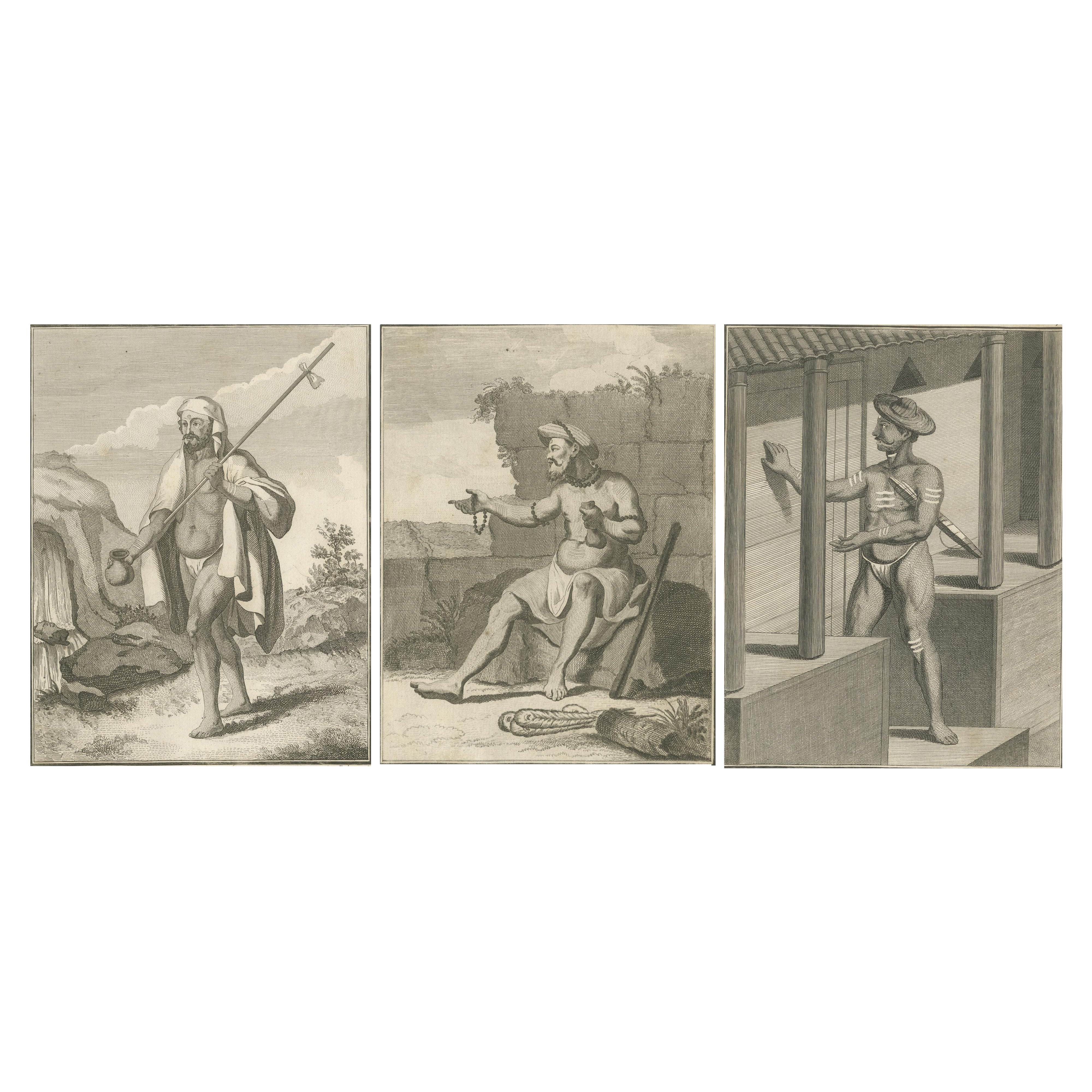
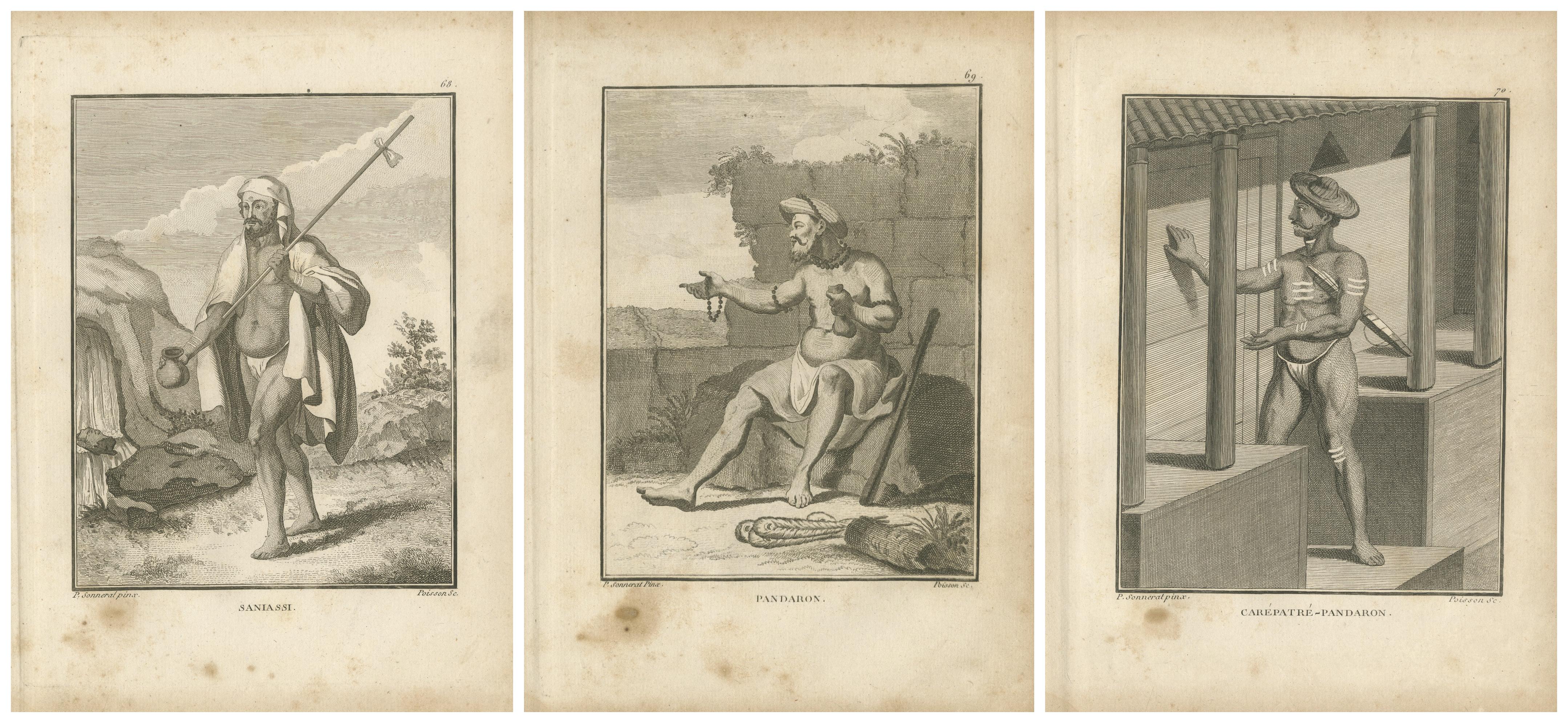
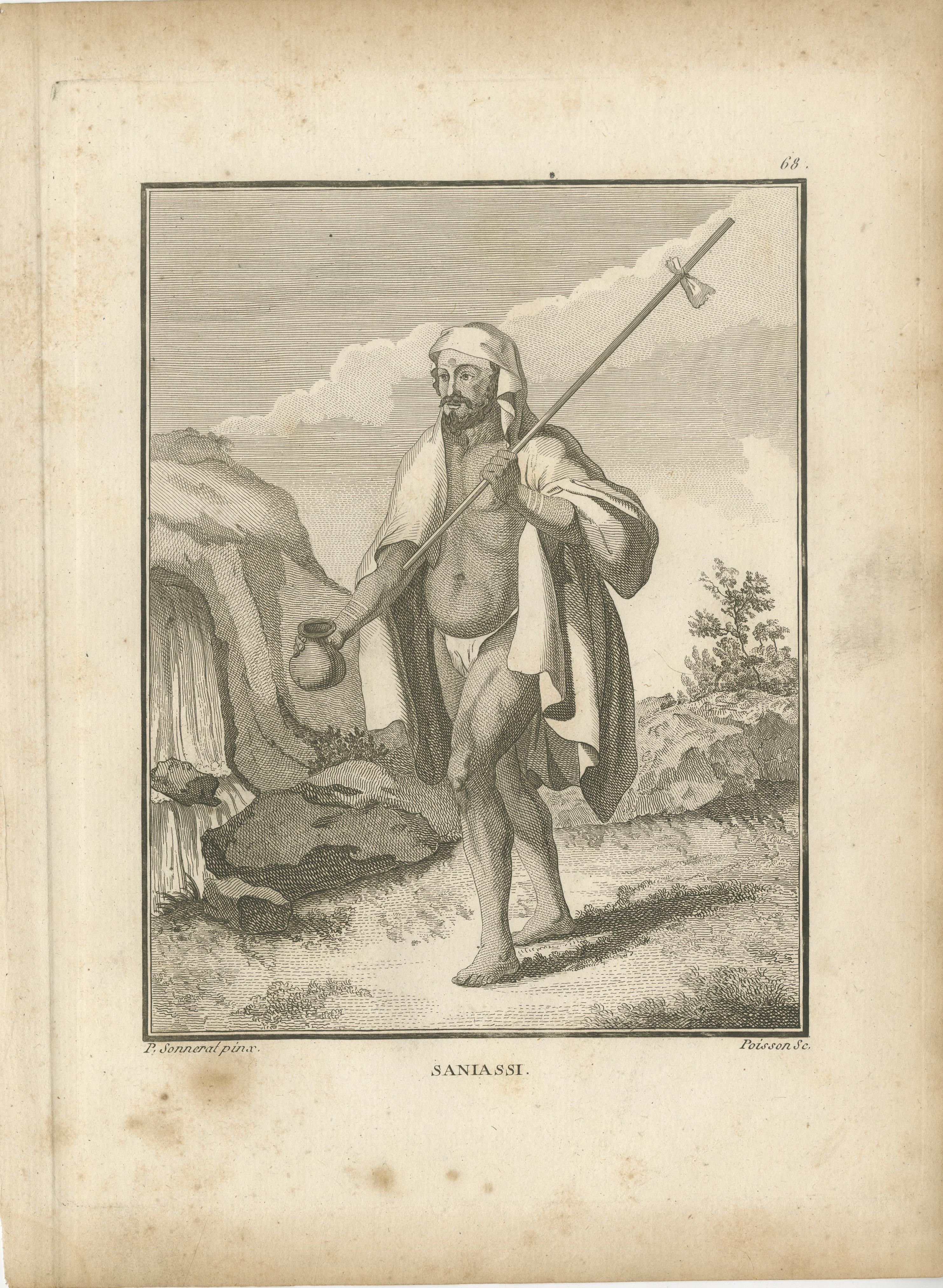
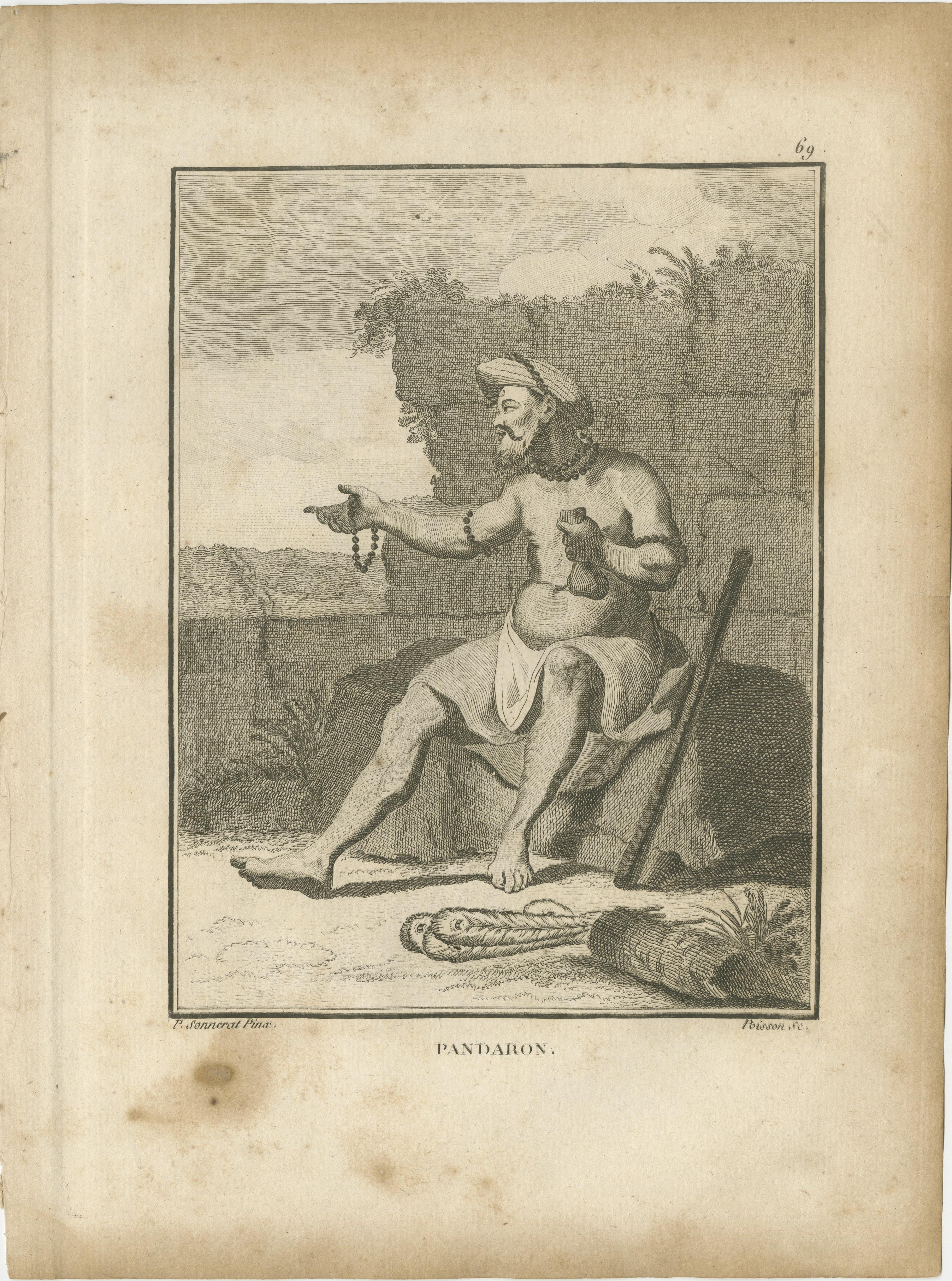
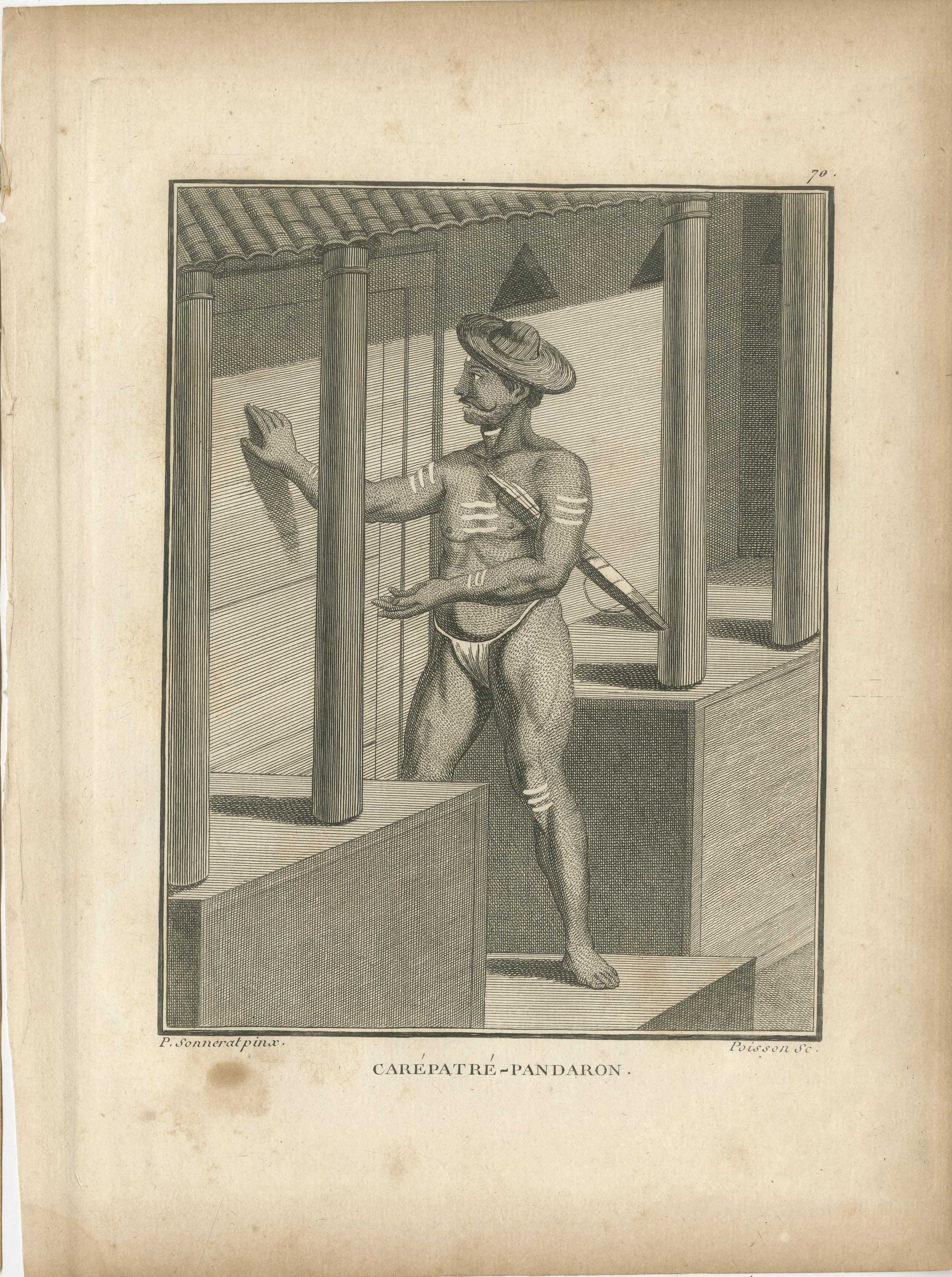
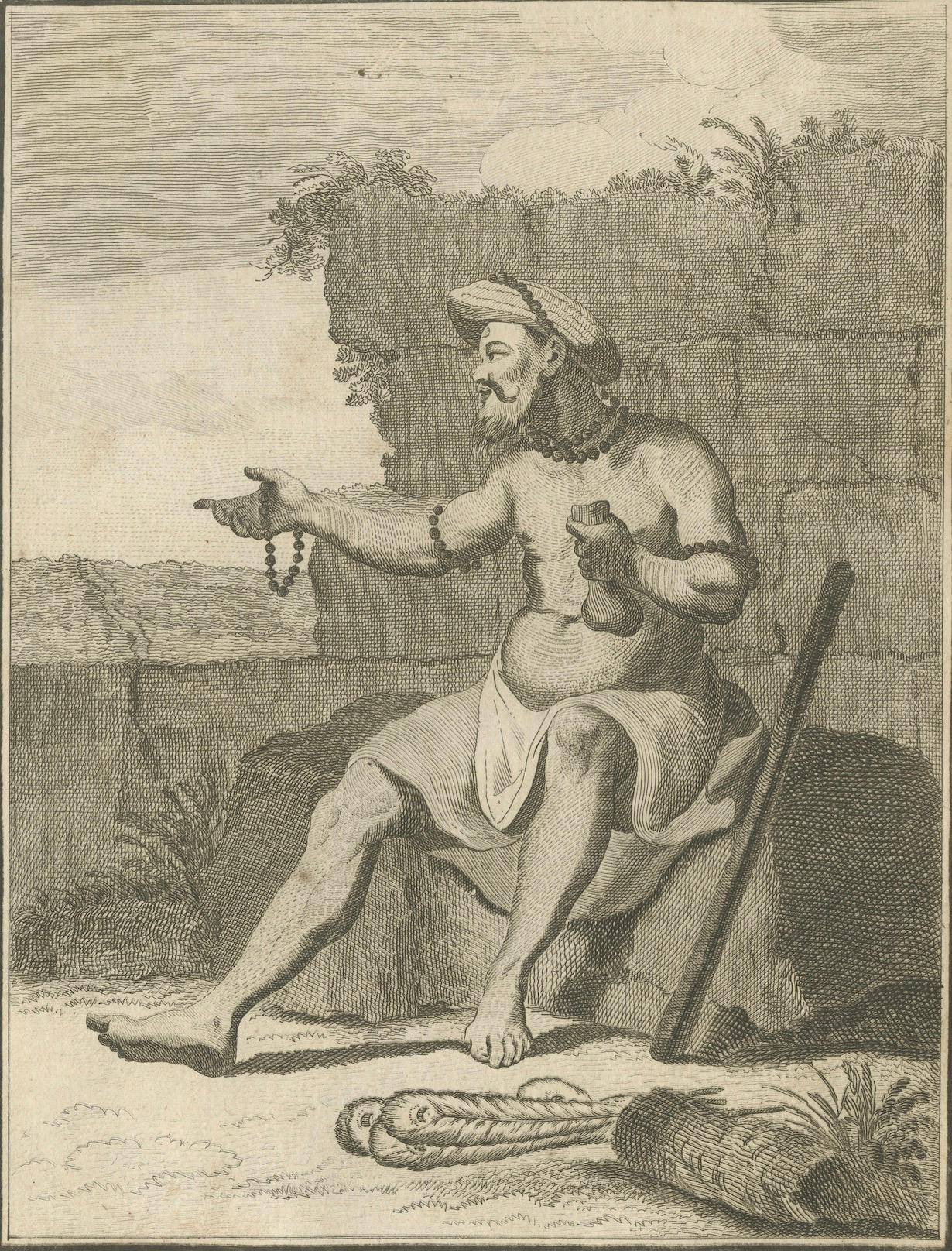
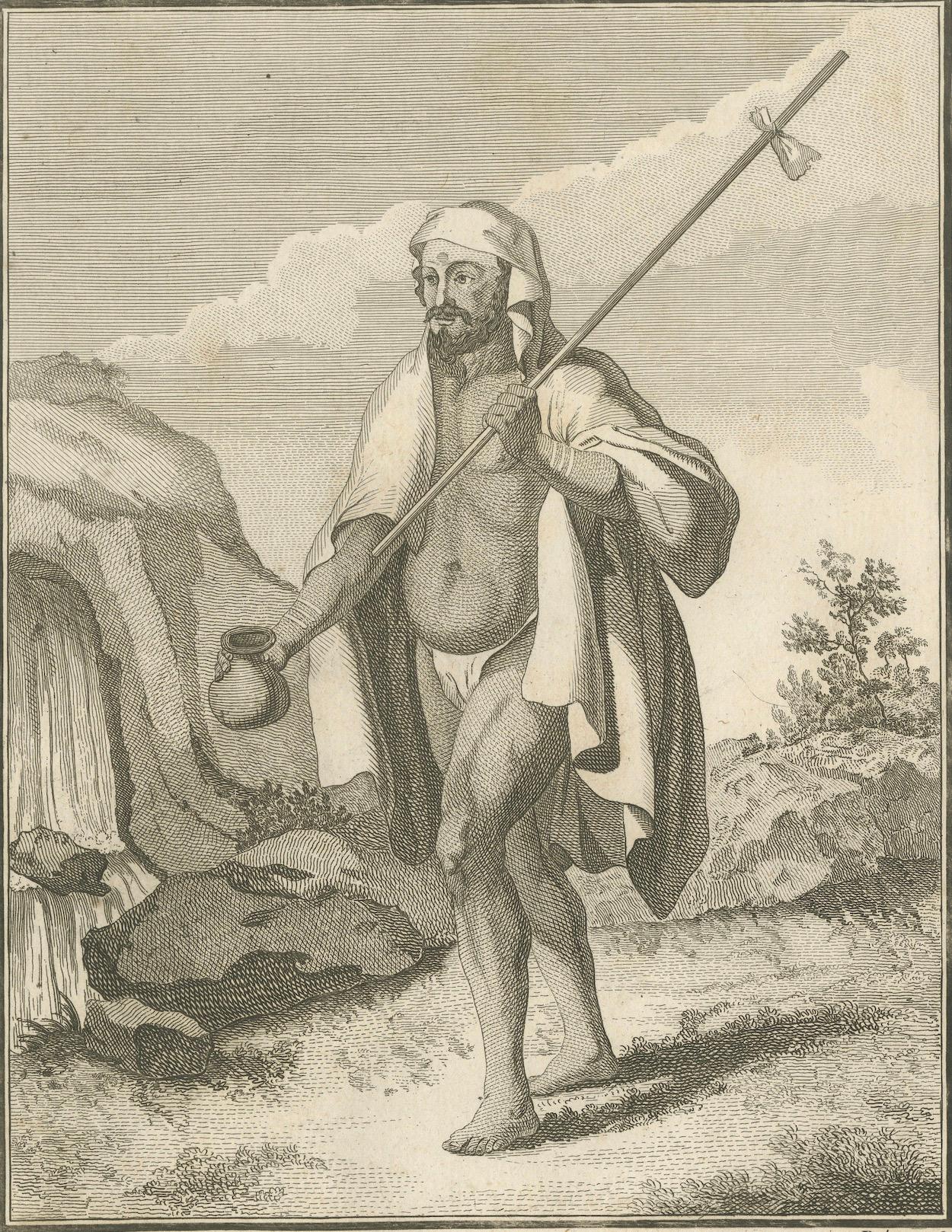
This composite engraving presents three distinct depictions of Hindu spiritual figures, each portrayed in a separate frame with individualized titles: *Saniassi*, *Pandaron*, and *Carépatré-Pandaron*. These figures reflect various aspects of asceticism, devotion, and priesthood in South Indian religious life as observed by European travelers in the 18th century.
On the left, the *Saniassi* is shown as a wandering ascetic, barefoot and draped in a simple cloth, holding a staff and water pot. He appears near a cave dwelling, suggesting a life of renunciation and meditation. Sannyasis (or sadhus) are respected spiritual seekers in Hindu tradition who renounce worldly attachments to pursue spiritual enlightenment.
The central image depicts the *Pandaron*, likely representing a type of seated ascetic or temple mendicant. He is shown in a relaxed yet attentive posture, holding a string of prayer beads and seated near ritual tools, possibly indicating his role in temple-related religious practices or public preaching.
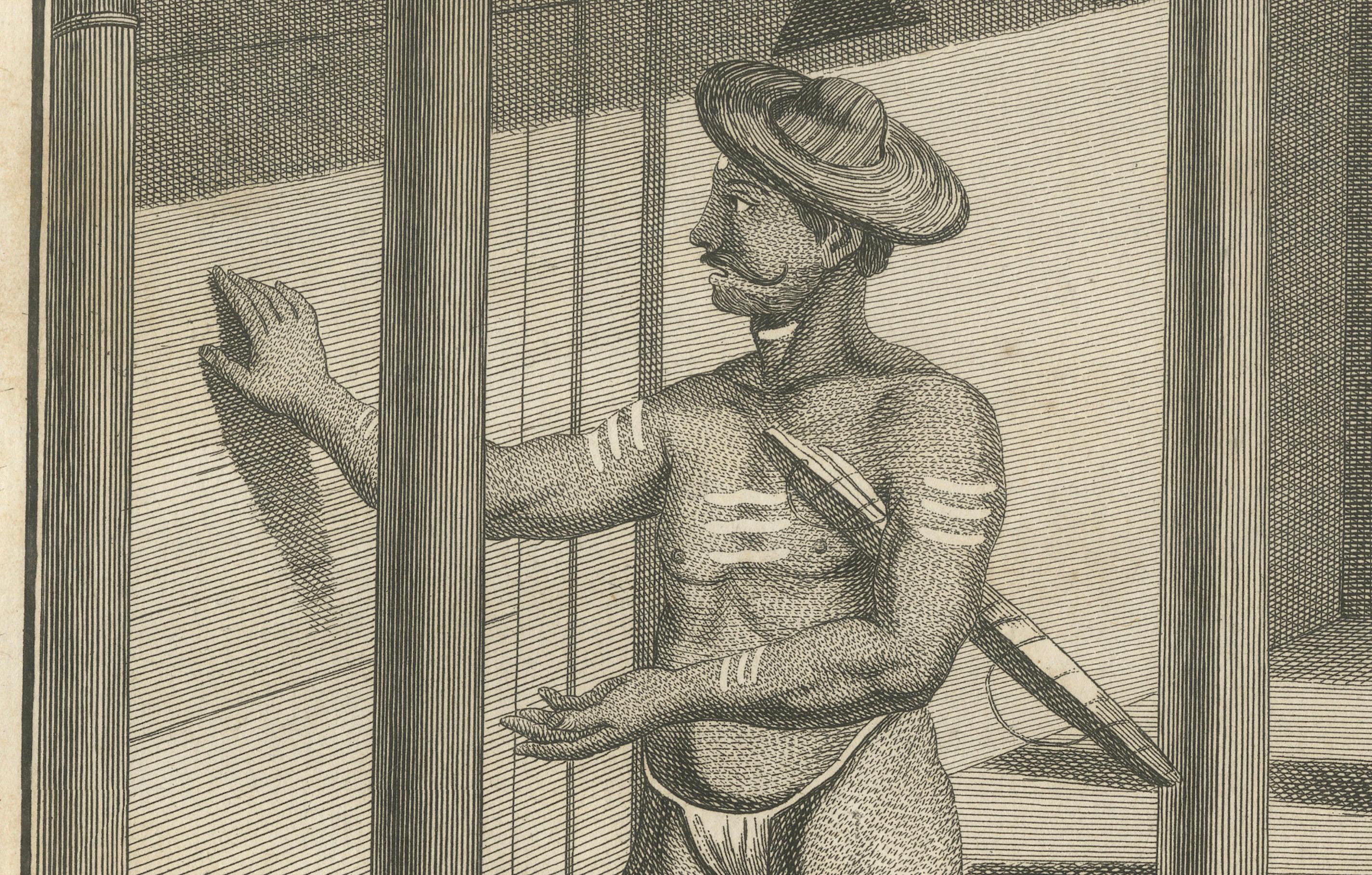
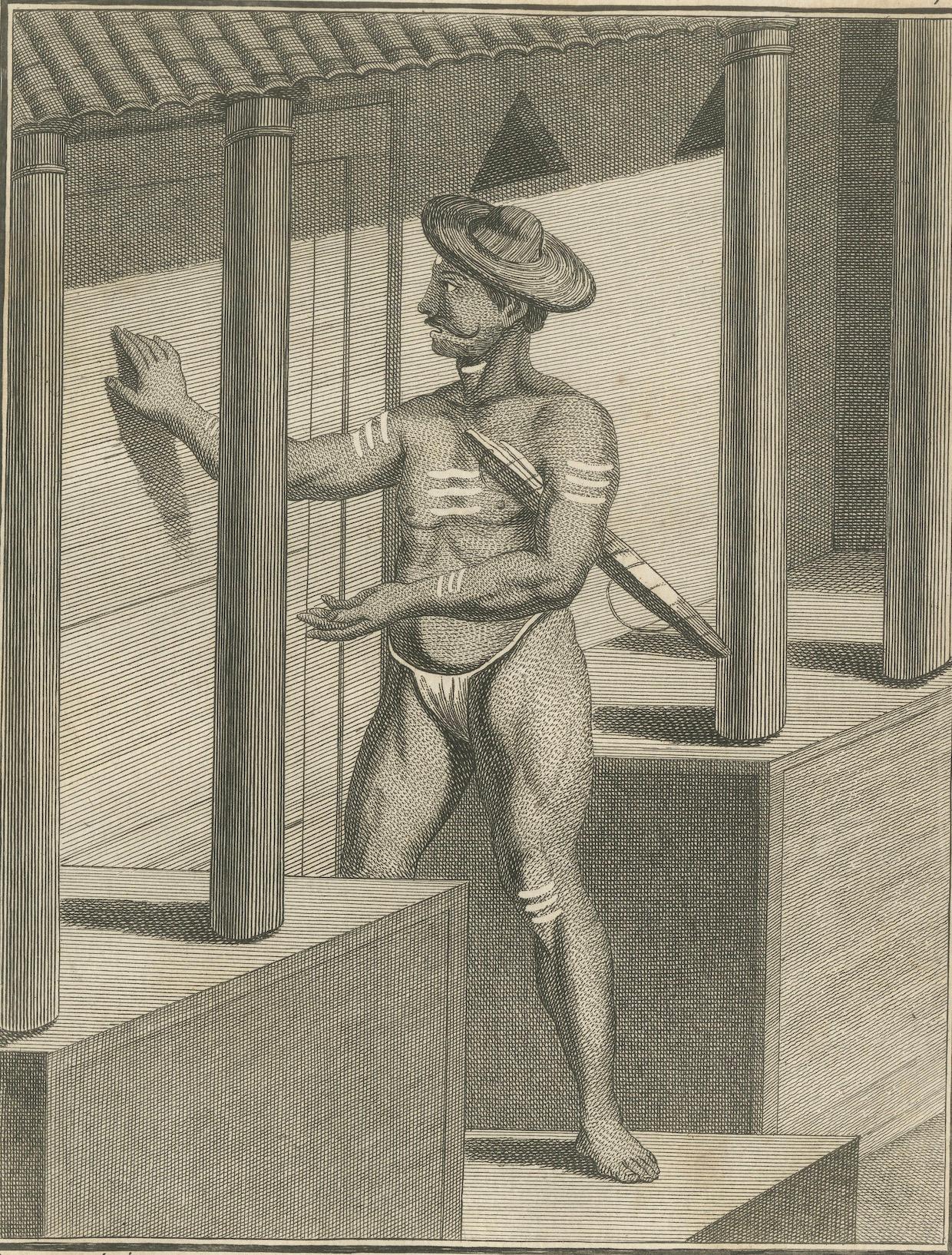
The right panel shows the *Carépatré-Pandaron*, a priest or devotee within a temple colonnade, actively engaged in worship or ritual. He is partially marked with religious body paint and gestures with one hand, possibly mid-chant or in prayer. His upright, attentive stance and temple setting suggest he holds a ritual officiant role.
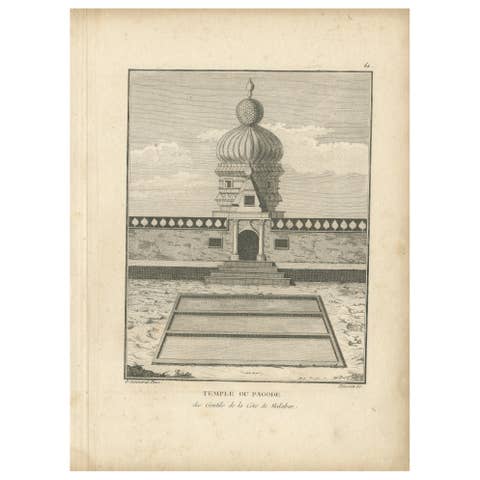
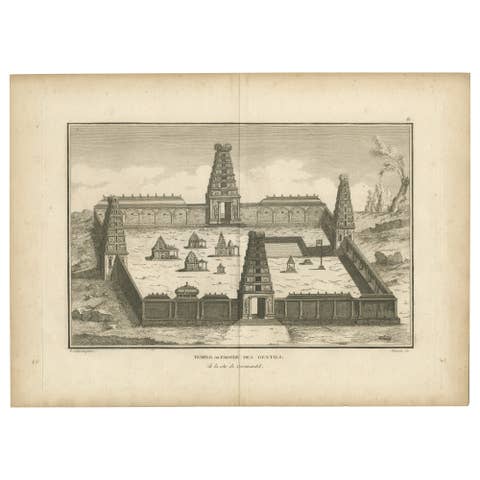
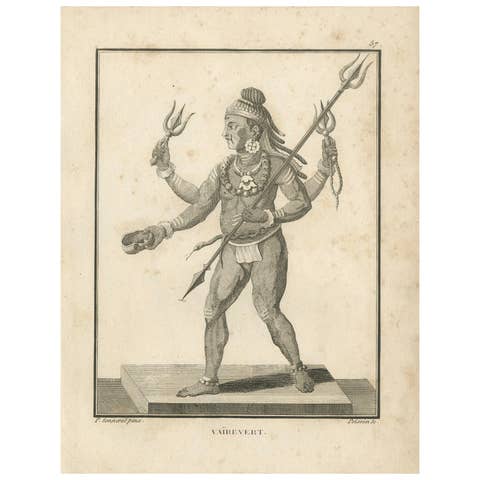
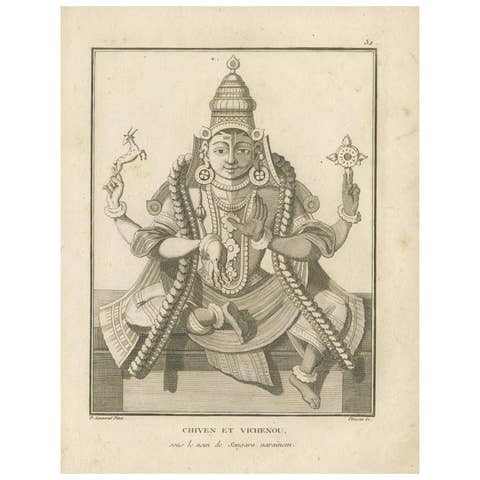
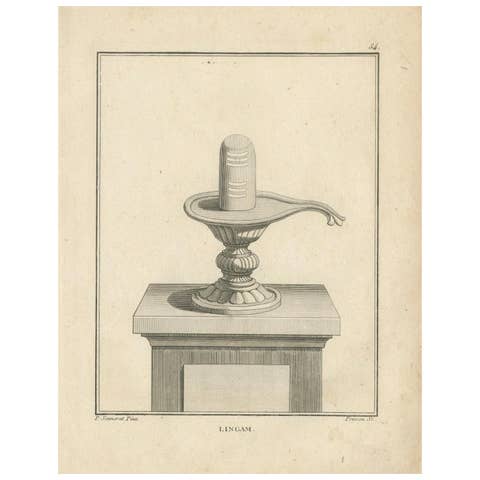
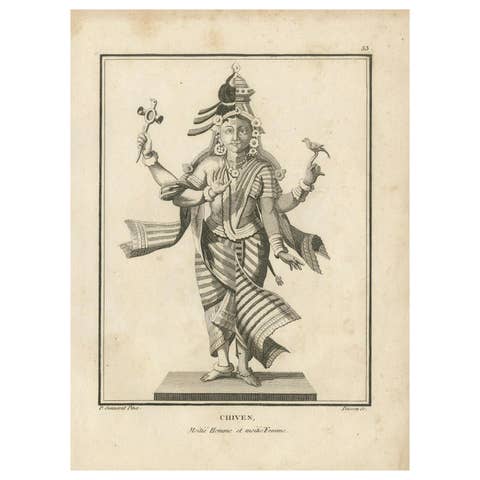
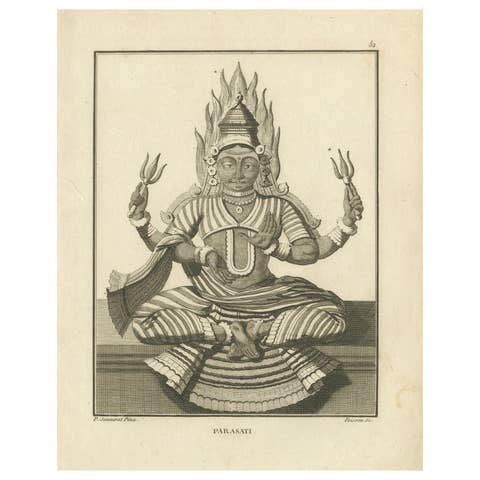
All three scenes are drawn from Pierre Sonnerat’s travels in South India and were engraved by Jean-Baptiste-Marie Poisson for the 1806 edition of *Voyage aux Indes Orientales et à la Chine*. The engravings reflect a European attempt to classify and visually document the religious diversity and practices of India during the colonial period.
Together, the plates offer insight into early 19th-century interpretations of Hindu spirituality and provide a valuable visual reference for students of religion, anthropology, and colonial history.
Condition report:
Good overall condition. Sheet trimmed with light toning and some minor foxing, especially in the lower margins. Plates are clean and impressions remain strong.
Framing tips:
This triptych-style engraving would be well suited to a single wide frame with a neutral mat, allowing each figure to be individually appreciated while preserving the unity of the composition.
Technique: Engraving
Maker: J.-B.-M. Poisson after Pierre Sonnerat, Paris, 1806