About this sheet
Antique Monkeys & South American Anteaters Engraving – Bertuch, c. 1800
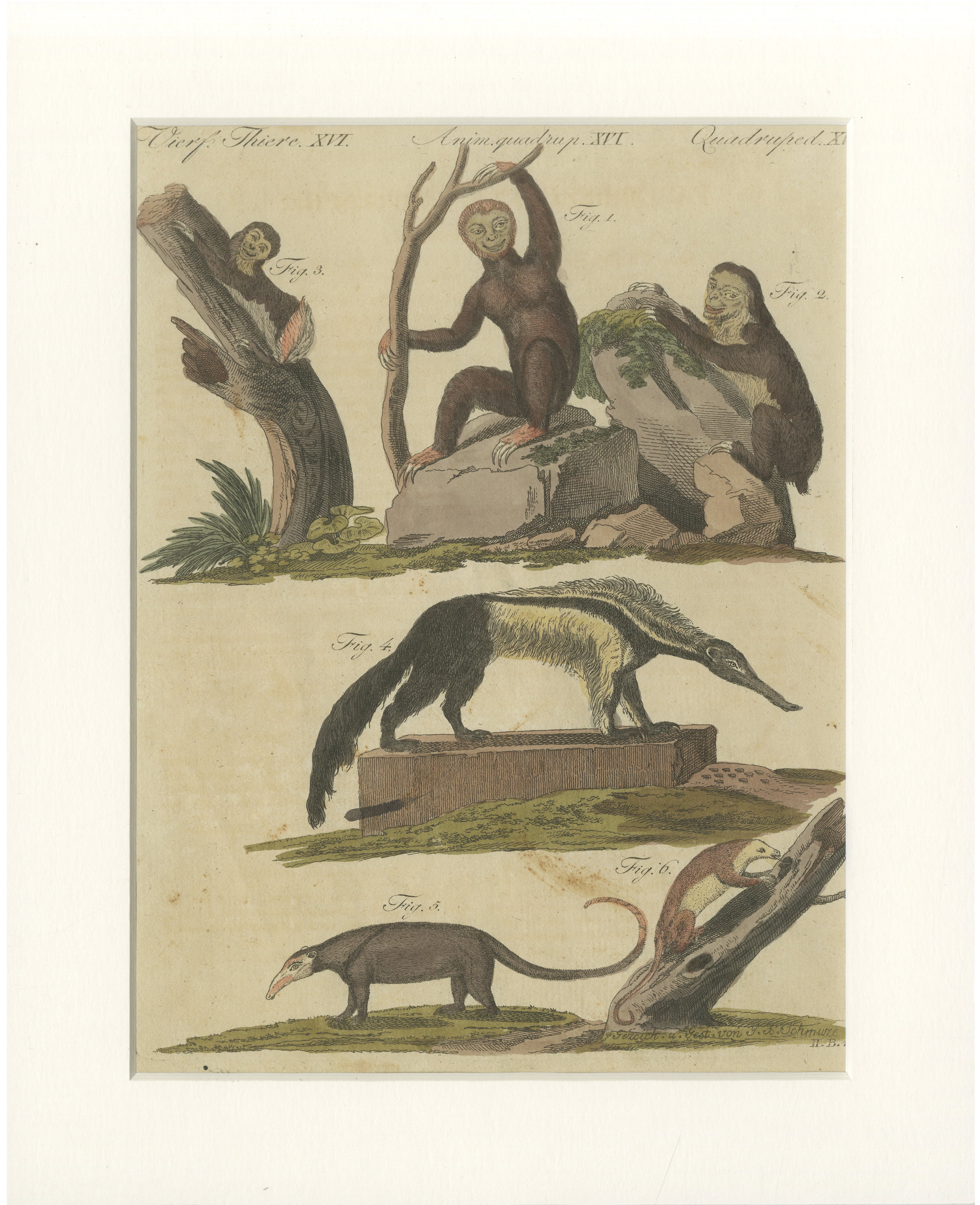
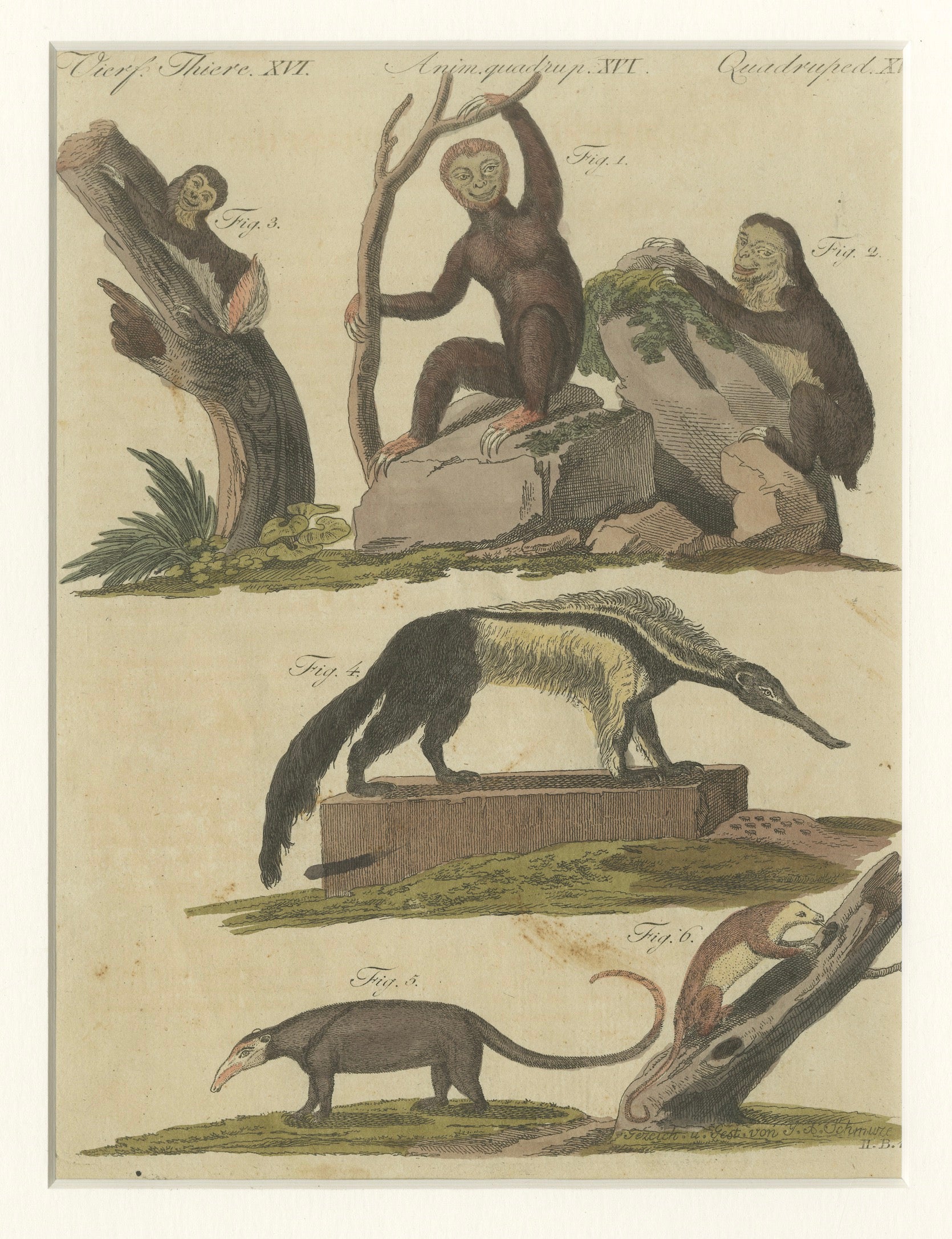
Original antique hand-colored copper engraving depicting three exotic monkeys together with three remarkable South American anteaters, published in Friedrich Justin Bertuch’s celebrated “Bilderbuch für Kinder” around the turn of the 19th century.
The plate is headed “Vierfüßige Thiere XVI / Anim. quadrup. XVI / Quadrupèdes XVI” and illustrates six mammals whose unusual appearance fascinated European naturalists and readers during the great age of exploration.
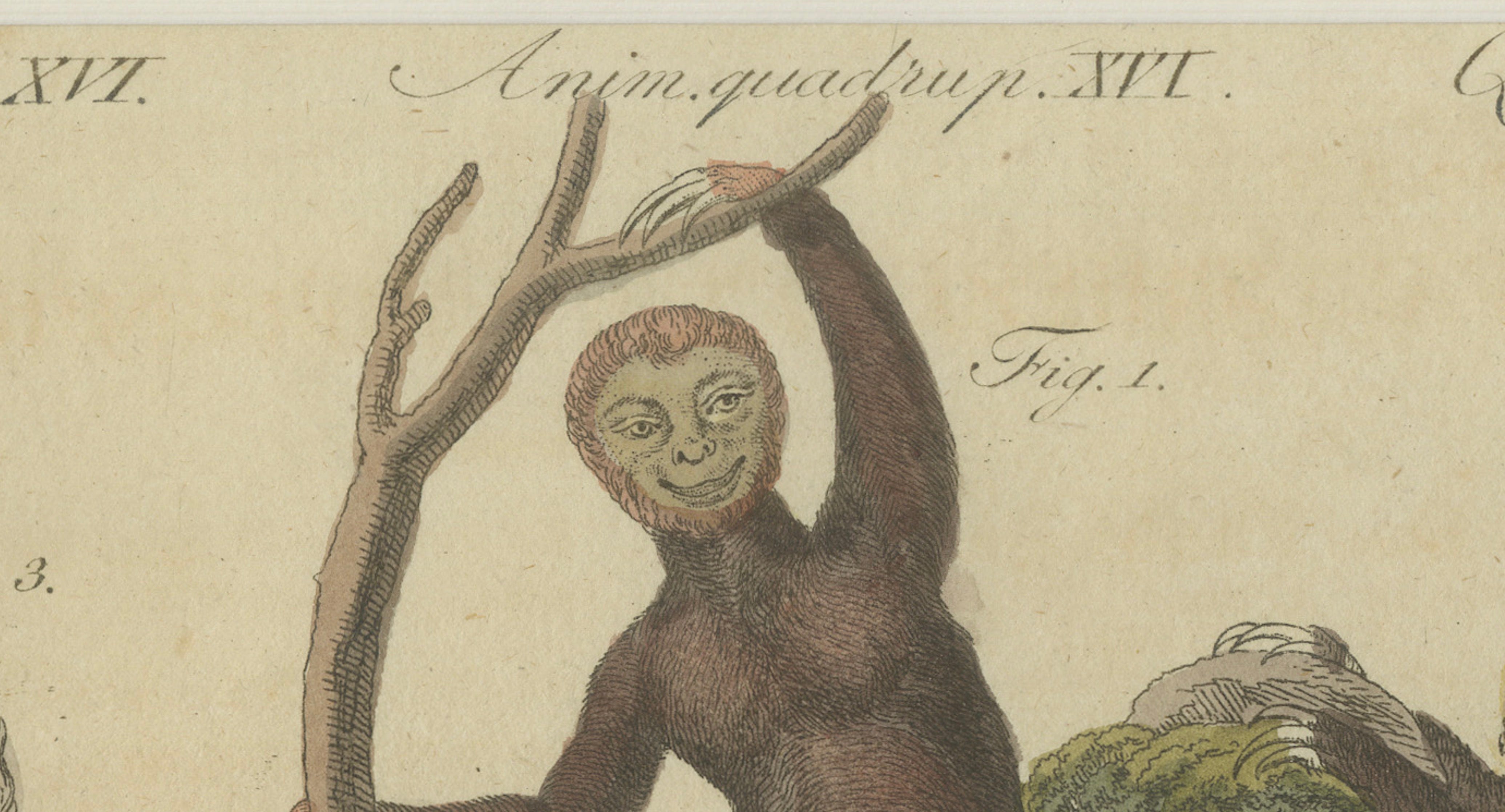
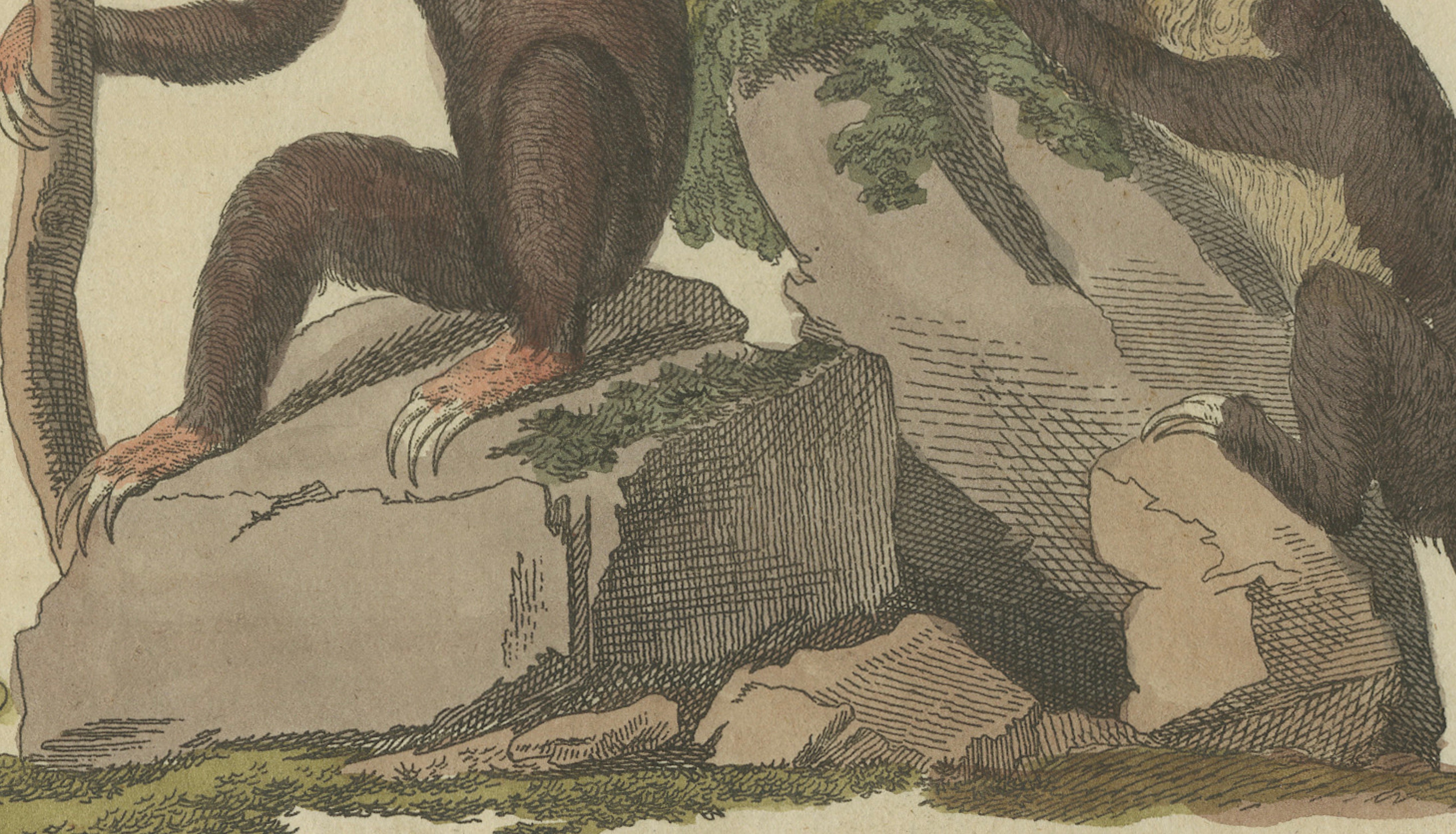
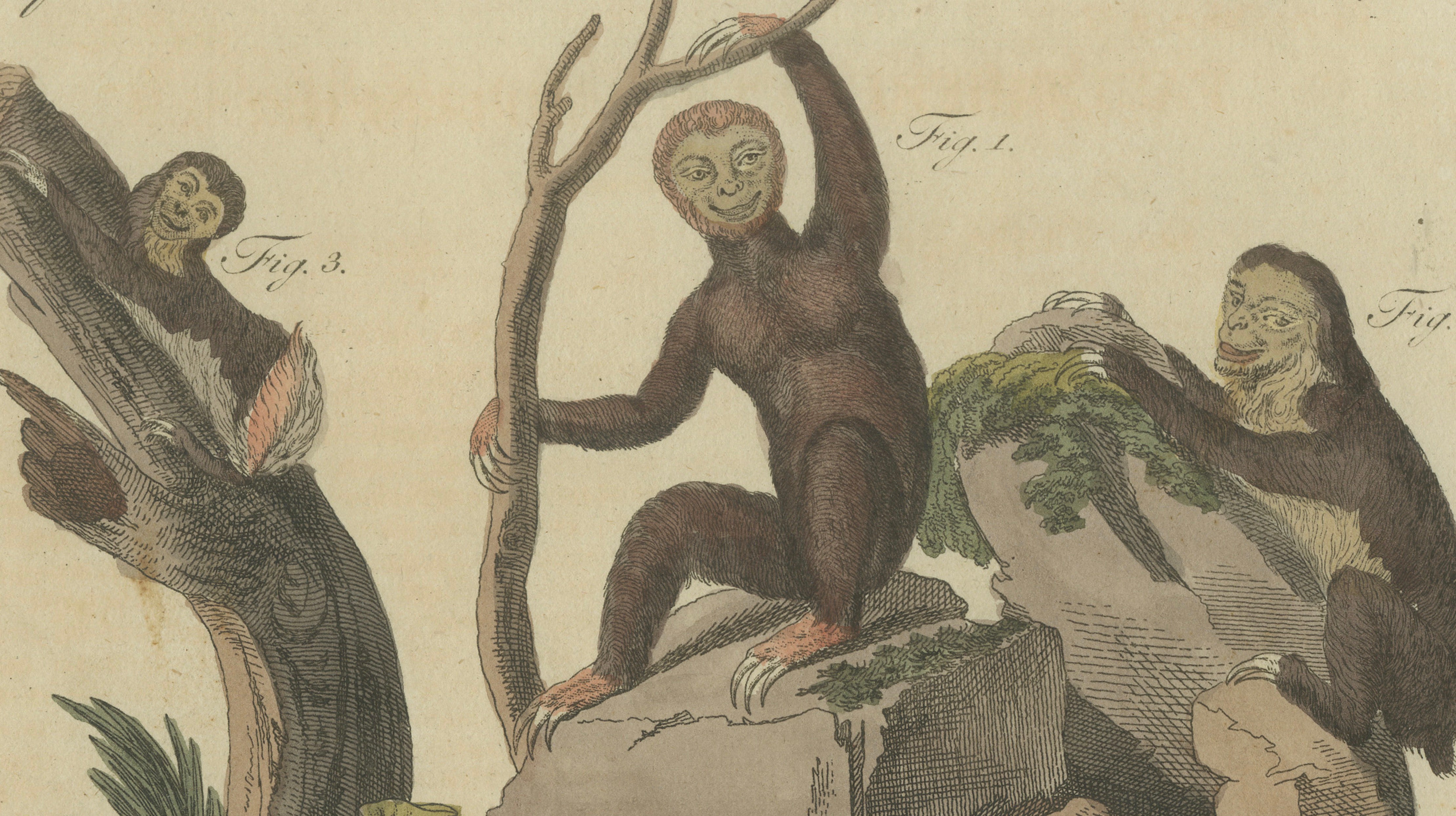
Fig. 1 – South American Monkey / Sapajou Type
A long-limbed New World monkey shown climbing among branches. The animal belongs to the group of South American monkeys historically described by European naturalists under names such as sapajou or capuchin.
Fig. 2 – Capuchin Monkey
A dark-bodied monkey with a contrasting pale face, beard and chest, closely resembling one of the capuchin or sapajou monkeys of Central and South America. Capuchins became especially familiar to Europeans through travellers’ accounts and early natural-history collections.
Fig. 3 – Small South American Monkey
A smaller monkey shown clinging to a tree trunk. Its compact proportions and arboreal pose emphasize the great variety of New World primates that European naturalists were attempting to classify during Bertuch’s period.
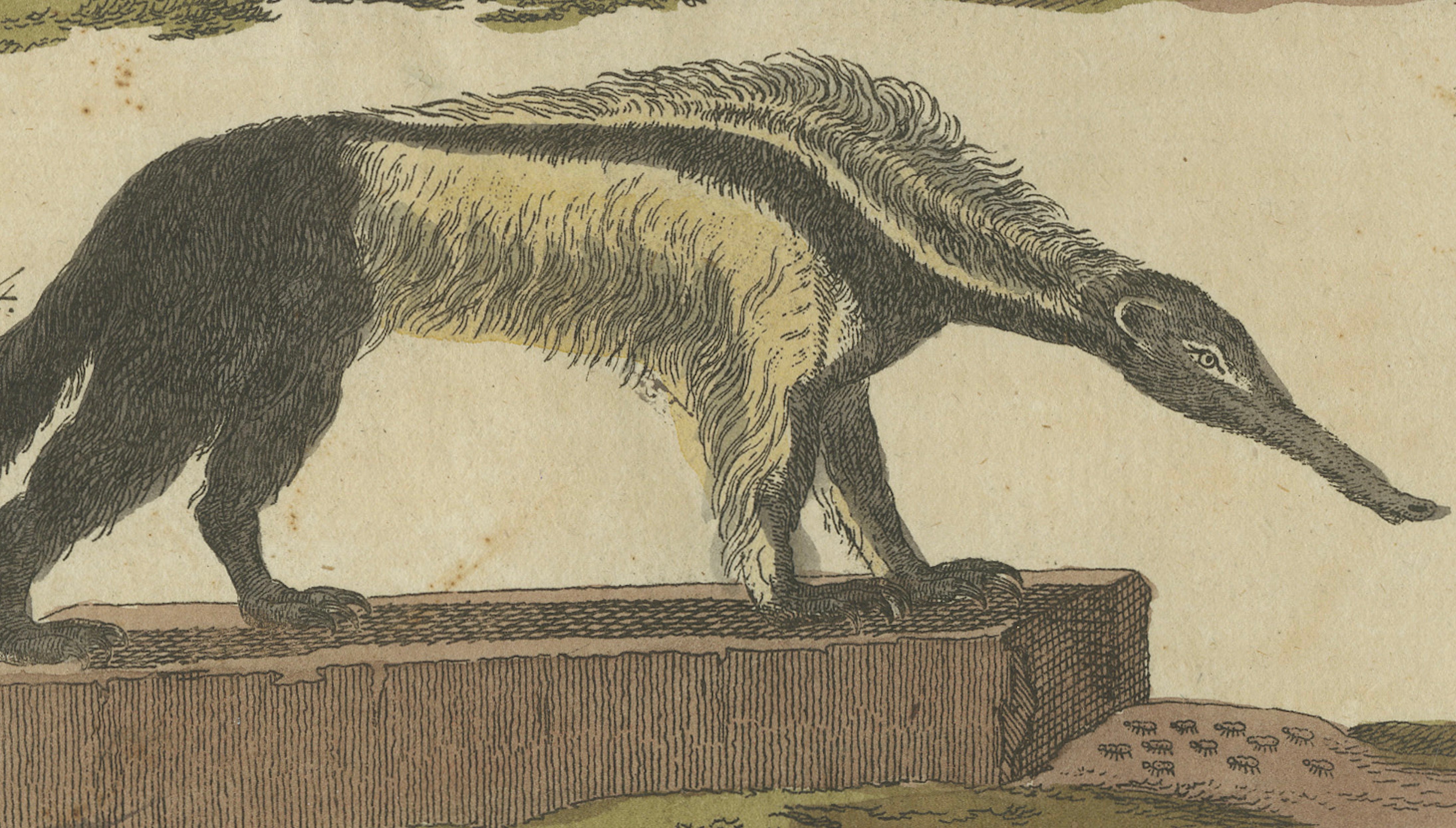
Fig. 4 – Giant Anteater / Great Ant-Bear (Myrmecophaga tridactyla)
The most immediately recognizable animal on the plate is the magnificent Giant Anteater of Central and South America.
Early naturalists also called it the Great Ant-Bear. Its extraordinary elongated snout, powerful foreclaws and enormous bushy tail are clearly represented in the engraving.
The Giant Anteater has no teeth and uses its exceptionally long, sticky tongue to collect ants and termites. Its unusual anatomy made it one of the most remarkable South American mammals described in early European natural-history literature.
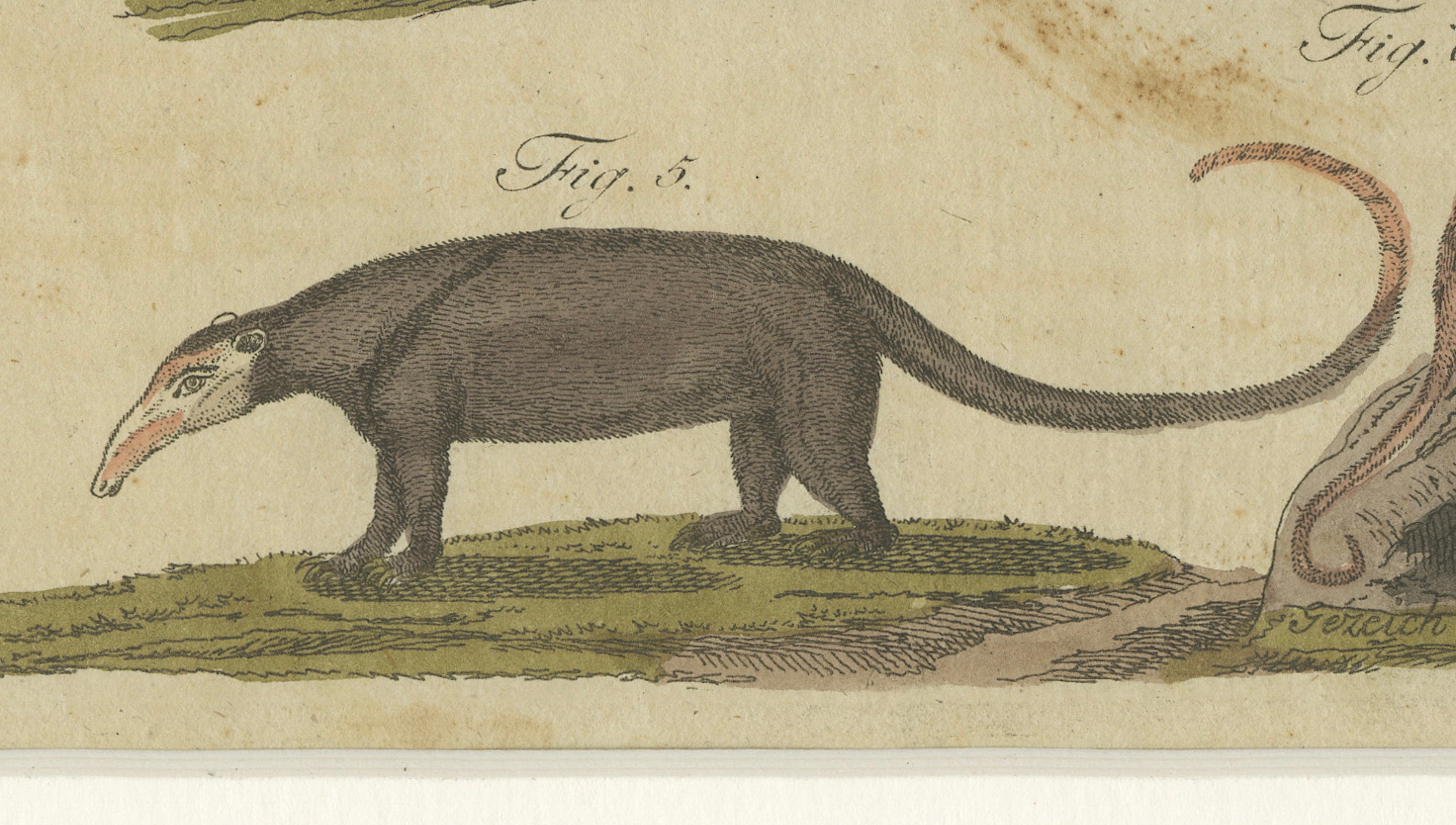
Fig. 5 – Tamandua / Lesser Anteater (Tamandua species)
A smaller South American anteater characterized by its elongated snout, relatively slender body and long tail.
Known historically as a tamandua or lesser anteater, these animals are accomplished climbers and spend considerably more time in trees than the much larger Giant Anteater.
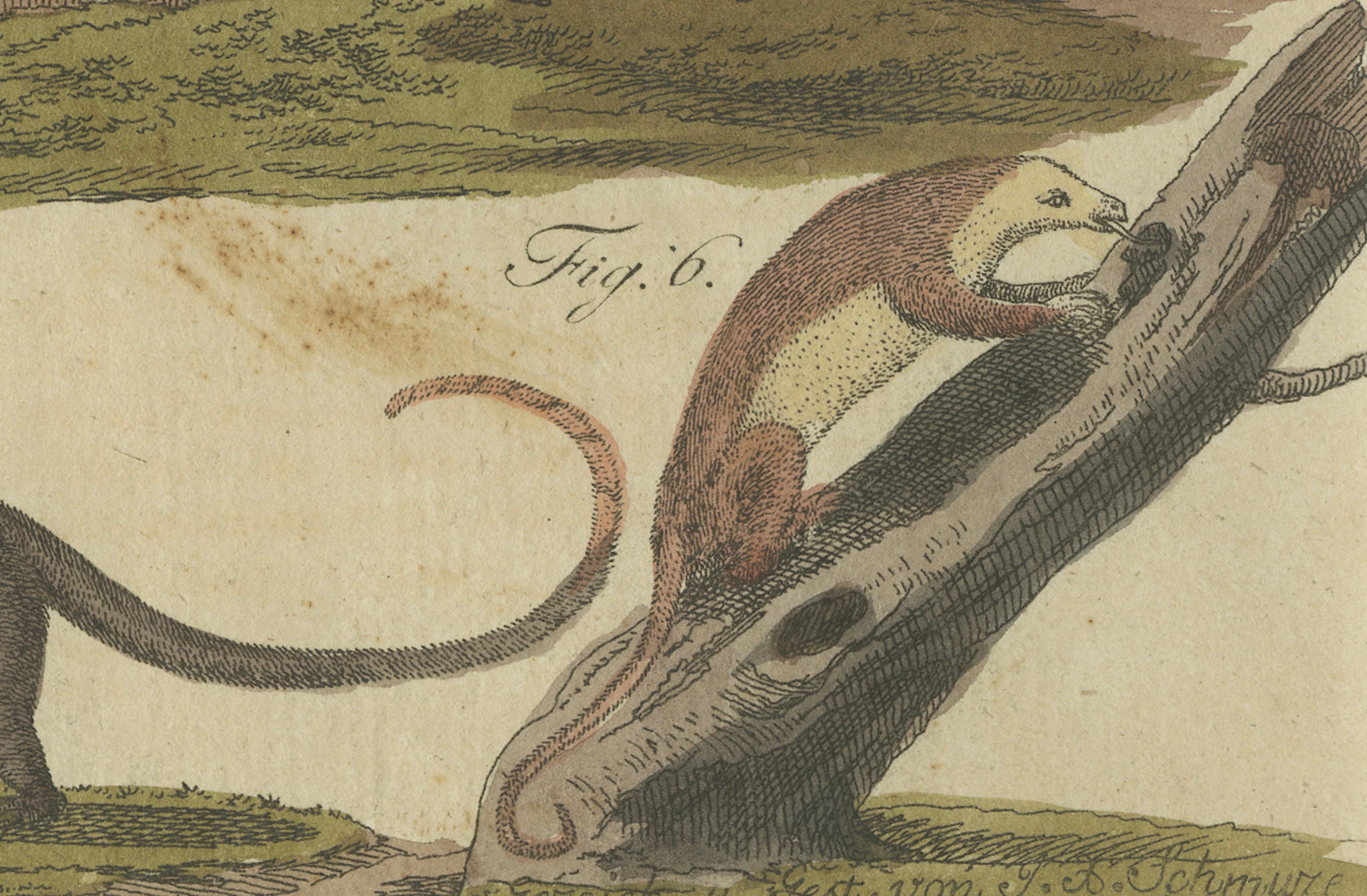
Fig. 6 – Silky Anteater / Pygmy Anteater (Cyclopes didactylus)
The tiny climbing animal at lower right represents the smallest and most arboreal member of the anteater group.
Commonly known as the Silky Anteater, Pygmy Anteater or Two-toed Anteater, Cyclopes didactylus is native to tropical Central and South America. Its small size, climbing habits and prehensile tail distinguish it dramatically from the enormous Giant Anteater illustrated immediately above.
Together, the three animals provide a fascinating comparison between the great terrestrial anteater, the intermediate tamandua and the tiny tree-dwelling silky anteater.
Friedrich Justin Bertuch (1747–1822) was a German publisher, writer and patron of the arts. His monumental “Bilderbuch für Kinder” (Picture Book for Children), first published in Weimar in 1790, became one of the great illustrated educational encyclopedias of the late 18th and early 19th centuries.
Its hundreds of engraved and hand-colored plates introduced readers to animals, plants, geography, science, technology, antiquity and cultures from around the world.
This particularly appealing plate reflects the intense European fascination with the exotic wildlife of the Americas. The combination of climbing monkeys and three dramatically different forms of anteater makes it an unusually varied and decorative natural-history composition.
Technique: Original hand-colored copper engraving
Publisher: Friedrich Justin Bertuch / Industrie-Comptoir
Publication: Bilderbuch für Kinder
Place: Weimar, Germany
Date: circa 1800
Plate: Vierfüßige Thiere XVI / Anim. quadrup. XVI / Quadrupèdes XVI
Subjects: Monkeys, Giant Anteater, Tamandua and Silky Anteater
Modern names represented include:
Giant Anteater – Myrmecophaga tridactyla
Tamandua / Lesser Anteater – Tamandua species
Silky Anteater / Pygmy Anteater – Cyclopes didactylus
Condition:
Good antique condition with overall age-related toning, scattered foxing and spotting and several small brown marks and stains, particularly in the lower half of the sheet. Some light handling and age-related imperfections are visible. The original hand coloring remains attractive. Please study the photographs carefully as they form part of the condition description.
The engraving is loosely inserted in an acid-free matting board.
Please note: This is an original antique hand-colored copper engraving from around 1800, not a modern reproduction. The print is sold unframed. Framed images or interior views, if shown, are for presentation and inspiration only.
Other companion animal and natural-history plates from Bertuch’s “Bilderbuch für Kinder” are also available separately.
Keywords...