Burmese Monk in His Religious Robe – Antique Costume Print, circa 1800
€ 180
Original antique · The actual sheet photographed · Certificate of authenticity on request · Sold unframed · Worldwide shipping from € 15 (rates)
Date
1800
Mapmaker / artist
Anonymous Dutch engraver, Netherlands, circa 1800
Technique
Copper engraving
Sheet size
21 × 12 cm (8.3 × 4.7 in)
Reference
BG-11645-1-9
What the condition grades mean
Excellent
Bright and clean, with no faults worth mentioning.
Very good
Only light signs of age, such as faint toning.
Good
Normal signs of age for a sheet of this period: toning, some foxing, small marks or neat old repairs.
Fair
Clear faults such as staining, tears or repairs, priced to match.
Every fault we see is written in the condition note, and the whole sheet is shown uncropped in the photos.
Condition
Crisp impression on clean laid paper. Minor age-toning and a few small foxing spots in the margin. No tears or repairs. Plate mark clearly visible, with wide full margins.
About this sheet
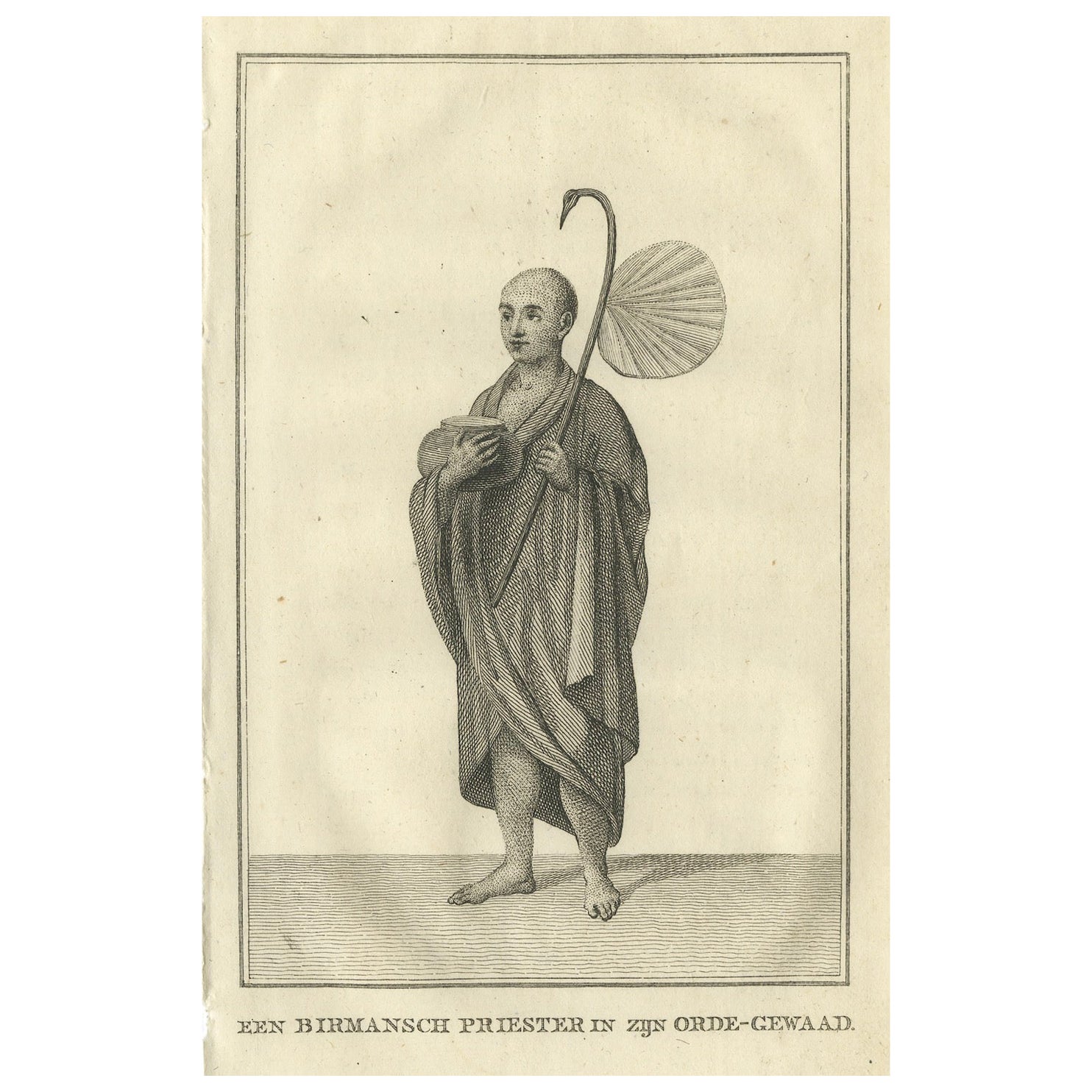
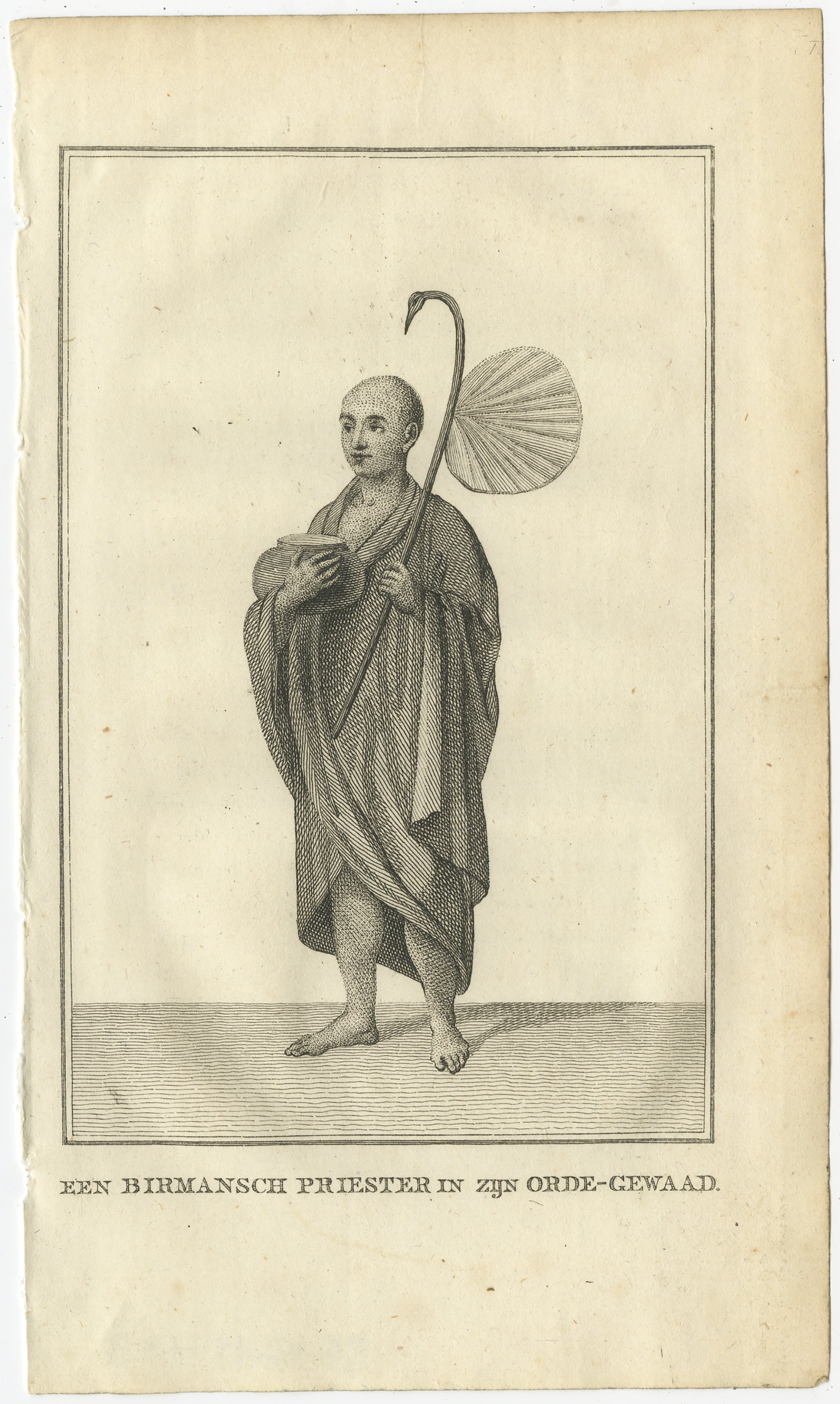
Burmese Monk in His Religious Robe – Antique Costume Print, circa 1800
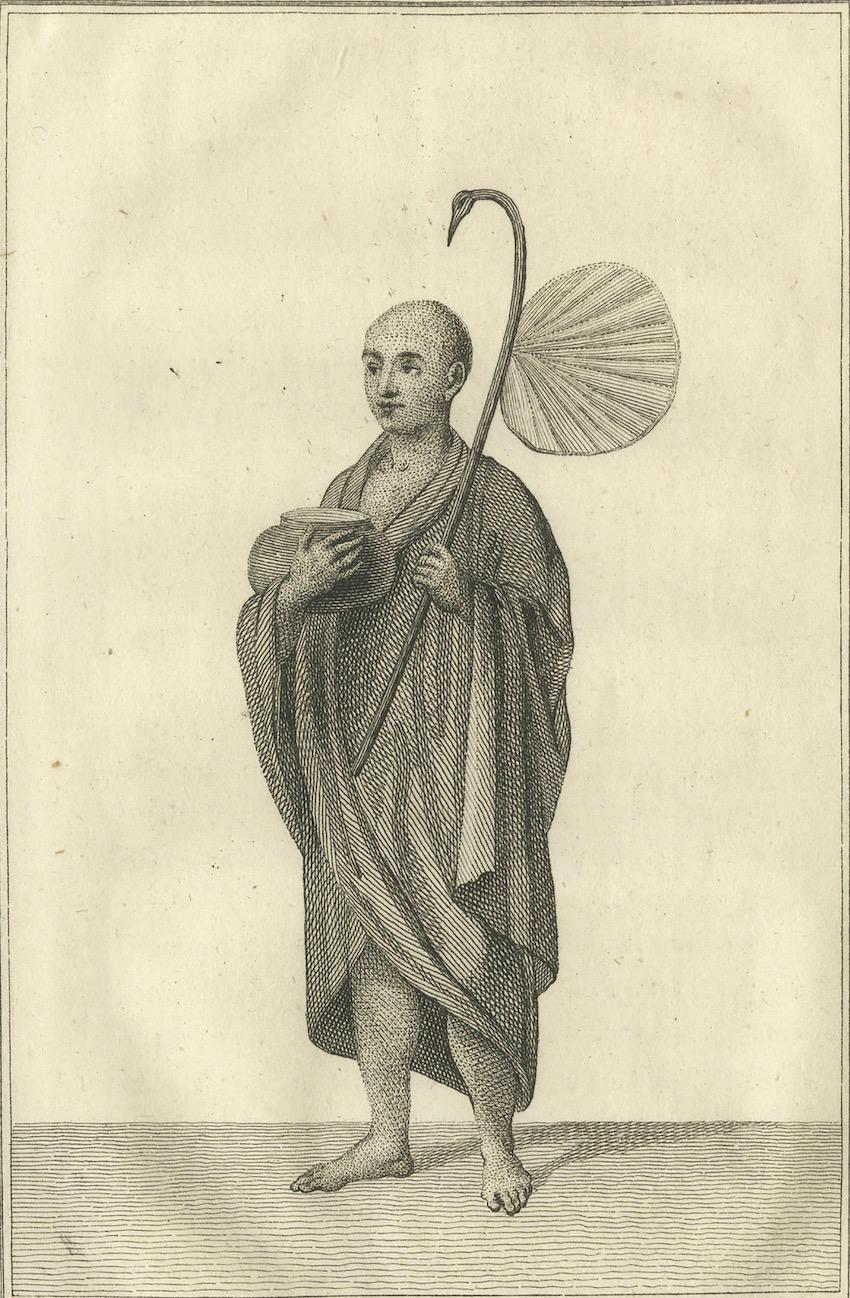
This finely executed Dutch engraving, titled “Een Birmansch Priester in Zijn Orde-Gewaad” (“A Burmese Priest in His Religious Robe”), portrays a Theravāda Buddhist monk from Burma (modern-day Myanmar), captured in his traditional attire. Dating to around 1800, this image forms part of a rare and insightful series of costume prints that accompanied early European travel accounts, such as the Dutch edition of Michael Symes’ embassy report from 1795 to the Burmese court.
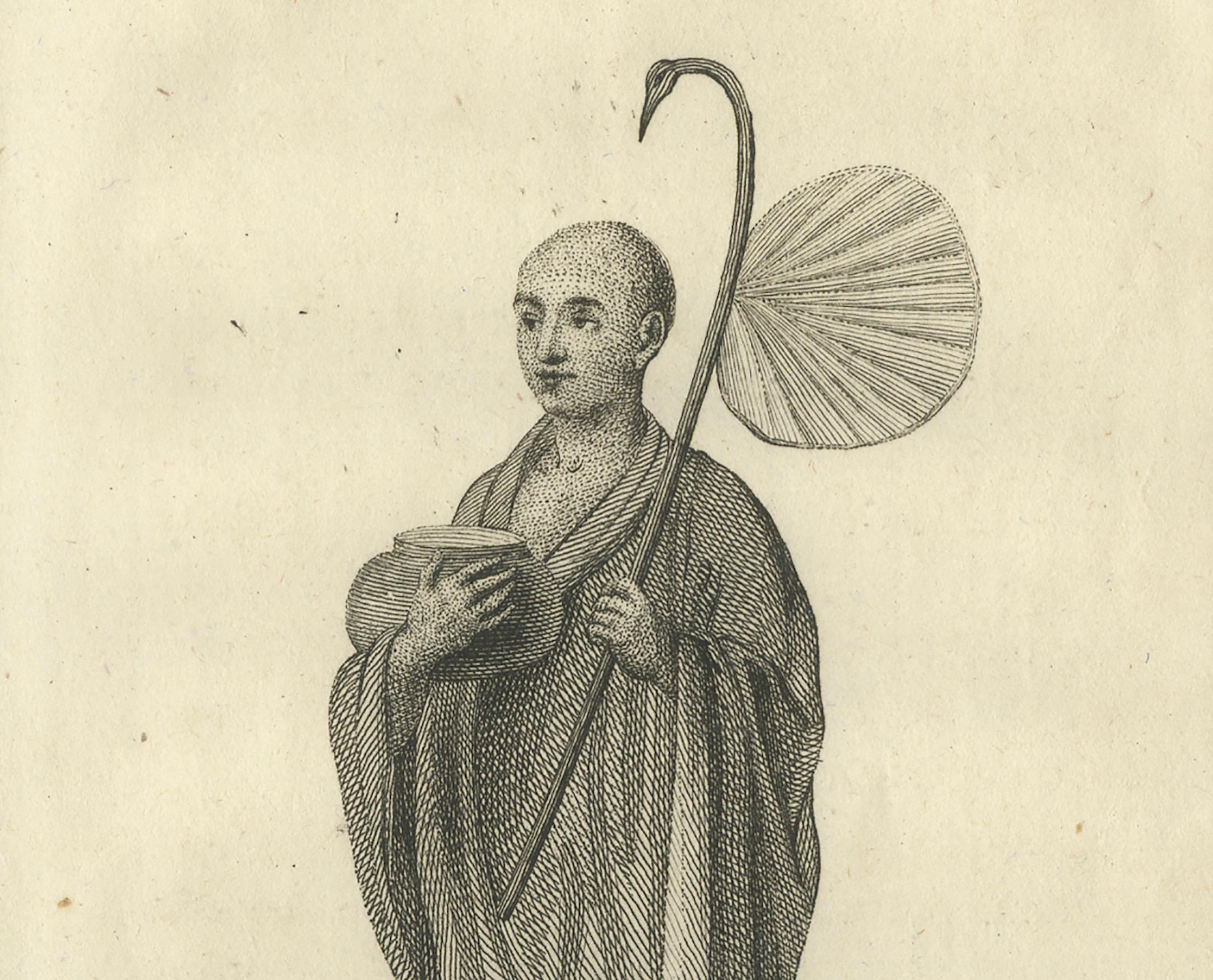
The barefoot monk stands serenely, draped in a flowing saffron-style robe rendered here in finely engraved textures. His head is shaved in the typical monastic tradition. In his left hand he holds an alms bowl, while in his right he carries a tall ceremonial fan with a curved handle and wide, leaf-like design. The fan served both as a practical item for shading and as a symbol of religious status and decorum during rituals or processions.
The portrayal is both respectful and idealized, reflecting European curiosity about Buddhism and Burmese society during the Enlightenment period. It also illustrates the central role of monastic life in Burmese culture, where monks were held in high esteem and maintained a close relationship with the community through teaching, ritual, and almsgiving.
This print serves as a valuable cultural document, offering an early European visual interpretation of Buddhist monastic life in Southeast Asia. It would appeal to collectors of religious iconography, Burmese history, and colonial-era ethnographic illustration.
Framing tips: Ideal in a simple black or dark teak frame with a soft cream or natural linen mat. A float-mount presentation will emphasize the refined vertical composition and engraved border.