About this sheet
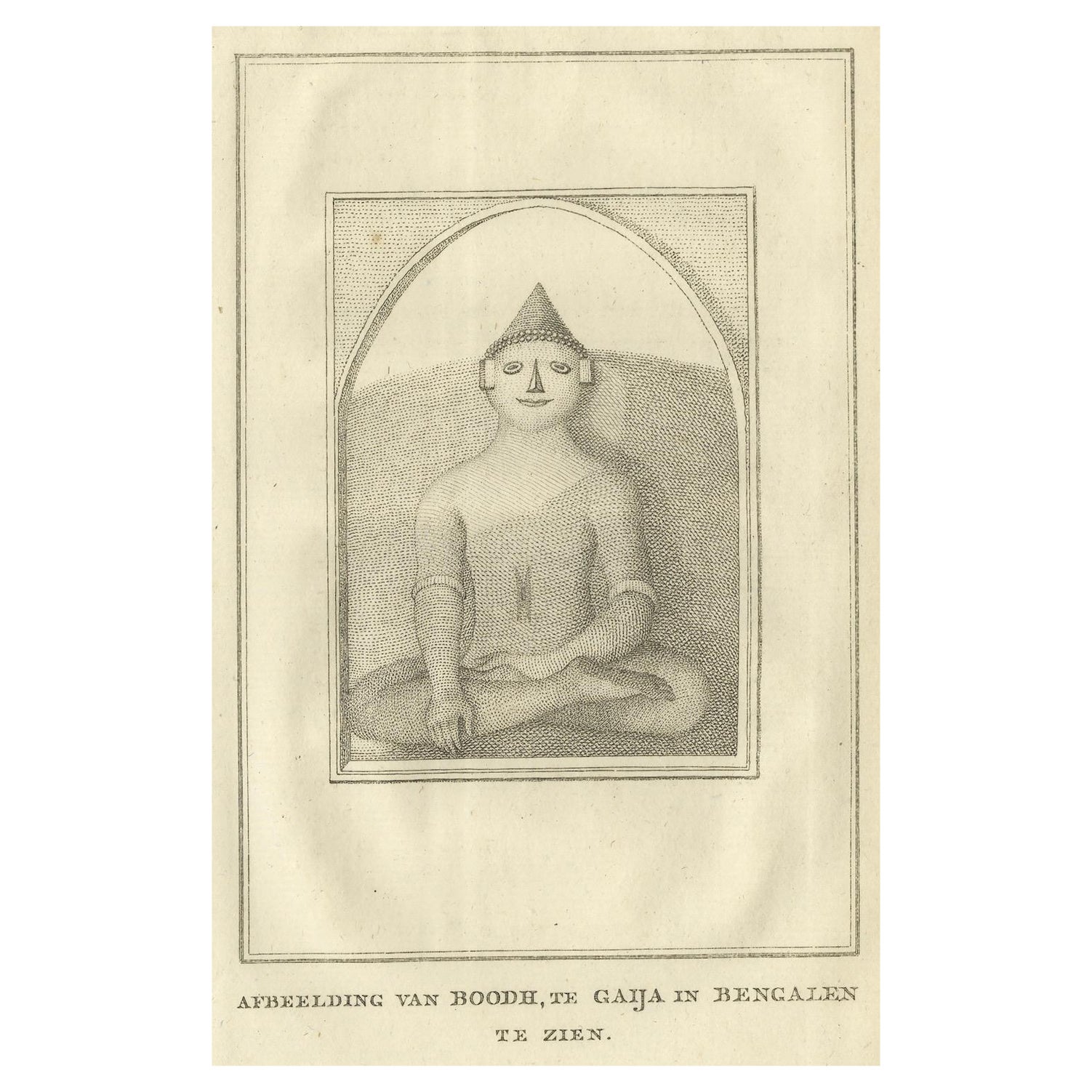
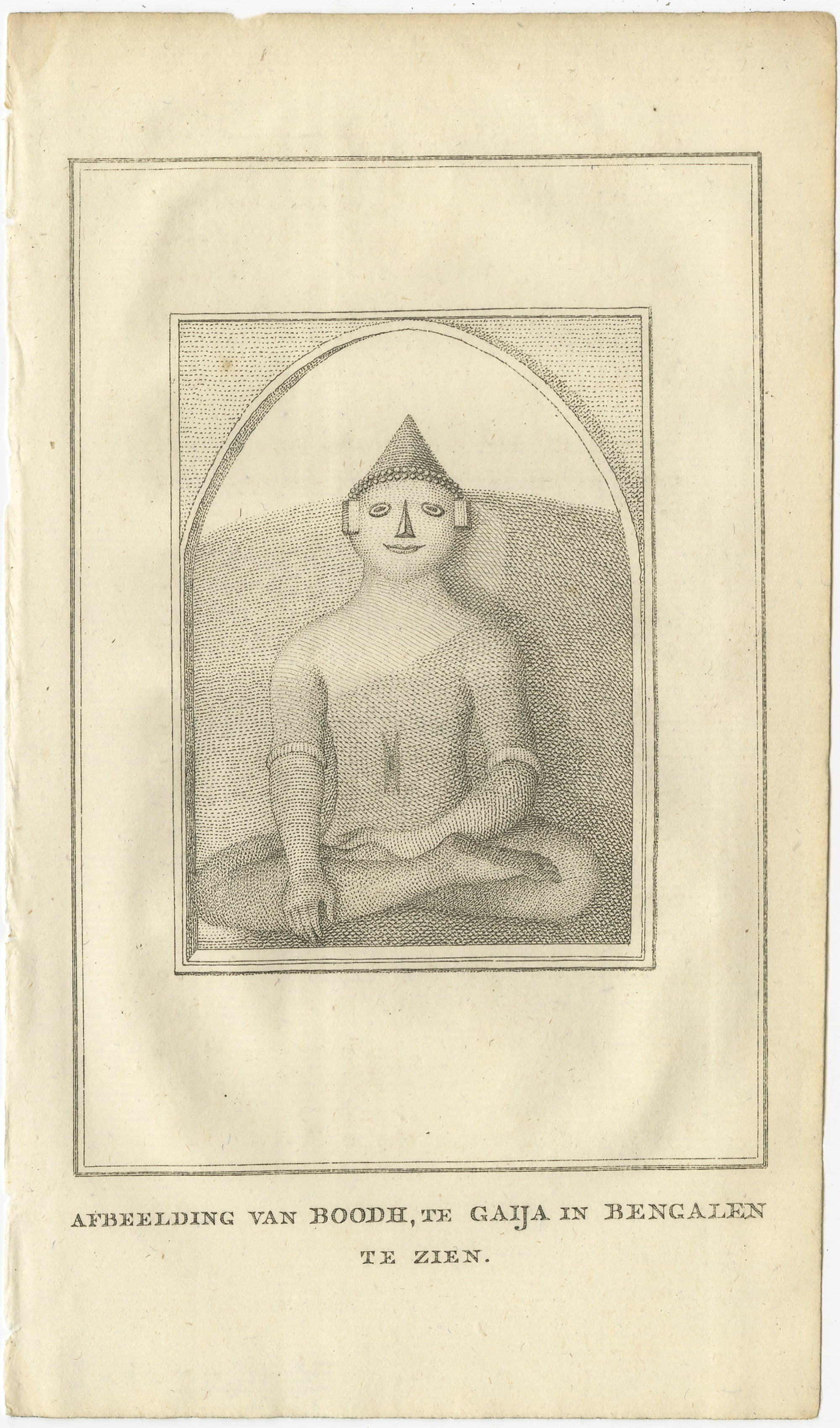
Seated Buddha at Gaya – Antique Dutch Print of a Statue in Bengal, ca. 1800
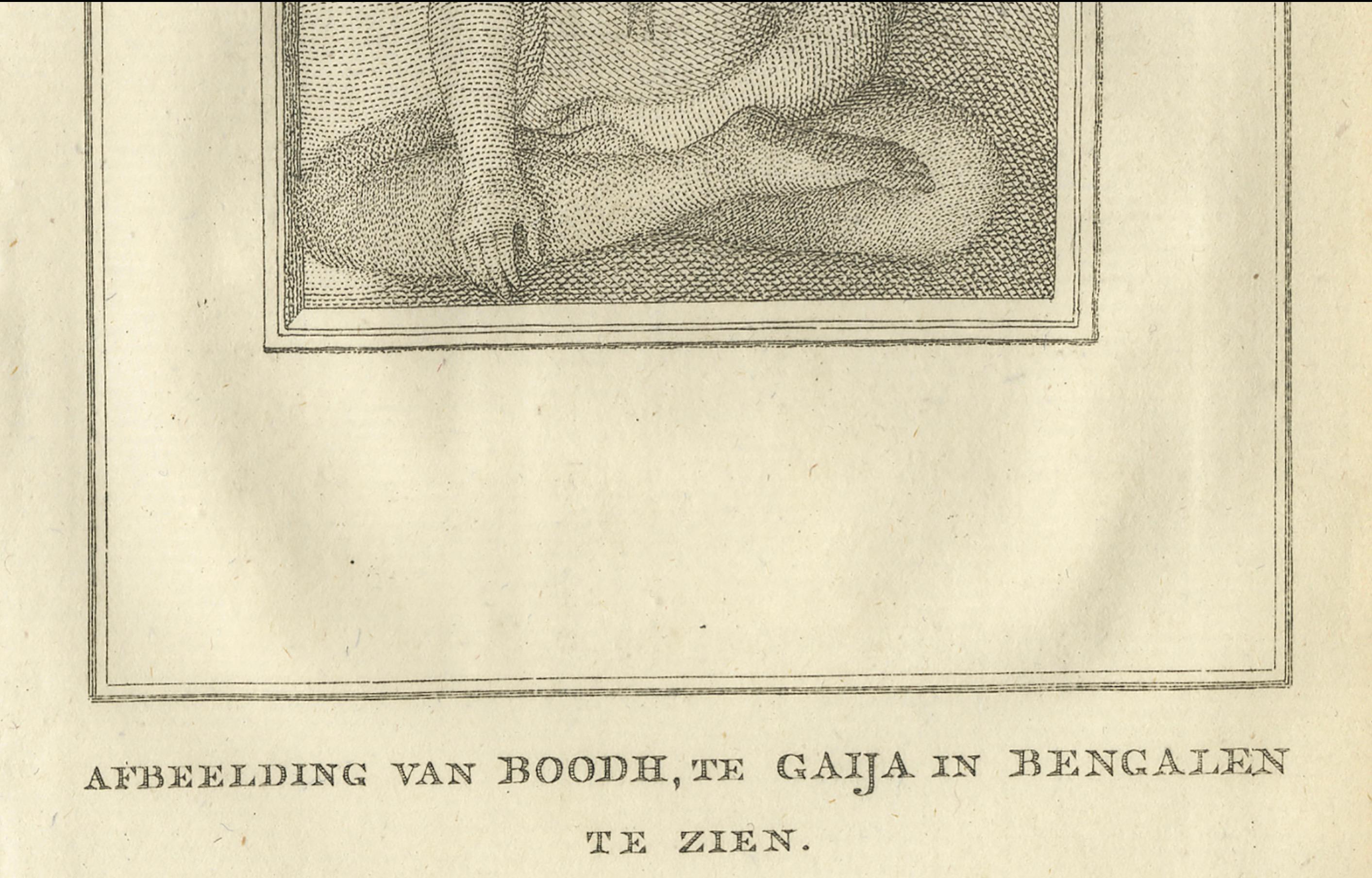
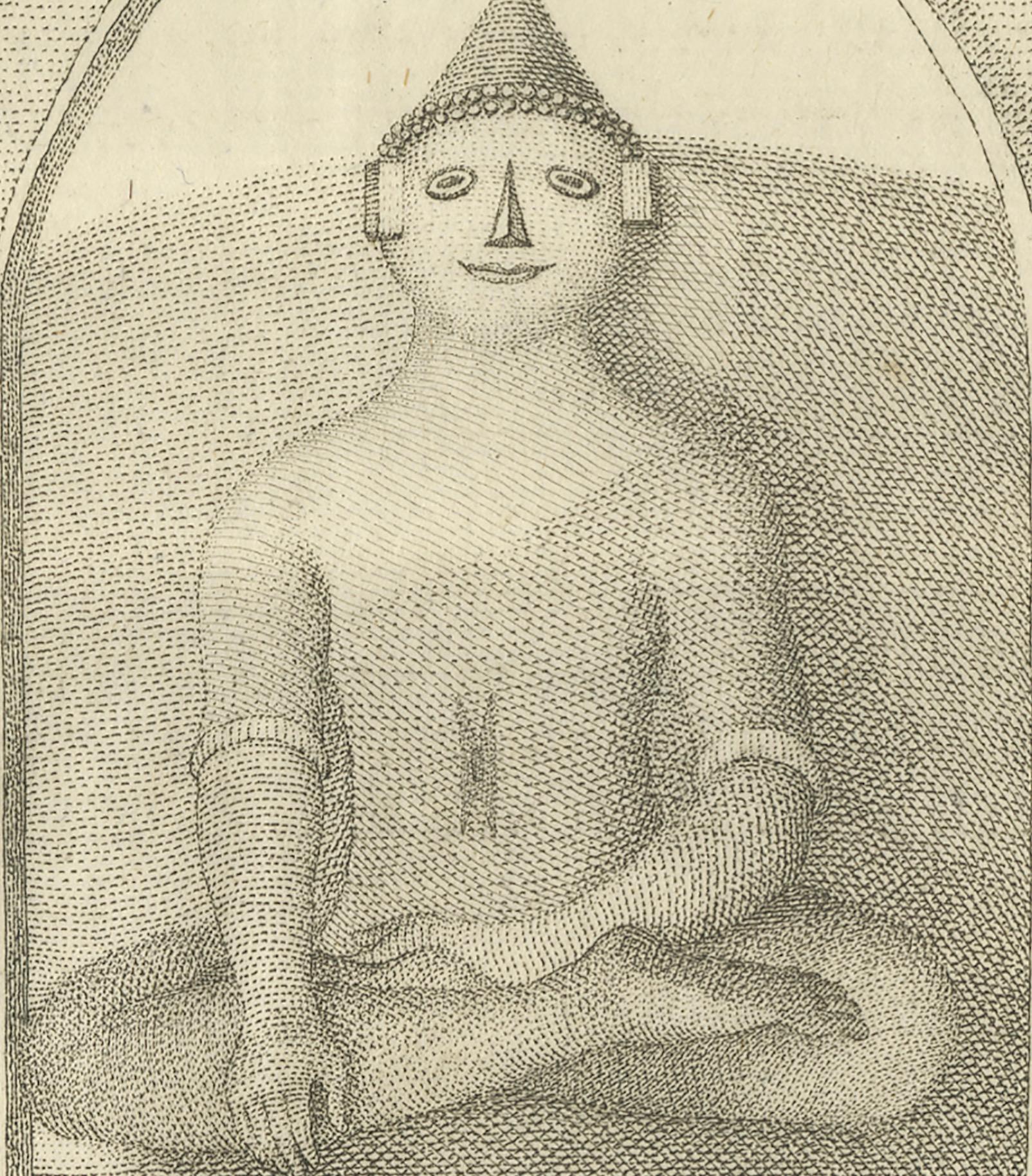
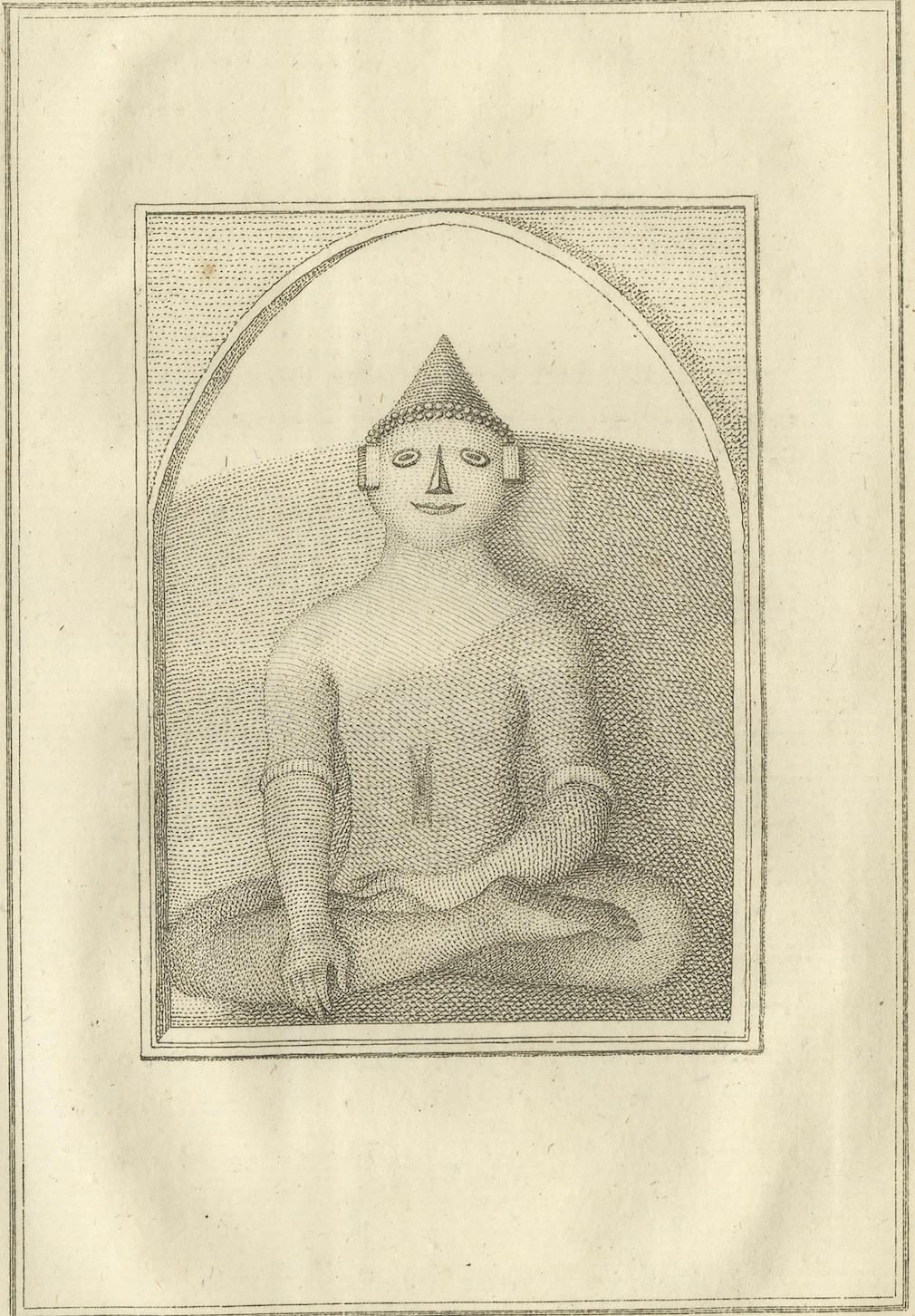
This early 19th-century Dutch engraving titled "Afbeelding van Boodh, te Gaija in Bengalen te zien" (Translation: "Image of Buddha, seen at Gaya in Bengal") depicts a stylized seated Buddha figure within an arched niche, representing a sculpture from the sacred Buddhist site of Bodh Gaya, India. The print likely accompanied a Dutch translation of a colonial travel account, such as that of Michael Symes or other contemporary European observers of Asia.
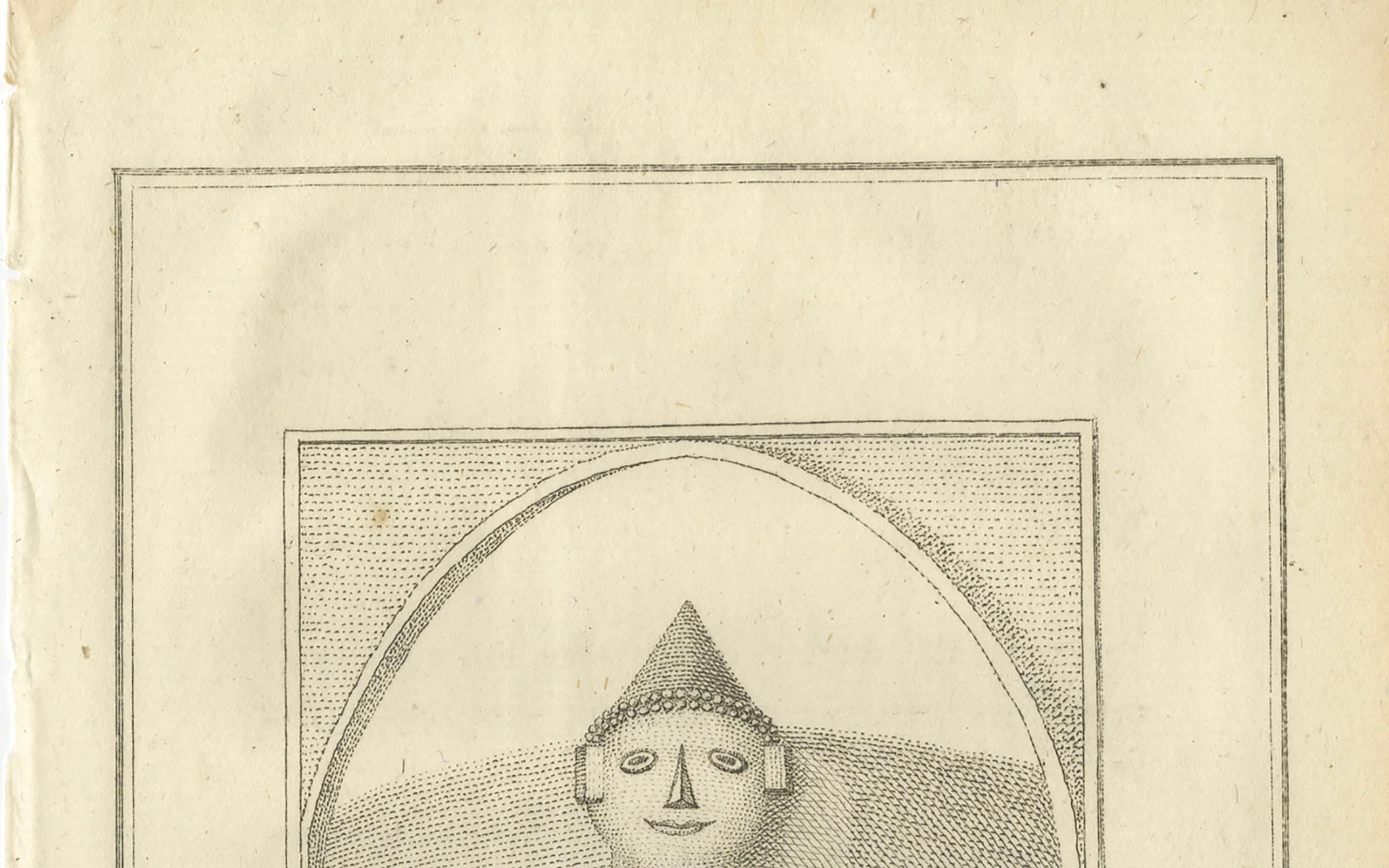
The engraving portrays the Buddha in a simplified and somewhat abstract form, reflecting the limitations of second-hand visual information and artistic interpretation common in early European depictions of Eastern religious icons. The figure sits in the lotus position with hands in the meditation mudra, wearing a conical headdress and adorned with large ear ornaments. The face is marked by symmetrical, almost geometric features—triangular nose, almond-shaped eyes, and a subtle smile. The background is rendered with fine hatching, giving a sense of depth and enclosure within the temple niche.
Bodh Gaya, the location referenced, is the most sacred site in Buddhism, where Siddhartha Gautama is believed to have attained enlightenment under the Bodhi tree. By the late 18th century, the region was of interest not only to pilgrims but also to European scholars, missionaries, and colonial administrators attempting to document the religions and cultures of the Indian subcontinent.
This print holds special appeal for collectors of Buddhist iconography, Dutch Orientalist publications, and early European visual interpretations of South Asian religious art. Its stylization, simplicity, and cultural intent offer insight into the Western gaze on Eastern spirituality during the Enlightenment and colonial expansion.
Condition: Excellent early impression on laid paper. Slight age-toning and faint creases along the left margin from original binding. No tears or stains. Full margins preserved.
Framing tips: This engraving pairs well with a black or dark wood frame and a light cream or muted gold mat. A shadow box presentation with spacers can enhance its sculptural subject and historical depth.
Technique: Copper engraving
Maker: Anonymous Dutch engraver, likely ca. 1800, after a travel account or missionary record