About this sheet
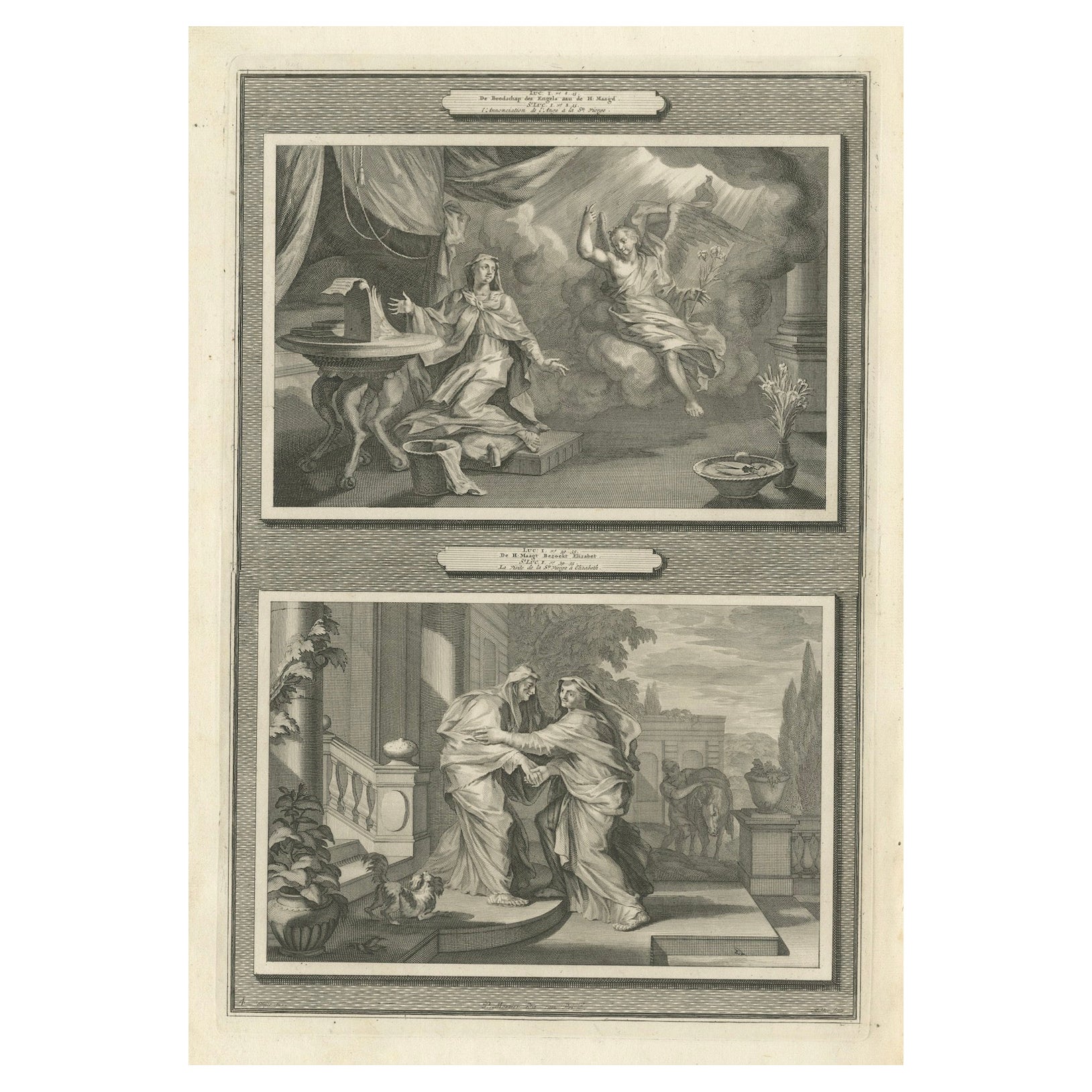
Annunciation & Visitation, Pieter Mortier, ca. 1700
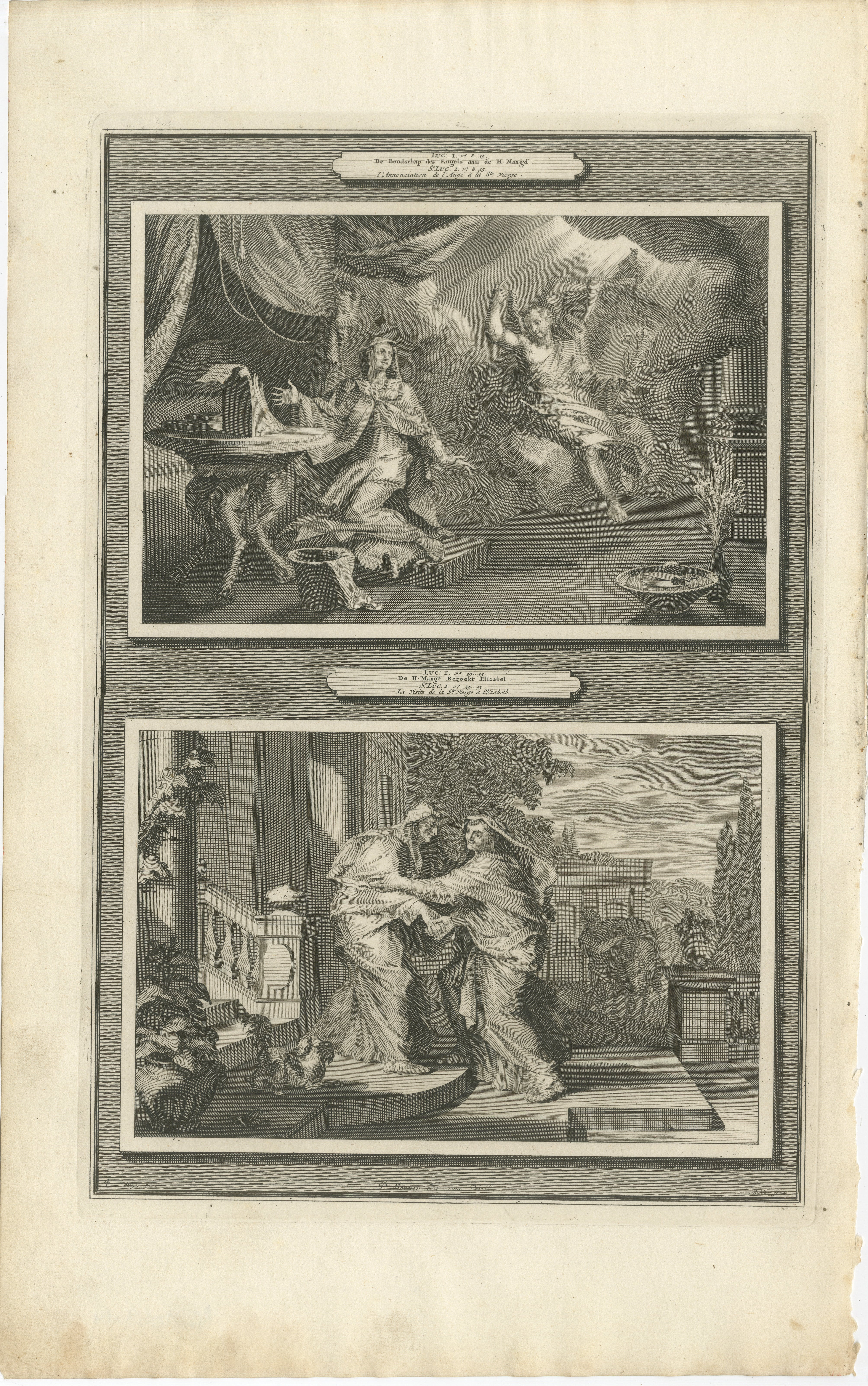
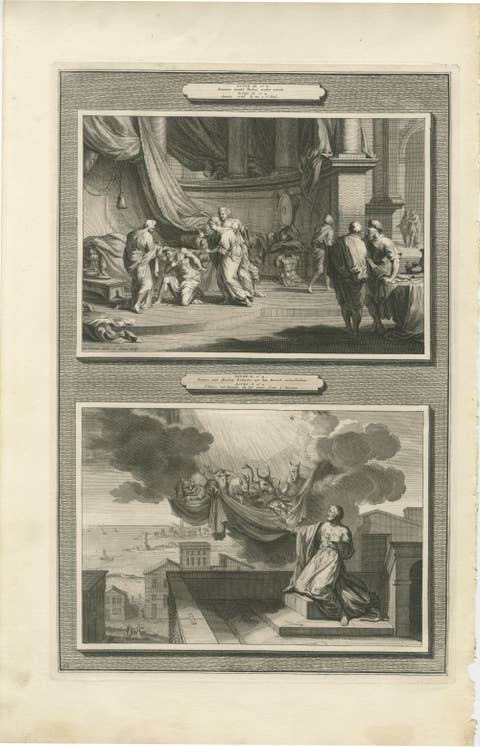
Original antique engraving from Histoire du Vieux et du Nouveau Testament, published in Amsterdam by Pieter Mortier around 1700. This plate presents two important episodes from the Gospel of Luke, executed with dramatic baroque detail characteristic of Mortier’s great illustrated Bibles.
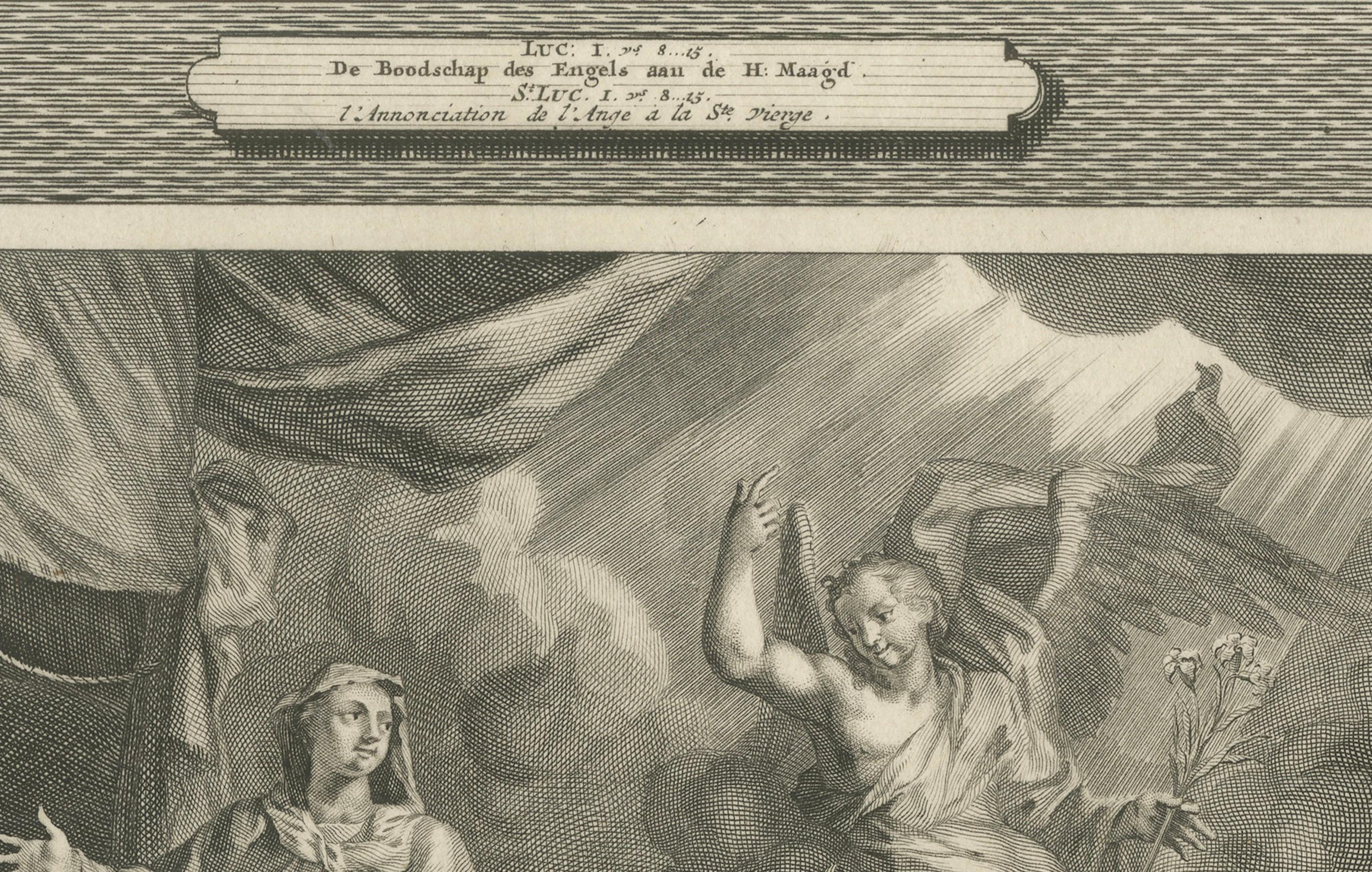
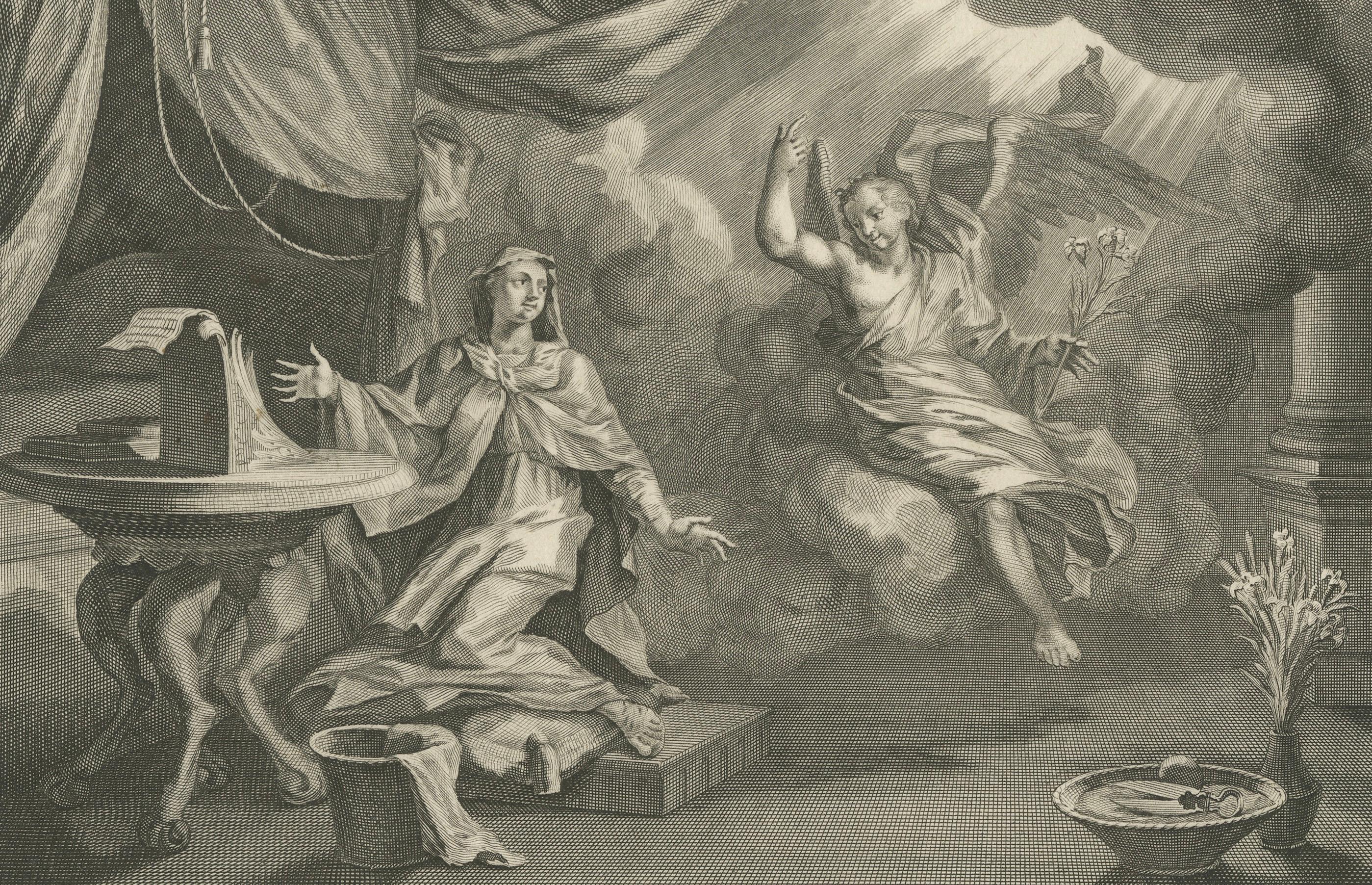
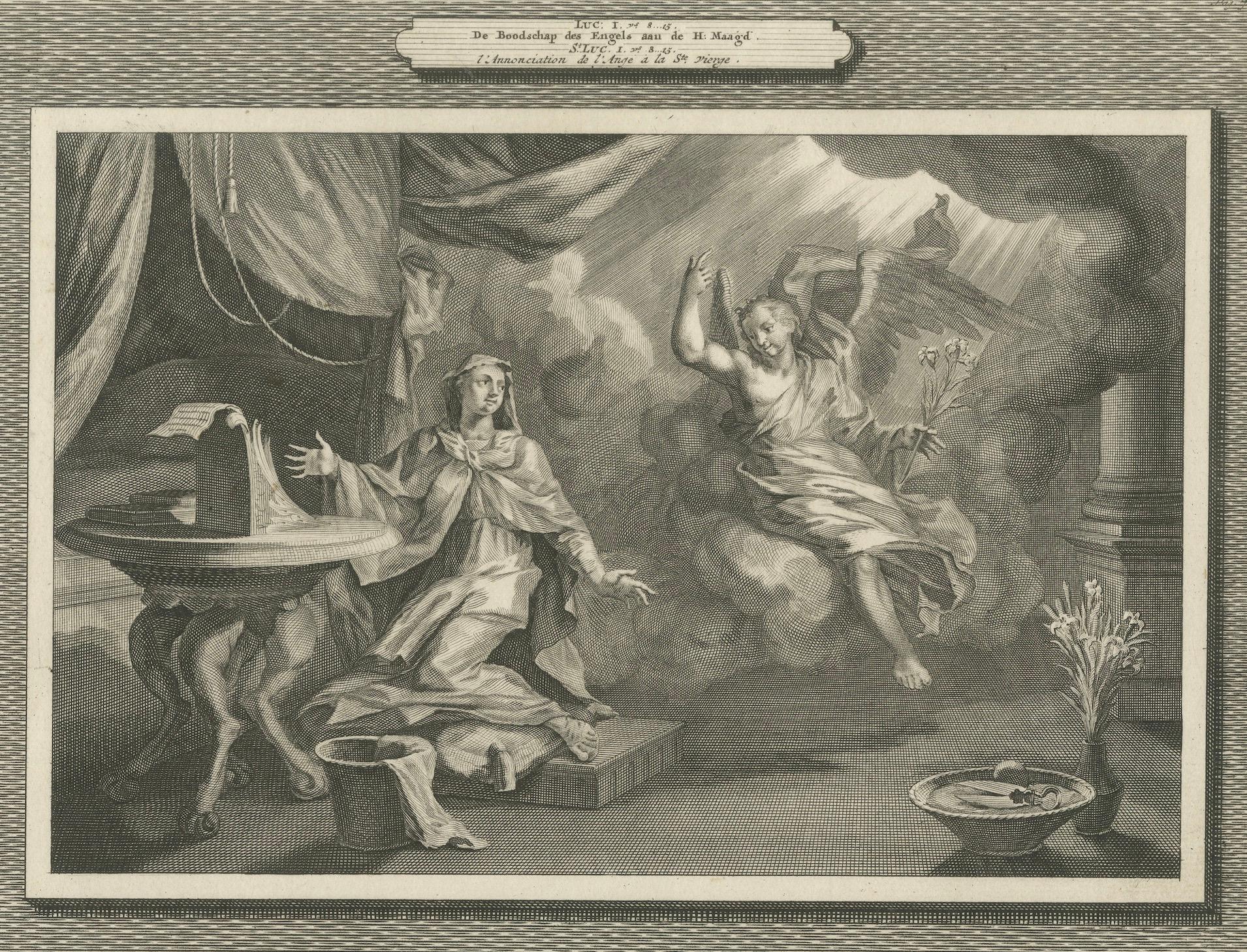
The upper scene depicts the Annunciation (Luke I, 26–38). The angel Gabriel descends in radiant light to announce to the Virgin Mary that she will conceive and bear the Son of God. Mary, seated at a reading desk, reacts with awe as she raises her hands in humility. A vase of lilies, symbolizing purity, appears in the foreground, while heavenly light illuminates the angel’s figure, emphasizing the divine nature of the message.
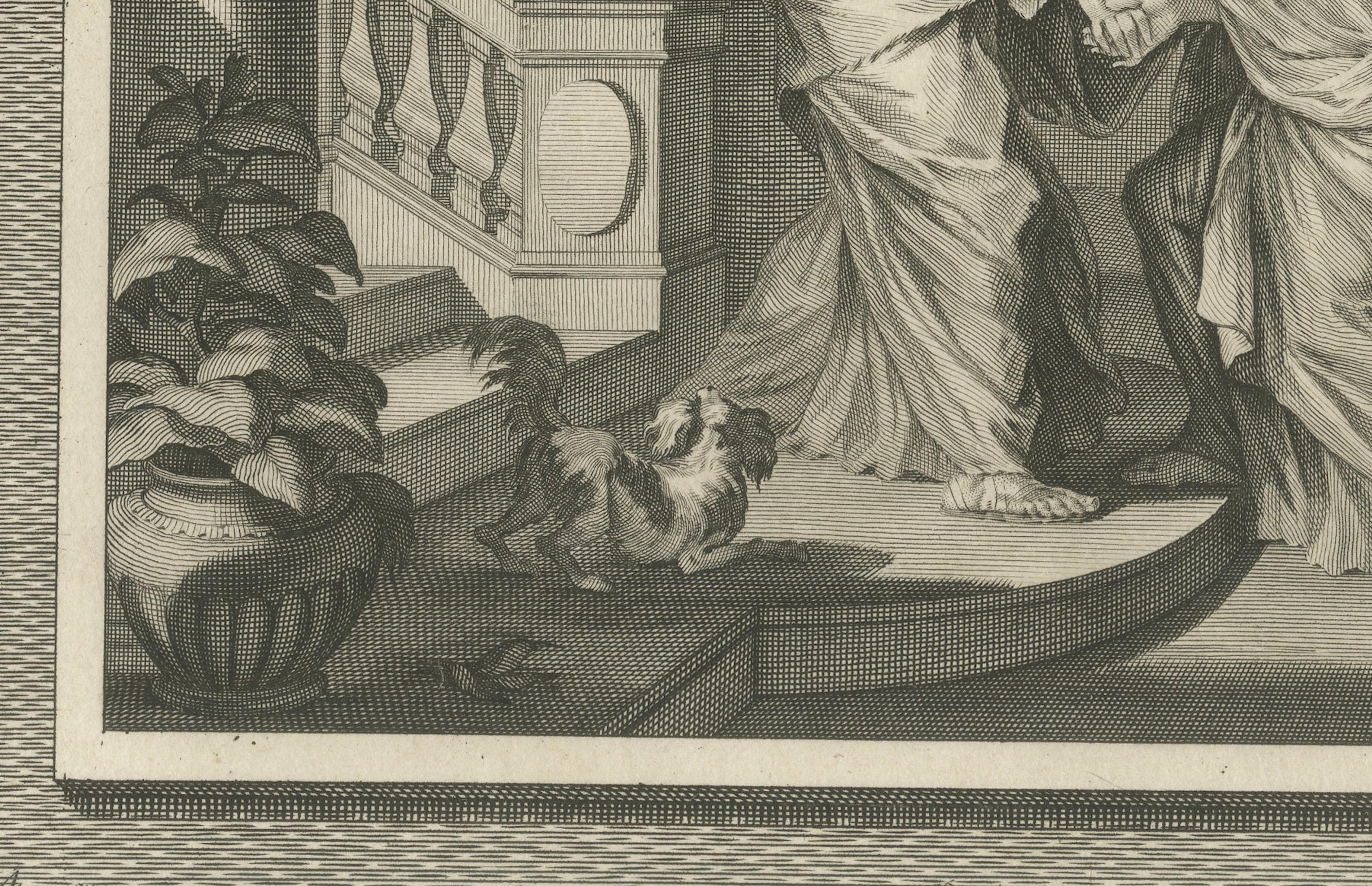
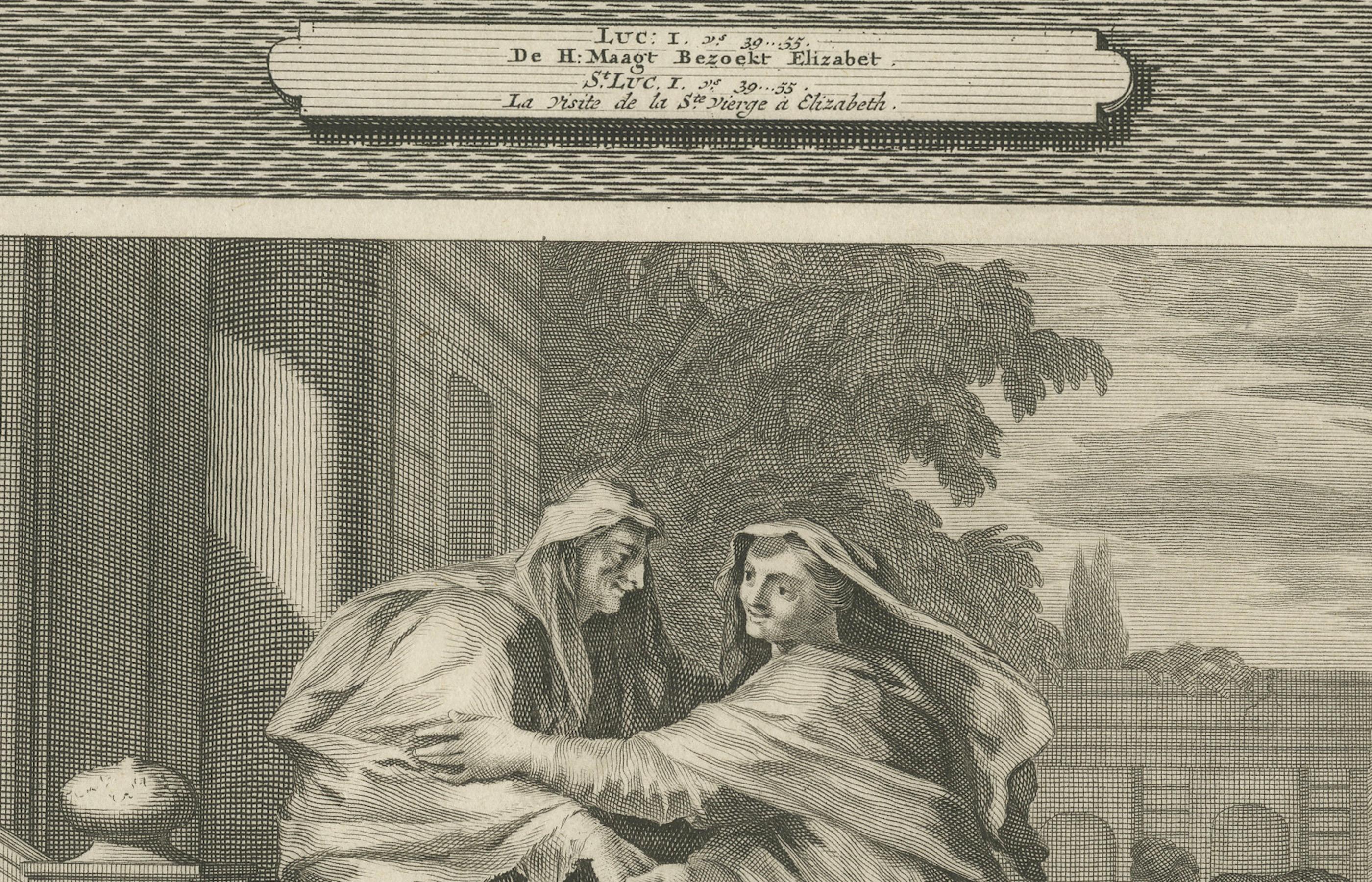
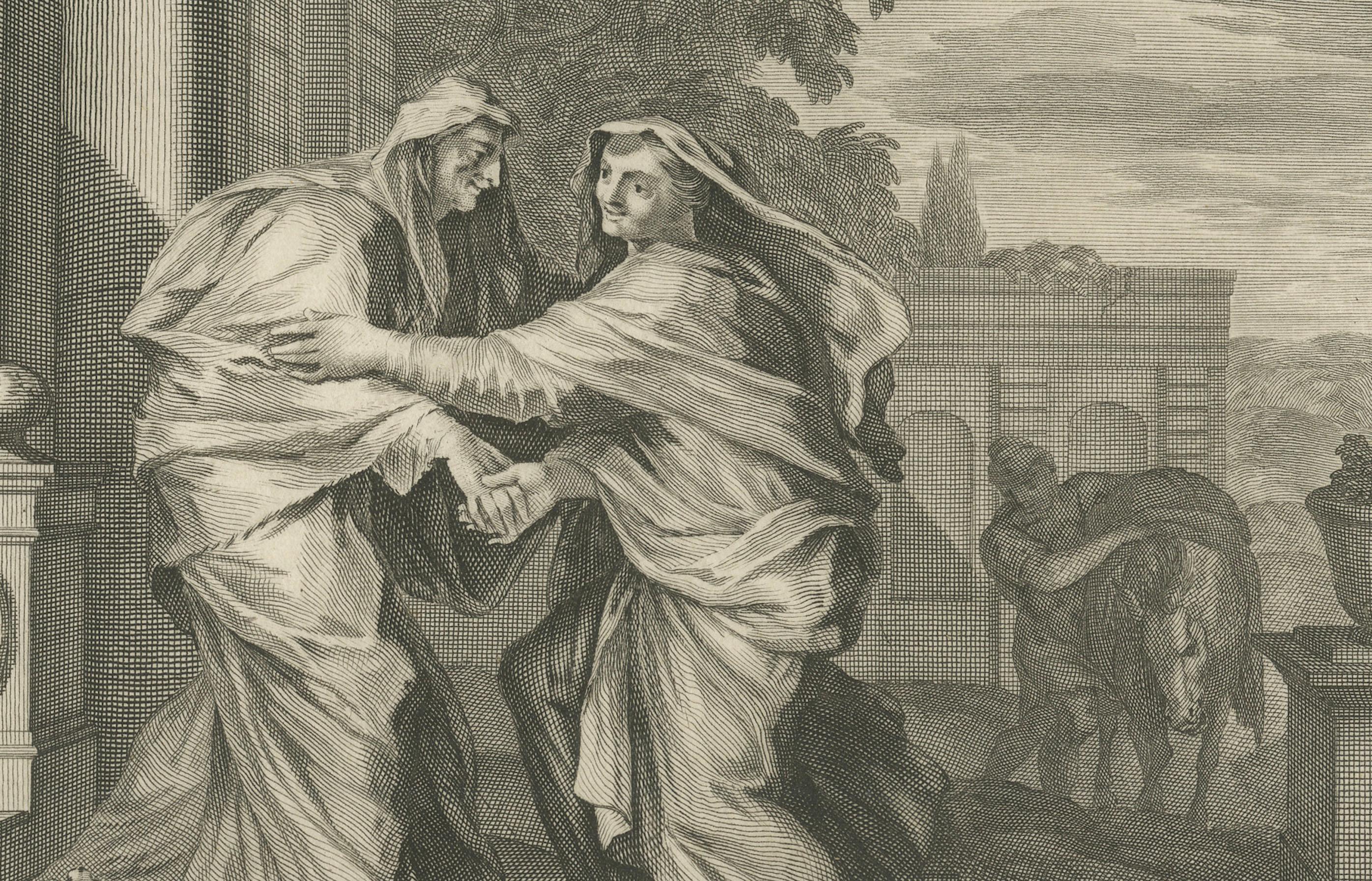
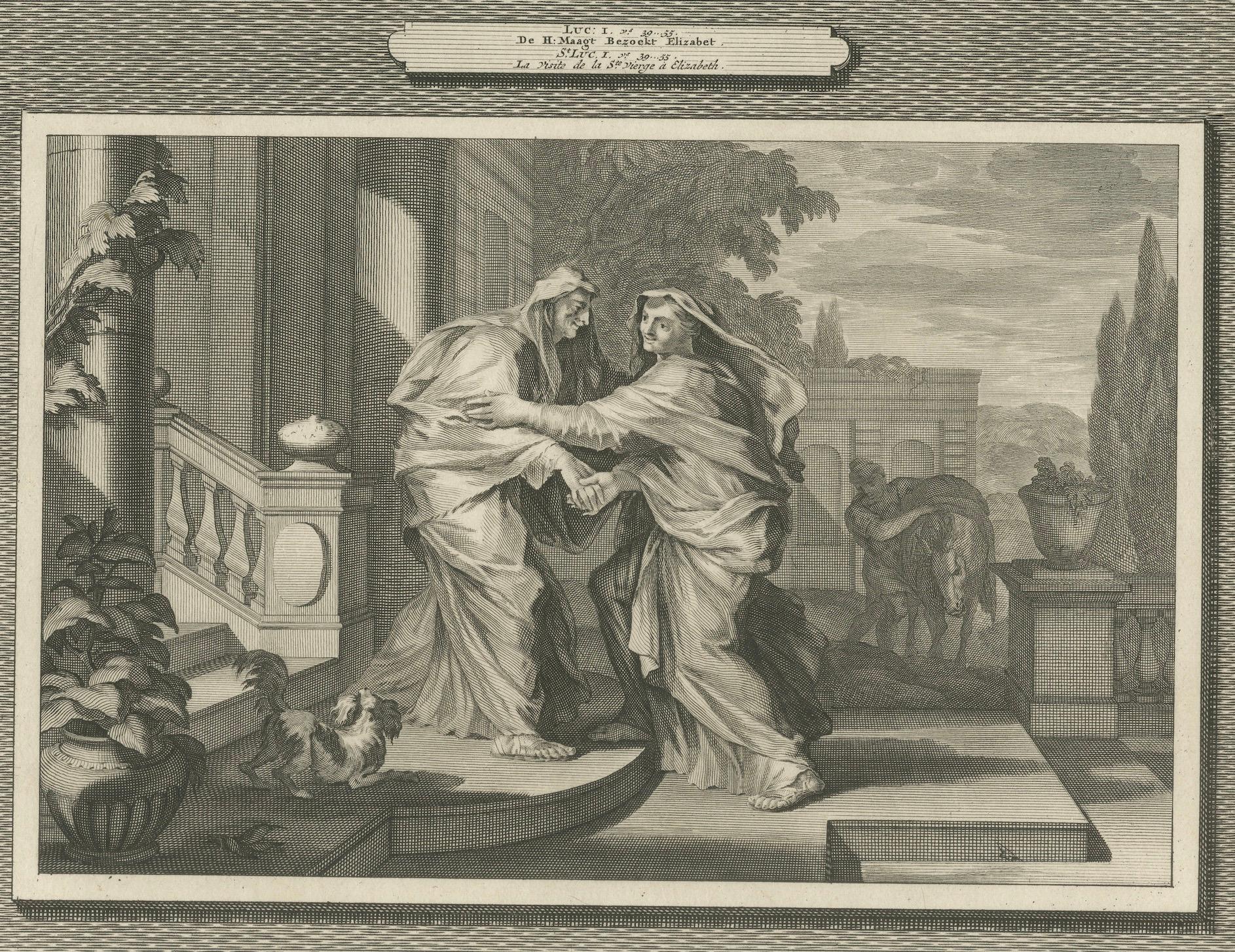
The lower scene illustrates the Visitation (Luke I, 39–45). Mary greets her cousin Elizabeth, who is pregnant with John the Baptist. The two women embrace warmly on a terrace, with classical architecture and a pastoral background suggesting the sanctity of their meeting. Elizabeth’s recognition of Mary as “the mother of my Lord” is captured in their expressive gestures, while domestic details, such as plants and animals, add depth to the scene.
Together, the engravings convey the themes of divine promise and recognition, central to the beginning of the New Testament narrative. Pieter Mortier’s engravers combine theological symbolism with carefully composed settings, creating images that were both devotional and decorative for early 18th-century readers.
Condition report:
Very good condition. Strong impression with wide margins. Minor toning and faint foxing at edges, light handling marks consistent with age. Central images sharp and detailed.
Framing tips:
A cream or ivory double-aperture mat will balance the two episodes while keeping the plate unified. A dark walnut or black frame will add contrast and solemnity, while a gilt frame enhances the sacred subject matter and the radiance of the Annunciation.
Technique: Copperplate engraving
Maker: Pieter Mortier, Amsterdam, ca. 1700