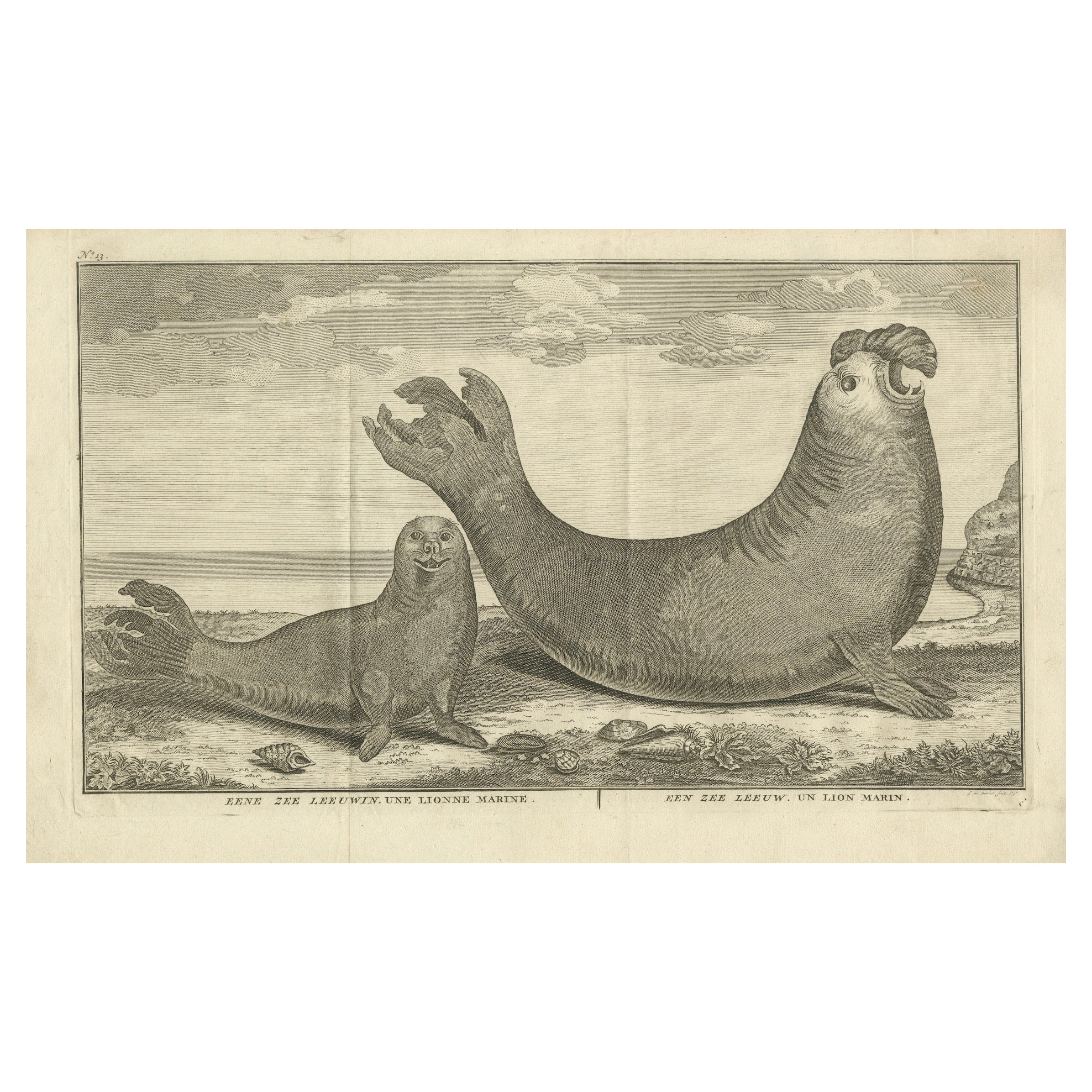
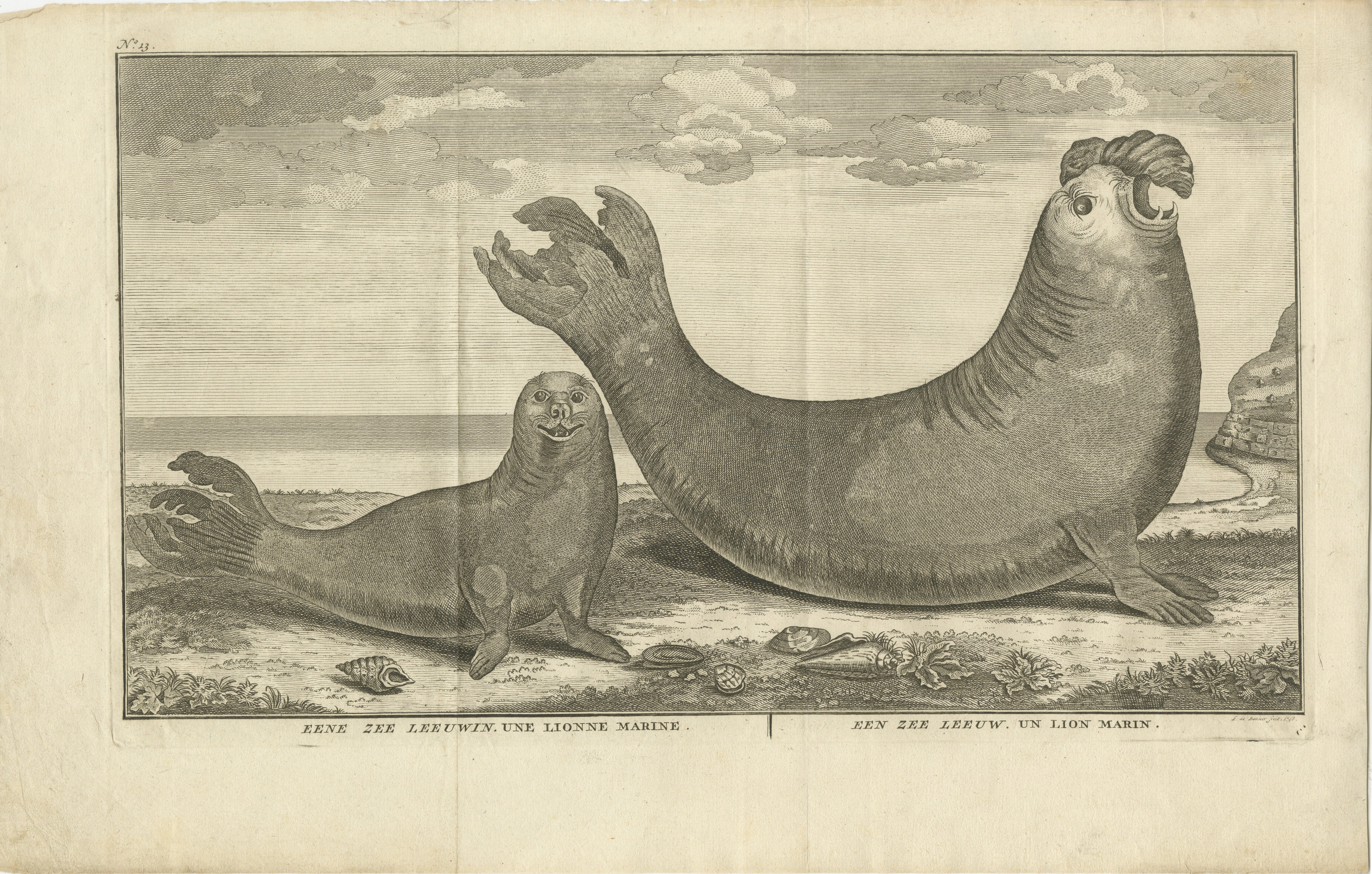
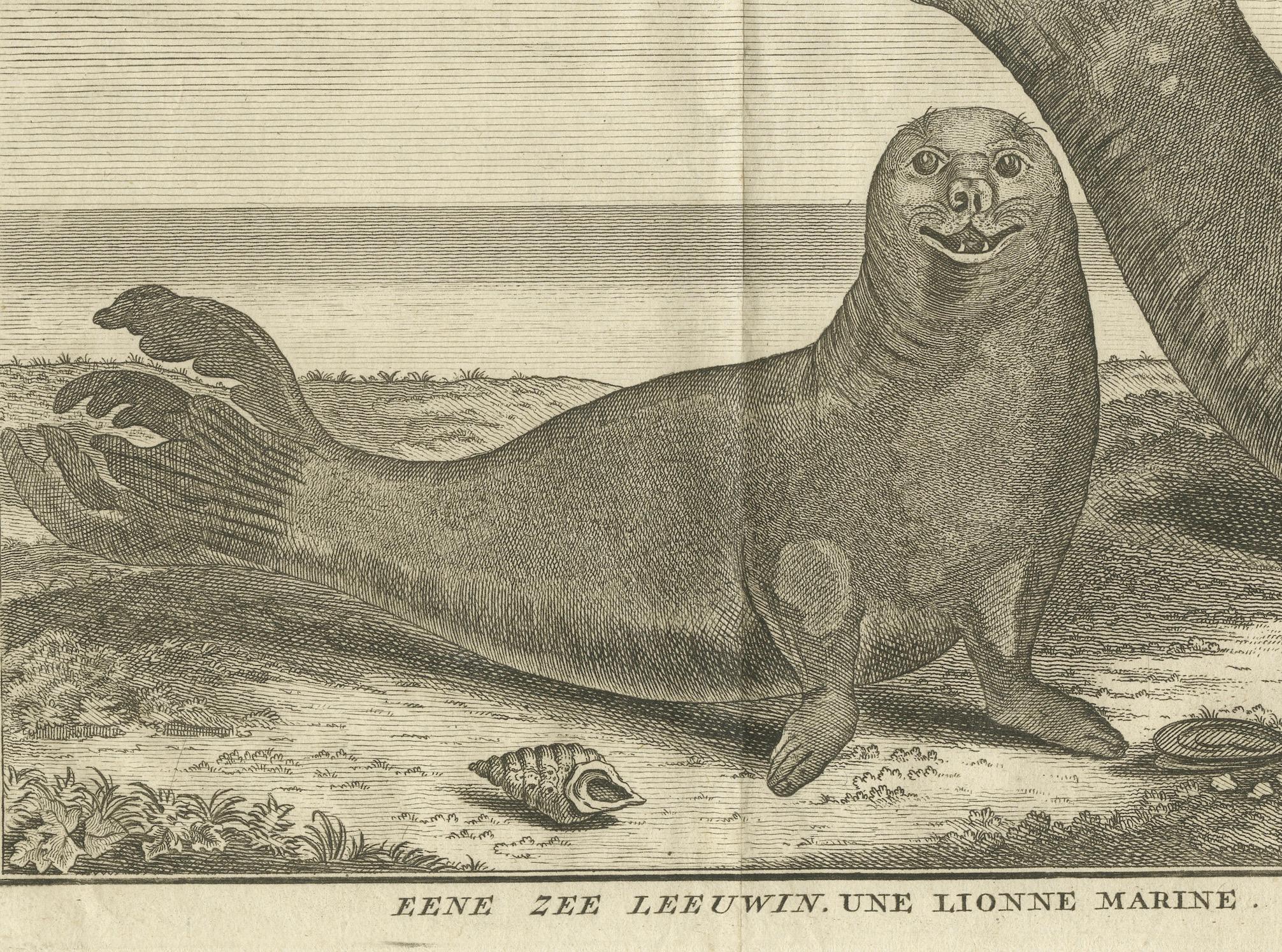
Marine Creatures in an Old Engraving: A Sea Lioness and a Sea Elephant, 1765
€ 270
One of a kind: this is the sheet in the photographs. Ships from Langweer, the Netherlands.
Date
1765
Sheet size
27.2 × 42.5 cm (10.7 × 16.7 in)
Reference
BG-13782-6
Condition
General age related toning and ocassional light soiling. Original fold lines as issued.
About this sheet
This is an engraving depicting sea lions from a 1765 Dutch edition of George Anson's account of his voyage around the world. Here's a detailed description of the artwork:
Title: "Eene Zeee Leeuwin, Une Lionne Marine" and "Een Zee Leeuw, Un Lion Marin" (A Sea Lion. A Sea Elephant.)
Medium: Etching/engraving on verge type hand-laid paper.
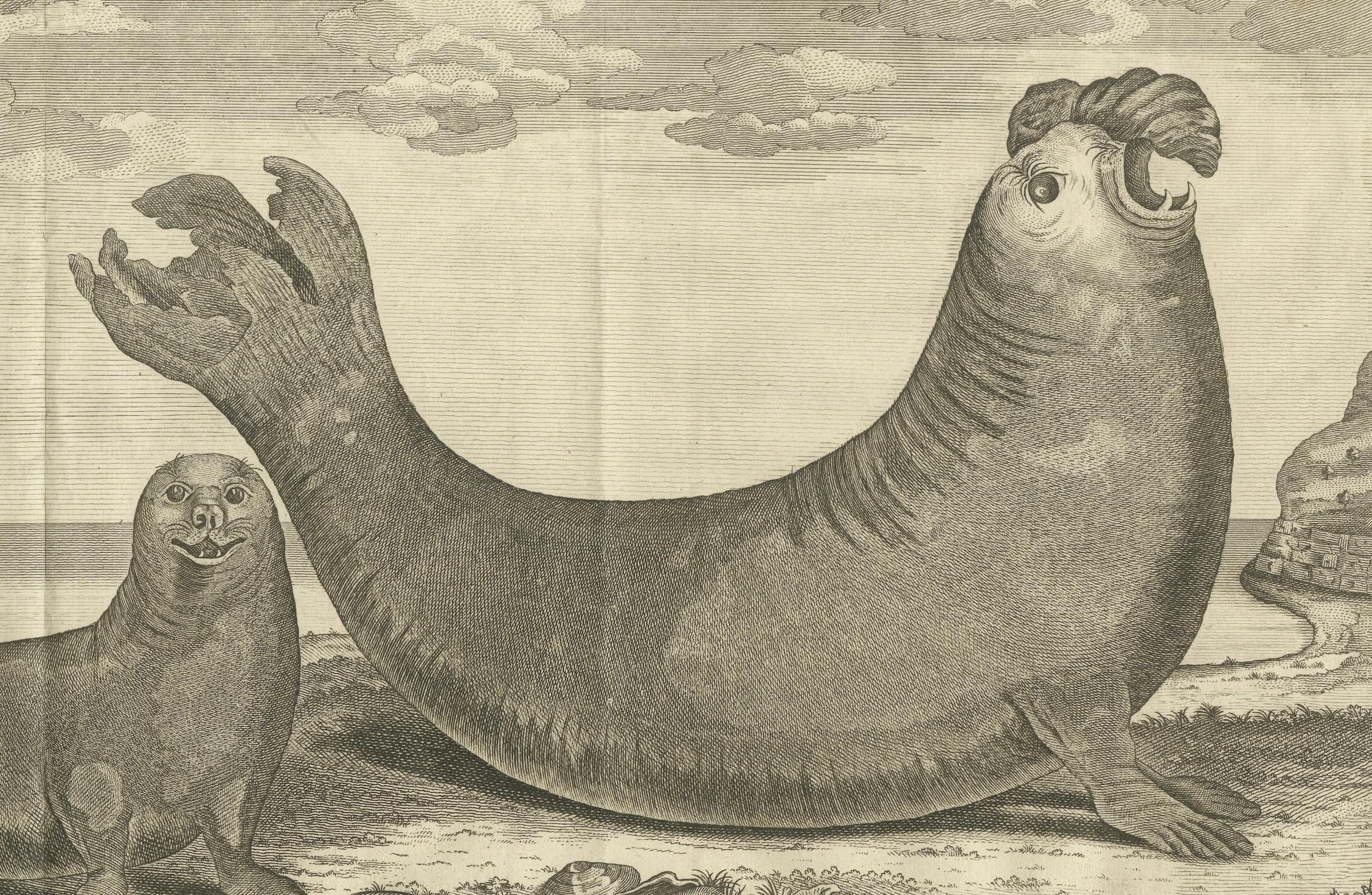
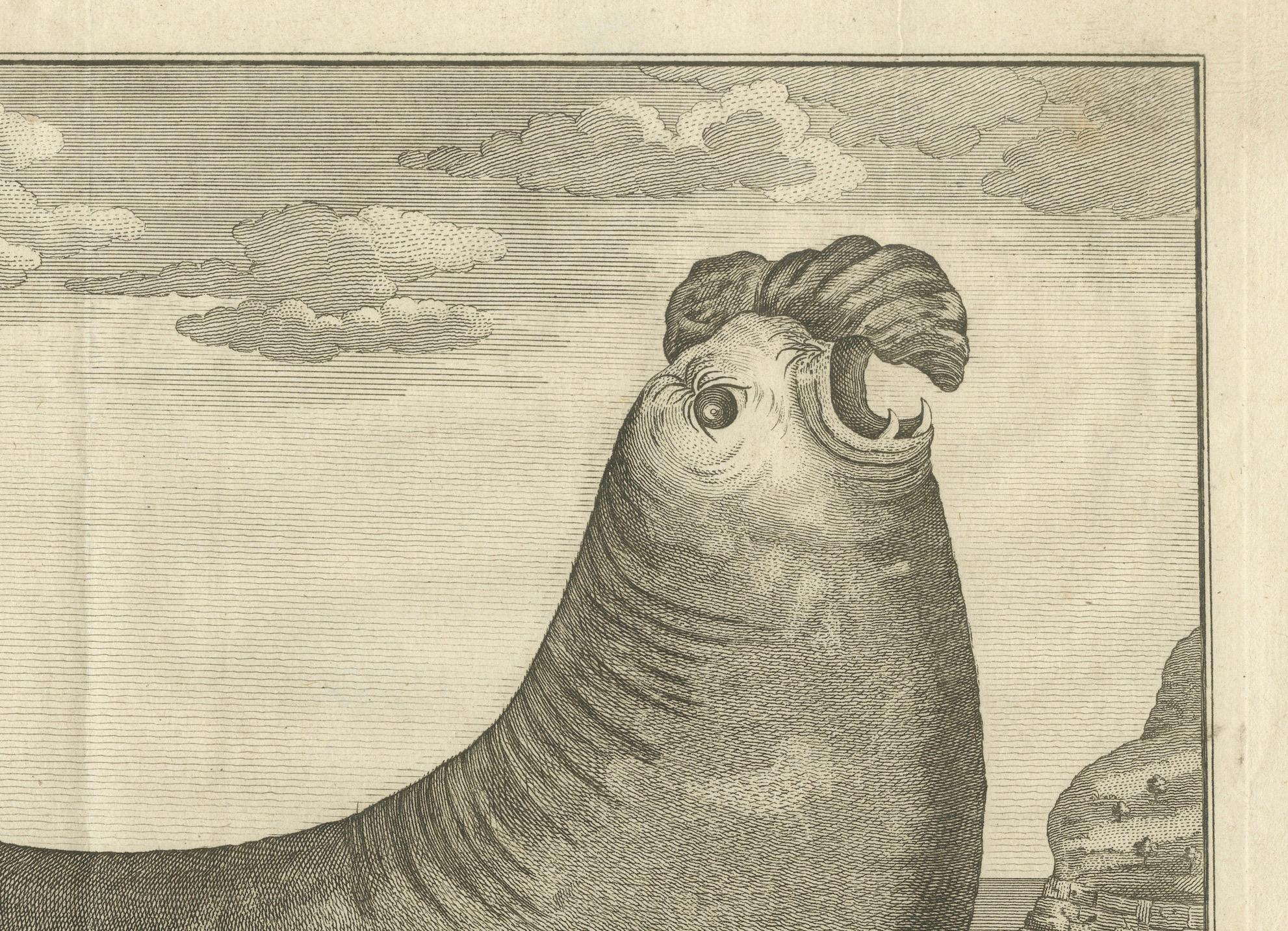
- Image seize: approximately 37.5 x 22.5 cm (14.8 x 8.9 inches). The engraving features two marine animals on a shore. On the left is a smaller sea lioness (labeled "Une Lionne Marine"), depicted in a relaxed pose, looking directly at the viewer with a somewhat anthropomorphic facial expression. On the right is a larger sea elephant (labeled "Un Lion Marin"), characterized by its massive size and distinctive trunk-like nose. Both animals are illustrated with attention to detail, showing their textured skin and flippers. The background includes a serene coastal landscape with a calm sea and a partially cloudy sky.
Historical Context: This engraving is plate number 13 from the book "Reize rondom de werreld, Gedaan in de jaaren 1740 tot 1744, door den Heere George Anson" (A voyage round the world … by George Anson …), 3rd edition, published in Leiden and Amsterdam in 1765. The book is a Dutch translation of the 1748 first English edition by Richard Walter.
Significance: George Anson was a British admiral who led a circumnavigation of the globe during the war with Spain in 1740. Despite numerous hardships, including the loss of most of his ships and crew, Anson managed to capture a gold-laden Spanish galleon near Manila, securing his fortune. This engraving is part of the official account of his voyage, compiled from Anson’s journals by Richard Walter and revised by Benjamin Robins.
Artists and Engravers: No specific engraver is indicated for this plate, but the originating work includes contributions from notable Dutch engravers such as Jacob Folkema, Jakob van der Schley, and Frans de Bakker.
The engraving exemplifies the detailed and informative nature of historical illustrations in maritime exploration literature.