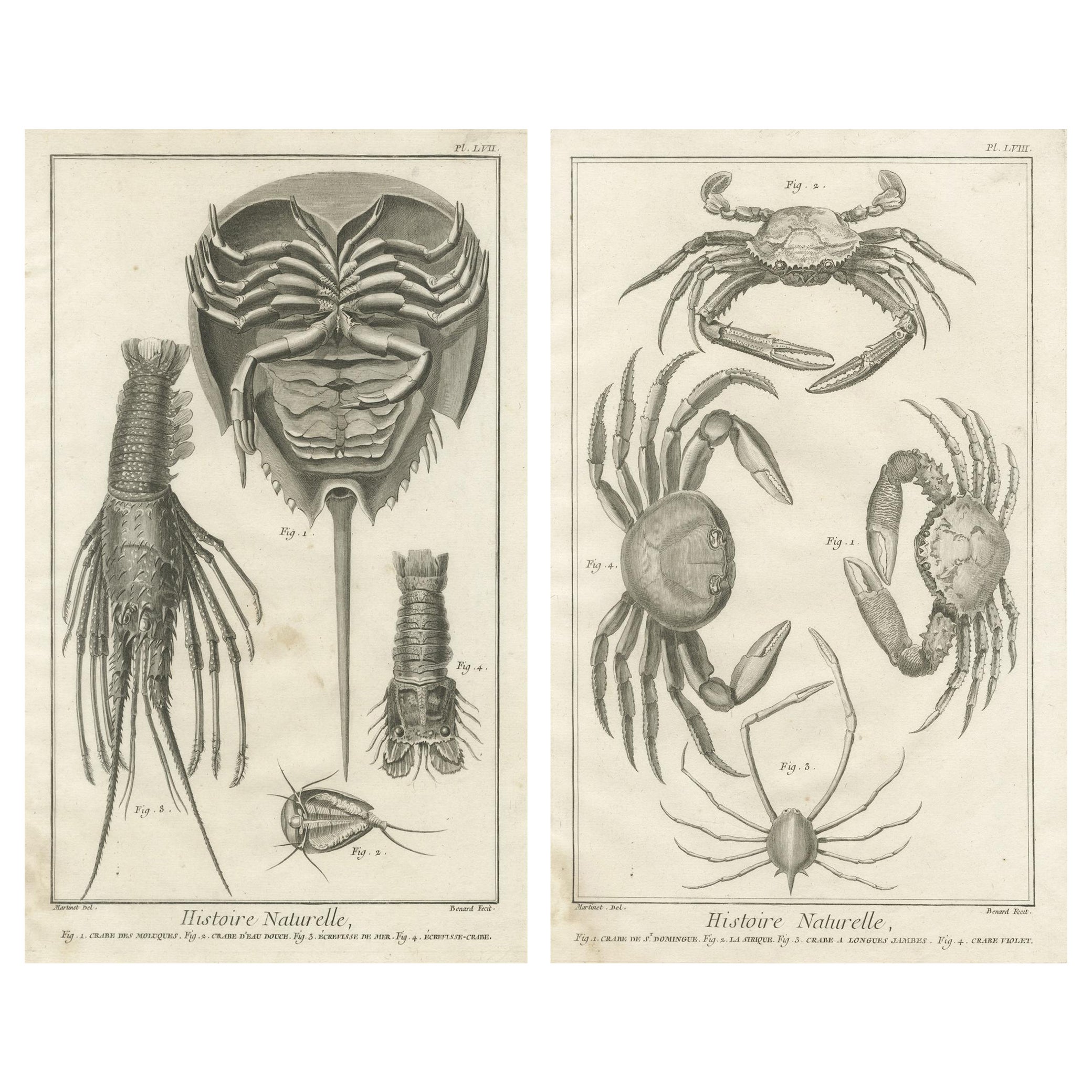
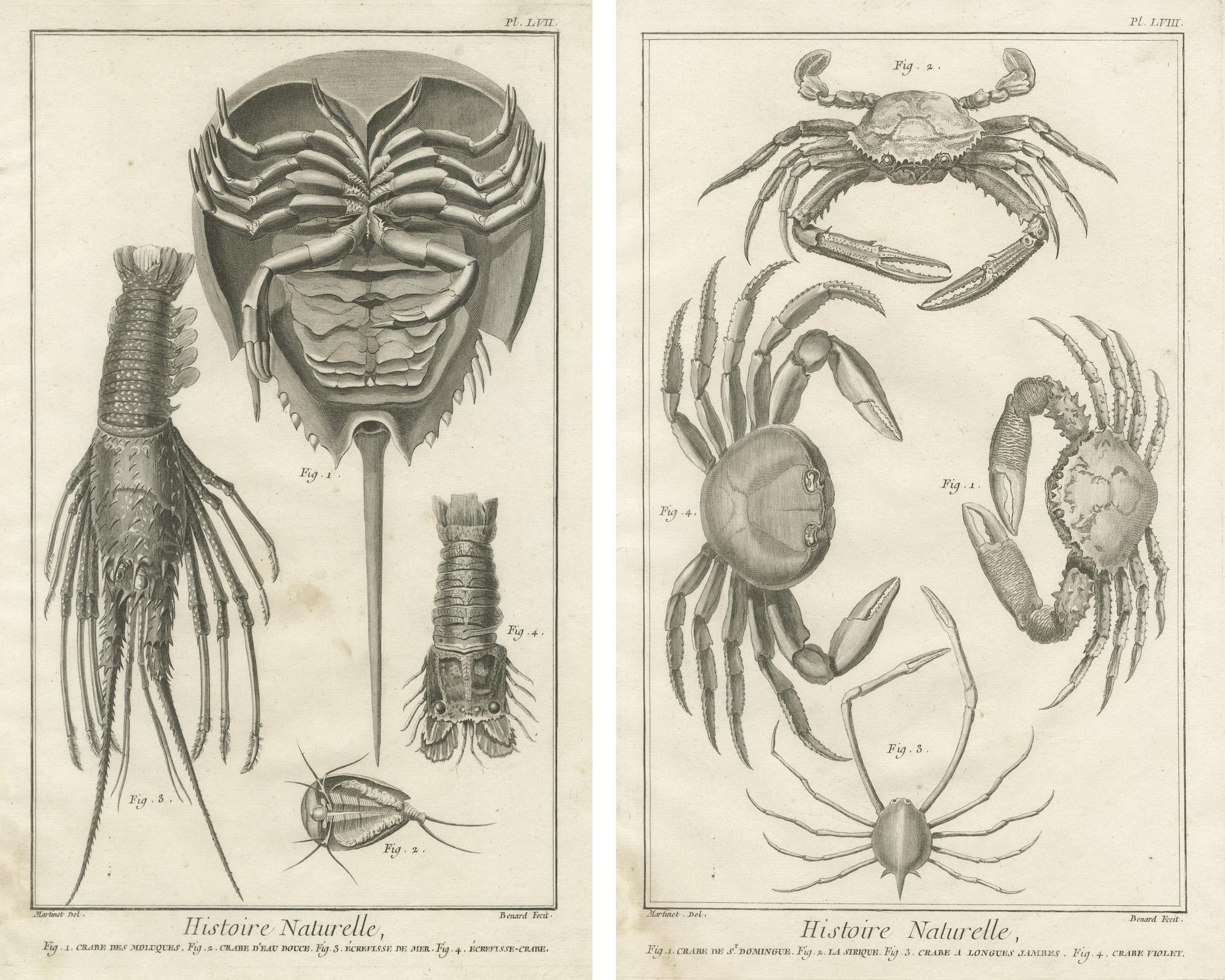
Pair of Antique Engravings of Crabs - Diderot & d’Alembert’s Encyclopédie, 1770
€ 290
One of a kind: this is the sheet in the photographs. Ships from Langweer, the Netherlands.
Date
1770
Sheet size
39 × 25 cm (15.4 × 9.8 in)
Condition
Good
Reference
BG-13494-7, -8
Condition
Condition report: Both plates in good condition with strong platemarks. Some toning and foxing at margins, particularly on the crab plate (Pl. LVIII), but images remain sharp and well-preserved. Unframed, sold as two separate folio sheets.
About this sheet
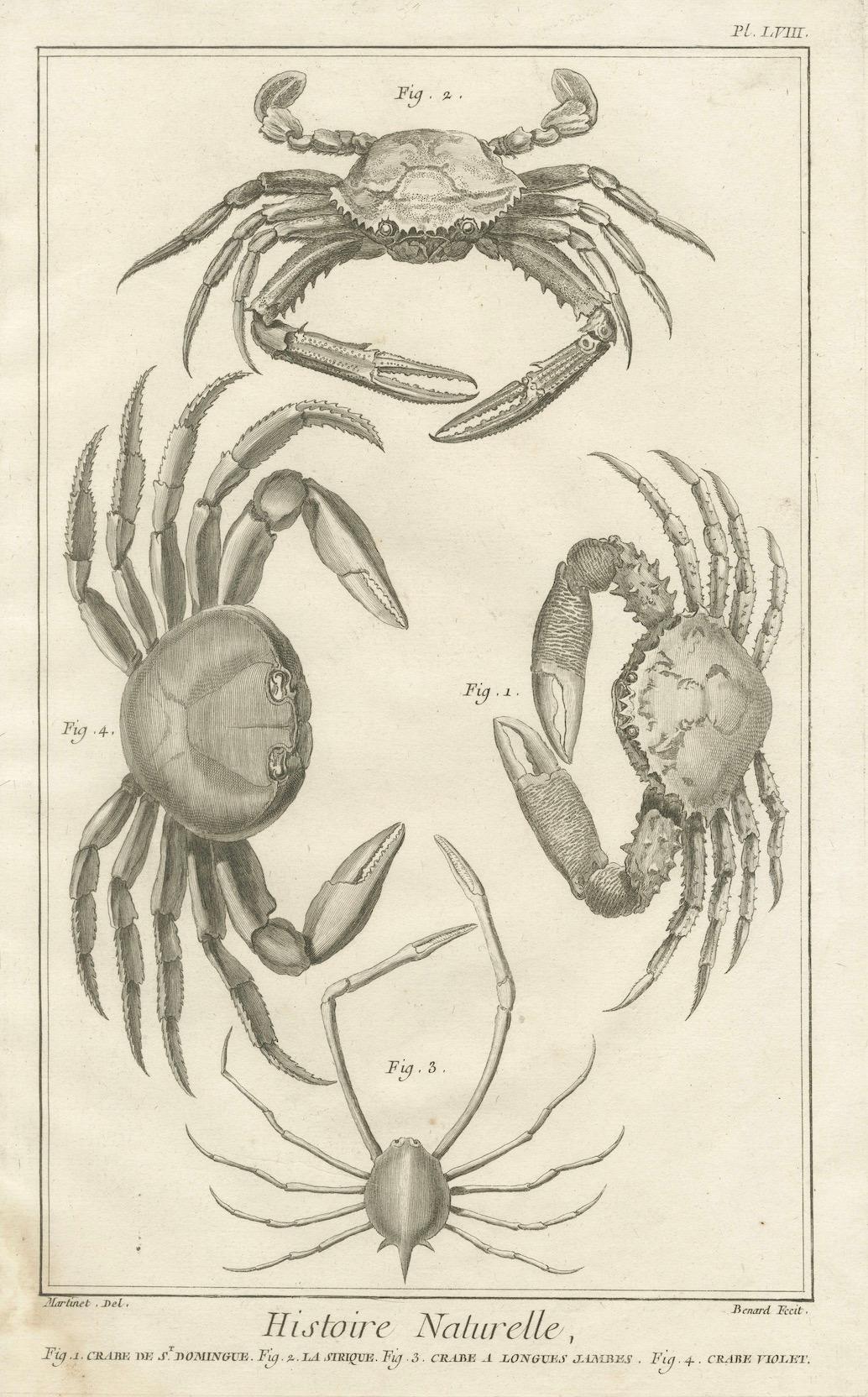
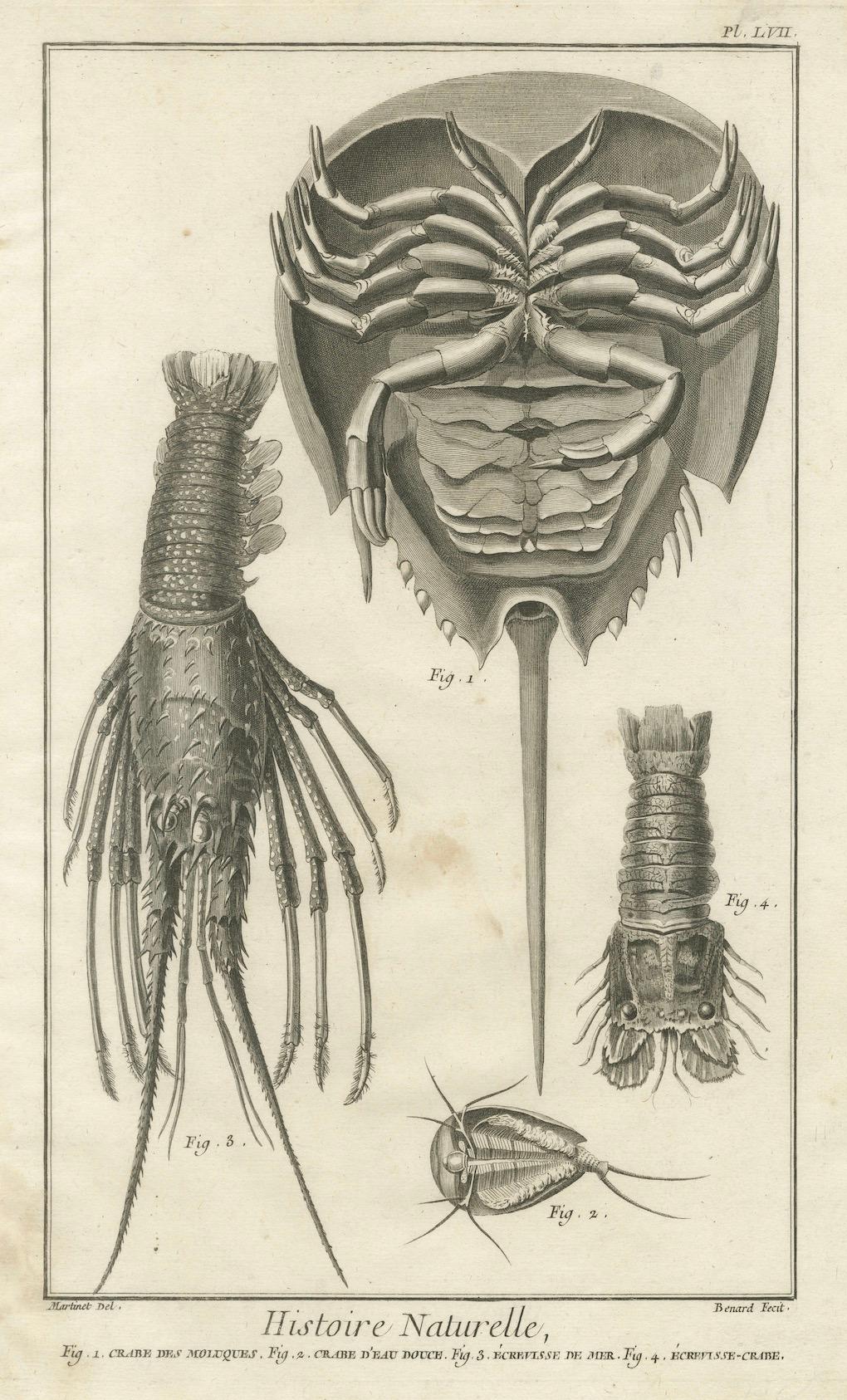
Pair of Antique Engravings of Crabs from Diderot & d’Alembert’s Encyclopédie, ca. 1770
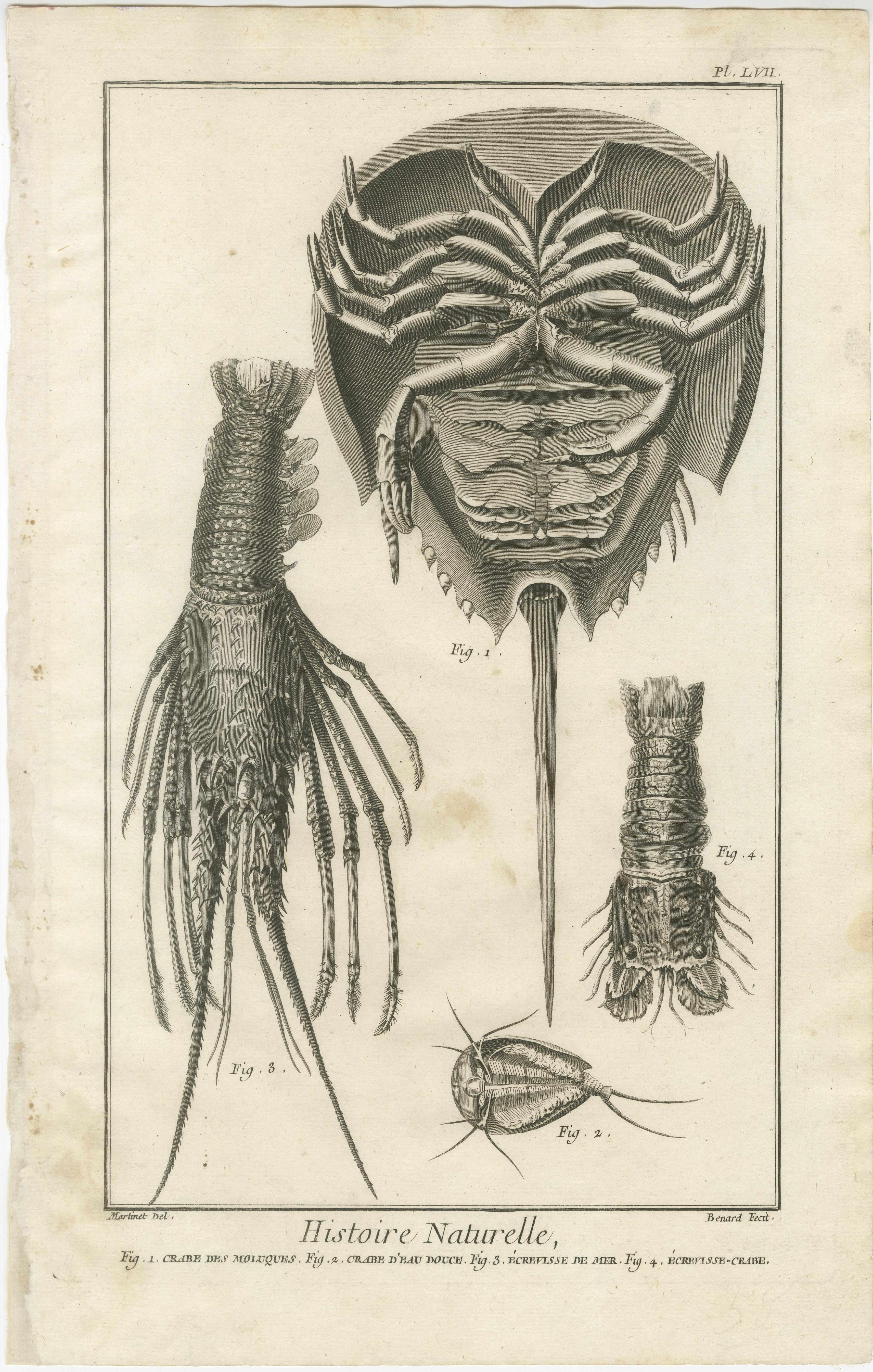
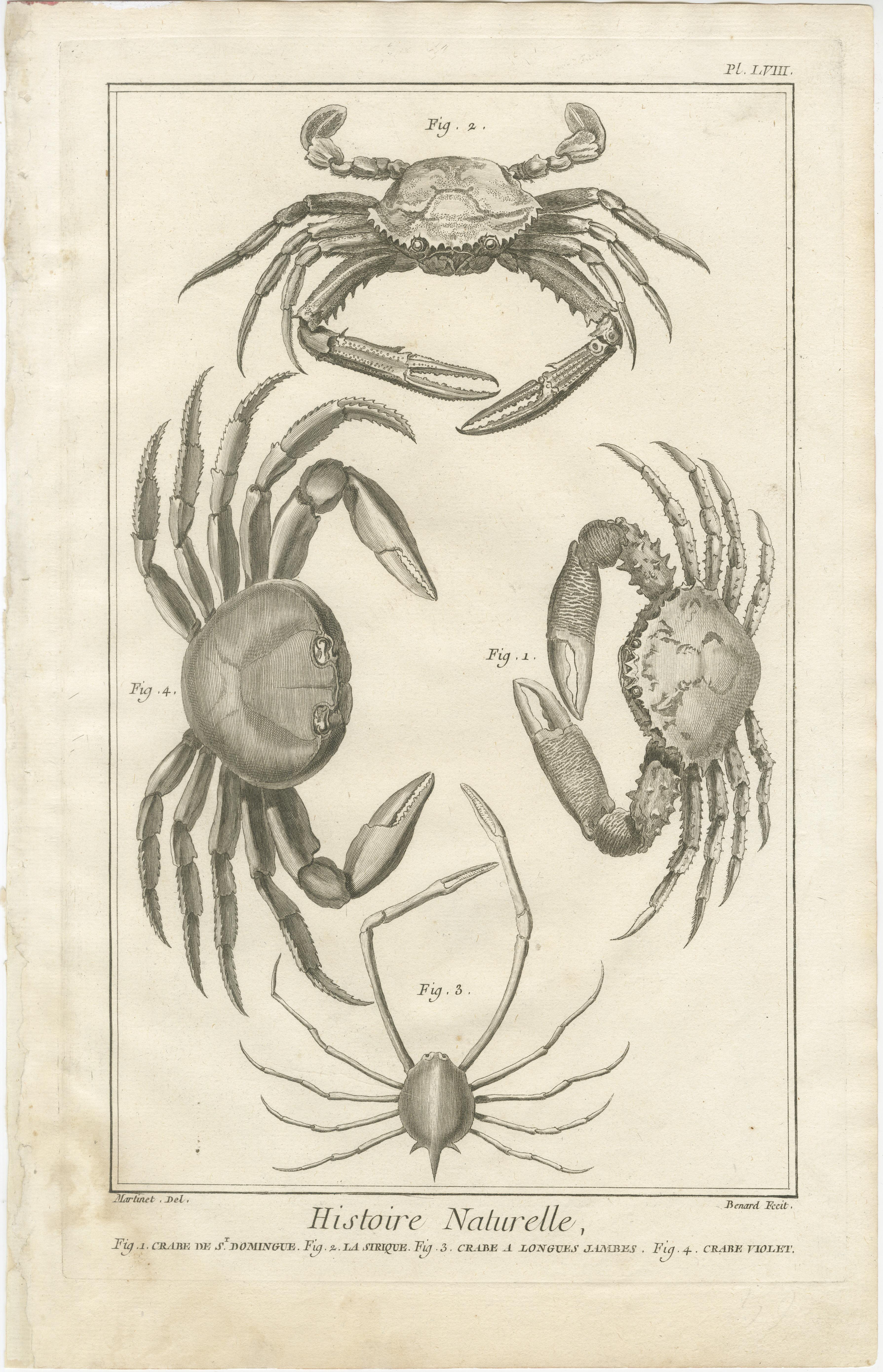
A fine pair of copperplate engravings from Denis Diderot and Jean le Rond d’Alembert’s Encyclopédie ou Dictionnaire raisonné des sciences, des arts et des métiers, Paris, circa 1770. These plates form part of the Histoire naturelle. Suite du règne animal section, devoted to crustaceans, and depict an impressive variety of crabs and related species with remarkable detail.
The first plate (Pl. LVII) features several extraordinary crustaceans, including the horseshoe crab (referred to as Crabe des Moluques), the freshwater crab (Crabe d’eau douce), and two species of squat lobsters or related decapods (Écrevisse de mer and Écrevisse-crabe). The anatomical rendering of claws, legs, and body armor demonstrates the engraver’s ability to balance scientific observation with aesthetic precision.
The second plate (Pl. LVIII) depicts four crab species: the crab of Saint-Domingue (Crabe de St. Domingue), the violet crab (Crabe violet), the spider crab (La Sirique), and a long-legged crab (Crabe à longues jambes). Each species is shown in a bold, isolated composition that highlights the diversity of form and adaptation within the crustacean family.
These engravings are a testament to the Enlightenment ambition of cataloguing and disseminating natural history knowledge. Produced for the folio edition of the Encyclopédie, they are not only valuable as works of scientific illustration but also as artifacts of one of the most influential intellectual projects of the 18th century. Displayed together, they form a fascinating and decorative set for collectors of natural history, marine life, or Enlightenment prints.
Condition report: Both plates in good condition with strong platemarks. Some toning and foxing at margins, particularly on the crab plate (Pl. LVIII), but images remain sharp and well-preserved. Unframed, sold as two separate folio sheets.
Framing tips: These engravings work well as a pair. Matching frames in dark wood or black with wide ivory mounts will emphasize their scientific character while maintaining elegance. Double matting with a thin red or green inner line can highlight the intricate linework and bring depth to the presentation.
Technique: Copperplate engraving Maker: Denis Diderot & Jean le Rond d’Alembert, Paris, ca. 1770