About this sheet
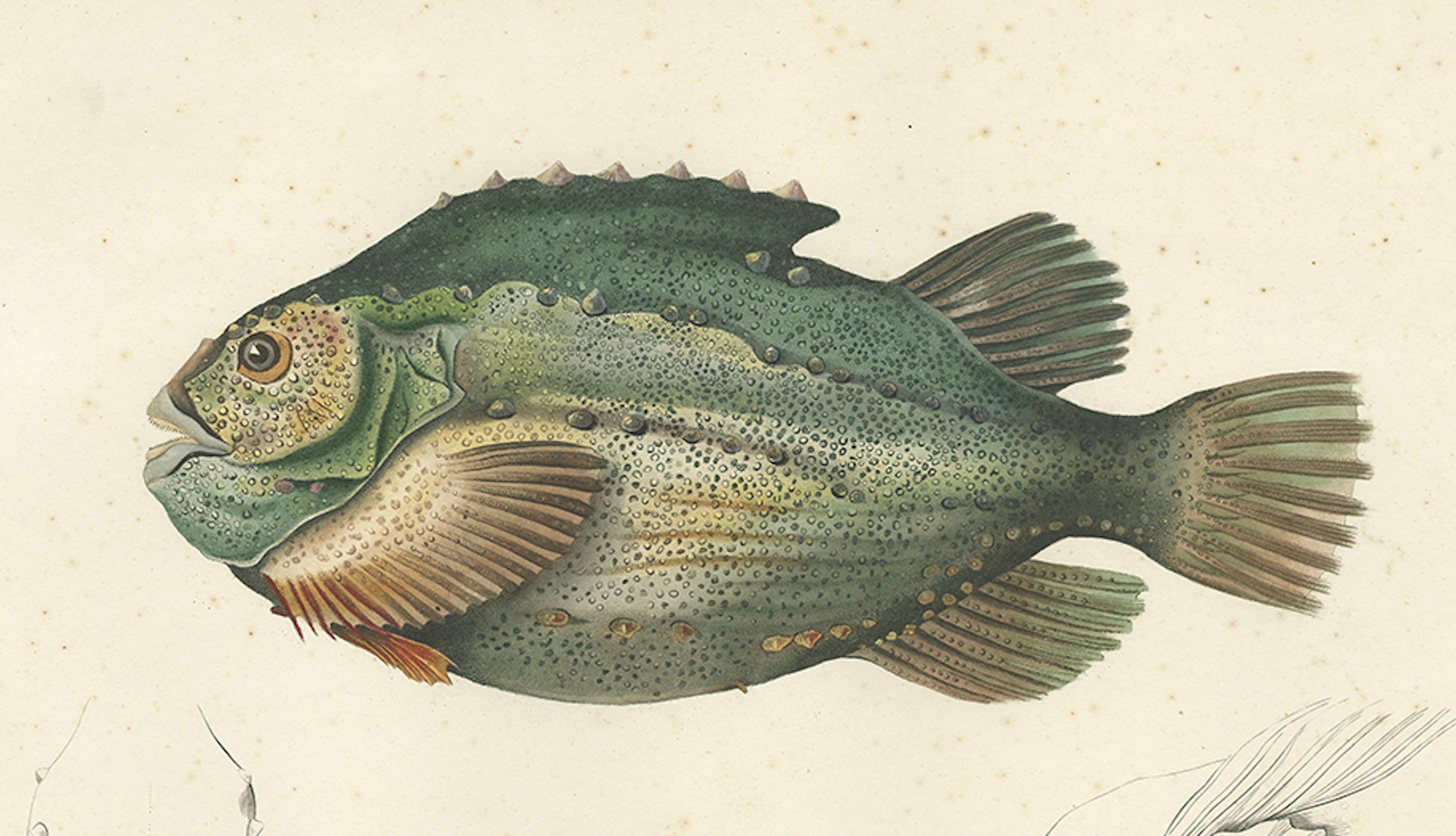
Antique Print of the Lumpsucker (Cyclopterus Lumpus) – Hand-Colored French Lithograph, 1845
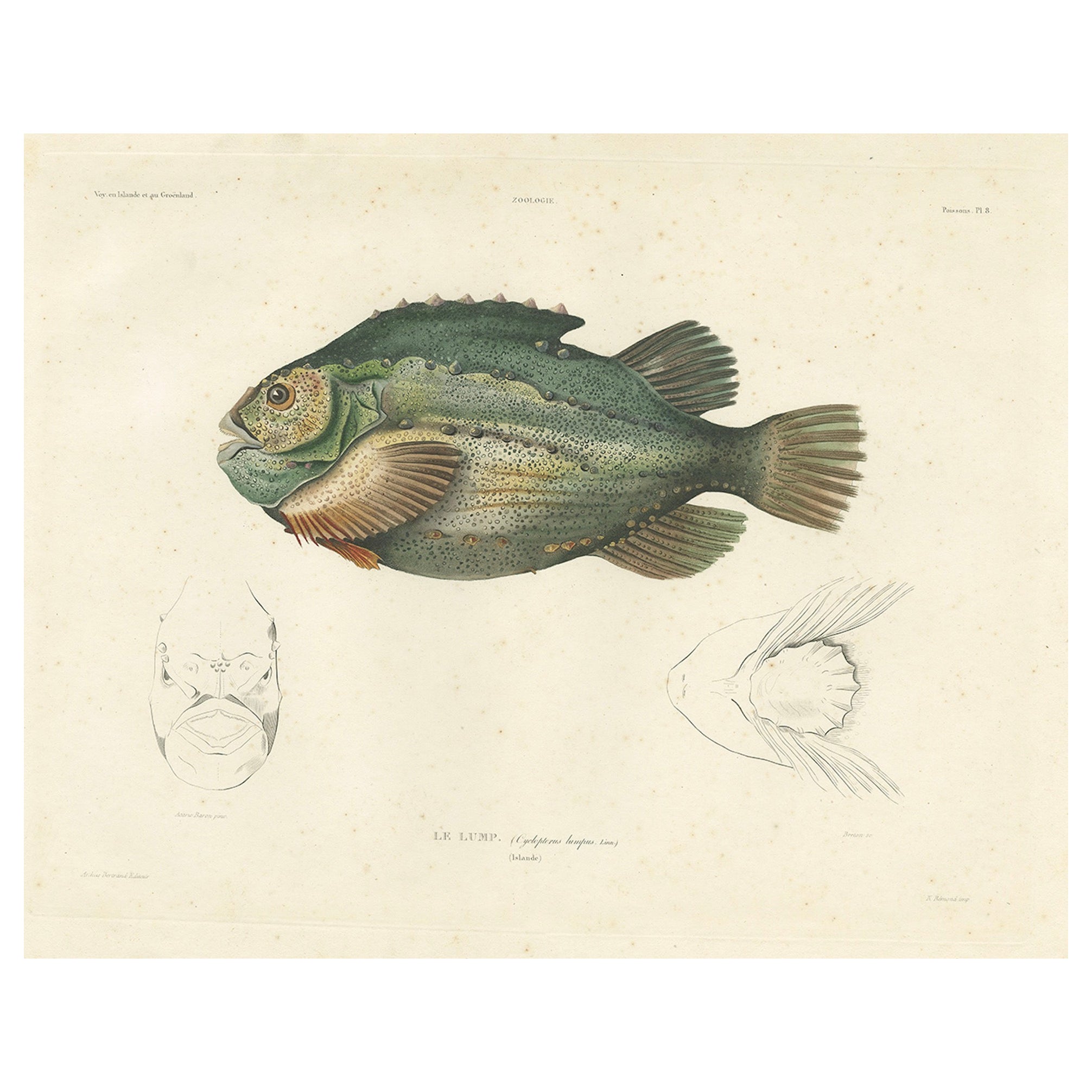
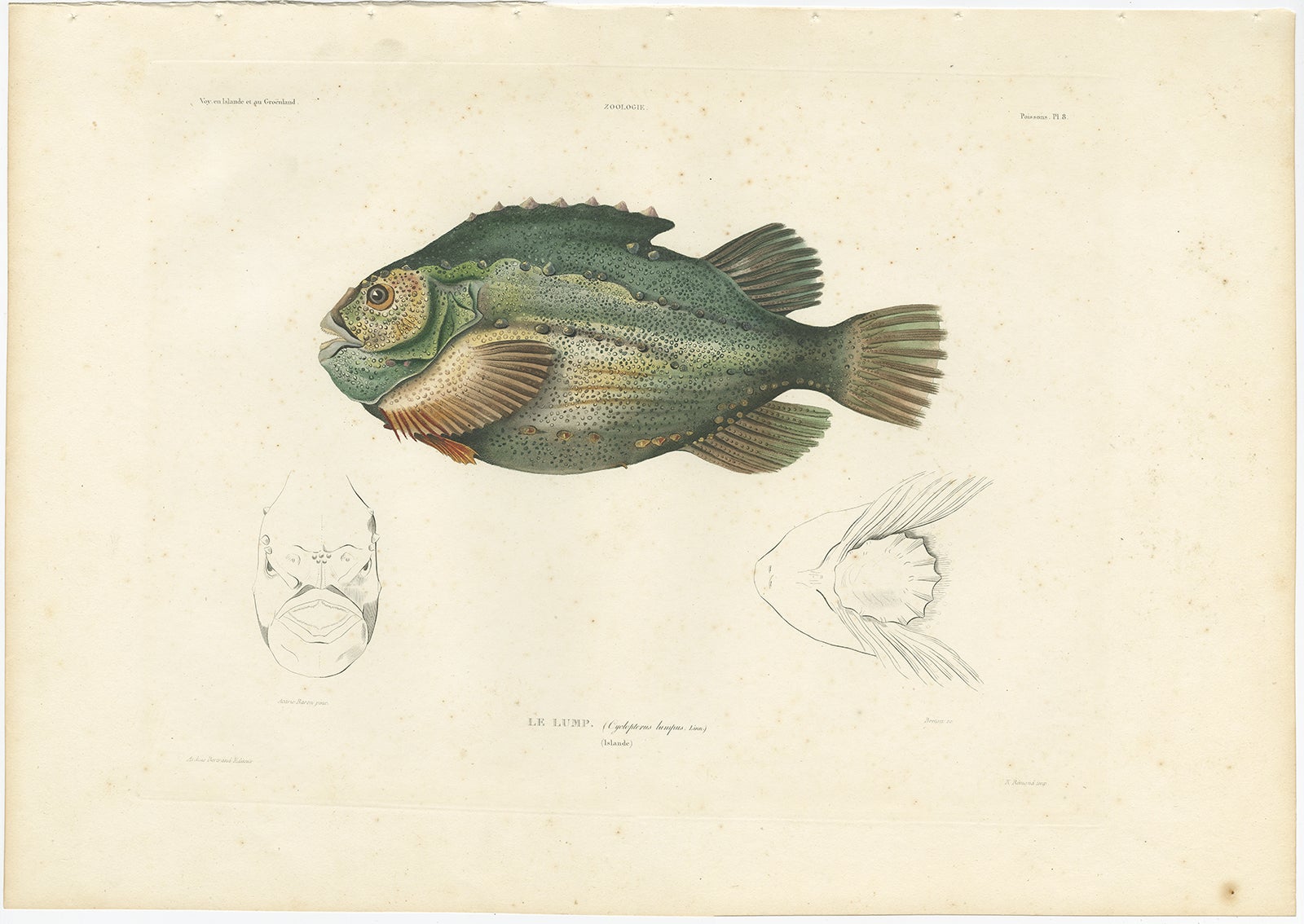
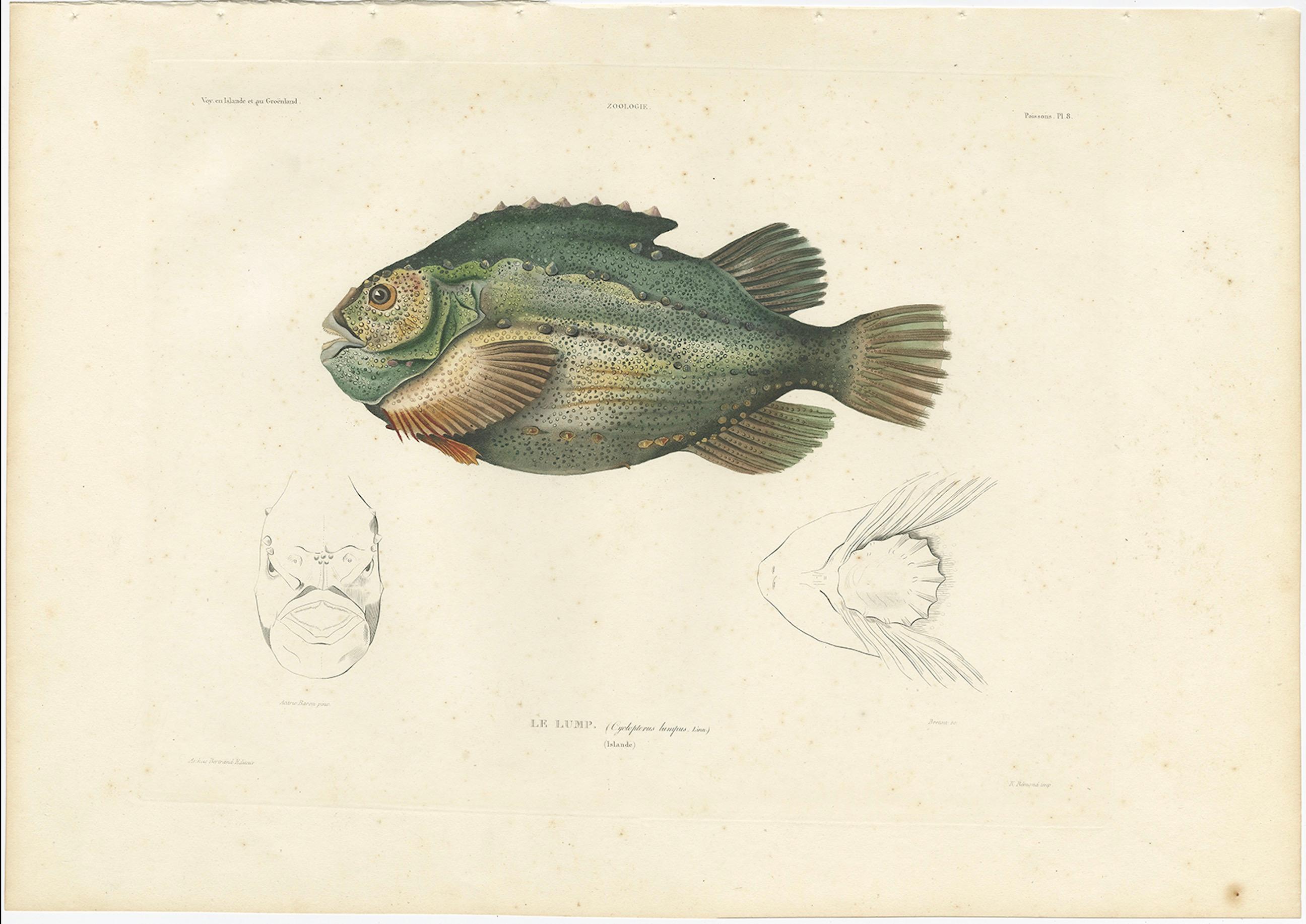
This striking hand-colored lithograph features Le Lump (Cyclopterus lumpus), commonly known as the Lumpsucker or Lumpfish, a cold-water marine species renowned for its unusual shape, adhesive pelvic disc, and vivid spawning colors. The illustration was published in Paris in 1845 as part of the French natural history series Voyage en Islande et au Groenland, documenting the Arctic expedition’s zoological findings.
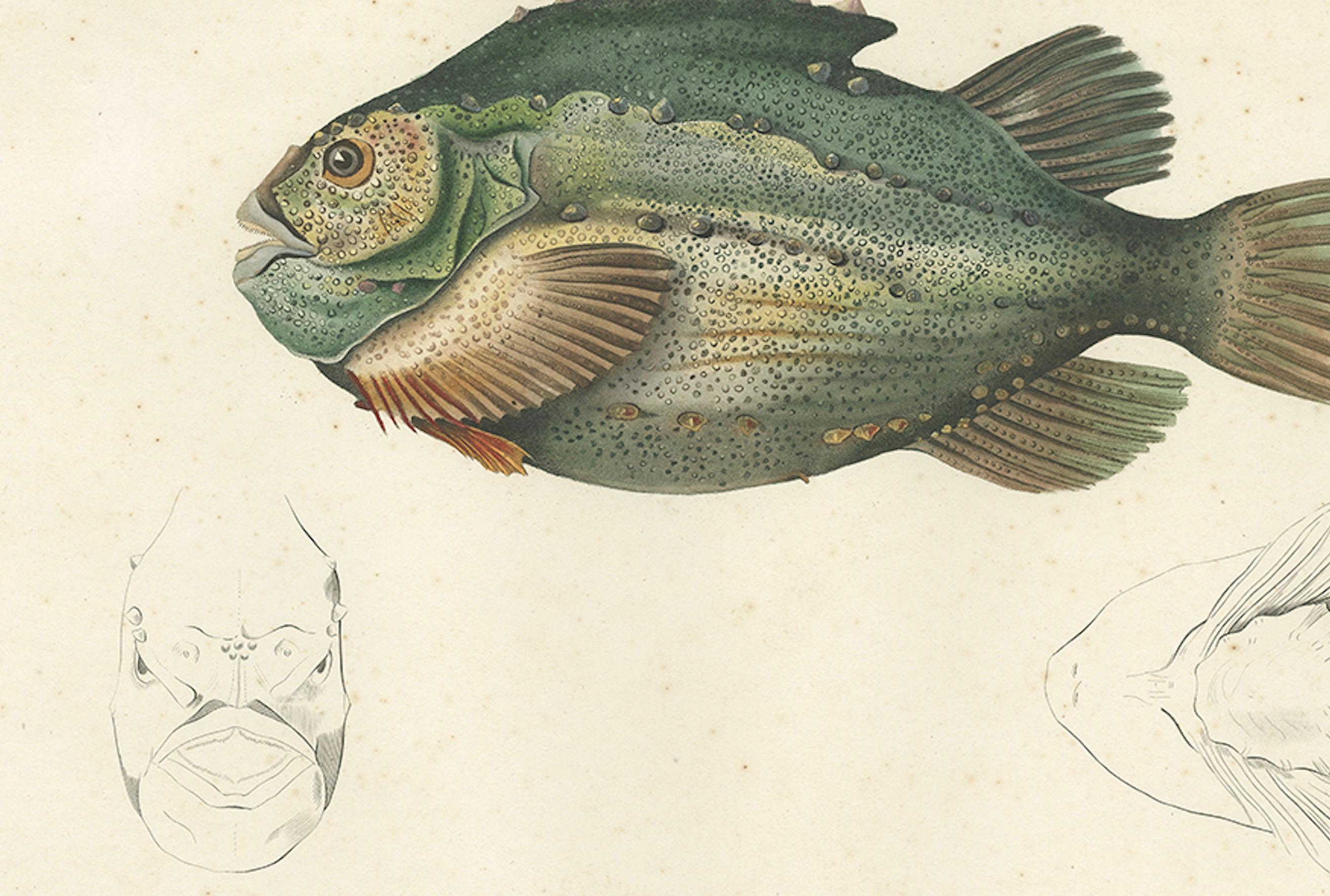
The Lumpsucker is portrayed in rich green and olive hues, with finely dotted textures along the flanks and bony tubercles across the upper body. Its distinctive rounded body and small fins, which it uses more for stabilization than swimming, are rendered with remarkable anatomical precision. The image highlights the species’ comical yet fascinating form, including the ventral suction disc that allows it to cling to rocks and kelp in high-energy coastal waters.
Two anatomical studies flank the main image:
* A ventral view of the head, showing the structure of the mouth and suction disc.
* A lateral underside detail of the pelvic disc in action.
This is plate “Poissons Pl. 3” and was drawn by Louis Bévalet, engraved by Blanchard, and printed by Arthus Bertrand. The balance of vivid natural coloration and scientific detail reflects the best of French mid-19th-century natural history illustration.
Native to the North Atlantic, *Cyclopterus lumpus* was a subject of growing scientific interest in the 1800s due to its reproductive behaviors, unusual morphology, and presence in cold, inaccessible waters. It remains notable today for its role in aquaculture, where its juveniles are used as cleaner fish in salmon farms.
The Voyage en Islande et au Groenland was a state-funded expedition that contributed significantly to the scientific documentation of Arctic and North Atlantic marine life. Plates such as this one combine scientific documentation with artistic elegance and are now highly collectible.
Condition:
Good. Moderate foxing scattered throughout, more noticeable in the upper and lower areas. Image area remains clean and vibrant. Strong plate impression with excellent color retention. No repairs or damage.
Framing Tips:
To highlight the rich greens and browns of the fish, choose a dark green, black, or natural wood frame with a neutral ivory or pale sage mat. Ideal for marine-themed decor or collectors of rare Arctic marine species illustrations. UV-protective glass is recommended to preserve the hand-coloring.