About this sheet
Antique Print of the Deep-Sea Spiny Eel (Notacanthus Nasus) – Paris, 1845
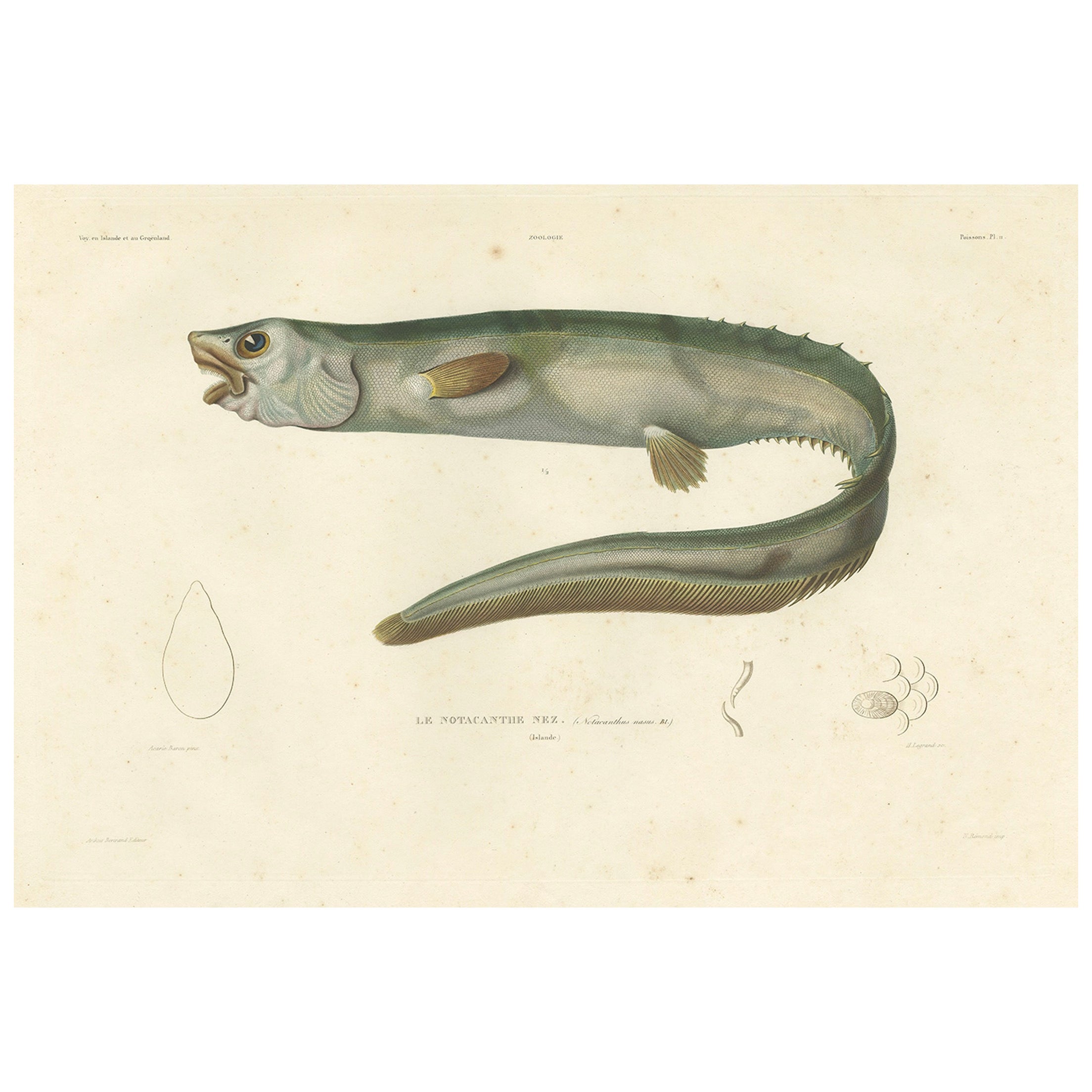
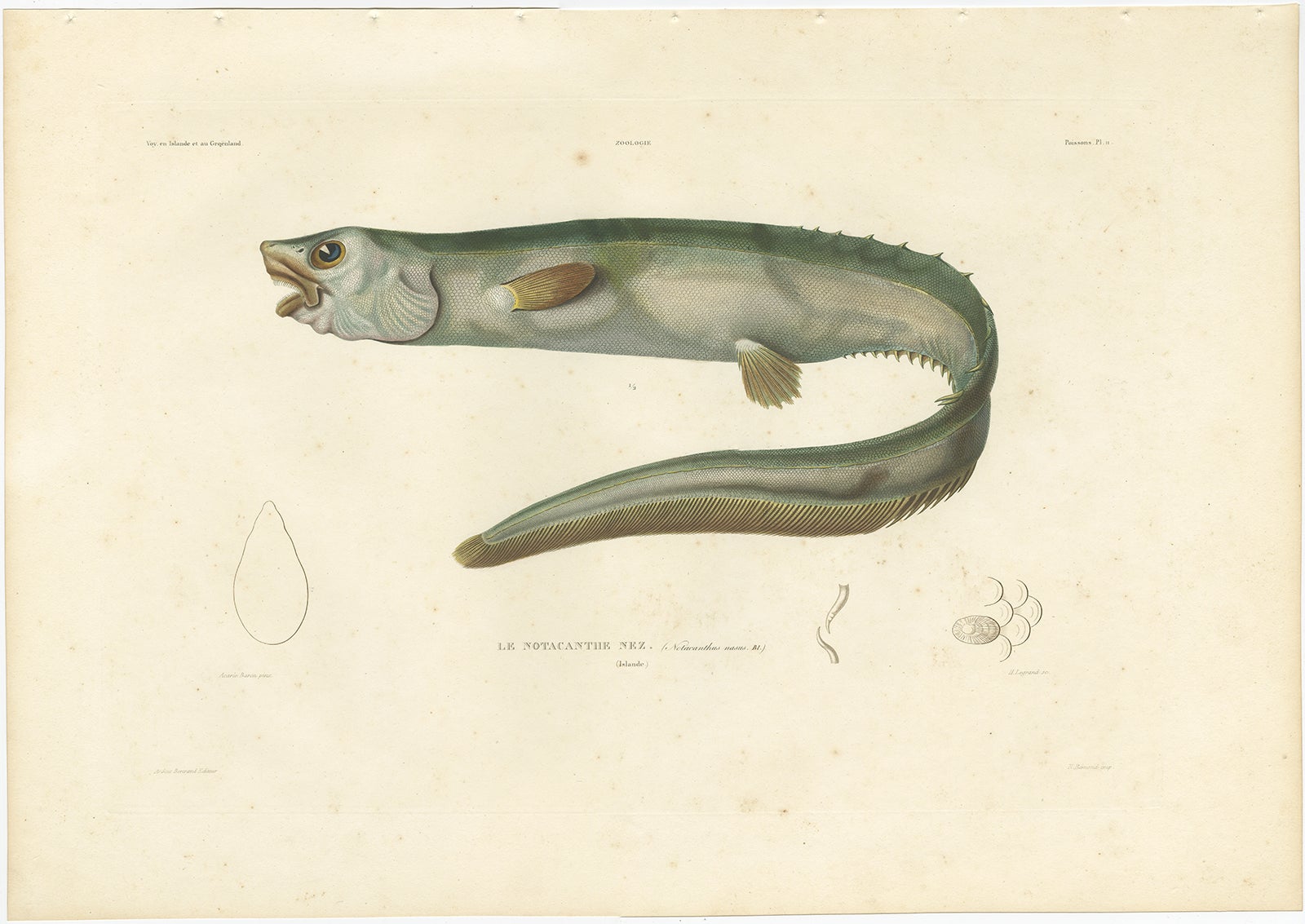
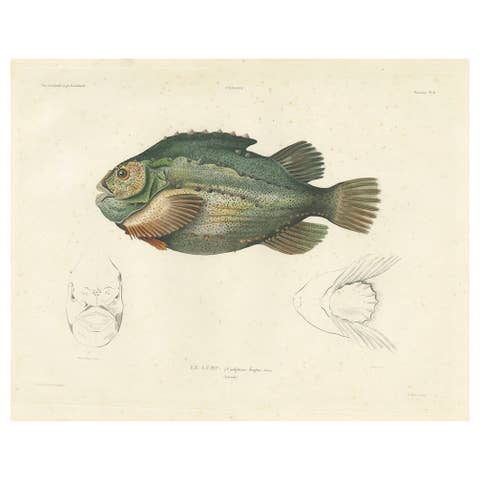
This beautifully hand-colored lithograph features Le Notacanth Nez (Notacanthus Nasus), known as the Deep-Sea Spiny Eel, a rare and mysterious species that inhabits the deep cold waters of the North Atlantic. The plate originates from the French scientific expedition Voyage en Islande et au Groenland, published in Paris by Arthus Bertrand in 1845.
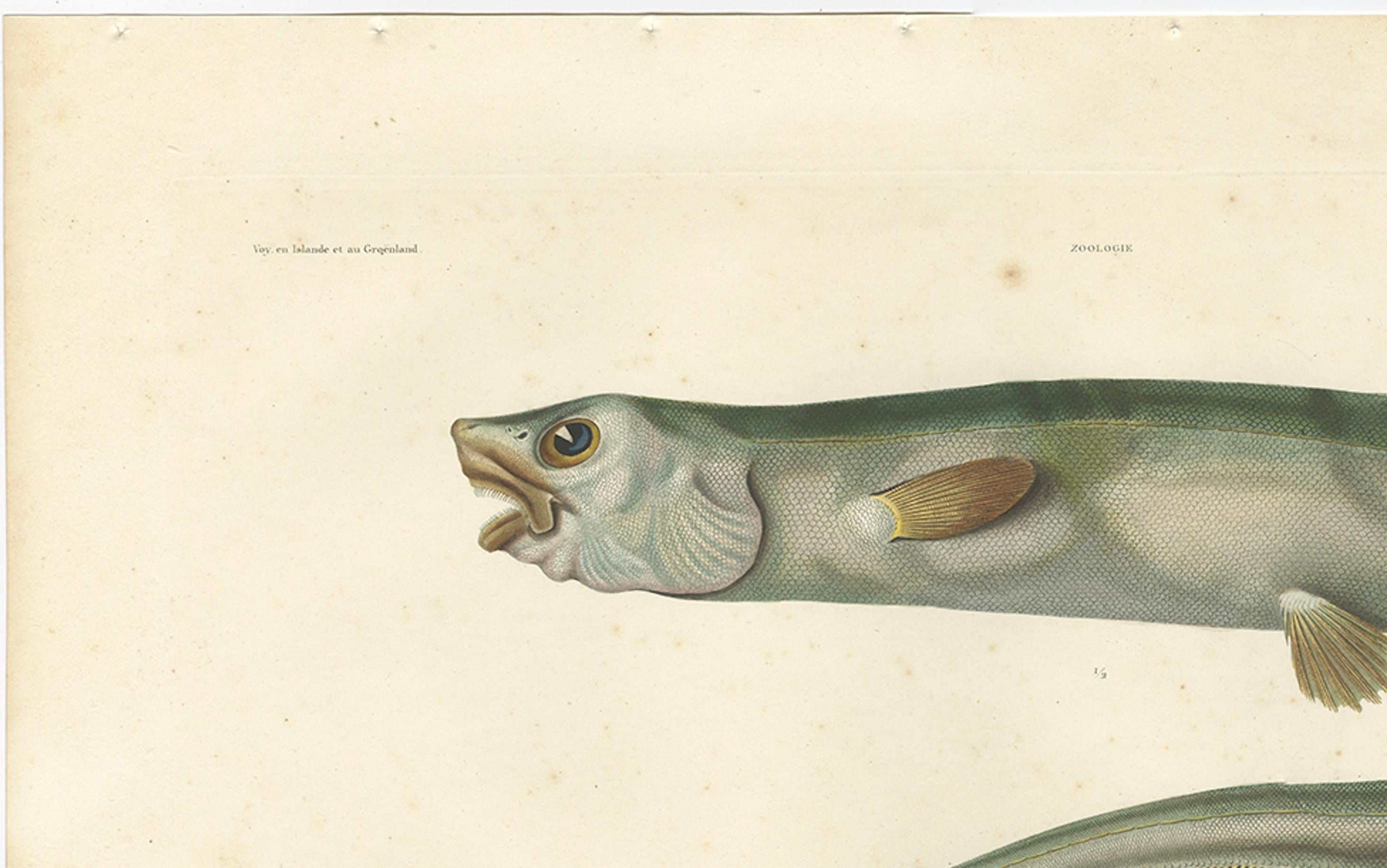
Unlike true eels, Notacanthus nasus belongs to a unique order of ray-finned fish that inhabit extreme depths, often ranging from 100 to over 4000 meters. This illustration captures the fish's elongated, laterally compressed body and distinctive downward-sloping mouth. Its large, expressive eye, powerful pectoral fins, and the serrated dorsal ridge are rendered with remarkable anatomical precision.
Below and to the sides of the main figure, the plate features additional scientific insets:
* The body outline as seen from above,
* Fin and tail spine structures,
* Microscopic detail of reproductive anatomy.
This is plate “Poissons Pl. 28” and was drawn by Louis Bévalet, engraved by H. Blanchard. It is a fine example of mid-19th-century French expeditionary science, where marine zoology, artistic craftsmanship, and taxonomy converged to produce collectible and highly accurate records of newly studied species.
The Voyage en Islande et au Groenland was a state-sponsored expedition to the Arctic and sub-Arctic waters, contributing to the broader European understanding of marine biodiversity in extreme environments. This plate, focused on a deep-sea species, exemplifies the curiosity and rigor of that era’s zoological research.
Condition:
Good condition. Light foxing, primarily in the margins, and mild age-related toning. Strong plate impression. No visible damage or restoration.
Framing tips:
A black, walnut, or natural wood frame paired with a pale gray or cream mat will complement the muted green-blue and ivory tones of the fish. Suitable for collectors of natural history, ocean-themed interiors, or cabinets of curiosities. UV-filtering glass recommended to preserve the hand coloring.