Aquatic Elegance: A 19th Century Portfolio of Marine Gastropods, 1845
€ 110
Original antique · The actual sheet photographed · Certificate of authenticity on request · Sold unframed · Worldwide shipping from € 15 (rates)
Date
1845
Sheet size
26.5 × 17 cm (10.4 × 6.7 in)
Condition
Good
Reference
BG-13261-153
What the condition grades mean
Excellent
Bright and clean, with no faults worth mentioning.
Very good
Only light signs of age, such as faint toning.
Good
Normal signs of age for a sheet of this period: toning, some foxing, small marks or neat old repairs.
Fair
Clear faults such as staining, tears or repairs, priced to match.
Every fault we see is written in the condition note, and the whole sheet is shown uncropped in the photos.
Condition
Good. Moderate offsetting and a few light brownish spots outside the image. Aged paper with typically warm, yellowish-brown hue. Please review the images for further condition details.
About this sheet
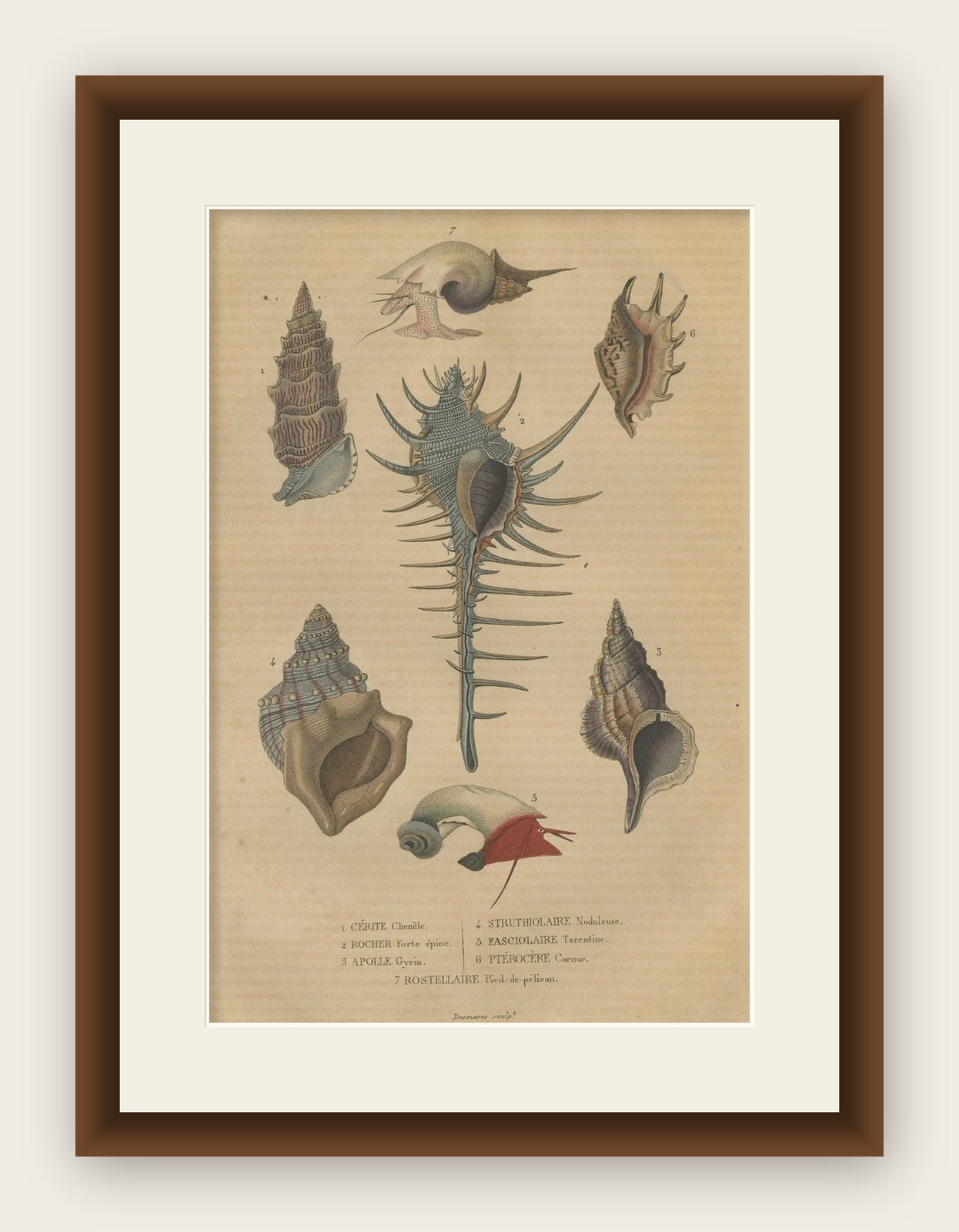
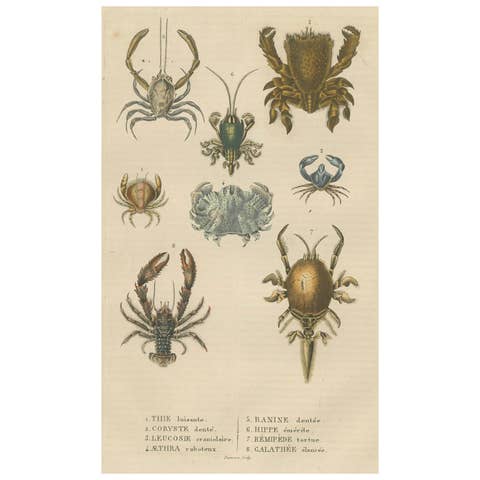
The print features a collection of marine gastropod mollusks, more commonly known as snails, each with distinctive shell shapes and ornamentations:
1. Cérith (Cerithium): This is likely a depiction of a cerith, a type of sea snail with a high-spired shell and variable patterns, often found in marine and brackish waters.
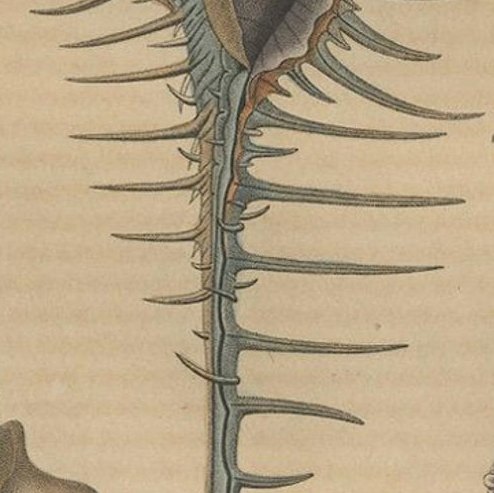
2. Rocher (Murex): Known for its spiny and elaborately ornamented shell, the murex is a predatory sea snail that has been historically used to produce purple dye.
3. Apollo Gyrin (Turbinella pyrum): Also known as the chank shell, these snails have a heavy, convoluted shell and are significant in various cultural and religious contexts.
4. Struthiolaire (Struthiolaria): Characterized by its nodulose or bumpy shell, this snail's design is quite distinct and recognizable.
5. Fasciolaire (Fasciolaria): A genus of large sea snails with a spiral shell, often with a siphonal canal extending from the aperture.
6. Ptérocère (Pterocera): Also known as the "scorpion conch" due to its long, finger-like projections, this snail's shell is a spectacular sight.
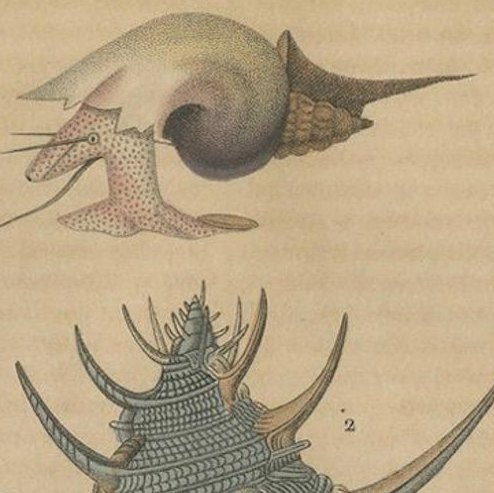
7. Rostellaire (Rostellaria): This snail has a long, tapering shell with a developed siphonal canal, giving it a tusk-like appearance.
The print is a hand-colored engraving, a common practice in the 19th century for scientific illustration, which allowed for detailed and precise visual representation of specimens. This artistic technique served both educational and aesthetic purposes.