One of a kind: this is the sheet in the photographs. Ships from Langweer, the Netherlands.
Date
1887
Sheet size
26.3 × 17.5 cm (10.4 × 6.9 in)
Condition
Good
Reference
BG-13029-1-29
Condition
Very good condition for its age. Minor toning and a few small foxing spots along the margins, typical of 19th-century natural history prints. Strong plate impression with crisp, clear labels. Small tear in the left border.
About this sheet
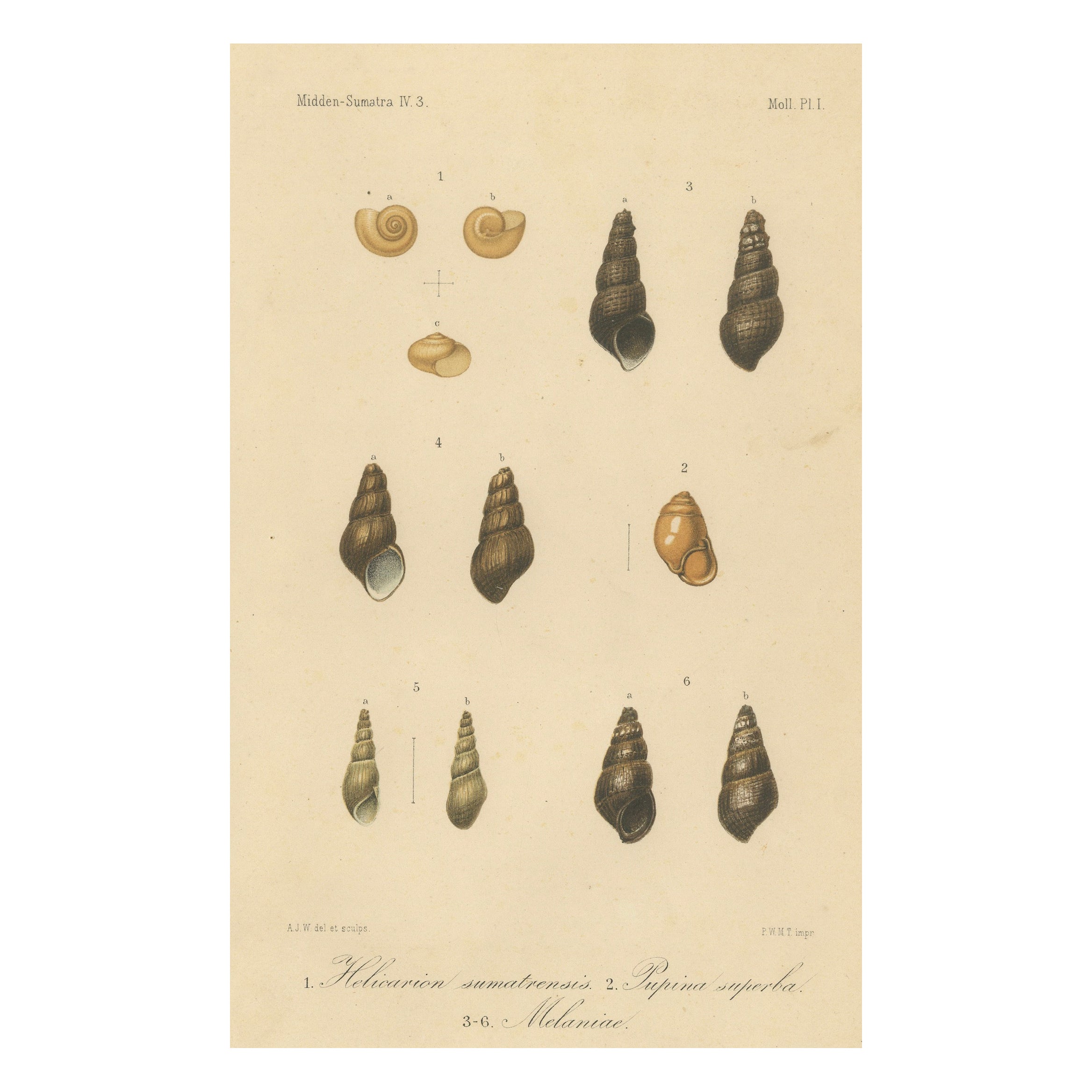
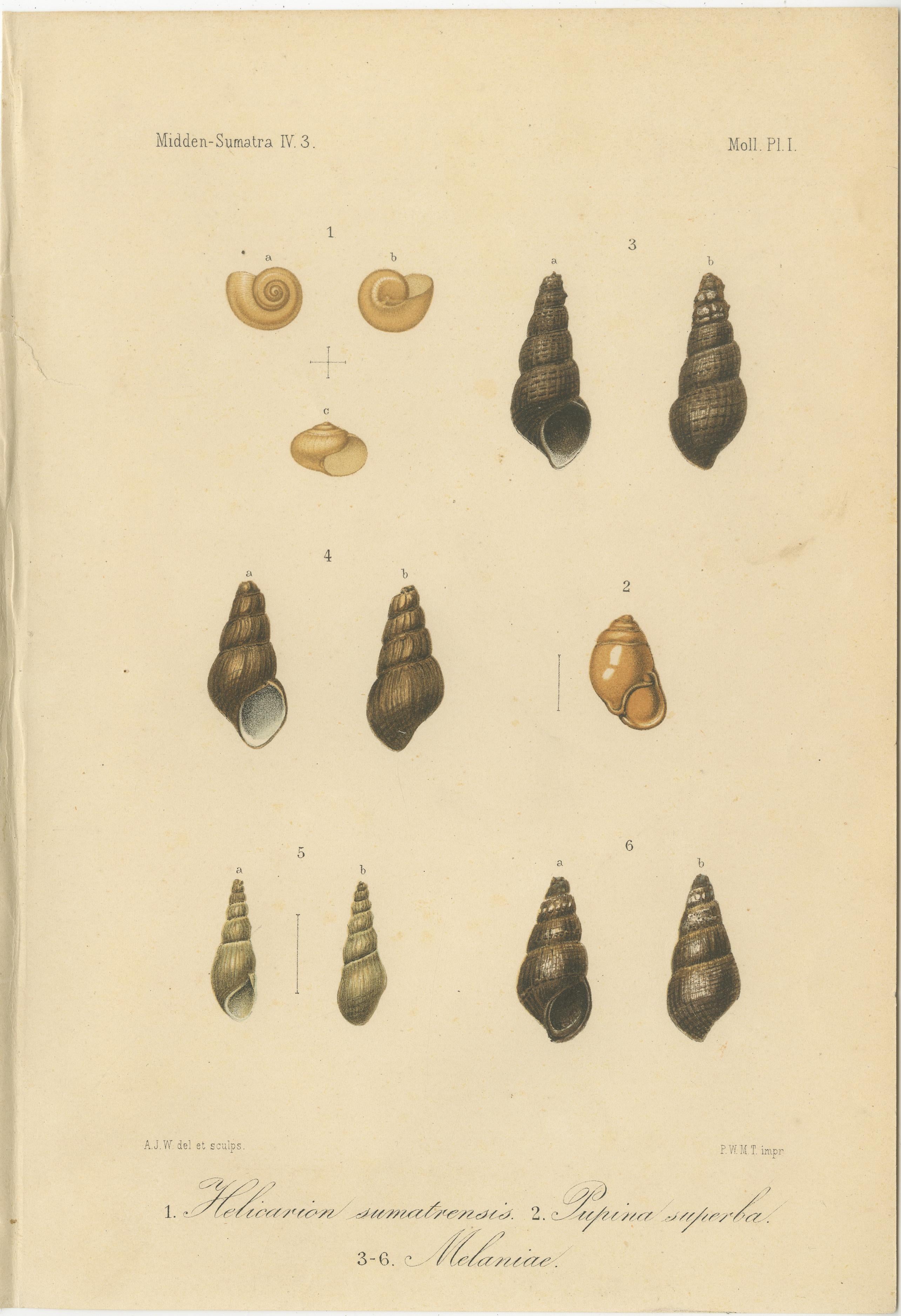
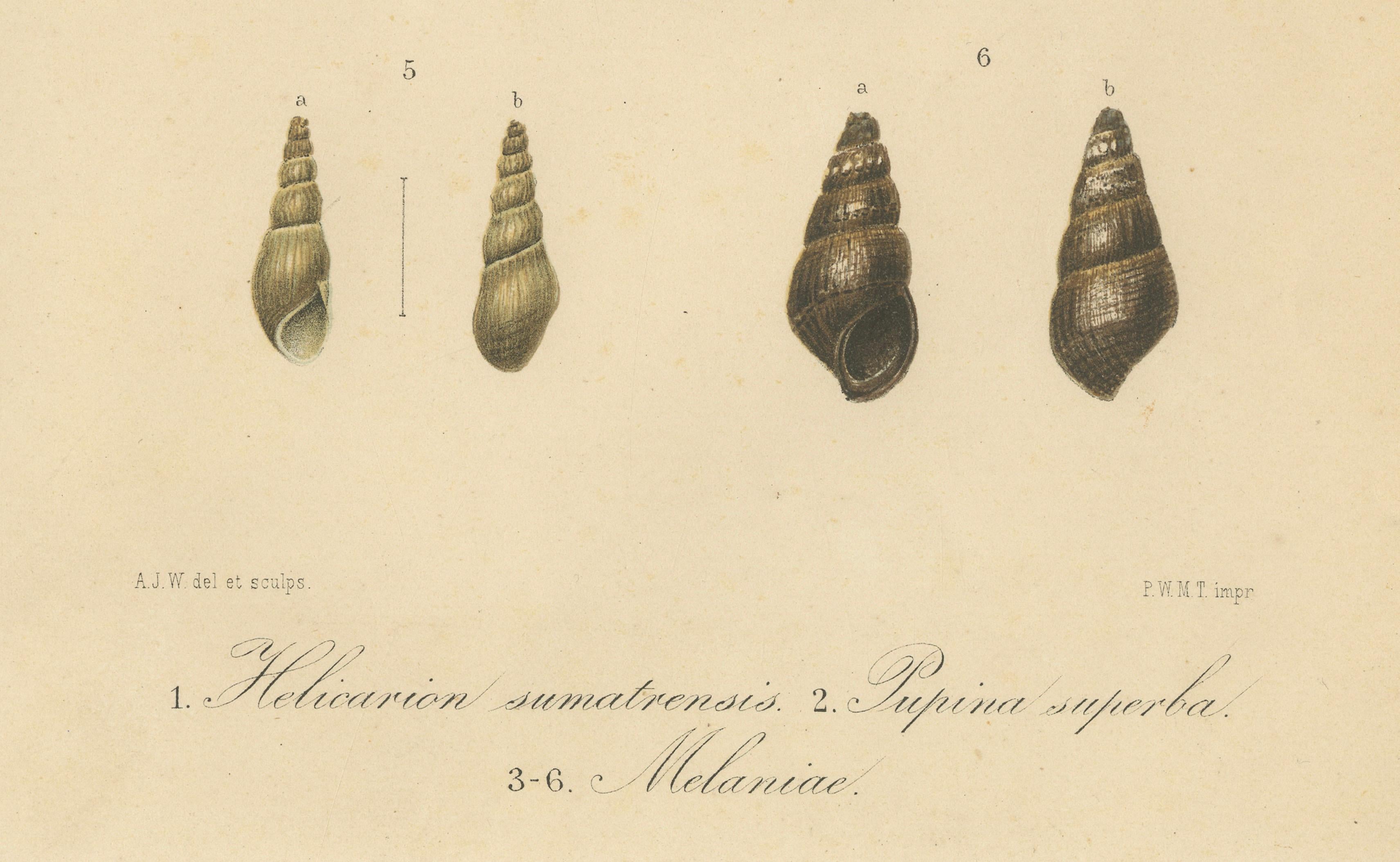
Antique Shell Print of Sumatran Snails – Helicarion, Pupina, Melania c.1887 This elegant 19th-century lithograph depicts various Sumatran molluscs and was published circa 1878 in the renowned Dutch scientific series *Midden-Sumatra*. The plate is titled *Moll. Pl. I.* and illustrates:
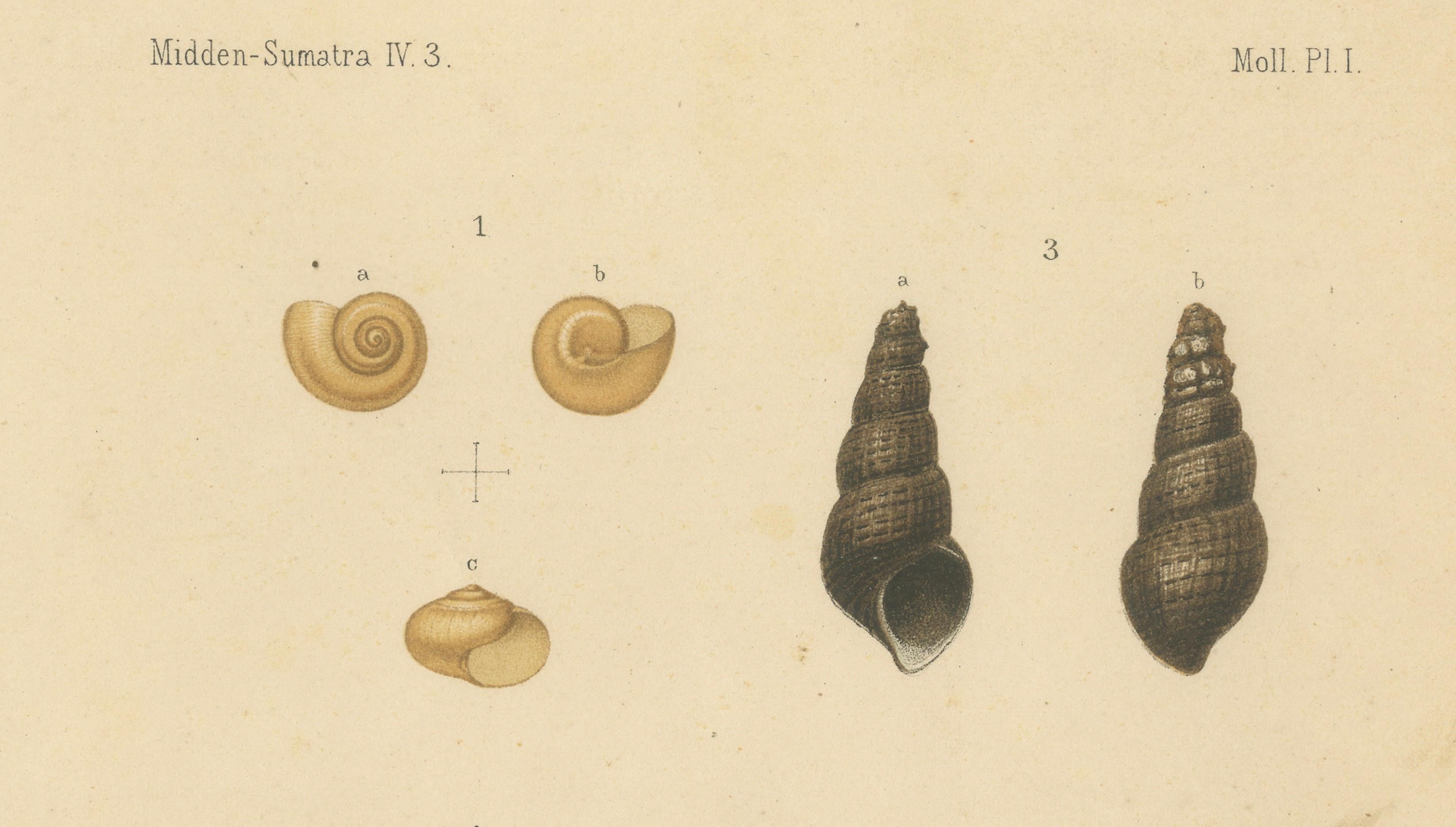
1. Helicarion sumatrensis – a terrestrial pulmonate gastropod belonging to the family Helicarionidae, notable for its semi-slug form with a small, partly reduced shell and extended mantle, often found in humid forest habitats feeding on decaying plant matter and fungi.
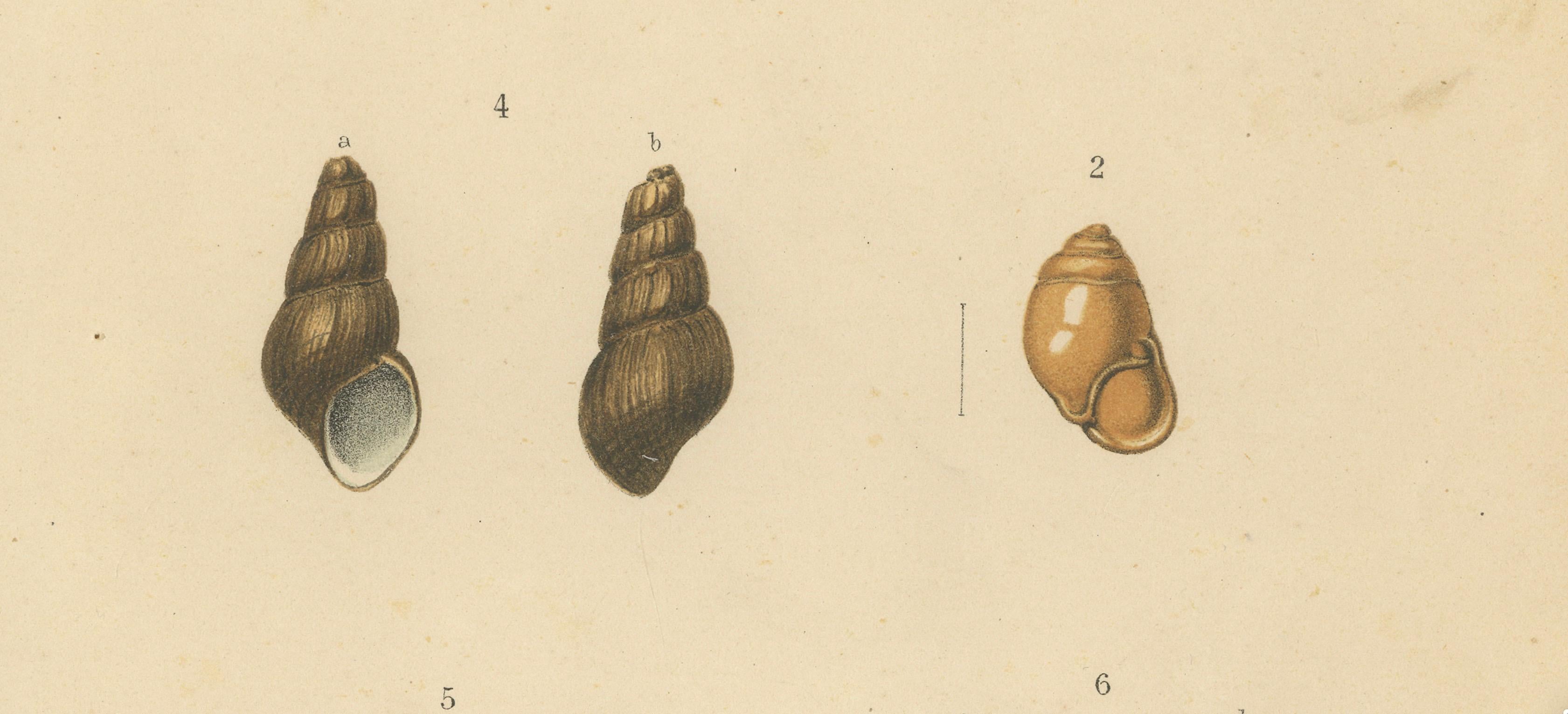
2. Pupina superba – a striking land snail from the Pupinidae family, recognised by its glossy, thick shell with an operculum, adapted for retaining moisture, often inhabiting limestone areas and dense vegetation in tropical Southeast Asia.
3-6. Melania species – freshwater snails of the genus Melanoides, part of the Thiaridae family, showing their characteristic turreted shells with multiple whorls. These are common in streams and rivers with sandy or muddy bottoms and play ecological roles in nutrient cycling and algae grazing.
This lithograph was drawn and engraved by A.J.W. (artist and lithographer initials visible lower left) and printed by P.W\.M. Trap in Leiden, a leading natural history printer of the era. The image displays fine scientific accuracy, subtle coloration, and detailed studies of apertures and shell texture, reflecting the meticulous taxonomic work carried out during the Dutch expeditions in Sumatra.
Condition report: Very good condition for its age. Minor toning and a few small foxing spots along the margins, typical of 19th-century natural history prints. Strong plate impression with crisp, clear labels. Small tear in the left border.
Framing tips: This plate will look refined in a slender gold, walnut, or dark brown wooden frame with a natural linen or cream mount, enhancing its delicate lines while harmonising with botanical or zoological prints in a study, gallery wall, or museum-style interior.