Persian-Turkish Faience Plate with Twin Fish Motif – Julius Lessing, Berlin 1890
€ 340
One of a kind: this is the sheet in the photographs. Ships from Langweer, the Netherlands.
Date
1890
Sheet size
49 × 33 cm (19.3 × 13.0 in)
Condition
Good
Reference
BG-14139-3
Condition
Fine condition with excellent color preservation and full margins. Minimal age toning and faint edge wear consistent with age. Printed on heavy wove paper typical of Wasmuth chromolithographs.
About this sheet
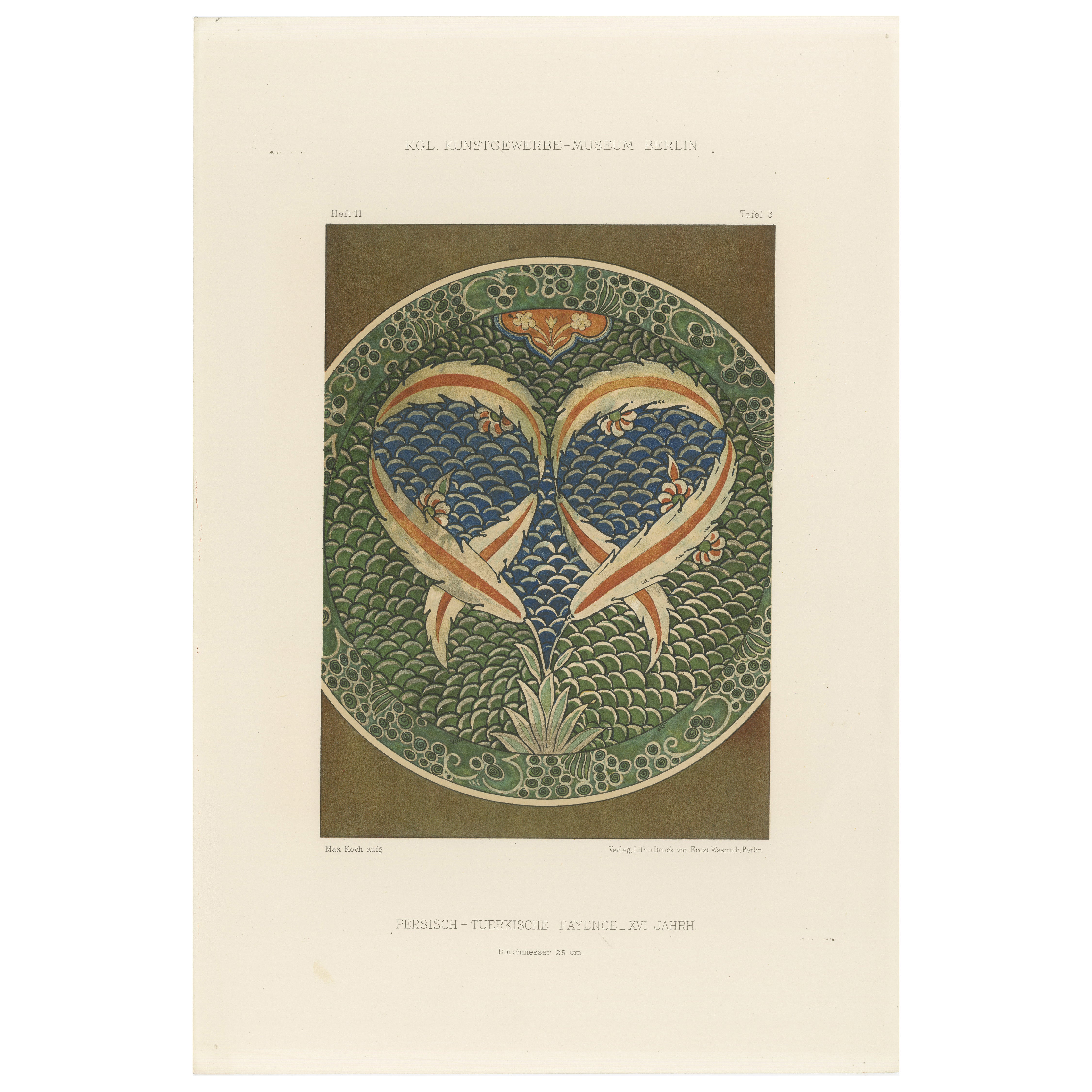
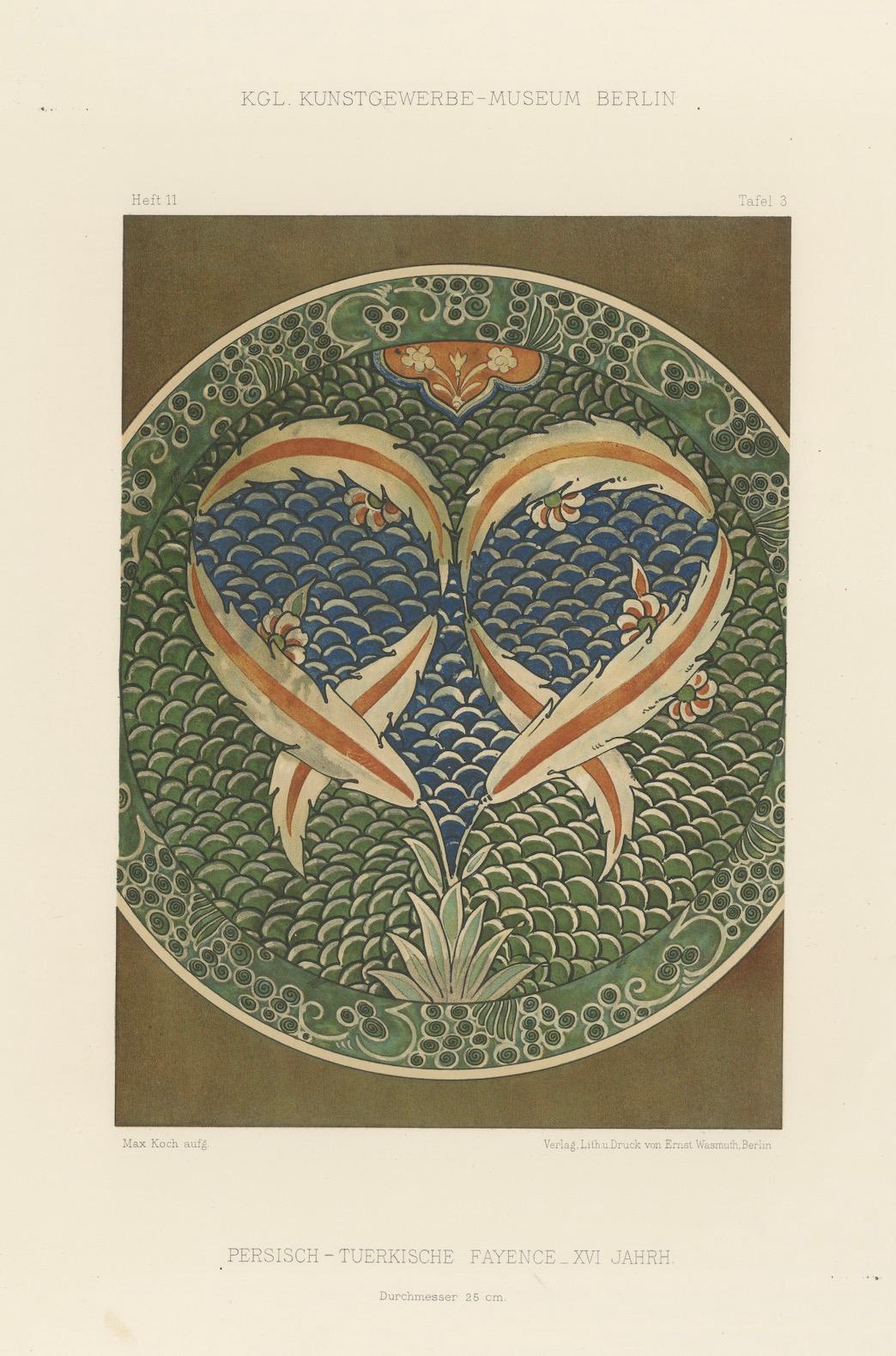
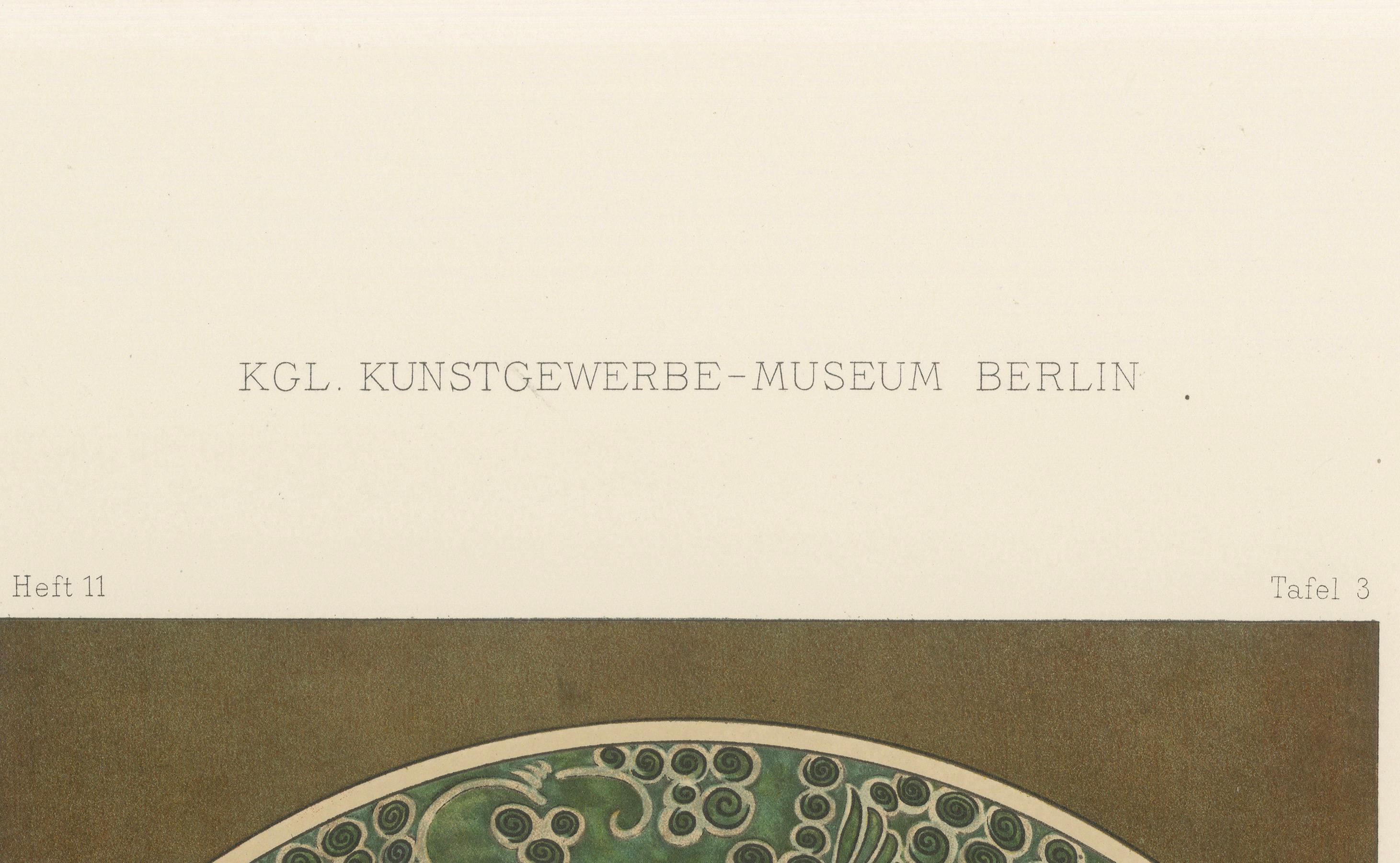
Persian-Turkish Faience Plate with Twin Fish Motif – Julius Lessing, Berlin 1890 An exquisite chromolithograph from Julius Lessing’s Persisch-Türkische Fayencen (Persian-Turkish Faience), published in Berlin by Ernst Wasmuth in 1890 as part of Vorbilder-Hefte aus dem Königlichen Kunstgewerbe-Museum, Heft 11. This particular plate (Tafel 3) reproduces a 16th-century Persian faience dish from the Royal Museum of Decorative Arts in Berlin.
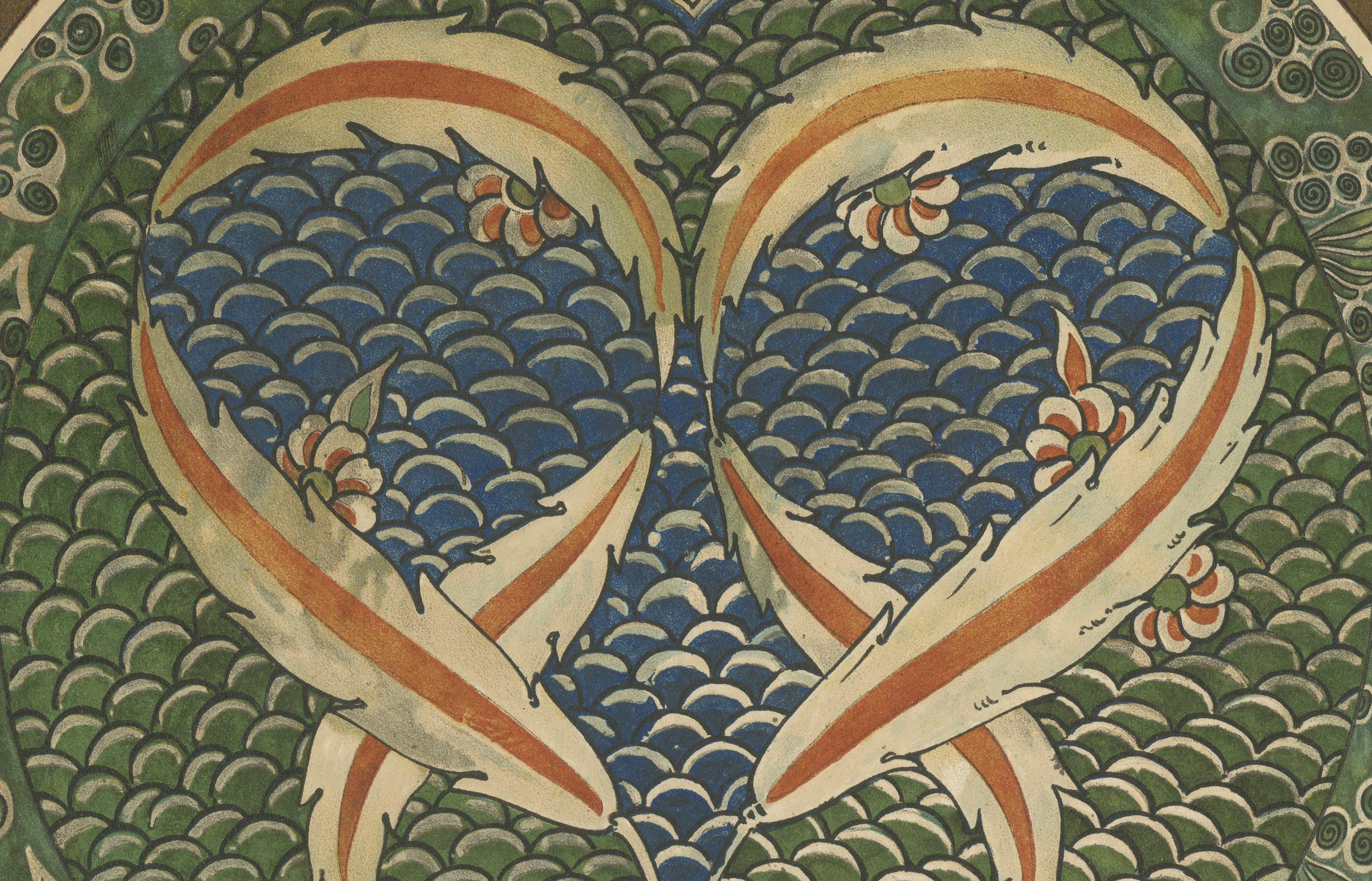
The design showcases two elegant fish symmetrically positioned in a circular pattern, surrounded by stylized water motifs and lush vegetal ornamentation. The overlapping fish tails form a heart-like shape at the center, symbolizing harmony, prosperity, and renewal—motifs deeply rooted in Persian and Ottoman visual culture. The outer border is filled with rhythmic green spirals and geometric waves, evoking the flow of water and continuity of life.
Rendered in shades of jade green, cobalt blue, and coral red, this composition represents the refined aesthetics of Islamic ceramic art during the Safavid and Ottoman periods. The delicate layering of glazes and patterns reveals the technical sophistication of 16th-century artisans and the enduring influence of Iznik and Persian pottery.
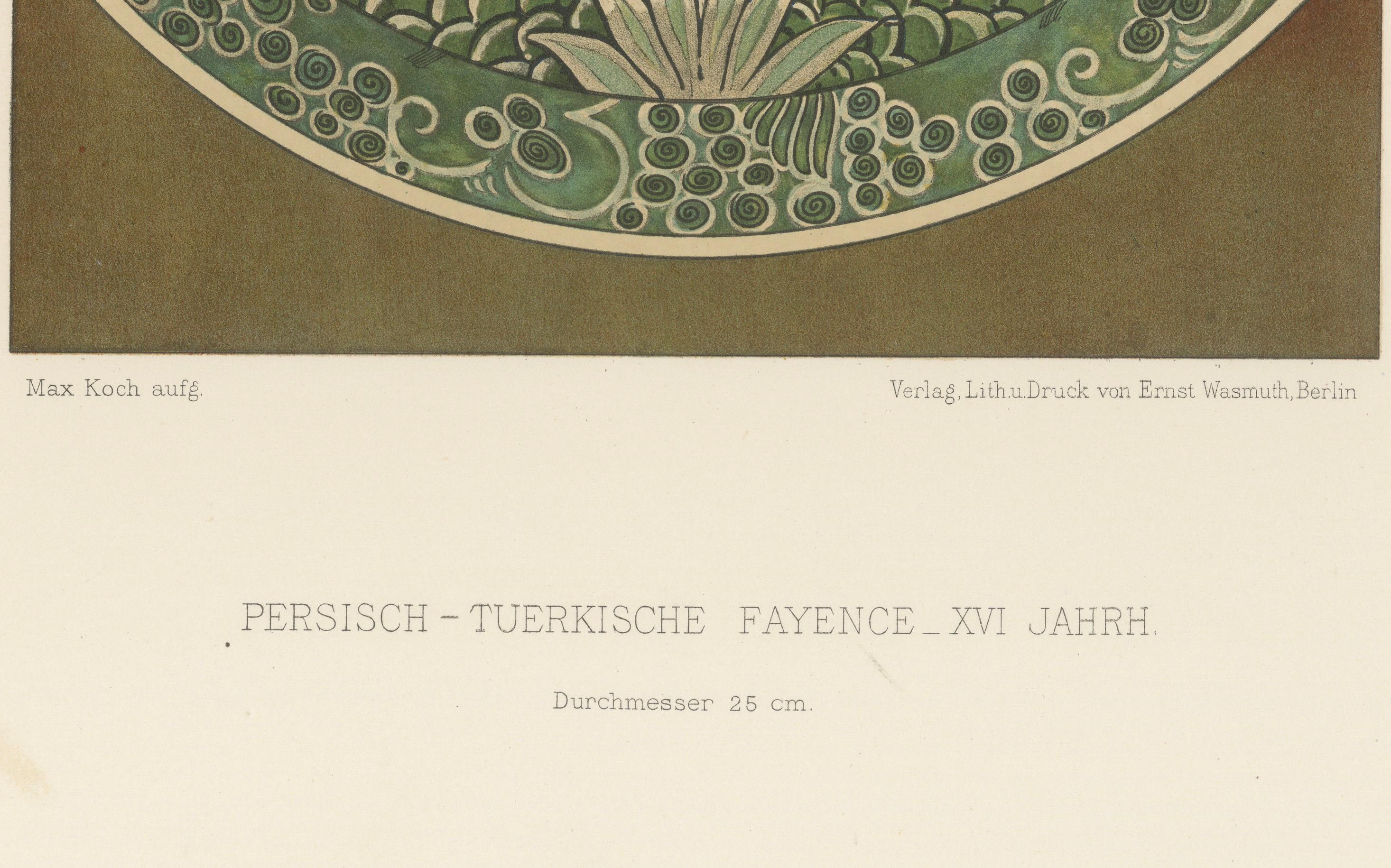
The plate was drawn by Max Koch and printed by the prestigious Wasmuth lithographic workshop in Berlin under Julius Lessing’s direction. Lessing (1843–1908), the first director of the Königliches Kunstgewerbemuseum, was instrumental in bringing the world’s decorative heritage to European design education. Through his *Vorbilder-Hefte* series, he provided artists and craftsmen with access to historic motifs from across cultures, inspiring the Art Nouveau and Orientalist movements that followed.
Condition report: Fine condition with excellent color preservation and full margins. Minimal age toning and faint edge wear consistent with age. Printed on heavy wove paper typical of Wasmuth chromolithographs.
Framing tips: A wide cream or ivory mat combined with a dark wooden or gilded frame enhances the vivid greens and blues of the composition. This plate pairs beautifully with other works from the *Persisch-Türkische Fayencen* series for a cohesive, elegant wall display.
Technique: Chromolithograph Maker: Julius Lessing, Berlin, 1890