Antique Scientific Print of Sumatran Crab and Prawn, Midden-Sumatra c.1887
€ 290
One of a kind: this is the sheet in the photographs. Ships from Langweer, the Netherlands.
Date
1887
Sheet size
26.3 × 17.5 cm (10.4 × 6.9 in)
Condition
Good
Reference
BG-13029-1-7
Condition
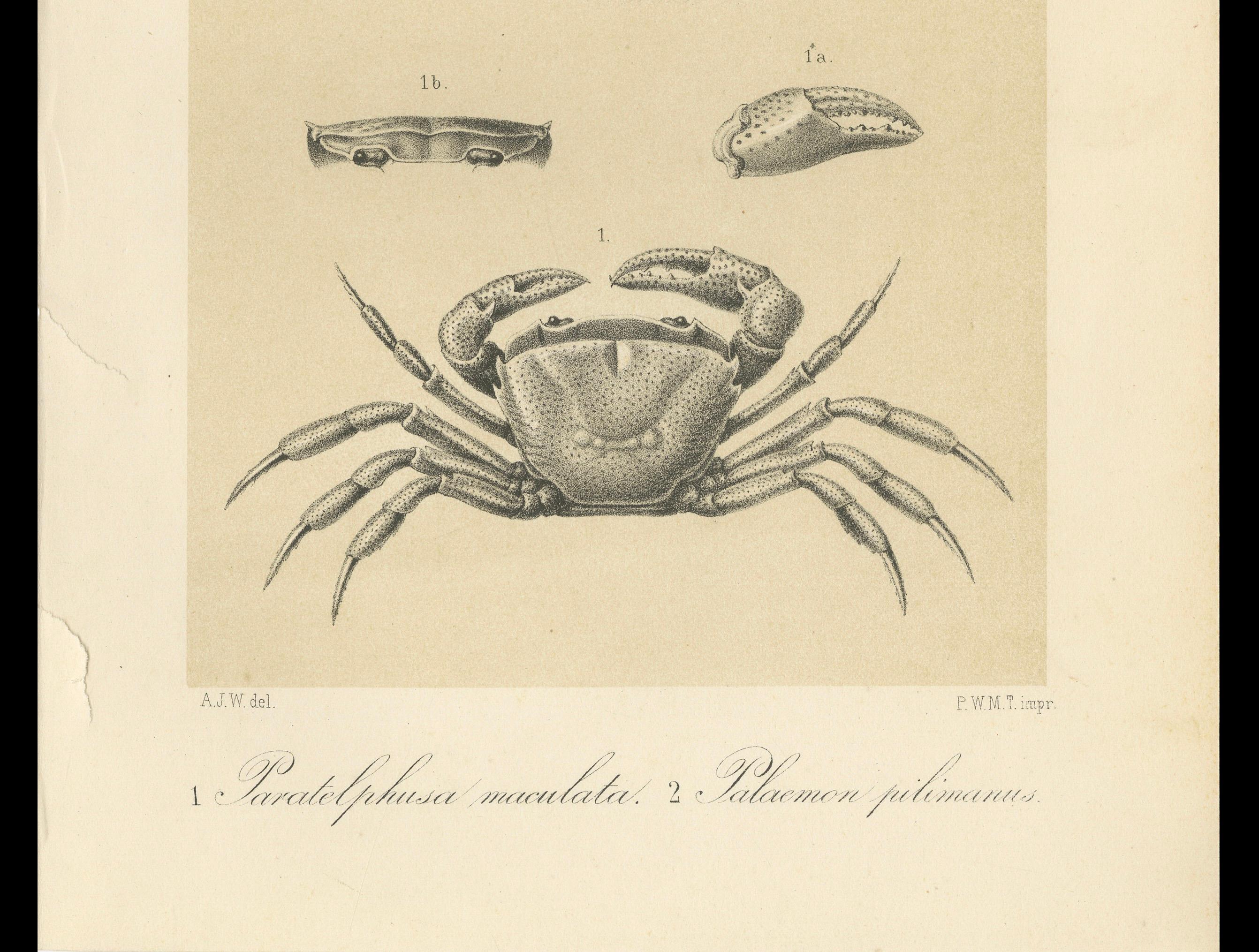
The print is in good condition with strong original impressions. Minor age toning is visible, along with two small margin tears lower left, not affecting the image area. The paper remains stable and untrimmed.
About this sheet
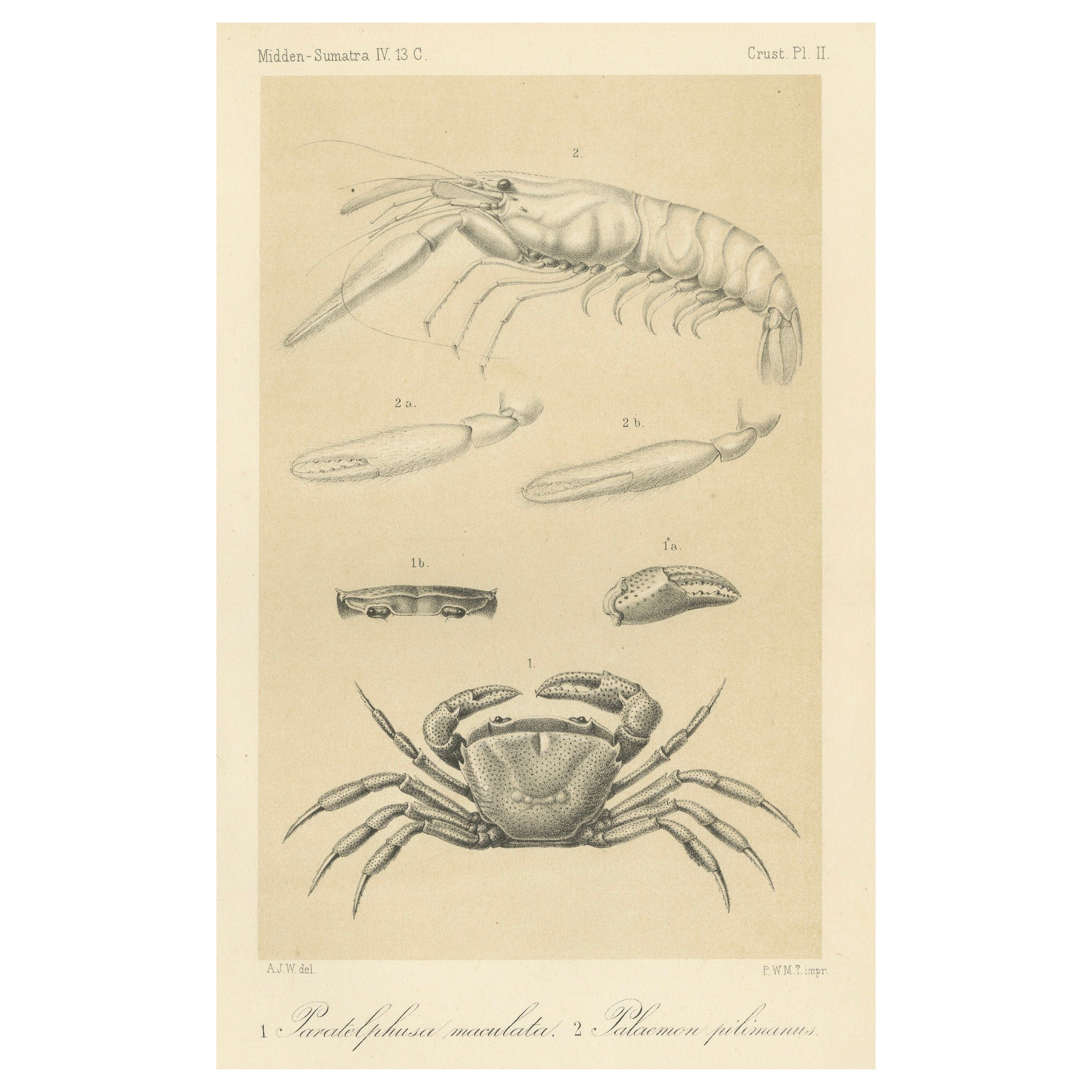
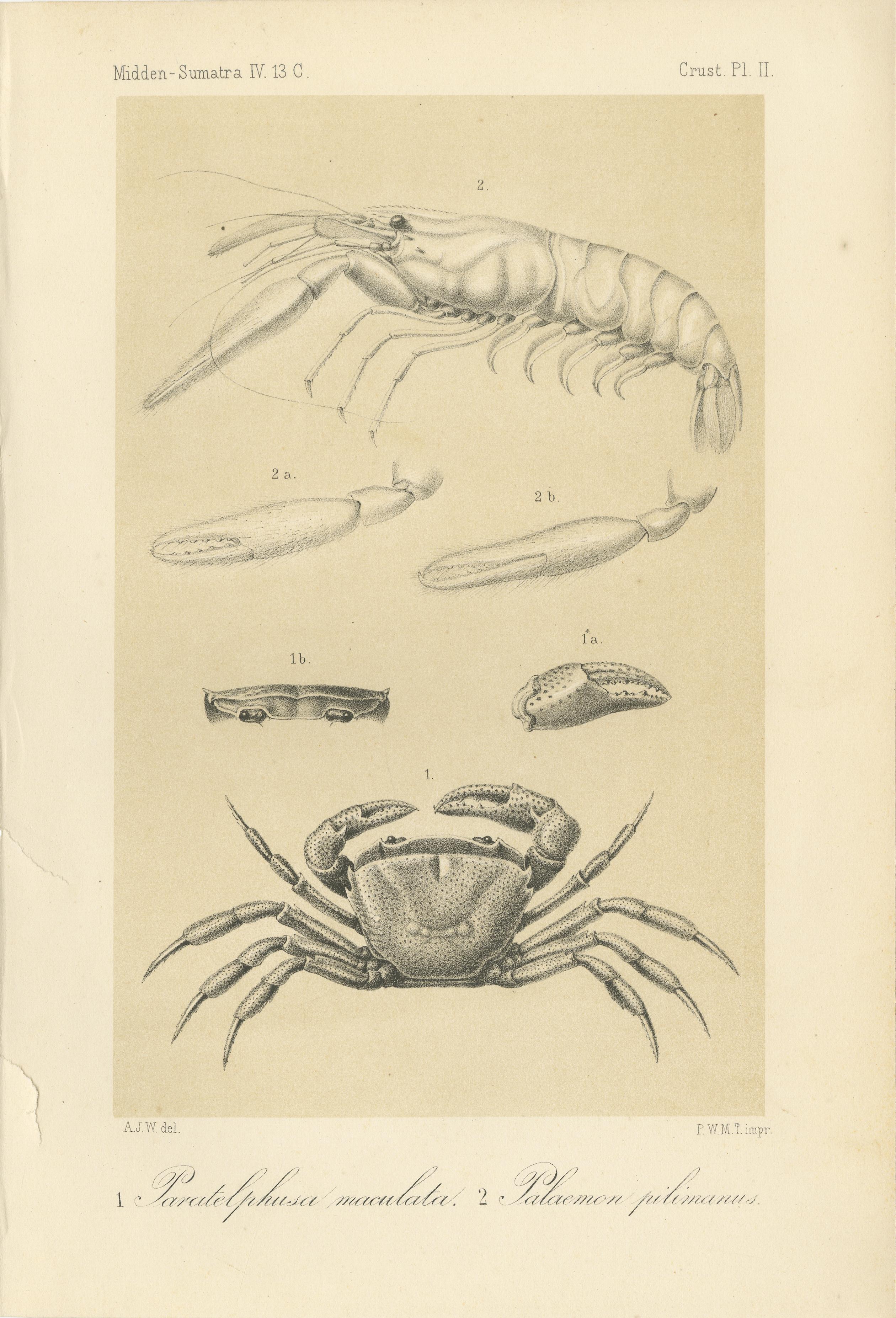
Antique Scientific Print of Sumatran Crab and Prawn, Midden-Sumatra c.1887
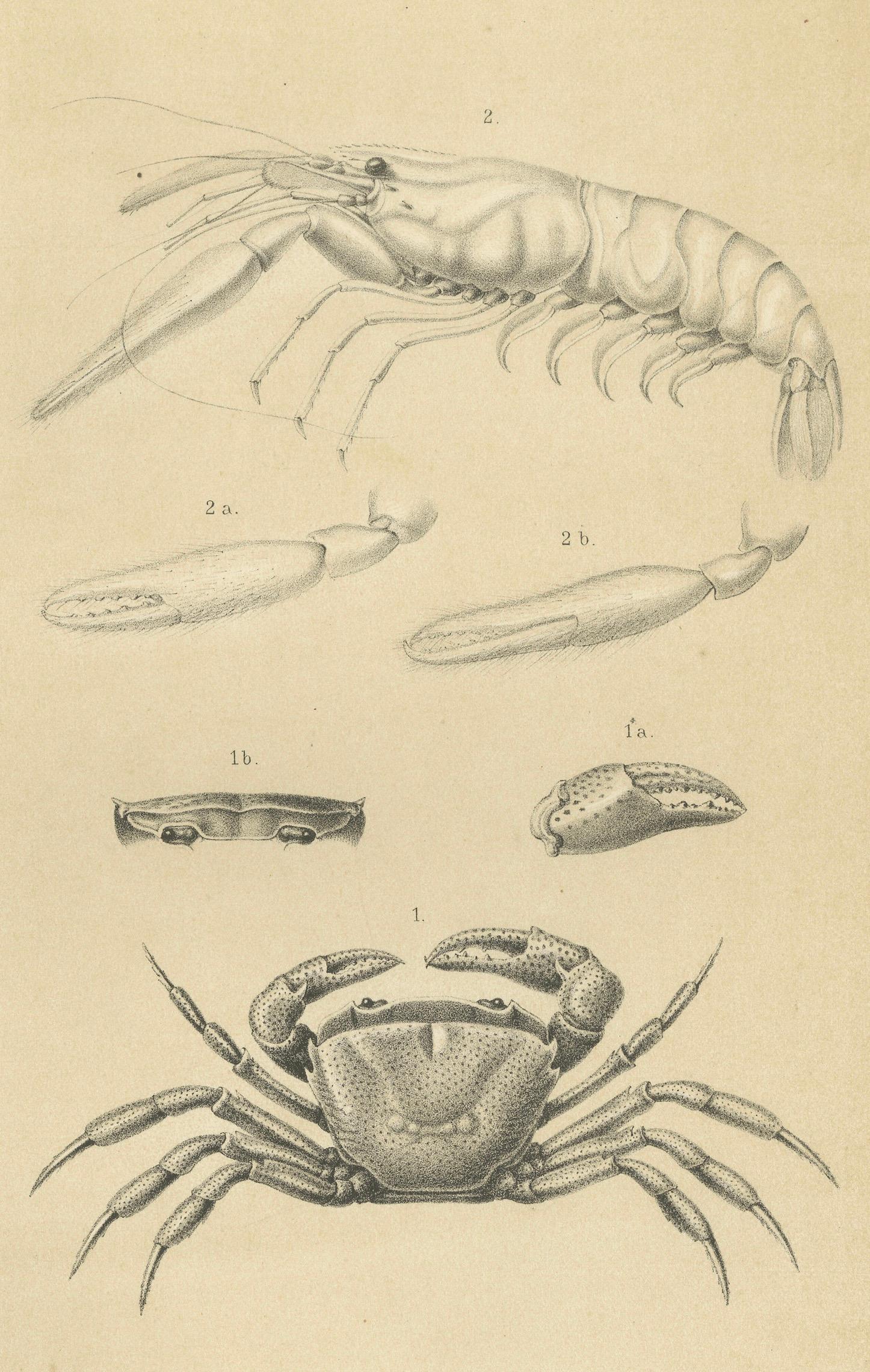
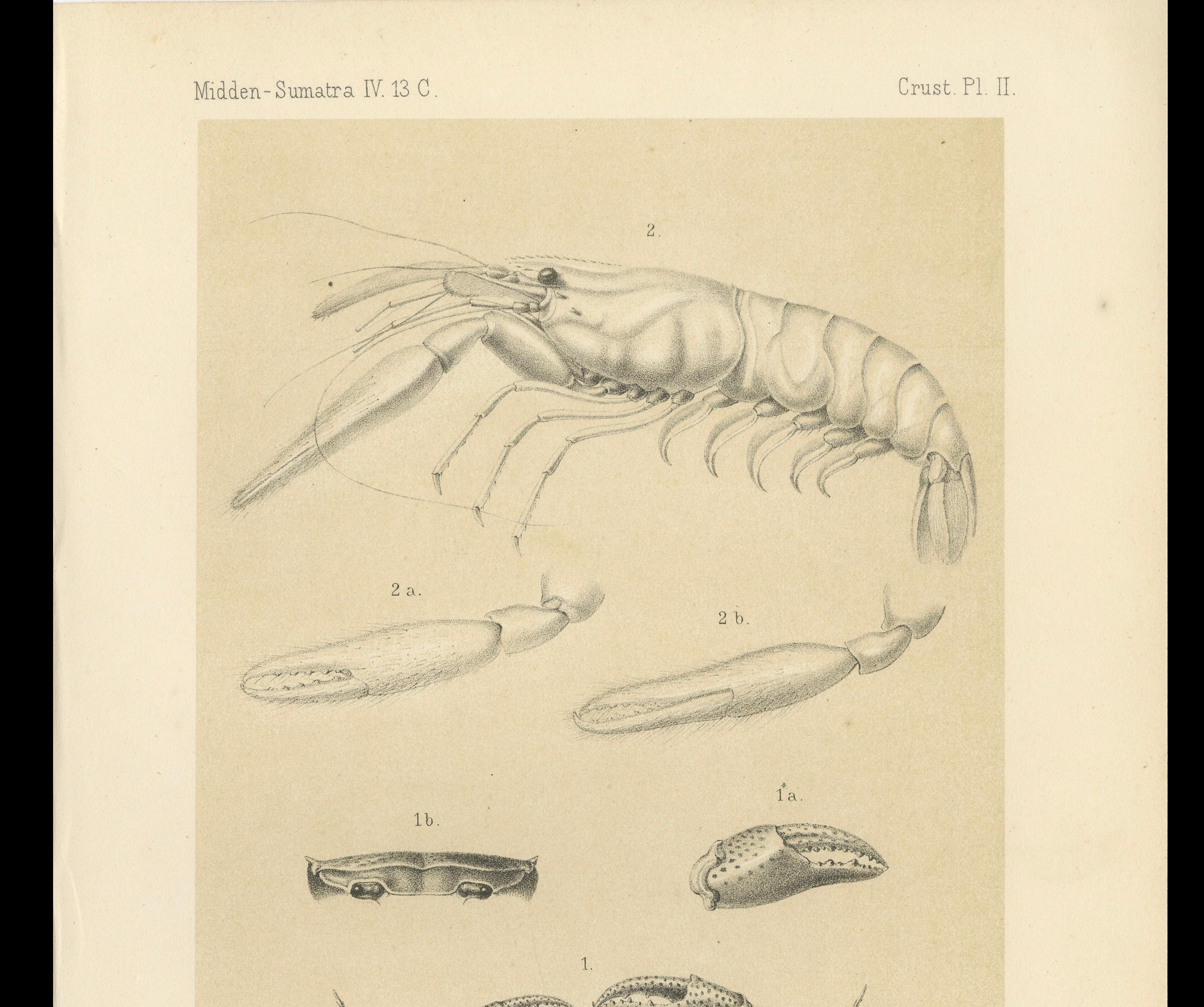
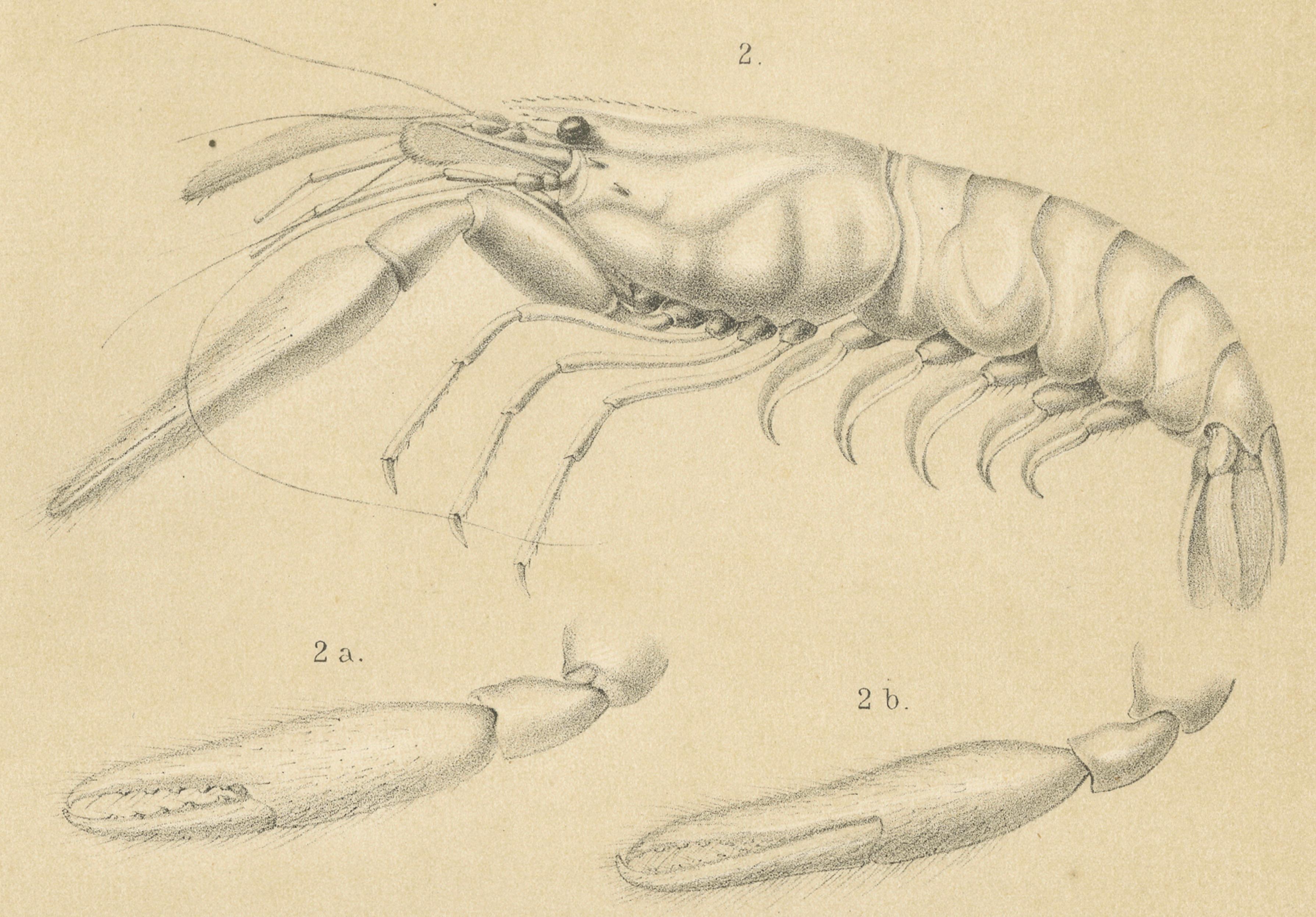
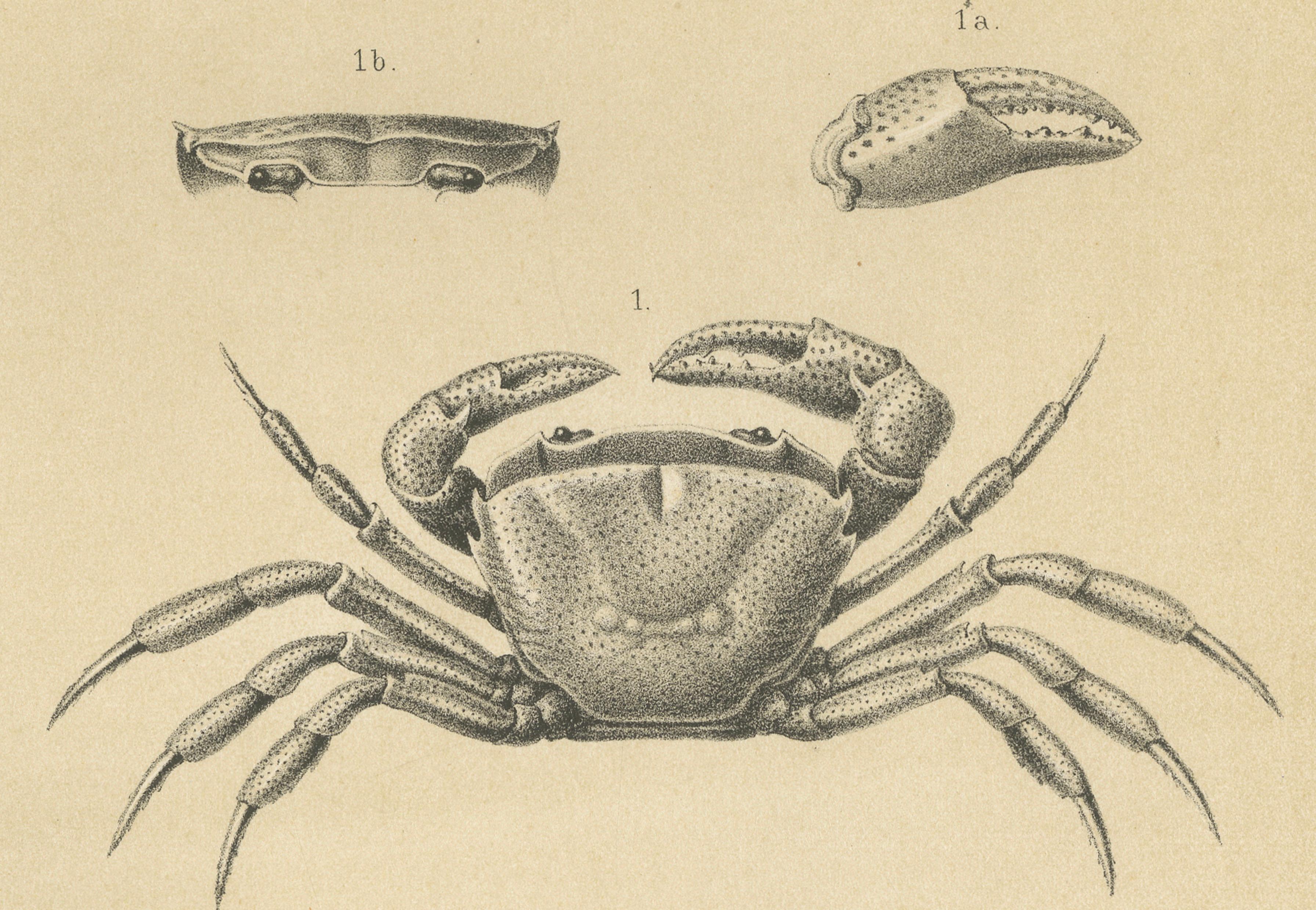
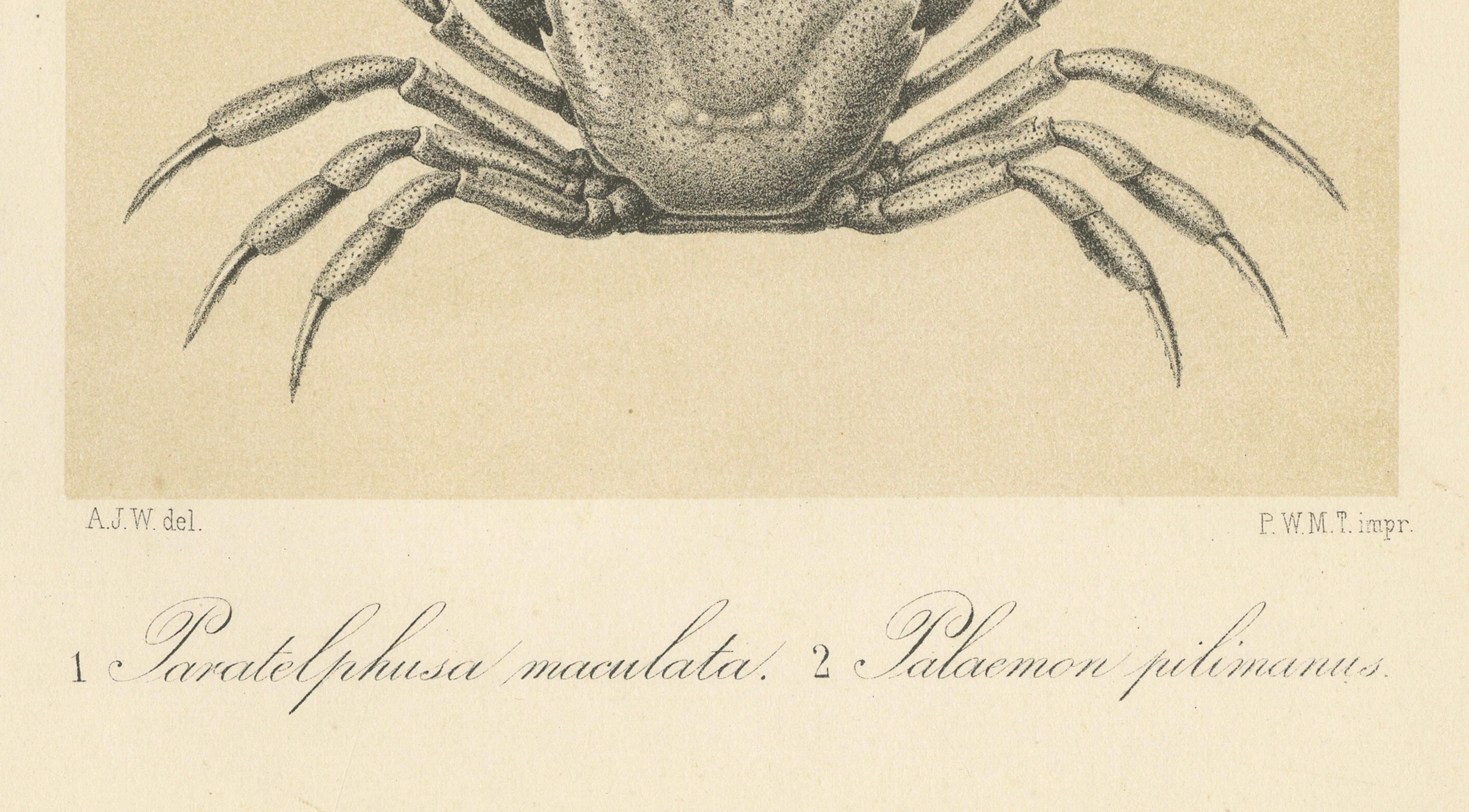
This detailed antique scientific lithograph depicts two crustacean species from Sumatra: Paratelphusa maculata (freshwater crab) and Palaemon pilimanus (prawn). The print is titled Midden-Sumatra IV.13 C. Crust. Pl. II. and was drawn by A.J.W. and printed by P.W\.M. Trap in the late 19th century as part of the Dutch colonial natural history documentation of Central Sumatra.
The illustration shows both species with exceptional anatomical precision: the crab displayed ventrally and dorsally with detailed claws (1, 1a, 1b) and the prawn shown in lateral view with enlarged studies of its pincers (2, 2a, 2b). Such plates were essential for taxonomic classification and remain valuable for researchers and collectors interested in the biodiversity studies of the East Indies.
Produced under the supervision of Dutch zoologists, these lithographs combine scientific accuracy with aesthetic clarity, representing a key period in colonial-era zoological exploration. Today they are collected for their decorative and educational value in natural history, crustacean biology, and Southeast Asian biodiversity collections.
Condition report: The print is in good condition with strong original impressions. Minor age toning is visible, along with two small margin tears lower left, not affecting the image area. The paper remains stable and untrimmed.
Framing tips: This lithograph will display beautifully in a slim black or dark wood frame with a gold inner edge to highlight its crisp lines. Pair with a cream or pale sand-coloured mat for a refined presentation, ideal for natural history galleries, studies, or scientific illustration walls.