Antique Print of Greenland Shark with Detail Views – Paris, circa 1845
€ 780
One of a kind: this is the sheet in the photographs. Ships from Langweer, the Netherlands.
Date
1845
Sheet size
34 × 48.7 cm (13.4 × 19.2 in)
Condition
Good
Reference
BG-09916
Condition
Good to very good. Some light foxing is visible, mostly confined to the margins. The main image is clear and the colors remain strong. Plate mark is visible. No restoration or repairs.
About this sheet
Antique Print of Greenland Shark with Detail Views – Paris, circa 1845
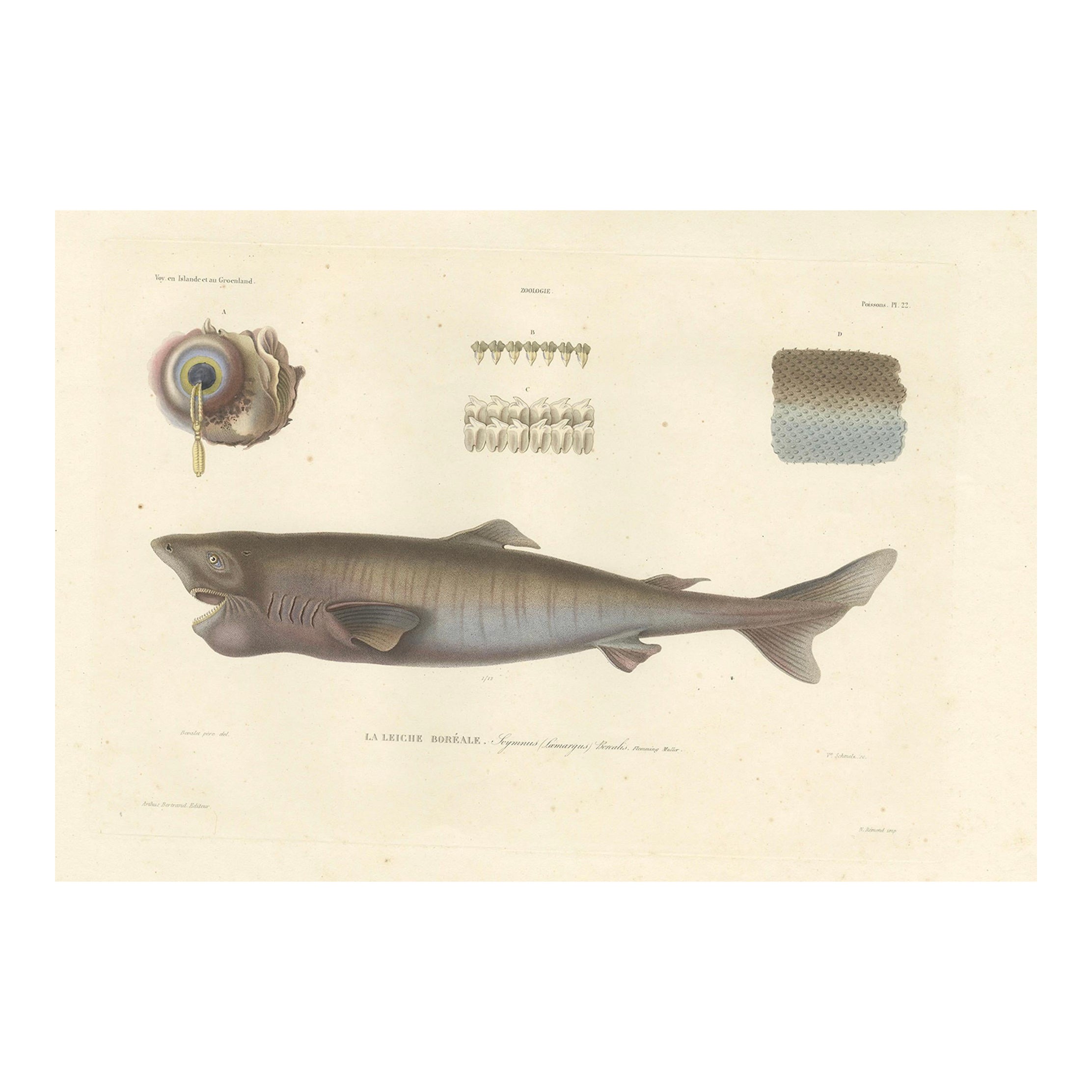
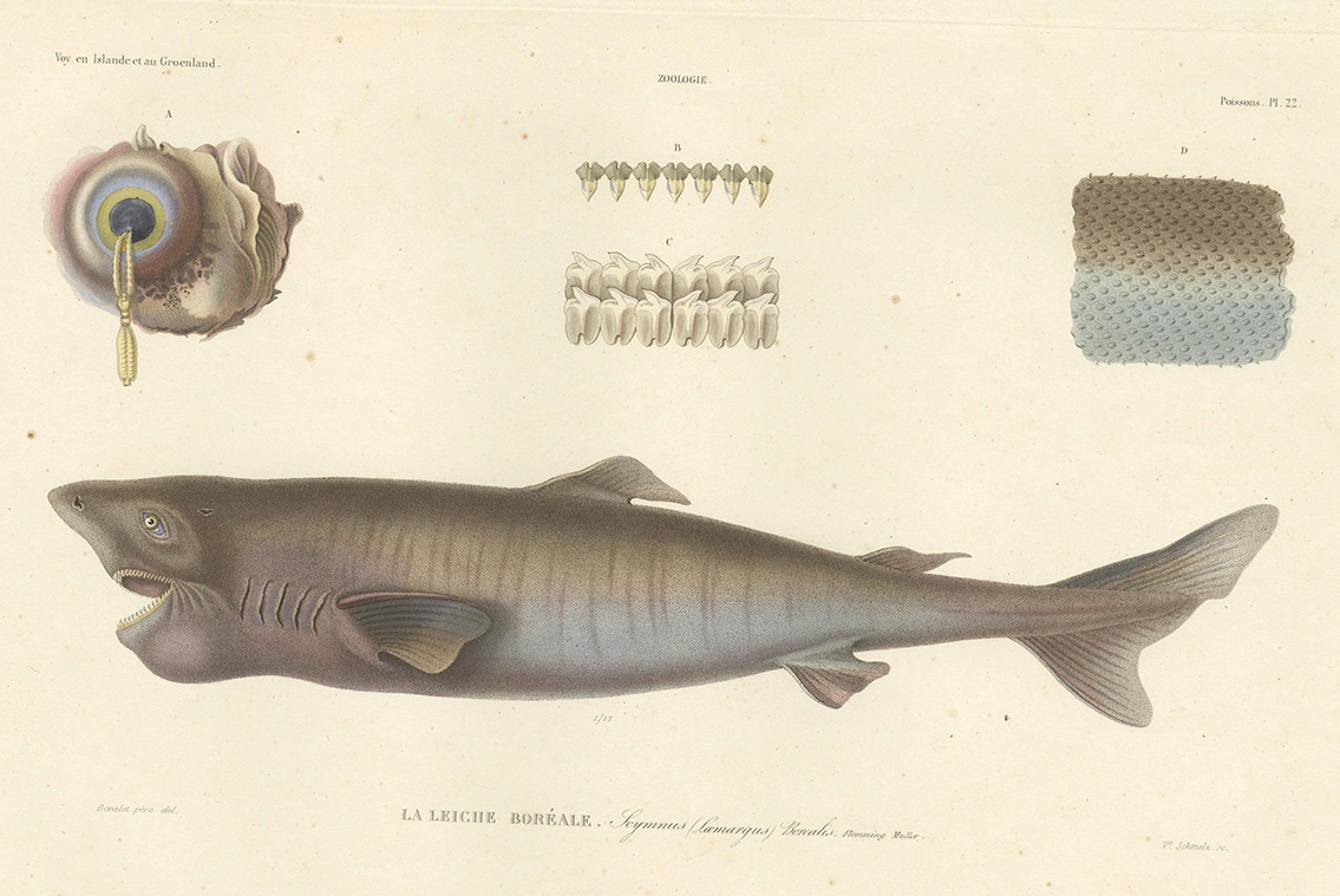
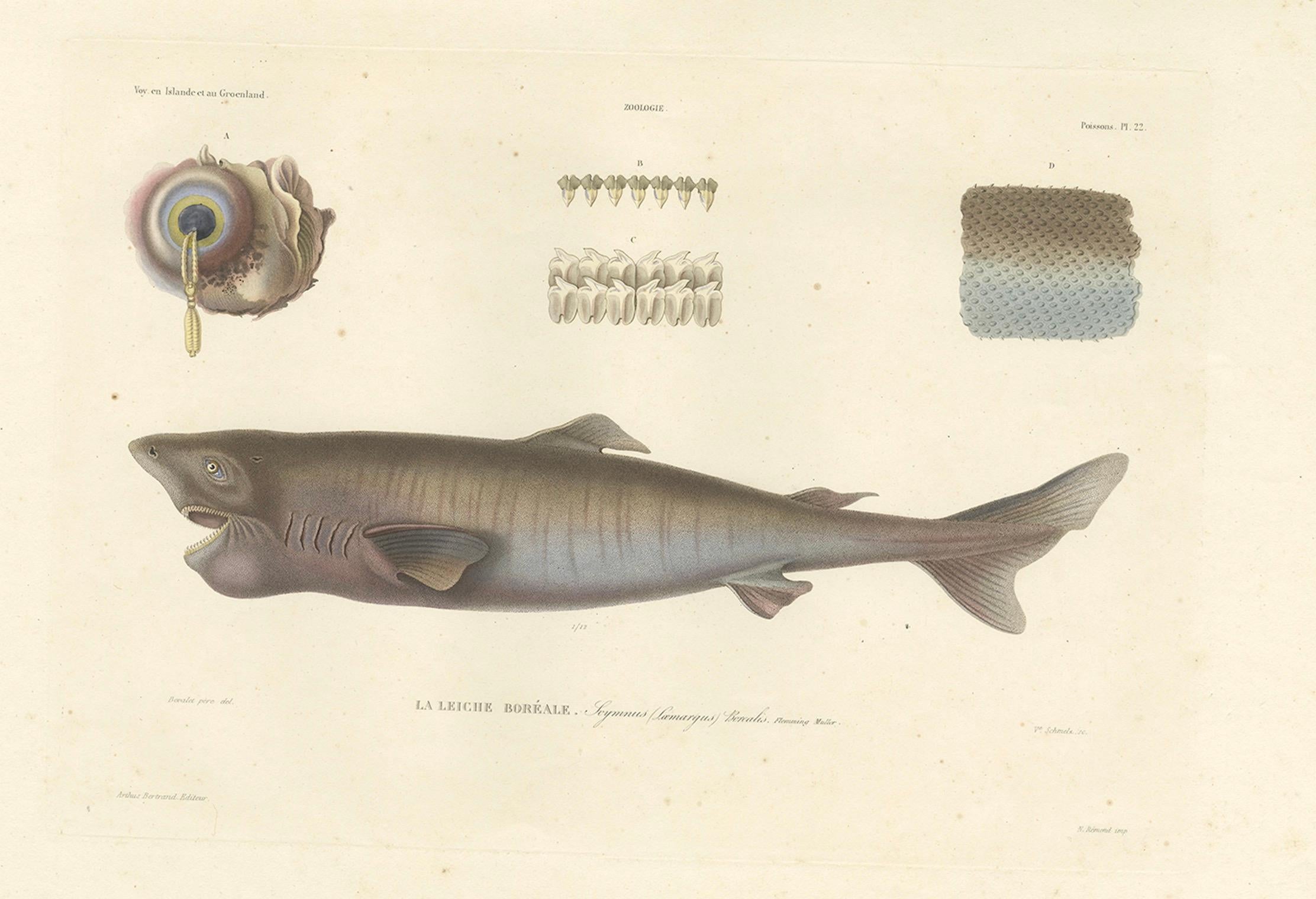
This finely detailed hand-colored lithograph features La Liche Boréale — the Greenland Shark (Squalus (Somniosus) borealis), as it was classified in the 19th century. The illustration shows a full-body depiction of the shark, accompanied by inset studies of anatomical features including the eye, teeth, and dermal skin texture. This combination of artistic rendering and scientific observation is typical of French expeditionary zoological works from the mid-1800s.
The print is plate number 22 from the section on fish (Poissons Pl. 22) in the publication "Voyage en Islande et au Groenland" — a French scientific expedition that explored the northern Atlantic and Arctic waters. Printed by Langlumé and published under the auspices of French natural history institutions, this lithograph stands as both a decorative and educational artifact.
The Greenland Shark, native to cold Arctic and subarctic waters, is known for its elusive nature, sluggish movement, and remarkable longevity. Recent scientific findings suggest that some specimens can live well over 300 years. In the 19th century, it was a rare and fascinating subject, especially for naturalists documenting the marine life of remote northern regions.
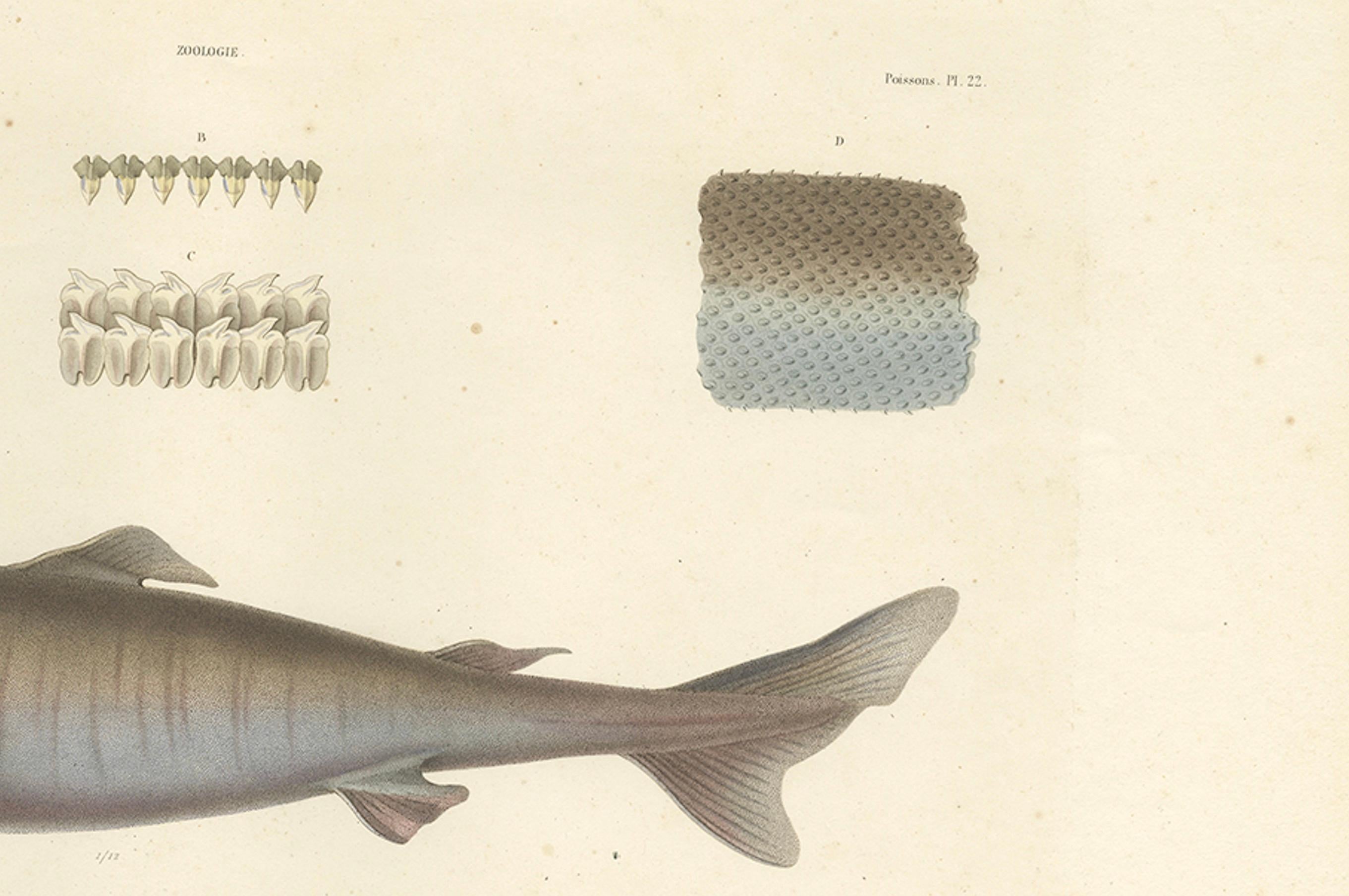
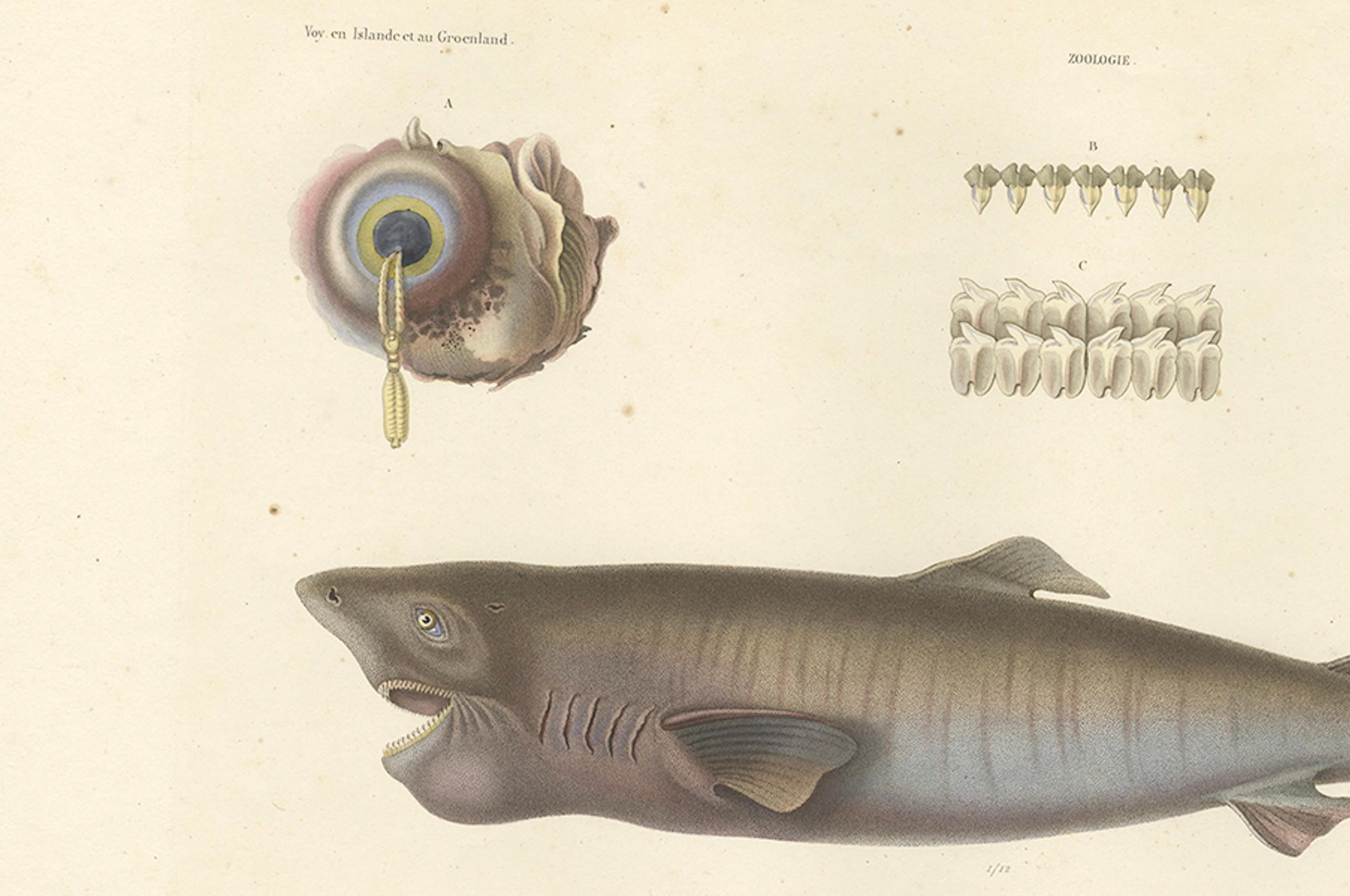
The inset illustrations provide close-up scientific observations: A – a detailed view of the eye B and C – rows of teeth from upper and lower jaws D – the shark’s rough, scale-like skin texture
These details were included to help zoologists and anatomists understand the adaptations of deep-sea species. The clarity and accuracy of this print make it a valuable example of scientific illustration from the age of exploration.
Condition: Good to very good. Some light foxing is visible, mostly confined to the margins. The main image is clear and the colors remain strong. Plate mark is visible. No restoration or repairs.
Framing tips: This print works well in a black or dark wood frame with a soft cream or grey mat to complement the subtle tones of the illustration. Use UV-protective glass or acrylic to preserve the hand coloring. Suitable for natural history displays, marine-themed interiors, or collectors of Arctic exploration material.