About this sheet
Antique Print of the Icelandic Horse – Gaimard, 1842
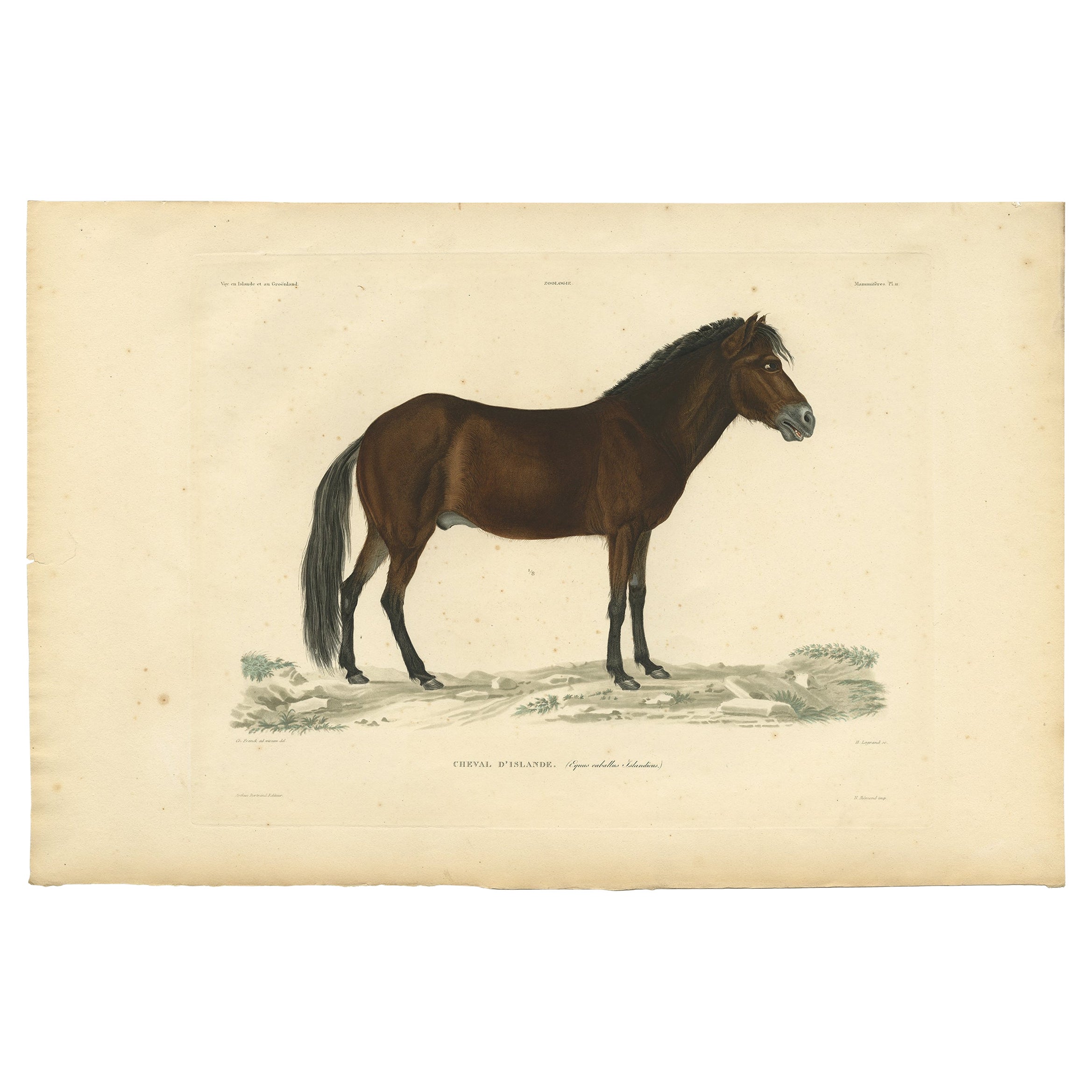
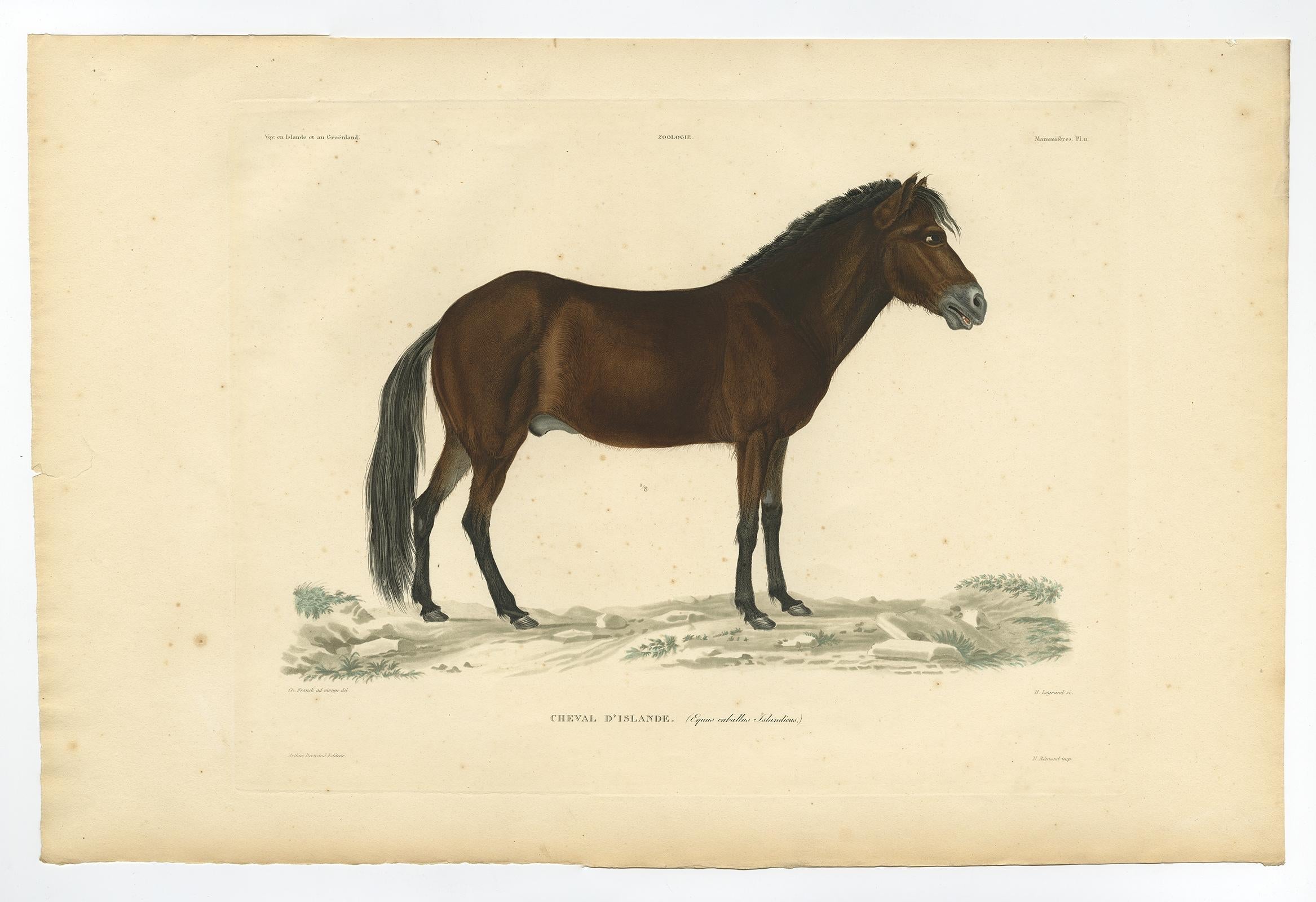
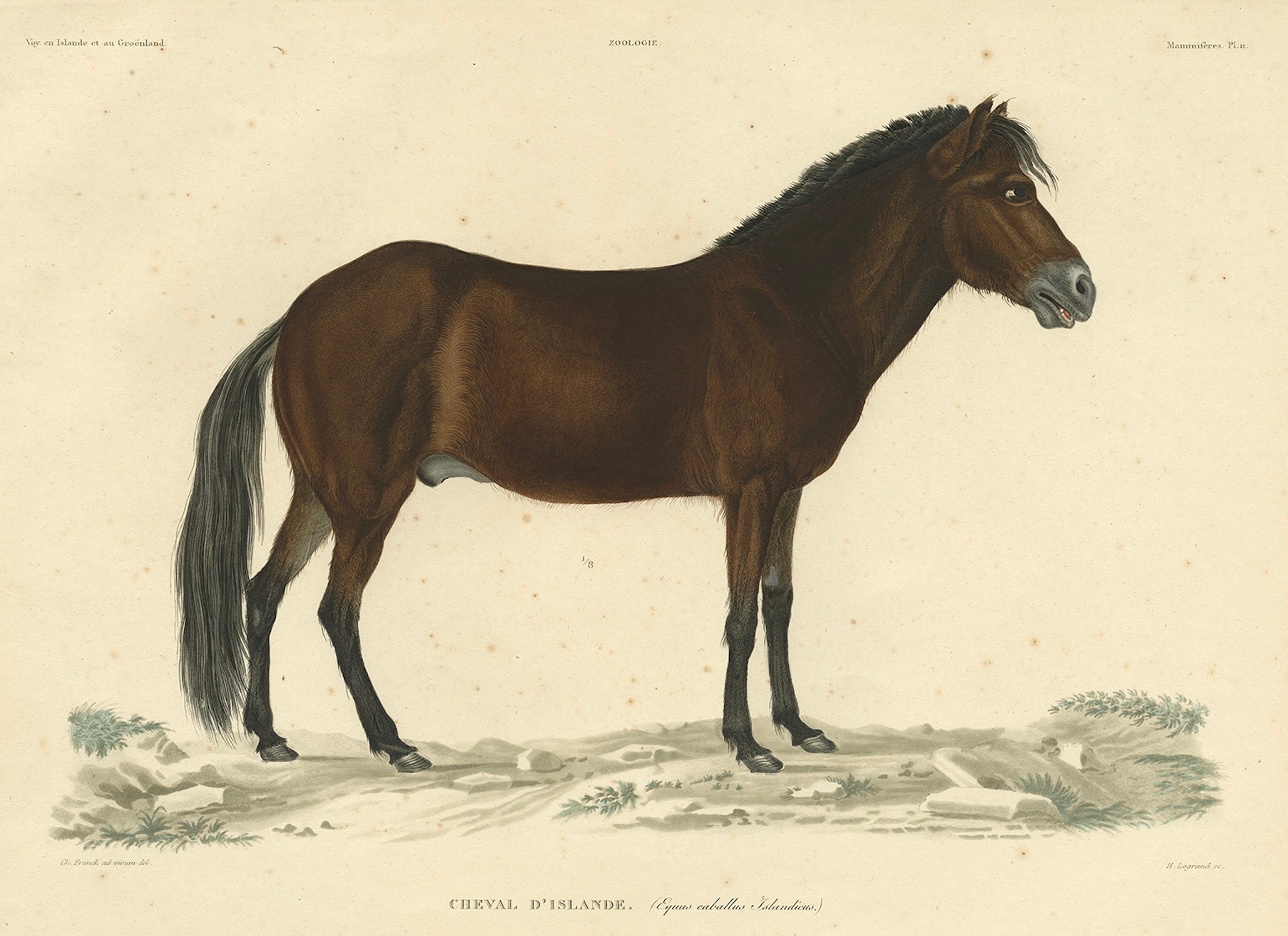
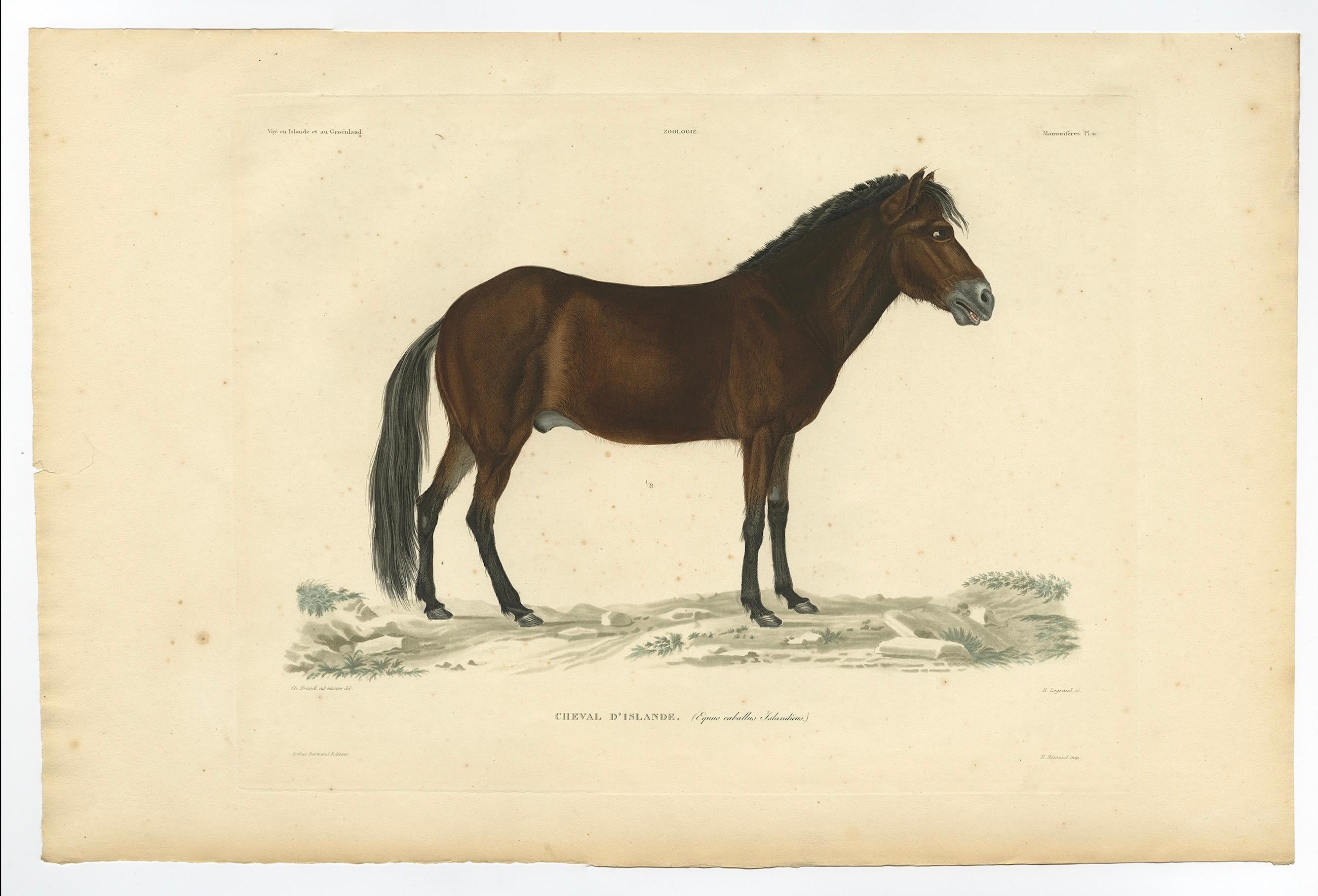
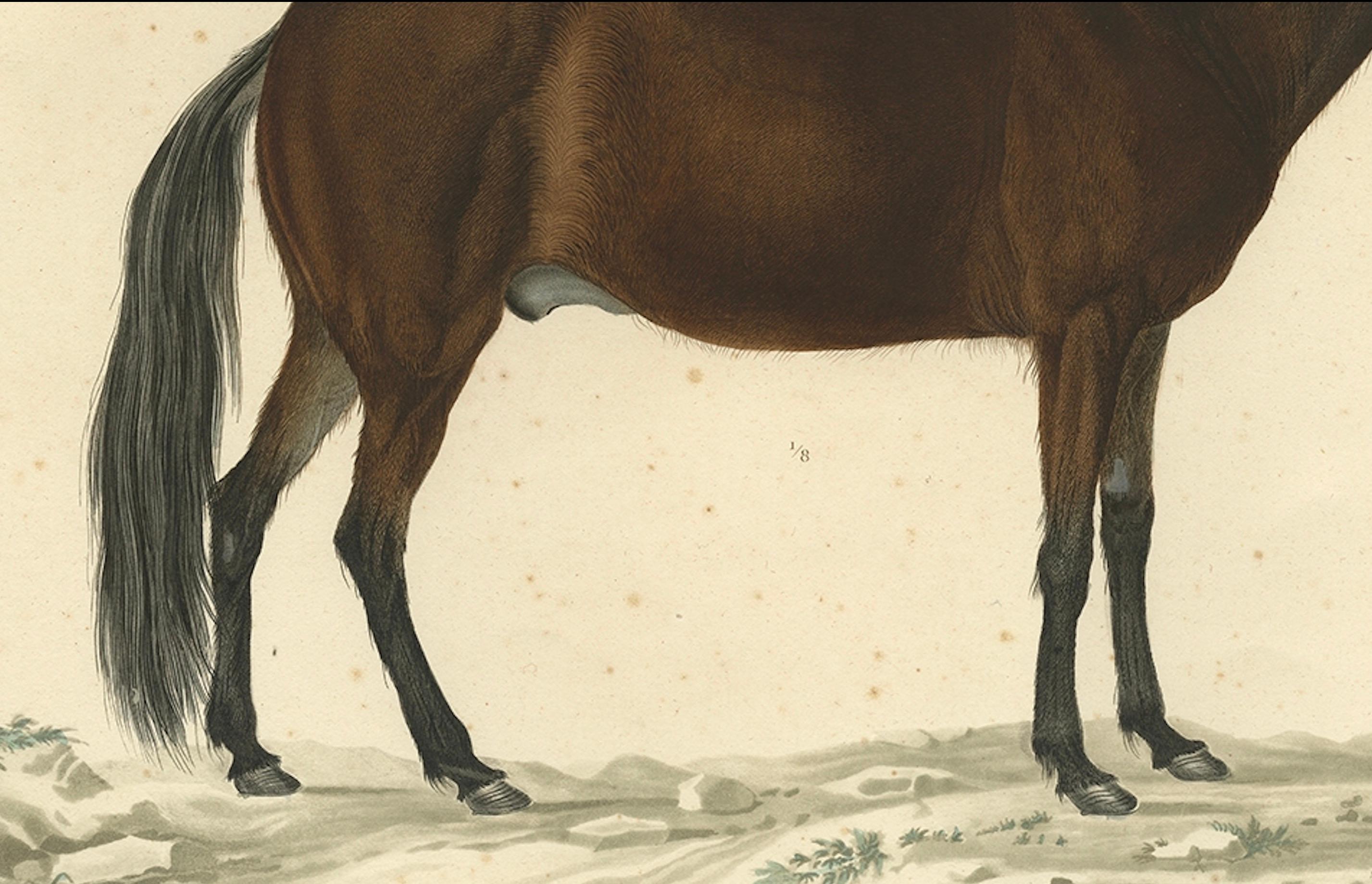
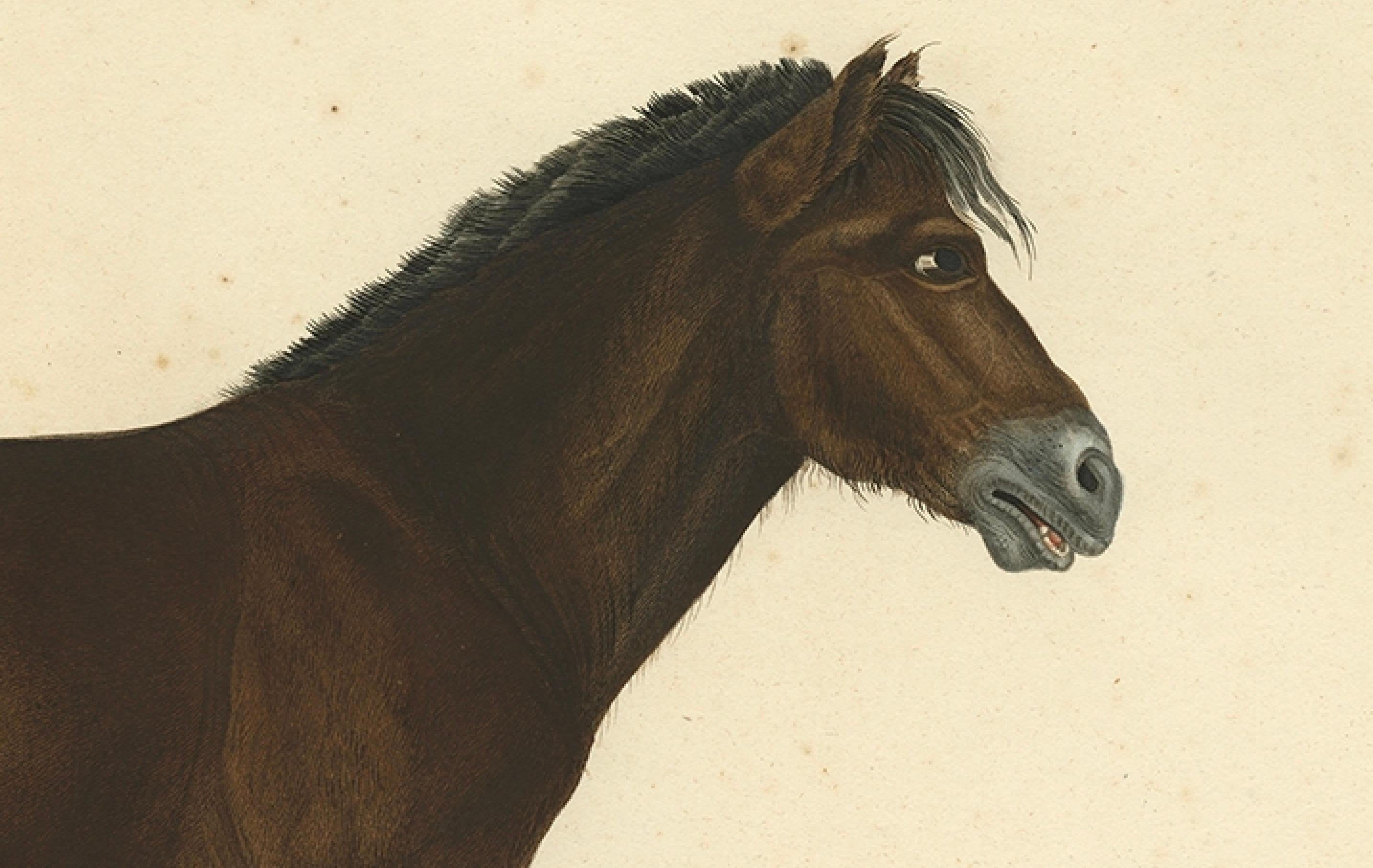
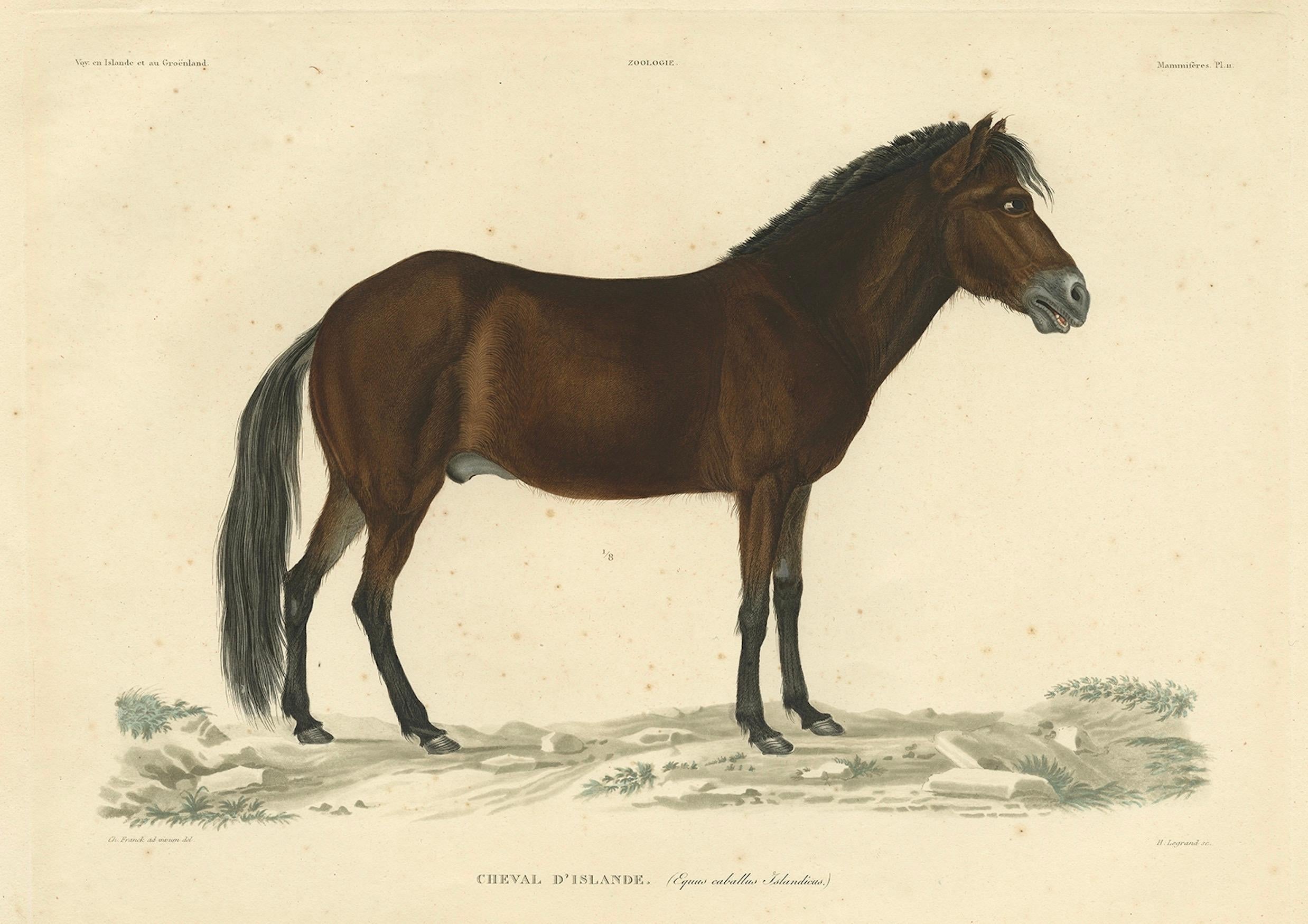
This hand-colored lithograph portrays the Icelandic Horse (Equus caballus islandicus), one of the most iconic and ancient horse breeds in Europe. Known for its small but sturdy build, thick coat, and remarkable endurance, the Icelandic Horse has been an indispensable companion in the harsh northern climate for centuries.
The animal is shown in profile, standing on rocky terrain with sparse vegetation, emphasizing its adaptation to Iceland’s rugged landscape. Its muscular body, thick mane, and strong legs are rendered with careful attention to detail, highlighting both its strength and resilience. The simple yet naturalistic background places the horse in its native environment, making this one of the most admired mammal plates from Gaimard’s expedition.
The illustration was published in *Voyage en Islande et au Groenland* (Paris, 1842), Paul Gaimard’s extensive account of his 1835 expedition. Although the voyage was originally intended to search for the lost Arctic expedition of Jean de Blosseville, it instead produced a wide-ranging survey of Icelandic and Greenlandic geography, ethnography, and natural history. The zoological section included mammals, birds, and marine life, all drawn with scientific precision and hand-colored to bring them vividly to life.
This plate was drawn by H. Cappadose and lithographed by J. Bernard, with hand coloring applied. The combination of technical accuracy and subtle artistic detail makes it both a valuable scientific record and an attractive decorative print. Today, it is particularly desirable among collectors of equine art, Icelandic cultural history, and natural history illustration.
Condition report: Strong impression with original hand coloring. Wide margins with scattered foxing and mild age toning, particularly in the outer sheet, not affecting the image itself. Plate mark visible.
Framing tips: Best displayed in a walnut or natural oak frame with a cream or pale ivory mat, which will complement the warm brown tones of the horse. A double mat with a soft green or grey inner border can add subtle depth while echoing the natural setting.
Technique: Hand-colored lithograph
Maker: Drawn by H. Cappadose, lithographed by J. Bernard – from Paul Gaimard, Paris, 1842