About this sheet
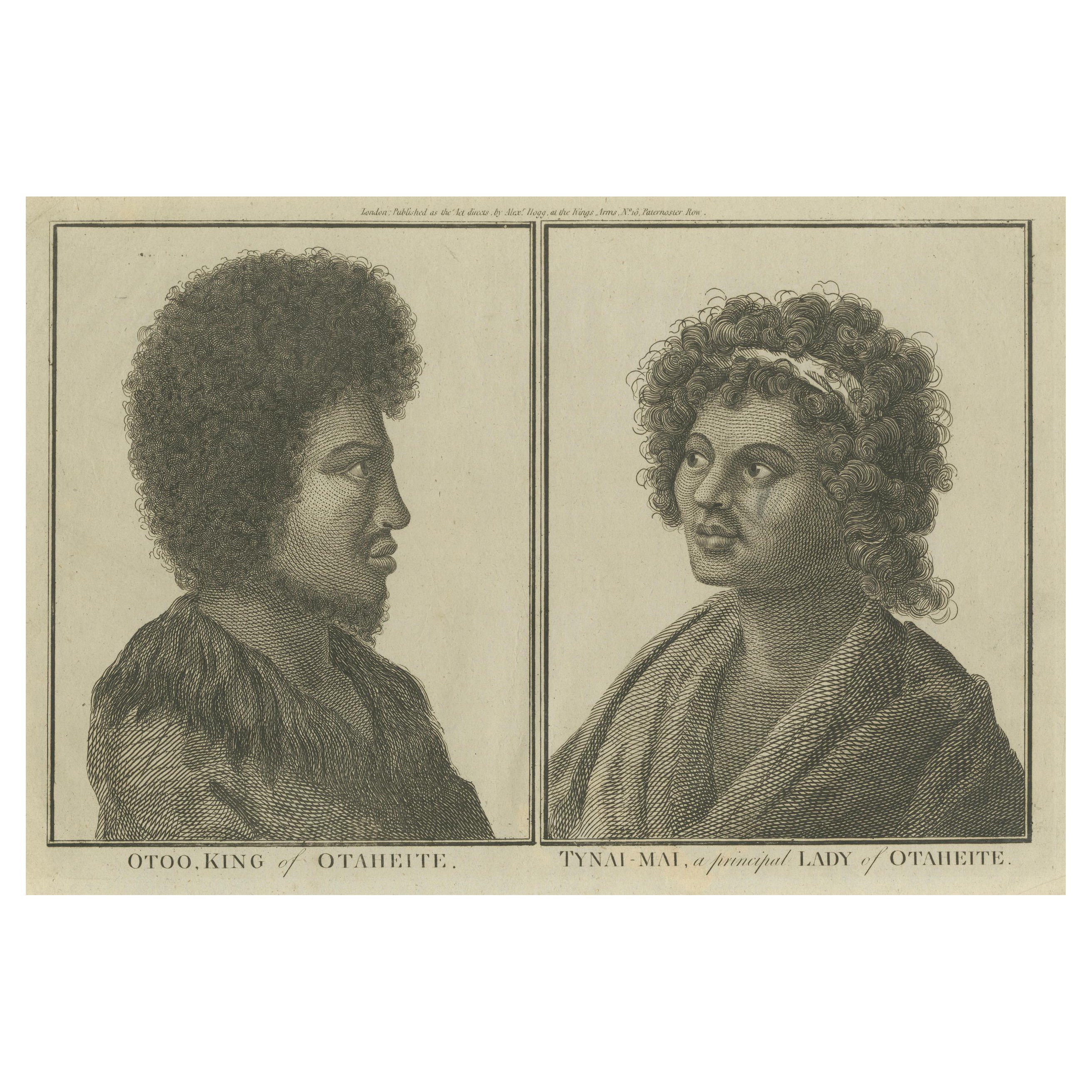
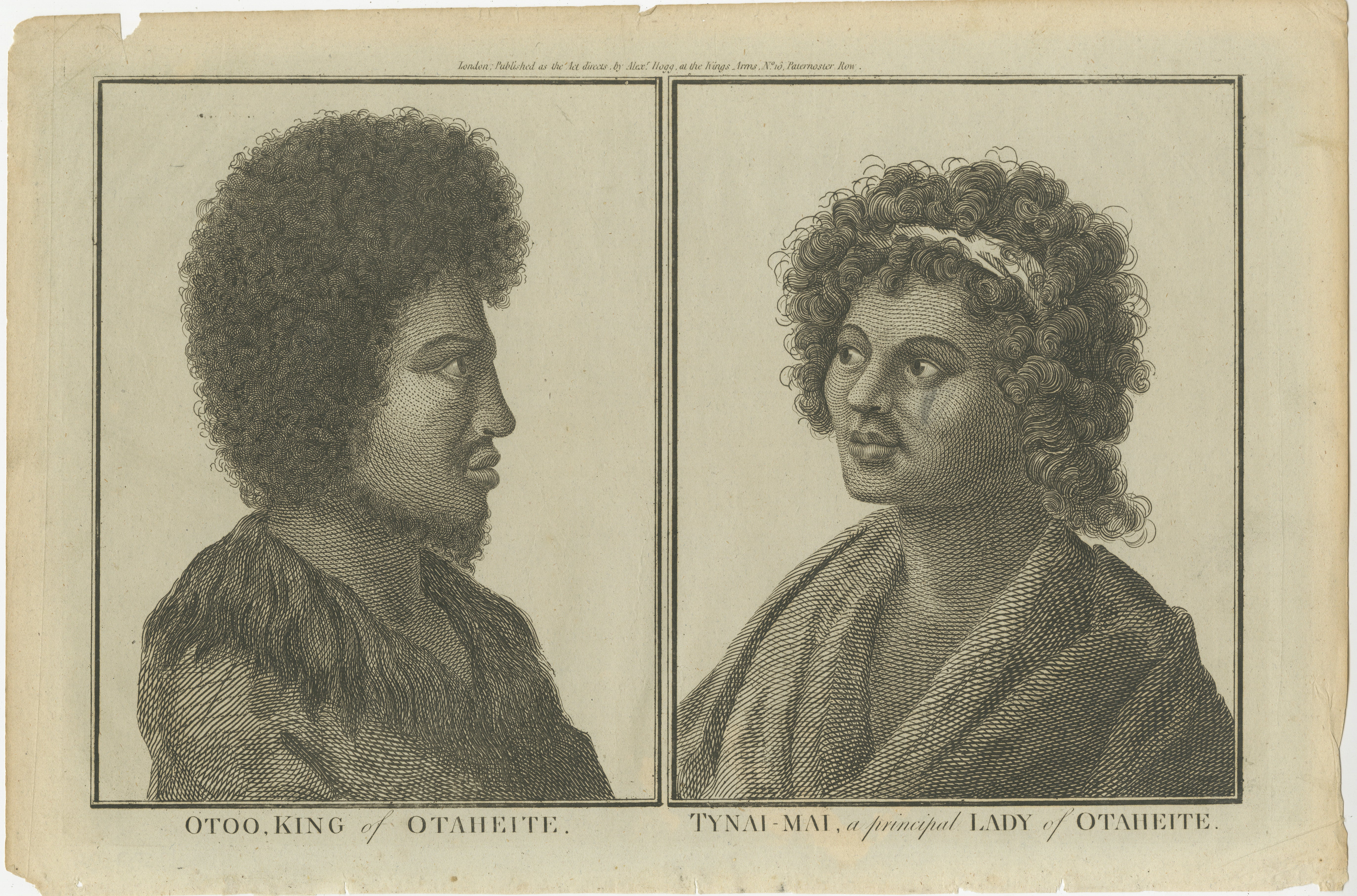
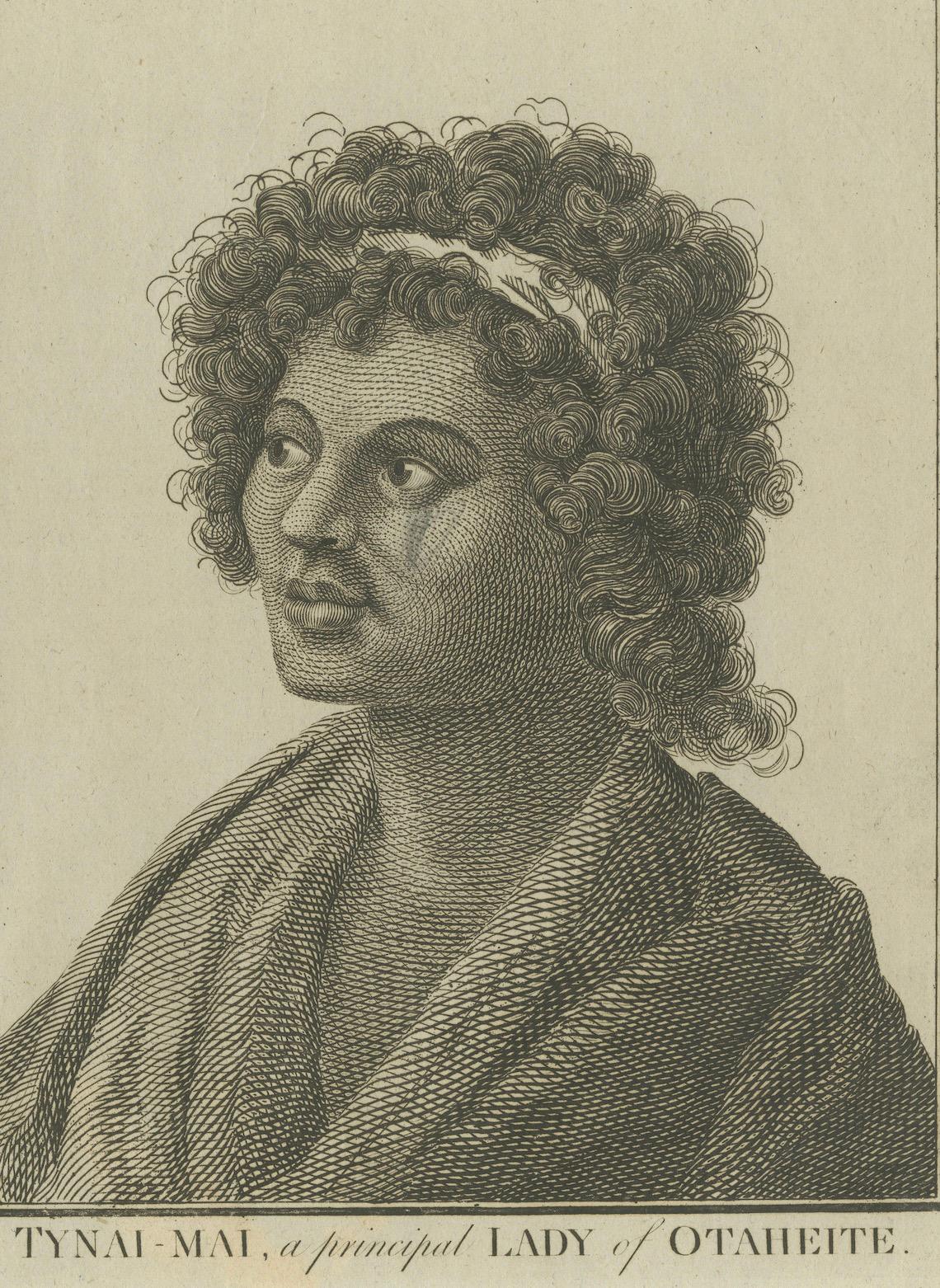
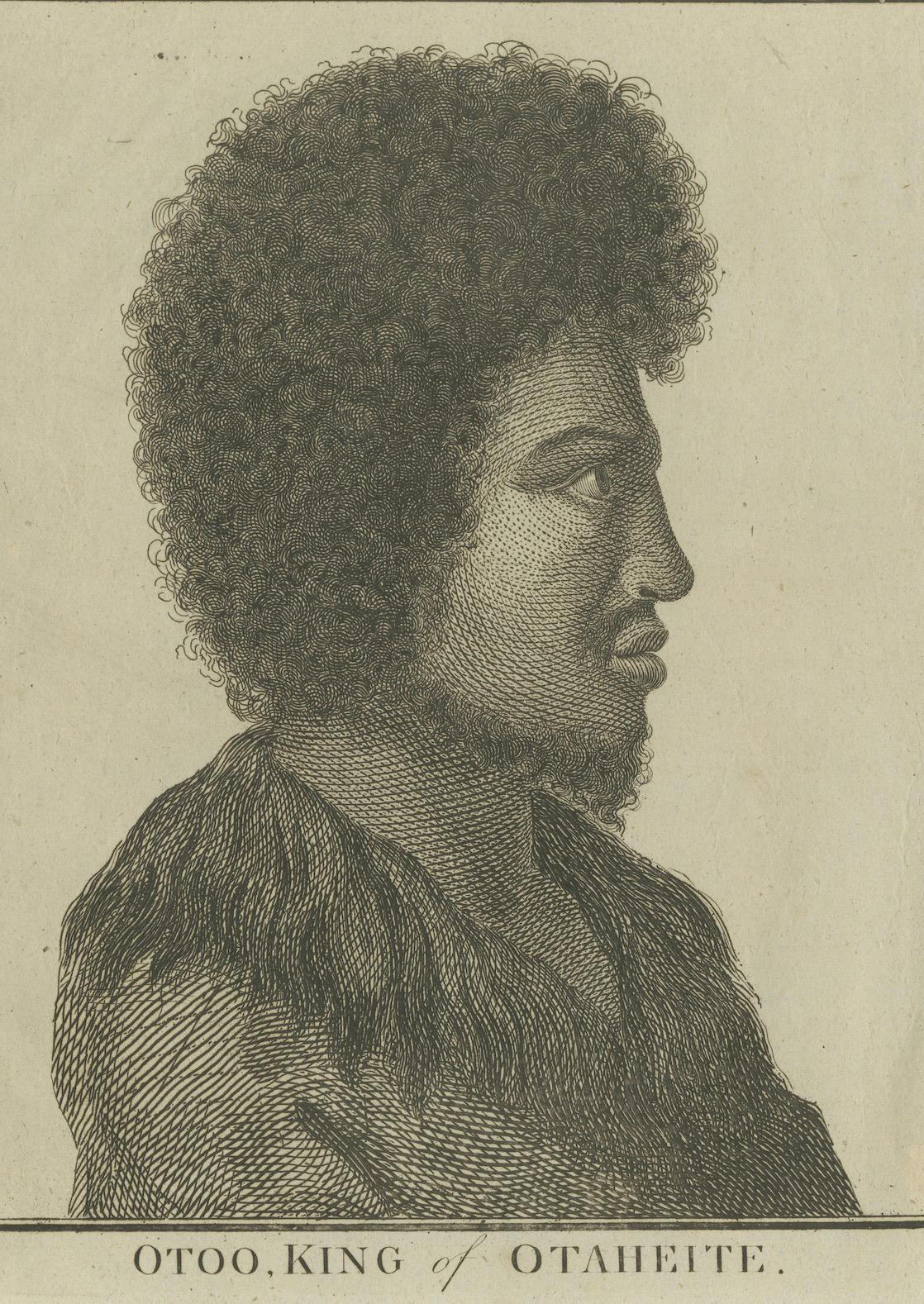
The engraving showcases two individuals of high status from Tahiti, known historically as "Otaheite" during the period of European exploration in the Pacific.
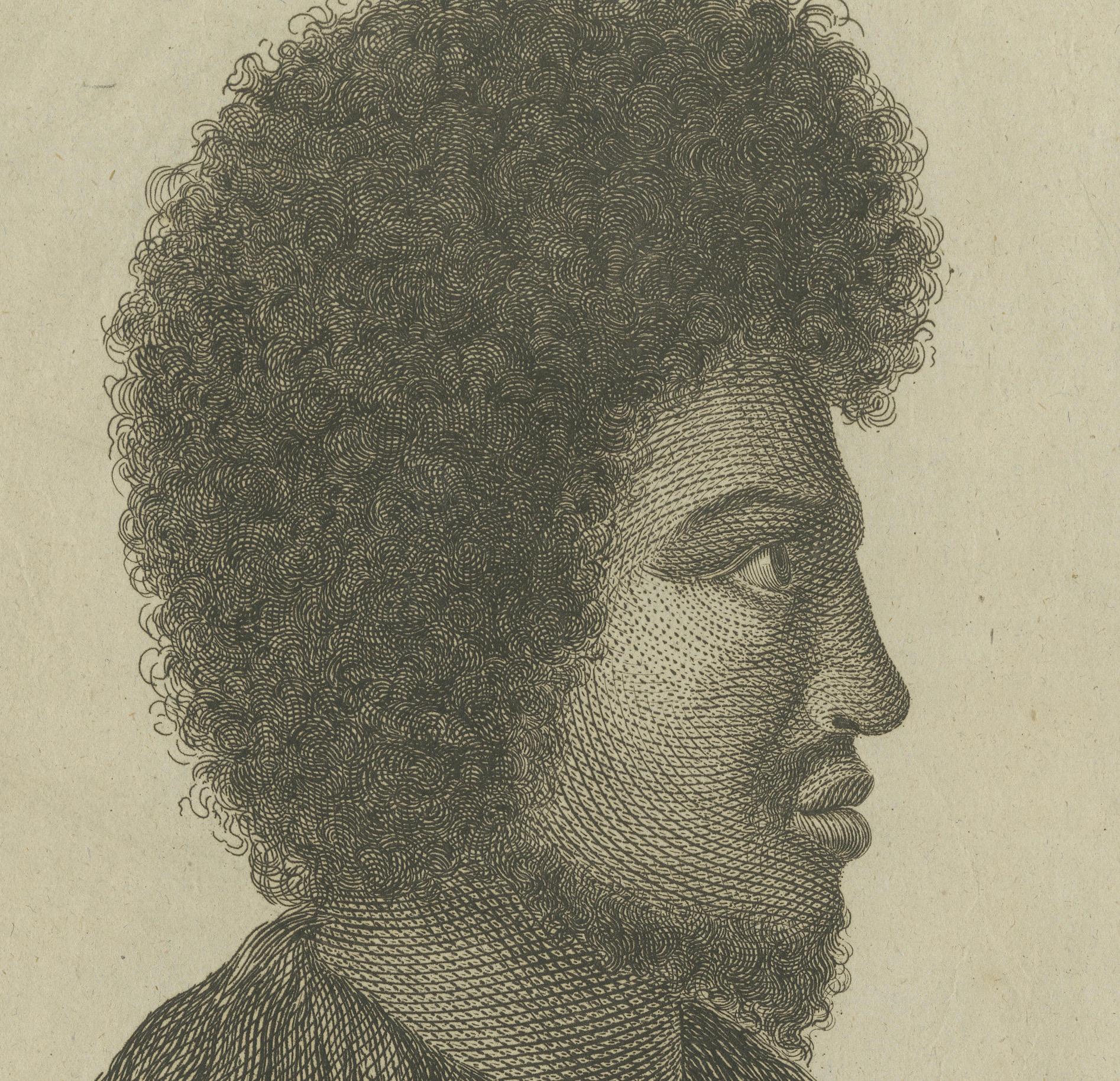
On the left is "OTOO, KING of OTAHEITE." He is portrayed in profile, with a strong gaze and a full head of curly hair, indicating his noble status. His attire is simple yet may carry symbols of his rank, and his posture is one of regal bearing.
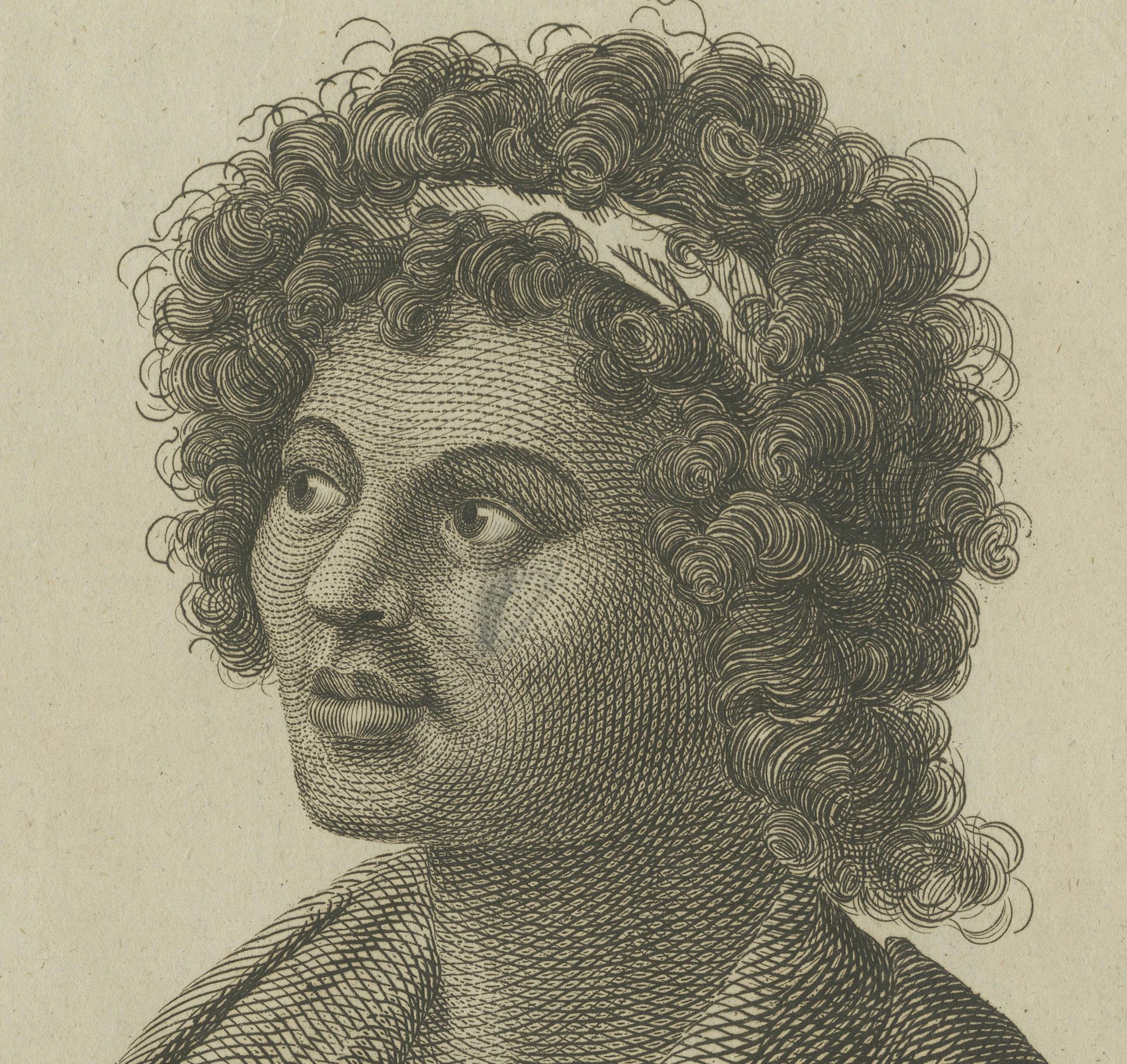
On the right is "TYNAI-MAI, a principal LADY of OTAHEITE." Her hair is styled in ringlets, a detail that emphasizes her status, and she wears a headband and a striped garment draped around her, similar to the attire of the king. Her expression is poised, and she has a direct and engaging gaze.
The publication date of this engraving would be from a collection detailing Captain Cook's voyages, published in the late 18th century, likely in the 1780s. The detailed work suggests that it was created for a comprehensive and "accurate" account of the voyages, intended for an audience curious about the wider world.
More details on the persons depicted:
**Otoo (also known as Tu)**:
Otoo, whose name is sometimes spelled "Tu," was a high-ranking chief and later became the king of Tahiti. He was known to European explorers and was an important figure during the period of the first European contacts with Tahiti. Otoo was initially the Ari'i Rahi (paramount chief) of the Teva clan, which was one of the most powerful on the island. He became more prominent during the time of Captain James Cook's voyages in the Pacific.
Otoo's interactions with Europeans were significant as he navigated the complex dynamics of external influences while trying to maintain his authority and the traditions of Tahiti. His rule saw the initial stages of Tahiti's transformation through increasing contact with European ships and traders.
**Tynai-Mai**:
Tynai-Mai, referred to as a principal lady of Tahiti, is less well-documented in historical records than Otoo. Her title suggests that she was a woman of high social status, possibly a chieftainess or a member of the Tahitian nobility. Women in Tahitian society could hold significant influence and status, and her depiction in the engraving alongside Otoo indicates her importance.
The specific details of Tynai-Mai's life, her contributions to her society, and her interactions with European explorers are not widely recorded in the same manner as the male chiefs and kings of the time. Nevertheless, her inclusion in such engravings suggests that she was a figure of note during the period of initial European contact with Tahiti.
These individuals are emblematic of the complex and often challenging relationships that formed between European explorers and Pacific Islander societies during the Age of Discovery, a time marked by both mutual curiosity and the looming changes brought by colonization.