About this sheet
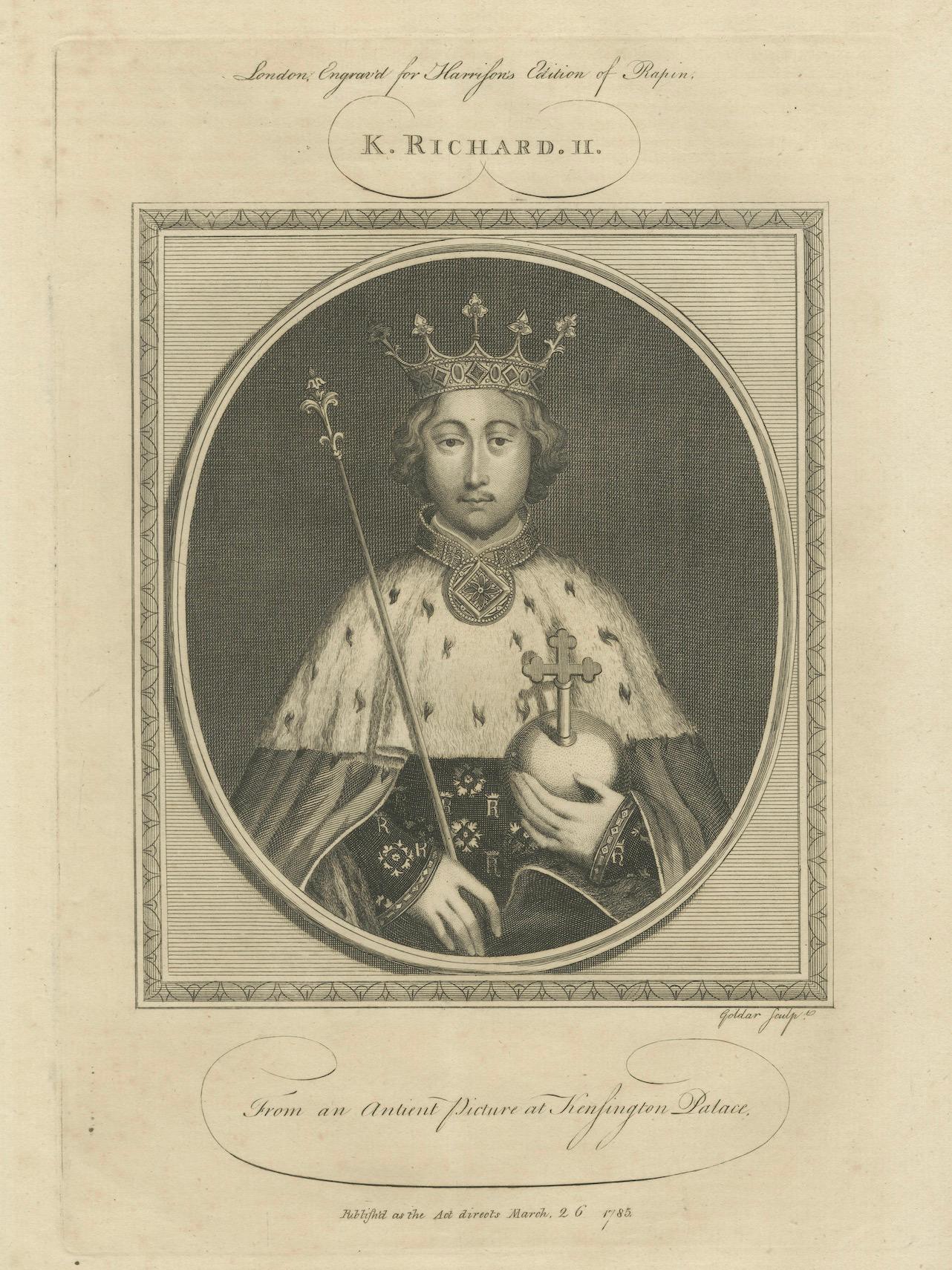
Antique Engraving of King Richard II – Published London, 1785
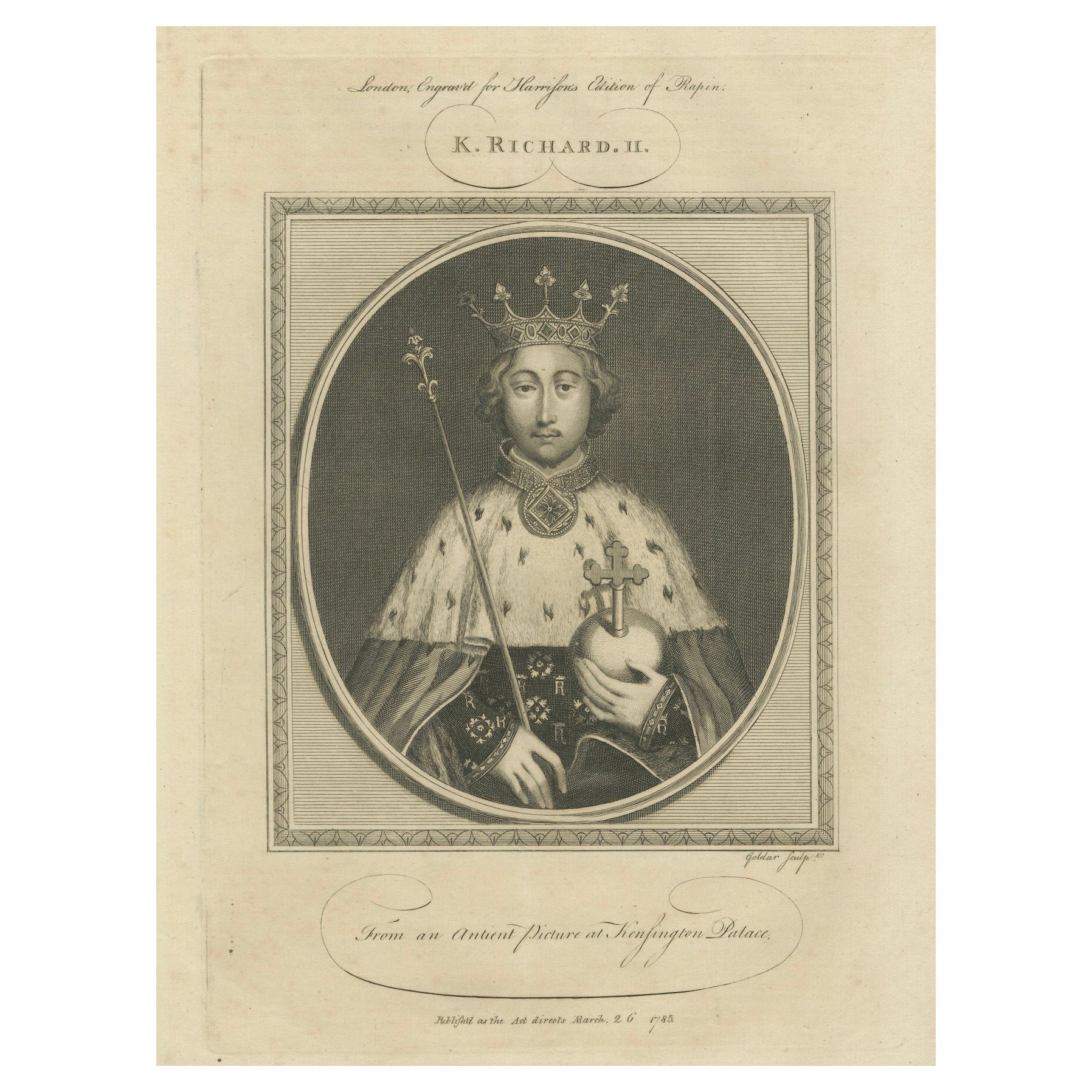
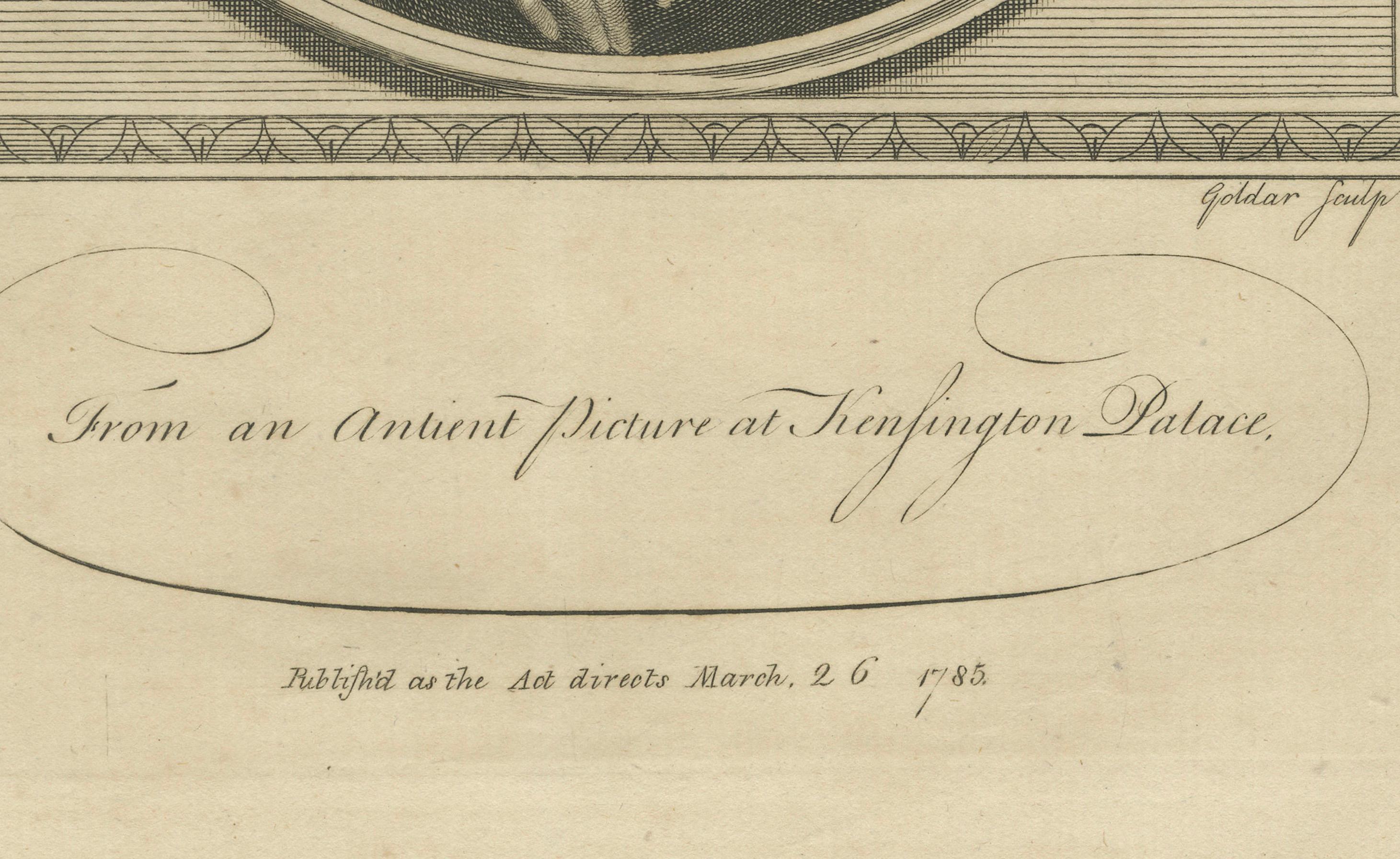
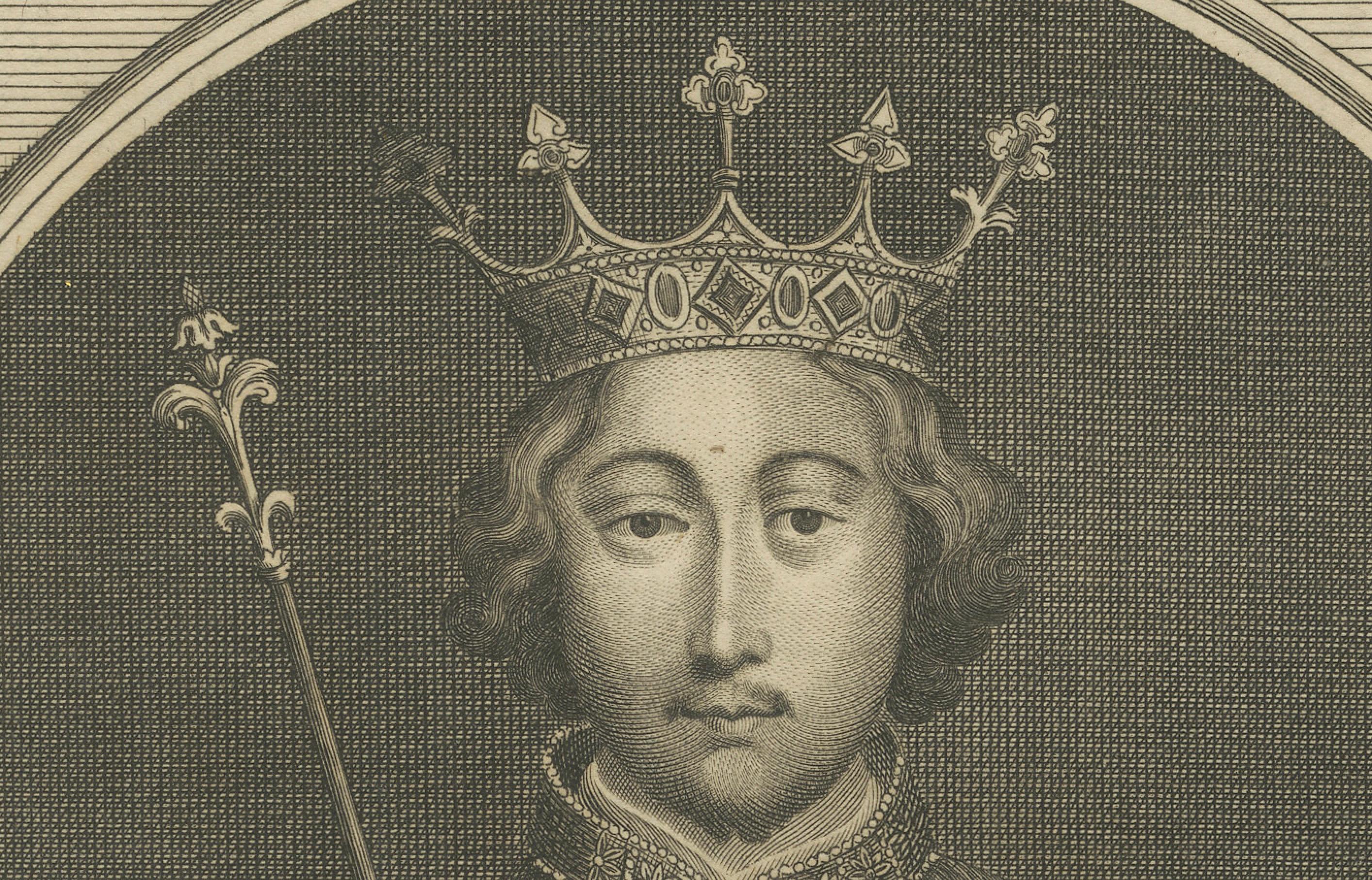
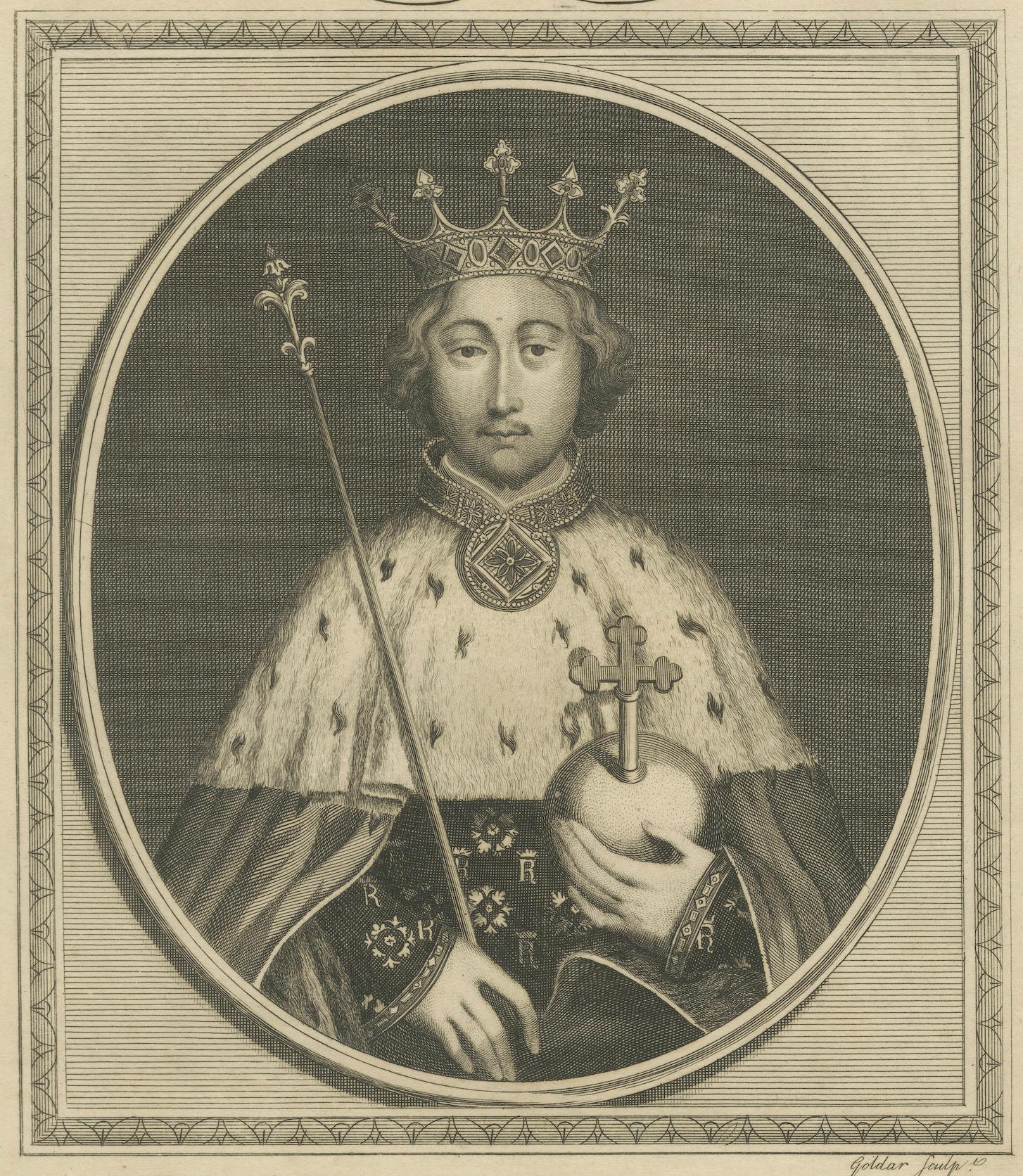
This fine copperplate engraving depicts King Richard II of England (1367–1400), who reigned from 1377 until his deposition in 1399. Shown crowned and robed in regal attire, Richard holds the orb and sceptre, the traditional symbols of sovereignty, emphasizing his role as divinely anointed monarch. The composition, framed within a decorative oval border, is based on an ancient portrait then preserved at Kensington Palace.
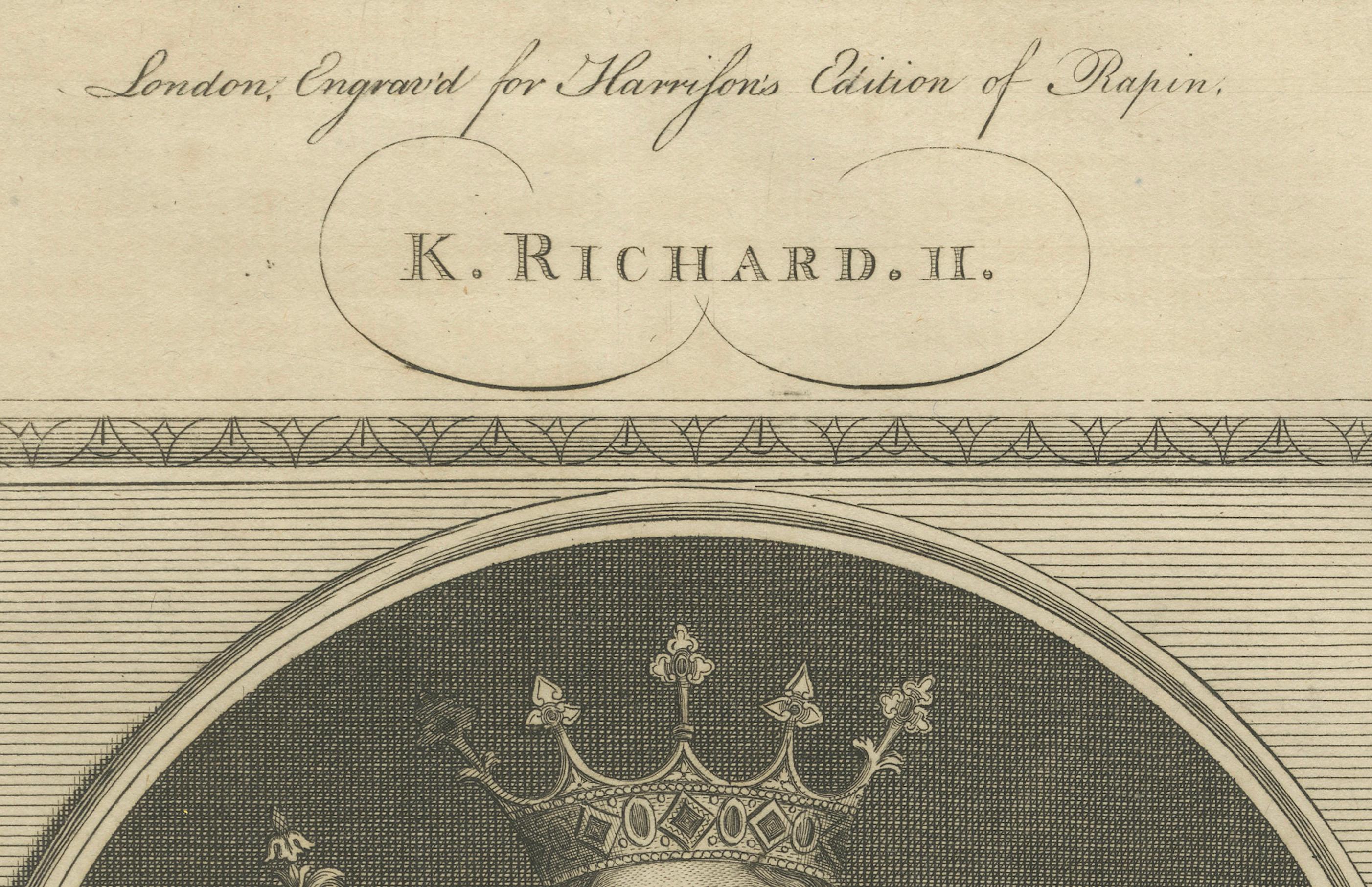
The plate was engraved by James Goldar and published in London on March 26, 1785, specifically for John Harrison’s celebrated illustrated edition of Paul de Rapin de Thoyras’ *History of England*. Rapin’s monumental history, first published in French in the early 18th century, became one of the most authoritative chronicles of the English monarchy, and Harrison’s English edition was richly ornamented with engraved portraits of the nation’s kings and queens.
Richard II, remembered for his patronage of the arts and his troubled political rule, occupies a fascinating place in English history. His reign was marked by the Peasants’ Revolt of 1381, increasing conflict with the nobility, and his eventual deposition by Henry Bolingbroke (Henry IV). Despite his political failures, Richard was a notable patron of architecture, literature, and painting, commissioning the famous Wilton Diptych and promoting the flowering of late medieval English court culture.
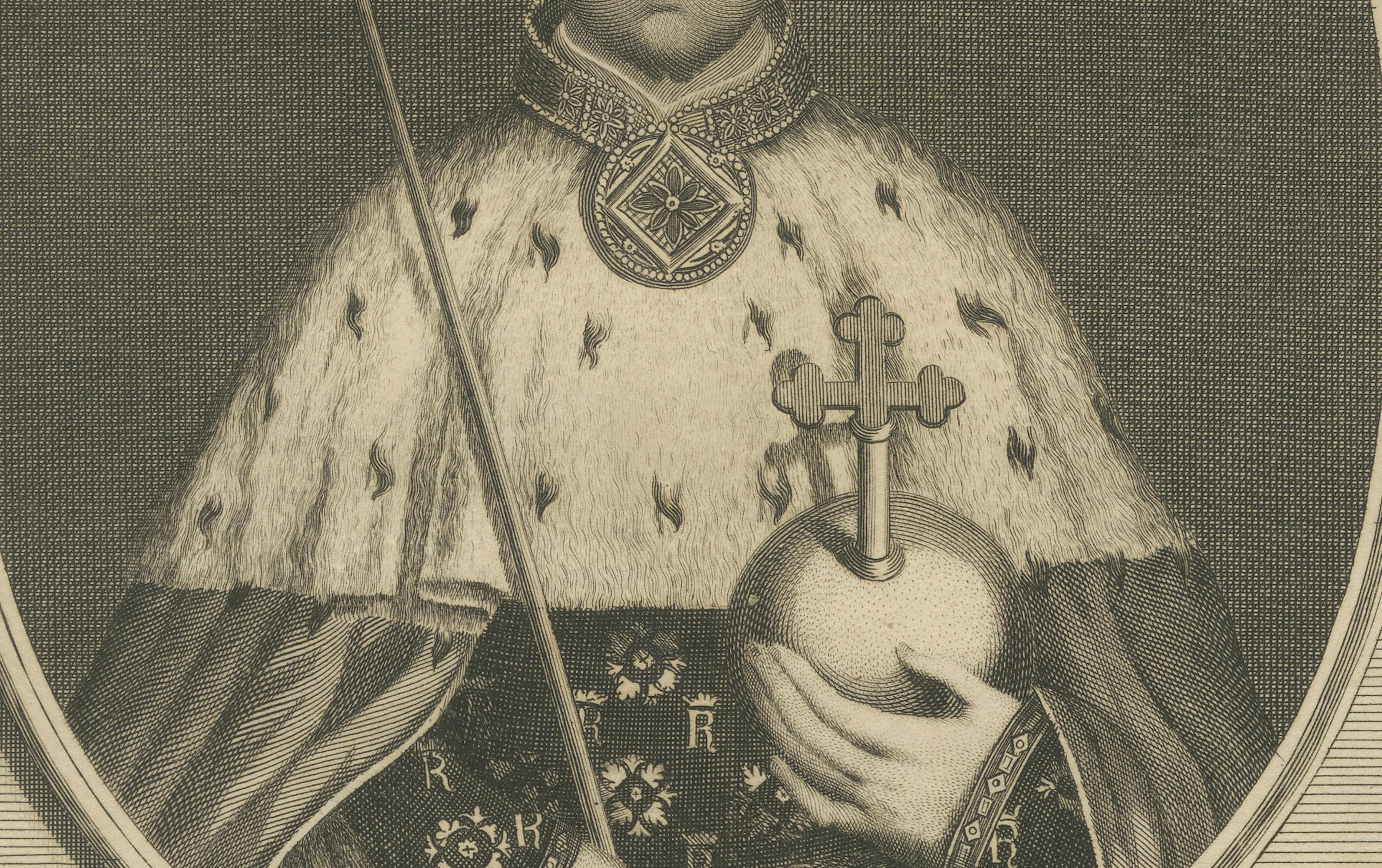
This engraving captures Richard with a youthful face, framed by flowing hair beneath a delicately rendered crown. His richly patterned robe, with embroidered “R” initials, and the fine treatment of fur and jewel details testify to the engraver’s skill. Pieces from Harrison’s Rapin are valued both for their historical subject matter and their craftsmanship, offering collectors a blend of art, history, and book illustration.
Condition report:
Very good impression with strong plate lines and fine detail. Light age toning and scattered minor foxing in margins consistent with age. Wide margins preserved. Plate mark clearly visible.
Framing tips:
A double mount with a soft cream or ivory mat will highlight the crisp black impression, while a dark wood or gilt frame provides a regal complement to the royal subject. For a more restrained presentation, a simple black or ebonized frame with gold fillet would emphasize the engraving’s clean lines and historical gravitas.
Technique: Copperplate engraving on laid paper
Maker: James Goldar (engraver), London, 1785