About this sheet
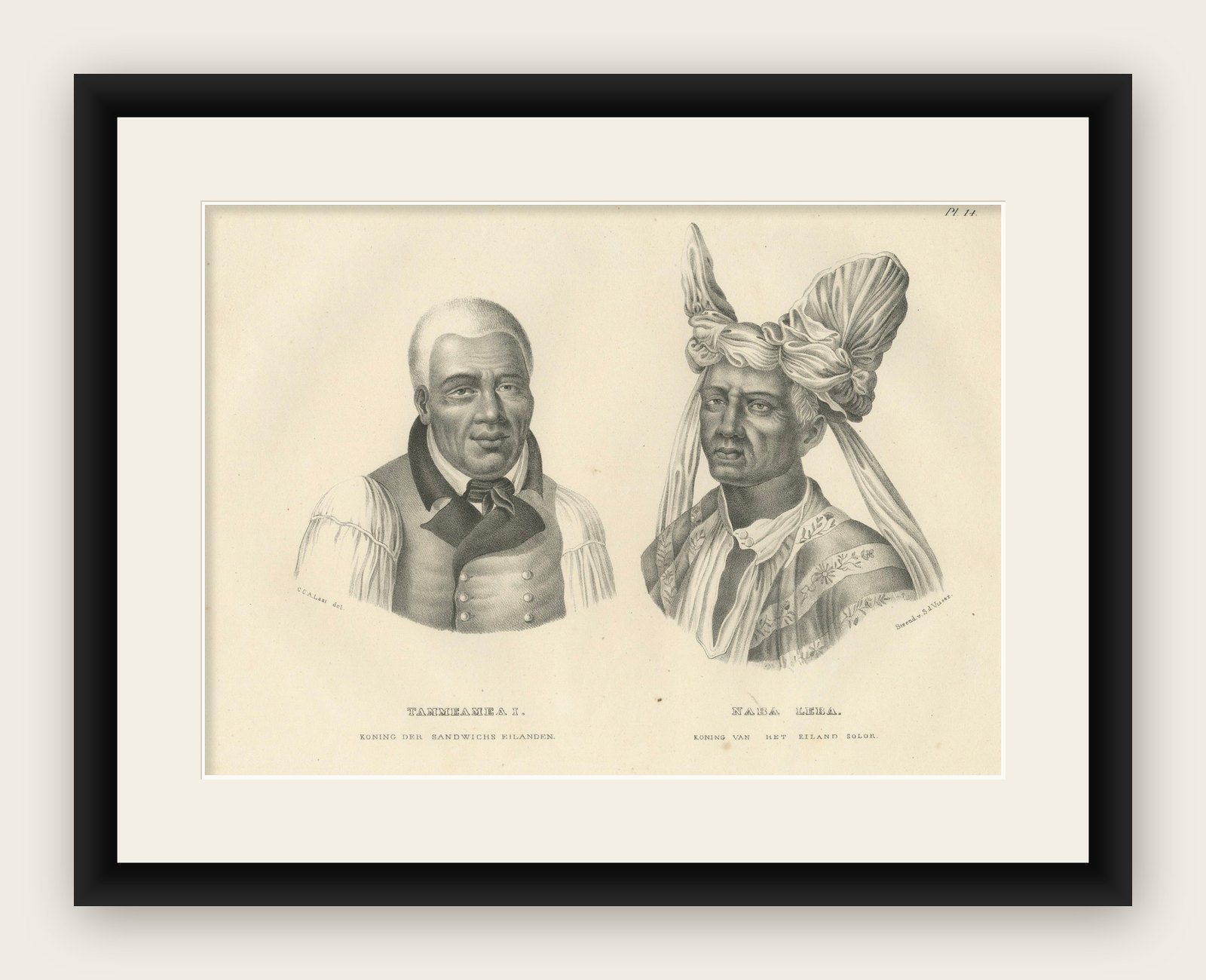
This lithograph by Karl Joseph Brodtmann depicts two important leaders from the Pacific and Southeast Asia regions: Tammeamea I, King of the Sandwich Islands (now known as Hawaii), and Naba Leba, King of the Island of Solor. These portraits are part of Brodtmann’s ethnographic series documenting notable figures from non-European cultures during the 19th century.
The lithograph presents two portraits, side by side, of significant monarchs from the Pacific and Southeast Asia, emphasizing their distinct cultural attire and leadership roles.
1. Tammeamea I (left):
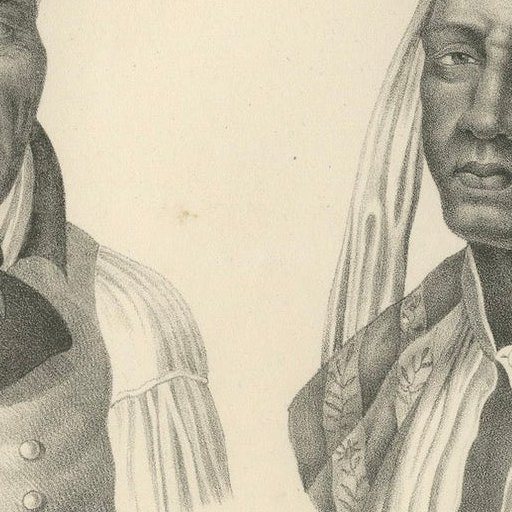
Tammeamea I, more commonly known as Kamehameha I, was the first King of the Hawaiian Islands, uniting the islands into one kingdom in the late 18th century. He is depicted here in European-style clothing, which he adopted as part of the increasing contact between Hawaii and the Western world. His clothing includes a buttoned waistcoat and a scarf tied around his neck. His short hair and dignified expression convey the image of a powerful and respected ruler.
2. Naba Leba (right):
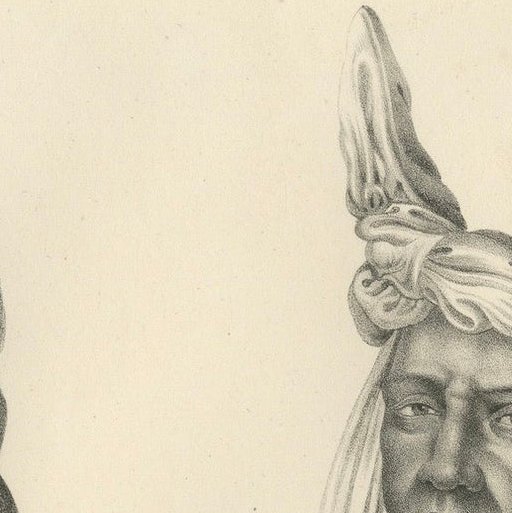
Naba Leba is portrayed as the King of Solor, an island in the East Nusa Tenggara region of Indonesia. His attire is notably different from that of Kamehameha, reflecting local traditions. He wears an elaborate headwrap, possibly signifying his royal status, with large, decorative folds that add a sense of grandeur to his appearance. His expression is serious and resolute, capturing the gravity of his position as a leader of his people.
Both portraits emphasize the cultural differences between the two leaders while highlighting their shared status as monarchs. The simple background directs attention to their clothing, facial features, and expressions, providing a clear view of each leader’s distinct cultural identity.
Technique and Style:
Brodtmann employed lithography to create these portraits, a technique that allowed for fine detailing and realistic shading. His style in this piece, as with many of his ethnographic works, is realistic yet romanticized, especially in how the clothing and adornments of the figures are depicted with careful attention to texture and light. Brodtmann's skillful use of shading adds depth and dignity to the portraits, making the figures appear lifelike and expressive.
The contrast between the European-inspired attire of Tammeamea I and the traditional, elaborate headgear of Naba Leba highlights the cultural diversity that Brodtmann sought to document in his ethnographic studies.
Cultural Context:
Kamehameha I, also known as Tammeamea I in this print, was one of the most significant figures in Hawaiian history, credited with uniting the Hawaiian Islands under one kingdom in 1810. His reign marked the beginning of increased contact with European powers, leading to shifts in the cultural and political landscape of Hawaii. By the time of his rule, Kamehameha had adopted certain Western customs, which is reflected in his European-style clothing in this portrait.
Naba Leba, as the King of Solor, would have ruled over an island known for its complex interactions with Dutch colonial powers and local tribal groups. Solor is located in the Indonesian archipelago, and Naba Leba’s attire reflects the traditions of his people, with the intricate headwrap symbolizing his royal status and the cultural uniqueness of his kingdom.
These portraits exemplify the broader European fascination with documenting and understanding the leaders of non-Western cultures during a period of exploration and imperialism. The lithographs would have served as both educational tools and artistic representations of global diversity for a 19th-century European audience.