Original Antique Portrait of Charles XI of Sweden, Engraved in 1698
€ 340
Original antique · The actual sheet photographed · Certificate of authenticity on request · Sold unframed · Worldwide shipping from € 15 (rates)
Date
1698
Sheet size
34 × 23.5 cm (13.4 × 9.3 in)
Reference
BG-13675-79
What the condition grades mean
Excellent
Bright and clean, with no faults worth mentioning.
Very good
Only light signs of age, such as faint toning.
Good
Normal signs of age for a sheet of this period: toning, some foxing, small marks or neat old repairs.
Fair
Clear faults such as staining, tears or repairs, priced to match.
Every fault we see is written in the condition note, and the whole sheet is shown uncropped in the photos.
Condition
Good, given age. General age-related toning and/or occasional minor defects or soiling from handling. Paper strong, possible double backed. Please study scan carefully.
About this sheet
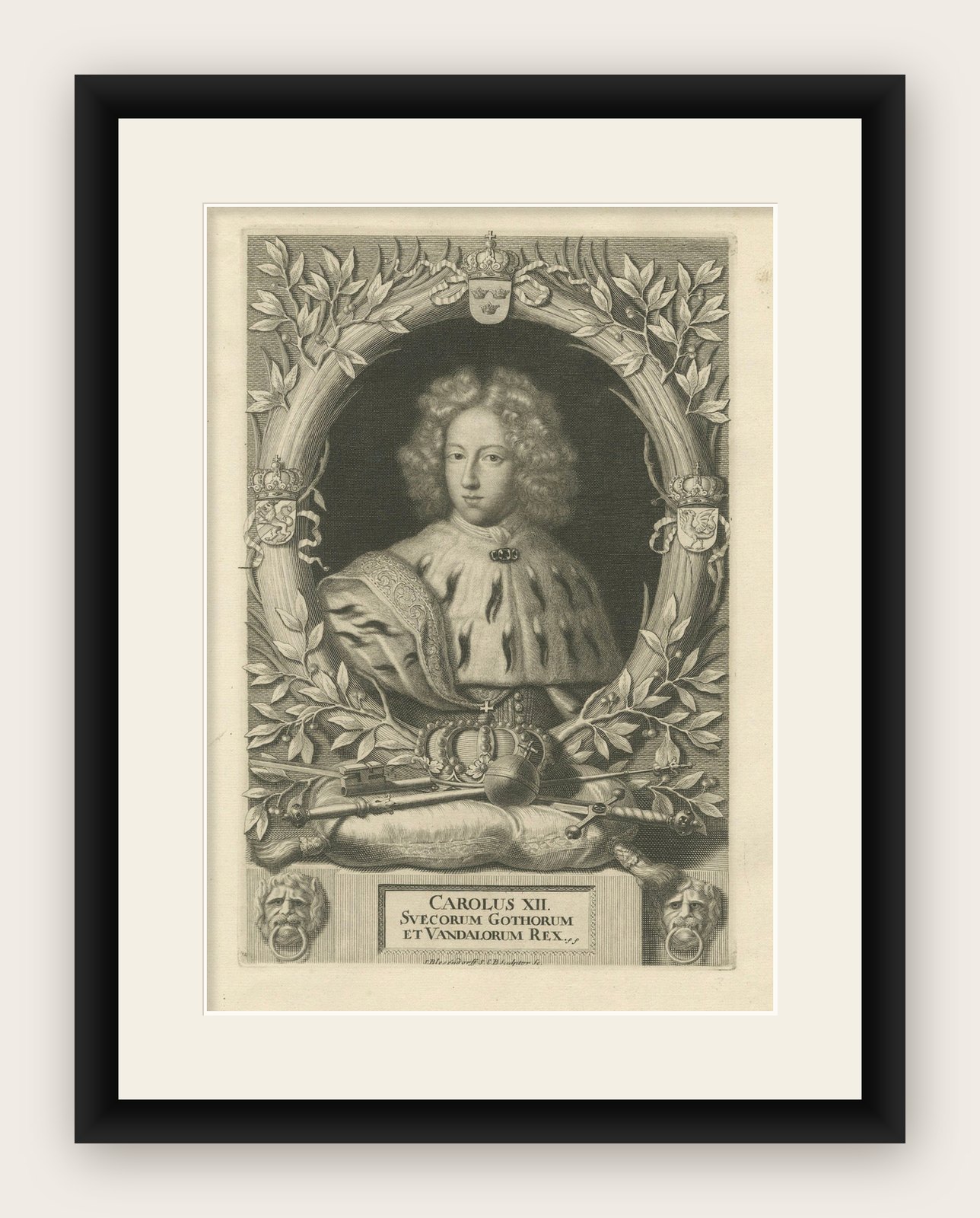
This is an original antique print that features an intricate engraving from 1698, depicting Charles XI, the King of Sweden, titled "Carolus XI, Suecorum Gothorum Et Vandalorum Rex," which translates to "Charles XI, King of the Swedes, Geats, and Wends." It's part of the "Suecia Antiqua et Hodierna" series, which means "Ancient and Modern Sweden."
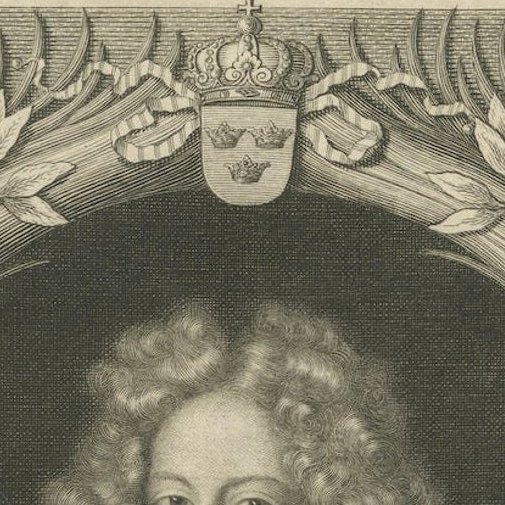
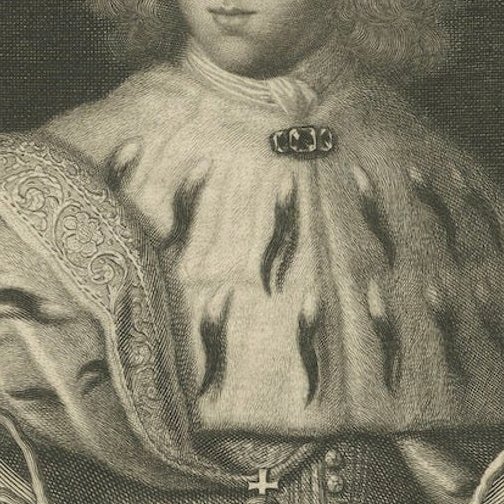
The artwork showcases the regal bearing and attire of the monarch, with a detailed representation of his robes, the fur trim denoting his status, and a plethora of regalia including a crown, scepter, and orb, symbolizing his authority and the state's power. He is framed within an arch, topped with his royal coat of arms, and supported by columns of laurel leaves, a classical symbol of victory and honor.
At the base, a small, more rugged portrait in a medallion likely represents an ancient ancestor or a figure of historical importance to the lineage of Charles XI, enhancing the image's connection to the past and the king’s heritage. This engraving is the work of Samuel Blesendorf, as mentioned on the object itself, with contributions from Erik Jönssen Dahlberg, and it was produced in Germany.
The meticulous craftsmanship of the engraving technique used by Blesendorf is evident in the fine lines and detailed textures, from the king's curly hair to the embroidery on his garments, and the ornate items that surround him. This print was likely created as a piece of historical documentation or a form of tribute to the king, capturing the grandeur and the formal symbolism associated with his reign.