About this sheet
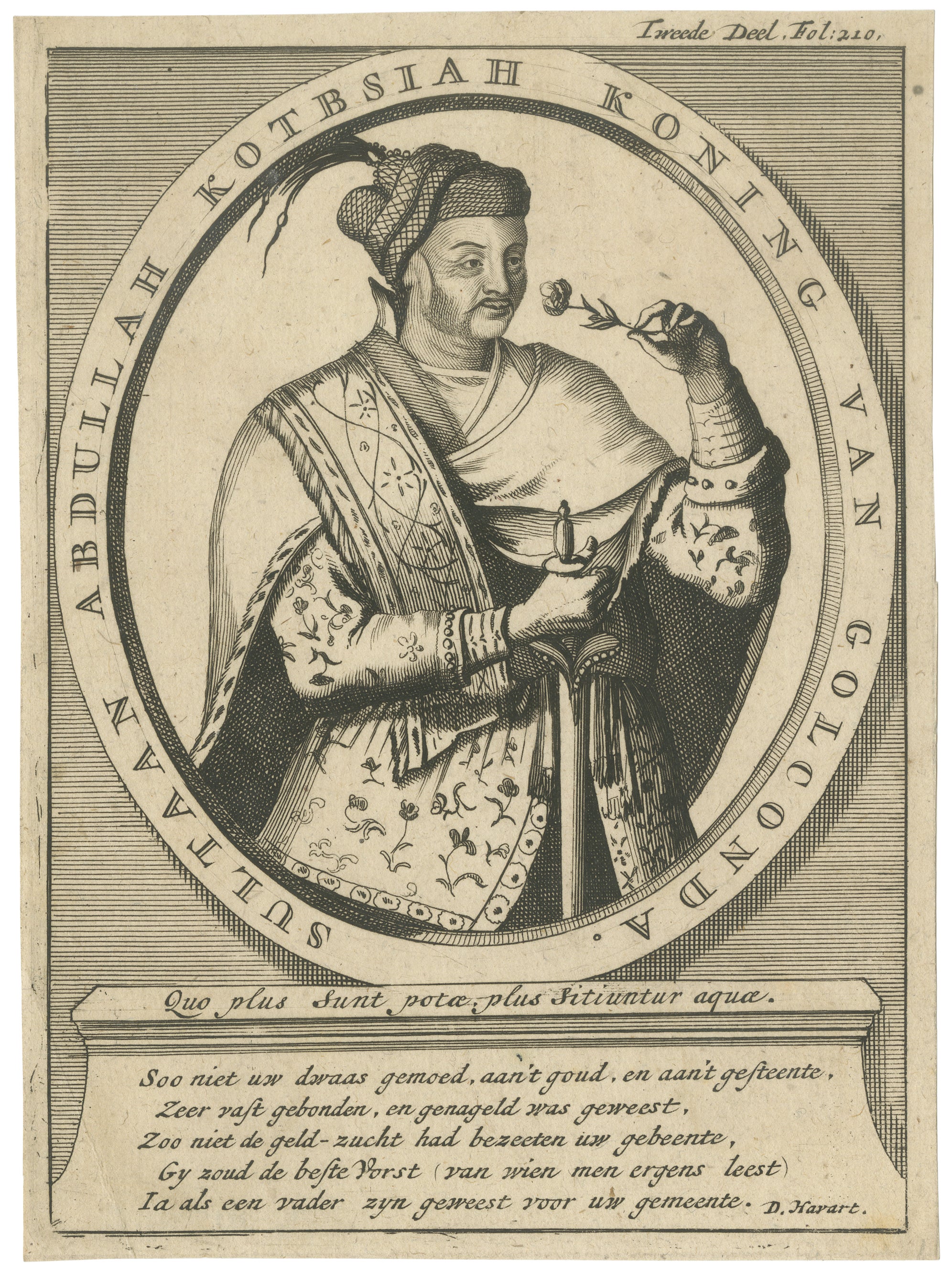
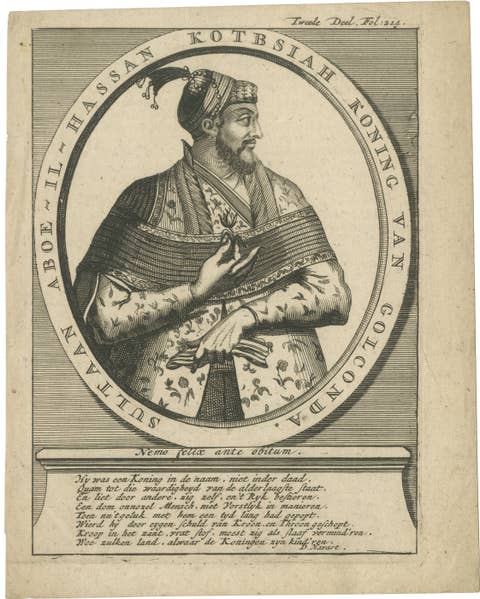
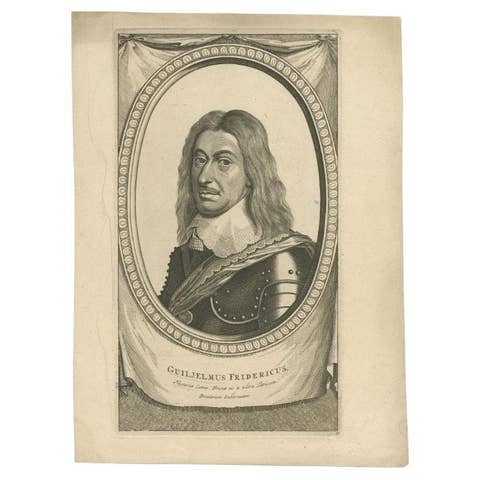
Abdullah Qutb Shah, King of Golconda Portrait Engraving, India, c.1700
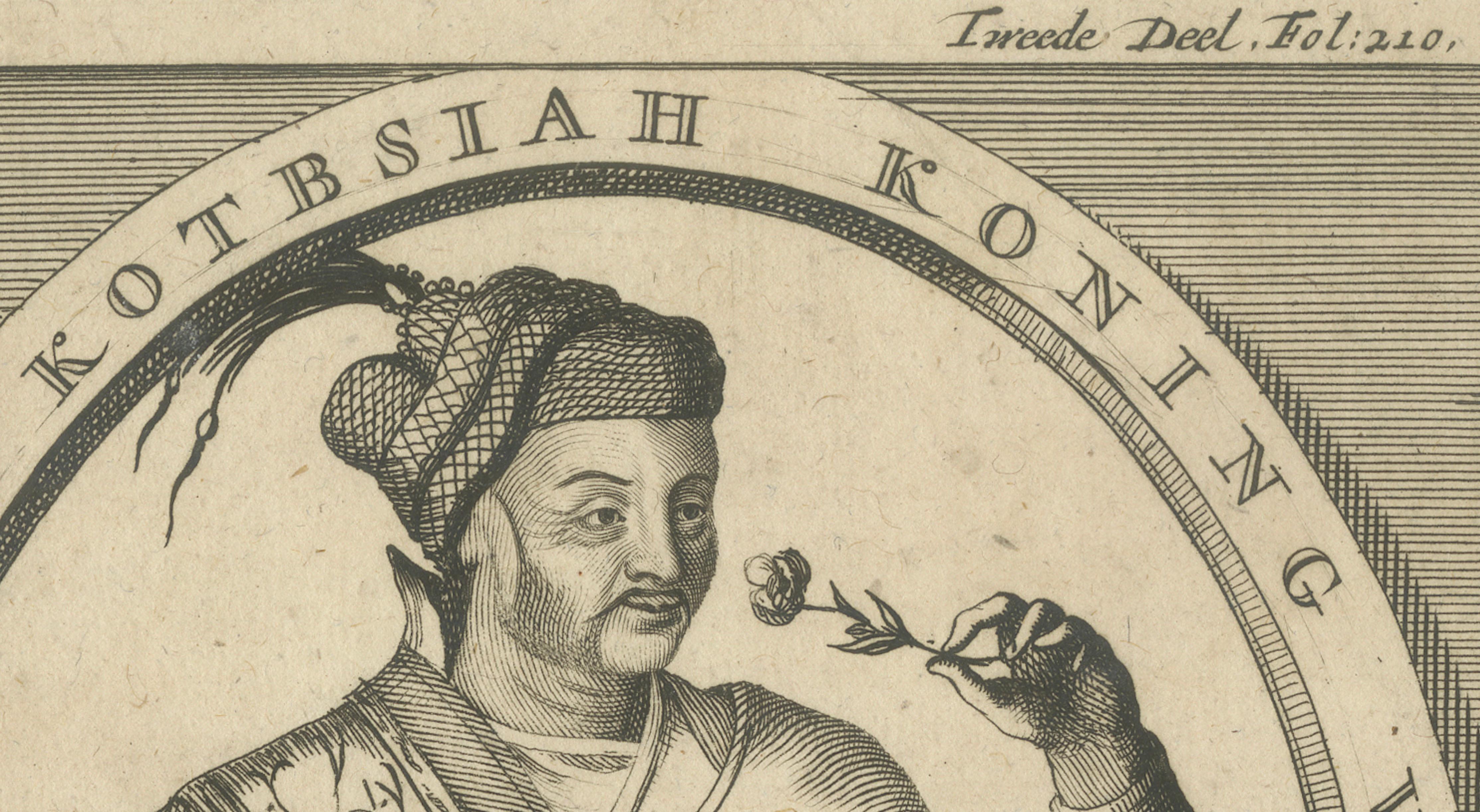
A finely engraved and historically rich early 18th-century copperplate portrait depicting Sultan Abdullah Qutb Shah (1614–1672), ruler of the Golconda Sultanate in southern India. This striking composition presents the Sultan in an elegant oval frame, identified in the surrounding inscription as “Sultaan Abdullah Kotbsiah Koning van Golconda,” reflecting early European interpretations of Indian rulers and their courts.
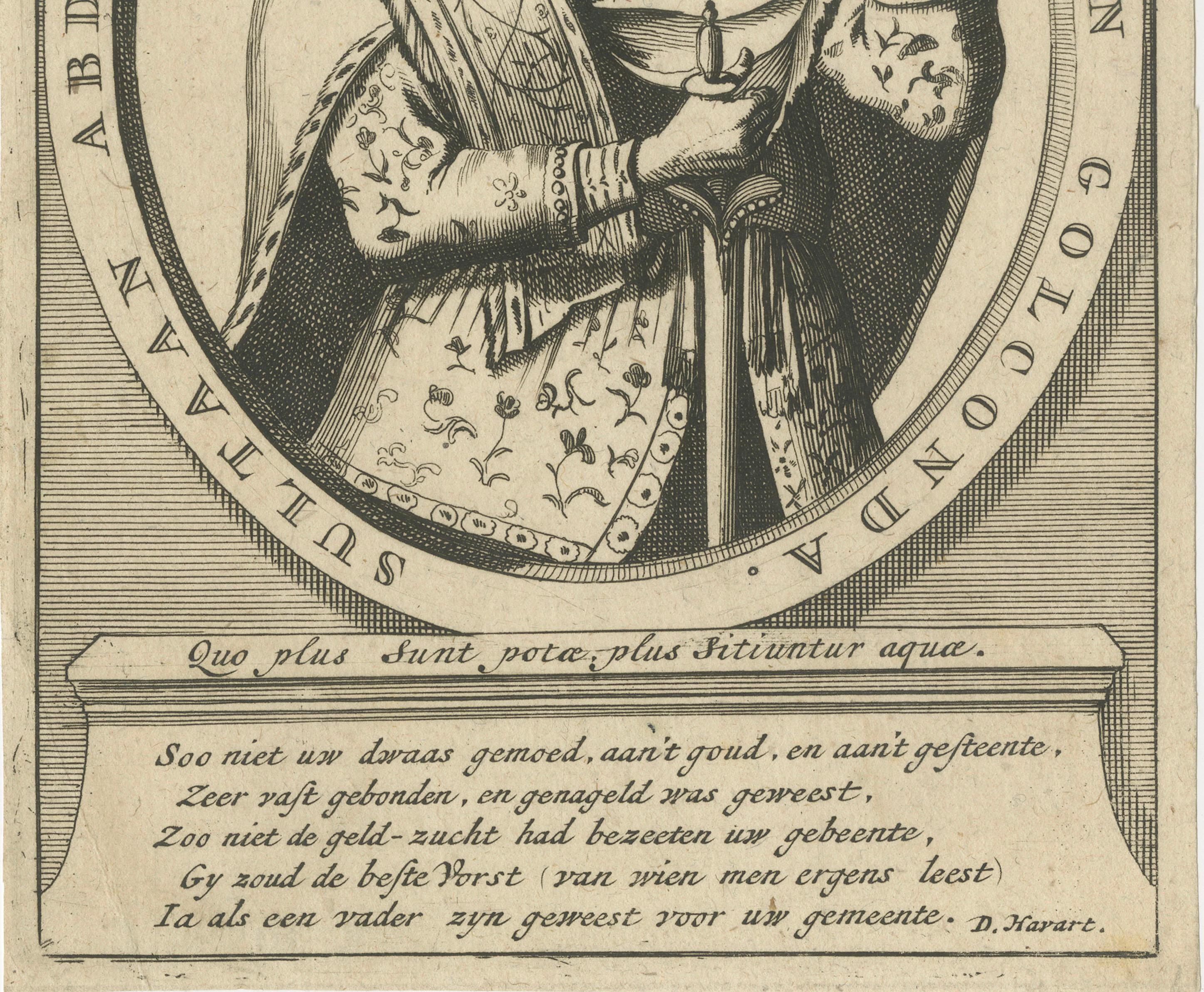
The Sultan is shown in a composed and symbolic pose, holding a delicate flower in one hand while resting the other on the hilt of a sword—an evocative combination of refinement and authority. His attire is rendered with meticulous detail, featuring richly patterned textiles and flowing garments that reflect the opulence of the Golconda court. The engraving demonstrates a high level of craftsmanship, particularly in the fine linework used to articulate texture, facial expression, and decorative elements.
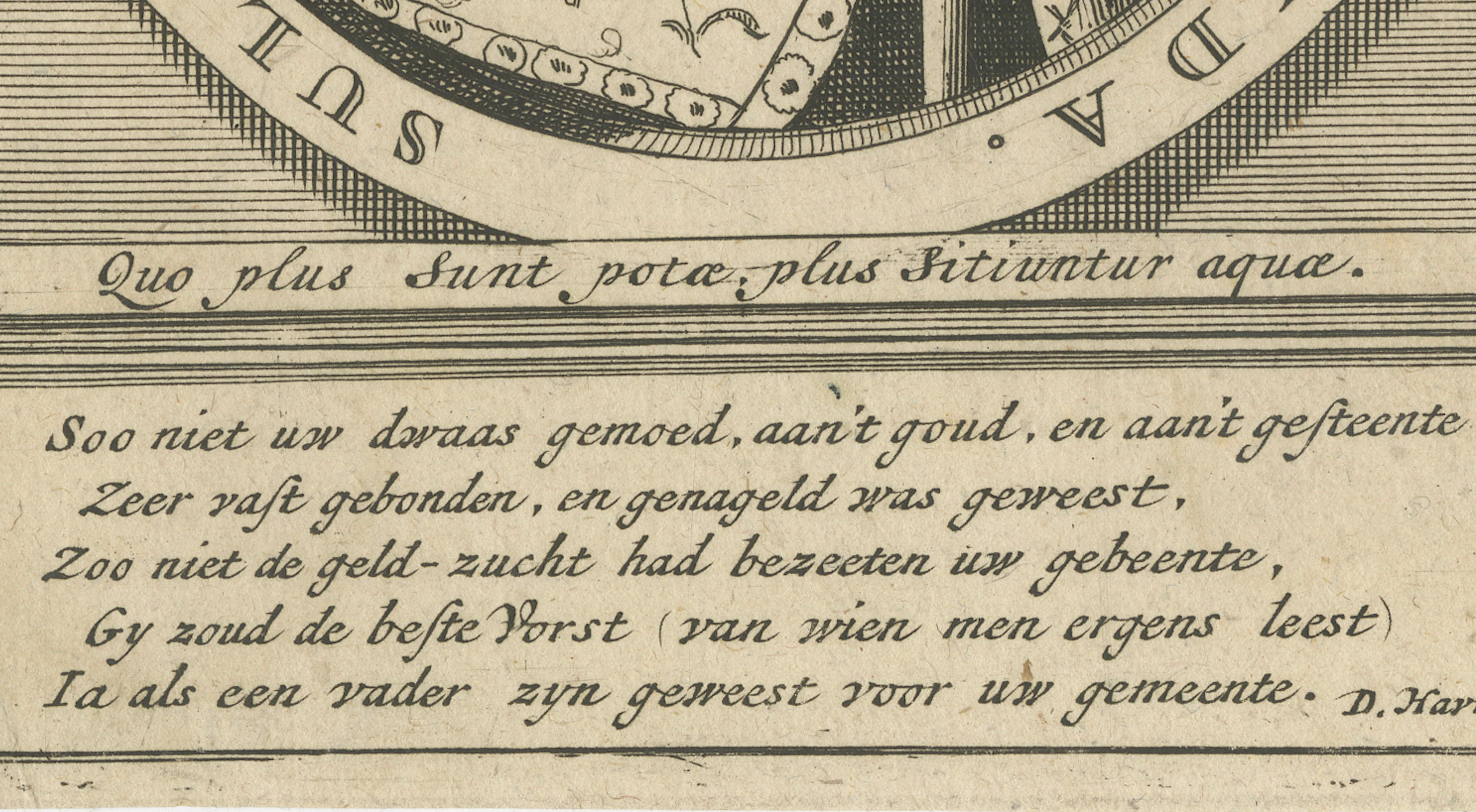
Encircling the portrait is a Latin motto, “Quo plus sunt pota, plus sitiuntur aquae” (“The more water is drunk, the more thirst there is for water”), followed by a Dutch poetic inscription below. Attributed to D. Havart, the poem offers a moral reflection on wealth and ambition, suggesting that the Sultan might have been an even greater ruler had he not been overly attached to riches. Such textual elements were typical of European publications of the period, blending portraiture with didactic commentary.
This engraving likely originates from a Dutch publication documenting notable rulers of Asia, part of a broader effort in the late 17th and early 18th centuries to catalogue global figures for European audiences. It reflects both historical interest and the interpretive lens through which such figures were presented in Europe.
The composition is highly decorative, with its strong oval framing, balanced typography, and detailed figure making it particularly suitable for interior display. It also holds significant appeal for collectors of Indian history, Mughal and Deccan-era subjects, and early European representations of Asia.
Interior mockups shown are for visual inspiration only and do not represent the exact scale. We do not sell reproductions, only original works of art over 100 years old.
Condition: Good antique condition with age-related toning and light scattered foxing. Minor wear to edges consistent with age. Plate mark visible.
Framing tips: This print is well suited to a wide ivory or cream mat that highlights the circular composition and engraved text. A dark wood or black frame provides contrast, while a gilded frame enhances its historical and decorative presence.
Technique: Copperplate engraving
Maker: Dutch School, after D. Havart publication, c. 1700