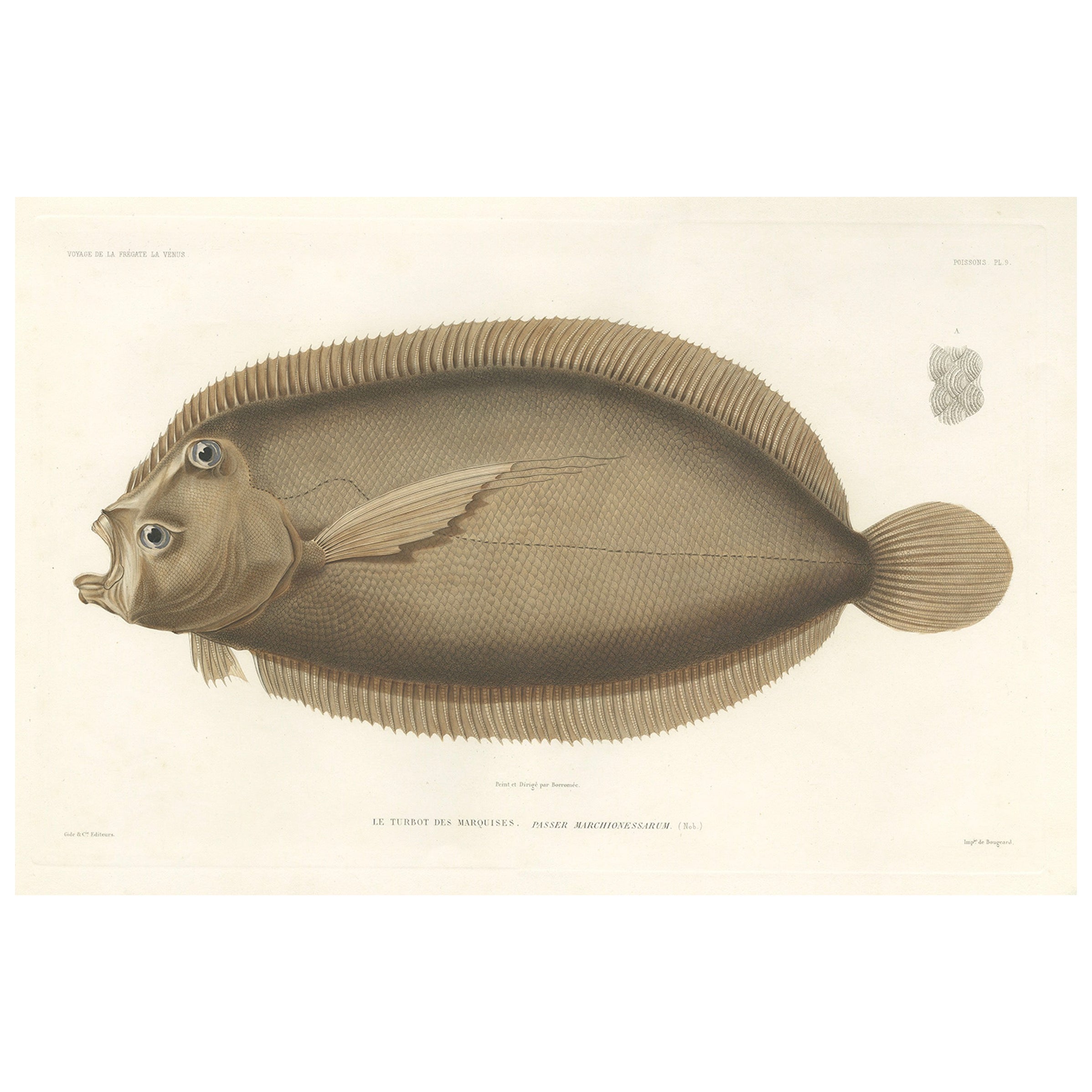
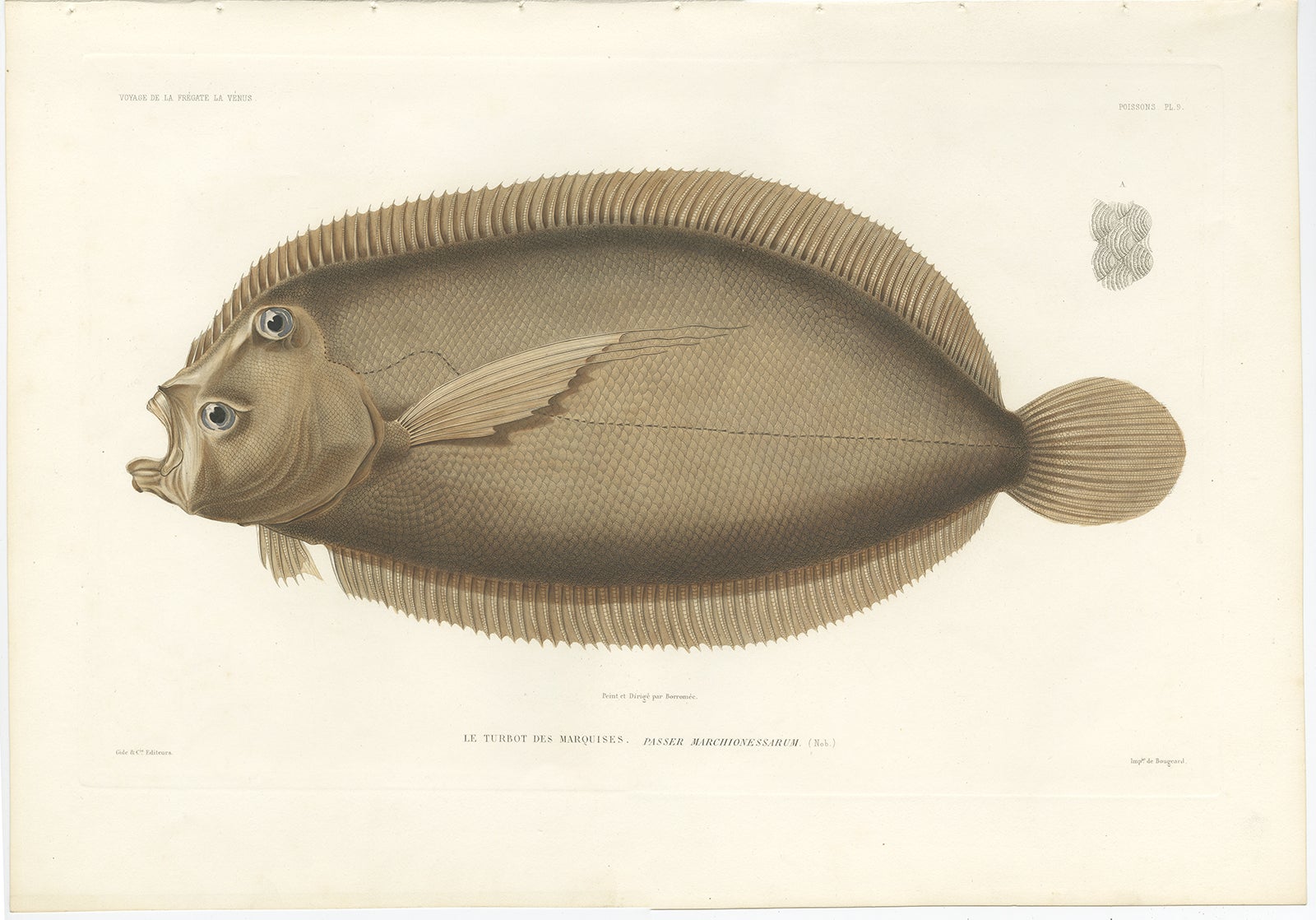
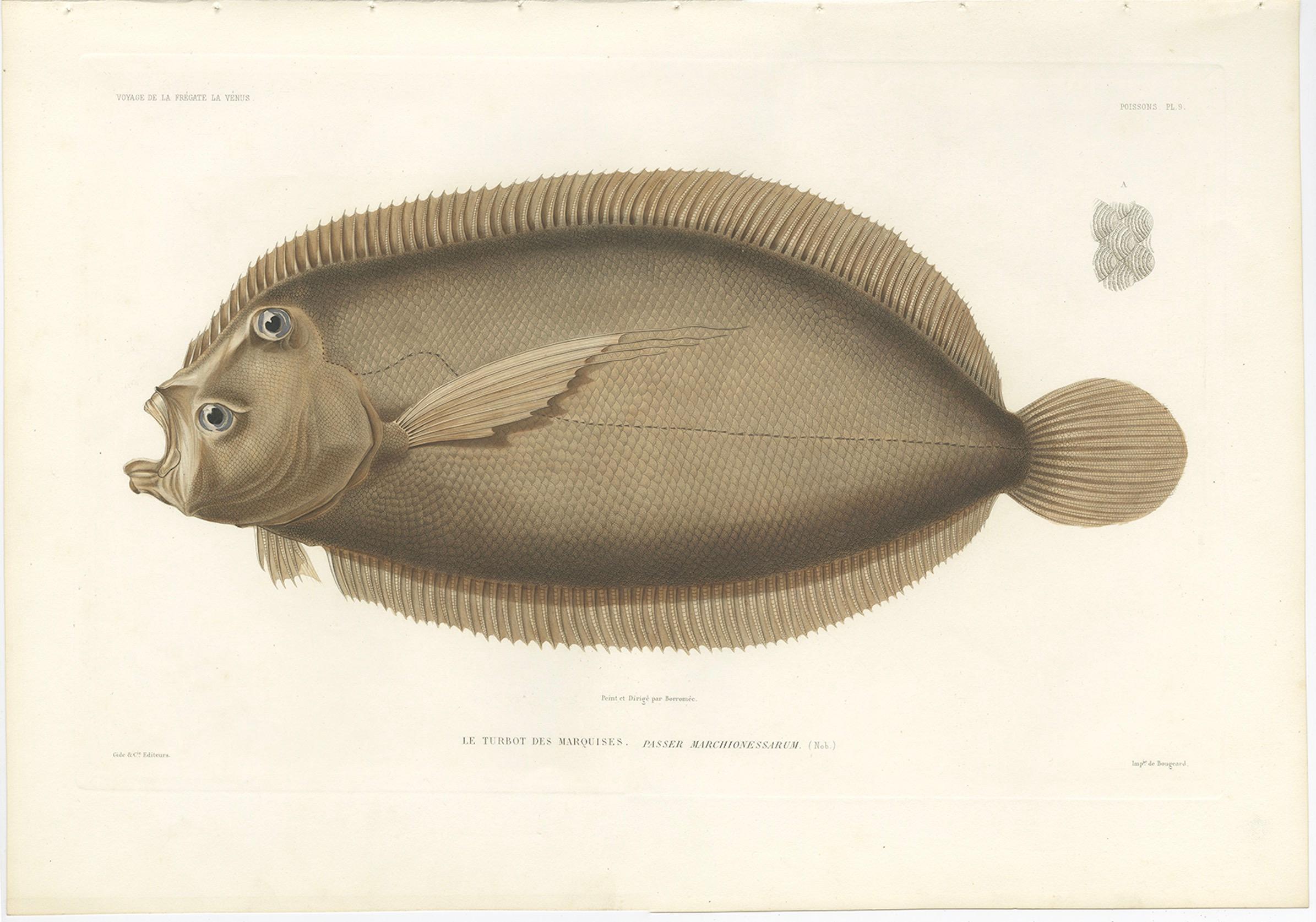
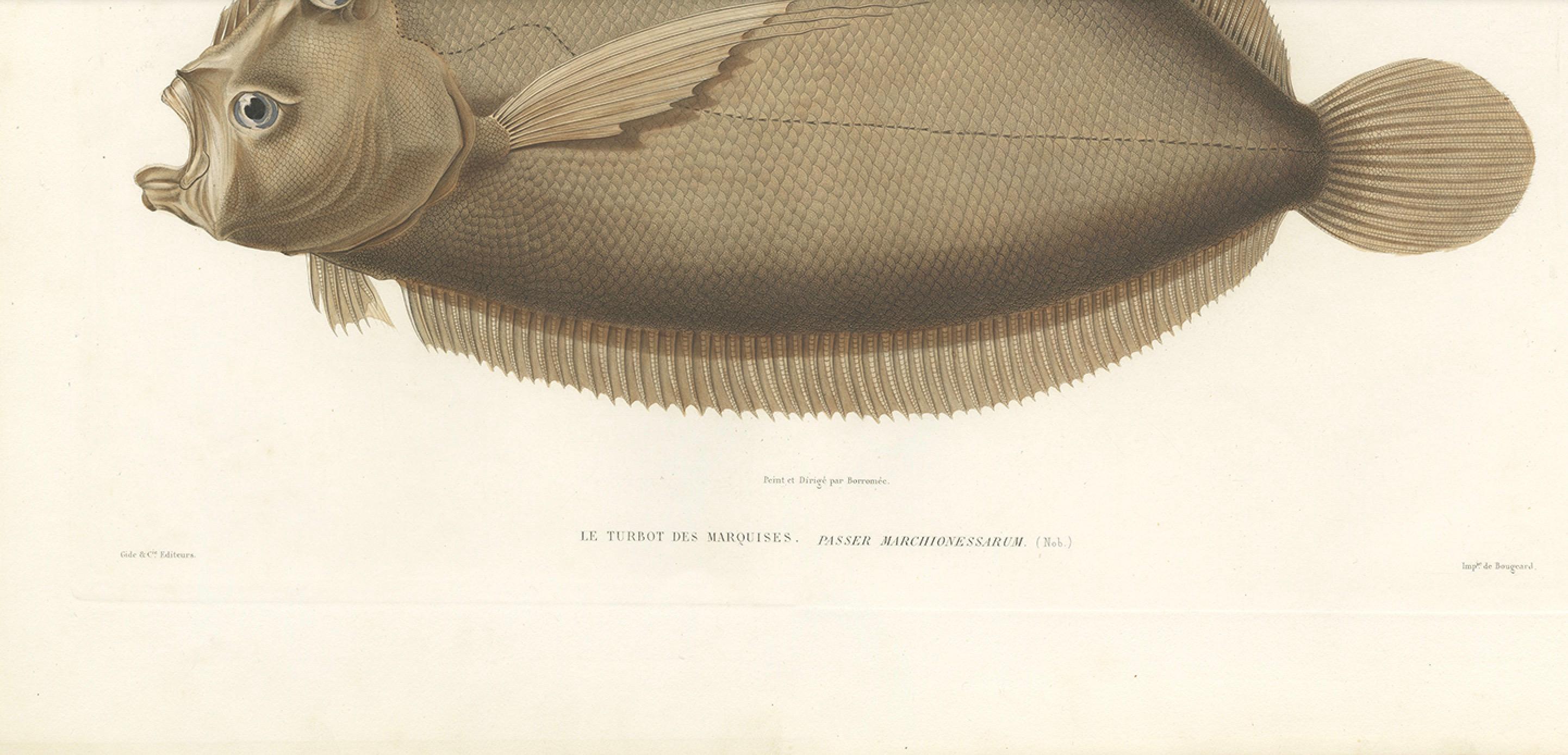
Antique Print of the Marquises Turbot – Hand-Colored Lithograph, 1845
€ 780
One of a kind: this is the sheet in the photographs. Ships from Langweer, the Netherlands.
Date
1845
Sheet size
34 × 48.7 cm (13.4 × 19.2 in)
Condition
Good
Reference
BG-09942
Condition
Very Good to Excellent condition. Minimal toning and only the faintest traces of foxing in the outer margin. Strong plate mark. Hand coloring exceptionally well preserved.
About this sheet
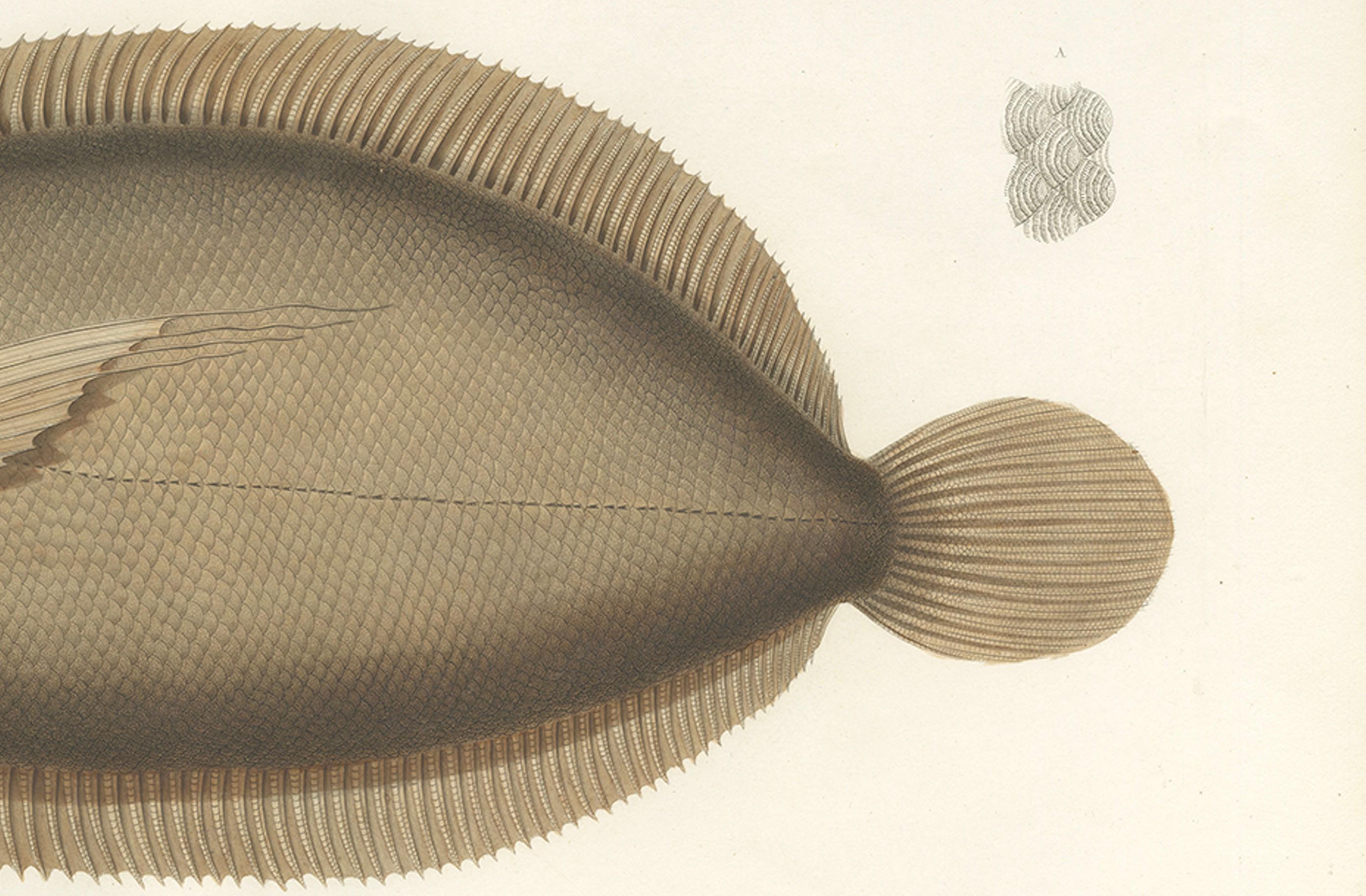
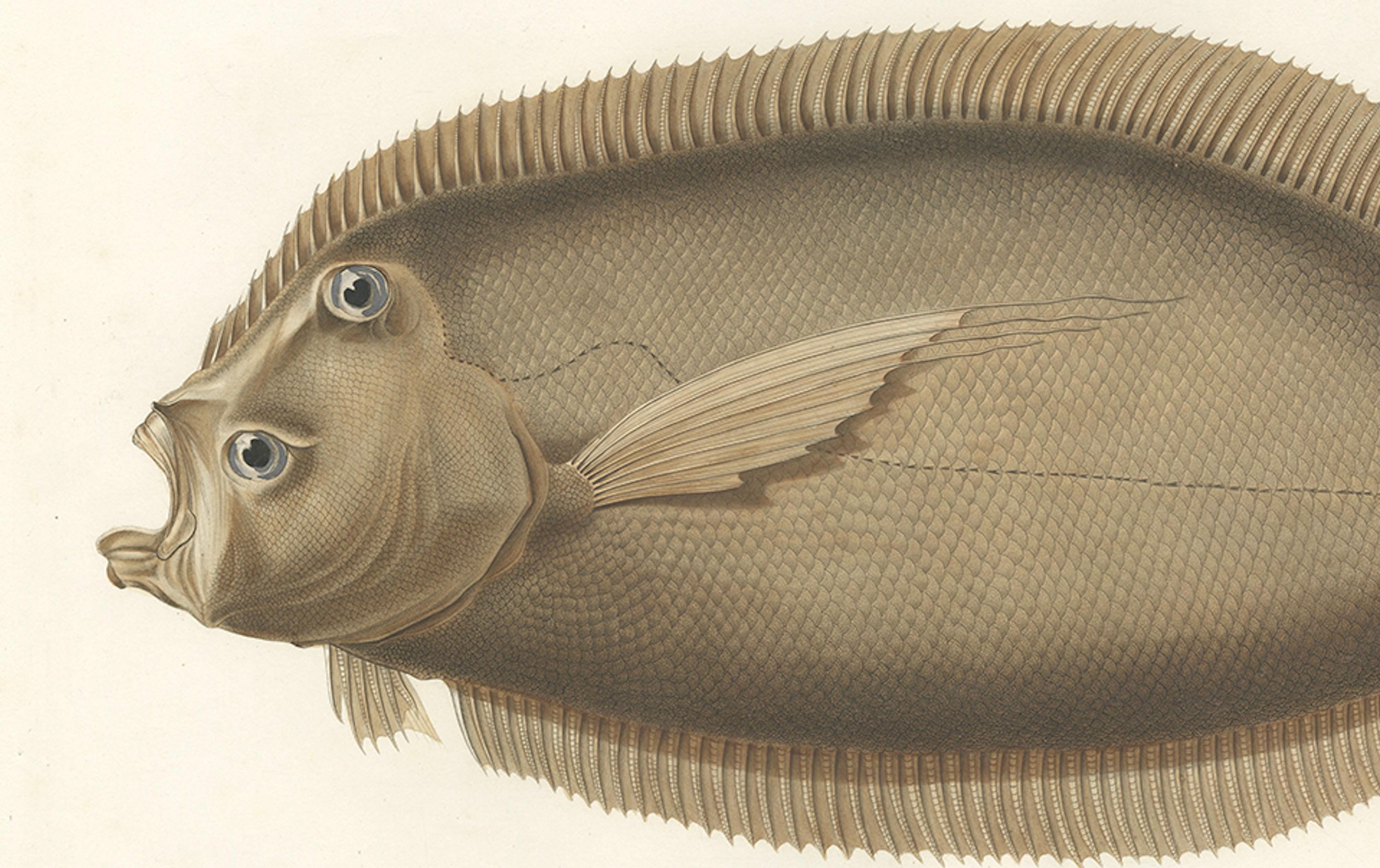
Antique Print of the Marquises Turbot (Passer marchionessarum) – Hand-Colored Lithograph, 1846
This beautifully detailed hand-colored lithograph depicts Le Turbot des Marquises (Passer marchionessarum), a flatfish species native to the waters surrounding the Marquesas Islands. The print was published in Paris in 1846 as part of the monumental French expedition Voyage de la frégate La Vénus, which explored the Pacific, including Polynesia, between 1836 and 1839.
The fish is illustrated in full lateral view with meticulous precision, showing its oval, laterally flattened body, characteristic of turbot and other flatfish. Both eyes are located on the left side of the head, a key adaptation of benthic species. The subtle brown gradient, intricate scale patterning, and fine linework of the fins and tail are rendered with exceptional finesse. The dorsal and anal fins form a continuous, rippling border around the entire fish.
A small inset drawing at upper right labeled “A” shows a magnified detail of the scale structure, emphasizing the scientific intent of the plate.
This is plate “Poissons Pl. 9,” drawn and directed by the naturalist Bournonville and printed by Bougeard. It reflects the dual purpose of the Voyage de la Vénus prints: to record newly described species with anatomical accuracy while producing artwork of enduring visual beauty.
Though Passer marchionessarum is no longer in use as a valid scientific name, this print remains an important record of early ichthyological classification in the South Pacific and is a rare example of flatfish illustrations from the Marquesas region.
Condition: Very Good to Excellent condition. Minimal toning and only the faintest traces of foxing in the outer margin. Strong plate mark. Hand coloring exceptionally well preserved.
Framing tips: This subtle, symmetrical composition pairs well with dark wood, mahogany, or light driftwood frames. A white or sandy beige mat will enhance the fine lines and neutral tones of the fish. Ideal for natural history walls, coastal interiors, or marine-themed collections. Use UV-protective glazing to maintain the integrity of the hand-applied color.