About this sheet
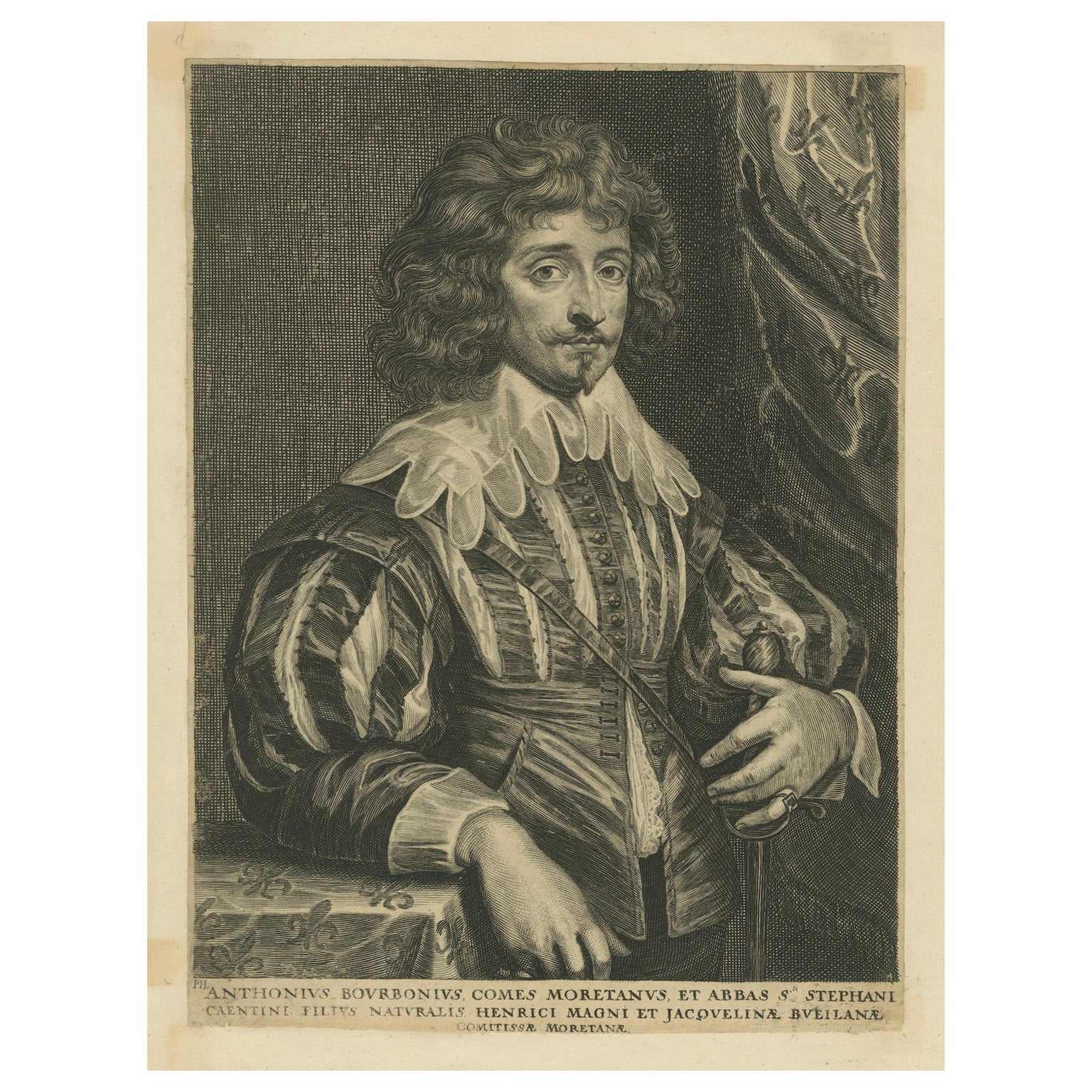
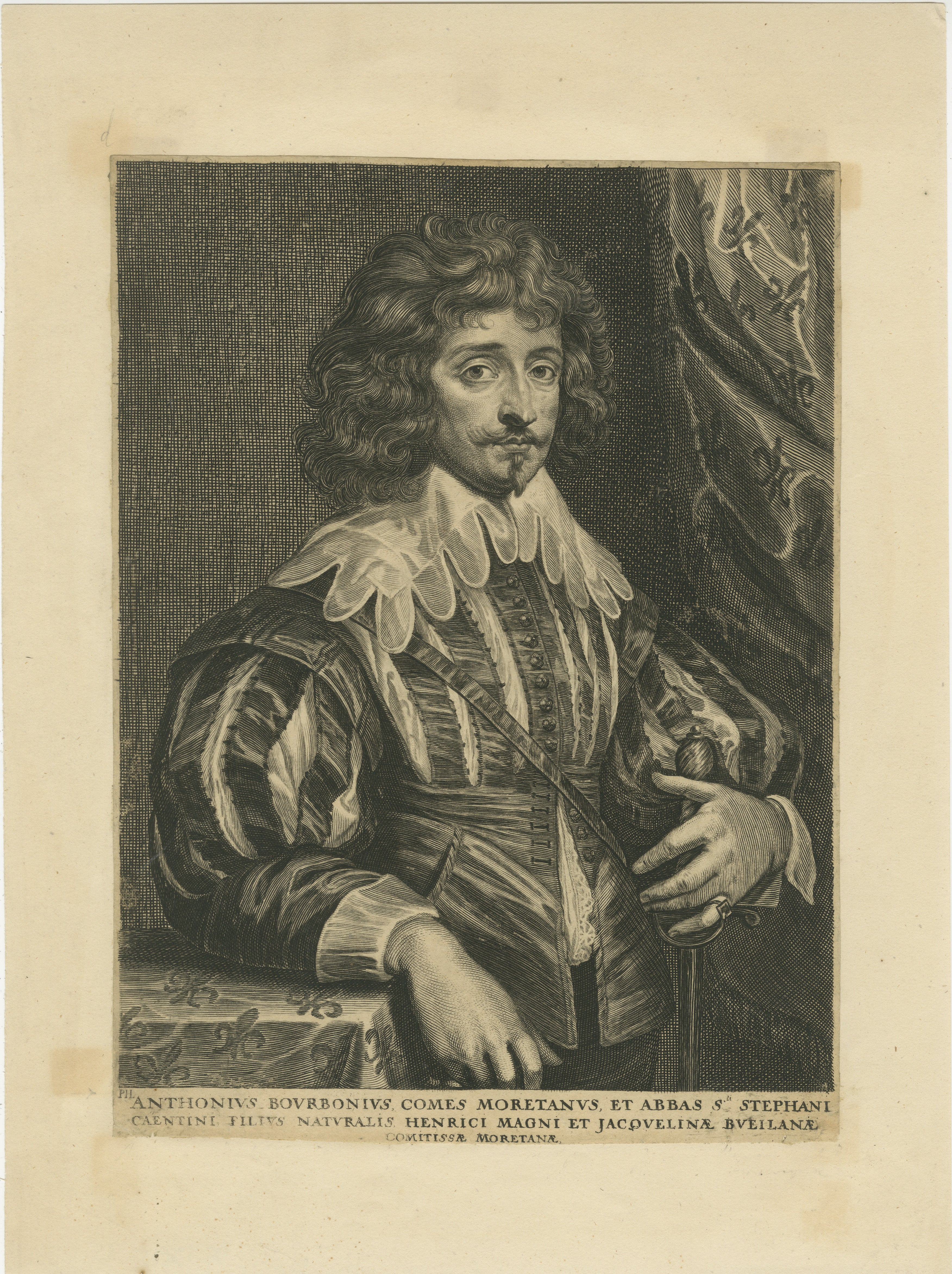
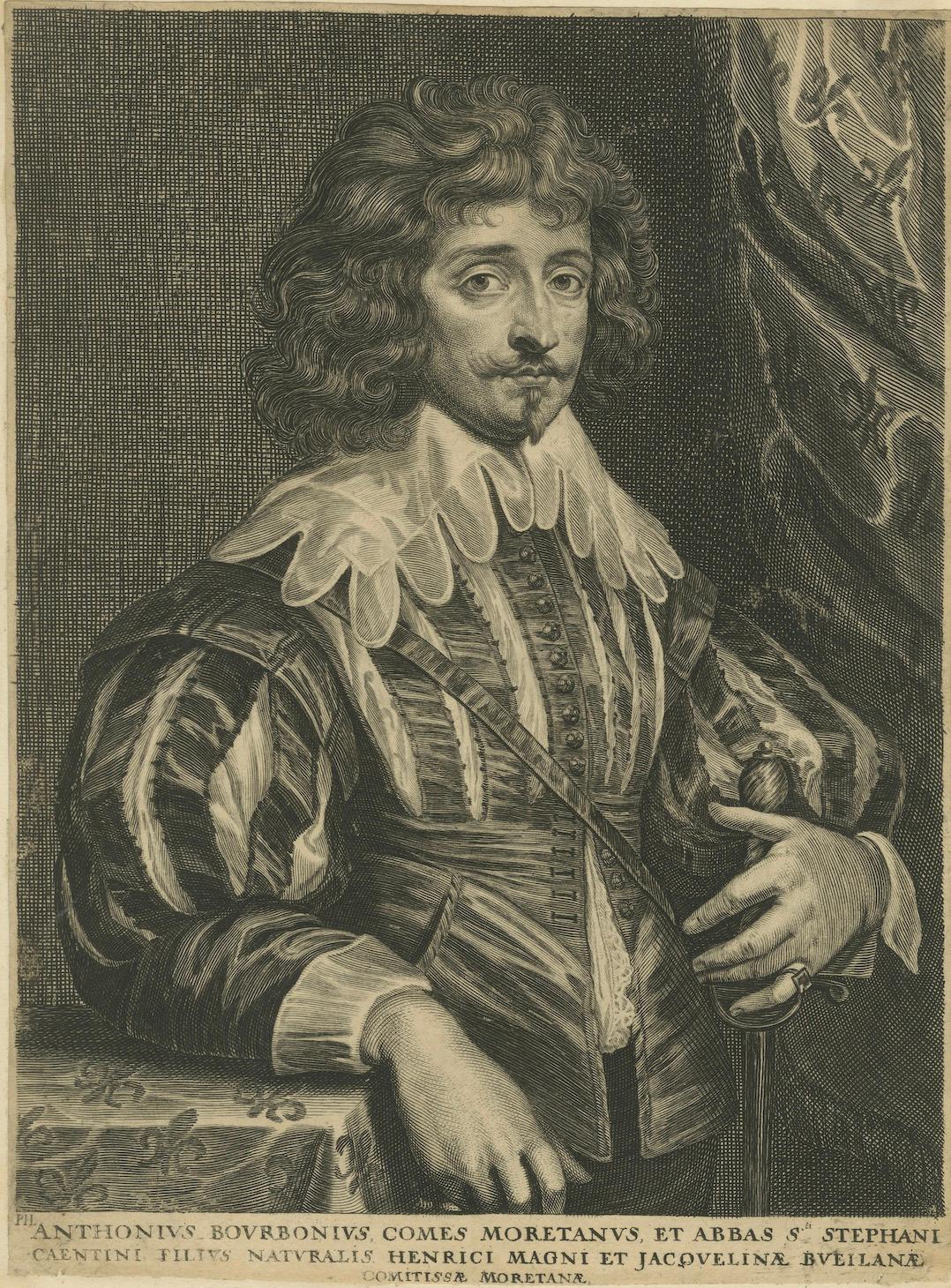
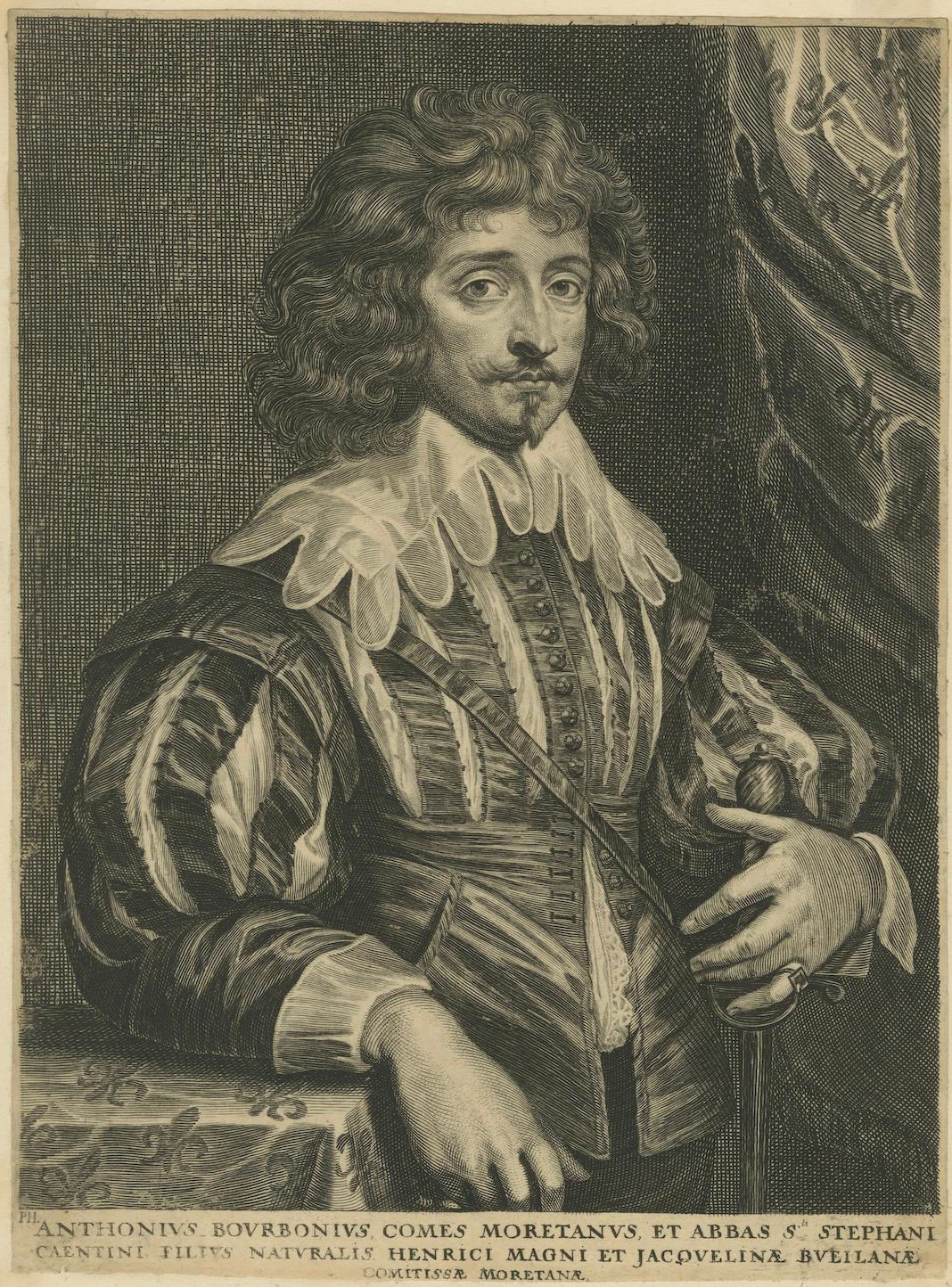
Antique engraving of Antoine de Bourbon, Count of Moret, by Pierre Lombart, ca. 1640
This fine antique portrait engraving represents Antoine de Bourbon, Count of Moret (1607–1632), an illegitimate son of King Henri IV of France (Henricus Magnus) and Jacqueline de Bueil, Countess of Moret.
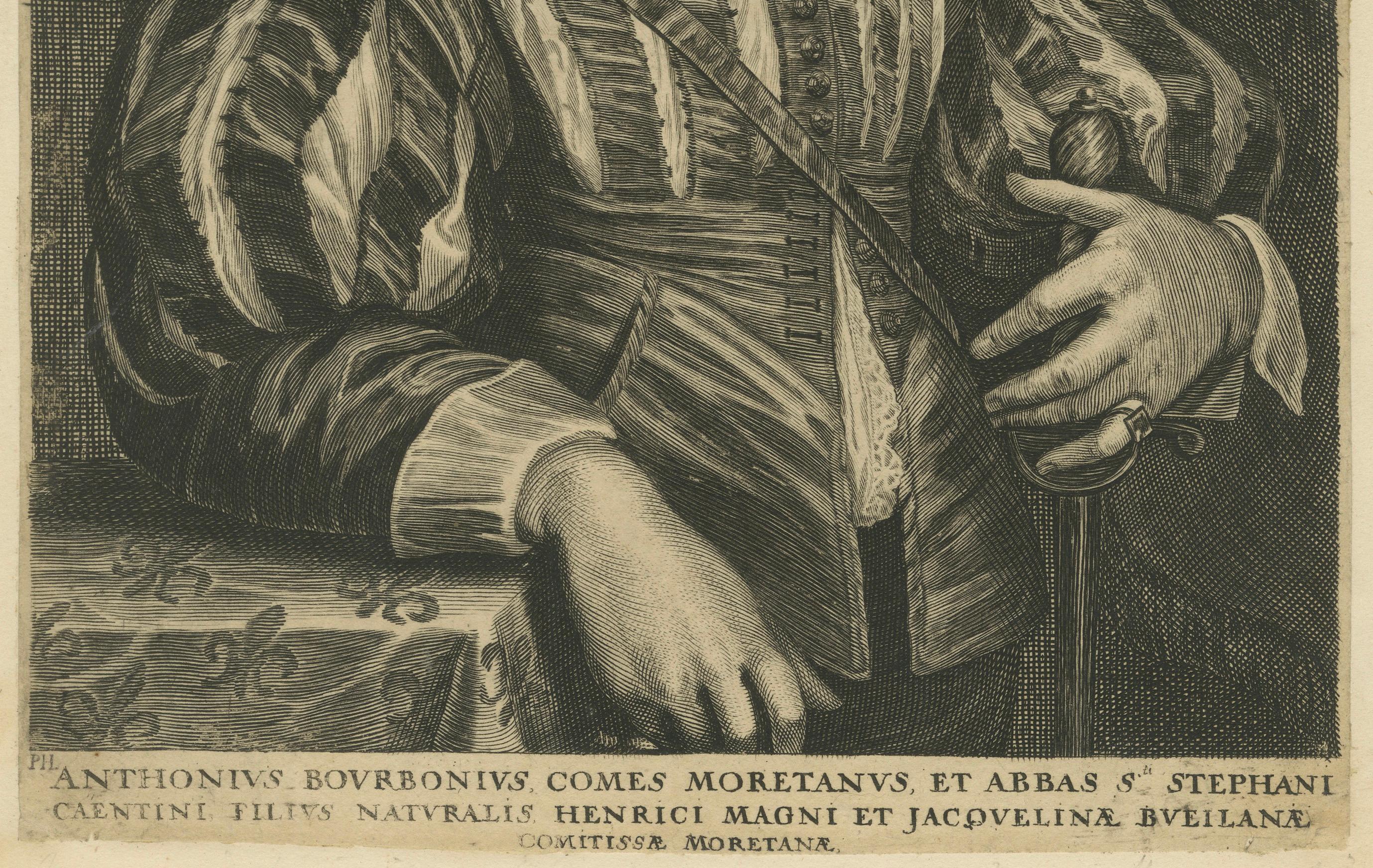
The Latin inscription beneath the image identifies him:*“ANTHONIVS BOVRBONIVS, COMES MORETANVS, ET ABBAS S. STEPHANI CAENTINI FILIVS NATVRALIS HENRICI MAGNI ET JACQVELINÆ BVILANÆ COMITISSÆ MORETANÆ” — “Antoine de Bourbon, Count of Moret, Abbot of Saint-Étienne of Caen, natural son of Henri the Great and Jacqueline de Bueil, Countess of Moret.”
Antoine de Bourbon, known as le comte de Moret, was raised in a position of privilege at the French court, though always in the shadow of his legitimate half-brother, Louis XIII. He held the title of abbot of Saint-Étienne de Caen and became involved in the political intrigues of the early 17th century. In 1632 he sided with Gaston, Duke of Orléans, against Cardinal Richelieu at the Battle of Castelnaudary, where he was reported killed. However, his supposed survival fueled persistent rumors and legends, with stories of him living incognito for years afterward.
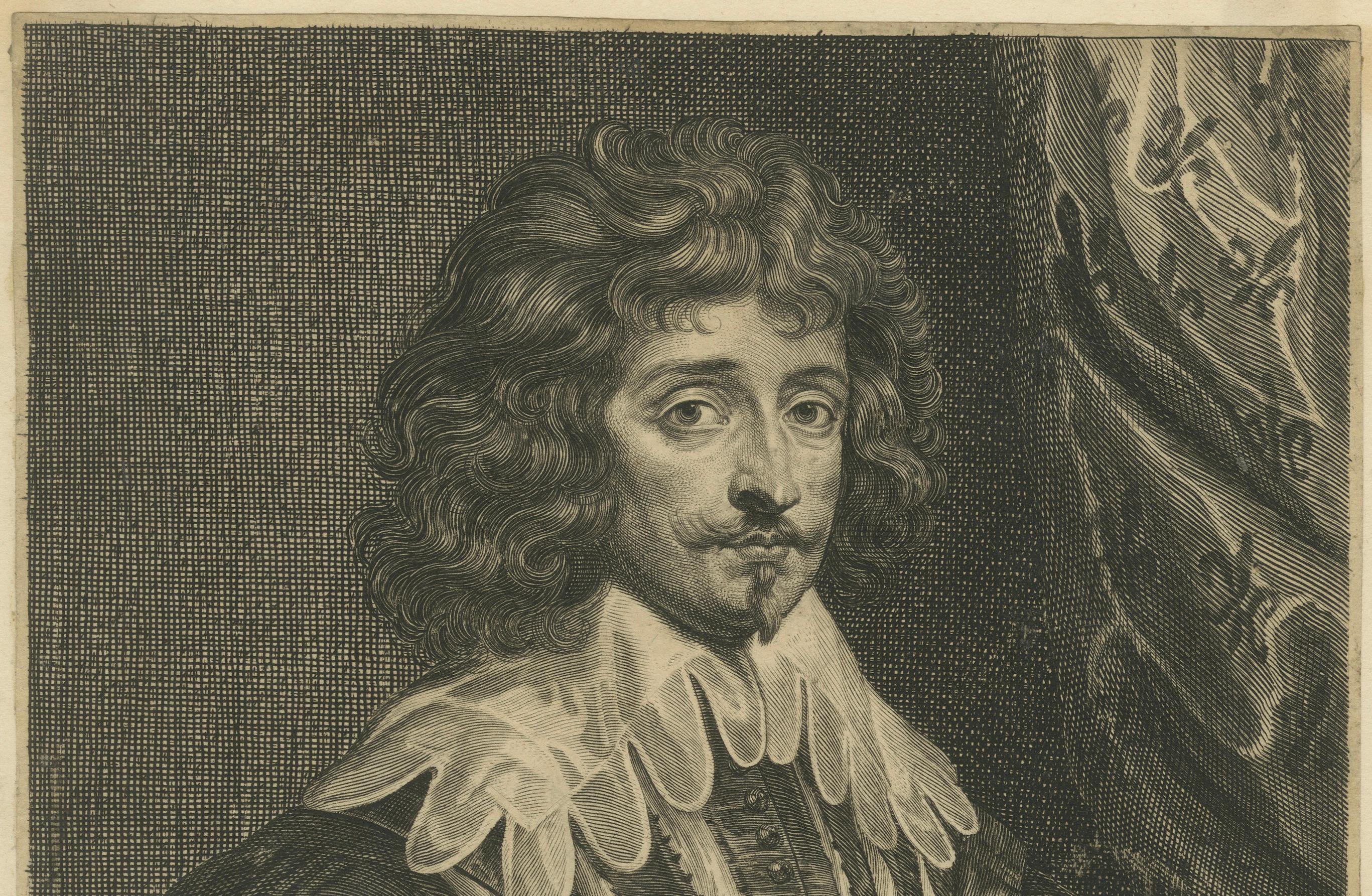
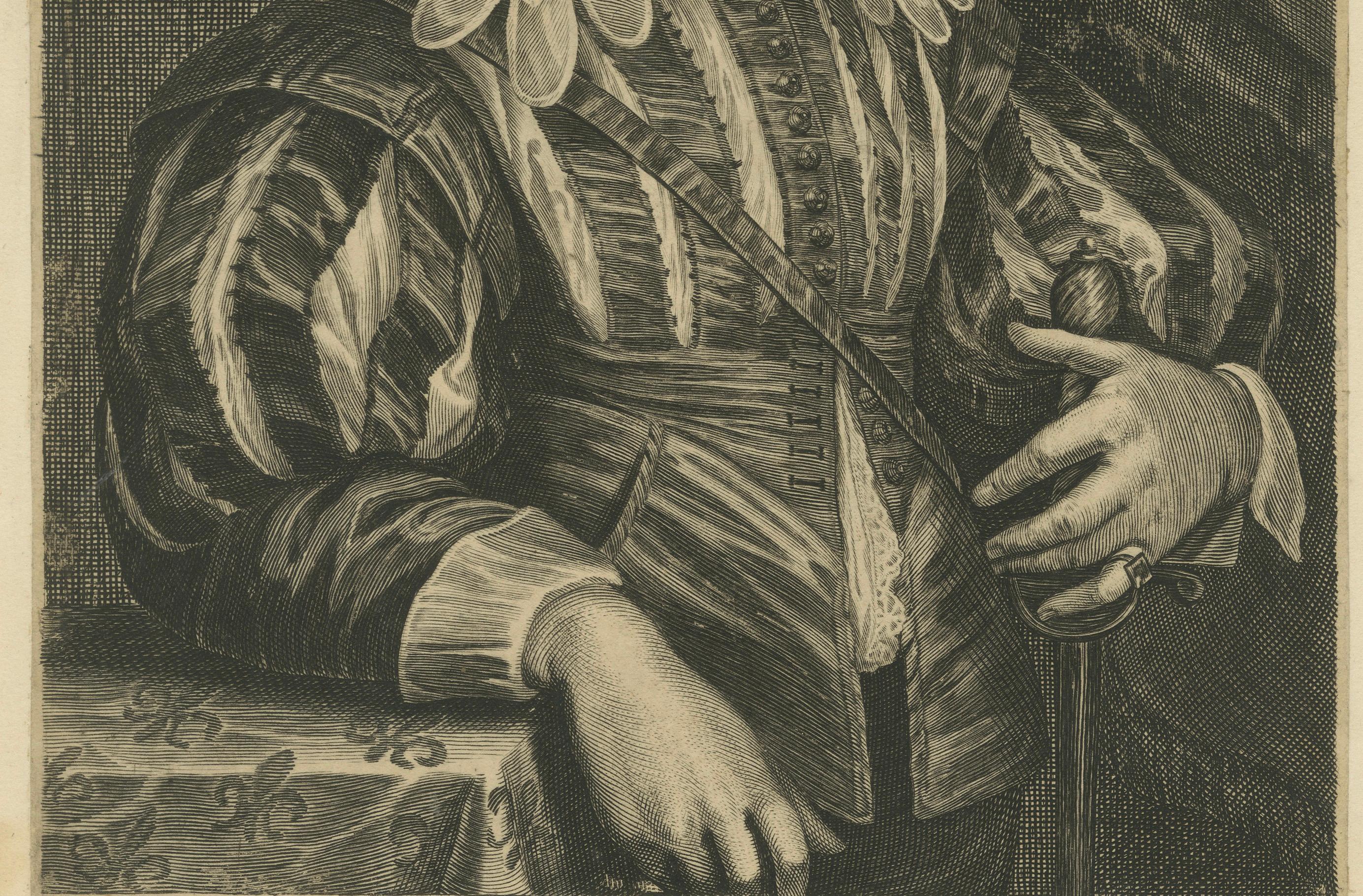
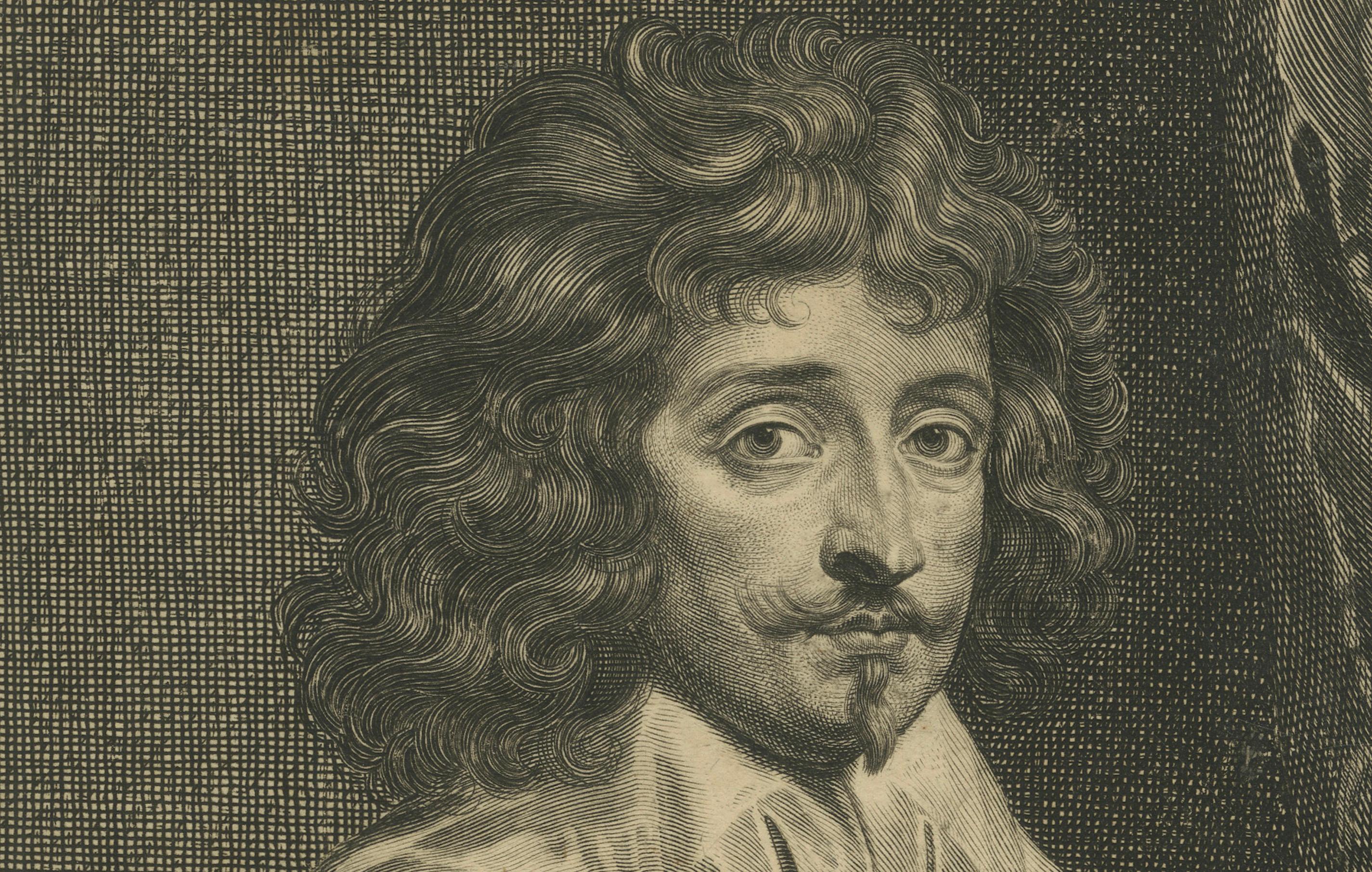
The engraving shows Antoine dressed in elegant aristocratic attire: a richly patterned doublet with broad sleeves, an elaborate lace collar, and a sword at his side, his hand resting with poise. The heavy curtain behind him and the table draped with a fleur-de-lys patterned cloth emphasize his noble birth and royal association.
This portrait is attributed to the French engraver Pierre Lombart (1612–1682), whose monogram “P.L.” appears at the lower left. Lombart was active in Paris and later London, producing highly accomplished engraved portraits of royalty and nobility. His works are distinguished by their fine detailing and subtle cross-hatching, as visible here in the rendering of textures, hair, and fabrics.
Created around 1640, this print is an important witness to the image-making of the Bourbon dynasty during the 17th century. Portraits like this circulated among collectors and courtiers, reinforcing the dynastic connections and memory of figures who played significant, if sometimes controversial, roles in French politics.
For collectors of early modern portraiture, French royal history, or works by Pierre Lombart, this engraving offers both aesthetic quality and historical depth.
Condition report:
Good condition for its age, with strong contrasts and clean, well-preserved lines. No margins and mounted to paper backing. Minor toning and faint handling marks in the margins, with slight age-related discoloration at the outer edges, but no significant tears or repairs.
Framing tips:
This engraving would look striking in a traditional presentation. A cream or warm ivory archival mat will accentuate the engraved details, while a dark wood or ebonized frame with subtle gilt accents will enhance its aristocratic presence. For a lighter effect, a gilt frame alone would emphasize its historical French royal context.
Technique: Engraving
Maker: Pierre Lombart (1612–1682), France, ca. 1640