About this sheet
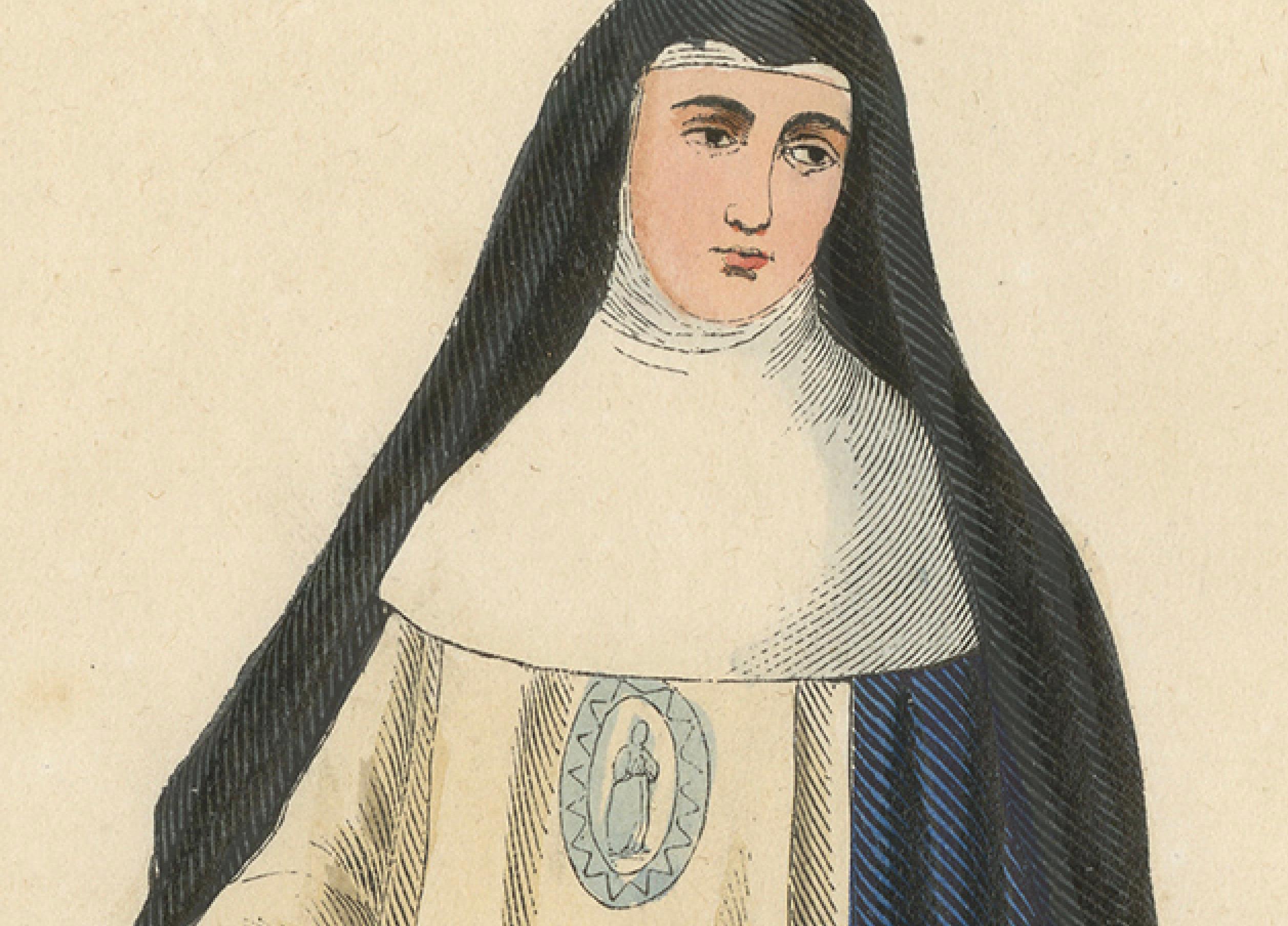
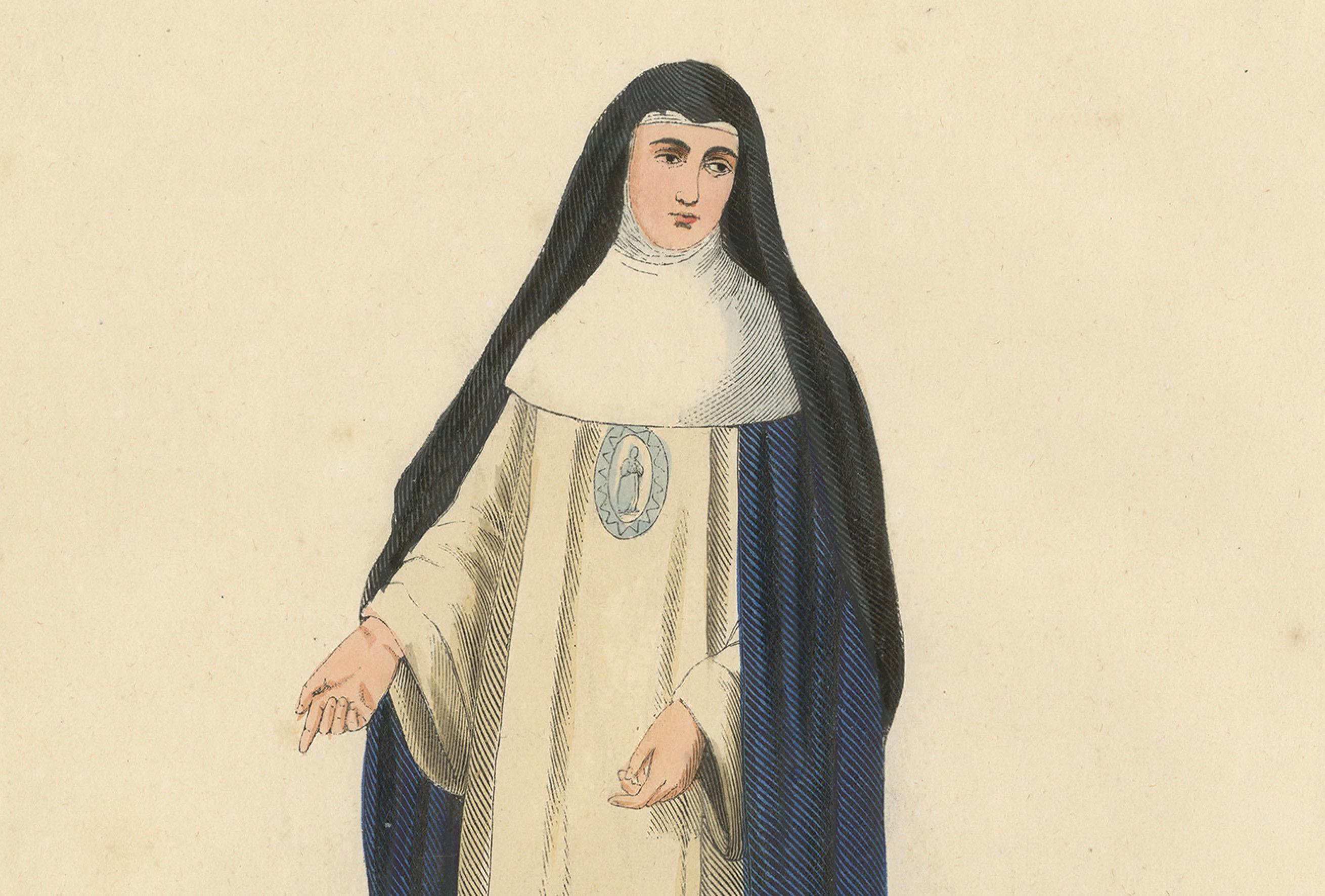
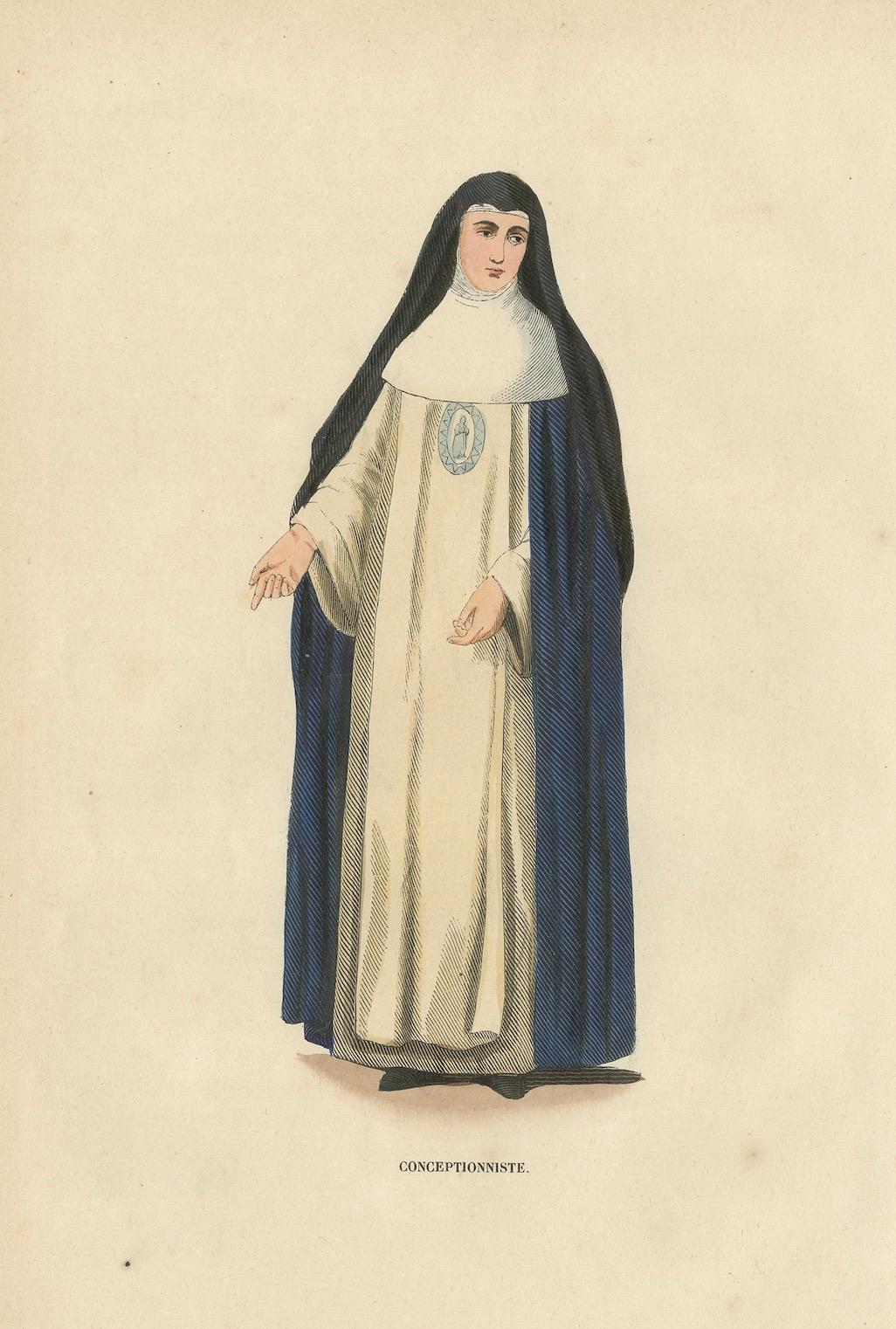
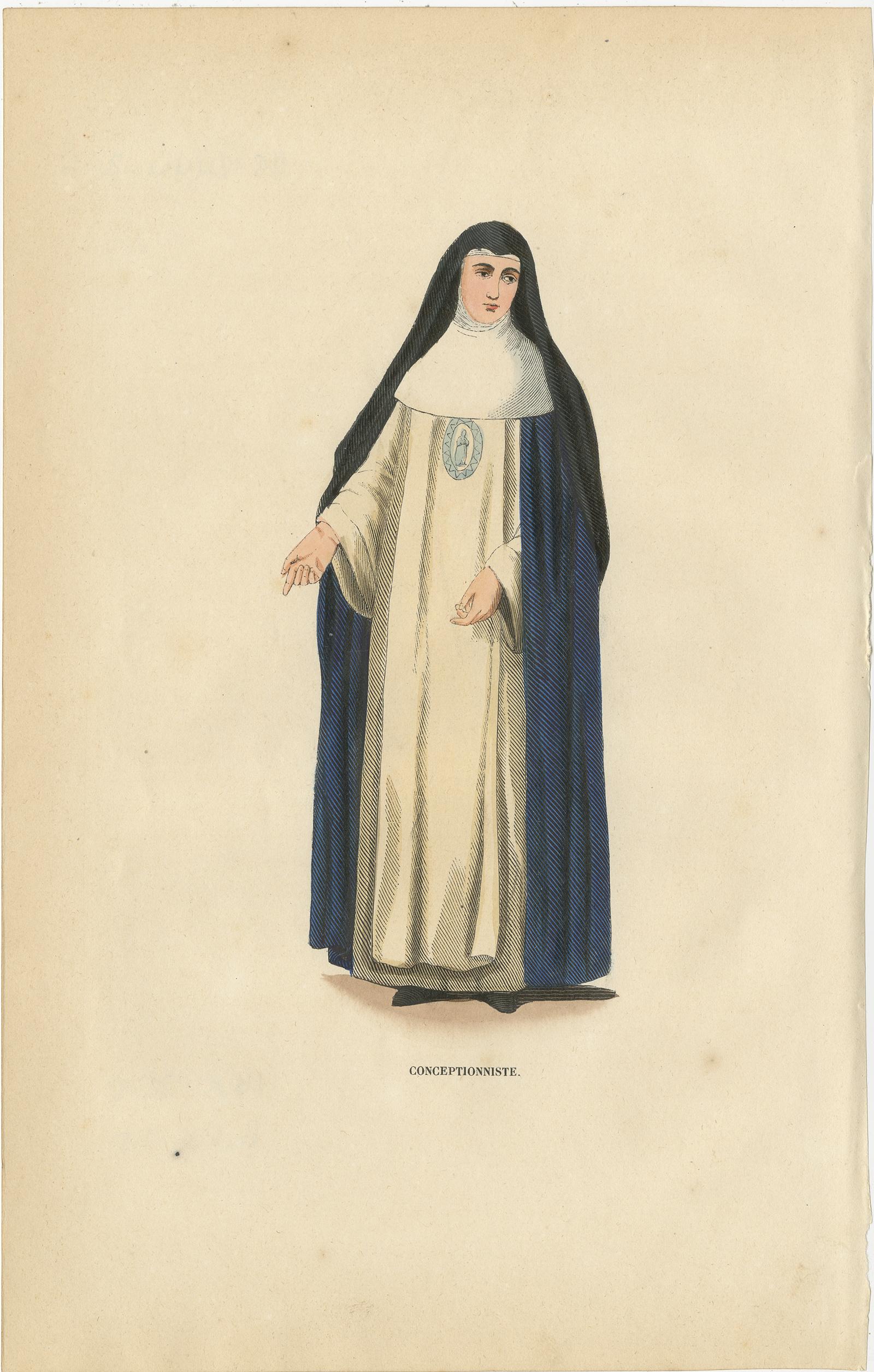
This finely detailed nineteenth-century hand-colored engraving depicts a Conceptionist nun, a member of the Order of the Immaculate Conception, a Roman Catholic religious order founded in Spain in the fifteenth century. The Conceptionists followed a strict monastic life dedicated to prayer, contemplation, and devotion to the Virgin Mary, emphasizing the doctrine of the Immaculate Conception.
The engraving presents the nun in her traditional habit, which consists of a white tunic and scapular, a blue mantle, and a black veil. The colors of the habit are symbolic, with white representing purity and blue signifying devotion to the Virgin Mary. The blue mantle, in particular, reflects the order’s dedication to the Immaculate Conception, a belief that Mary was conceived without original sin. A distinctive feature of the habit is the medallion bearing an image of the Virgin Mary, worn on the chest, reinforcing the order’s spiritual connection to Marian devotion.
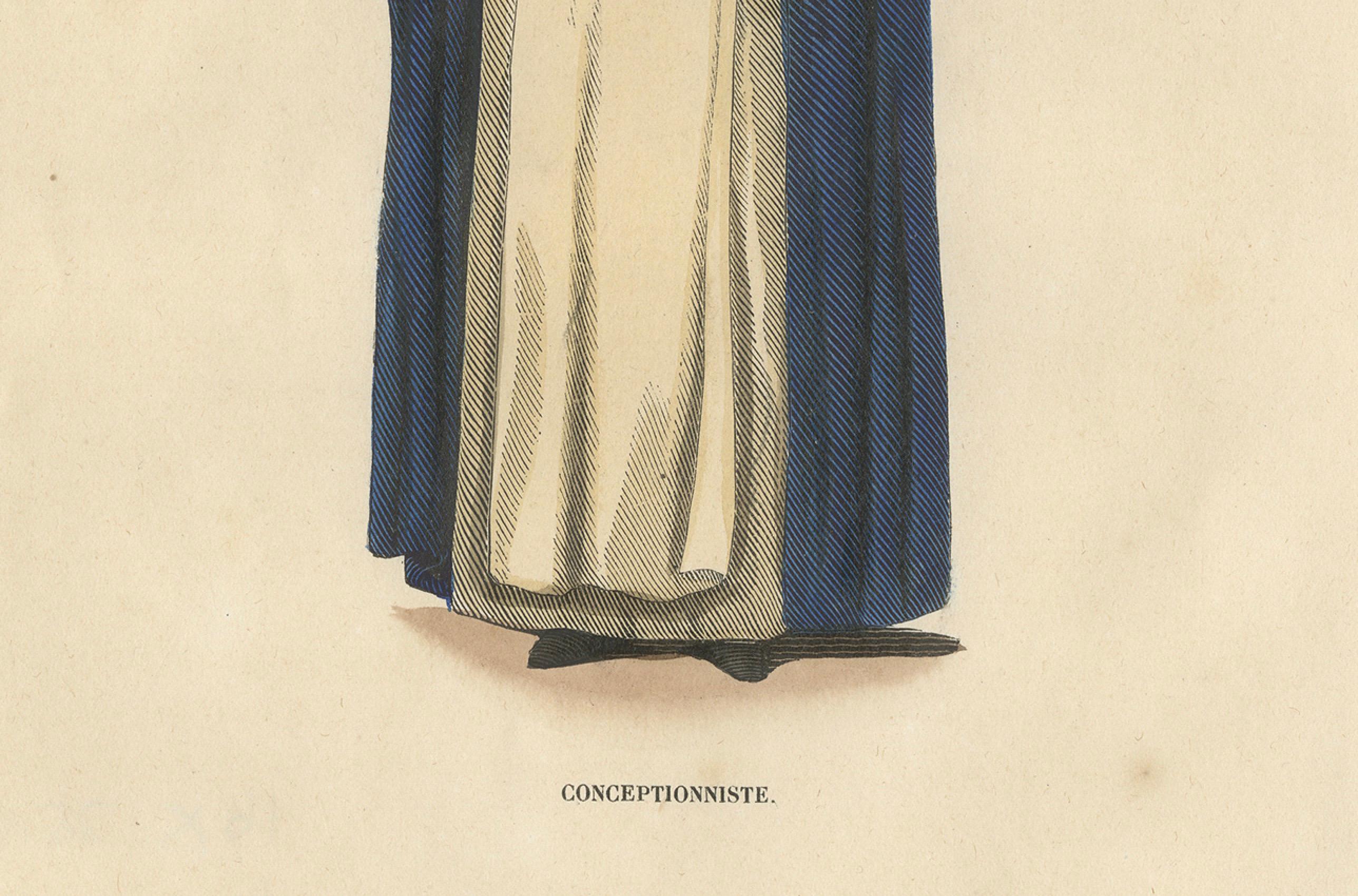
The engraving captures the elegance and solemnity of the religious attire, with delicate shading and fine cross-hatching used to add depth and texture. The nun’s expression is serene and contemplative, reflecting the quiet piety of monastic life. The background is left intentionally blank, focusing attention on the figure and her attire. The caption beneath the image reads Conceptionniste, identifying the subject and her order.
Hand-colored engravings like this were often included in costume books, ecclesiastical studies, or ethnographic works in the nineteenth century, providing insight into the attire, customs, and traditions of religious communities. The Conceptionist order, originally founded in 1484 by Saint Beatrice of Silva, spread throughout Spain, Portugal, and Latin America, playing a significant role in the religious and cultural history of Catholicism.
This engraving is an excellent example of the artistic and historical documentation of religious dress, reflecting both the aesthetic sensibilities of the nineteenth century and the ongoing fascination with monastic life.
Condition Report: The paper is in good condition, with a fine laid texture typical of high-quality nineteenth-century prints. The engraving remains crisp, with sharp lines and well-preserved detailing of the habit and facial features. There is a 1 cm tear in the right margin, backed on the reverse with archival tape.
There is light age-toning, particularly along the edges, which is common for prints of this age. The hand-coloring is beautifully preserved, with rich blue and soft ivory hues applied with precision. There is no significant staining, foxing, or damage, making this a fine and collectible example of a religious costume engraving.
Framing Recommendations:
To properly preserve and showcase this antique engraving, archival-quality materials are recommended.
For matting and backing, use acid-free, museum-grade board to prevent further aging. A double mat with a neutral outer mat and a soft blue or gold inner accent will enhance the rich tones of the habit.
A classic dark walnut, black, or gilded wooden frame will complement the historical nature of the engraving. A Victorian-style frame with subtle detailing would further enhance its nineteenth-century elegance.
To protect the print, UV-resistant museum glass or acrylic is advised to prevent fading while maintaining clarity. Anti-reflective glass will ensure that the fine details and delicate hand-coloring remain fully visible.
For mounting, avoid adhesives. Instead, use archival-quality corner mounts or Japanese paper hinges to secure the print safely without causing damage.
The framed engraving should be displayed in a stable environment, away from direct sunlight, humidity, and extreme temperature changes. Ideal locations for display include a study, library, or gallery, where its historical and artistic significance can be fully appreciated.
This nineteenth-century hand-colored engraving of a Conceptionist nun is a rare and historically significant piece, reflecting the religious traditions, devotional attire, and artistic documentation of Catholic monastic life. It is an excellent addition to collections focused on antique prints, religious art, and ecclesiastical history.