About this sheet
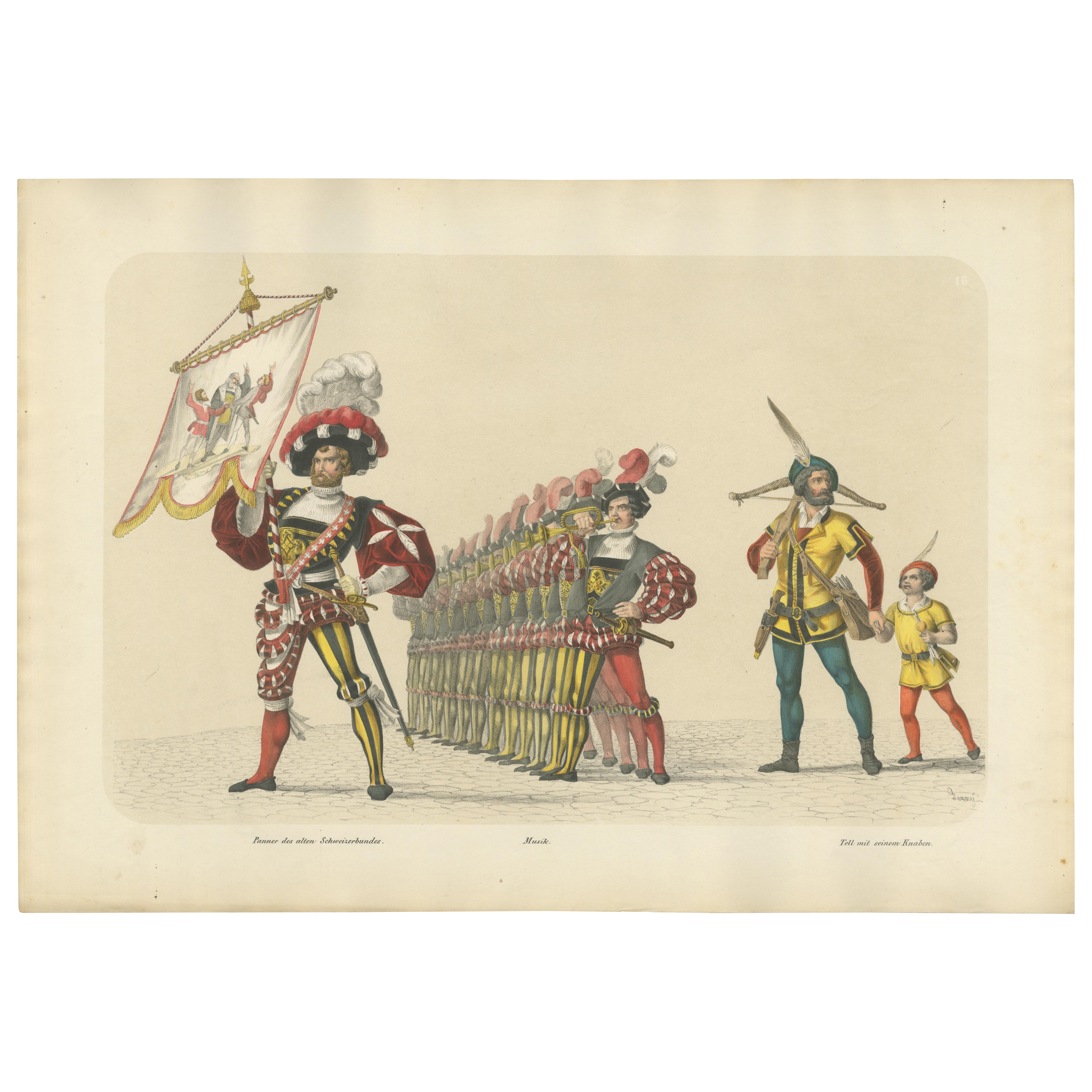
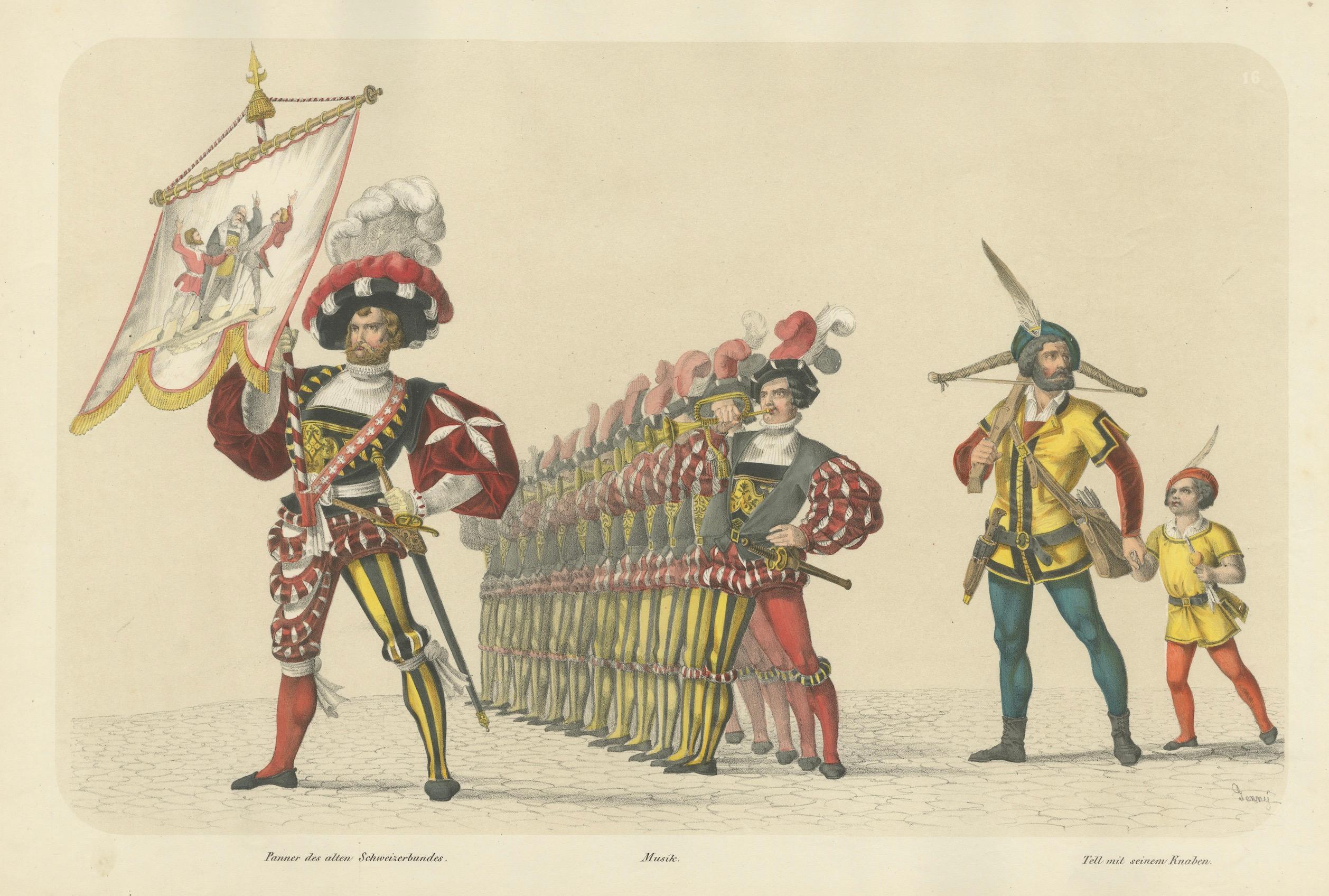
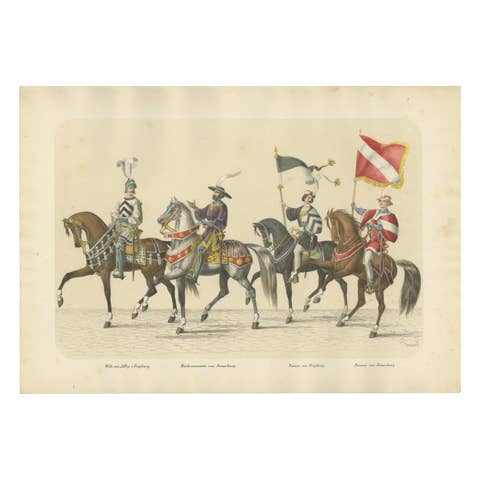
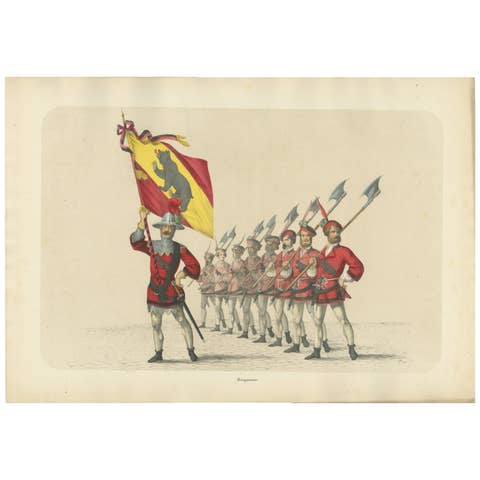
This striking hand-colored lithograph is part of the Fest Album Celebrating Bern’s Entry into the Swiss Confederation on March 6, 1353, Commemorated in 1853 on the Victory Days of Laupen and Murten, published in Bern and Zurich in 1855. Created by the artist Heinrich Jenny and lithographed by Kümmerly and Wittmer, this image highlights both the symbolic legacy of the Swiss Confederation and the legendary Swiss hero William Tell, making it one of the most patriotic and historically significant scenes in the series.
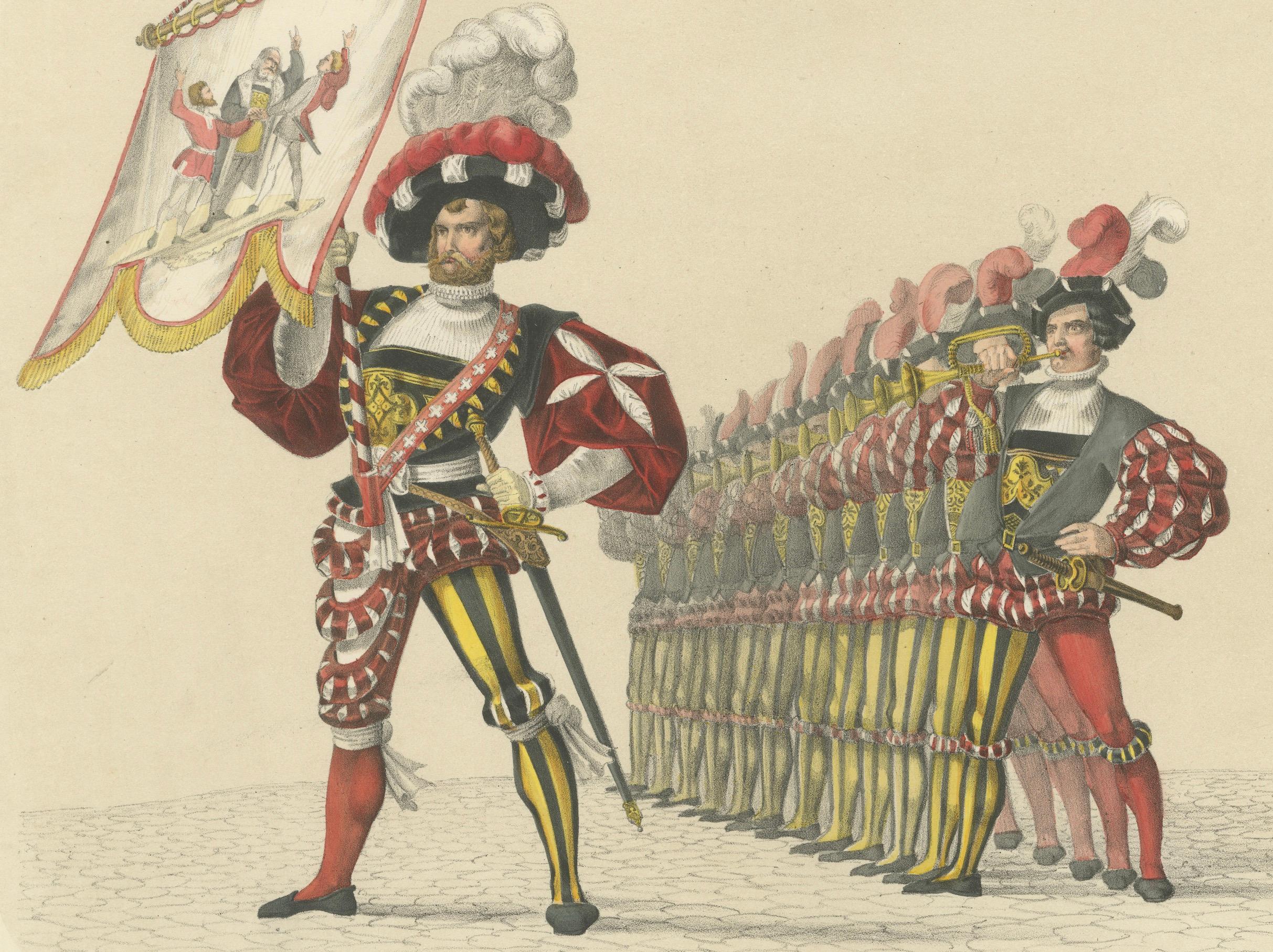
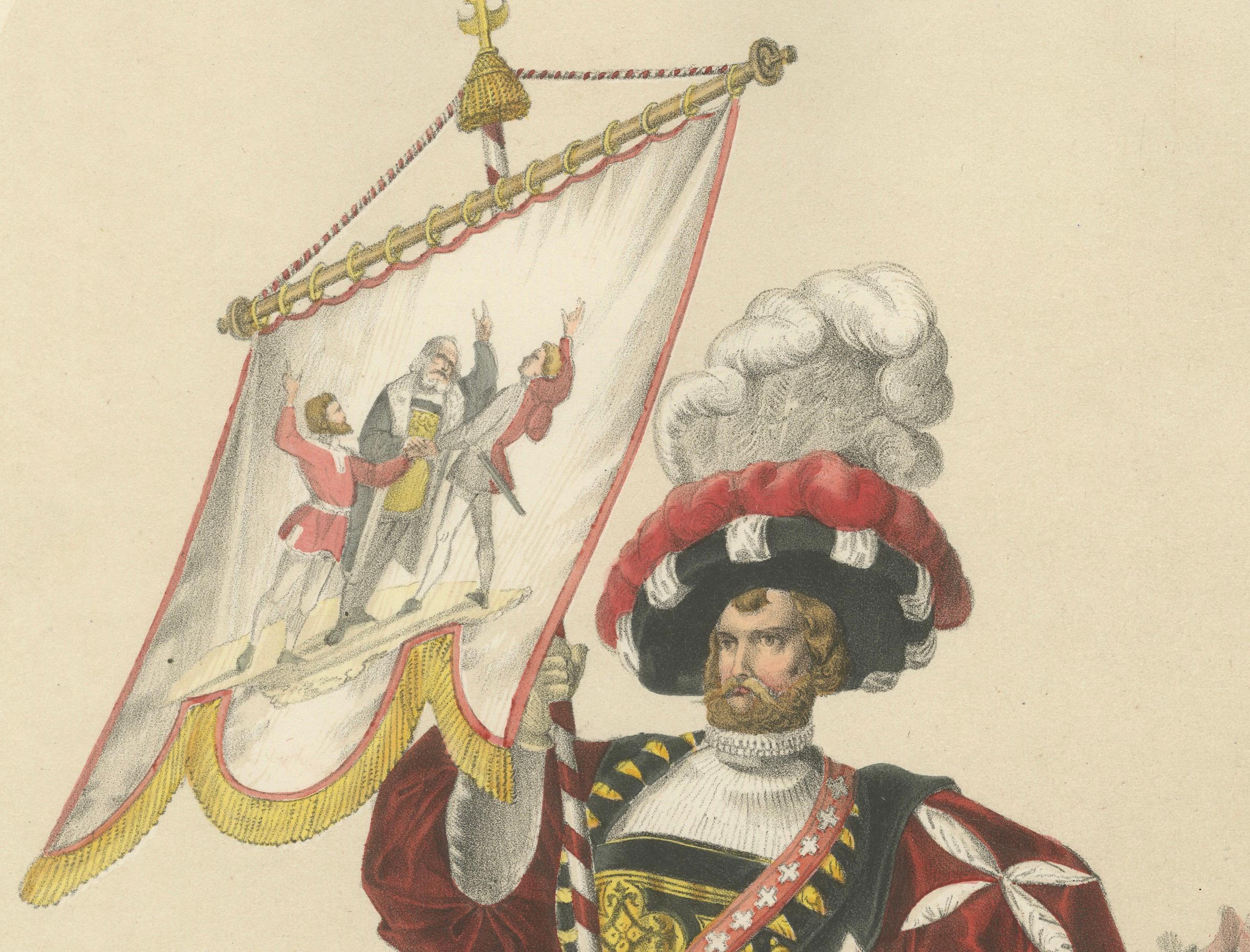
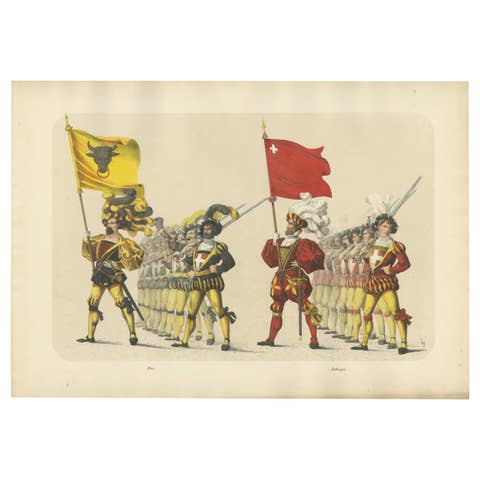
On the left, the **Banner of the Old Swiss Confederation** is carried by a proud banner bearer dressed in an elaborate Renaissance-style uniform of red, black, and yellow. His ornate attire, complete with a plumed hat, striped trousers, and a sword at his side, emphasizes the importance of his role in the procession. The banner he carries features an embroidered depiction of Swiss confederates swearing an oath, a powerful reference to the founding of the Swiss Confederation in 1291. This imagery reinforces the theme of unity and shared national identity, which was central to the 1853 celebration of Bern’s historic alliance.
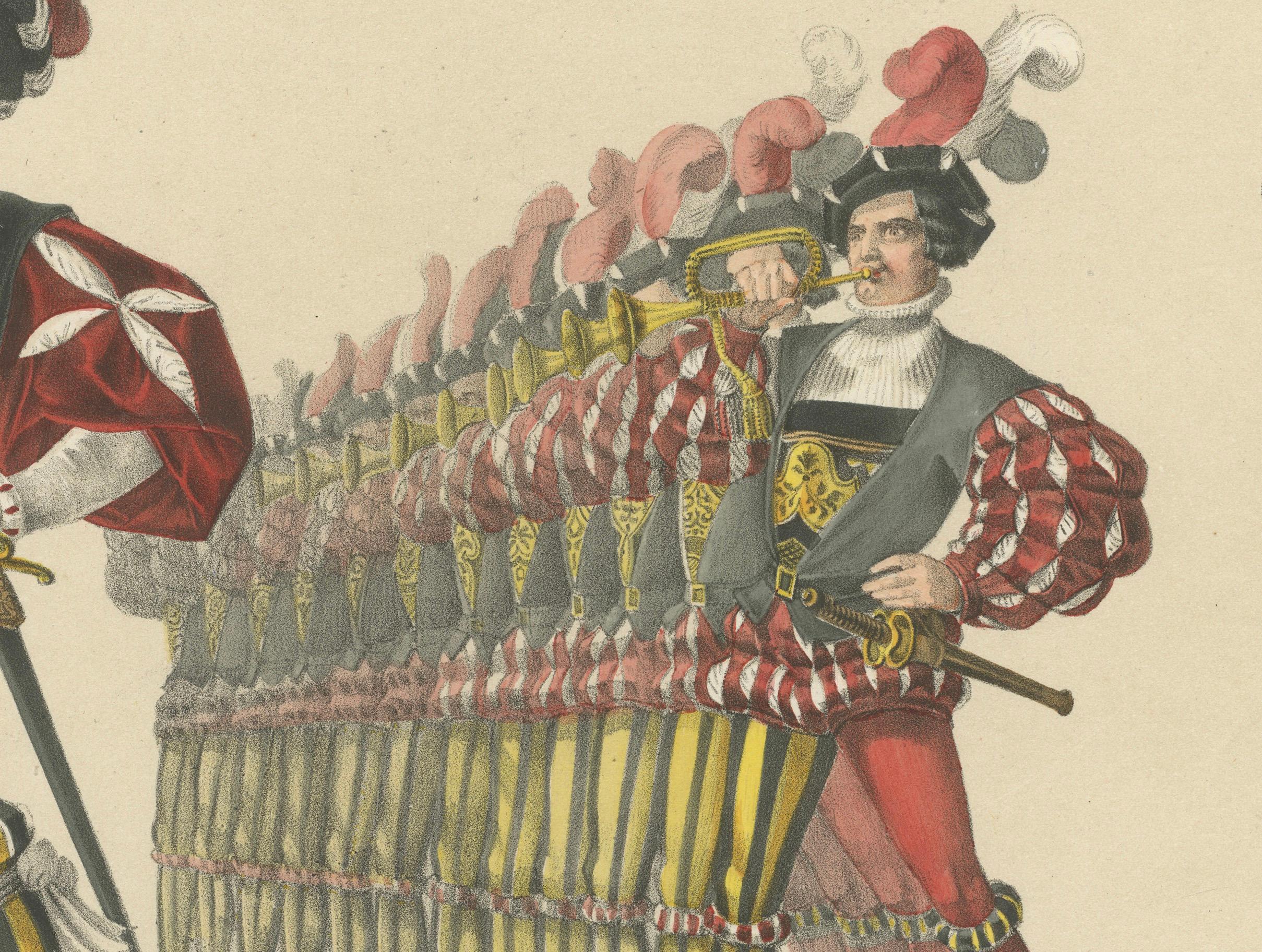
Behind the banner bearer, a regiment of musicians marches in perfect formation, dressed in red and yellow uniforms adorned with golden details. A musician in the foreground plays a long ceremonial trumpet, signaling the grandeur of the occasion. The presence of musicians in such a formal setting underlines the significance of music in Swiss military and civic celebrations, where it was used to rally troops, honor dignitaries, and create an atmosphere of festivity.
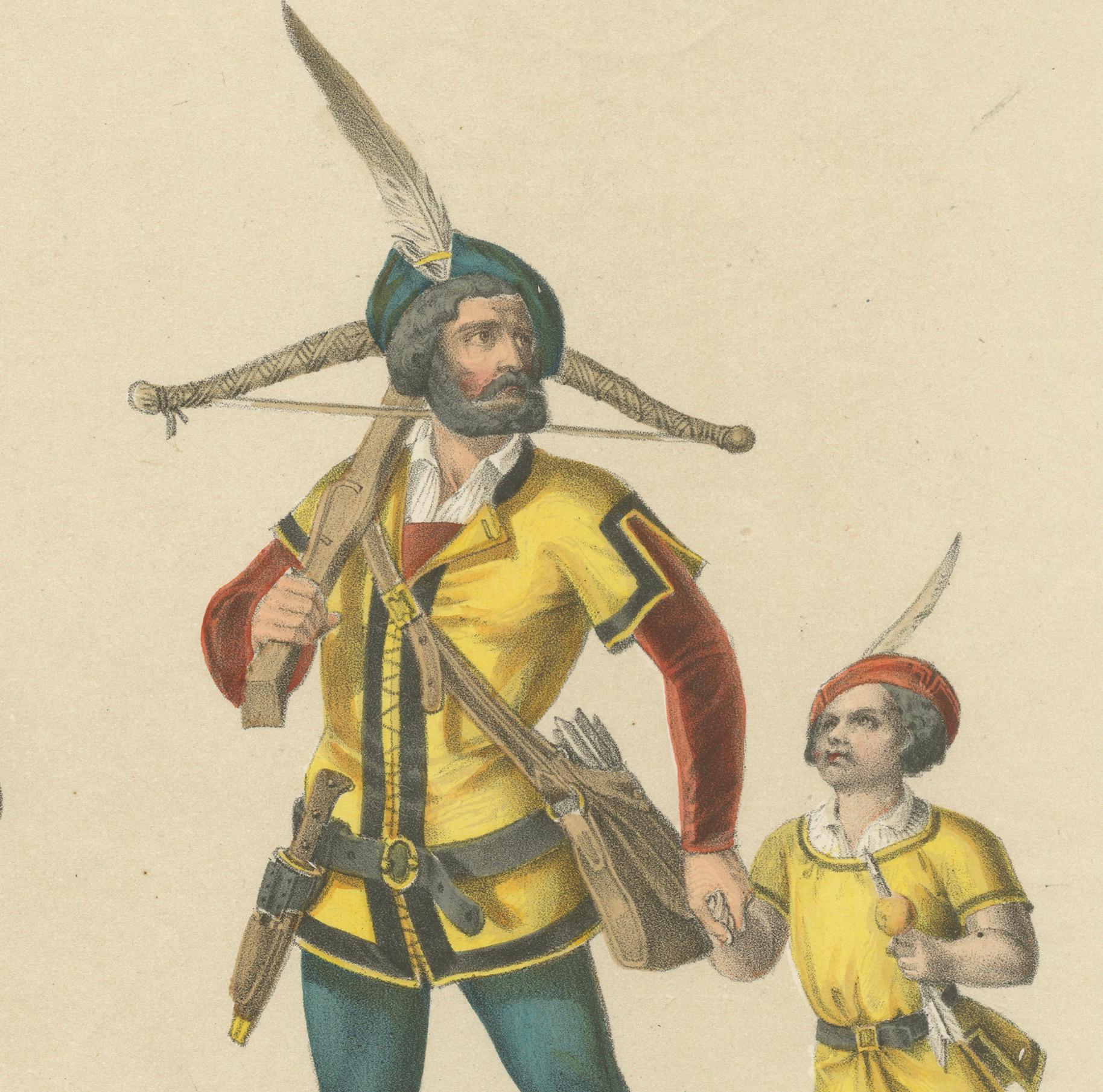
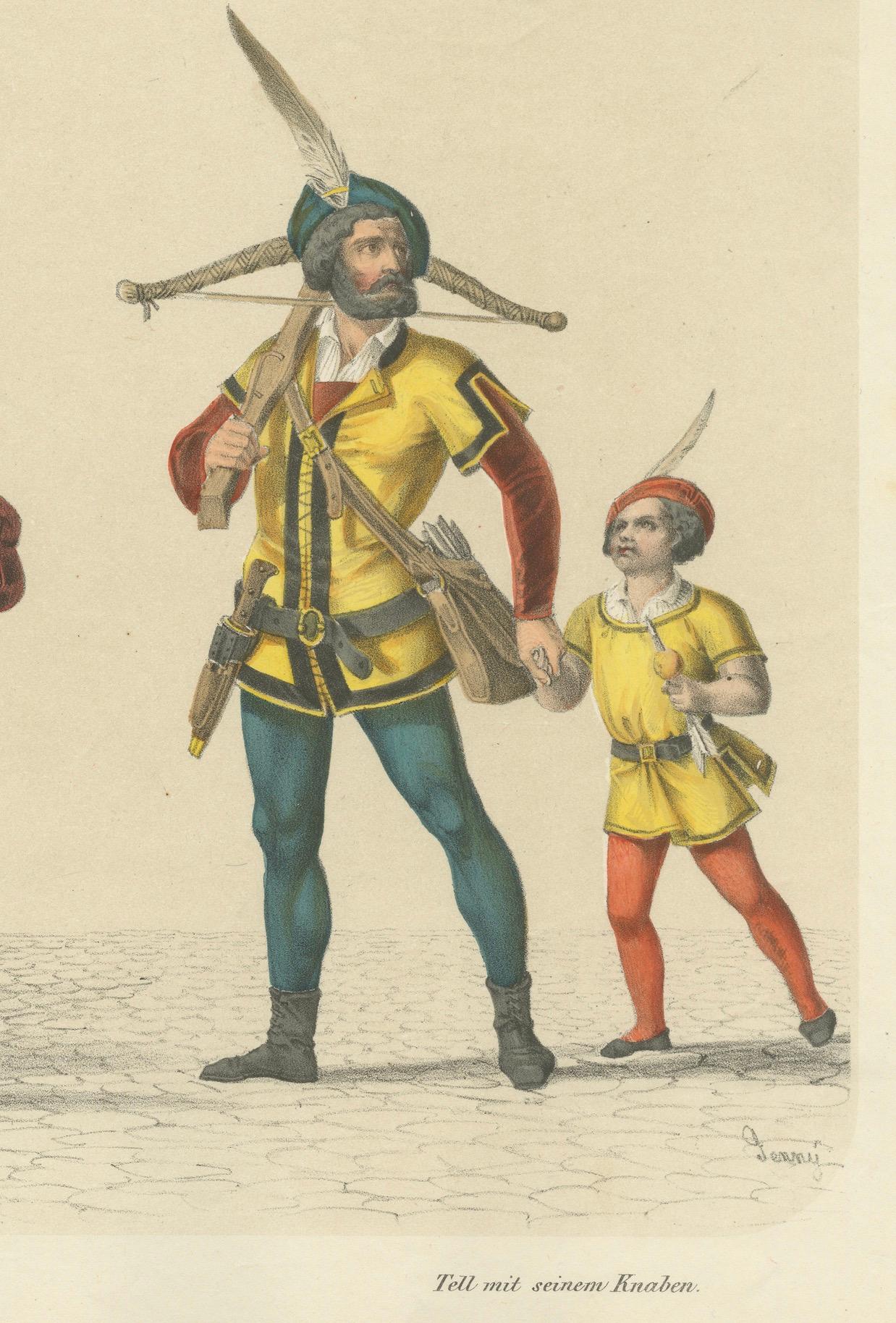
On the right, the legendary Swiss folk hero William Tell appears with his son. Tell is depicted wearing a yellow and blue outfit, complete with a crossbow and quiver full of arrows, referencing the famous tale in which he was forced to shoot an apple from his son’s head. His confident and determined expression, along with his protective grasp of his son’s hand, emphasizes his role as a symbol of Swiss resistance against foreign oppression. Tell’s inclusion in this historical procession links the real events of Swiss confederation history with the deeply rooted legends that shaped Swiss national identity.
This lithograph is a remarkable blend of historical accuracy and mythological reverence. The attention to detail in the textures of the fabrics, the embroidered banner, and the carefully shaded expressions makes it a visually engaging and historically rich piece. It serves as both a tribute to the political achievements of the Swiss Confederation and an artistic homage to one of Switzerland’s most enduring folk legends.
Summary of Condition:
The print is in good condition, with minor signs of aging such as slight foxing along the margins and mild discoloration on the edges. The colors remain vibrant, particularly in the deep reds, golds, and blues of the uniforms and banners. The fine details of the clothing, facial expressions, and weapons are well-preserved, maintaining the historical integrity of the lithograph.
Framing Tips:
To highlight the strong national symbolism of this lithograph, a deep gold or dark mahogany frame would provide an elegant contrast. A neutral archival mat in off-white or warm beige would ensure that the colors of the banners and uniforms remain the focal point. UV-resistant glass is highly recommended to protect the pigments and preserve the print’s clarity. A shadow box frame with a floating mount would add depth and enhance the presence of the banner bearer and William Tell, making it a powerful statement piece in any historical or art collection.