About this sheet
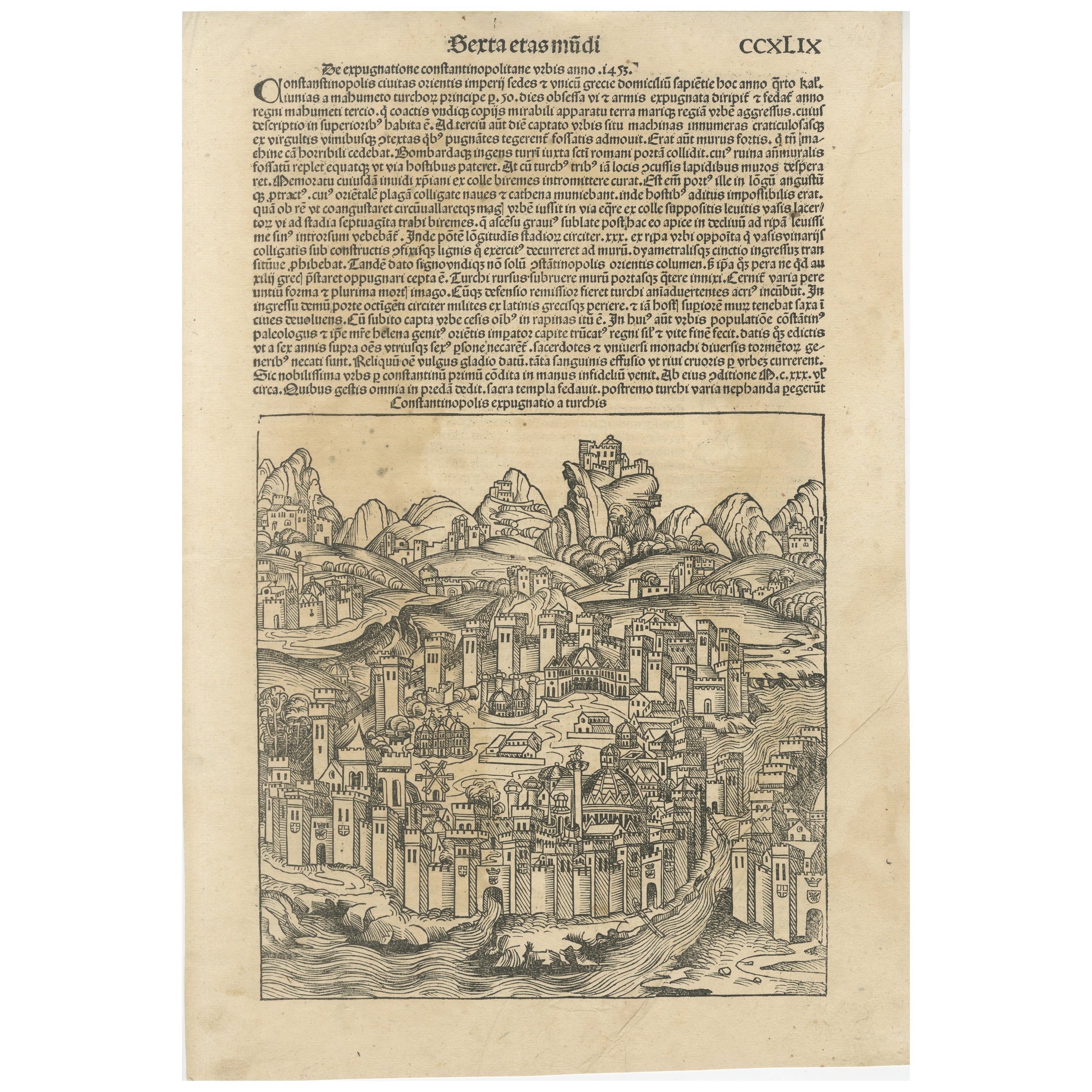
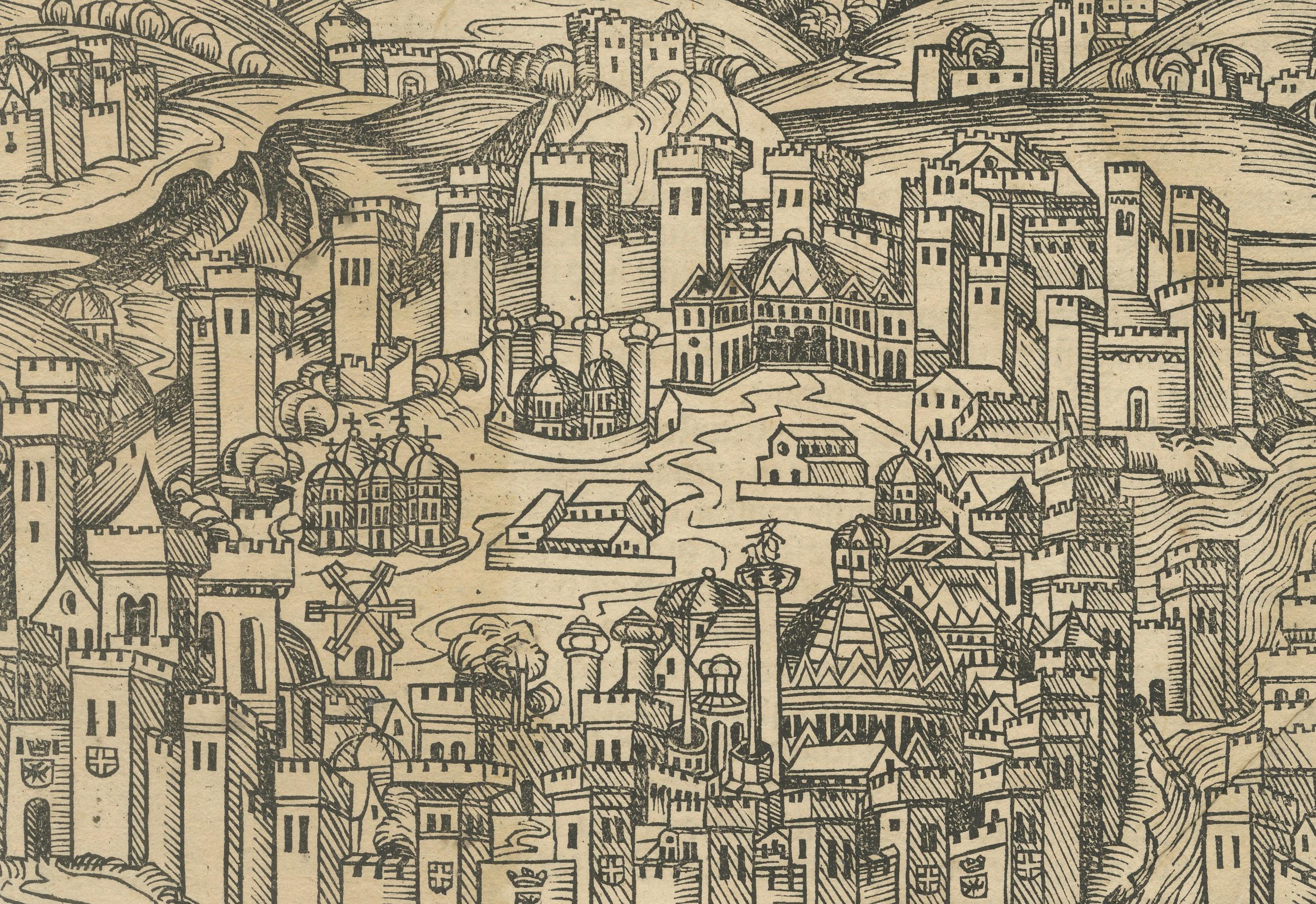
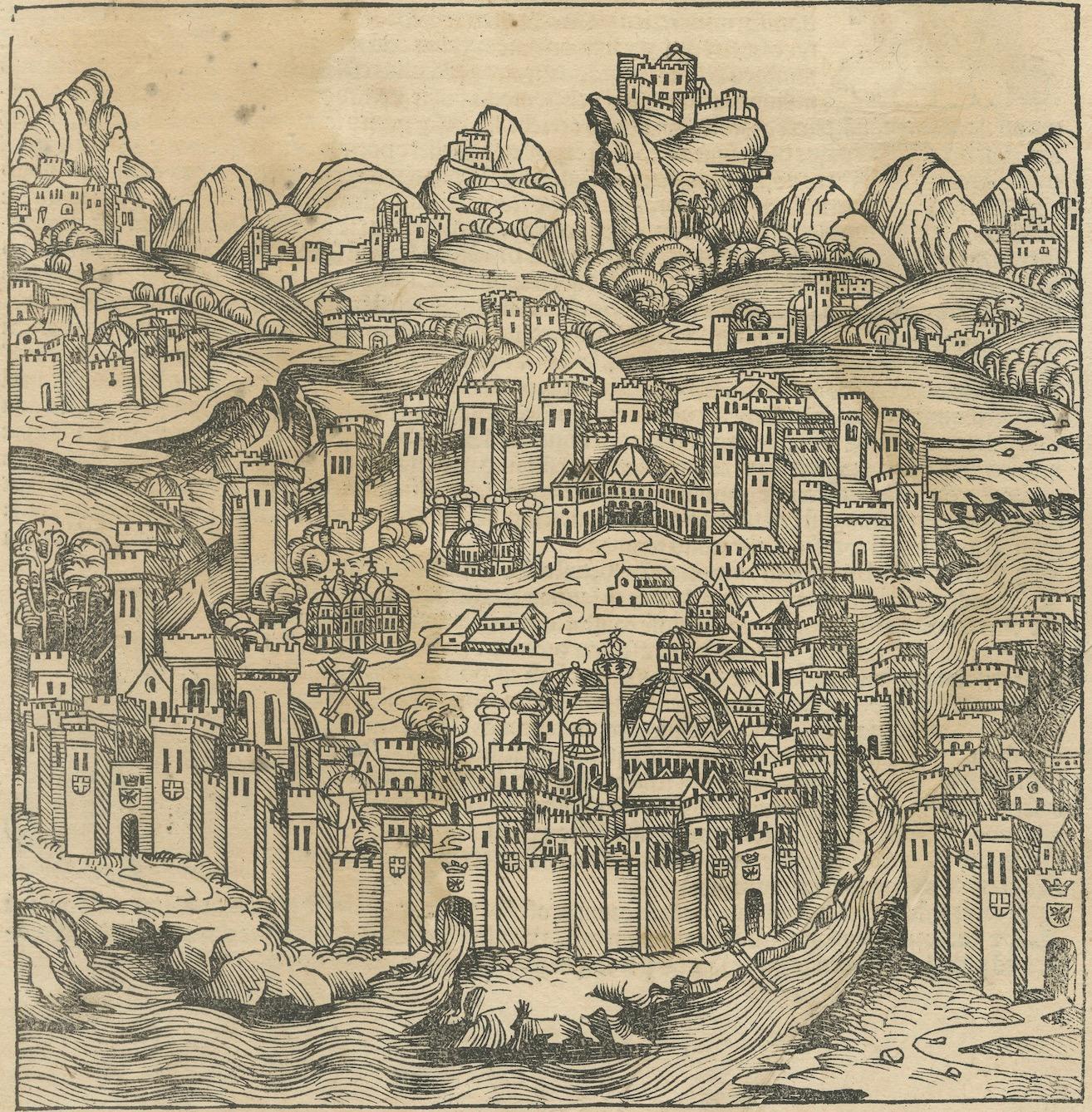
This woodcut view of Constantinople is from Hartmann Schedel's 'Nuremberg Chronicle' (Liber Chronicarum), published in 1493 by Anton Koberger. The Chronicle, a monumental work of early printing, was produced in both Latin and German editions. It combines a history of the world with approximately 1,800 woodcut illustrations, making it one of the most richly illustrated incunabula of its time.
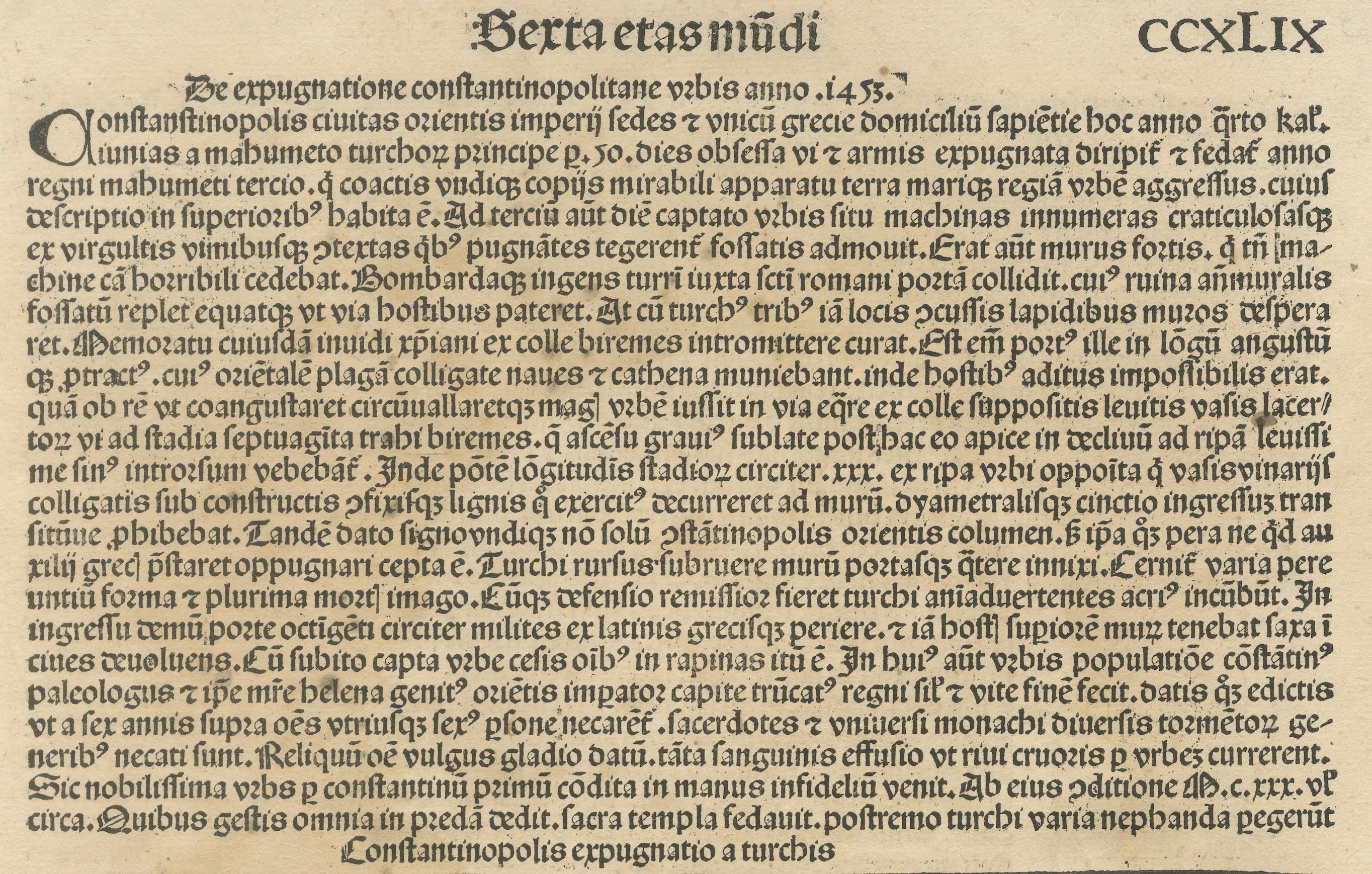
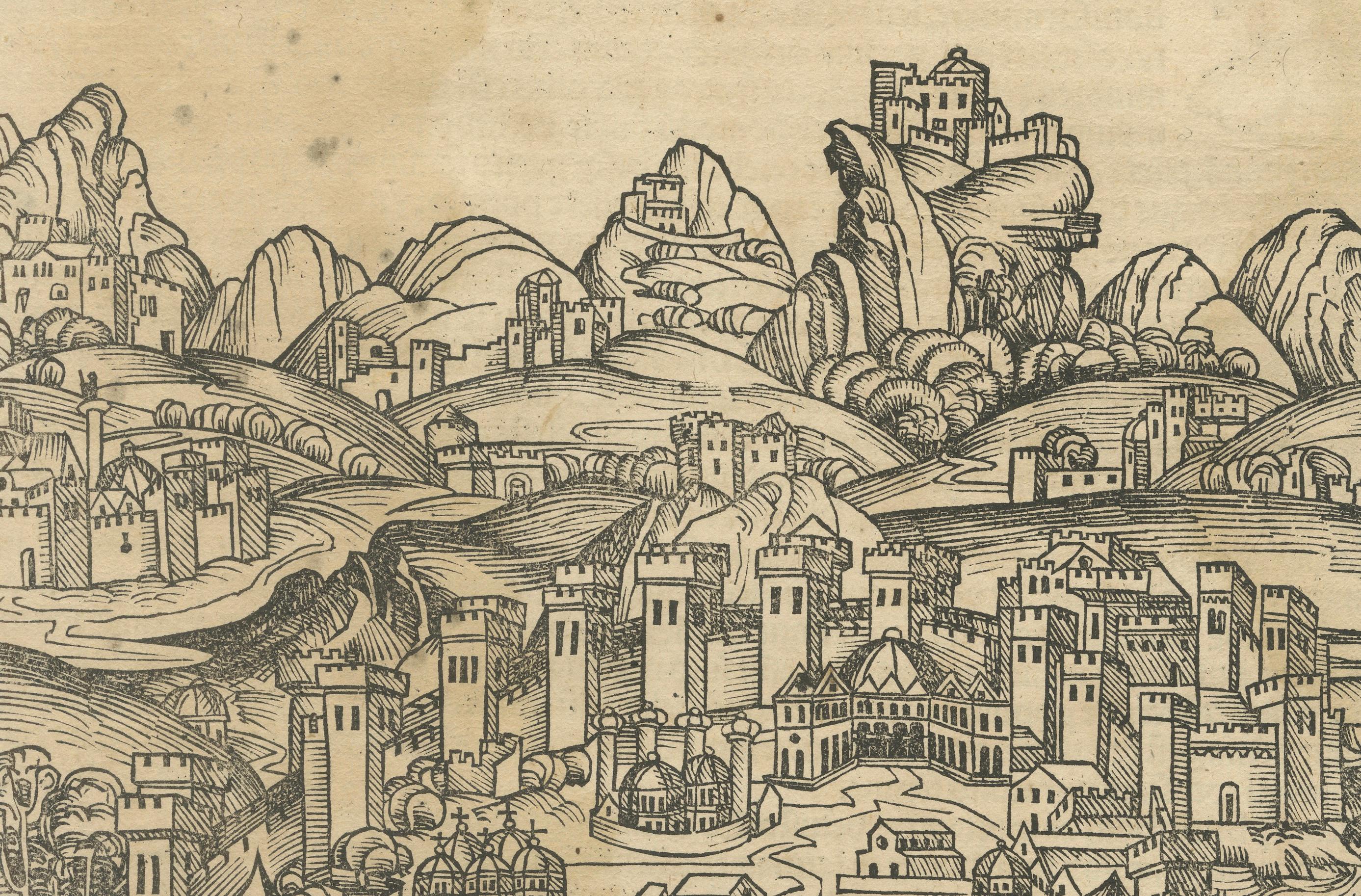
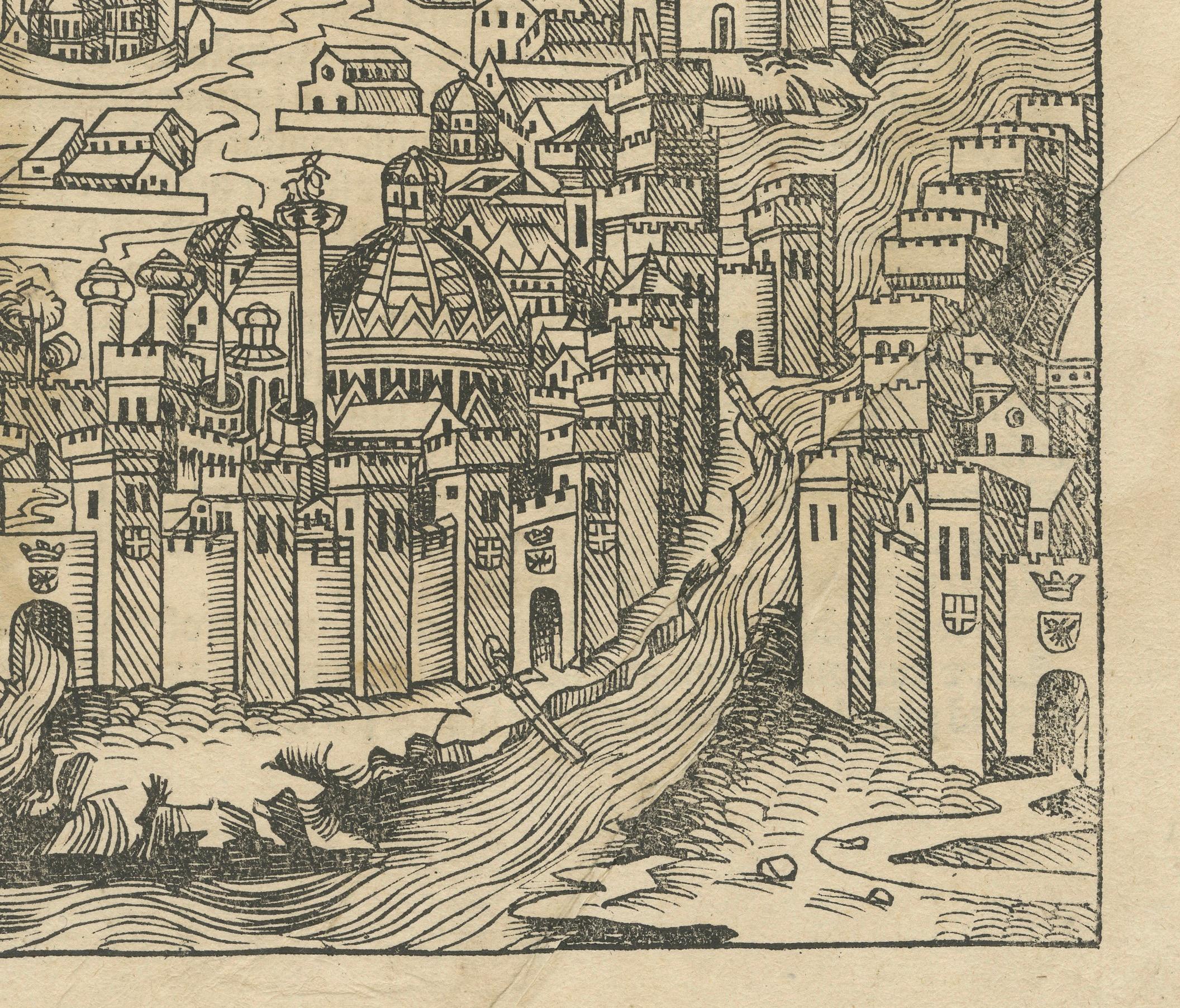
This depiction of Constantinople presents an imaginative view of the city after its conquest by the Ottoman Turks in 1453. It features landmarks such as mosques, windmills, and monuments within a fictionalized countryside, characteristic of many illustrations in the Chronicle. The text accompanying the image describes the siege of Constantinople, a pivotal event in European and world history.
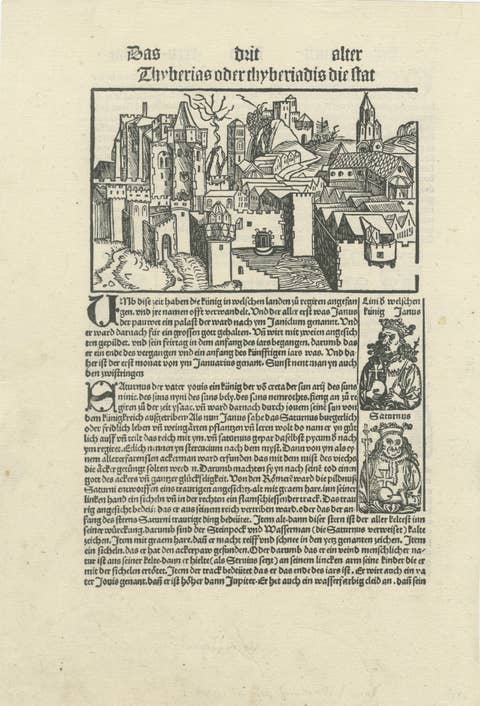
The woodcut, measuring approximately 10.9 x 16.0 inches, is on a full sheet of Latin text. The verso includes portraits of notable historical figures: Suncassianus, the King of Persia and Armenia; John Capistrano; and Francesco Filelfo of Ancona. The woodcut was designed by Michael Wohlgemuth and Willem Pleydenwurff, with possible contributions from their apprentice, Albrecht Dürer.
Key Features:
- Artist/Designer: Michael Wohlgemuth, Willem Pleydenwurff, and workshop (possibly Albrecht Dürer)
- Publisher: Anton Koberger
- Publication: 'Nuremberg Chronicle' (Liber Chronicarum), 1493
- Language: Latin
- Subject: Imaginary view of Constantinople post-1453 Ottoman conquest
- Dimensions: 10.9 x 16.0 inches (full sheet)
Significance:This piece is a fascinating artifact of early printed history, combining Renaissance artistic innovation with the evolving understanding of geography and history. The imaginative cityscape reflects the European perspective on Constantinople in the 15th century, while the Chronicle itself is a key work in the development of the printed book.
Uses:
- An important addition to collections focusing on incunabula, cartography, or historical views of cities.
- Ideal for display in exhibitions on early printing, European perceptions of the Ottoman Empire, or Renaissance art.
Condition Report:
Good condition. The sheet displays light toning and minor foxing, typical of 15th-century prints. Edges show slight wear, and there is no significant loss of image or text. One crease lower right corner. Woodcut impressions remain crisp and clear. No repairs or restorations noted.
Tips for display or framing:
Use acid-free mat and backing board to prevent damage. Protect the print with UV-filtering glass or acrylic to minimize fading. Mount using archival corners or hinges without adhesives. Select a neutral mat with 2-3 inches of space around the print. Choose a simple frame, such as black or dark wood, to complement the historic nature. Use glazing spacers to keep the print from touching the glass. Hang in a cool, dry location away from sunlight, humidity, or temperature fluctuations.