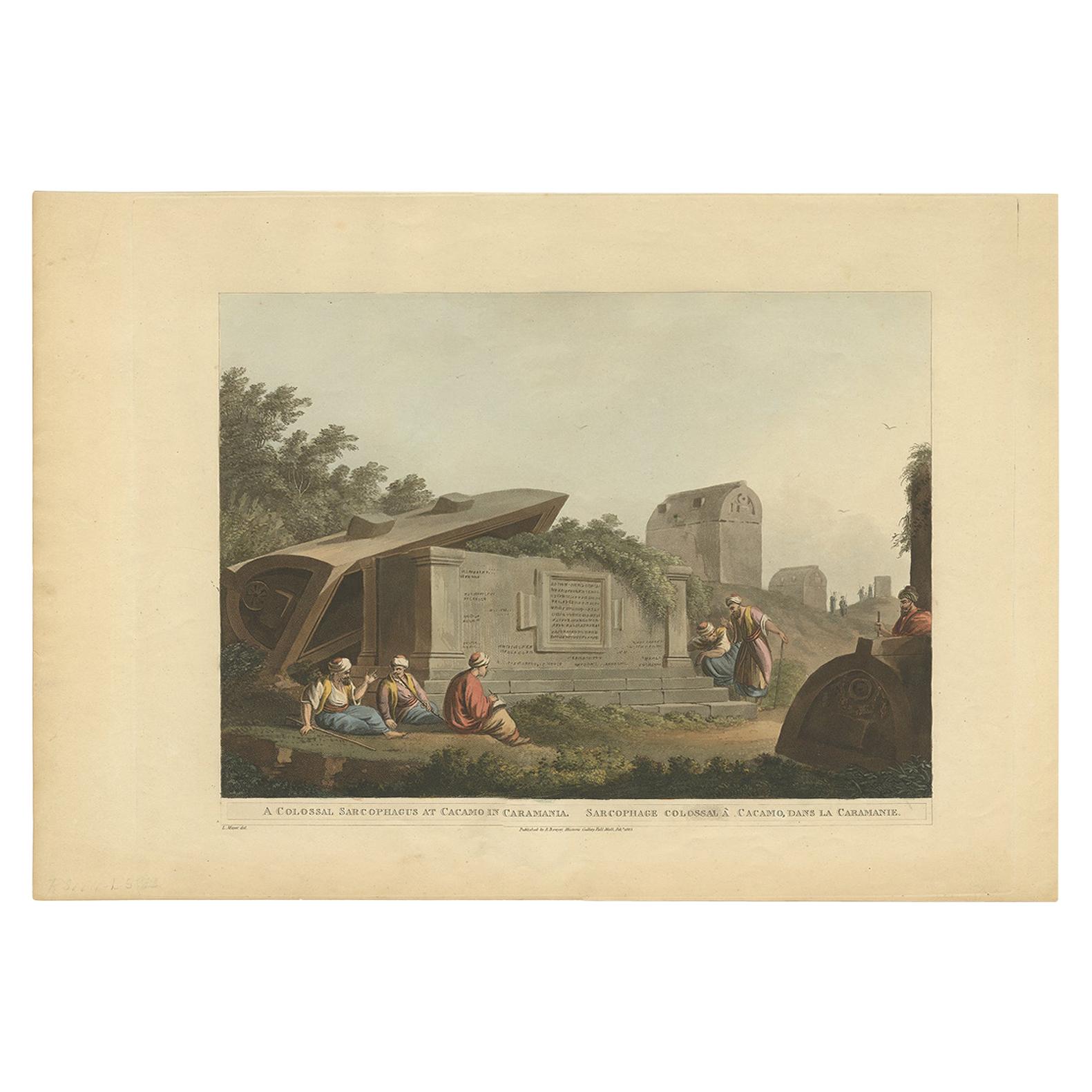
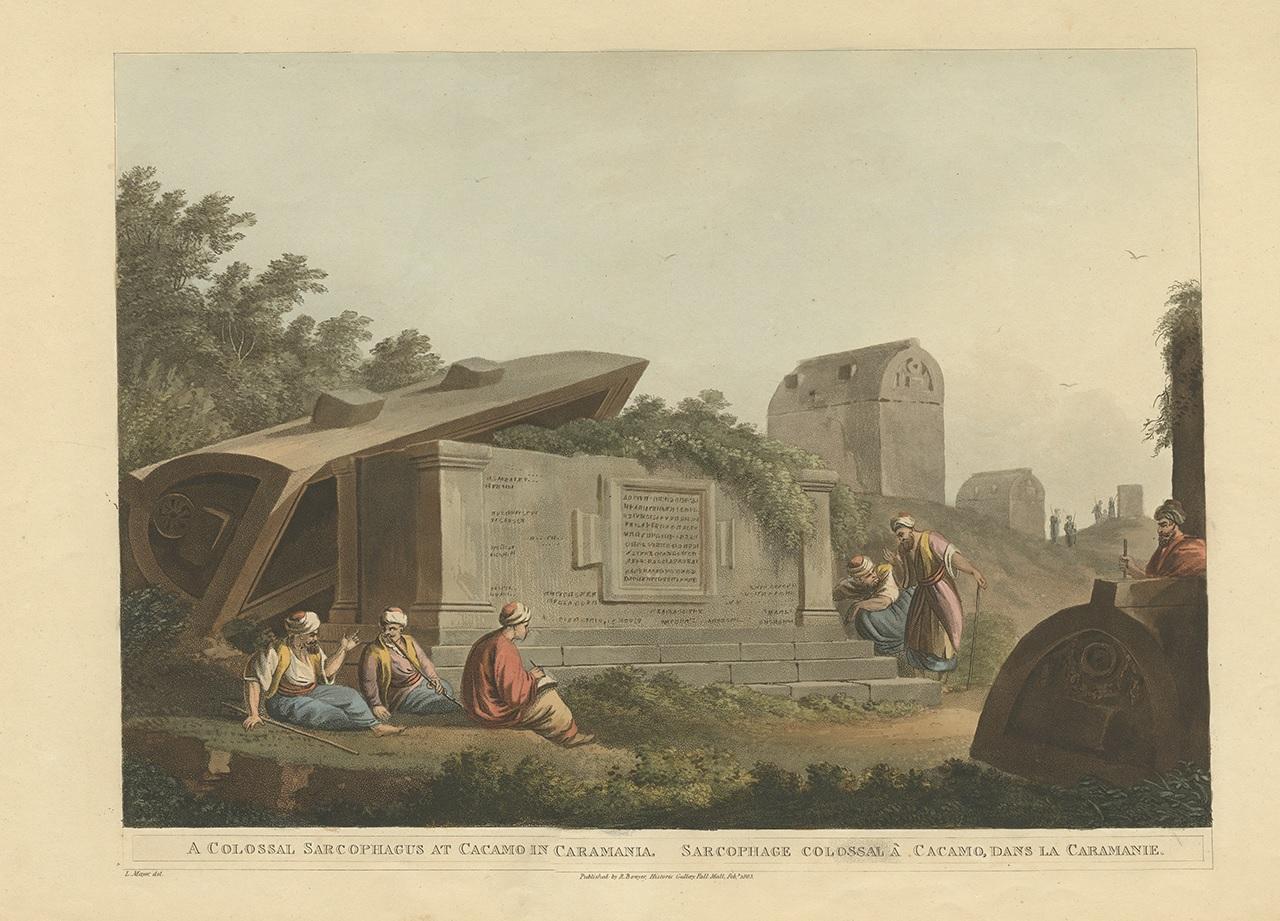
A Colossal Sarcophagus at Cacamo, Hand-Colored Aquatint, 1803
€ 350
One of a kind: this is the sheet in the photographs. Ships from Langweer, the Netherlands.
Date
1803
Sheet size
31 × 45 cm (12.2 × 17.7 in)
Condition
Good
Reference
BG-12043-3
Condition
condition with original hand-coloring. Some faint age-related toning around the outer margins. No tears, repairs, or major blemishes.
About this sheet
A Colossal Sarcophagus at Cacamo in Caramania – Hand-Colored View from Bowyer’s Ottoman Empire Series, 1803
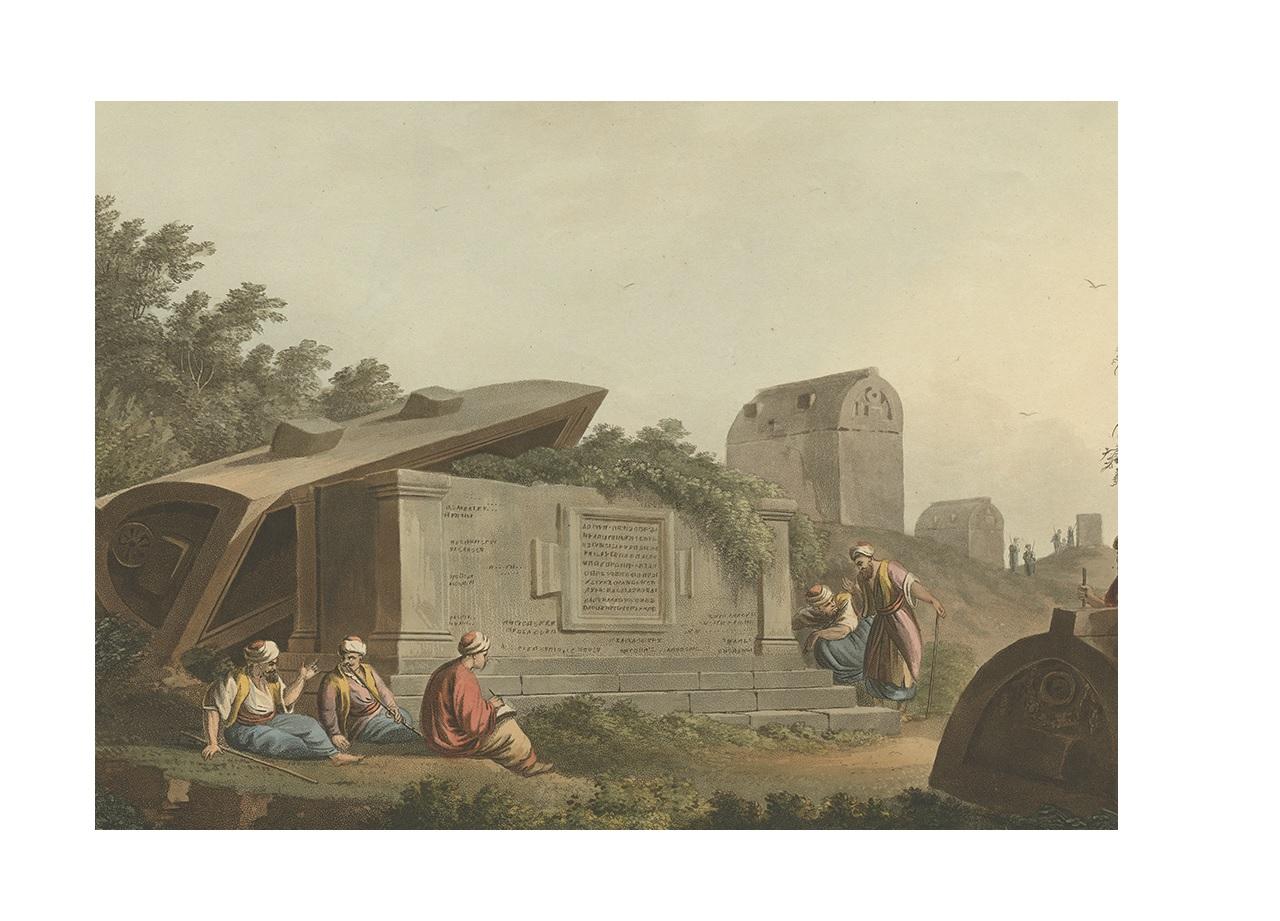
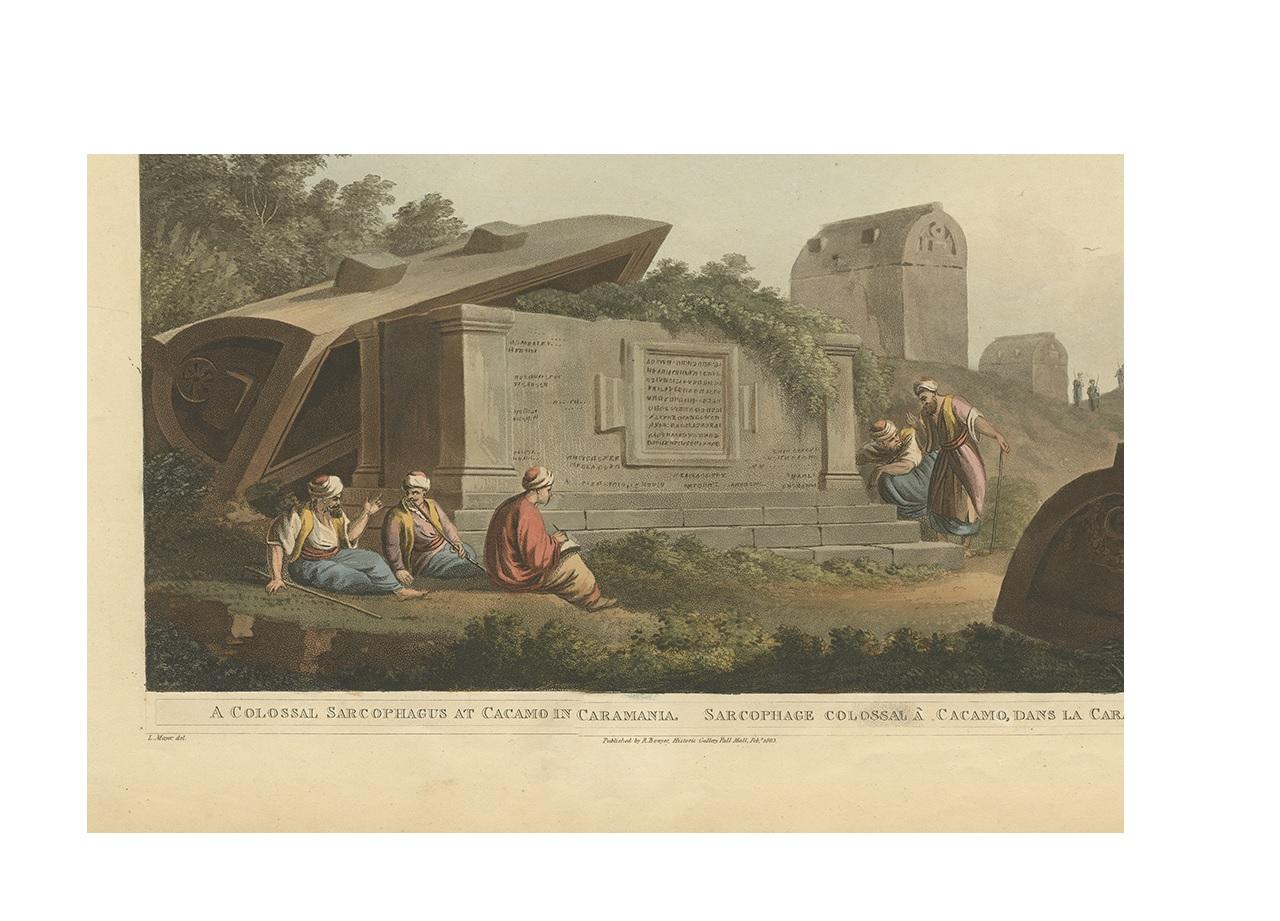
This evocative early 19th-century print, titled *A Colossal Sarcophagus at Cacamo in Caramania*, offers a finely rendered view of one of the ancient Lycian or Carian tombs encountered during British expeditions in southern Anatolia. Published by R. Bowyer in 1803 as part of the series *Views in the Ottoman Empire, Chiefly in Caramania*, this scene captures a moment of quiet exploration amidst the ruins, with Ottoman figures contemplating the monumental stone sarcophagus.
Cacamo (a misrendering likely referring to an ancient site near the modern Turkish coast) is situated in the historical region of Caramania, a European term for southern Asia Minor under Ottoman rule, encompassing areas like Lycia, Pamphylia, and Cilicia. The massive stone tomb with a partially open lid dominates the foreground, suggesting both the scale and grandeur of ancient Anatolian funerary architecture. Inscriptions are rendered in the print, lending it a documentary as well as romantic quality.
The figures dressed in Ottoman garb lend a picturesque and orientalist tone to the composition, aligning with British and European fascination with the East during the Napoleonic period. The print combines archaeological interest with aesthetic appeal, reflecting early European expeditions to document the vestiges of the ancient world within the Ottoman Empire.
This hand-colored aquatint was engraved after the drawings made by Luigi Mayer, a prolific artist known for his richly detailed and atmospheric scenes of the Eastern Mediterranean. Bowyer's publication was among the most luxurious British visual records of the Ottoman territories during the early 1800s, and prints from the series are now highly collectible for their artistic and historical value.
Condition: Good condition with original hand-coloring. Some faint age-related toning around the outer margins. No tears, repairs, or major blemishes.
Framing tips: A warm-toned wooden or burl frame with an off-white or pale beige mat will highlight the earthy colors and classical mood. UV-protective glass is recommended.
Technique: Aquatint with original hand-coloring Maker: Luigi Mayer (artist), published by R. Bowyer, London, 1803