Royal Celebration in Tongatapu: The Natche Ceremony Engraved in circa 1785
€ 160
One of a kind: this is the sheet in the photographs. Ships from Langweer, the Netherlands.
Date
1785
Sheet size
24 × 38 cm (9.4 × 15.0 in)
Condition
Good
Reference
BG-13597-88
Condition
Good condition, Aged paper with soiling due to handling and age, mainly along the edges. The edges slightly brownish or soiled, with some minor tears and creases. Study the image carefully.
About this sheet
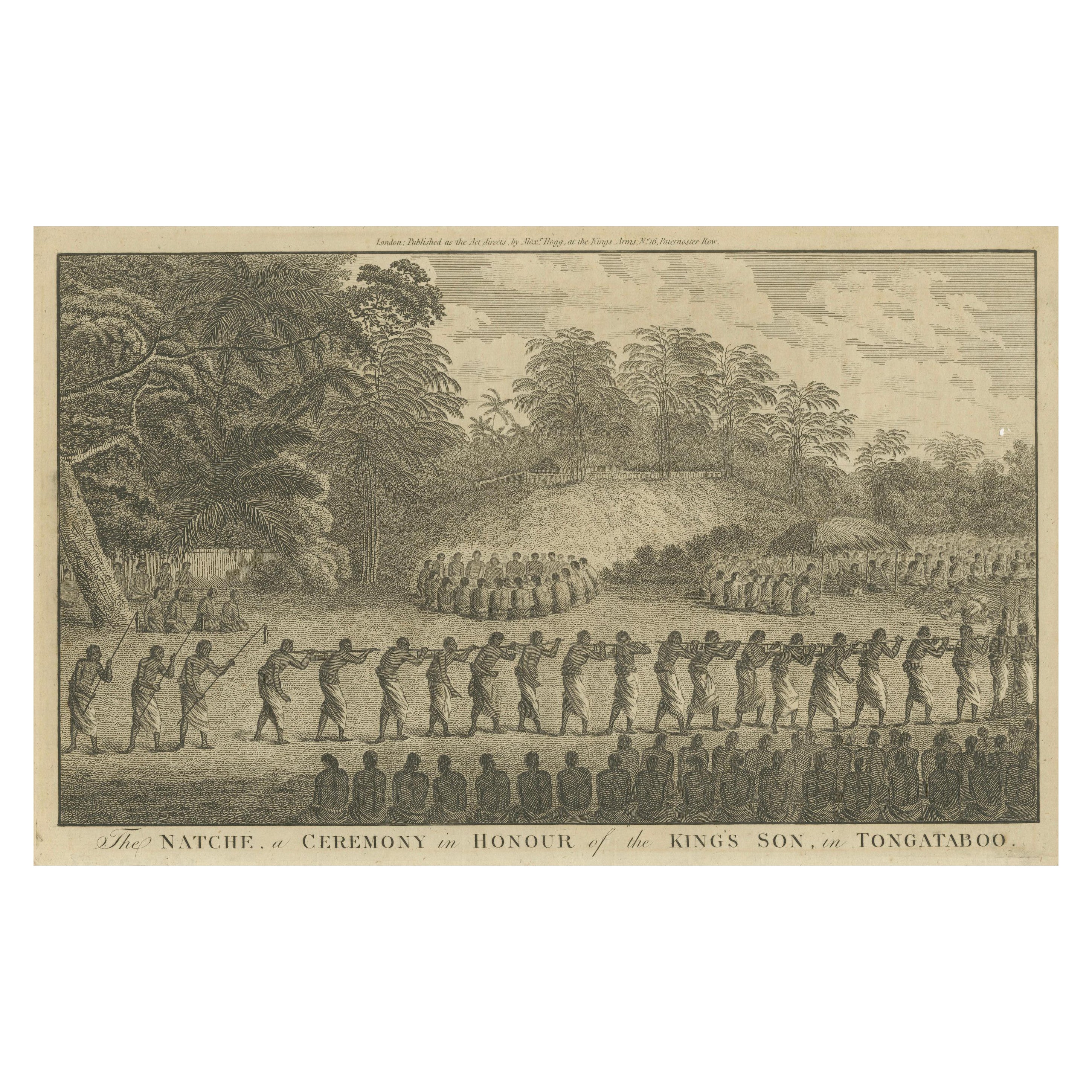
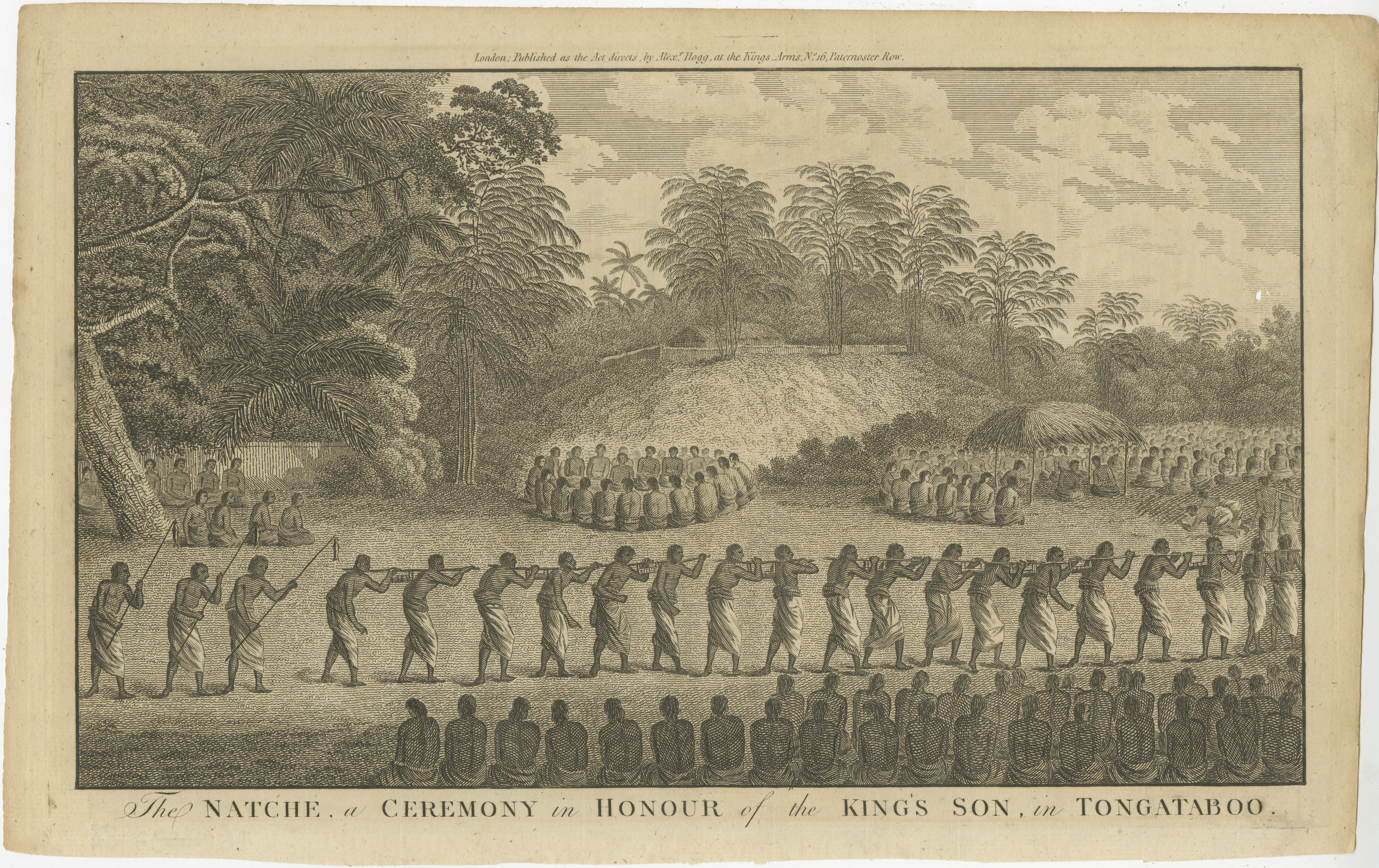
An authentic antique engraving titled "The NATCHE: a Ceremony in Honour of the KING'S SON, in TONGATABOO." It is likely from a work related to the voyages of Captain James Cook mission to the Pacific Islands in the late 18th century.
The engraving portrays a large ceremonial gathering in honor of the son of the king in Tongataboo, which refers to Tongatapu, the main island of the Kingdom of Tonga. The ceremony, labeled as "Natche," seems to involve a significant number of participants, suggesting it is a major event within the society.
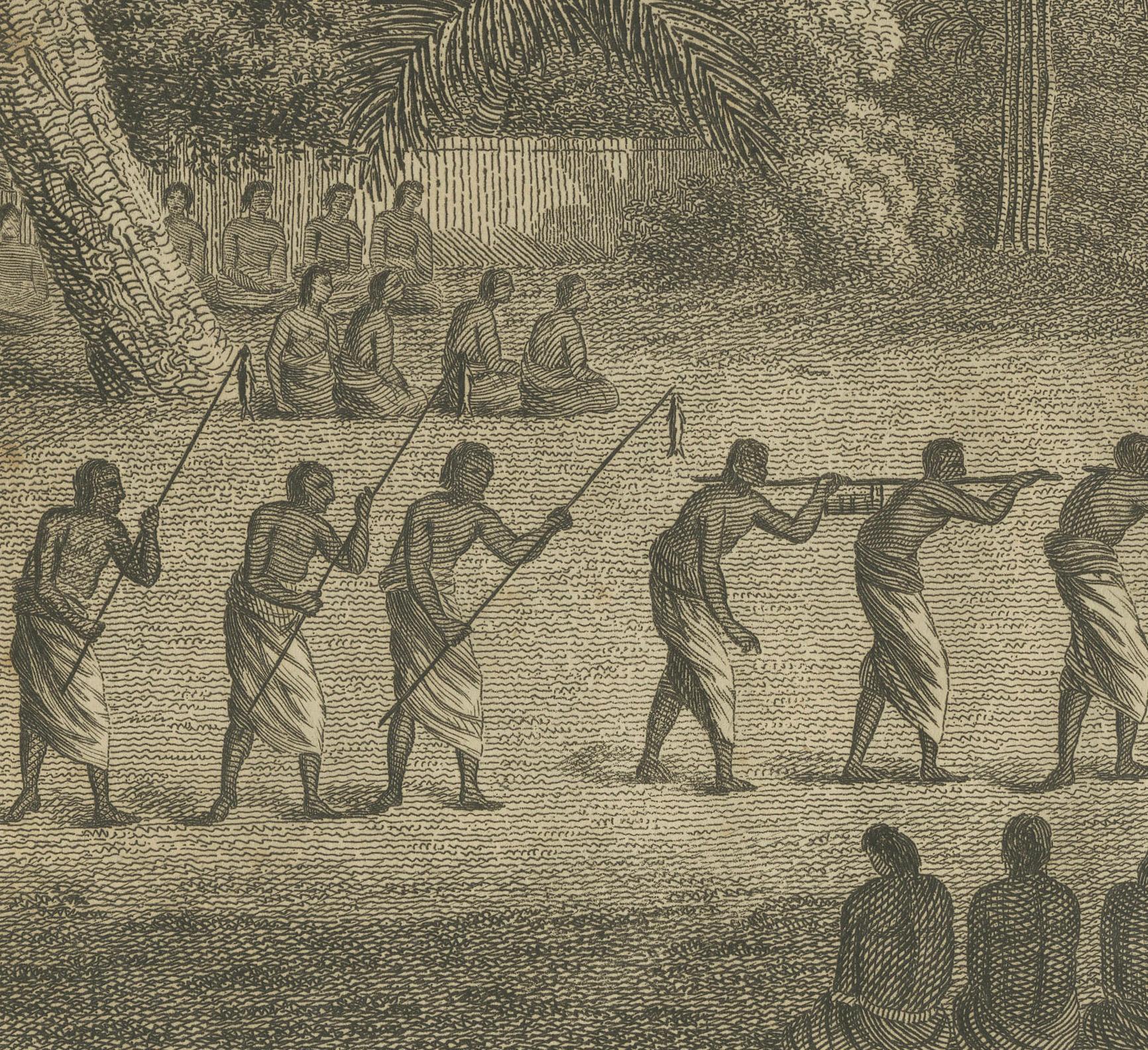
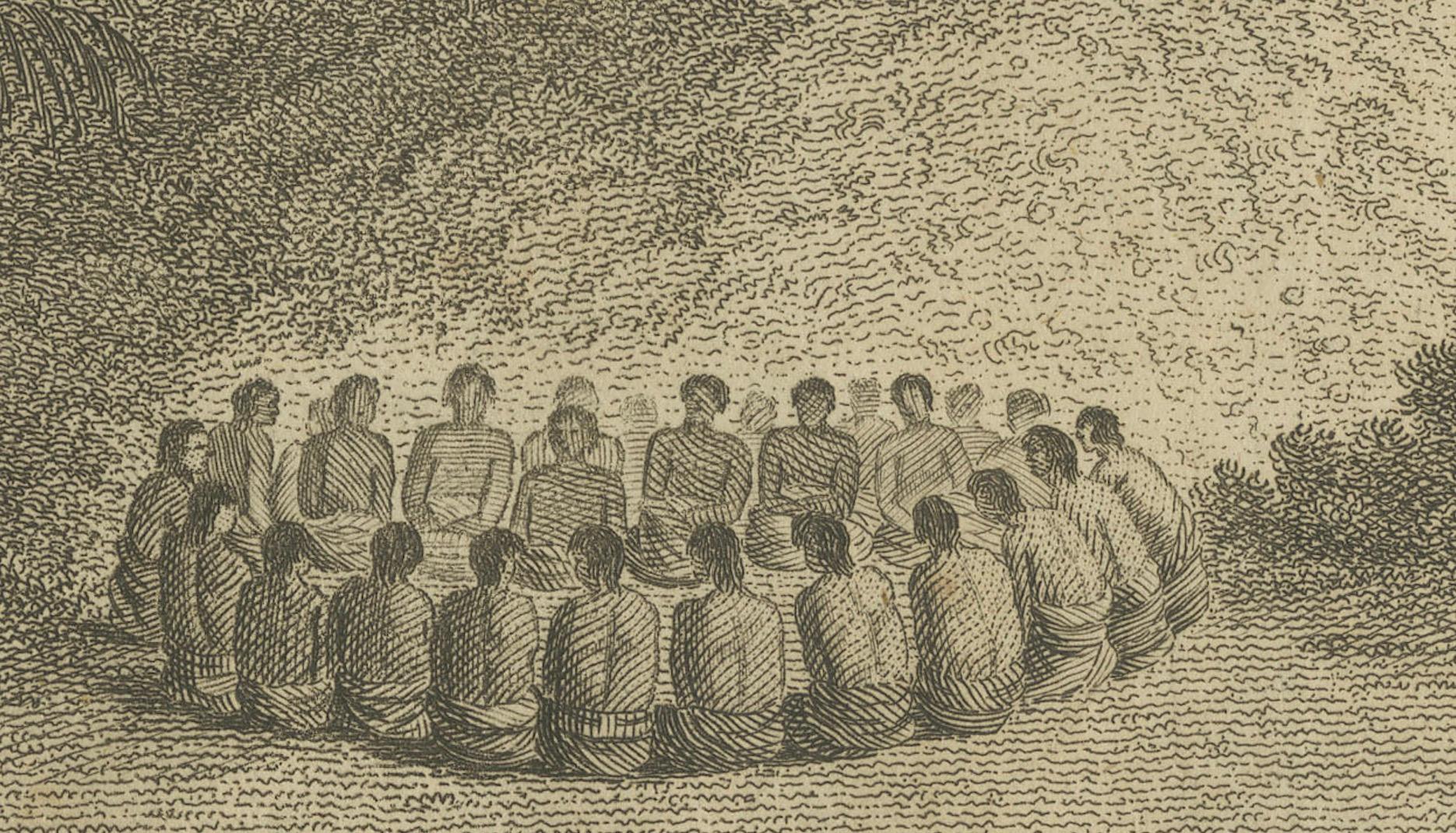
In the image, there are two prominent groups of figures; one is a circle of individuals, perhaps representing the dignitaries or important people in the society, and the other is a row of men with spears, possibly warriors or guards, in the foreground. Their attire and the way they are positioned suggest a formal and structured event with specific roles and protocol.
There are thatched structures in the background, indicative of the traditional architecture of Tonga at the time, and the landscape is lush with palm trees, which aligns with the tropical environment of the island.
Given the detail and the cultural significance portrayed in the engraving, it was probably intended to showcase the customs and ceremonies of the Tongan people to a European audience. Such illustrations were an important means of conveying the richness of the cultures encountered during exploratory expeditions.
This engraving might be from a larger work that documented the customs and lives of Pacific Islanders, possibly published as part of an official account of a voyage or as a separate ethnographic study. Works that included such images were often intended to educate Europeans about the diverse cultures and societies around the world, and they played a significant role in the dissemination of knowledge during the Age of Discovery and Enlightenment.