About this sheet
Captain Cook Hawaii Engravings, Death & Royal Encounter, Owhyhee, c.1788
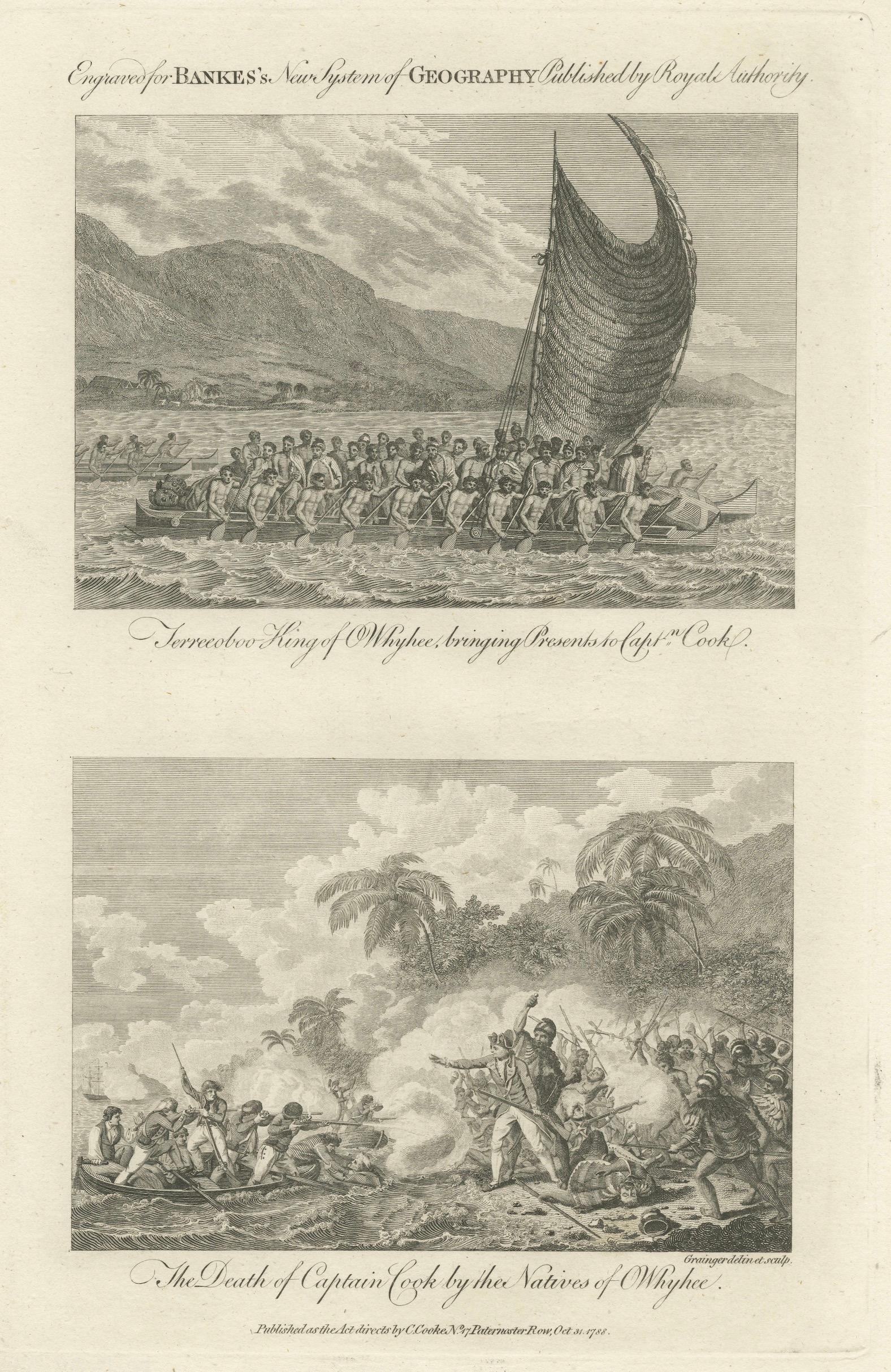
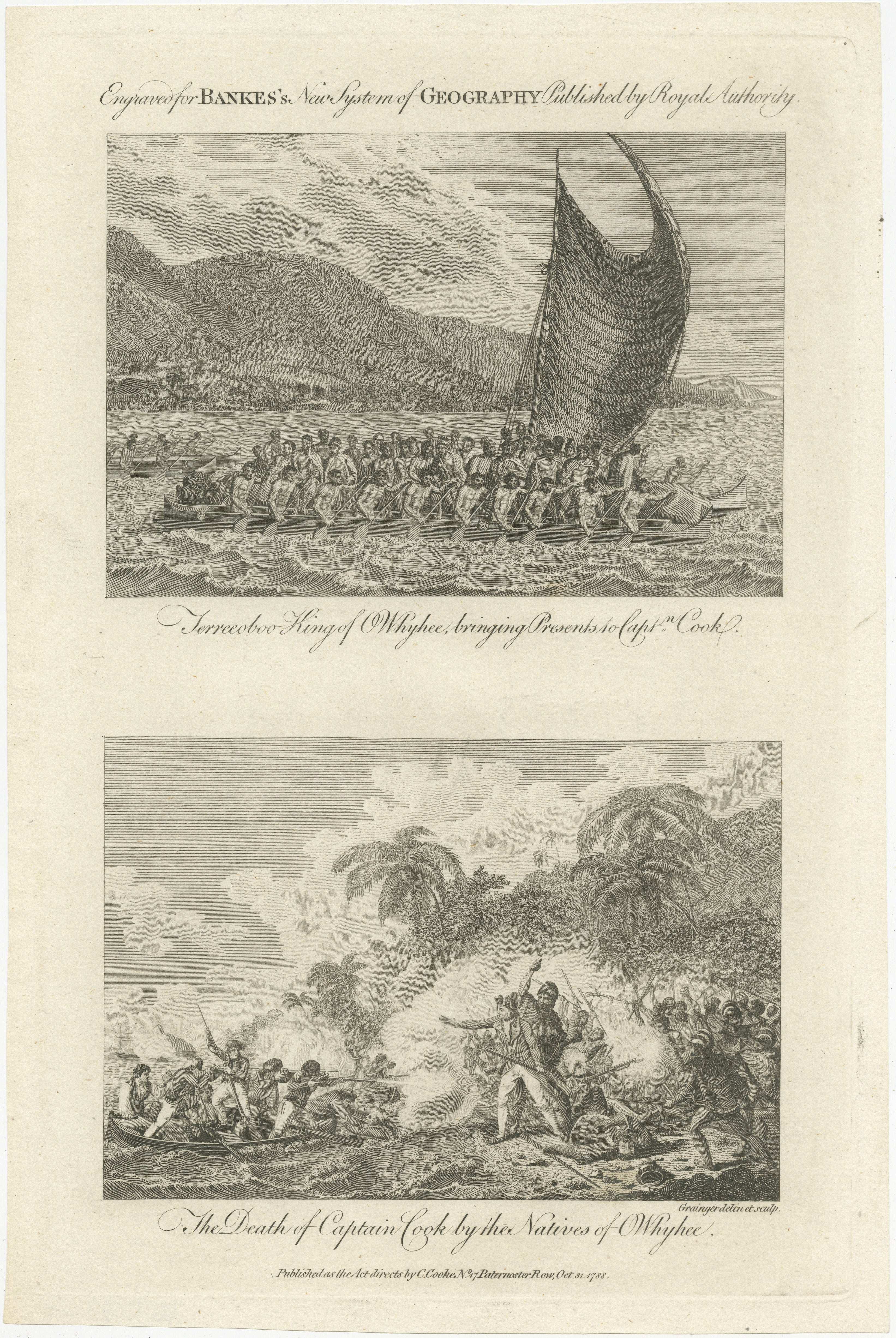
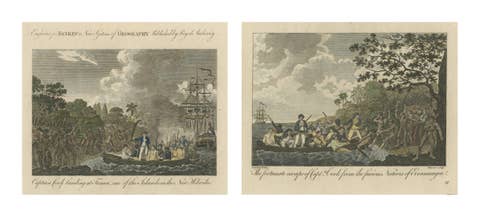
This dramatic and historically significant late 18th-century engraving sheet presents two iconic scenes from Captain James Cook’s third and final voyage to the Pacific, published in London circa 1787–1790 in Thomas Bankes’s New System of Geography. The engravings vividly depict events that took place in Hawaii—then known as “Owhyhee”—in 1779, marking one of the most pivotal and tragic moments in the history of European exploration.
The upper scene, titled “Terreeoboo King of Owhyhee bringing Presents to Captn. Cook,” shows the arrival of the Hawaiian ruler Kalaniʻōpuʻu (referred to as Terreeoboo) in a grand ceremonial canoe. The vessel, filled with paddlers and attendants, approaches with offerings, symbolizing the initial goodwill and diplomatic exchange between the Hawaiians and Cook’s expedition. The composition is striking for its dynamic movement across the water and the impressive scale of the canoe, complete with its distinctive sail, set against a mountainous tropical landscape.
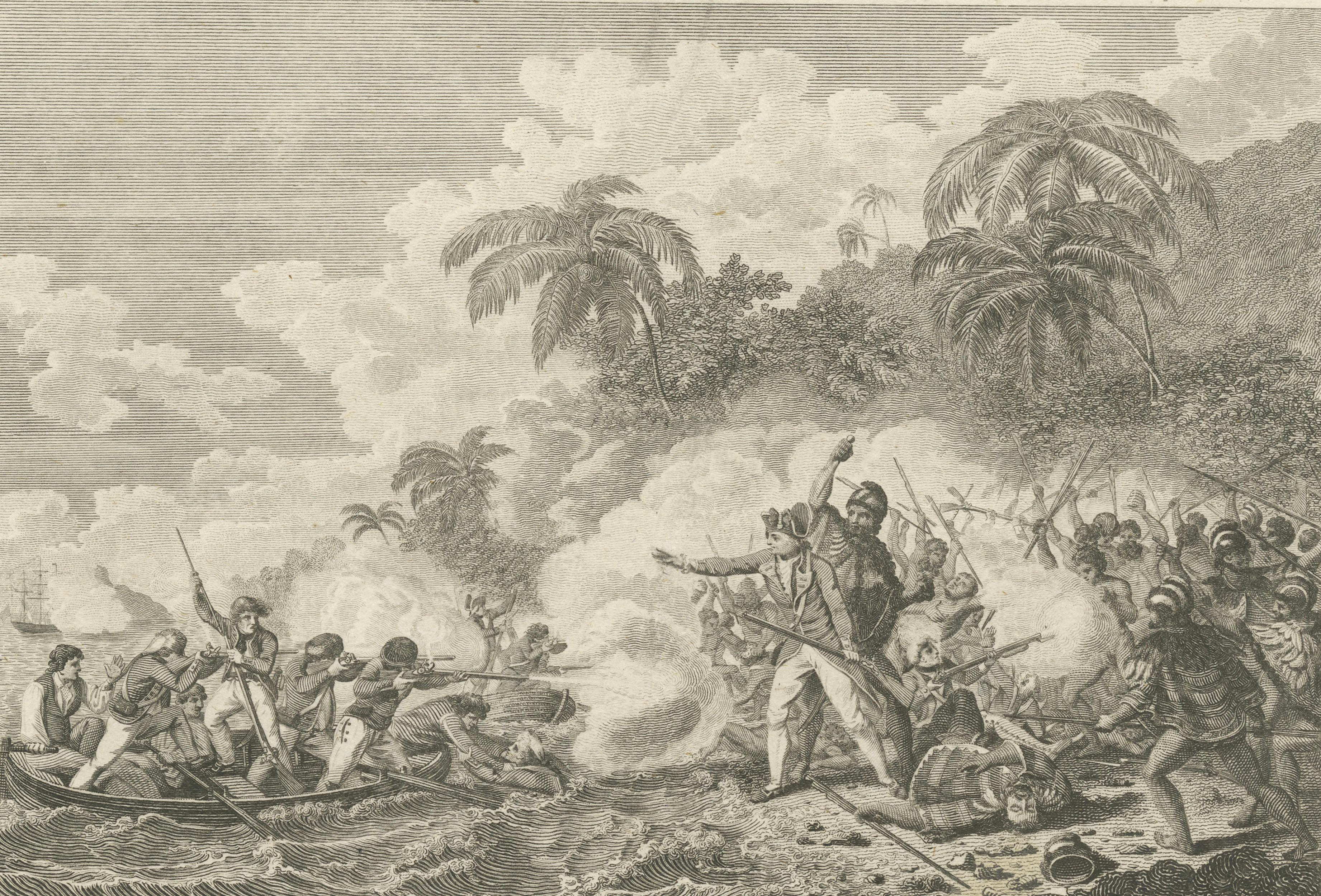
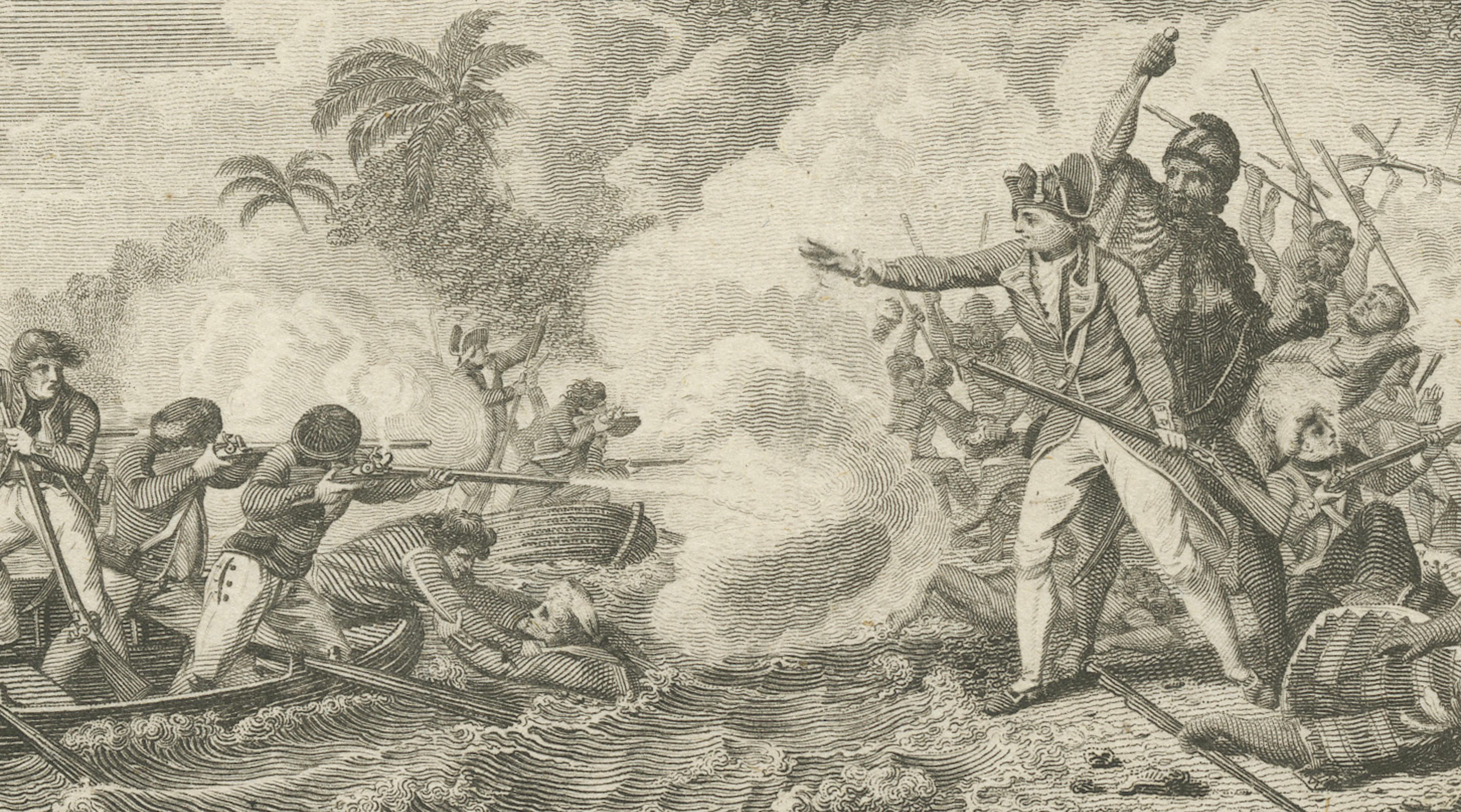
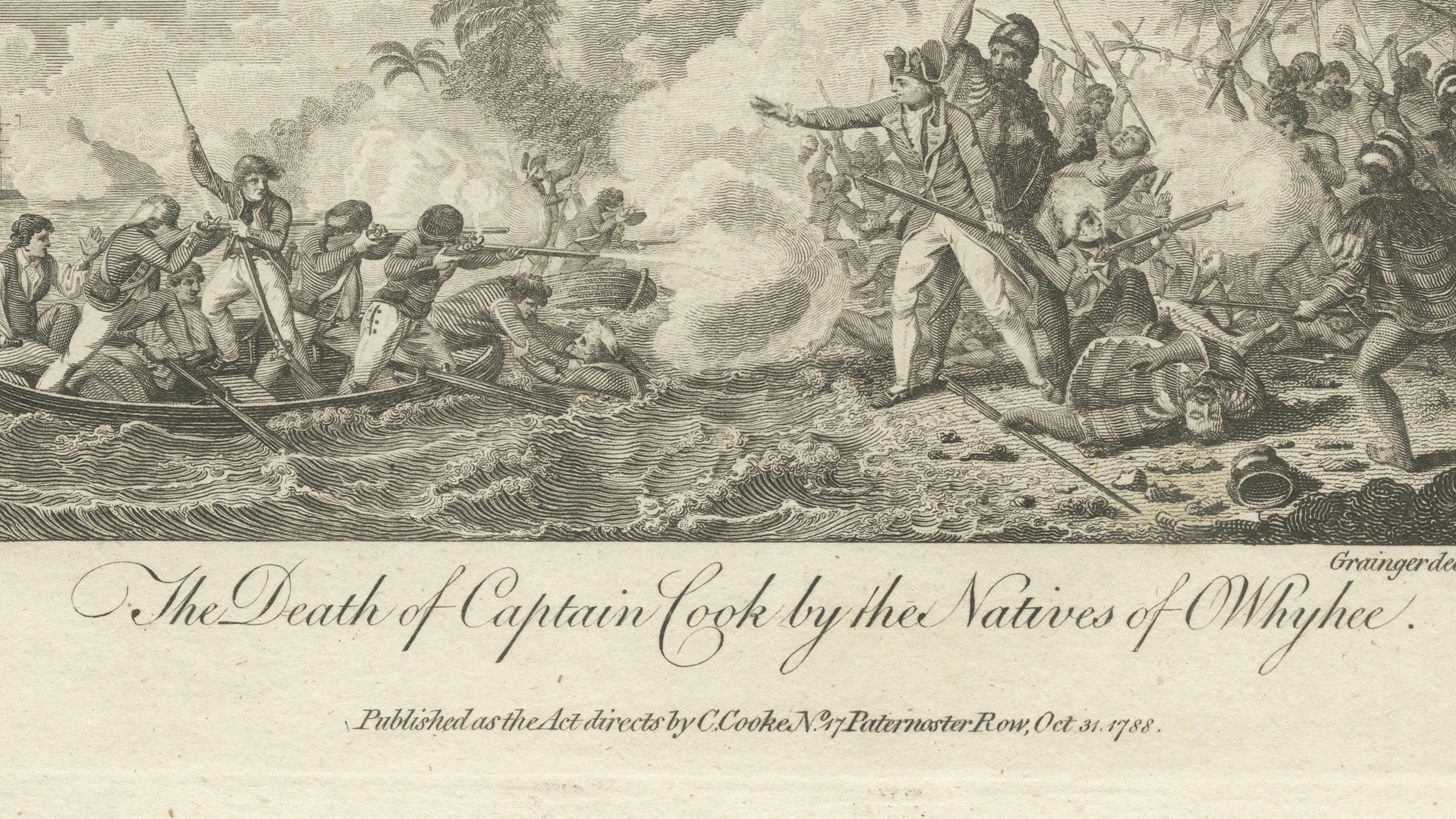
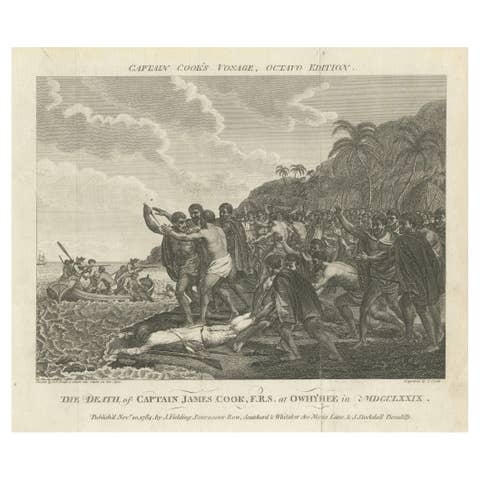
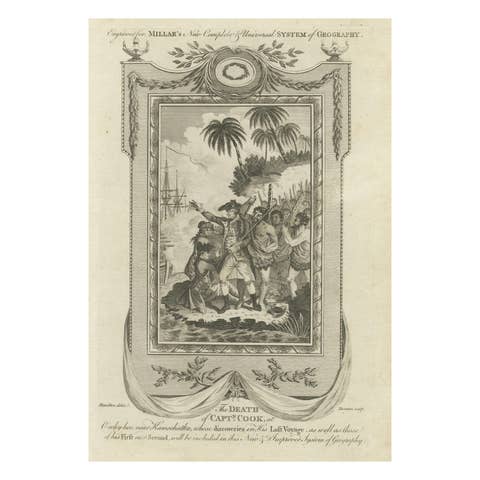
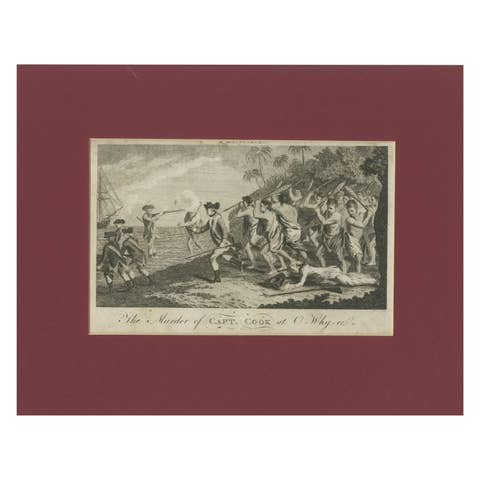
In contrast, the lower scene, “The Death of Captain Cook by the Natives of Owhyhee,” captures the violent culmination of these encounters. Following rising tensions and misunderstandings, Cook was killed on the shore at Kealakekua Bay on February 14, 1779. The engraving presents a dramatic confrontation between British marines and Hawaiian warriors, rendered with theatrical intensity and detailed narrative action. This moment became one of the most widely depicted episodes in the visual history of exploration.
Both scenes are based on original drawings by John Webber, the official artist on Cook’s voyage, and were later engraved by William Grainger for publication. The images reflect the European desire to document and interpret distant cultures, blending eyewitness observation with the artistic conventions of the period.
As a decorative object, this sheet is particularly compelling. The balanced dual composition offers both serenity and drama, making it a strong statement piece. It is ideally suited for interiors with a historical, nautical, or travel theme, and pairs exceptionally well with other works related to Pacific exploration or Captain Cook.
Condition: Good condition for its age, with light age-related toning and some spotting, mainly in the margins. Minor edge wear consistent with age. The impressions remain strong and well-defined. Plate marks visible.
Framing tips: This piece benefits from a generous ivory or museum-white mat to highlight both engraved scenes. A dark walnut or black frame will enhance contrast and bring out the depth of the engraving, creating a refined, gallery-style presentation.
Technique: Copperplate engraving
Maker: William Grainger (after John Webber), London, circa 1787–1790