About this sheet
Captain Cook Landing Tonga Engraving, Friendly Isles, Pacific, 1777
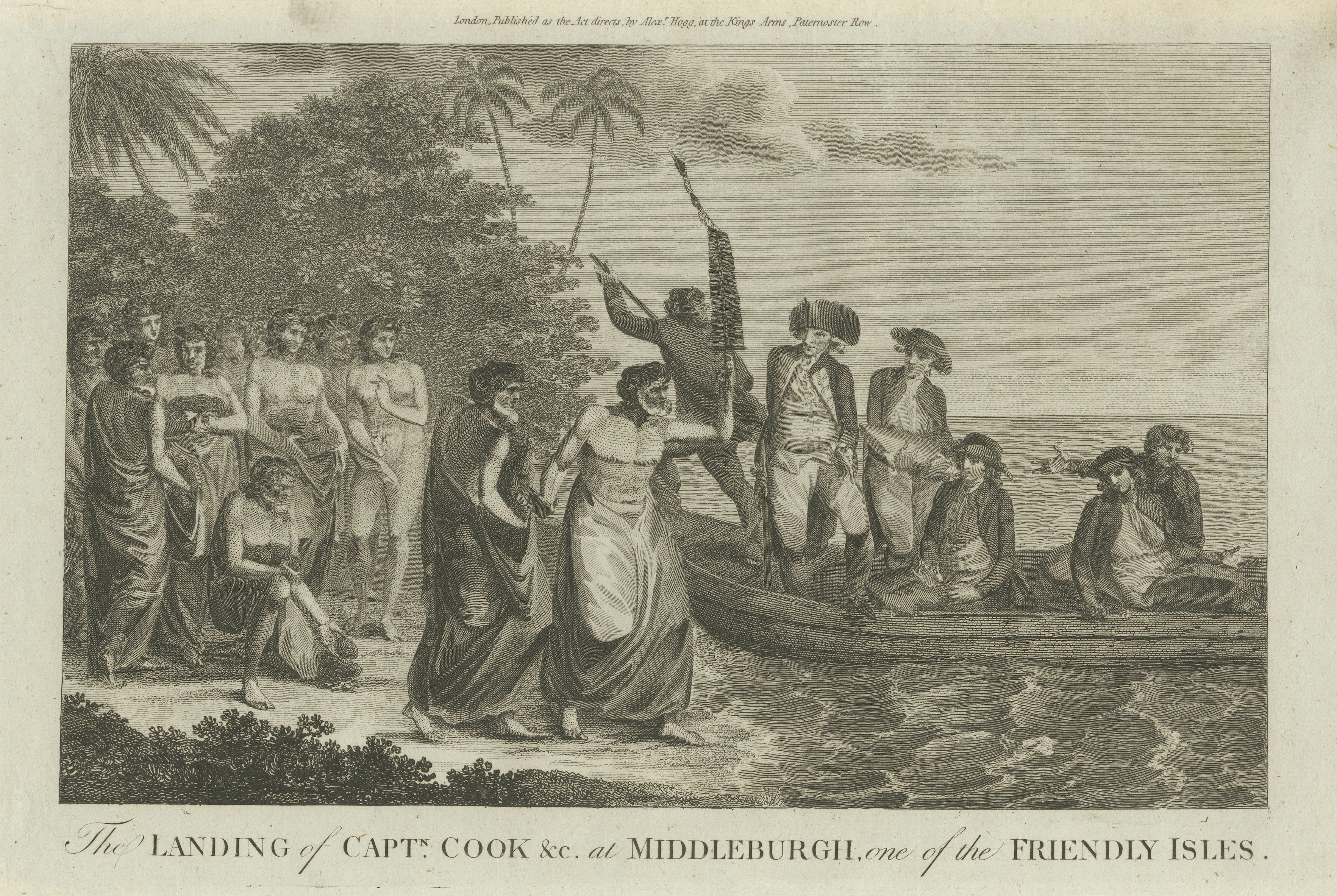
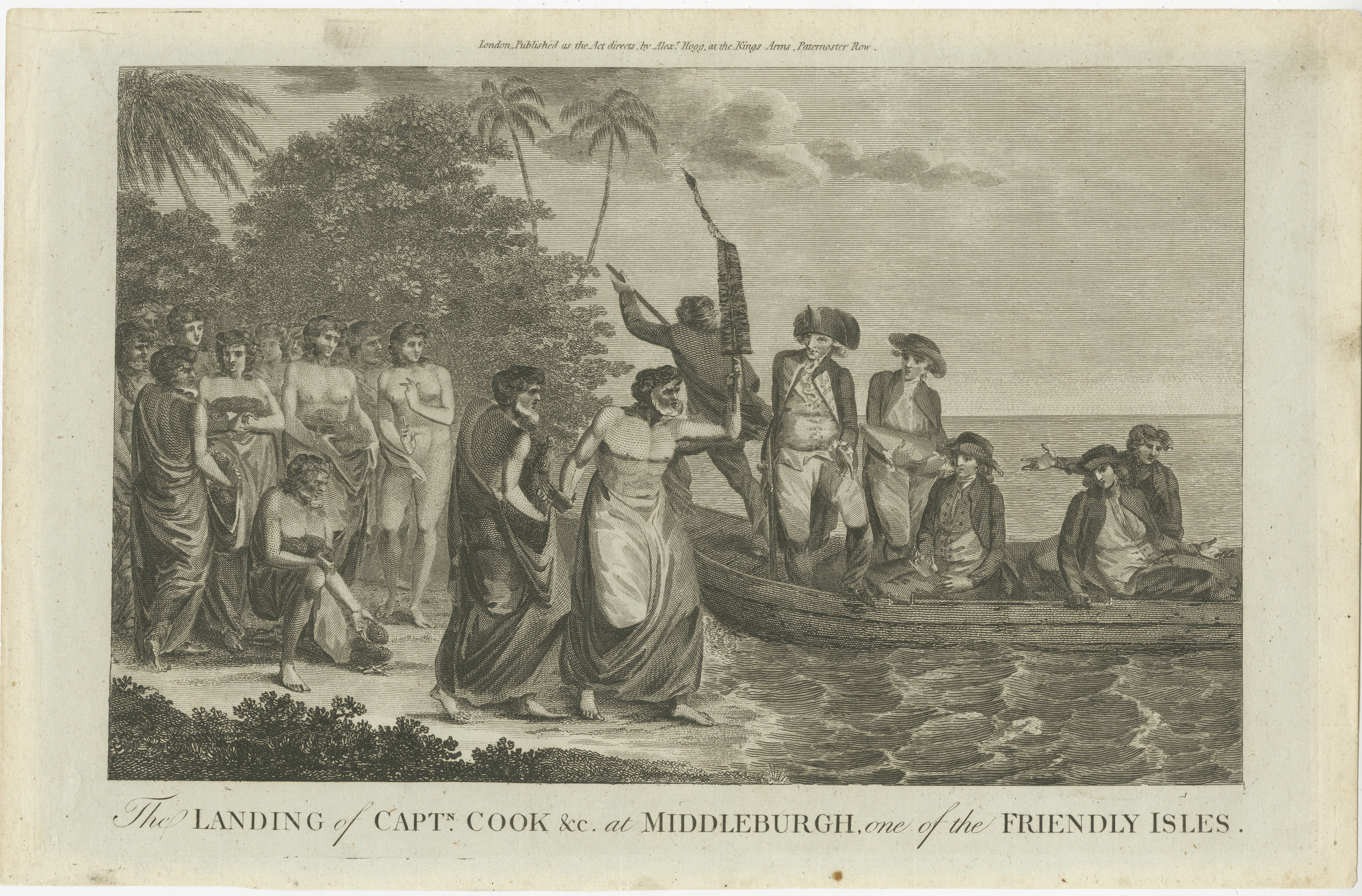
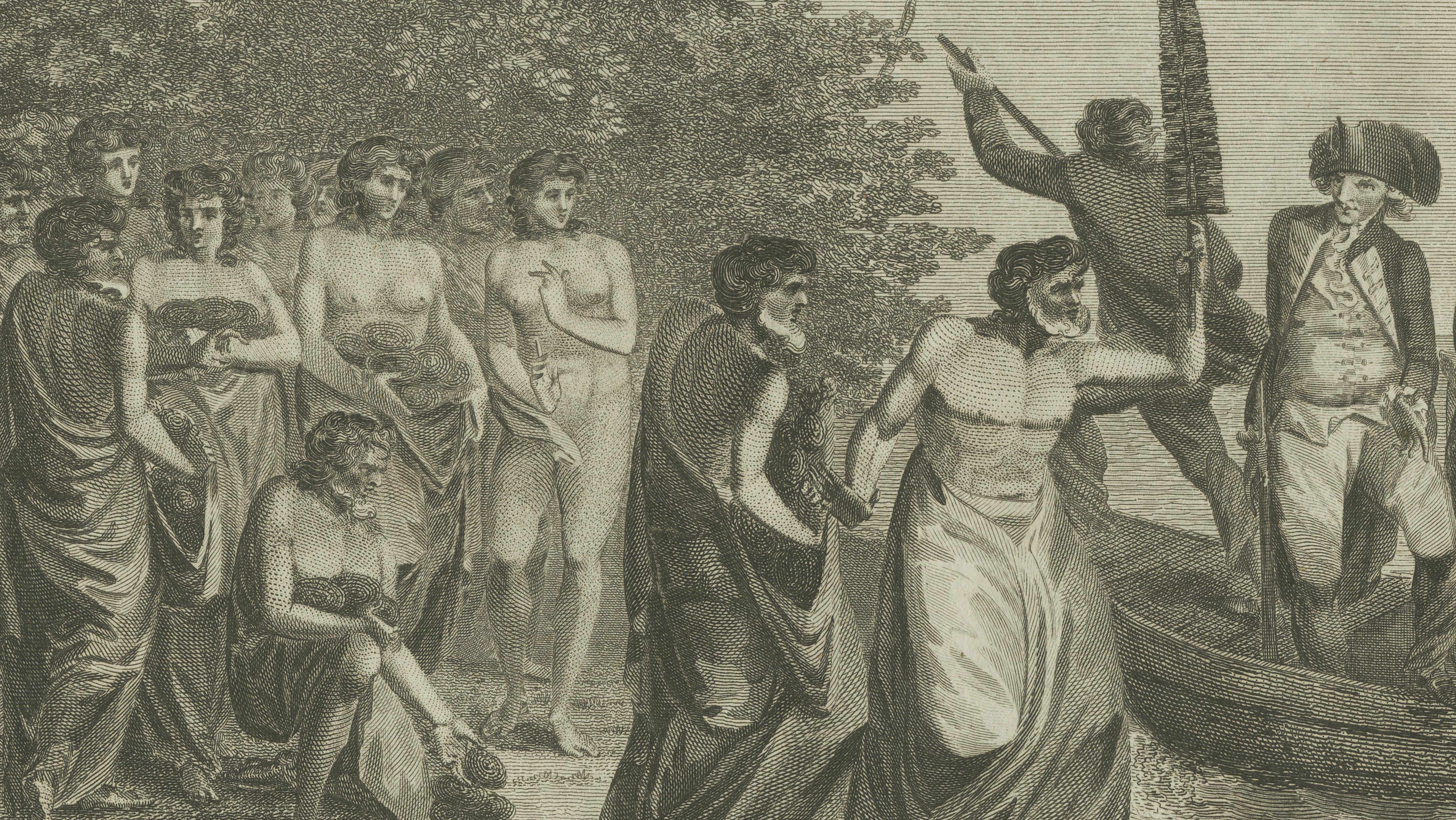
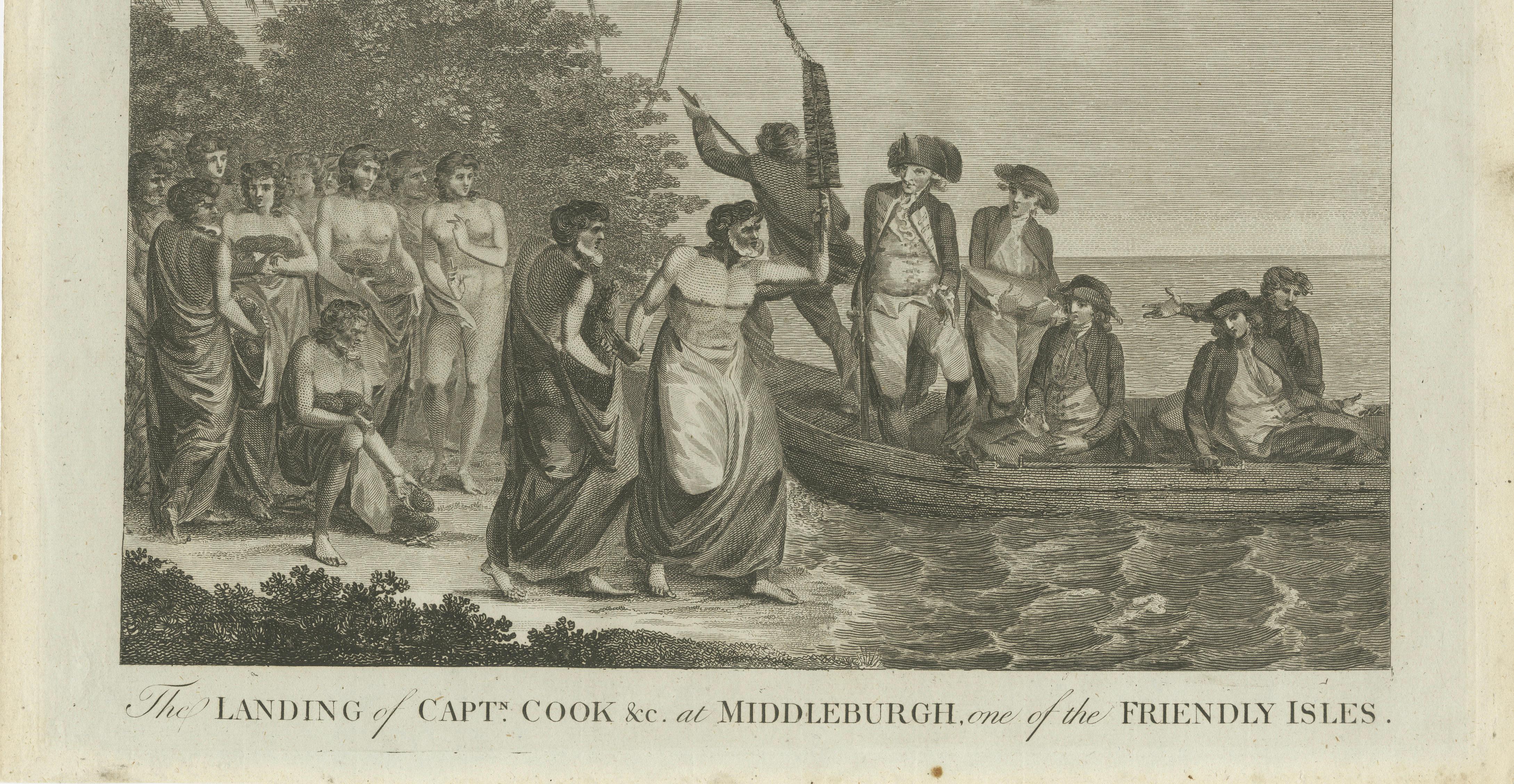
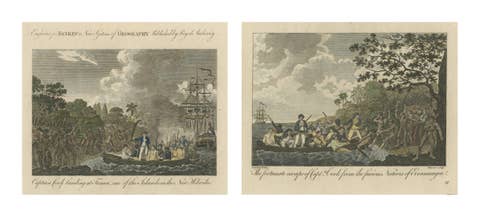
This exceptional 18th-century copperplate engraving depicts the historic landing of Captain James Cook at Middleburgh (modern-day ʻEua, Tonga), one of the so-called “Friendly Isles,” during his second voyage to the Pacific in 1773. Titled “The Landing of Capt. Cook &c. at Middleburgh, one of the Friendly Isles,” the print captures a moment of first contact between European explorers and the indigenous population of Tonga.
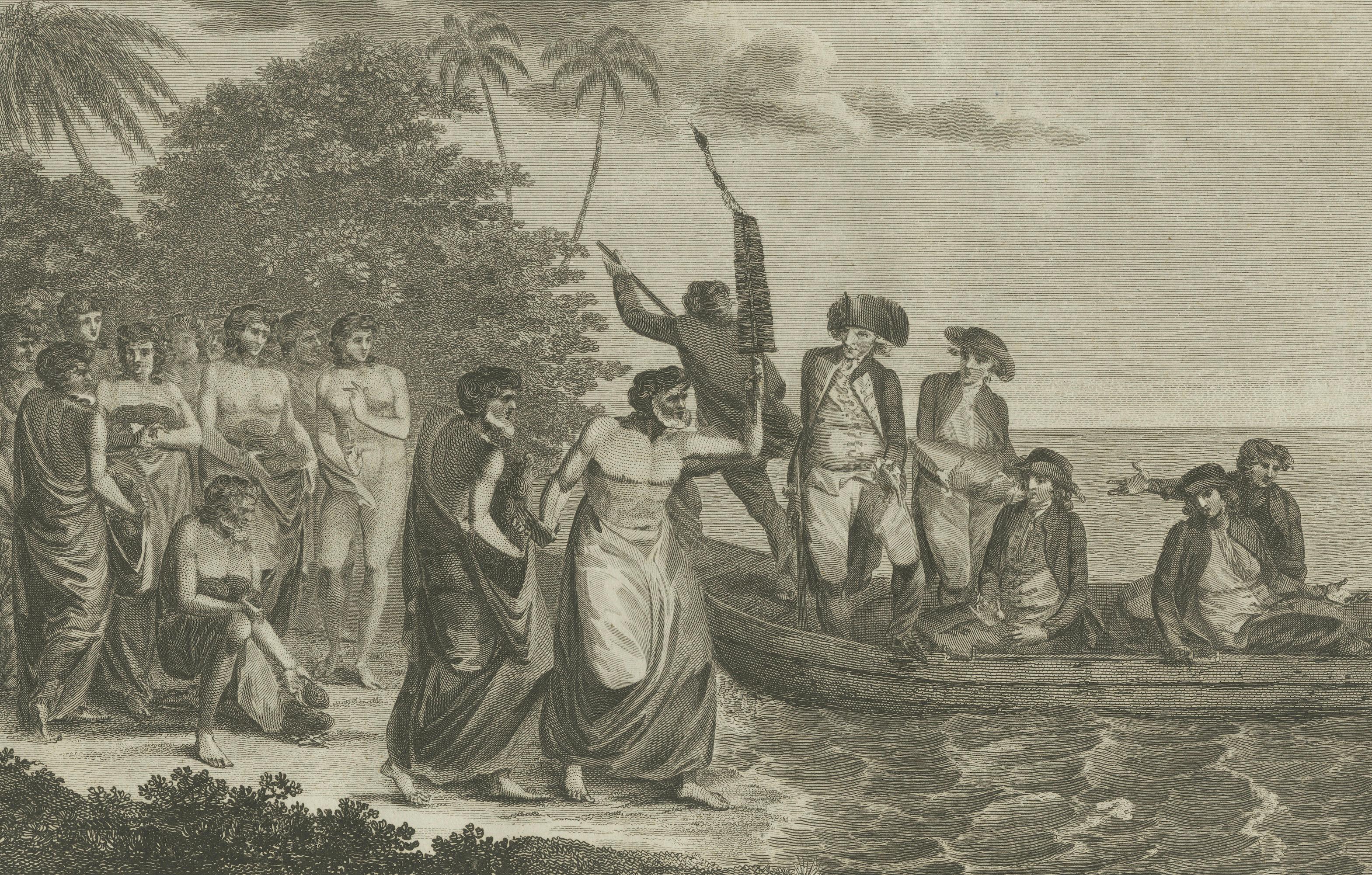
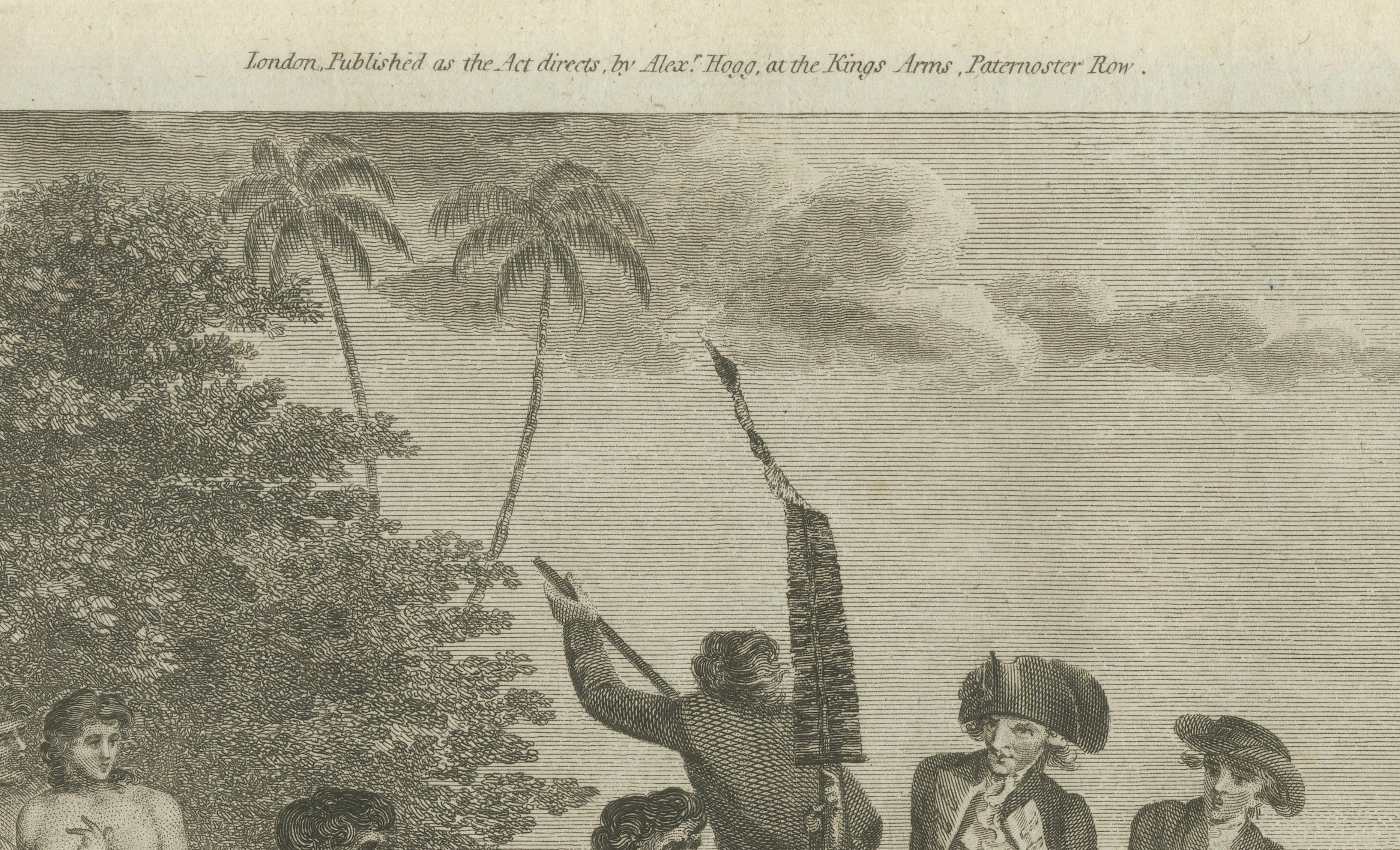
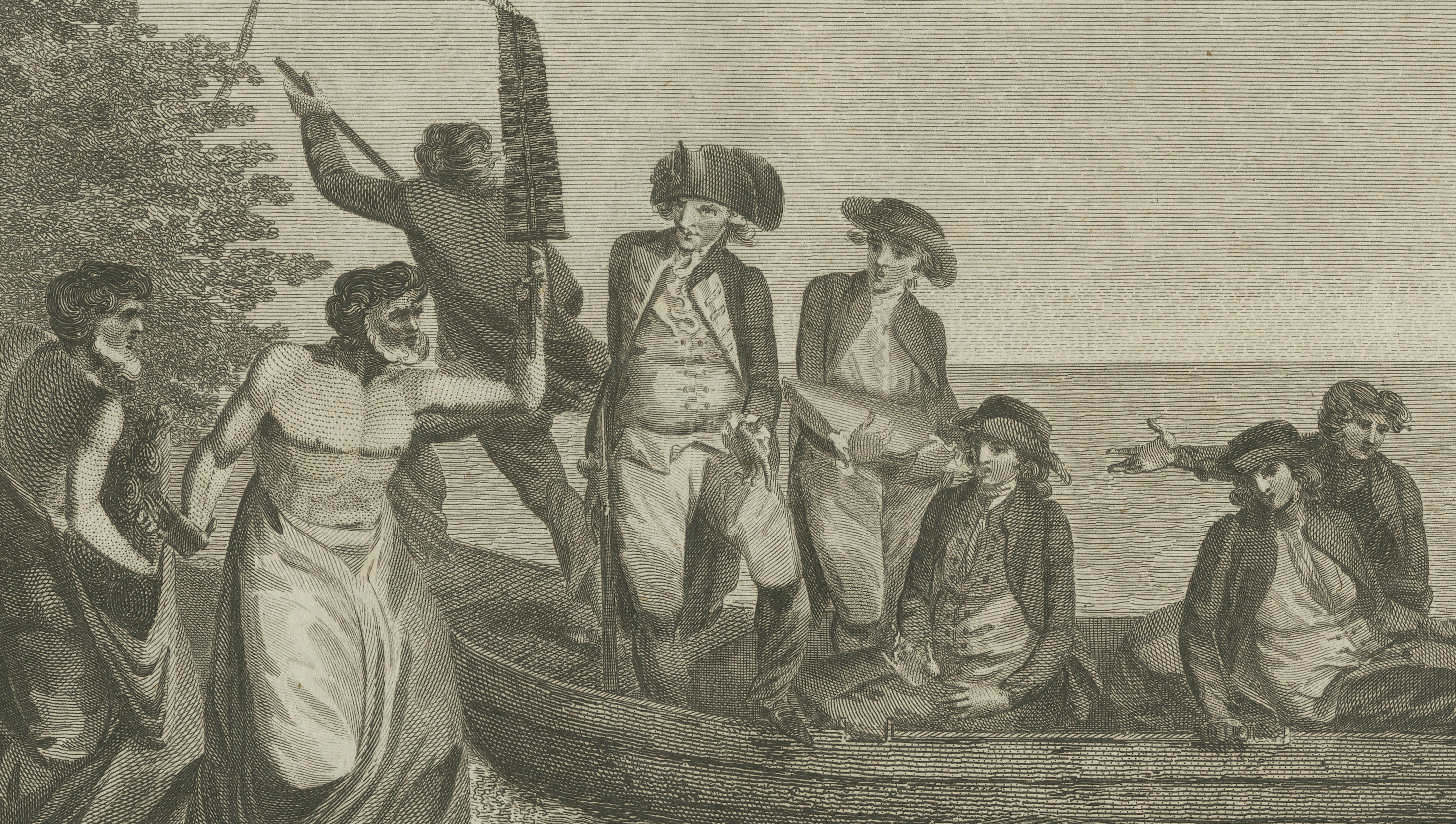
The composition is both elegant and theatrical. Cook is shown arriving in a small boat accompanied by members of his crew, while a large group of Tongans gathers along the shoreline to greet the visitors. At the center stands a chief figure, holding a plantain branch—a traditional gesture symbolizing peace and welcome. The scene conveys a sense of ceremony and diplomacy, reflecting the relatively harmonious initial encounters that led Cook to name the archipelago the “Friendly Isles.”
The engraving is based on an original painting by William Hodges, the official artist on Cook’s second voyage (1772–1775). Hodges was among the first European artists to depict the landscapes and peoples of the South Pacific from direct observation. His work was later translated into engraving by John Keyse Sherwin, one of the leading British engravers of the period, and published in London in 1777.
The print is notable for its refined neoclassical composition and detailed rendering of figures, costume, and environment. The lush tropical setting, combined with the carefully staged interaction between figures, creates a visually balanced and highly decorative image that appealed strongly to European audiences fascinated by exploration and distant cultures.
As a decorative piece, this engraving is particularly strong. The wide horizontal format, animated grouping of figures, and rich narrative content make it ideal for display in interiors with a maritime, historical, or travel theme. It also pairs beautifully with other works related to Captain Cook, Pacific exploration, or 18th-century ethnographic subjects.
Condition: Good condition for its age, with age-related toning and some spotting, primarily in the margins. Minor wear consistent with age. The engraving remains clear with a strong, well-inked impression. Plate mark visible.
Framing tips: Best displayed with a generous ivory or off-white mat to emphasize the plate mark and provide visual space. A dark walnut or black frame enhances contrast and gives the piece a refined, museum-quality appearance.
Technique: Copperplate engraving
Maker: John Keyse Sherwin (after William Hodges), London, 1777