About this sheet
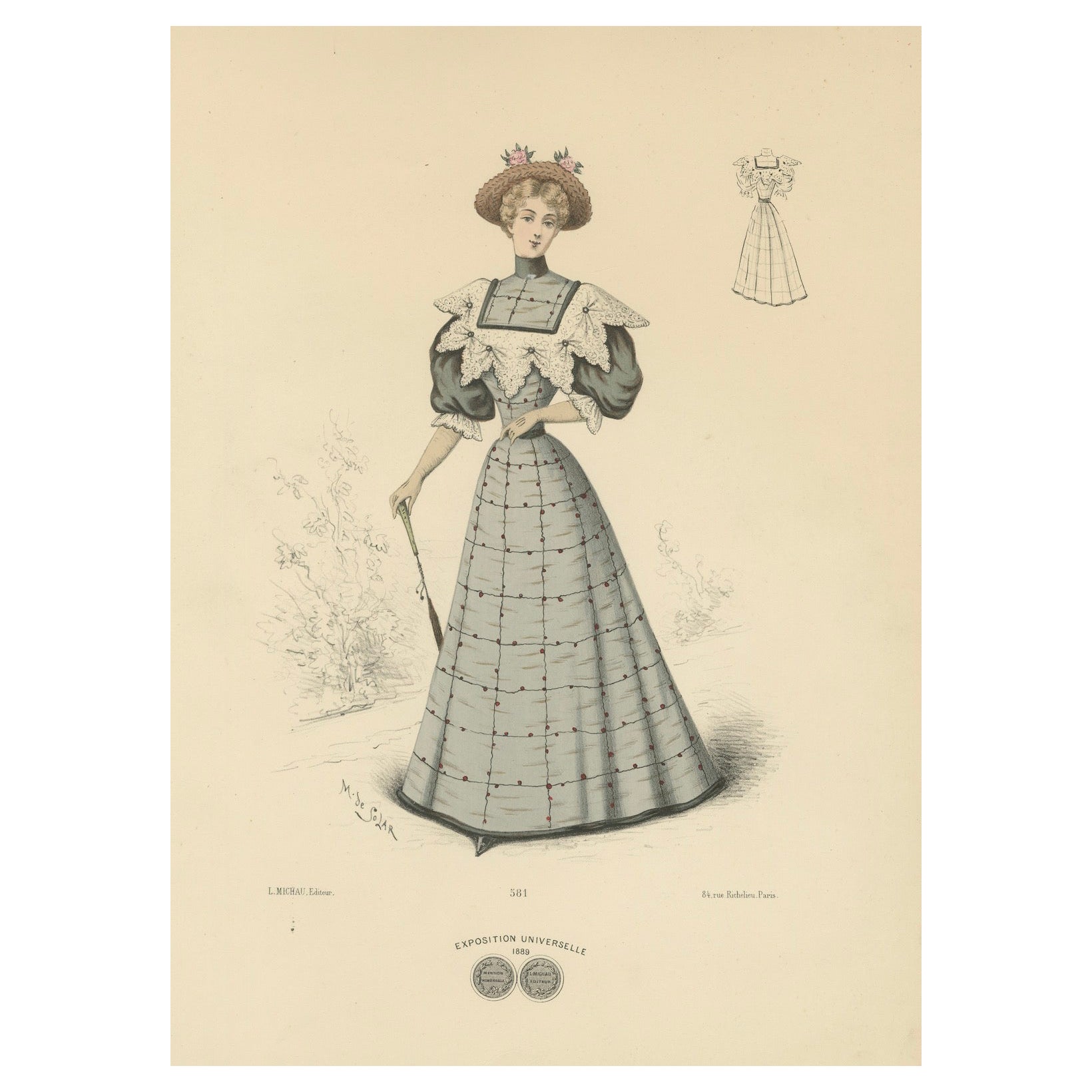
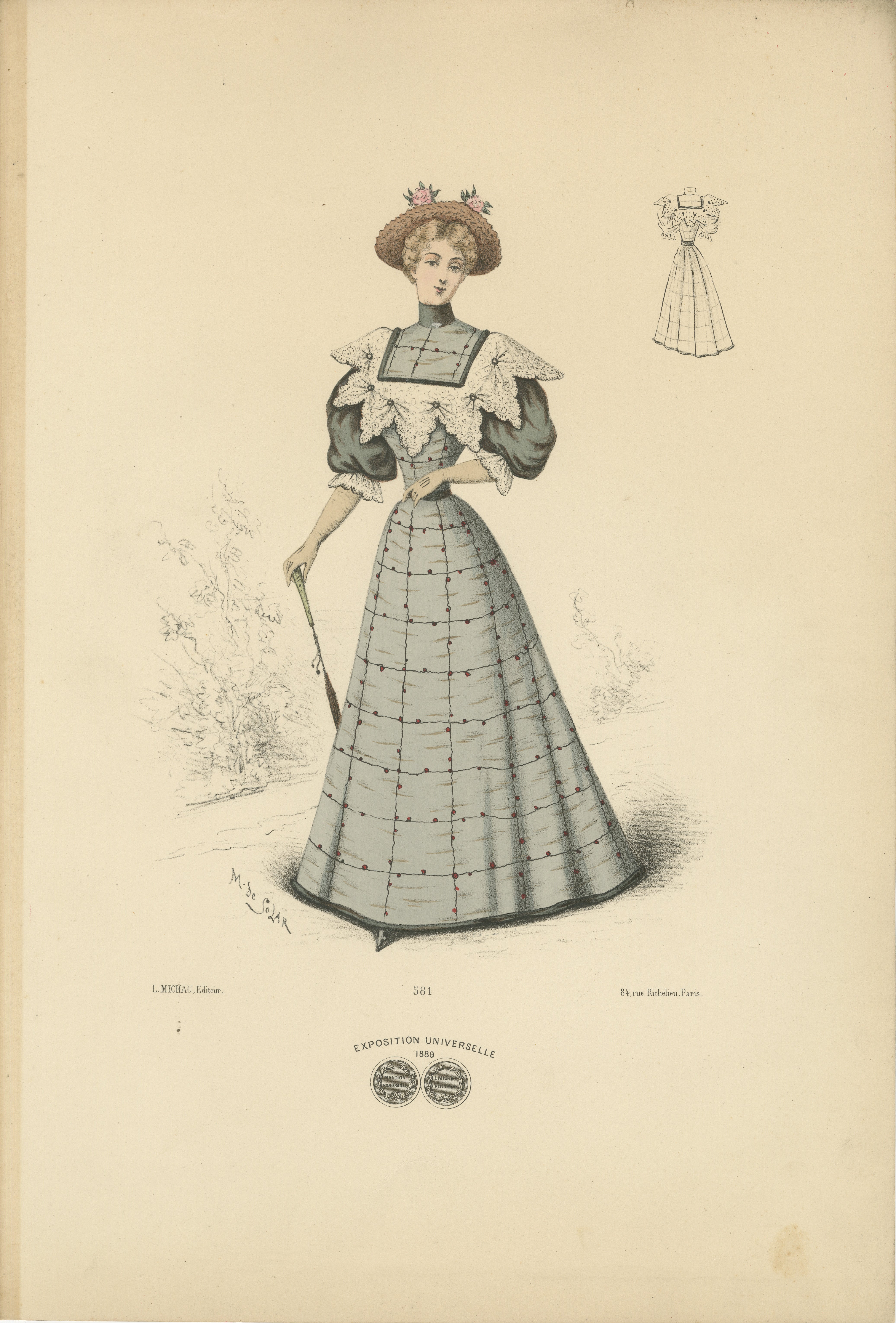
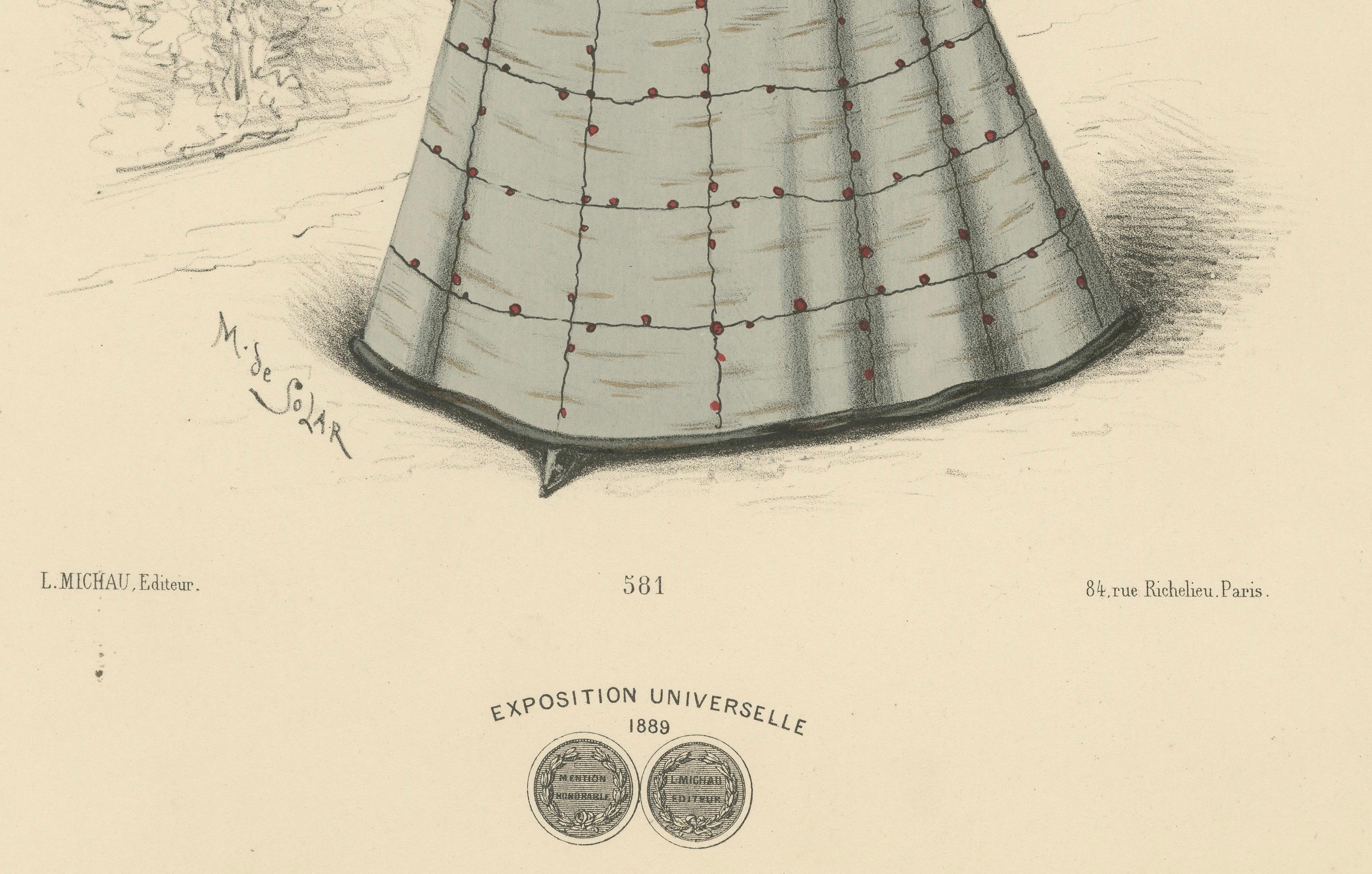
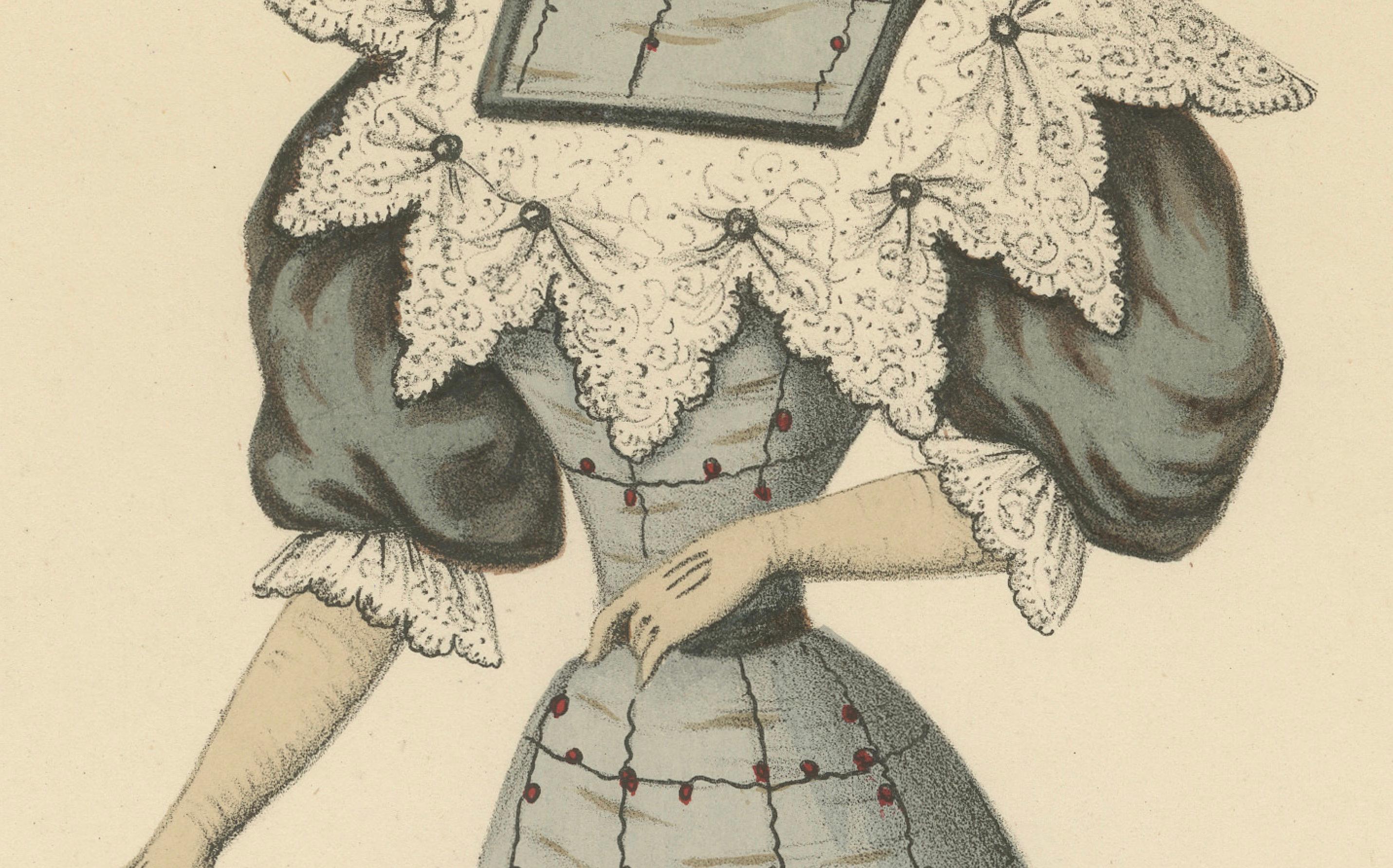
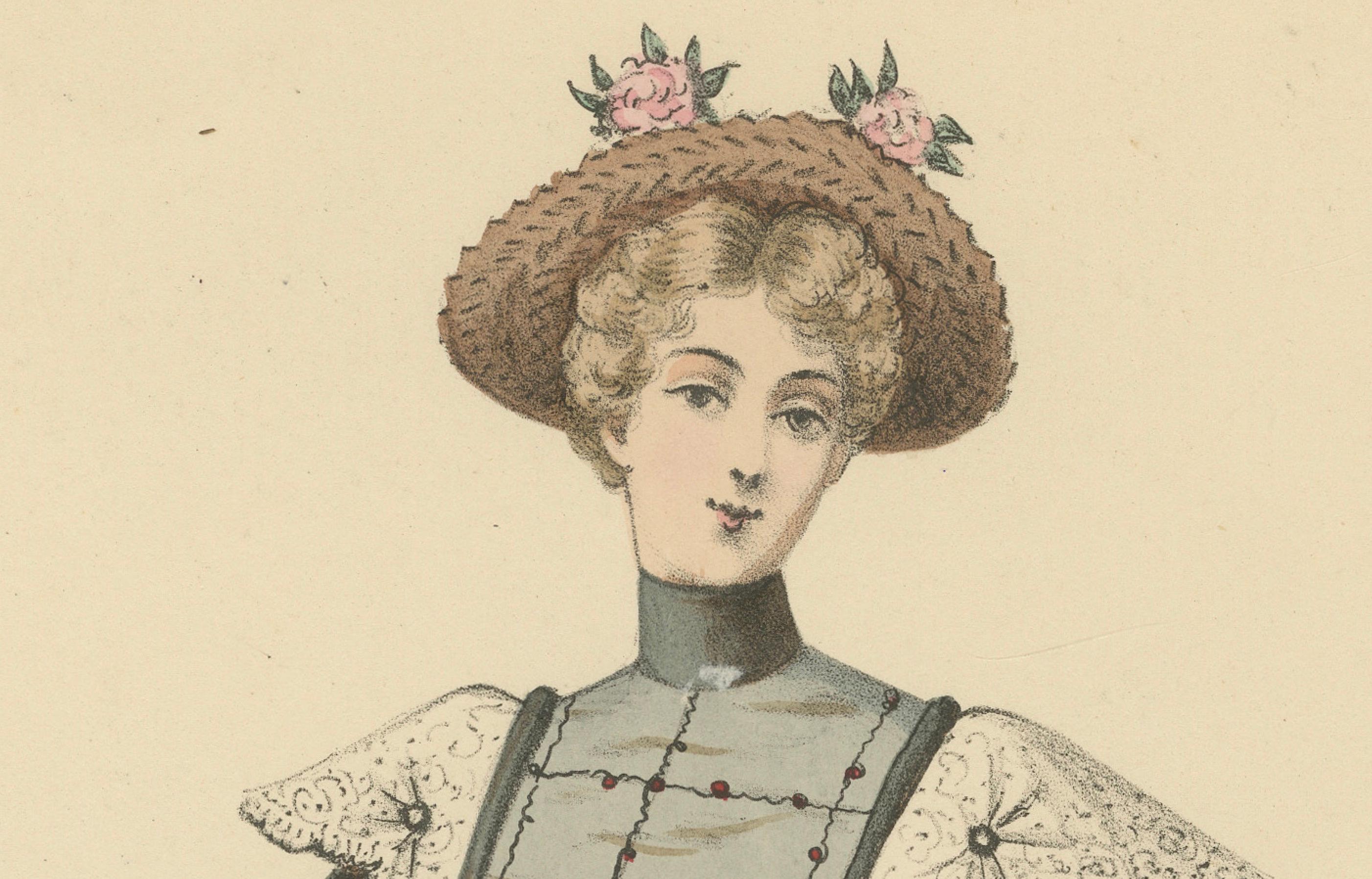
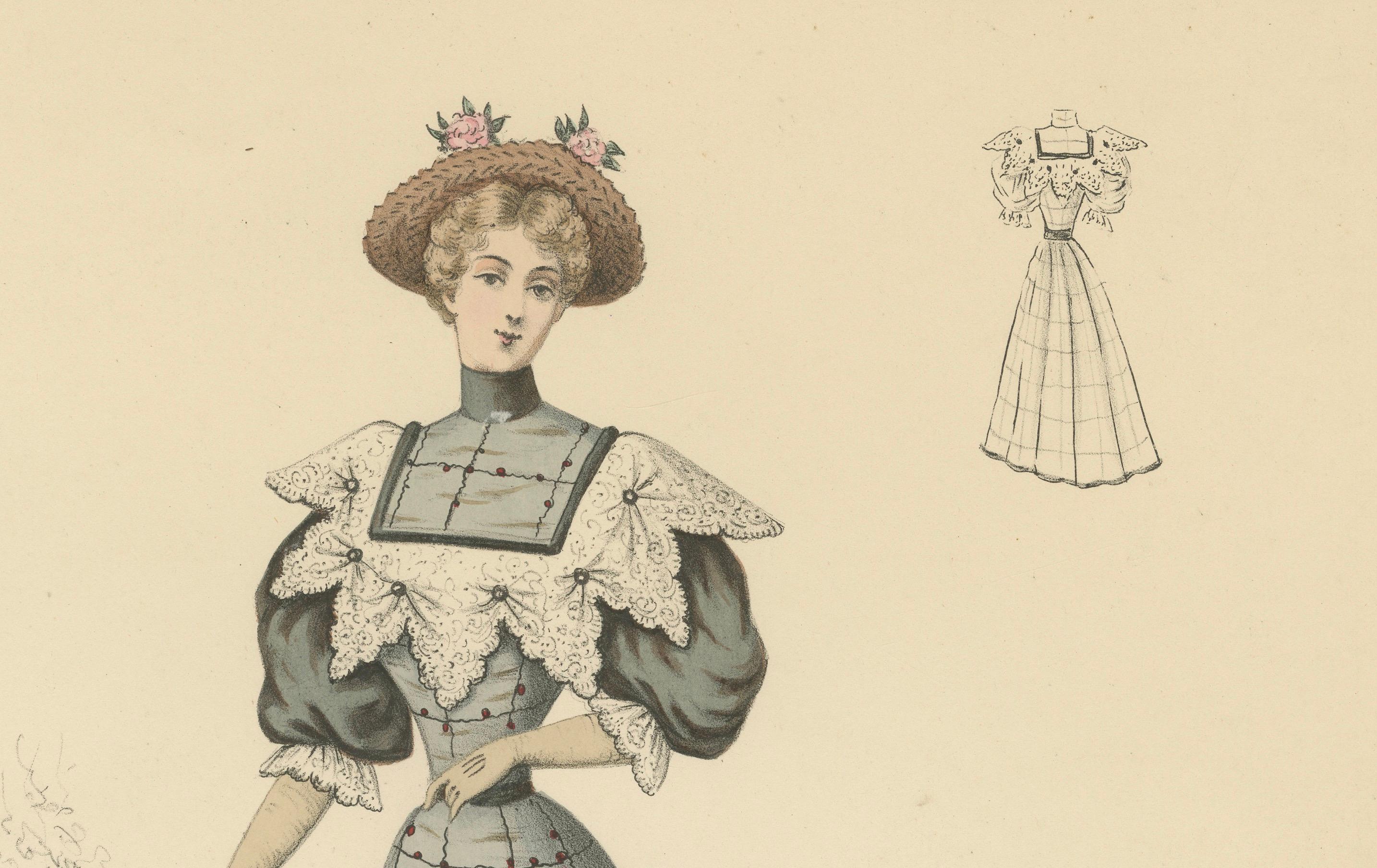
This lithograph depicts a fashionable woman from 1889, adorned in a sophisticated gown that reflects the trends of the late Victorian era. The dress features a structured bodice with puffed sleeves, layered with a detailed lace shawl-like overlay that drapes over the shoulders and upper arms. The gown is patterned with a grid design accented by small red dots, creating a subtle yet distinctive visual effect. The high collar and fitted waist emphasize the elegant silhouette, while the woman's accessories, including a wide-brimmed hat adorned with flowers and a parasol, complete the ensemble. The background suggests an outdoor setting, possibly a park or garden, enhancing the leisurely yet refined nature of the attire.
This lithograph was created by L. Michau, a recognized publisher of fashion illustrations during the late 19th century. The design is credited to M. de Solar, as indicated by the signature.
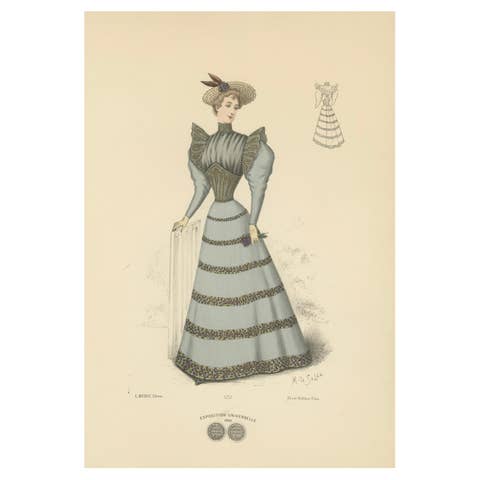
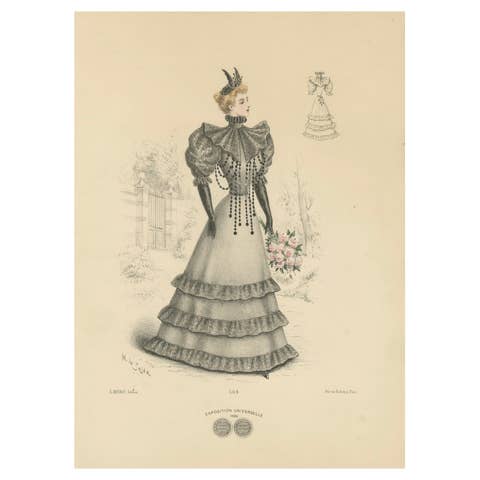
This illustration is part of a series designed for the Exposition Universelle of 1889, a world fair held in Paris. The fashion plates in this collection were created to showcase the latest trends and luxurious styles in women's fashion, serving as both artistic and cultural representations of the time.
The piece is a lithograph, a popular printmaking technique in the 19th century that enabled the production of detailed and high-quality images. Lithography involves drawing on a flat surface with a greasy substance, which is then treated to allow ink to adhere only to the image area. This method was widely used for fashion plates due to its ability to capture fine details and subtle color nuances, making it ideal for showcasing intricate clothing designs.