About this sheet
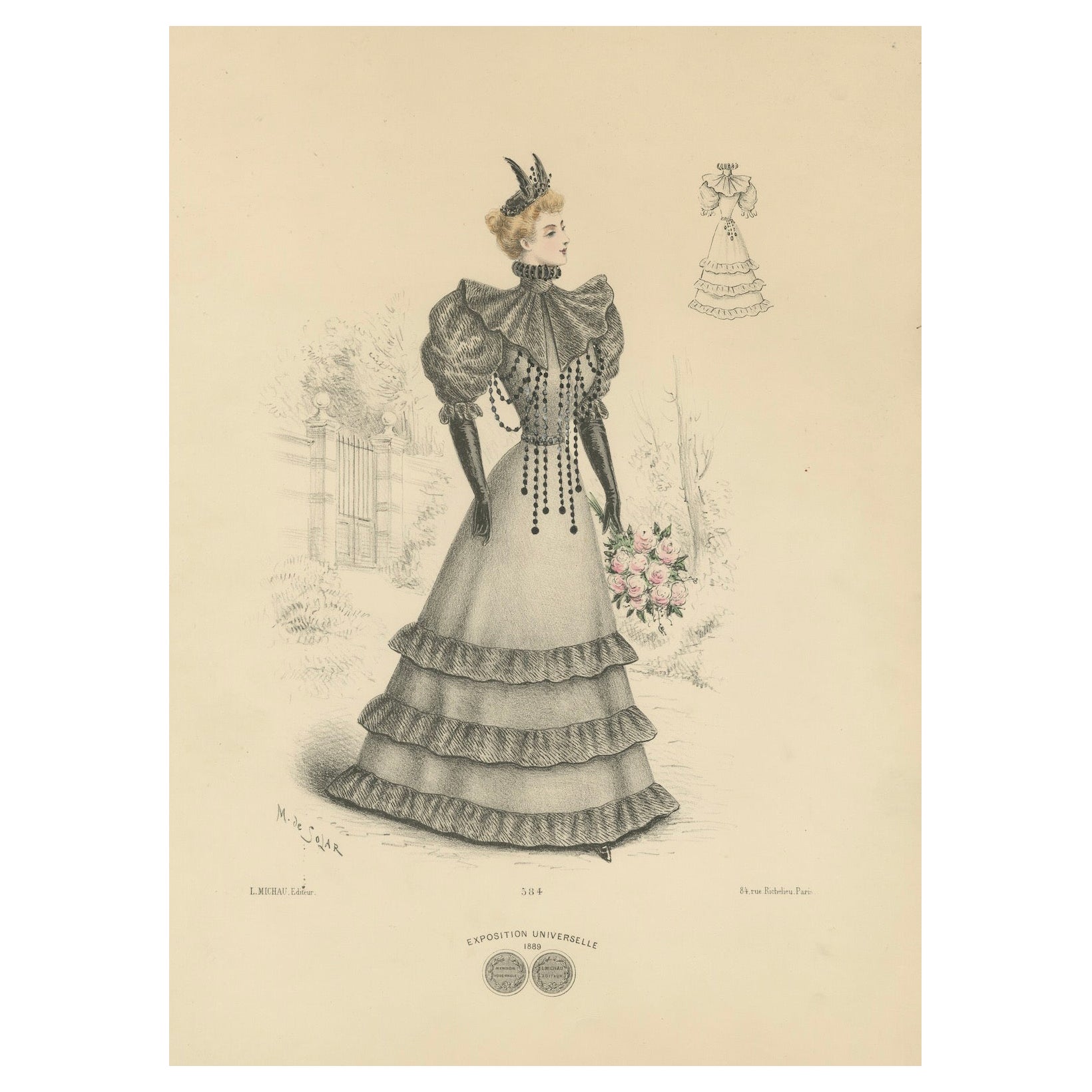
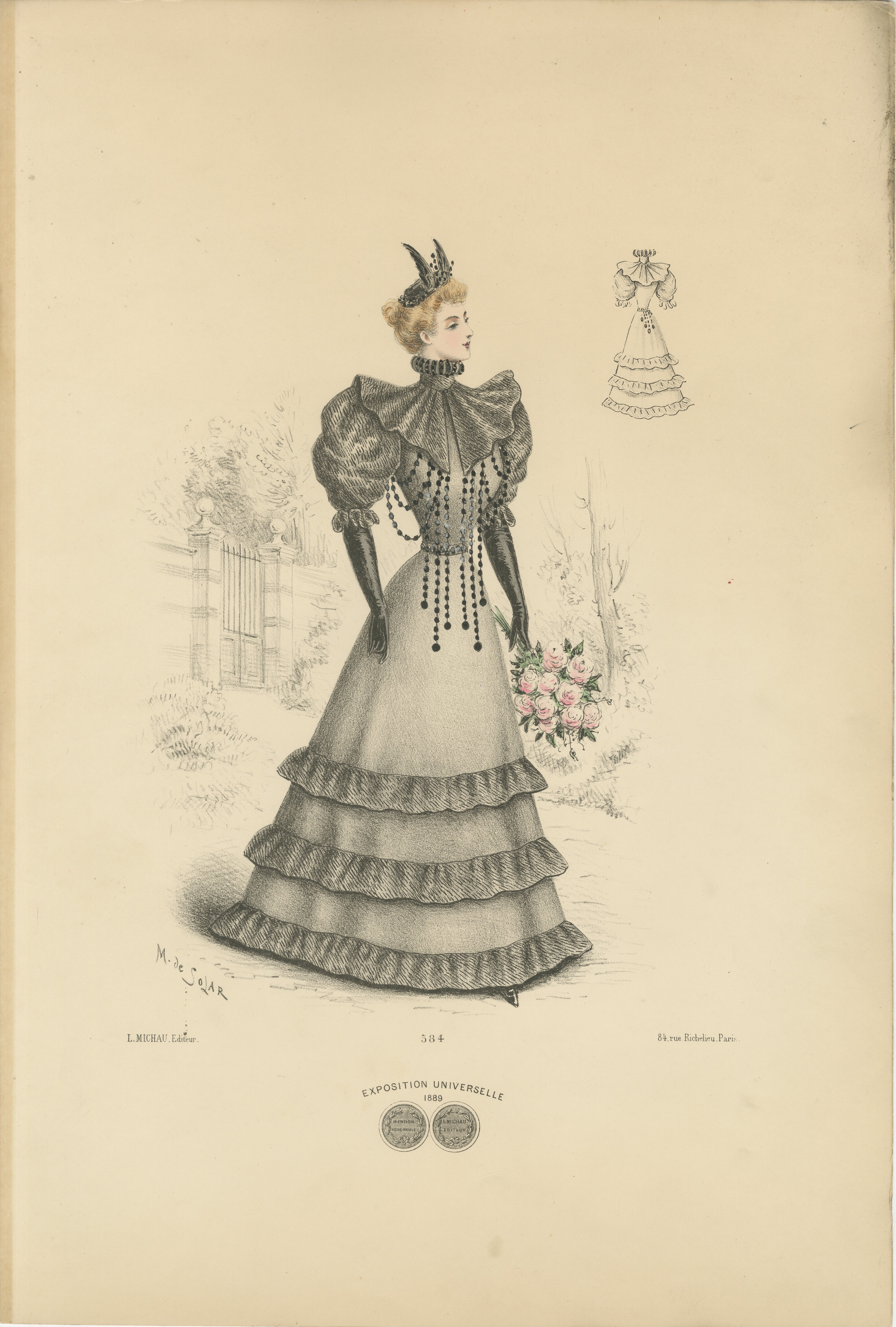
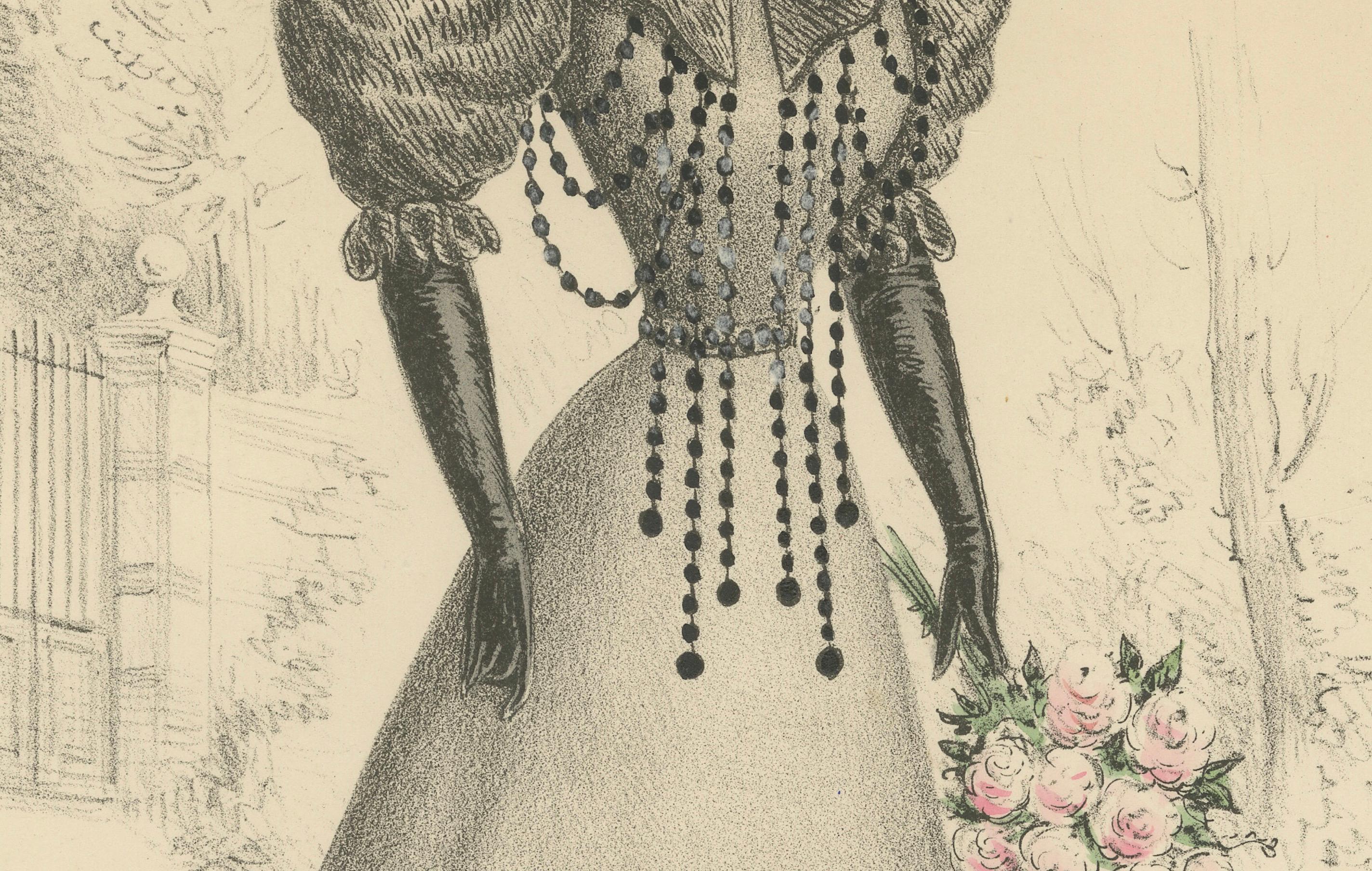
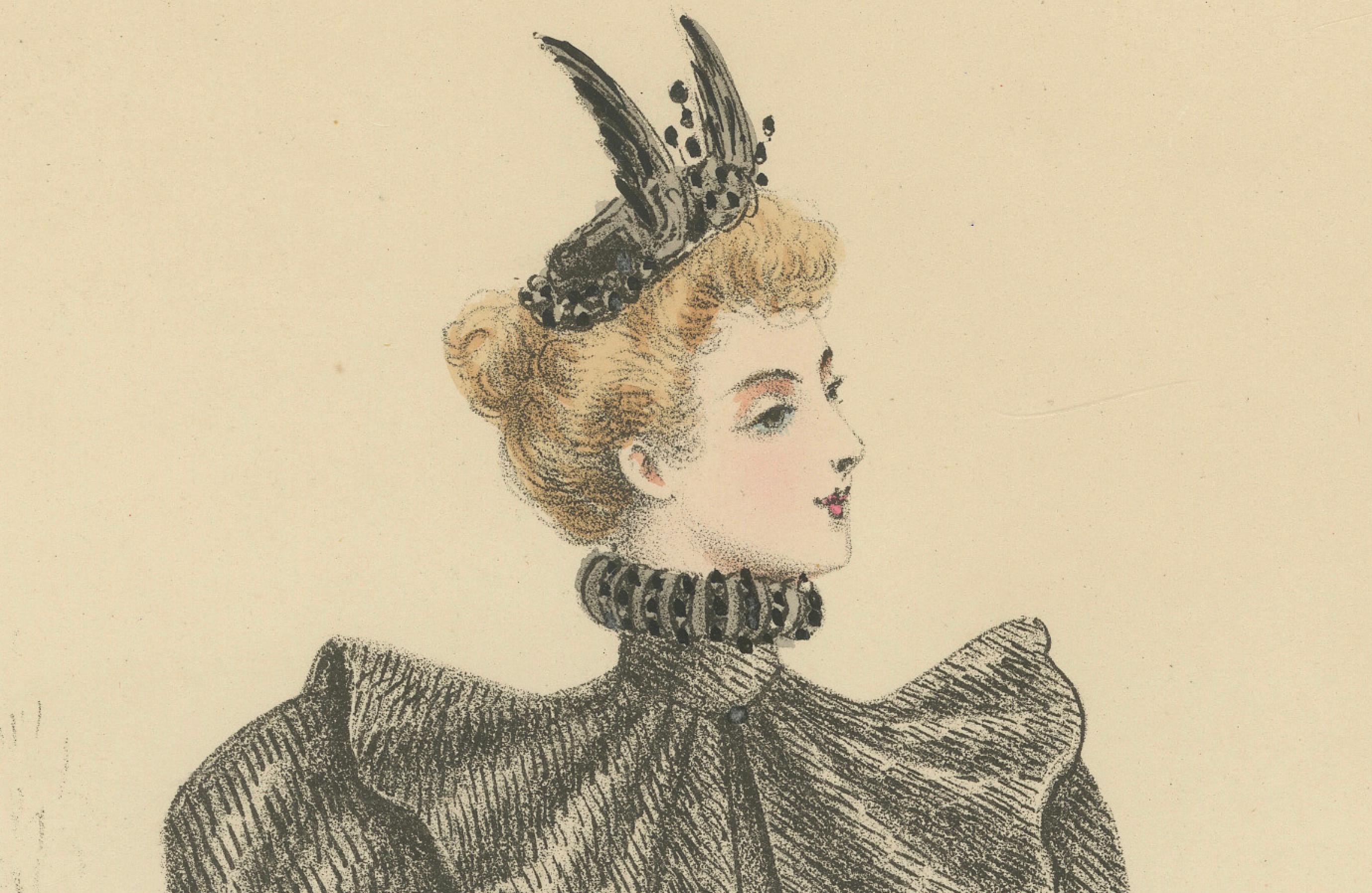
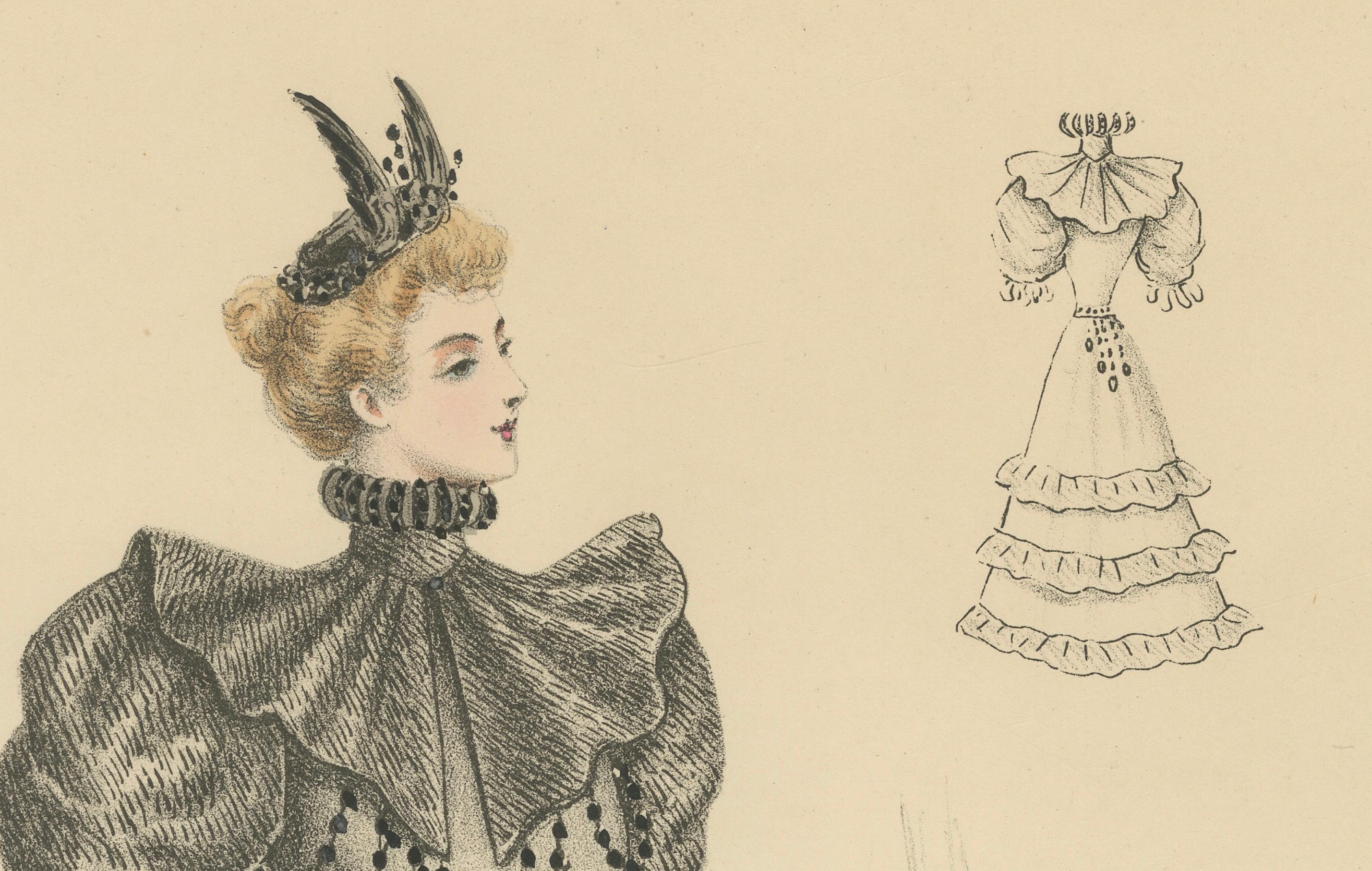
This lithograph portrays a fashionable woman from 1889, elegantly dressed in a sophisticated gown that exemplifies the style of the late Victorian era. The gown is made from a richly textured fabric in a subtle grey tone, accentuated by layers of ruffles on the skirt that add volume and movement. The bodice features a high neckline with a wide, ruffled collar and puffed sleeves, which taper into long, slim gloves, creating a dramatic and refined silhouette. The front of the bodice is adorned with long strands of dark beads, adding an element of intricate detail and contrast to the otherwise monochromatic outfit. The woman holds a bouquet of pink roses, which provides a delicate touch of color, and her hair is styled in an updo, topped with a decorative hat that features a feathered adornment.
This lithograph was produced by L. Michau, a recognized publisher of fashion illustrations during the late 19th century. The design is credited to M. de Solar, as indicated by the signature on the illustration.
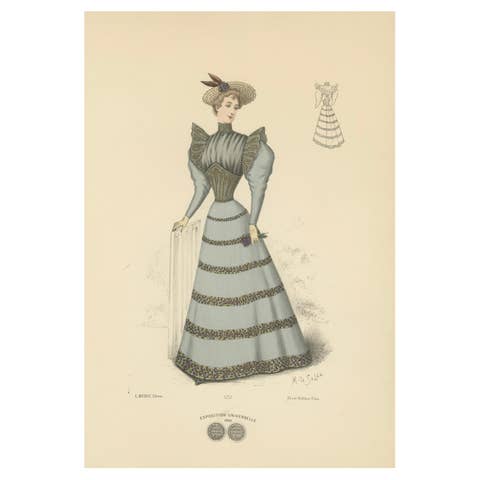
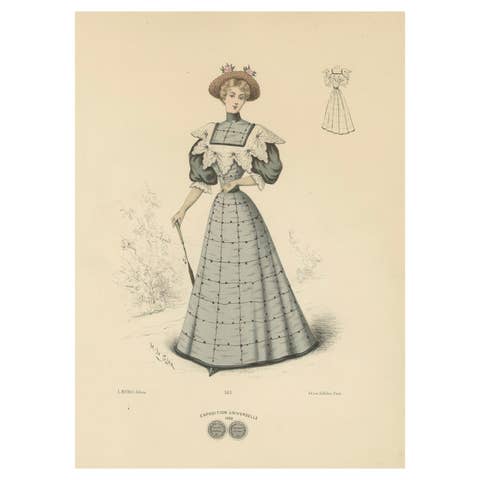
This illustration is part of a series likely created for the Exposition Universelle of 1889, held in Paris. The fashion plates from this collection were designed to showcase the latest trends in women's fashion, capturing the elegance and sophistication that were celebrated at this prestigious international exhibition.
The piece is a lithograph, a common printmaking technique in the 19th century that allowed for the production of detailed and high-quality images. Lithography involves drawing on a flat surface with a greasy substance, which is then treated to allow ink to adhere only to the drawn areas. This method was particularly favored for fashion plates due to its ability to capture intricate details and subtle color variations, making it ideal for depicting elaborate clothing designs.