About this sheet
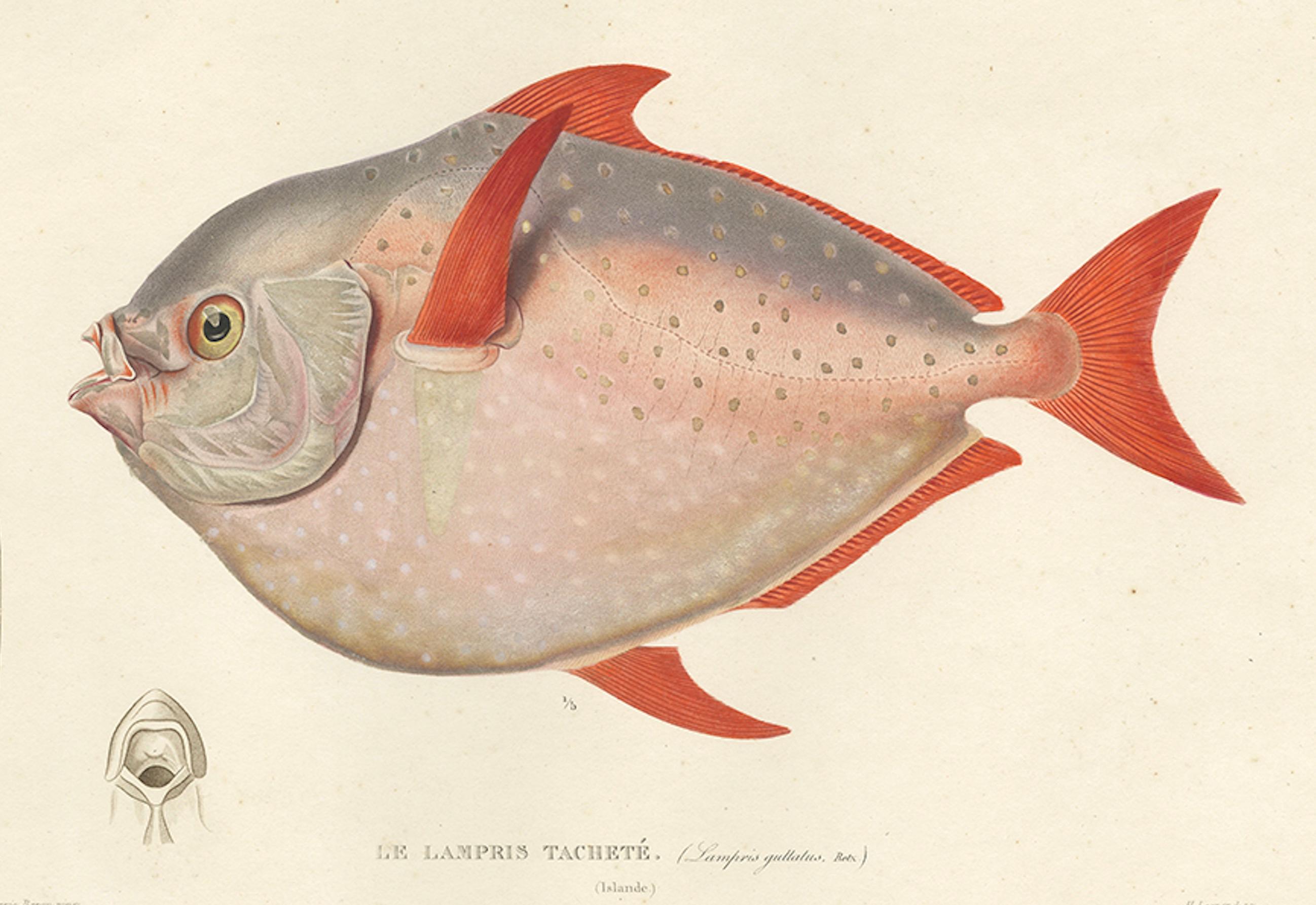
Antique Print of the Opah (Lampris guttatus) – Hand-Colored French Lithograph, 1845
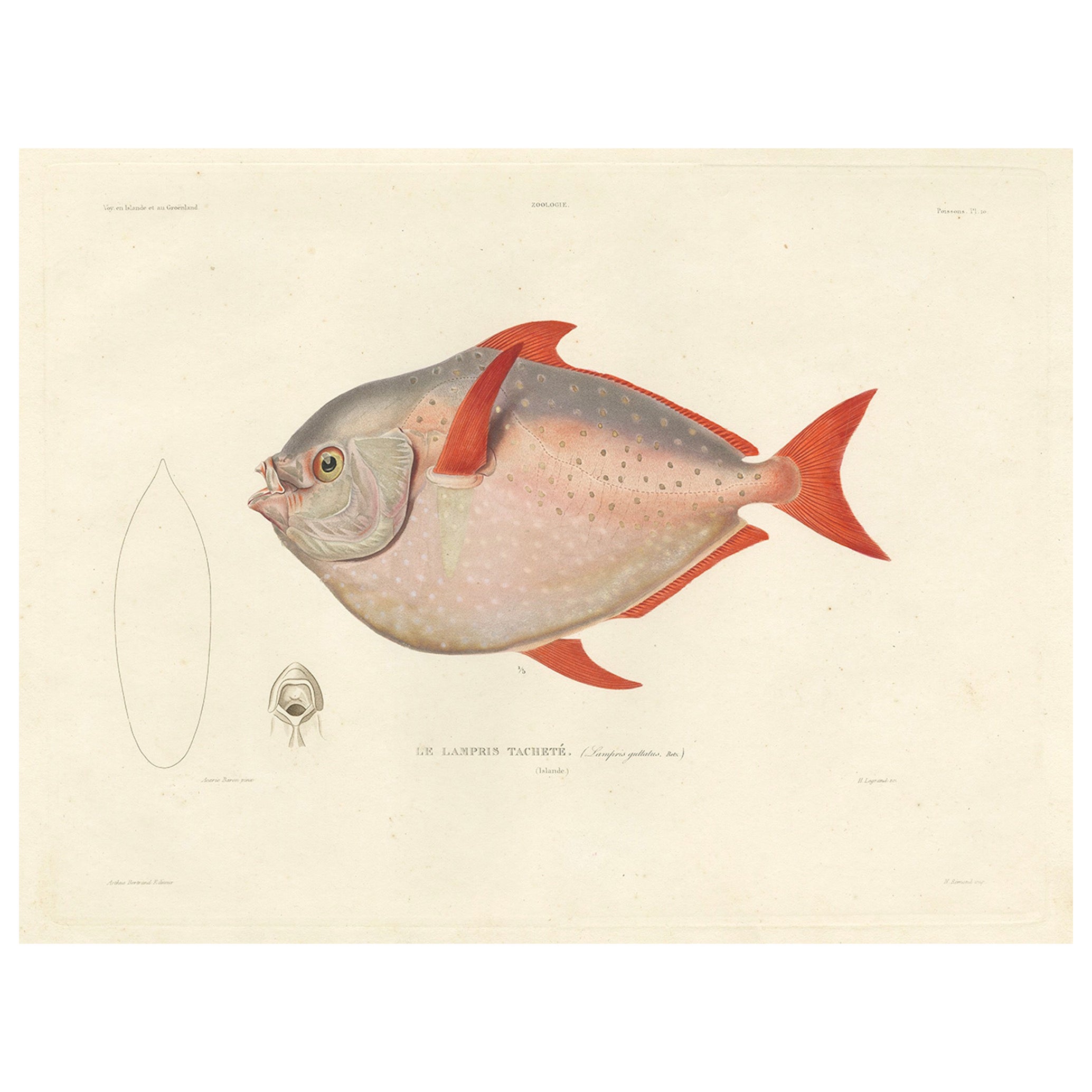
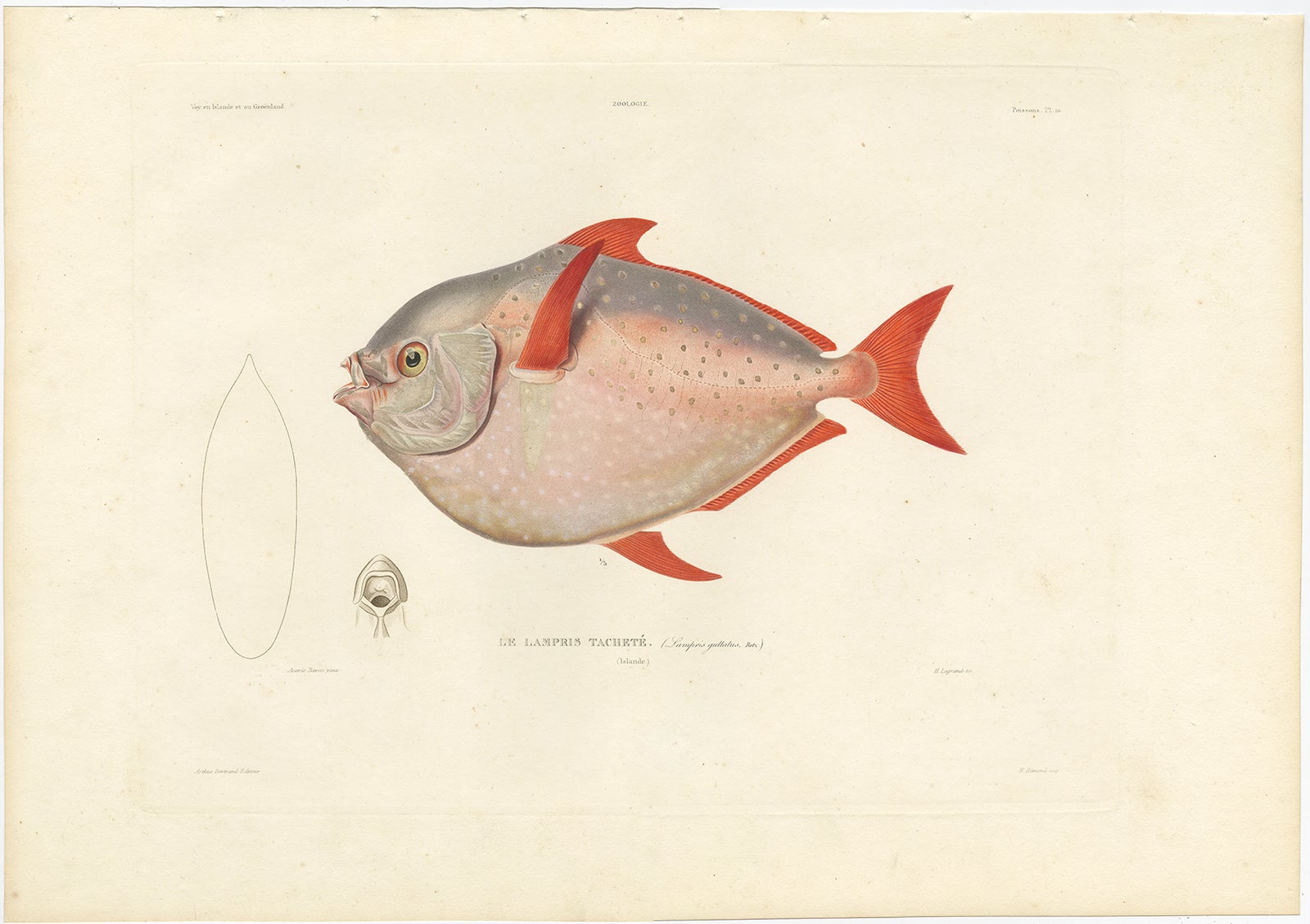
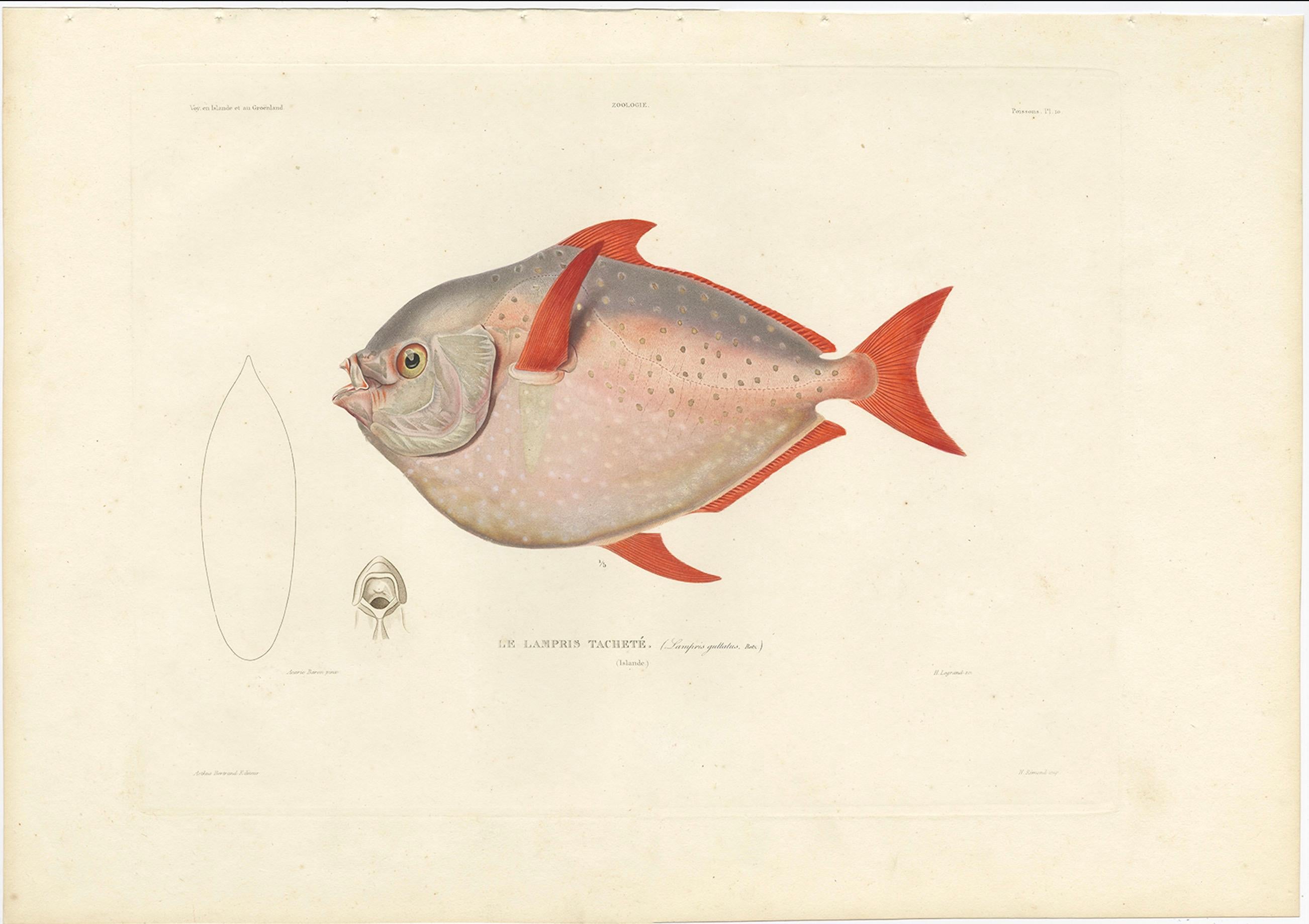
This stunning hand-colored lithograph features Le Lampris Tacheté (Lampris guttatus), known in English as the Opah or Moonfish. The print was published in Paris in 1845 as part of the French scientific expedition Voyage en Islande et au Groenland, a foundational natural history work documenting Arctic and North Atlantic marine life.
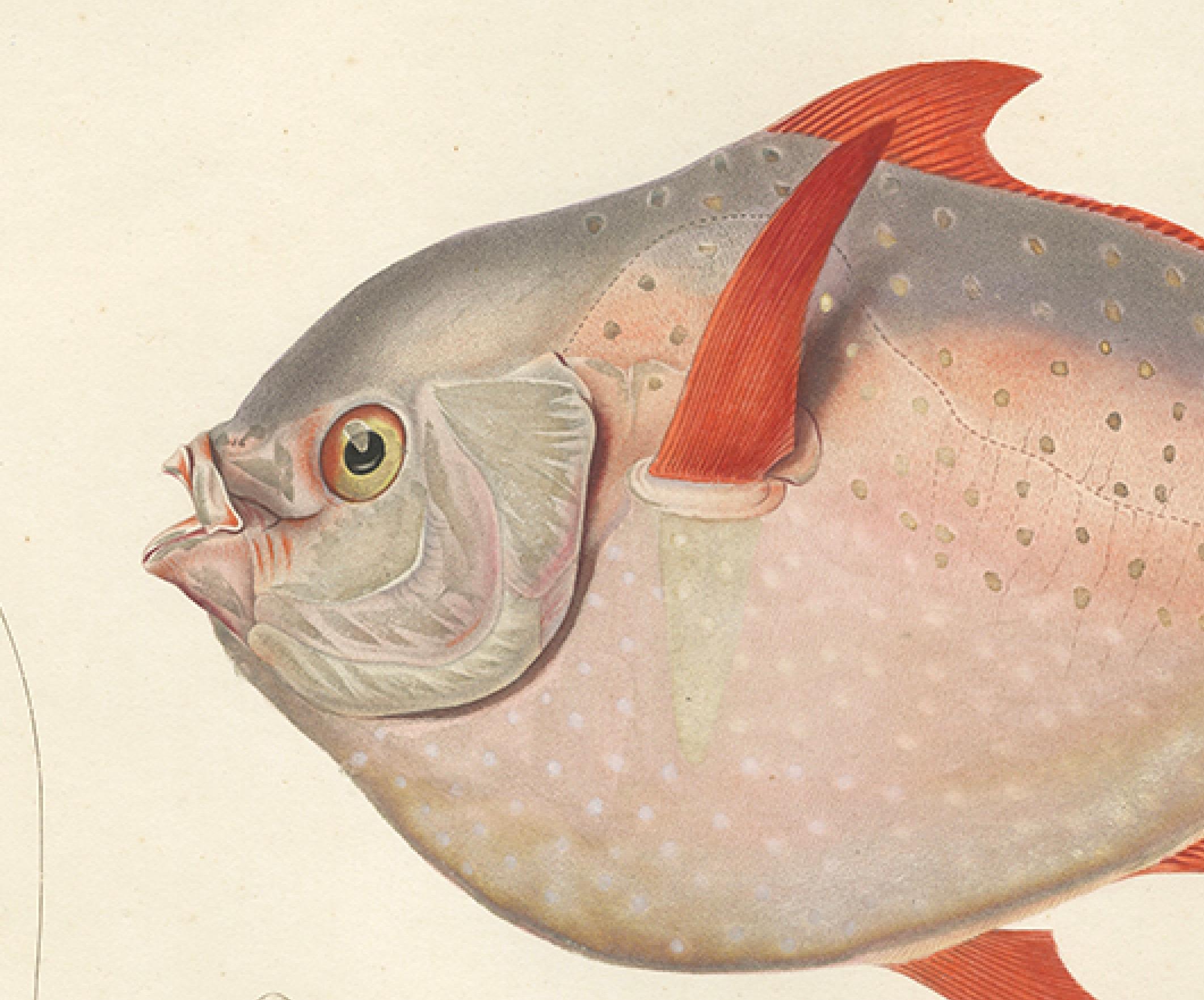
The Opah is depicted in brilliant hues of metallic grey and soft pink, with striking crimson-red fins and tail. Its disc-shaped, laterally compressed body and spotted flanks are rendered with exceptional detail, capturing the fish’s iridescent coloration and graceful form. The large, round eye and fleshy lips are anatomically accurate and full of character, while the red pectoral and caudal fins curve elegantly along the page.
This species, found in deep tropical and temperate waters around the globe, is the only known fully warm-blooded fish. Though unknown in this regard in the 19th century, its unique physiology, open ocean habitat, and elusive behavior made it a prized subject for early zoologists.
Two scientific inset drawings appear below the fish:
* A simplified outline of the body shape
* A frontal anatomical view of the head and jaw structure
This is plate “Poissons Pl. 30,” drawn by Louis Bévalet, engraved by H. Blanchard, and printed by Arthus Bertrand. It exemplifies the refined style and scientific purpose of French expeditionary art, uniting zoological precision with decorative grace.
The Voyage en Islande et au Groenland remains a landmark in 19th-century marine science and publishing, and prints such as this are highly collectible for their aesthetic value and historical importance.
Condition:
Good condition. Minimal foxing. The colors remain vivid, with a strong plate impression. No tears, repairs, or staining affecting the image area.
Framing tips:
This print pairs beautifully with a gold or dark wood frame and a white or blush-toned mat to highlight the red and pink accents. Ideal for coastal interiors, natural history collections, or contemporary gallery walls. Use UV-protective glazing to preserve the luminous hand coloring.