About this sheet
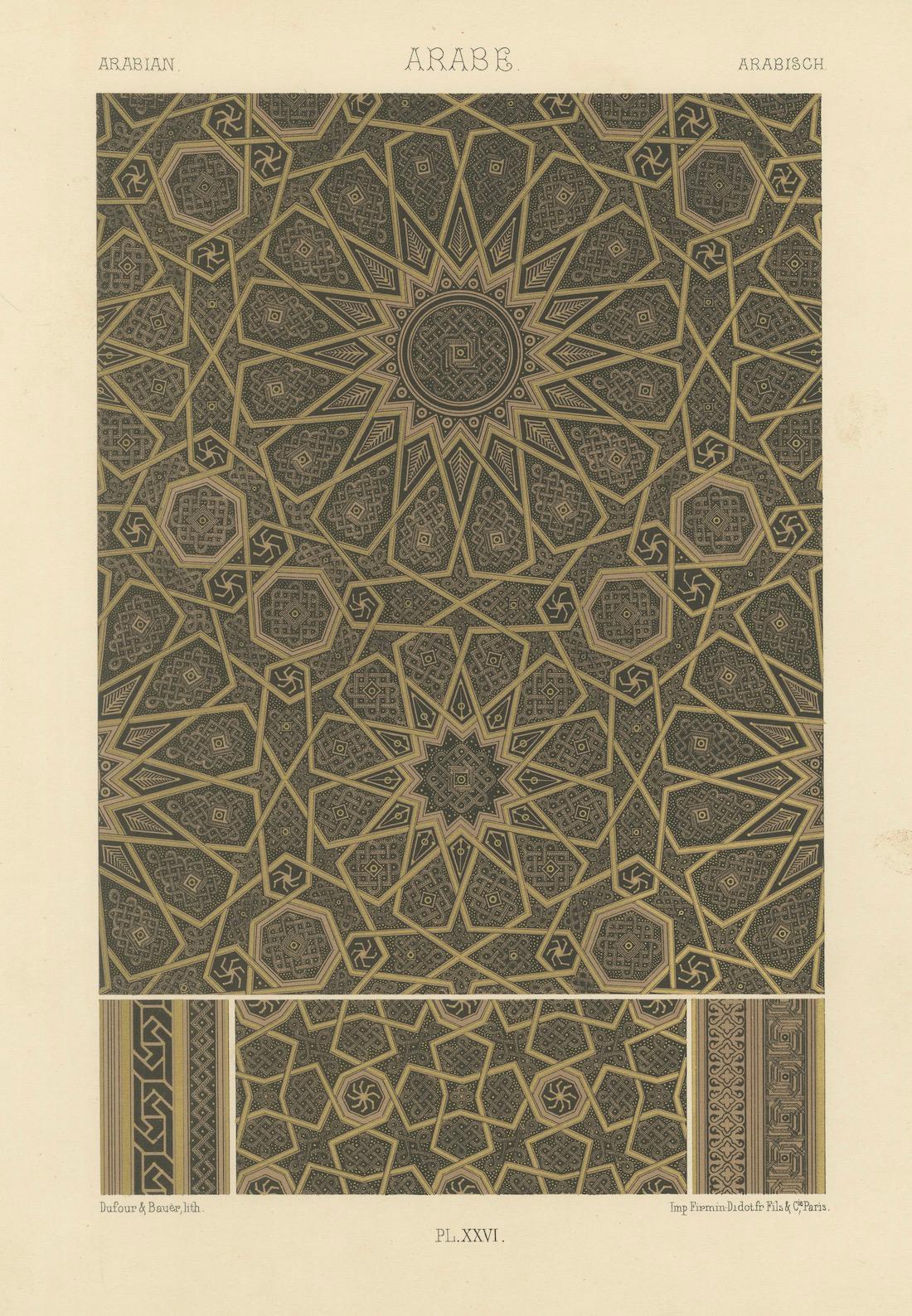
Arabian Geometric Ornament Print – Antique Lithograph of Islamic Star Pattern, c.1869
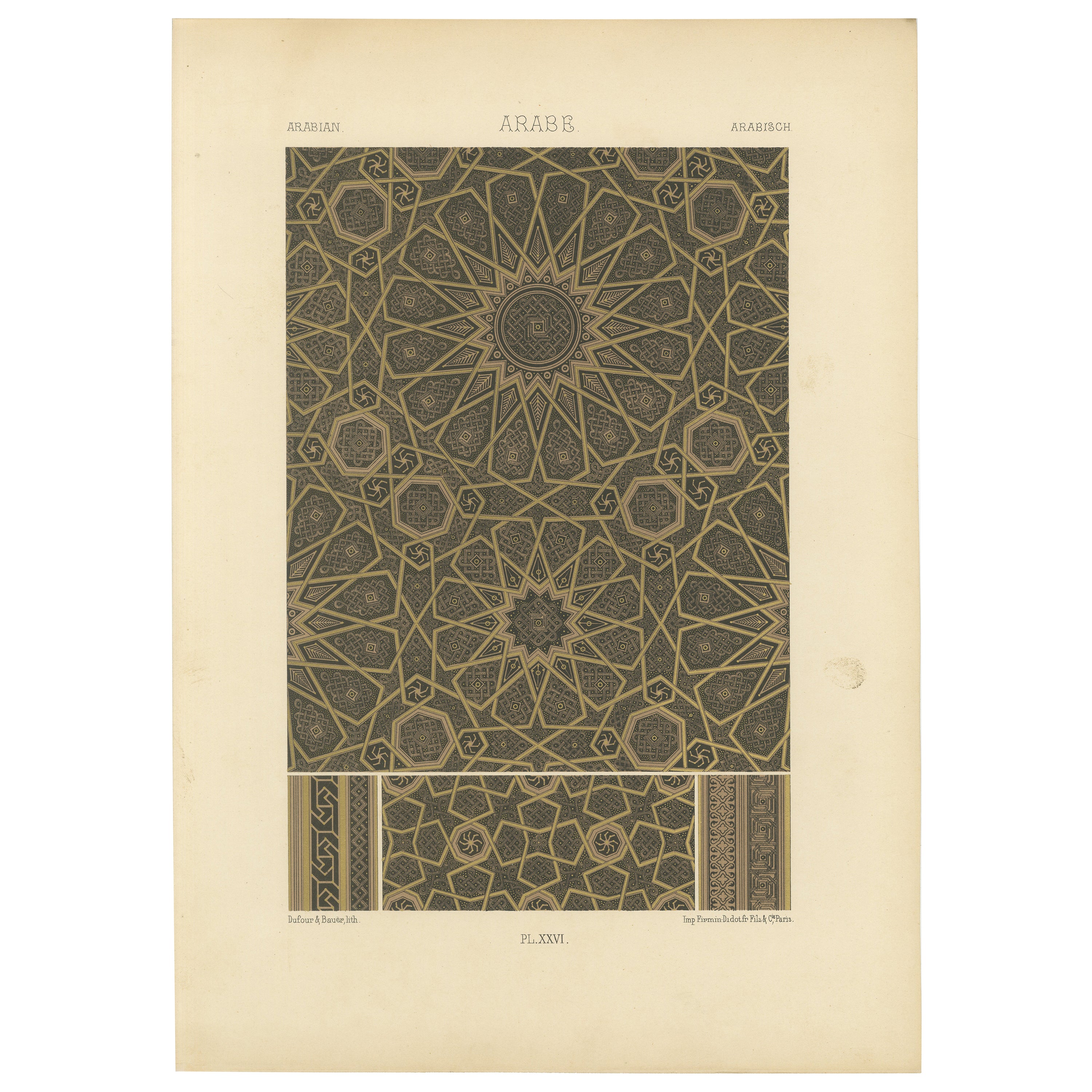
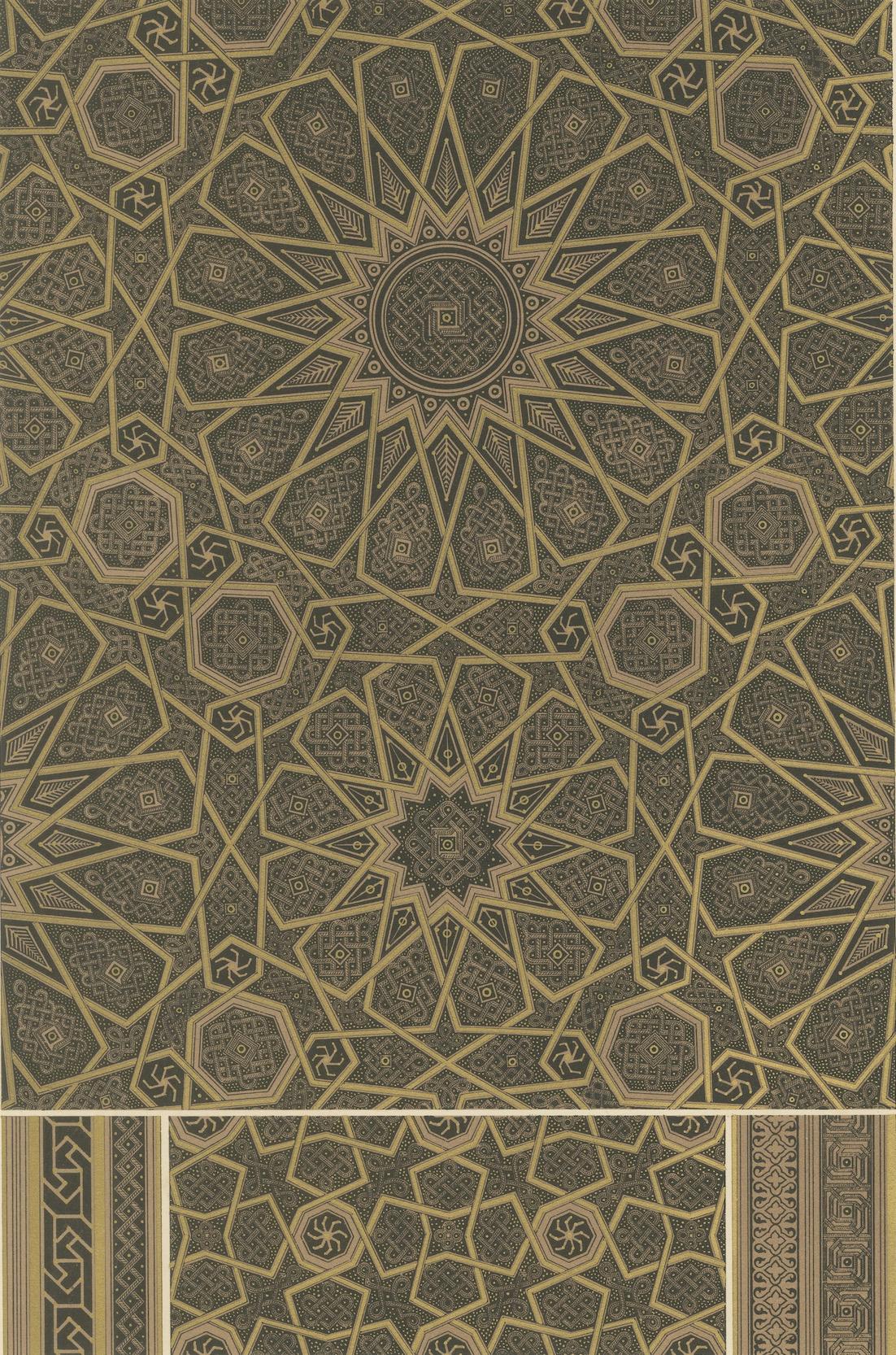
This extraordinary chromolithograph presents a masterful example of Arabian geometric ornamentation, composed of meticulously interlaced star and polygonal motifs. Plate XXVI from L'Ornement Polychrome, it captures the sophisticated mathematical artistry of Islamic design as seen in tilework, carved wood, and architectural decoration across North Africa, Moorish Spain, and the Middle East.
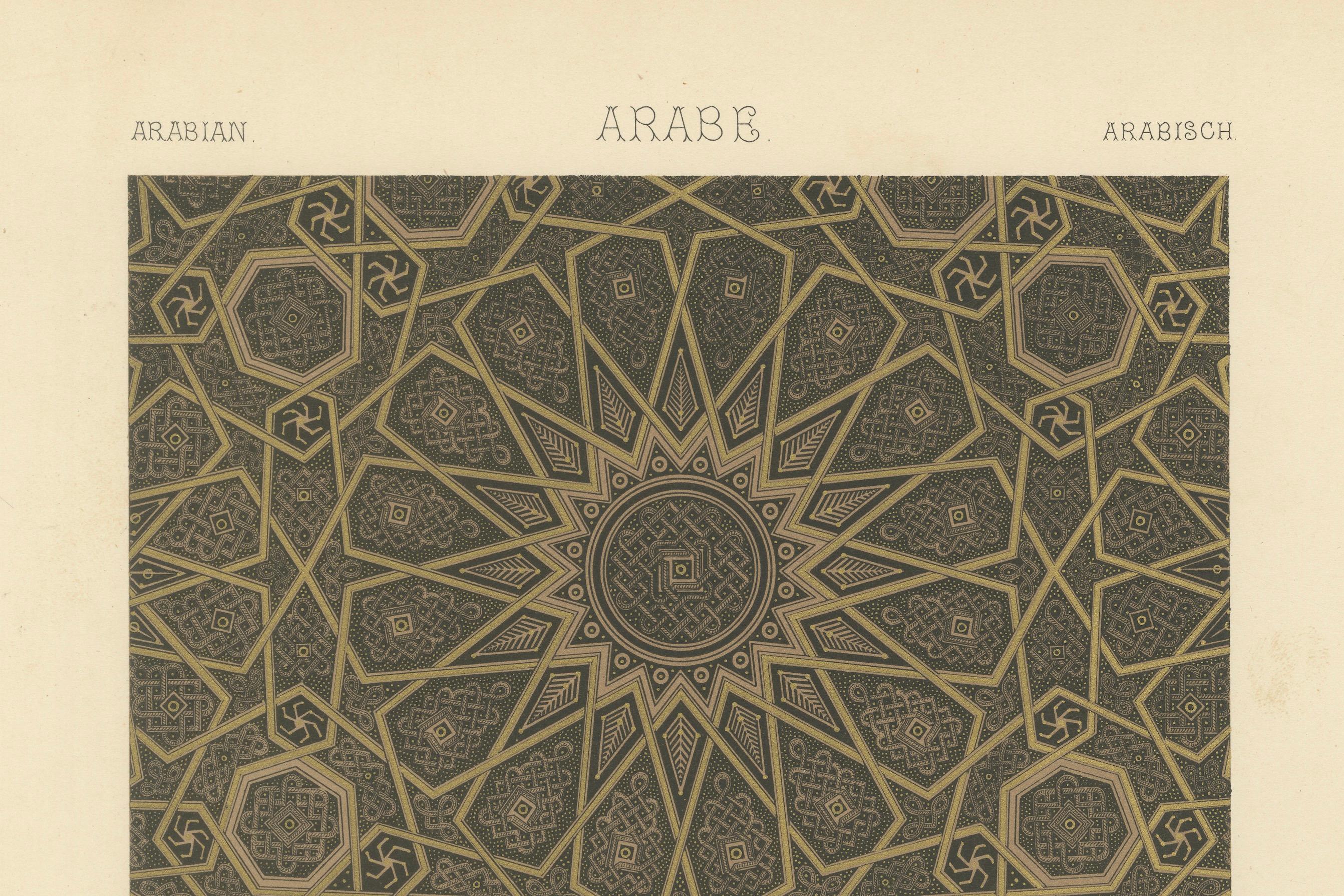
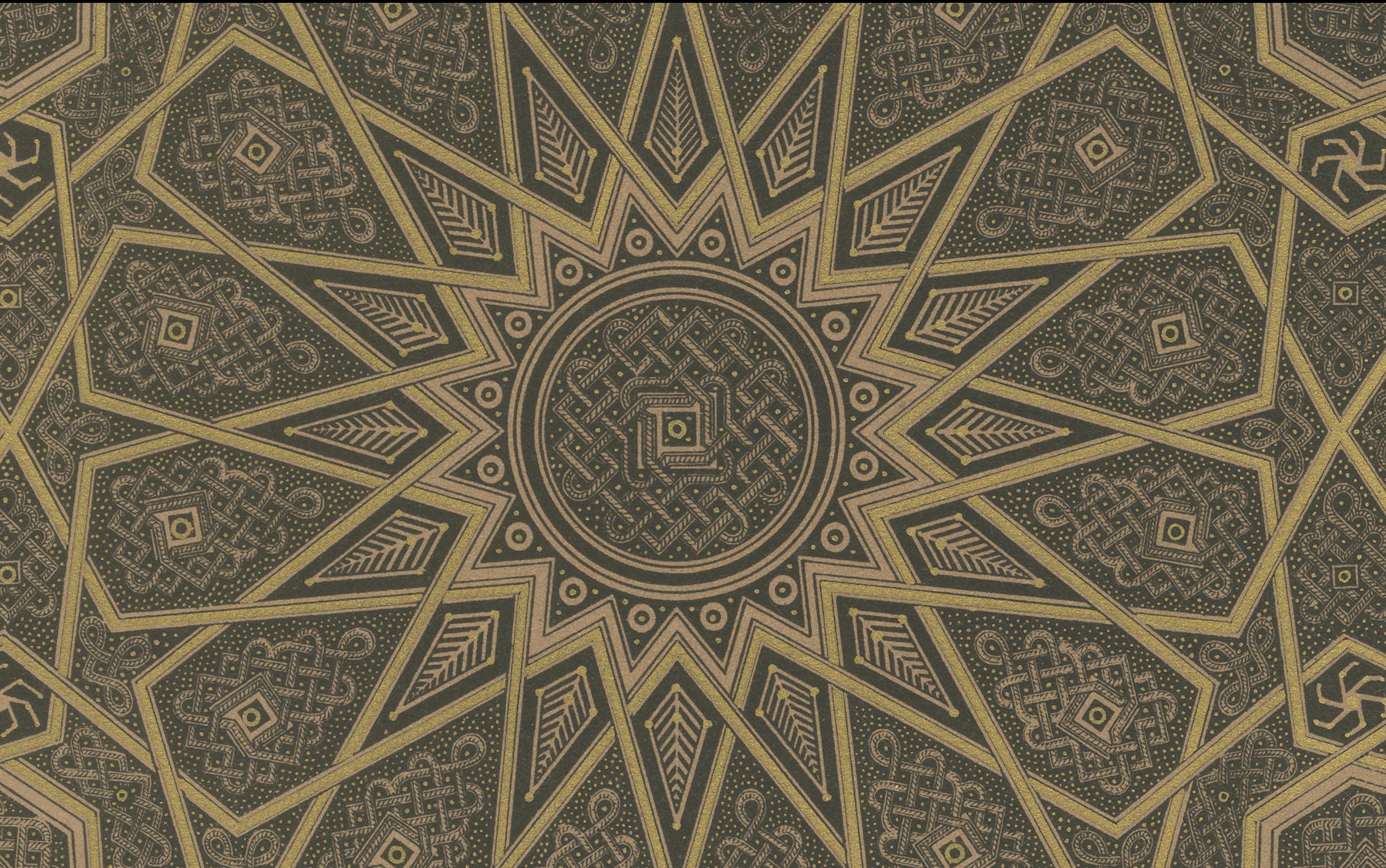
At the center of the composition is a large, radiating star—its finely structured symmetry unfolding across multiple layers of 10- and 12-point stars, octagons, and interlaced lines. The surrounding field is densely filled with smaller tessellated elements, each composed of nested polygons and intricate latticework. The design flows with seamless balance, revealing both structural rigor and spiritual symbolism, as is typical of Islamic ornamental philosophy.
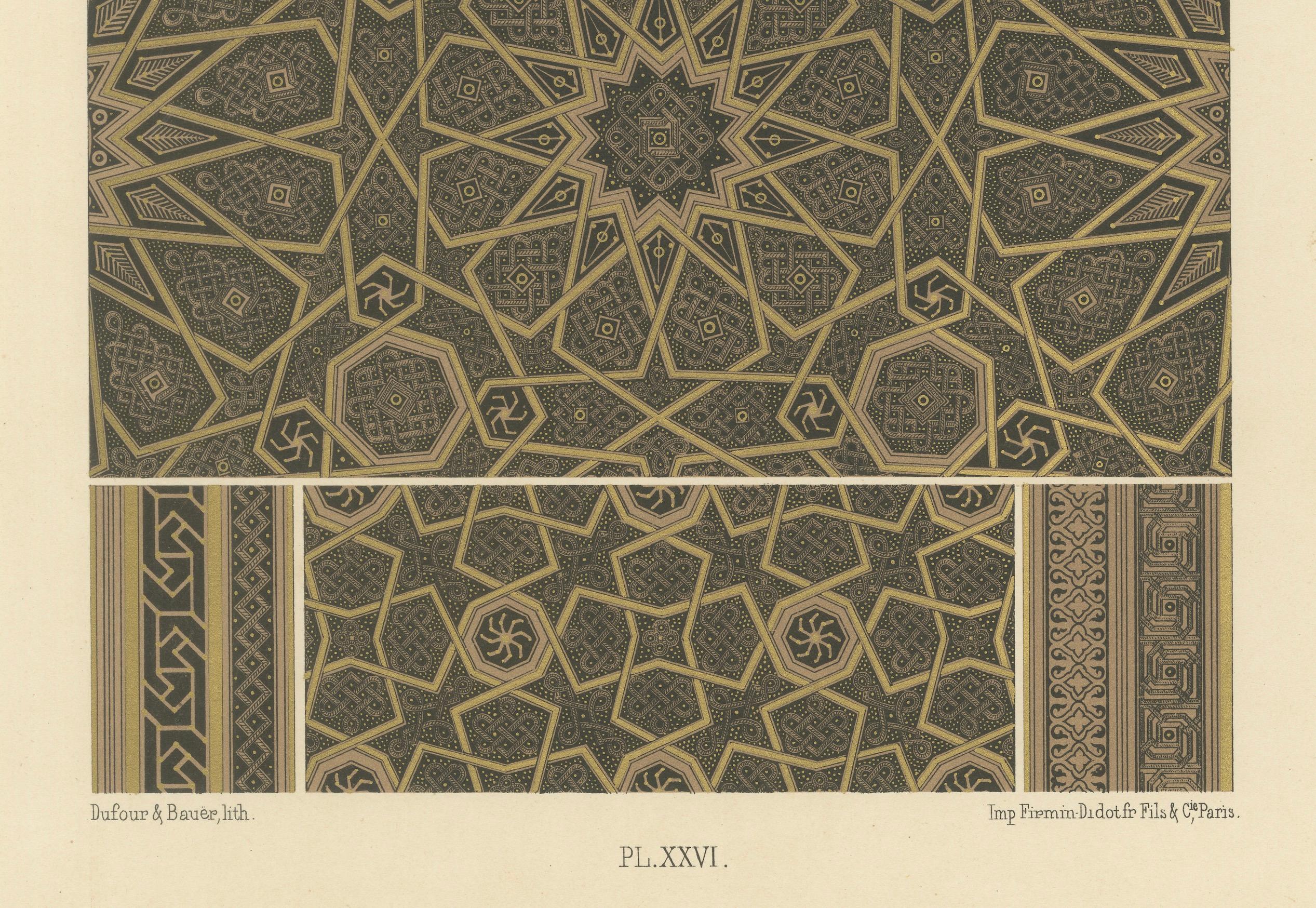
Rendered in a palette of gold, black, and earth tones, the image evokes the appearance of inlaid woodwork or stone muqarnas ceilings, particularly those seen in Islamic palaces such as the Alhambra in Granada. The lower section includes additional detail panels—band motifs and corner designs—that demonstrate how these patterns might have been adapted for architectural borders and friezes.
Produced in Paris around 1869 by Firmin-Didot and lithographed by Dufour and Bauer, this plate was printed using chromolithography, a process capable of replicating the fine lines and repetitive intricacies of Islamic art with remarkable fidelity. Compiled under the direction of Albert Racinet, it served as an essential reference for artists and designers during the Orientalist revival of the 19th century.
This print not only celebrates the intellectual depth of Islamic geometric design but also illustrates its influence on Western decorative arts, mathematics, and architecture.
Condition: Excellent condition. Crisp impression with strong, clear lines and tone. Mild age-toning and one dirt spot in the right margin; image area clean. No tears or repairs.
Framing tips: A black or dark walnut frame will enhance the contrast of the pattern. Pair with a wide ivory or soft gold mat to highlight the mathematical precision and ornamental intricacy.
Technique: Chromolithograph
Maker: Firmin-Didot, Paris, after A. Racinet, c.1869