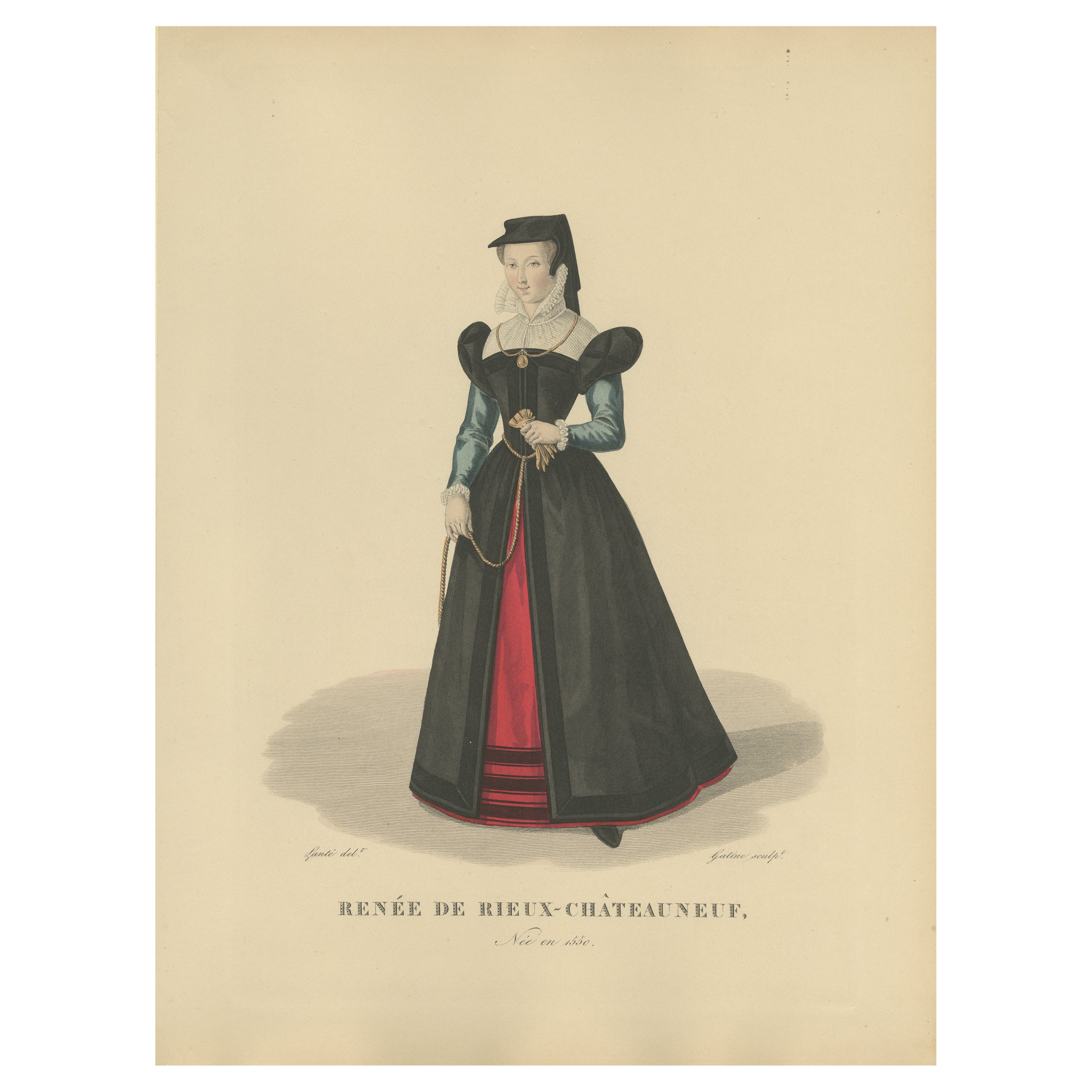
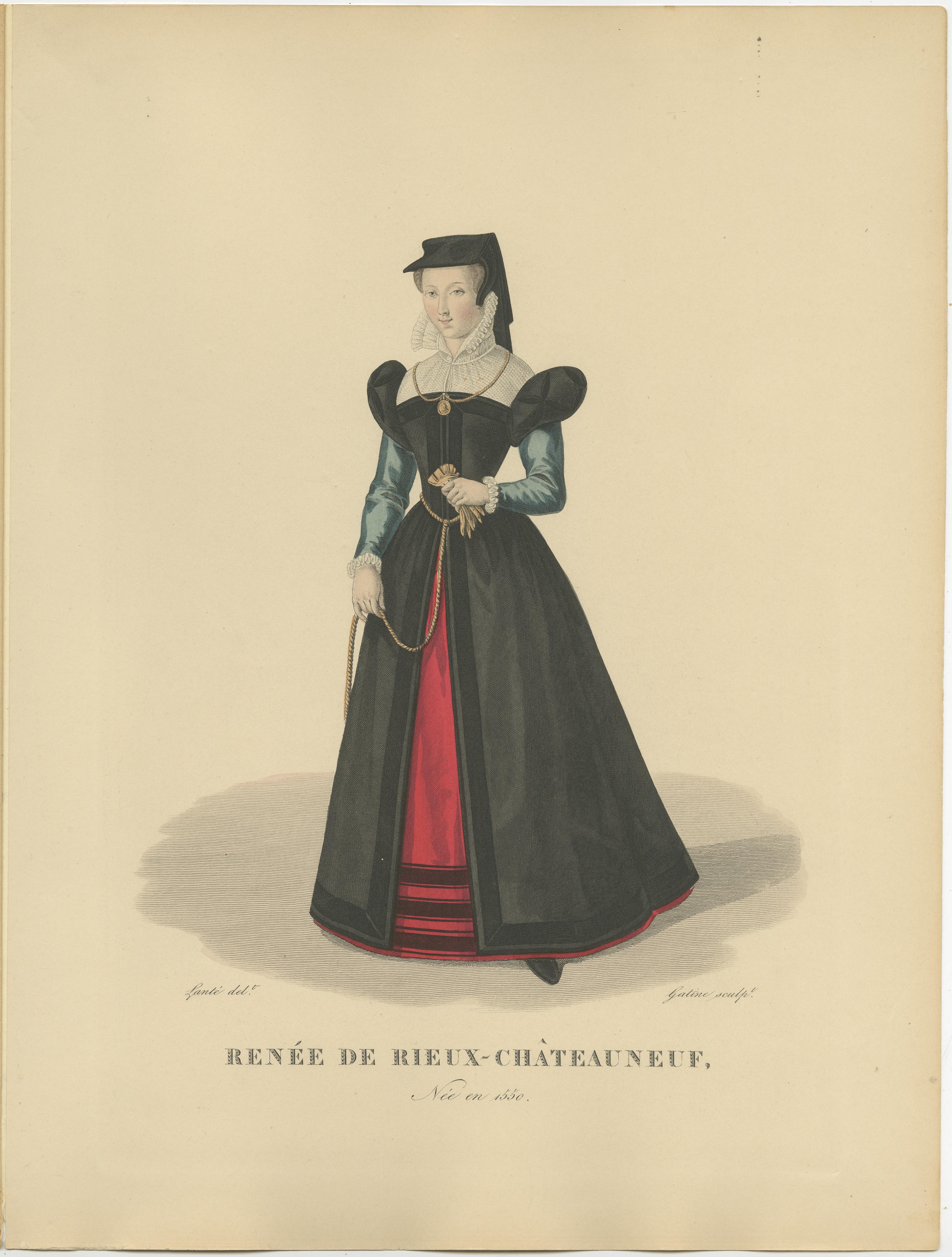
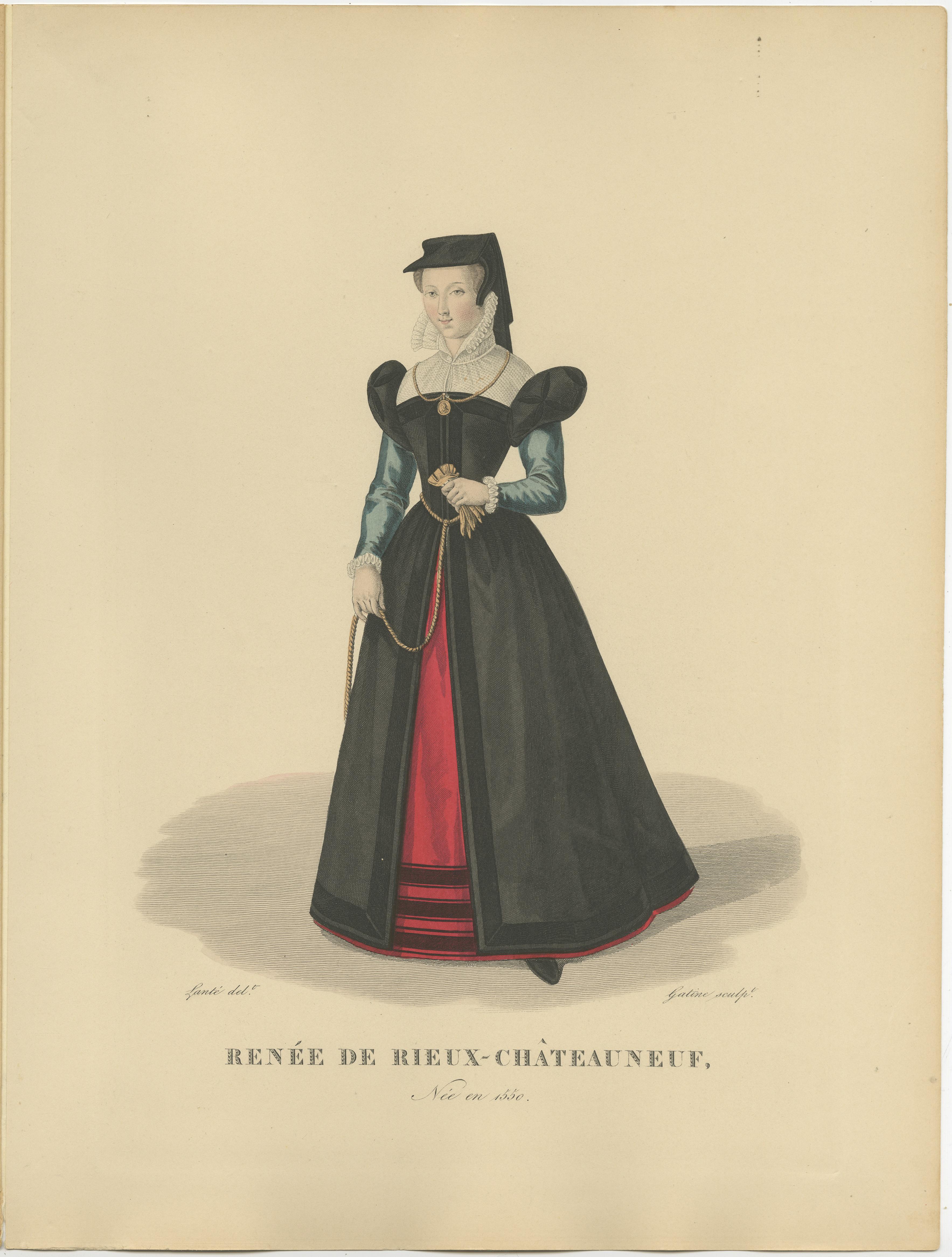
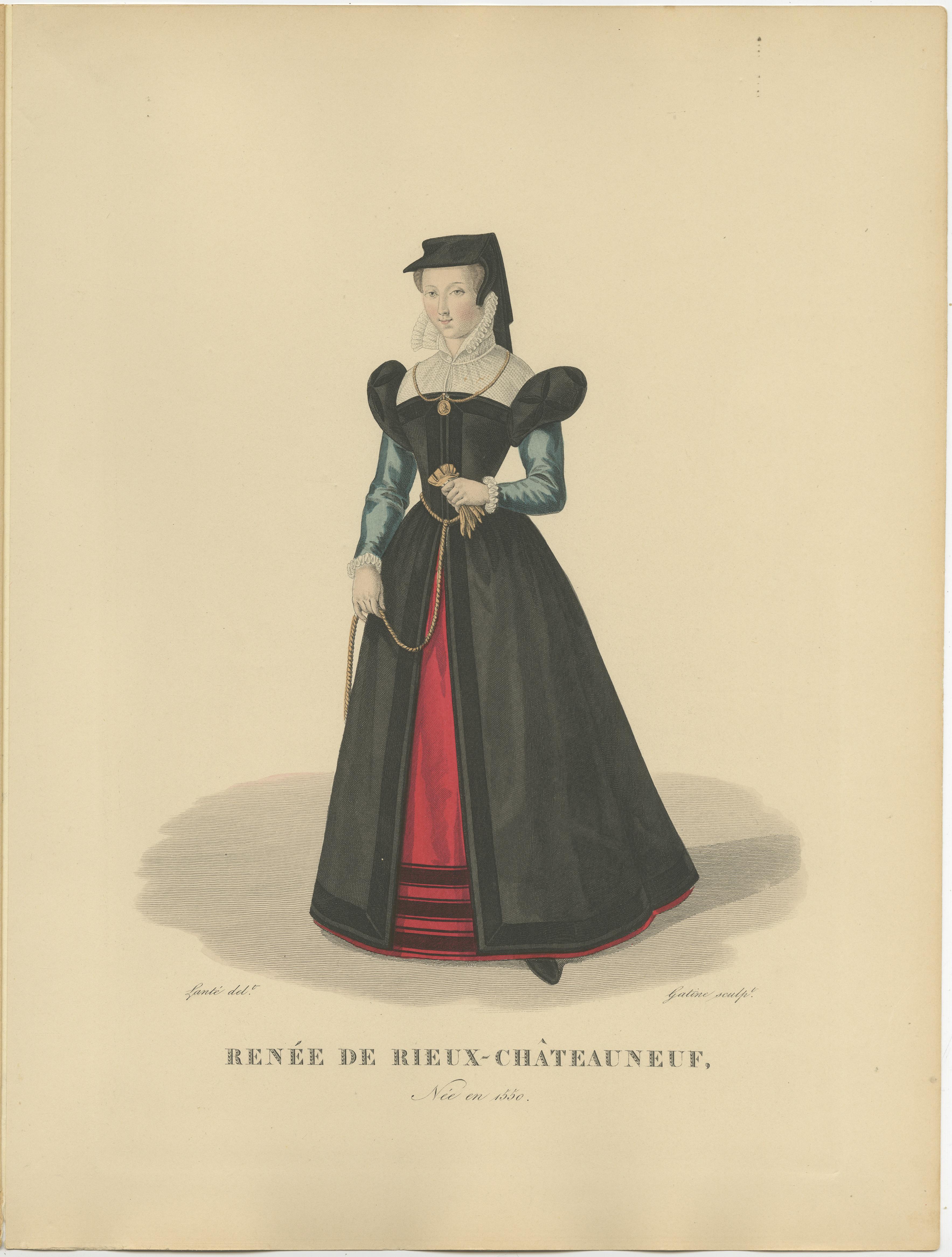
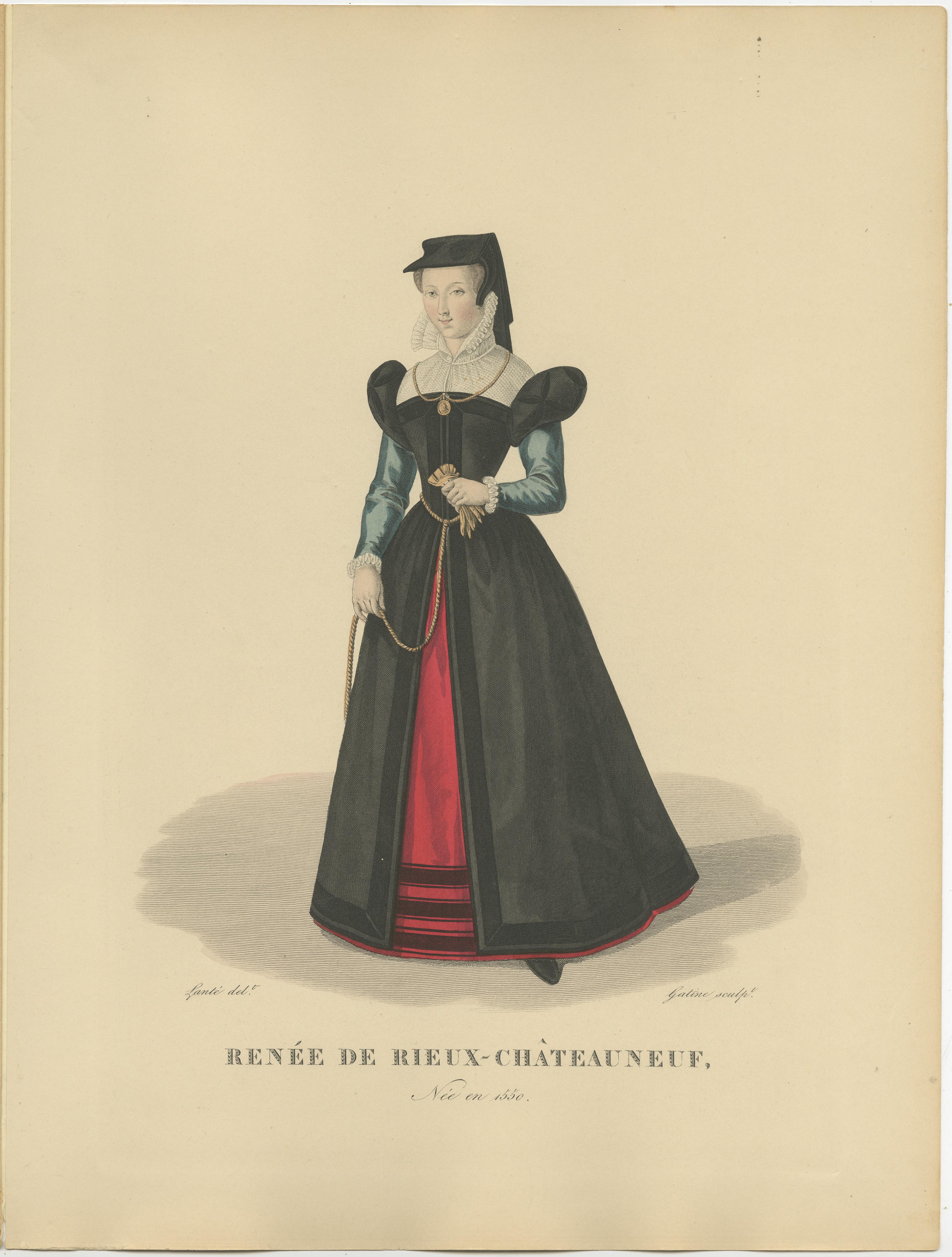
Hand Colored Engraving of Renée de Rieux or La Belle Châteauneuf, 1900
€ 230
One of a kind: this is the sheet in the photographs. Ships from Langweer, the Netherlands.
Date
1900
Technique
Engraved
Sheet size
33.5 × 25 cm (13.2 × 9.8 in)
Condition
Good
Reference
BG-13158-22
Condition
Original/contemporary hand coloring. General age-related toning, Minor wear and soiling, blank verso. Please study image carefully.
About this sheet
Antique print titled 'RENEE DE RIEUX CHATEAUNEUF' Original antique print of La Belle Châteauneuf.
"La Belle Châteauneuf" was the name popularly given to Renée de Rieux, daughter of Jean de Rieux, seigneur de Châteauneuf, who was descended from one of the greatest families of Brittany. The dates of her birth and death are unknown.
She was maid of honour to France's queen mother, Catherine de' Medici, and a member of her notorious "Flying Squadron" (L'escadron volant). She inspired an ardent passion in the duke of Anjou, brother of Charles IX. This intrigue deterred the duke from agreeing to an arranged marriage with Elizabeth I of England; but he soon abandoned la Châteauneuf for Marie of Cleves (1571). The court then wished to find a husband for her, whose singular beauty gave her an influence which the queen-mother feared, and matches were in turn suggested with the Voivode of Transylvania, the Earl of Leicester; with Antoine Duprat, provost of Paris and with the Count of Brienne, all of which came to nothing.
Ultimately, Renée was banished from the court on the ground that she had been lacking in respect toward the queen, Louise of Lorraine. She married a Florentine named Antinotti, whom she stabbed in a fit of jealousy (1577). She remarried, her husband being Philip Altoviti, who in 1586 was killed in a duel by the Grand Prior Henri d'Angoulême, who was himself mortally wounded.
This print originates from ' LA MÉSANGÈRE, Pierre and LANTÉ, Louis Marie. Costumes des Femmes Françaises du XIIe au XVIIIe siècle. Paris: Librairie Charles Tallandier, 1900.
This beautiful work tracing changes in French costume from the 12th to 18th century, stunning folio-sized hand-colored engraved plates depicting period fashions on famous French women who were celebrated for their talent or their beauty in the relevant periods.