About this sheet
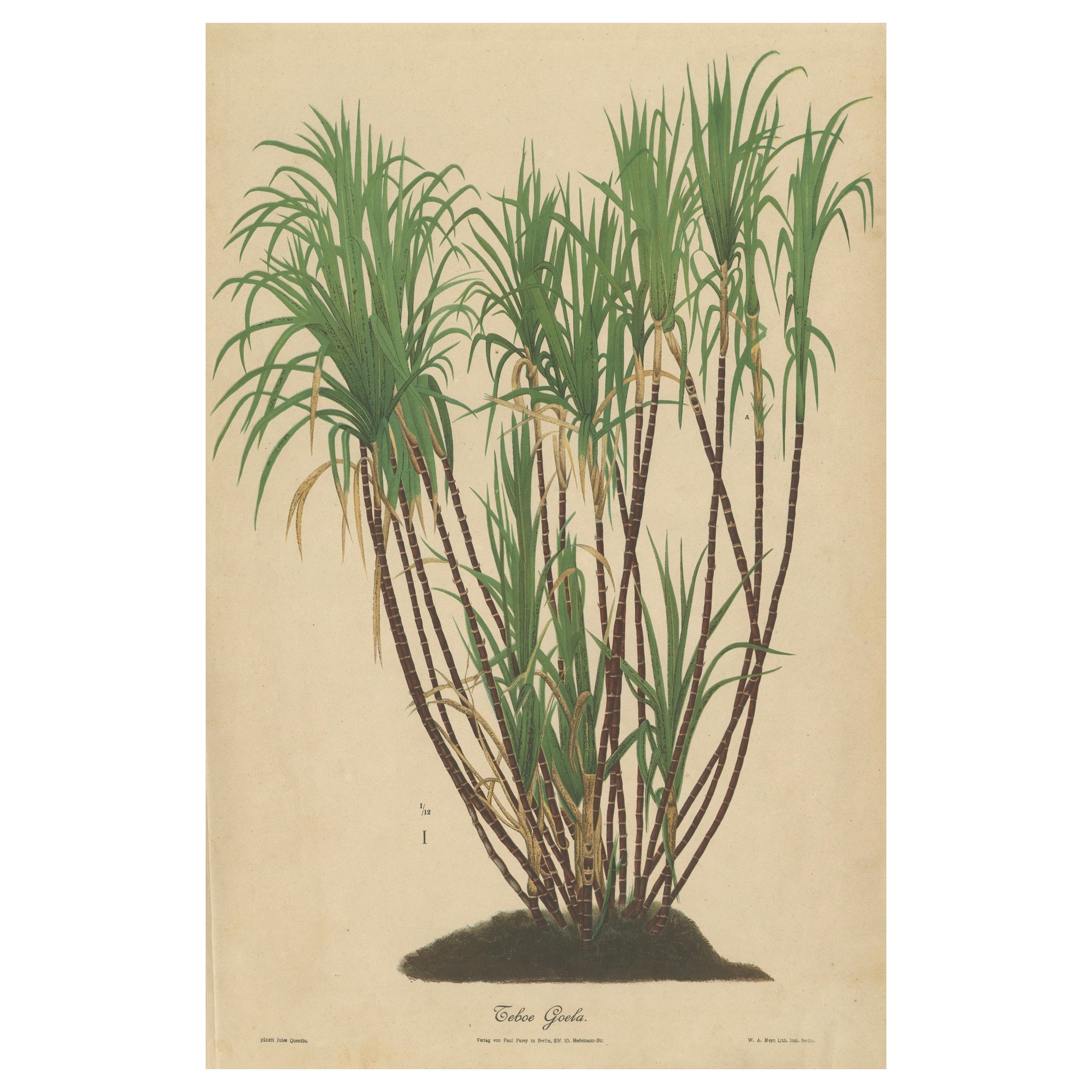
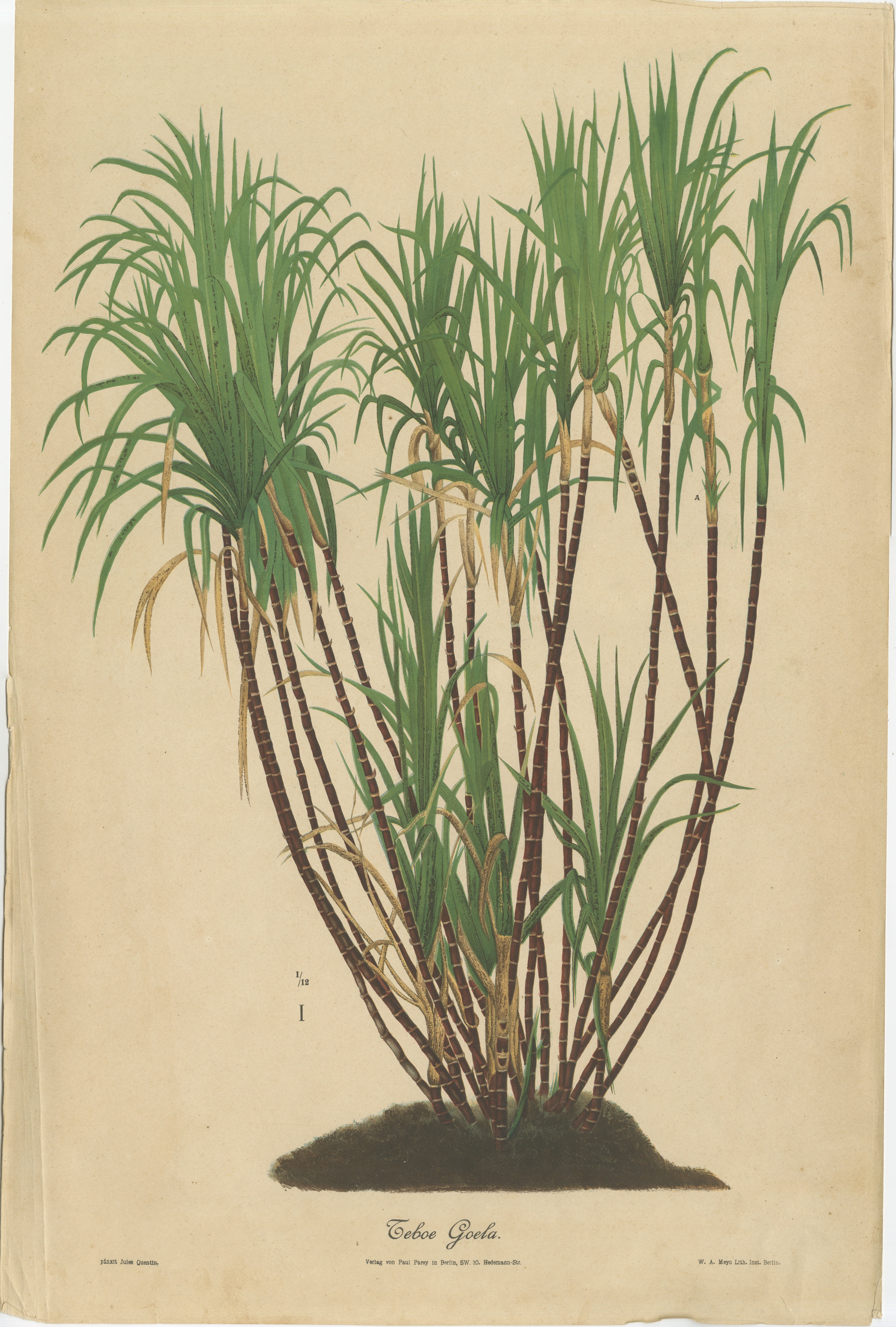
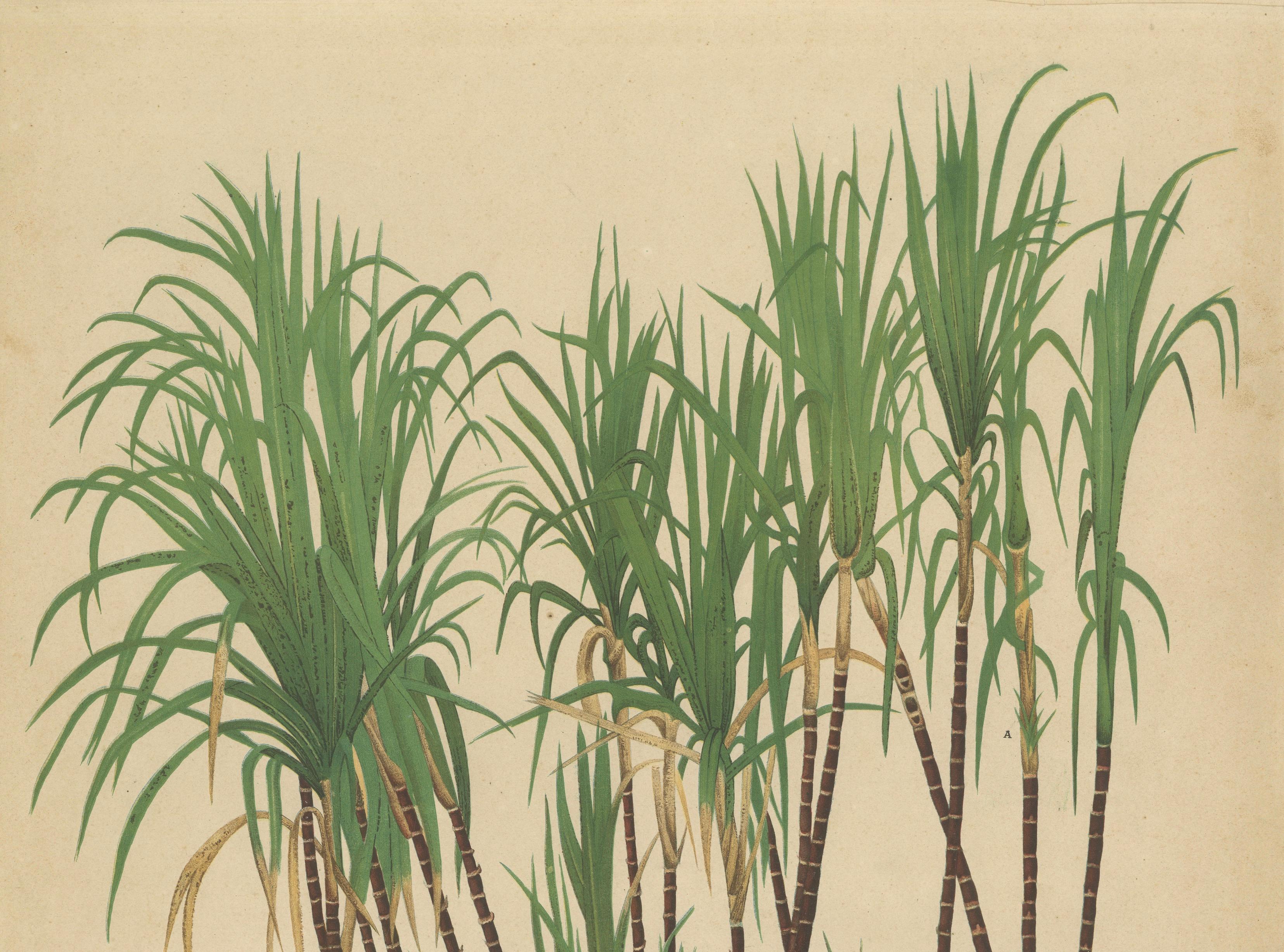
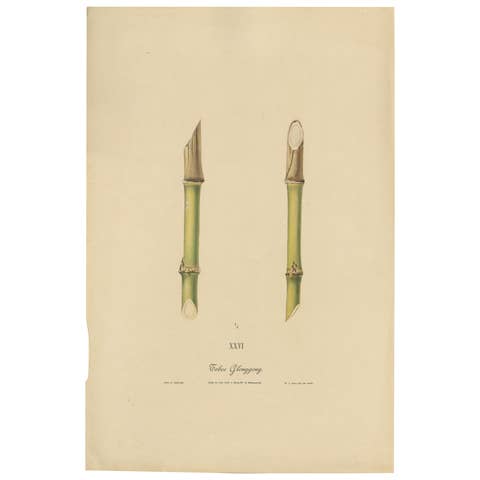
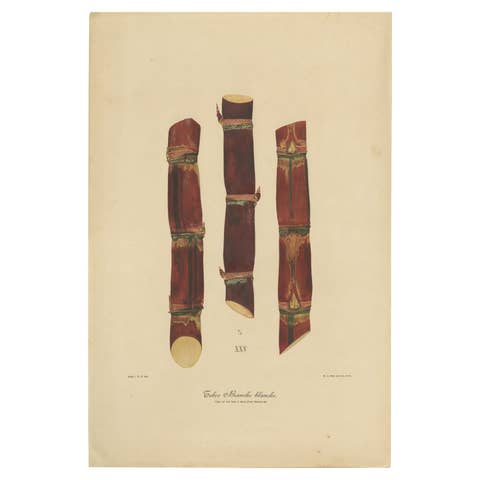
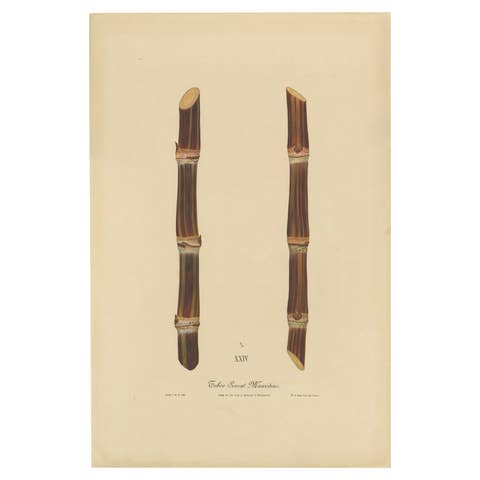
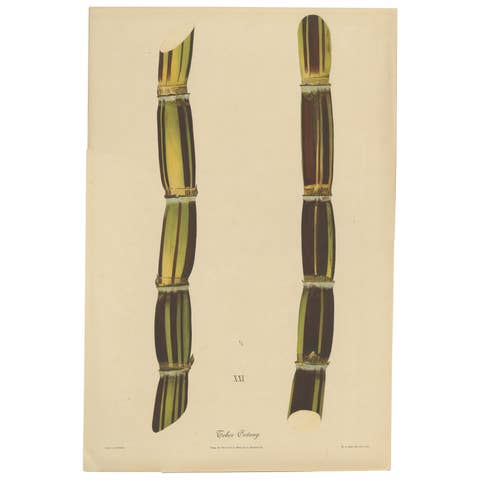
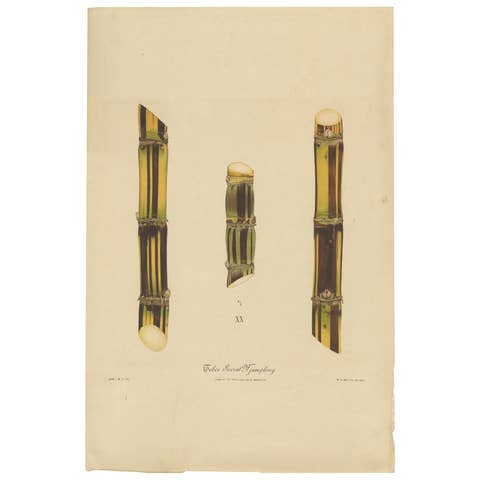
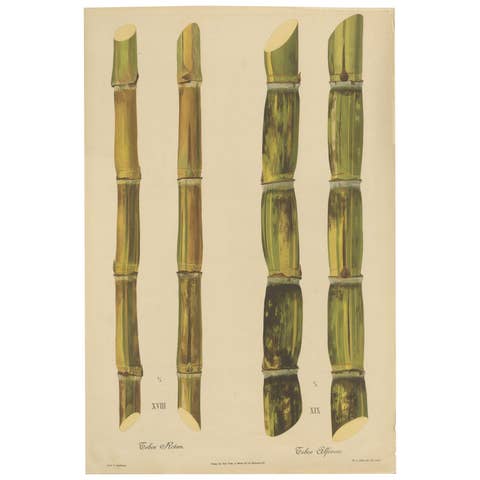
Antique Sugarcane Botanical Chromolithograph, Teboe Goela, Java 1892
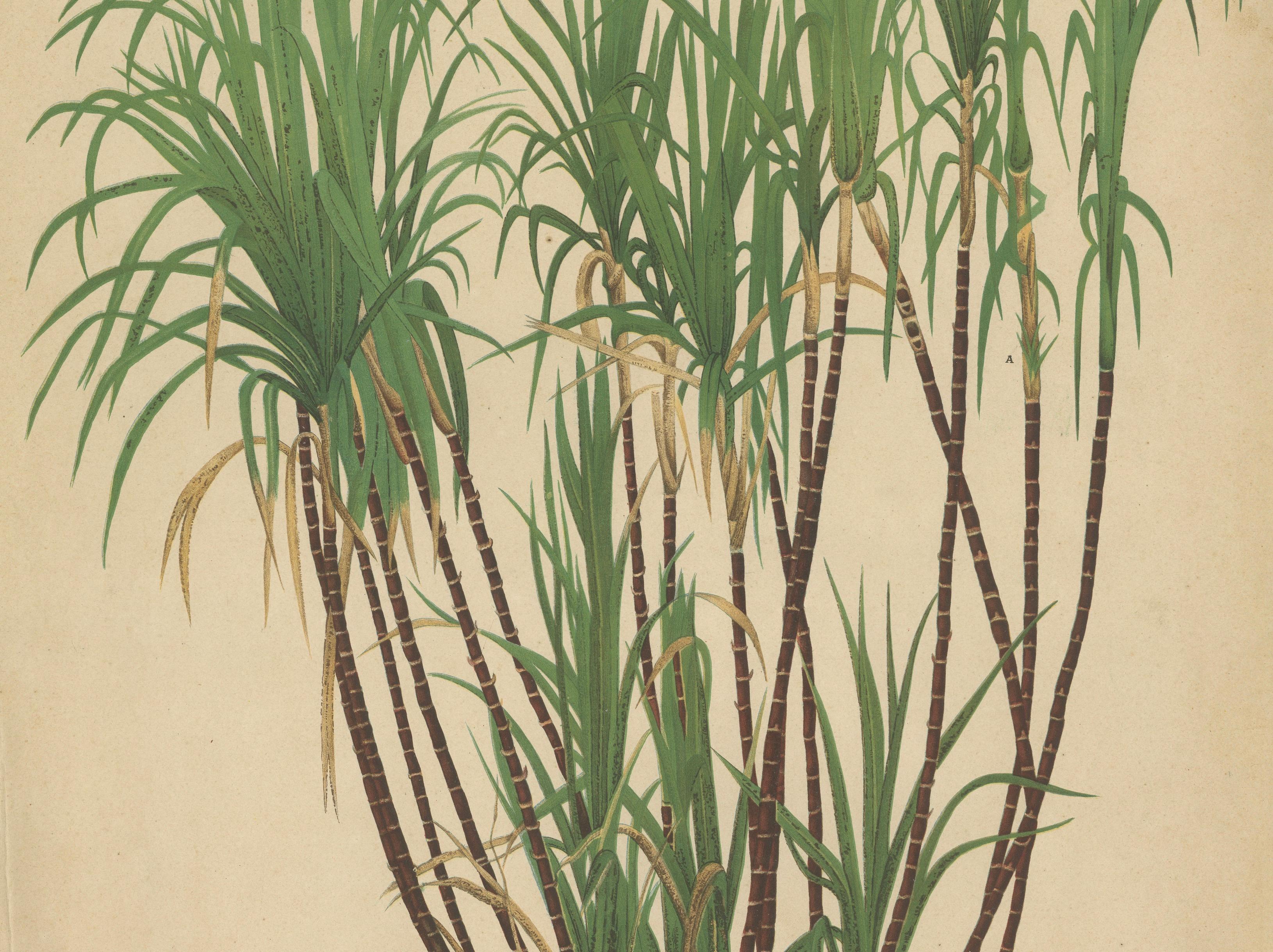
This large and visually commanding chromolithograph depicts Teboe Goela, a cultivated sugarcane variety, shown as a complete plant with stalks, leaves, and root structure. Issued in Berlin in 1892 as part of Friedrich Soltwedel’s rare botanical study Formen und Farben von Saccharum officinarum L. und verwandten Arten, the plate exemplifies late-19th-century scientific illustration at its most decorative and refined.
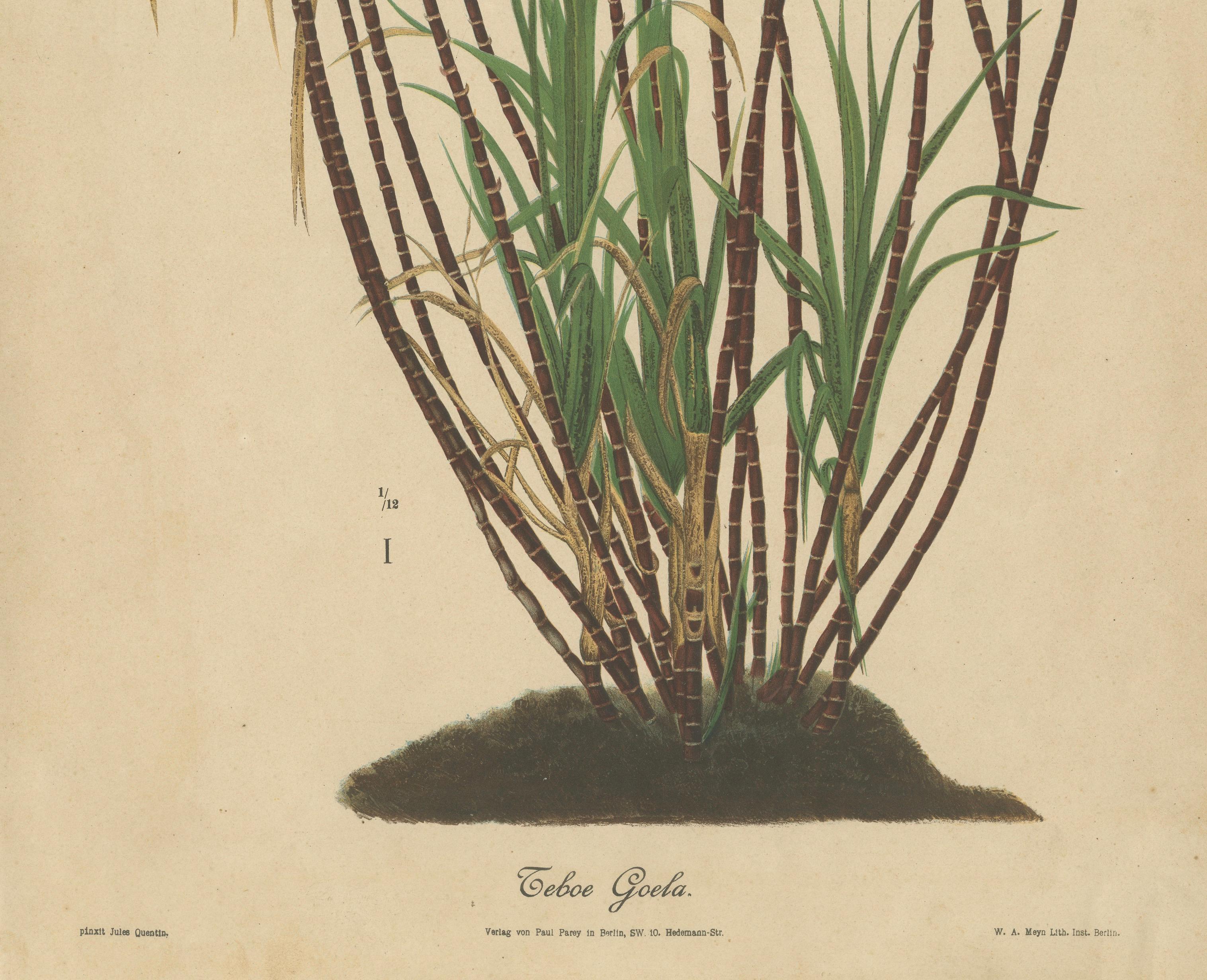
The composition presents multiple canes emerging from a shared root system, rendered with remarkable attention to structure, colour variation, and botanical accuracy. The vertical rhythm of the segmented stalks, combined with the elegant spray of long, narrow leaves, creates a strikingly modern visual effect that translates exceptionally well to contemporary interiors. The warm greens and soft ochres of the chromolithography are subtly modulated, giving the image both depth and calm balance.
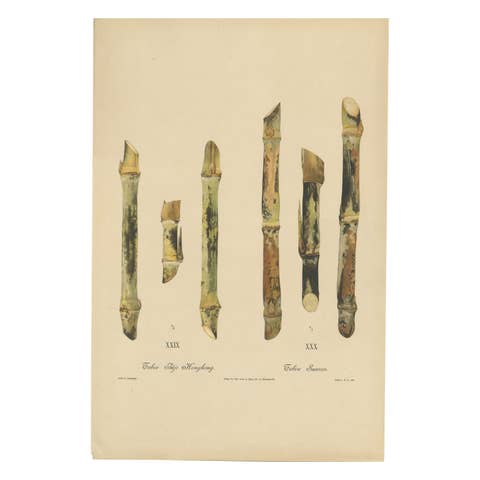
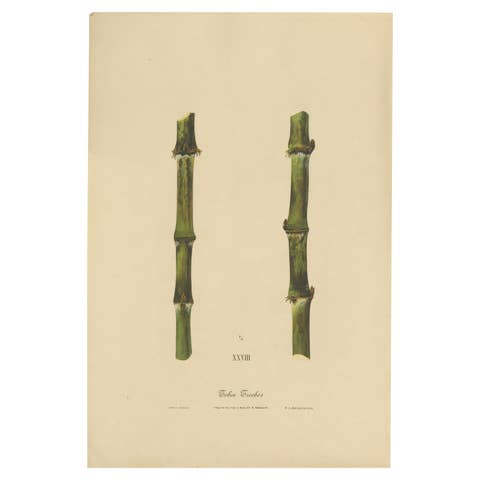
These plates were produced using high-quality chromolithography by W. A. Meyn, one of the leading German lithographic workshops of the period, and published by Paul Parey in Berlin. The work was intended as a visual atlas for agricultural and botanical study, documenting sugarcane varieties cultivated across Java and other colonial regions. Today, the plates are increasingly sought after for their strong graphic qualities and their connection to the global history of sugar production, trade, and plantation agriculture.
This example is particularly desirable as a standalone wall piece because it depicts the full plant rather than isolated cane segments. It works equally well in a classic interior, a library or study, or a modern setting where its tall, architectural form can be appreciated at scale.
Condition report:
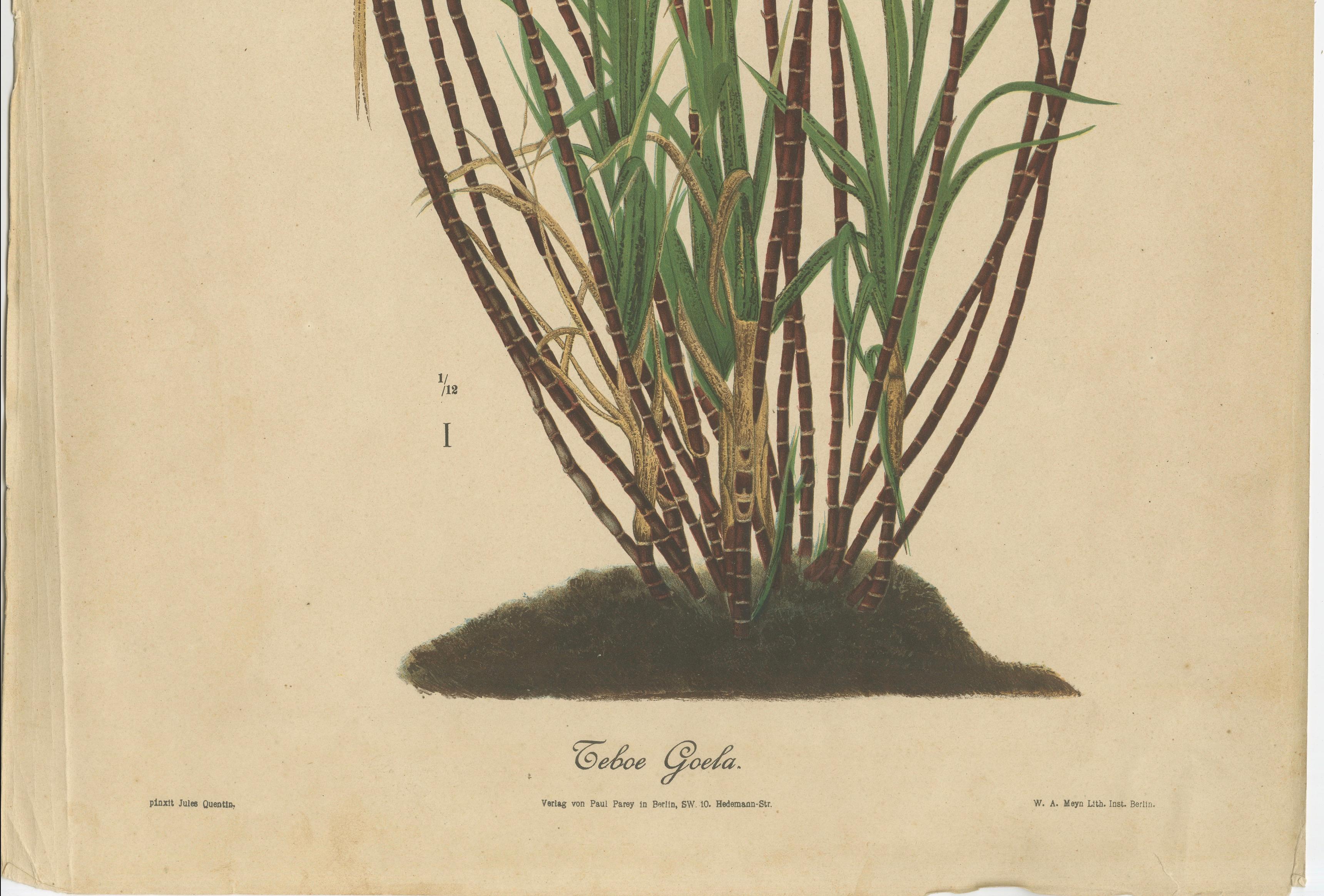
Original chromolithograph on paper. Mild overall toning consistent with age, with light scattered spotting and faint edge wear, mostly confined to the margins. Image area remains clean and well preserved. No tears or losses. Plate margins intact.
Framing tips:
This print benefits from emphasizing its verticality. A slim black or dark walnut frame paired with an ivory or light parchment mat will enhance contrast and keep the focus on the plant structure. For a more contemporary look, consider a narrow natural oak frame with a soft off-white mat. Allow generous margins rather than cropping tightly, as the white space enhances the graphic impact.
Technique: Chromolithograph
Maker: W. A. Meyn after Friedrich Soltwedel, Berlin, 1892