About this sheet
Antique Sugarcane Chromolithograph Pair, Teboe Tjio Hongkong & Saroer, 1892
Description
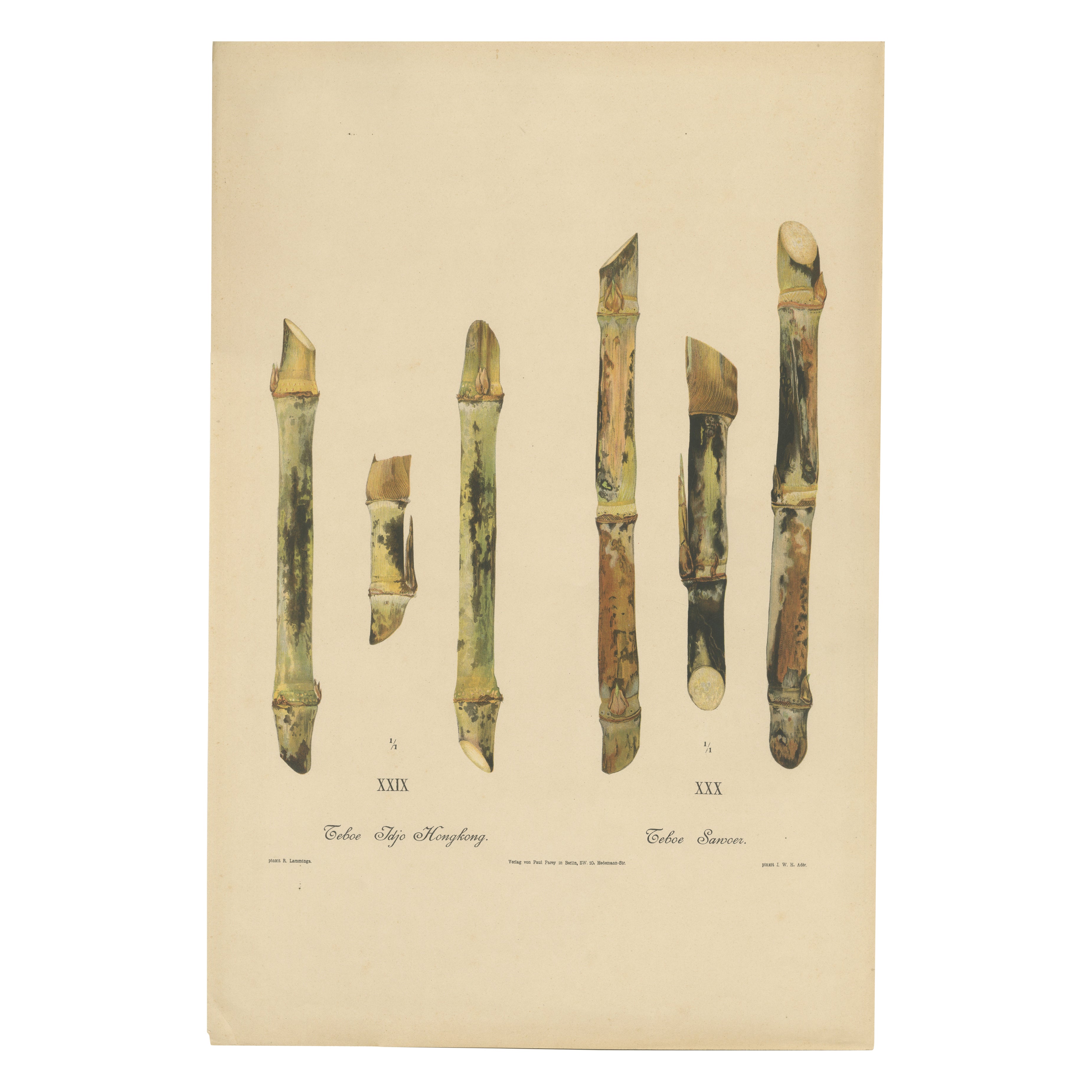
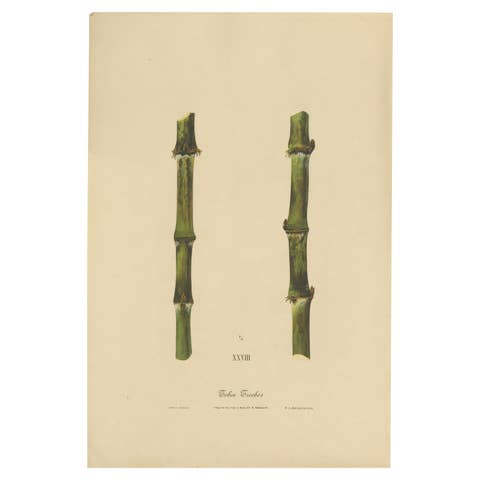
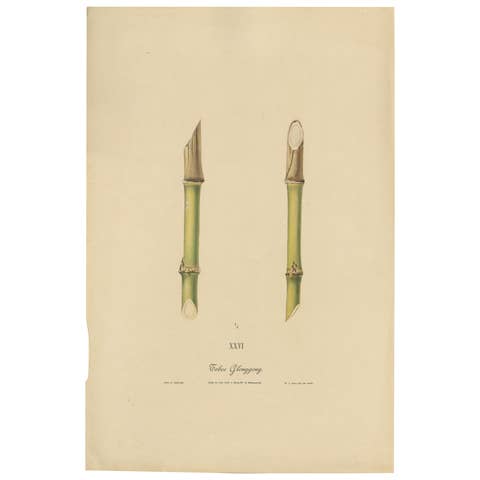
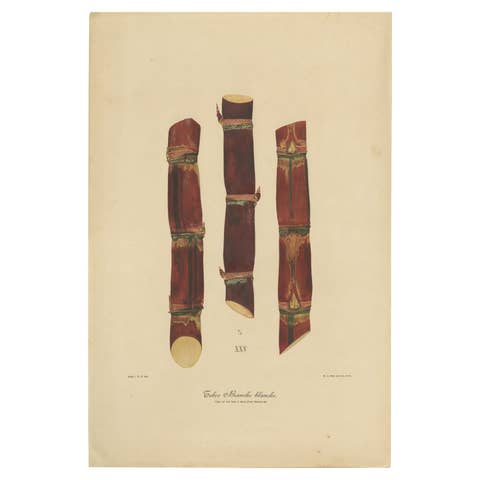
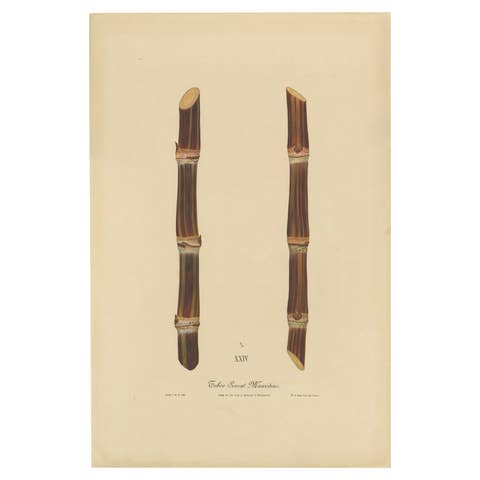
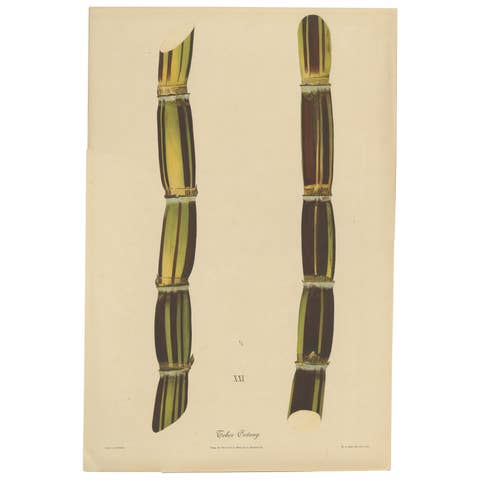
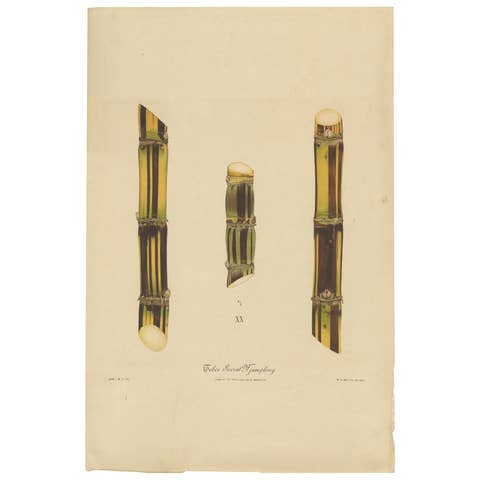
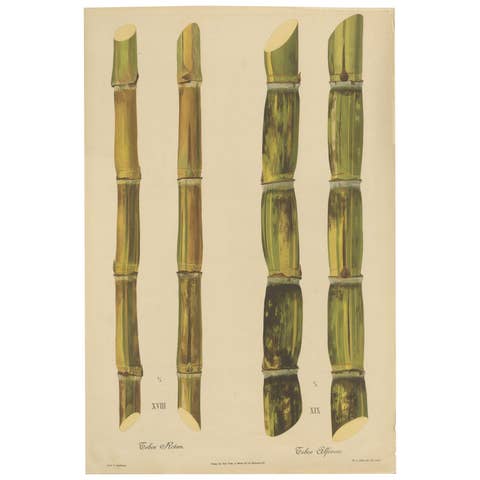
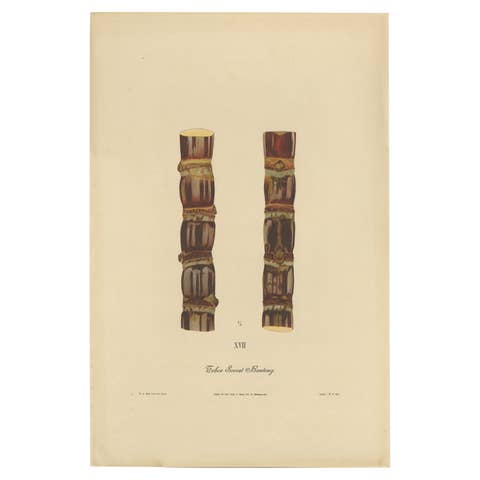
This large chromolithographic plate presents two distinct sugarcane varieties and was published in Berlin in 1892 as part of Friedrich Soltwedel’s important botanical study Formen und Farben von Saccharum officinarum L. und verwandten Arten. Printed by W. A. Meyn, the sheet exemplifies the precision and clarity of late nineteenth-century agricultural illustration.
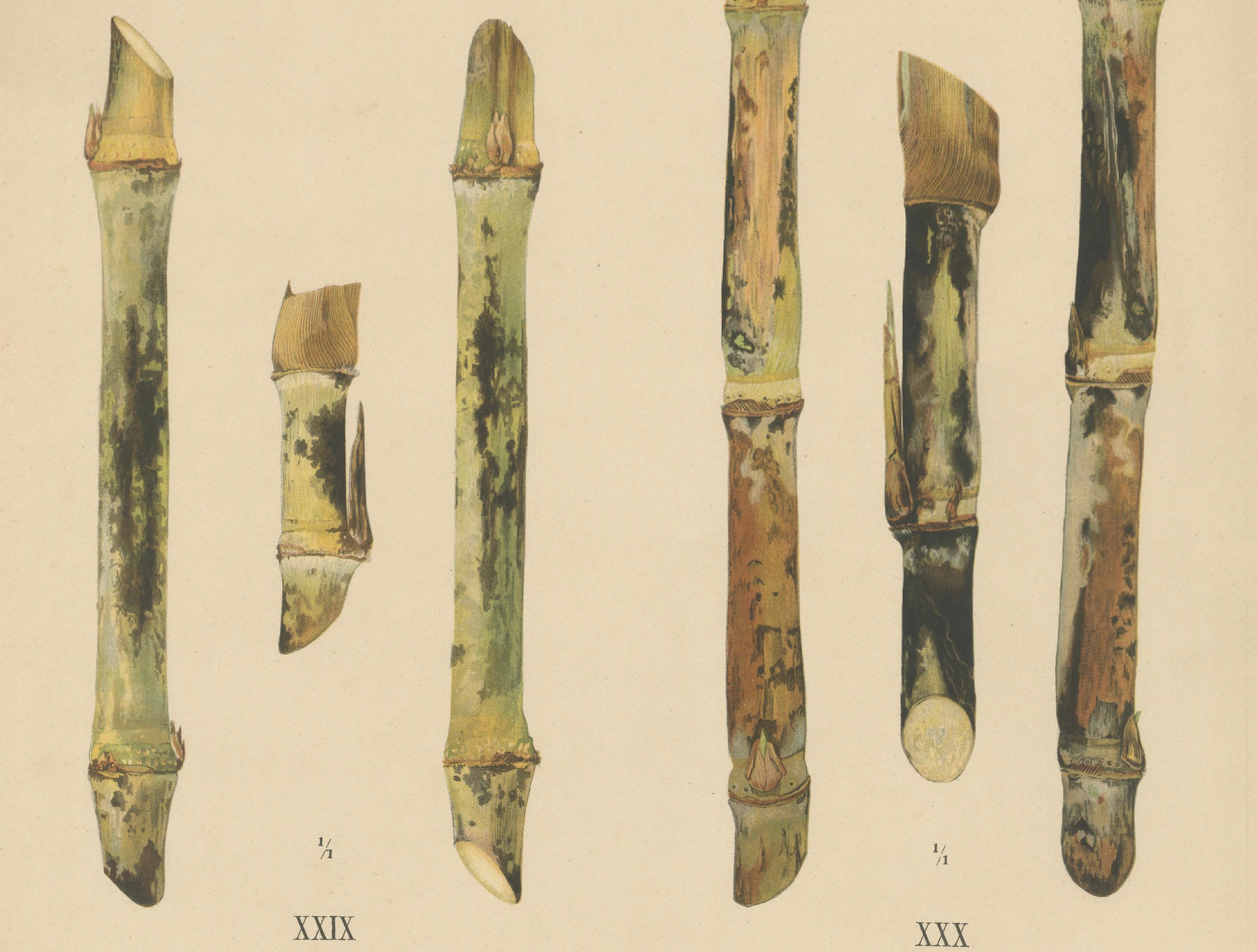
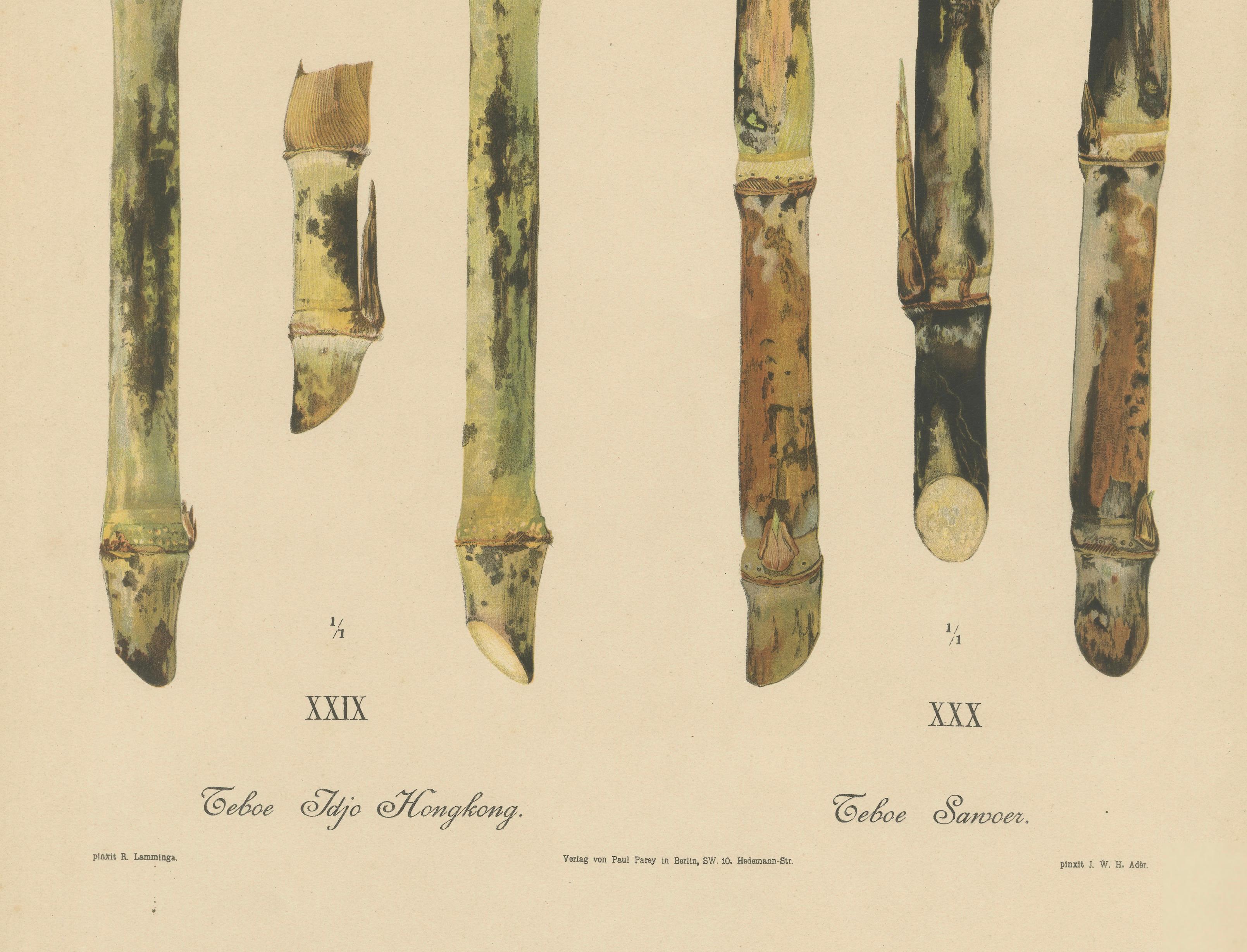
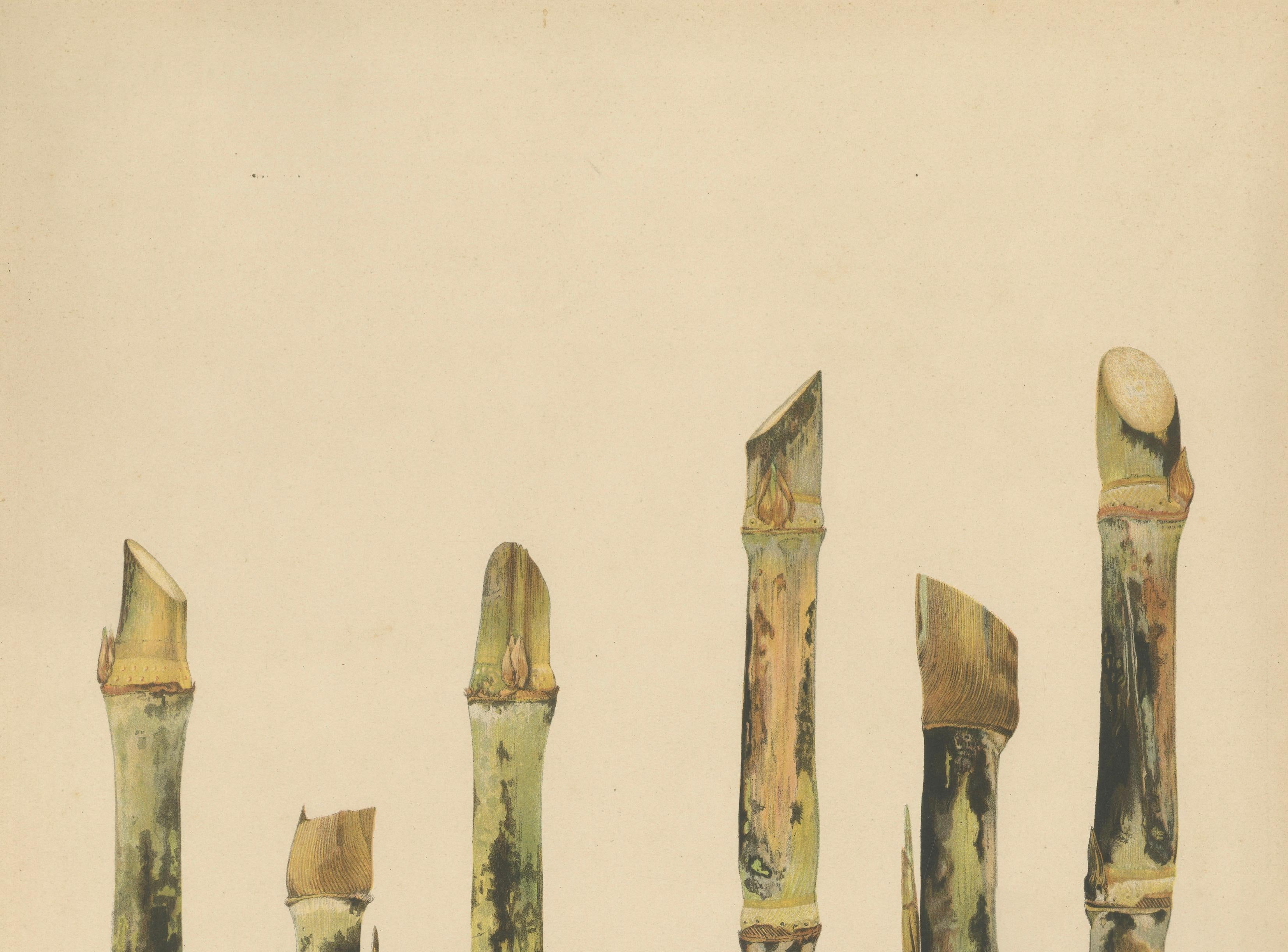
The plate combines Plate XXIX, Teboe Tjio Hongkong, shown on the left, and Plate XXX, Teboe Saroer, shown on the right. Each variety is depicted through multiple cut cane sections, allowing close comparison of colour, internode length, surface texture, and node structure. The two varieties differ subtly in tone and form, with Teboe Tjio Hongkong rendered in lighter green hues with mottled surface markings, while Teboe Saroer displays deeper, more variegated colouring and more pronounced segmentation.
These paired plates reflect the comparative purpose of Soltwedel’s work, documenting sugarcane varieties cultivated in Java and the wider colonial network, including types associated with East Asia. Issued separately from the accompanying text volume, the chromolithographic plates are now scarce, particularly intact paired sheets such as this.
With its balanced left-right composition and vertical rhythm, this plate works especially well as a decorative object when framed as a single large statement piece, appealing to collectors of botanical prints, historians of agriculture, and interior designers seeking refined scientific imagery with historical depth.
Condition report
One plate in very good condition for its age. Light, even age toning and minor surface marks consistent with atlas plates. Slight marginal wear. Colours remain well preserved. Plate marks visible. No significant tears or losses.
Framing suggestions
Best framed as a single sheet to preserve the paired composition. A dark walnut or ebonized frame with a wide ivory or parchment mat creates a museum-style presentation. Alternatively, a muted antique gold frame adds warmth while maintaining a refined botanical character.
Technique: Chromolithography
Maker: W. A. Meyn after F. Soltwedel, Berlin, 1892