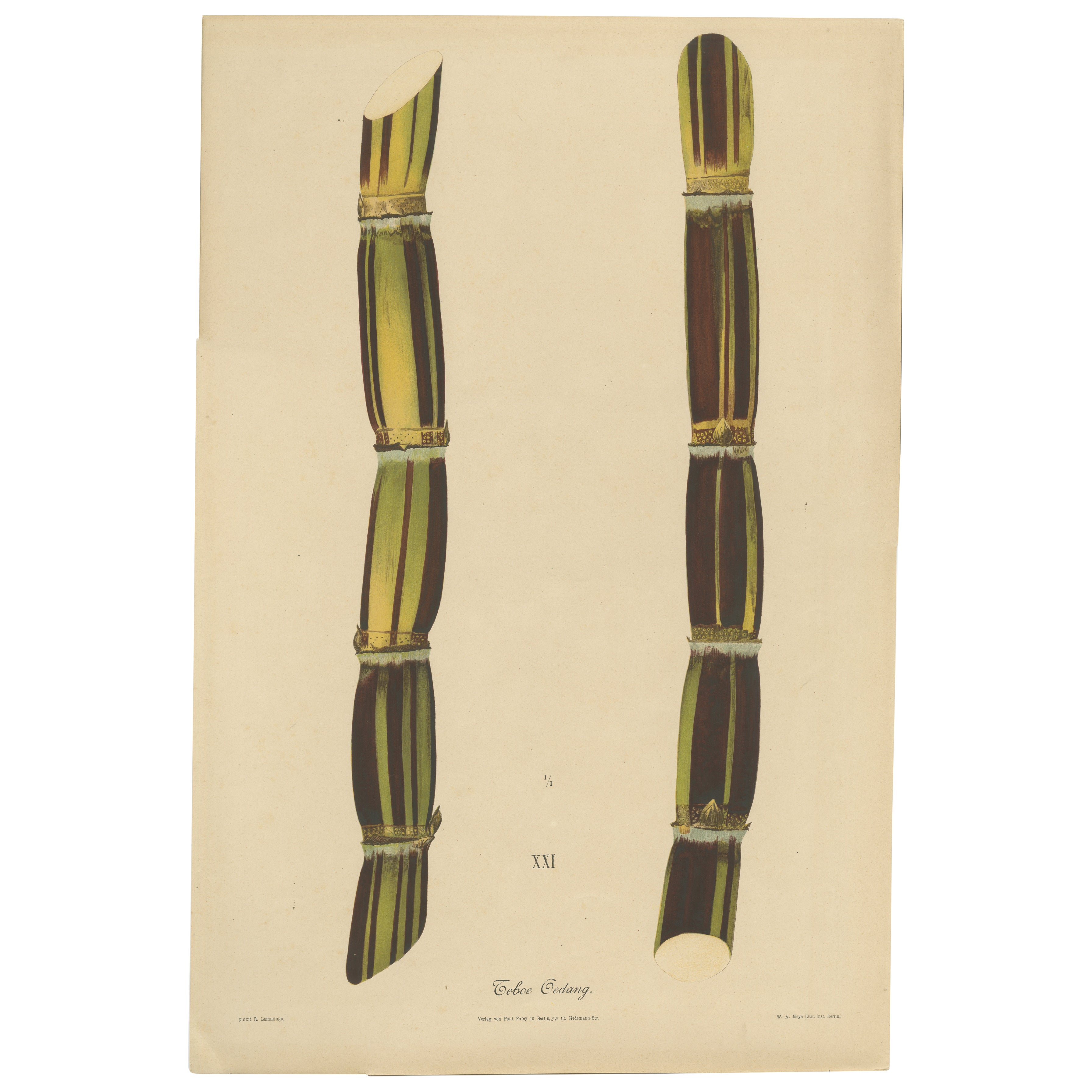
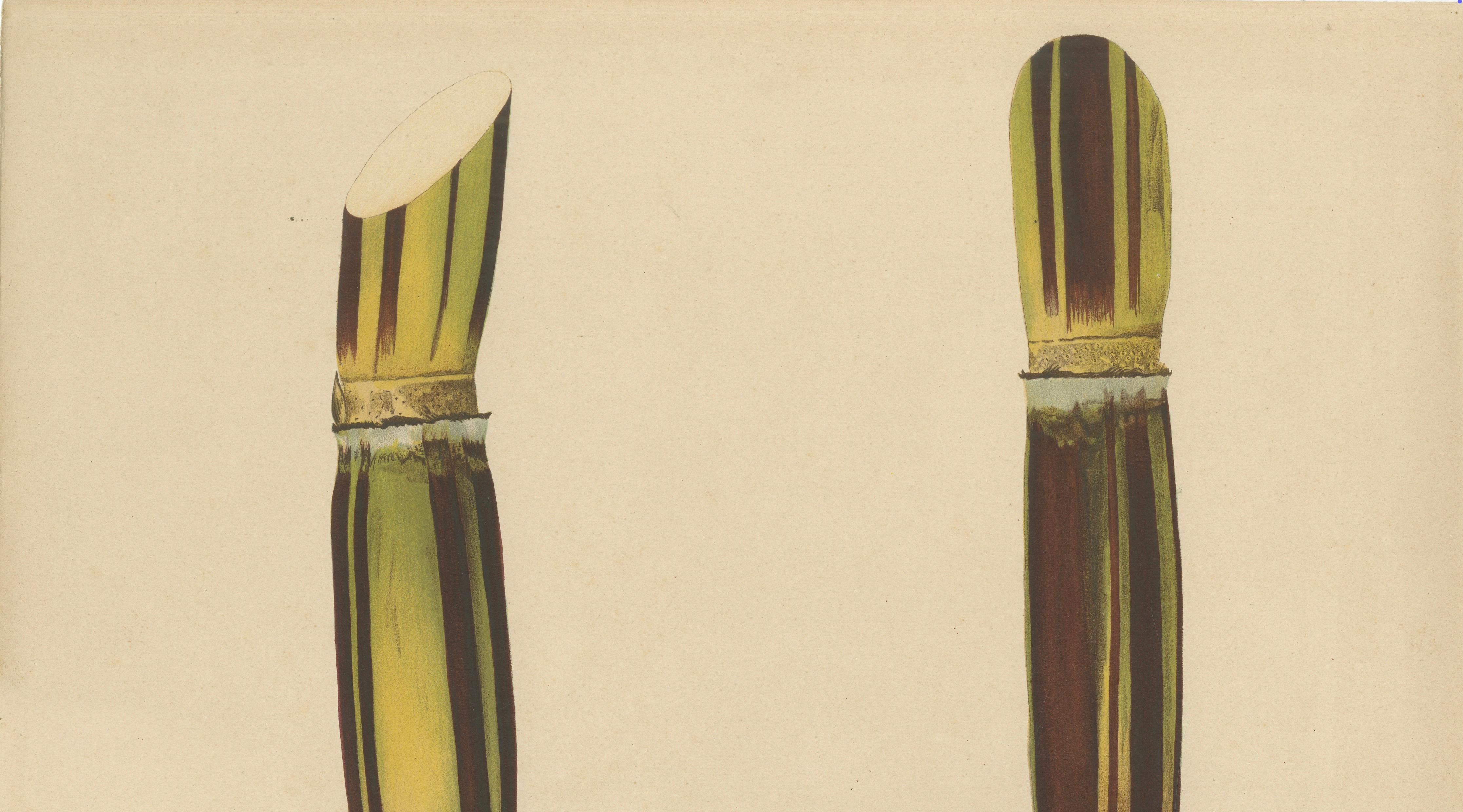
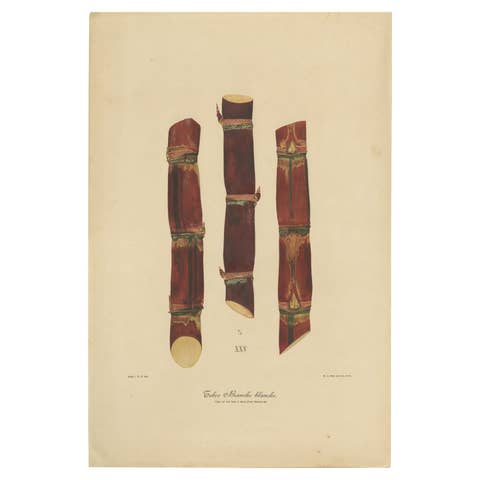
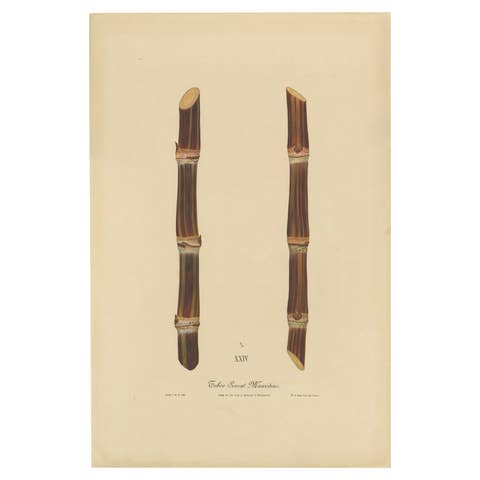
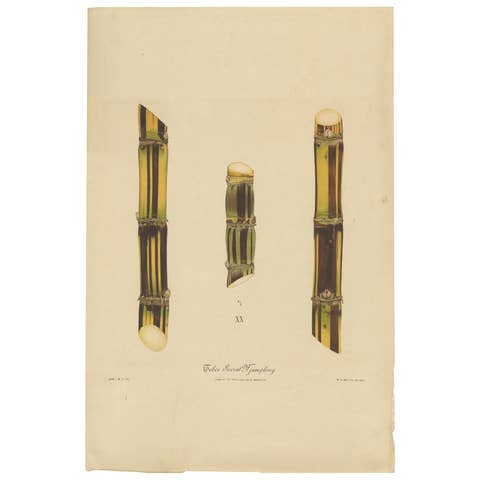
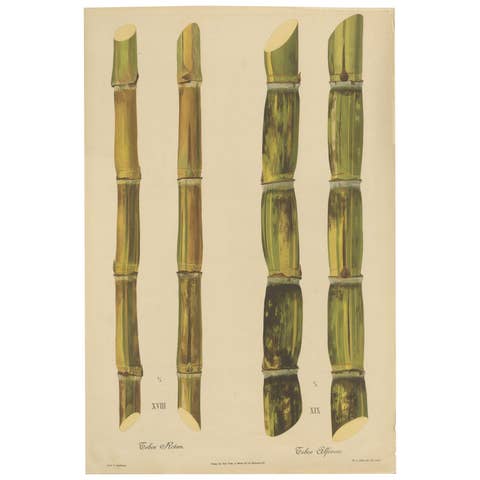
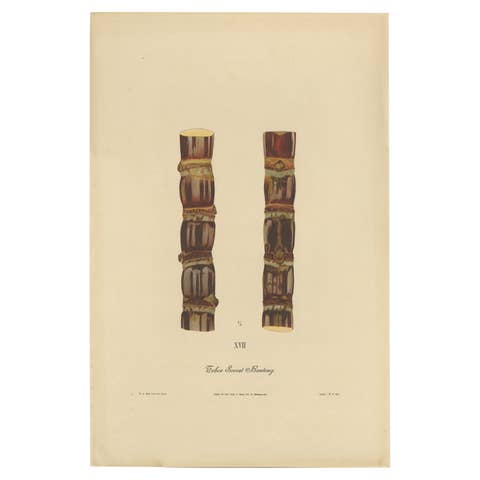
One of a kind: this is the sheet in the photographs. Ships from Langweer, the Netherlands.
Date
1892
Sheet size
60 × 40 cm (23.6 × 15.7 in)
Condition
Good
Reference
BG-14180-14
Condition
One plate in very good condition for its age. Light, even age toning and minor surface marks consistent with atlas plates. Slight marginal wear. Colours remain fresh and well preserved. Plate mark visible. No significant tears or losses.
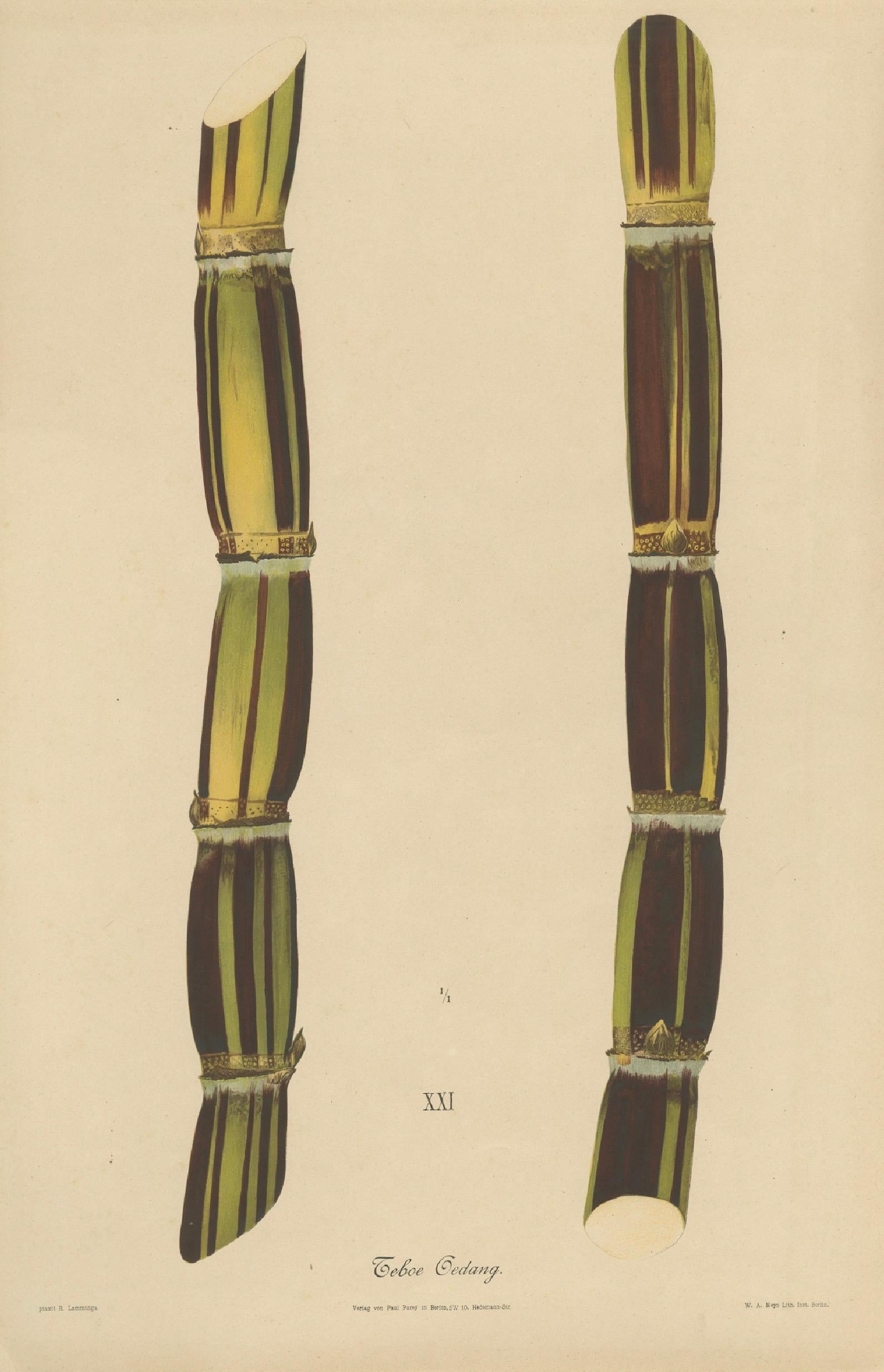
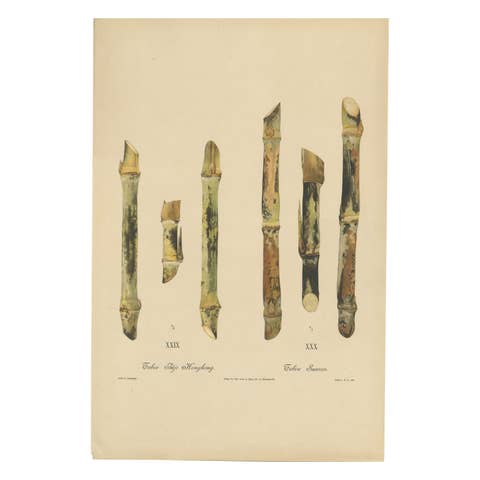
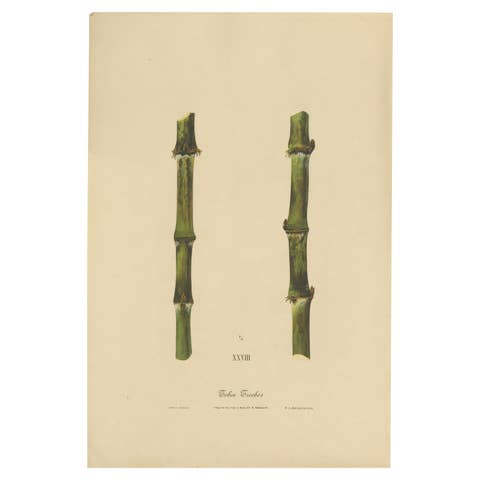
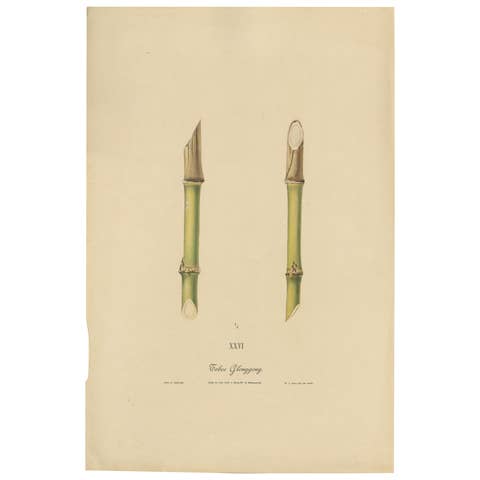
Description This large chromolithographic plate depicts a single named sugarcane variety cultivated in Java and was published in Berlin in 1892 as part of Friedrich Soltwedel’s botanical study Formen und Farben von Saccharum officinarum L. und verwandten Arten. Produced by W. A. Meyn, the plate reflects the high technical and artistic standards of late nineteenth-century agricultural illustration.
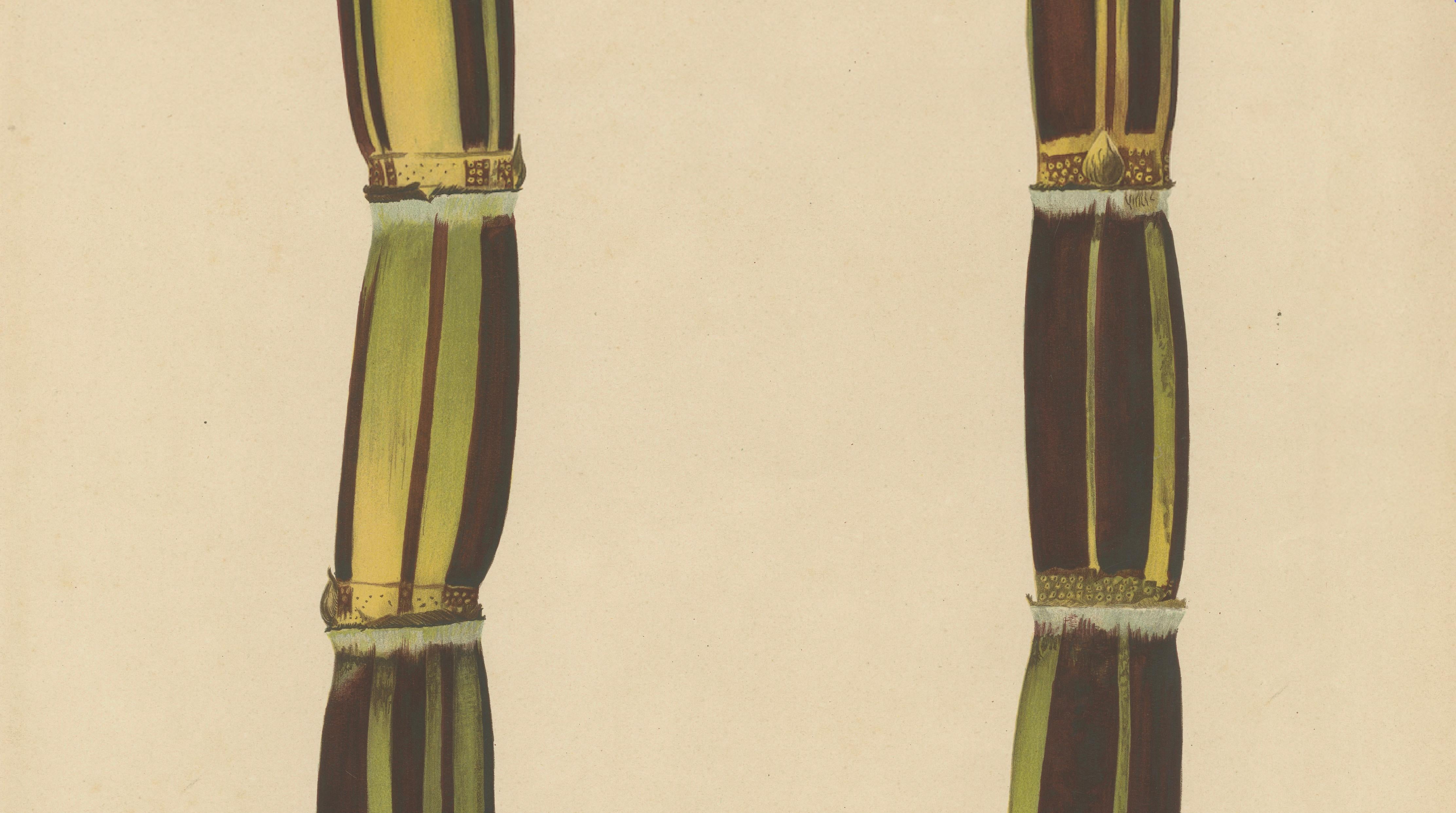
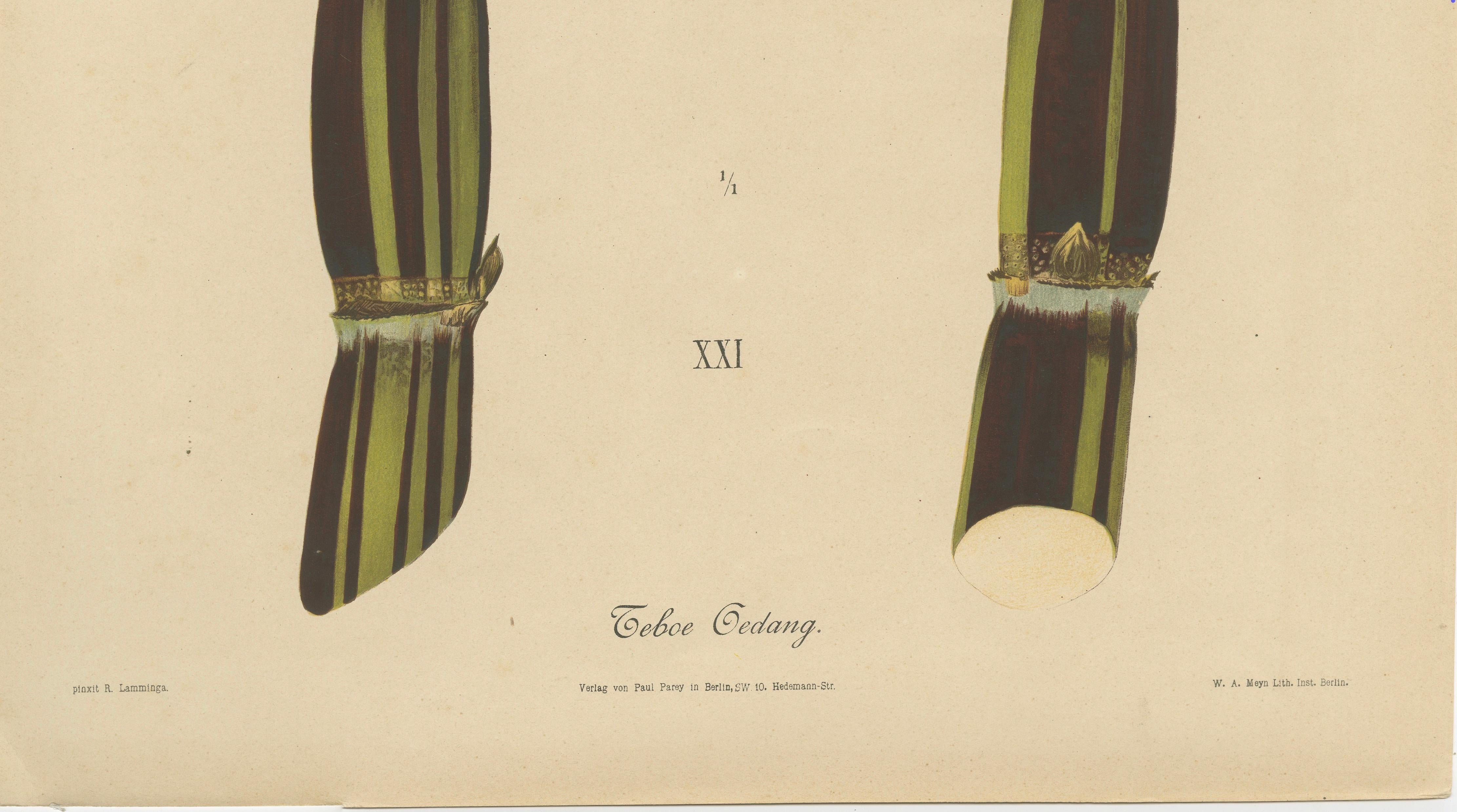
The sheet illustrates Plate XXI, Teboe Gedang. The cane is shown in full height, rendered in vivid yellow-green tones with strong vertical striping in darker green and brown. The clear depiction of nodes, internodes, and surface texture emphasizes varietal characteristics important for botanical comparison and agricultural study, while the restrained background gives the image a bold, graphic presence.
These plates were created during a period of systematic botanical research in the Dutch East Indies, when sugarcane cultivation was of major economic and agricultural importance. Soltwedel’s atlas of plates was issued separately from the accompanying text volume and is now scarce, particularly in well-preserved condition.
With its tall vertical format and striking striped coloration, this plate functions equally well as a collector’s item and as a decorative statement piece, especially suited to interiors seeking large-scale botanical imagery with rhythm and colour. This plate completes the full illustrated sequence of the Soltwedel sugarcane series.
Condition report One plate in very good condition for its age. Light, even age toning and minor surface marks consistent with atlas plates. Slight marginal wear. Colours remain fresh and well preserved. Plate mark visible. No significant tears or losses.
Framing suggestions Best framed vertically. A dark walnut or ebonized frame with an ivory or parchment mat creates a refined, museum-style presentation, while a slim antique gold frame enhances the green and yellow striping. Wide matting is recommended to emphasize scale and preserve the original margins.
Technique: Chromolithography Maker: W. A. Meyn after F. Soltwedel, Berlin, 1892