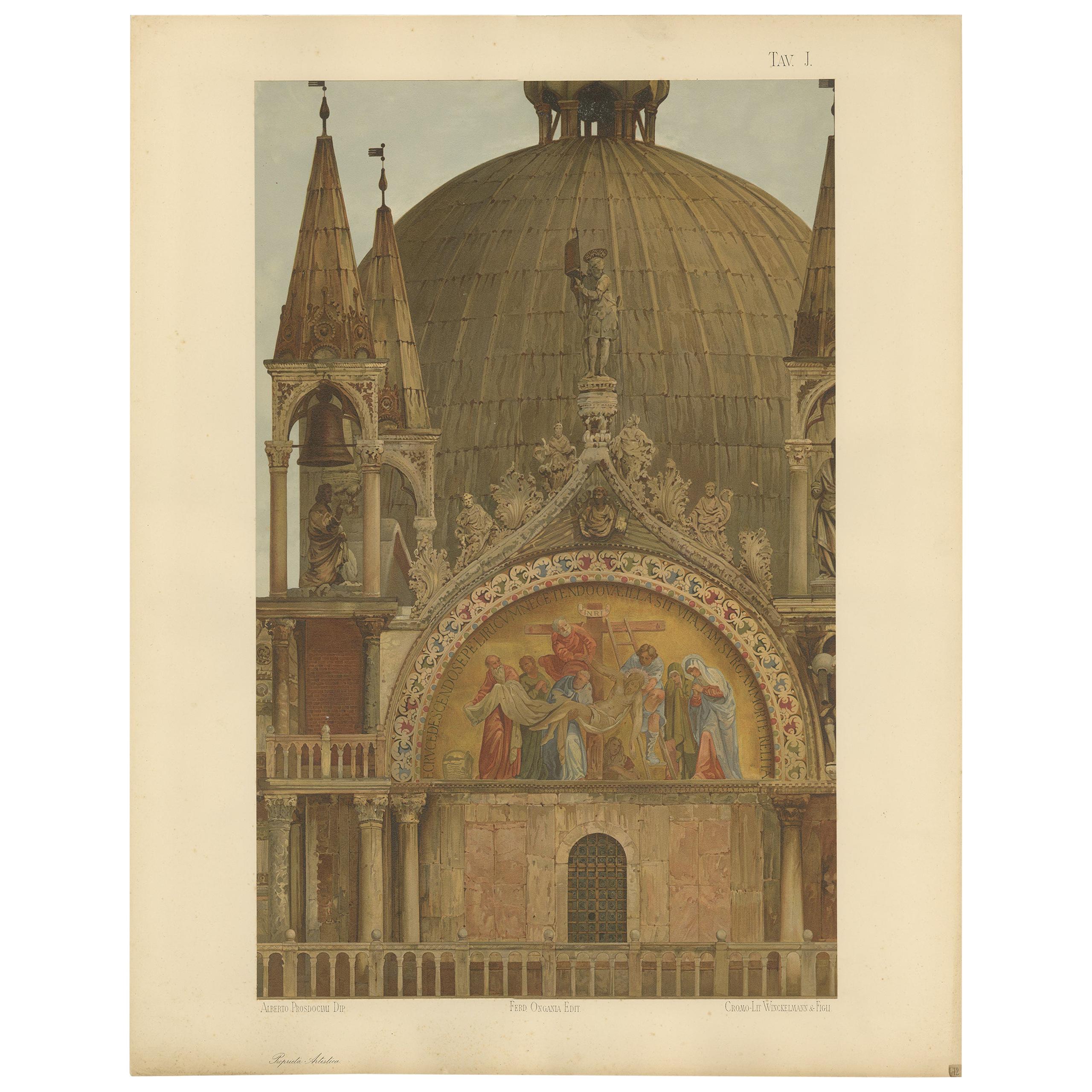
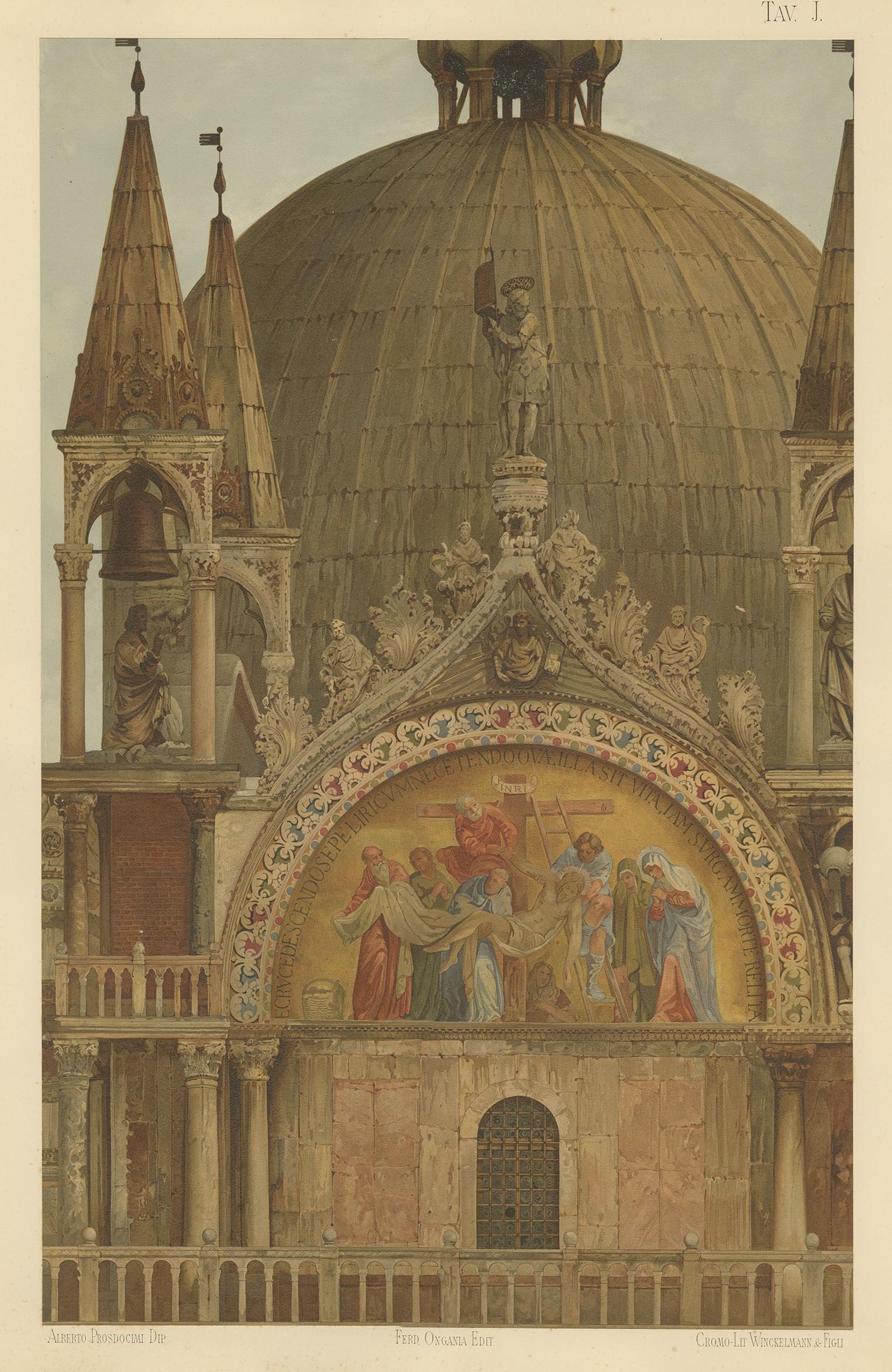
Antique Print of the Portal of Sant'Alipio of the Basilica of San Marco, 1881
€ 1 200
One of a kind: this is the sheet in the photographs. Ships from Langweer, the Netherlands.
Date
1881
Sheet size
71 × 56.5 cm (28.0 × 22.2 in)
Condition
Good
Reference
BGWH-006
Condition
General age-related toning. Some wear and foxing. Blank verso, please study images carefully.
About this sheet
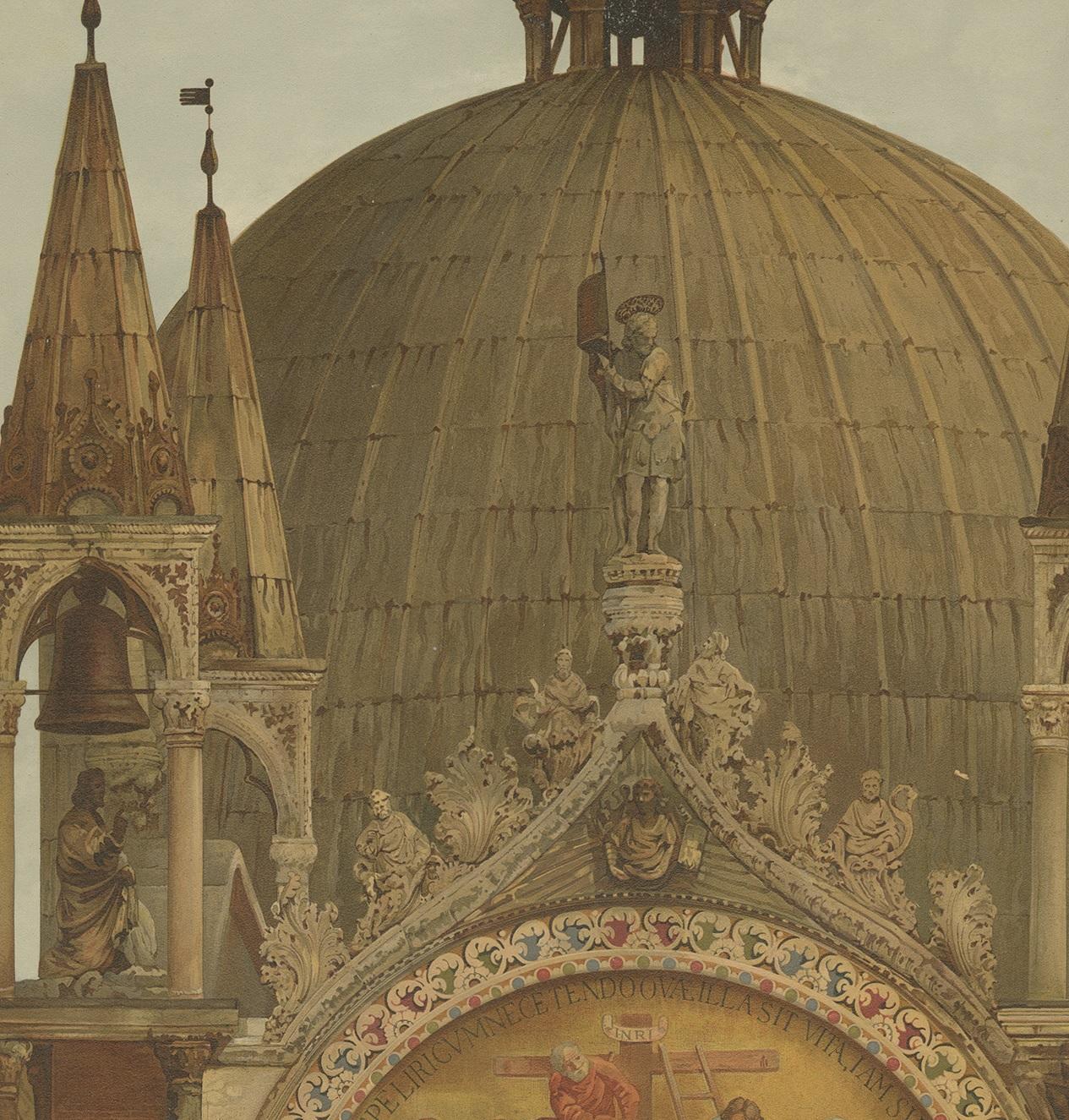
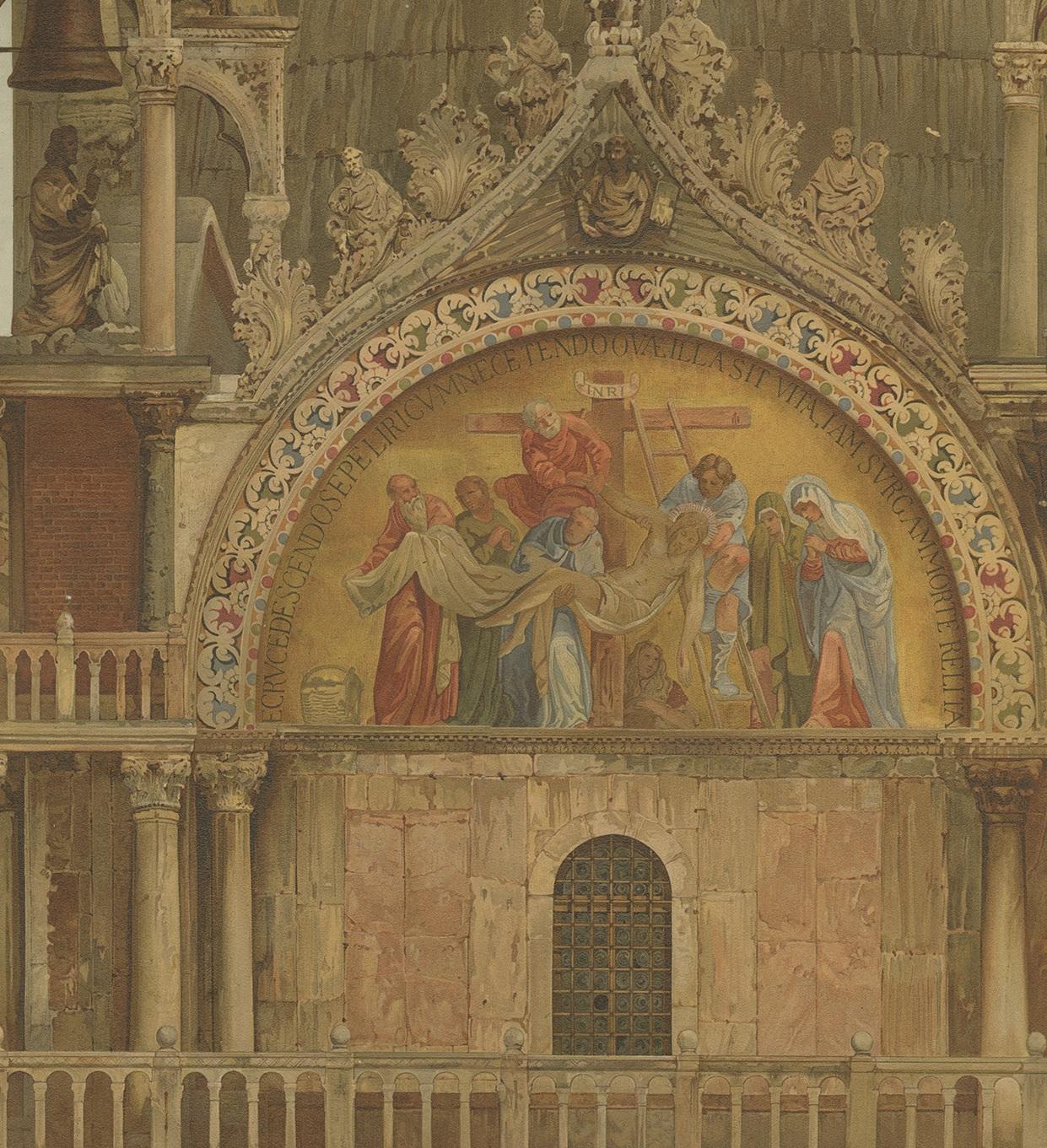
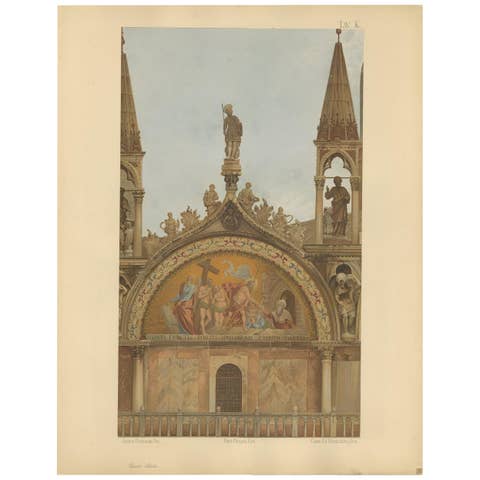
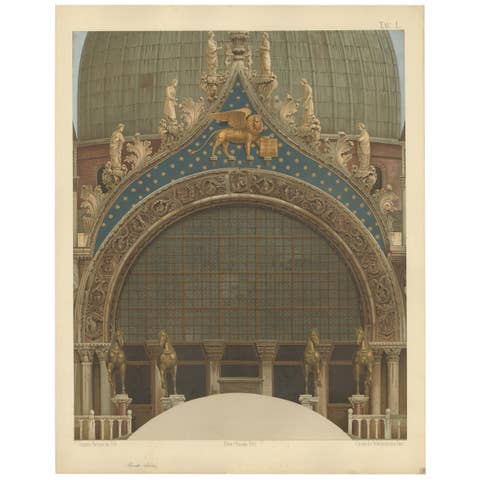
A large chromolithograph of the portal of Sant'Alipio, focusing on the upper part of the Basilica of San Marco in Venice, from Ferdinando Ongania's "Basilica di San Marco in Venezia," published in 1881, is an exquisite piece of art. The chromolithograph is a meticulous and vibrant print that captures the essence of the architectural and decorative elements of the portal.
The upper part of the portal is a rich tableau of the Basilica's ornamental and symbolic features. The artwork presents the detailed mosaics with gold leaf accents, capturing the glimmering effects of light on the glass tesserae that is a significant feature of the Basilica's design. These mosaics depict religious scenes or figures, rendered with a precision that conveys their spiritual significance and artistic beauty.
The intricacy of the stone and marble carvings around the portal would be highlighted, showcasing the skill of Venetian craftsmen. The composition include the archways, columns, capitals, and other sculptural elements that contribute to the portal's grandeur.
As a chromolithograph, this print brings out the portal's textures and colors, reflecting the technology's ability at the time to produce images with depth and a wide range of hues. This printing technique allowed for a nuanced portrayal of shadows and light, emphasizing the depth and the three-dimensional character of the architecture.
Like the main portal chromolithograph, this print from Ongania's collection would not just be a decorative artifact; it would serve as an educational resource, reflecting the dedication of the era to document and celebrate cultural and historical assets. Collectors and enthusiasts of Venetian art and architecture, as well as historians of printmaking, would find value in this work for its artistic merit and as a historical representation of one of the most treasured sites in Venice.