Antique Print of the Main Portal of the Basilica of San Marco, 1881
€ 1 200
Original antique · The actual sheet photographed · Certificate of authenticity on request · Sold unframed · Worldwide shipping from € 15 (rates)
Date
1881
Sheet size
71 × 56.5 cm (28.0 × 22.2 in)
Condition
Good
Reference
BGWH-010
What the condition grades mean
Excellent
Bright and clean, with no faults worth mentioning.
Very good
Only light signs of age, such as faint toning.
Good
Normal signs of age for a sheet of this period: toning, some foxing, small marks or neat old repairs.
Fair
Clear faults such as staining, tears or repairs, priced to match.
Every fault we see is written in the condition note, and the whole sheet is shown uncropped in the photos.
Condition
General age-related toning. Some wear and foxing. Blank verso. Please review the images for further condition details.
About this sheet
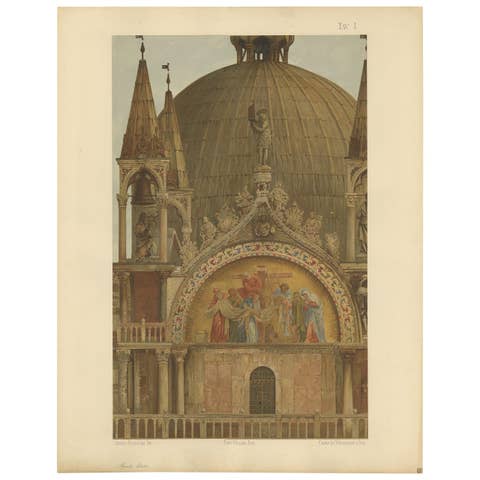
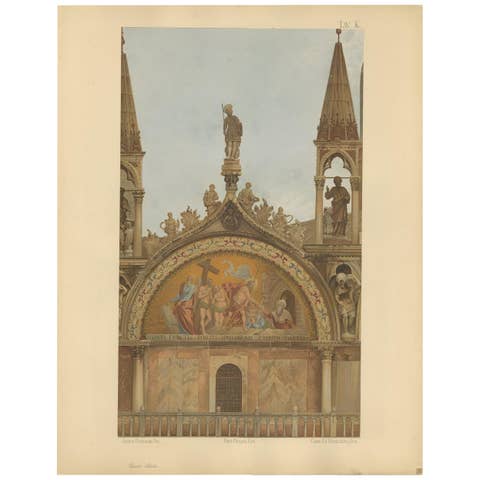
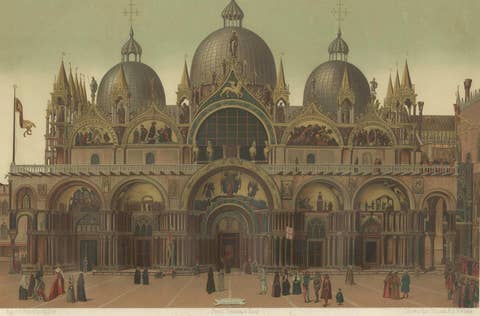
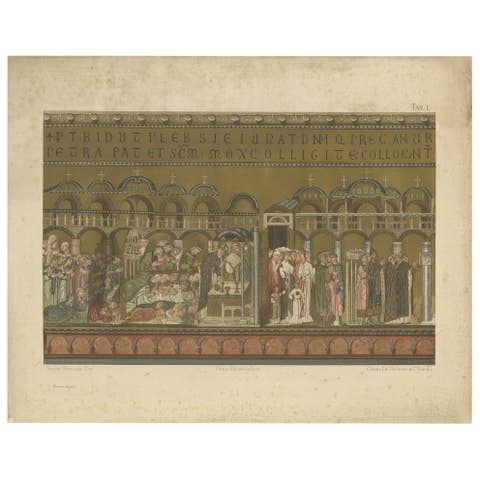
A large chromolithograph of the main portal of the Basilica of San Marco in Venice, Italy, originating from Ferdinando Ongania's "Basilica di San Marco in Venezia" published in 1881, wis a striking representation of this iconic example of Italo-Byzantine architecture.
Chromolithography, a method for making multi-color prints, was a significant art form of the 19th century, enabling the reproduction of color photographs with a painterly quality. This process would capture the grandeur and intricate details of the Basilica's portal with rich, vibrant colors, emphasizing the golden mosaics, the elaborate carvings, and the array of sculptures that adorn the church's façade.
The print features the Basilica's famed horses above the portal and the luxurious design elements that make the edifice one of the most recognized symbols of Venetian opulence and power. It also highlights the assortment of marble and stone figures, patterns, and religious iconography that cover the exterior—a visual testament to Venice's historic wealth and artistic heritage.
As a document from Ongania's comprehensive work on the Basilica di San Marco, this chromolithograph would not only be a beautiful art piece but also an important historical record. Ongania's work was known for its meticulous detail and commitment to accuracy, making this print a valuable resource for scholars and admirers of Venetian art and architecture.
Considering the date and origin, this chromolithograph would appeal to collectors and historians, representing a fusion of technological advancement in printmaking and the enduring allure of Venice's architectural marvels. It would stand as a testament to the Basilica's enduring legacy and the painstaking efforts of 19th-century artisans and historians to preserve and celebrate such heritage.