About this sheet
Antique Louvre Sculptures & Institut Ceiling Ornament Prints – Baltard 1803
This rare pair of early 19th-century architectural engravings originates from the important French publication Paris et ses Monuments, mesurés, dessinés et gravés, produced by the architect and engraver Louis-Pierre Baltard and published in Paris in 1803. Baltard’s ambitious work sought to document the architectural treasures of Paris with exceptional precision, combining artistic refinement with scholarly measurement and documentation. The publication was dedicated to Napoleon Bonaparte and stands as one of the earliest systematic visual surveys of the monuments of Paris.
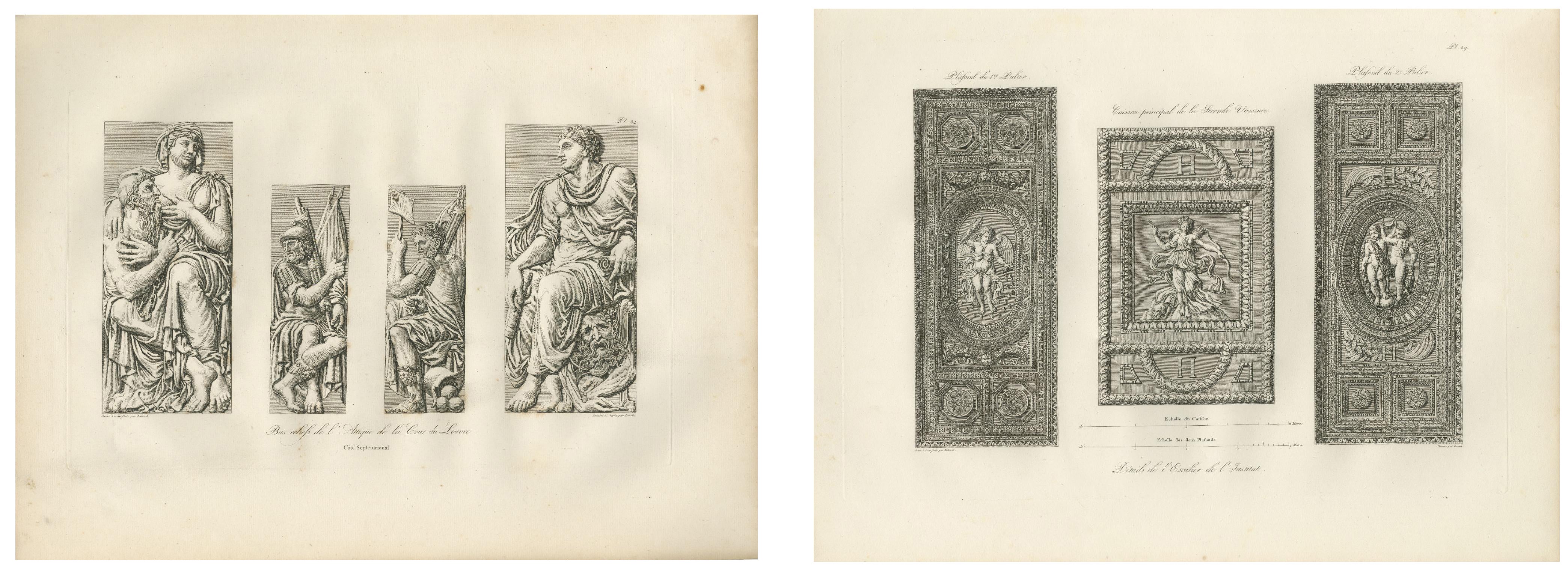
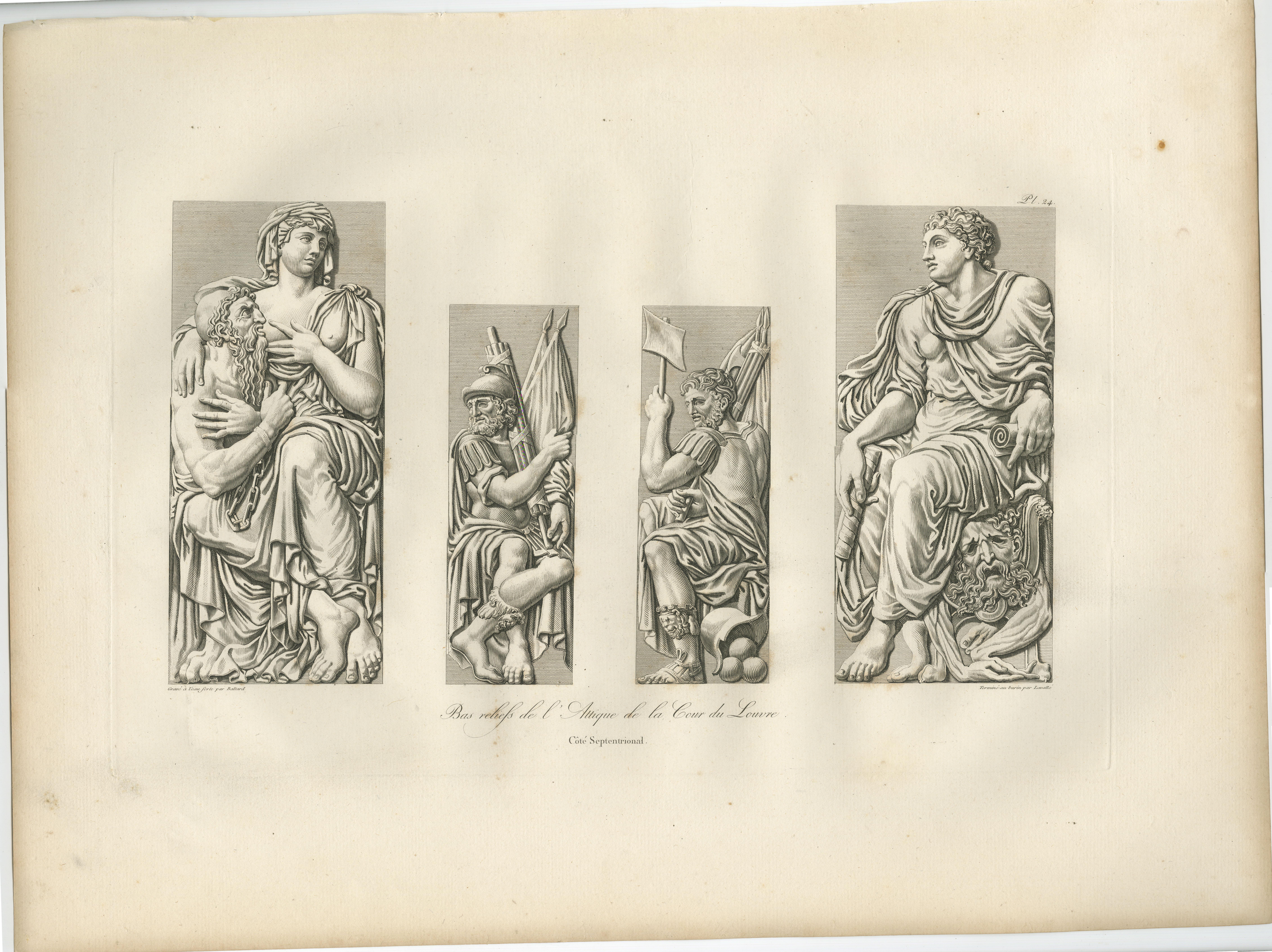
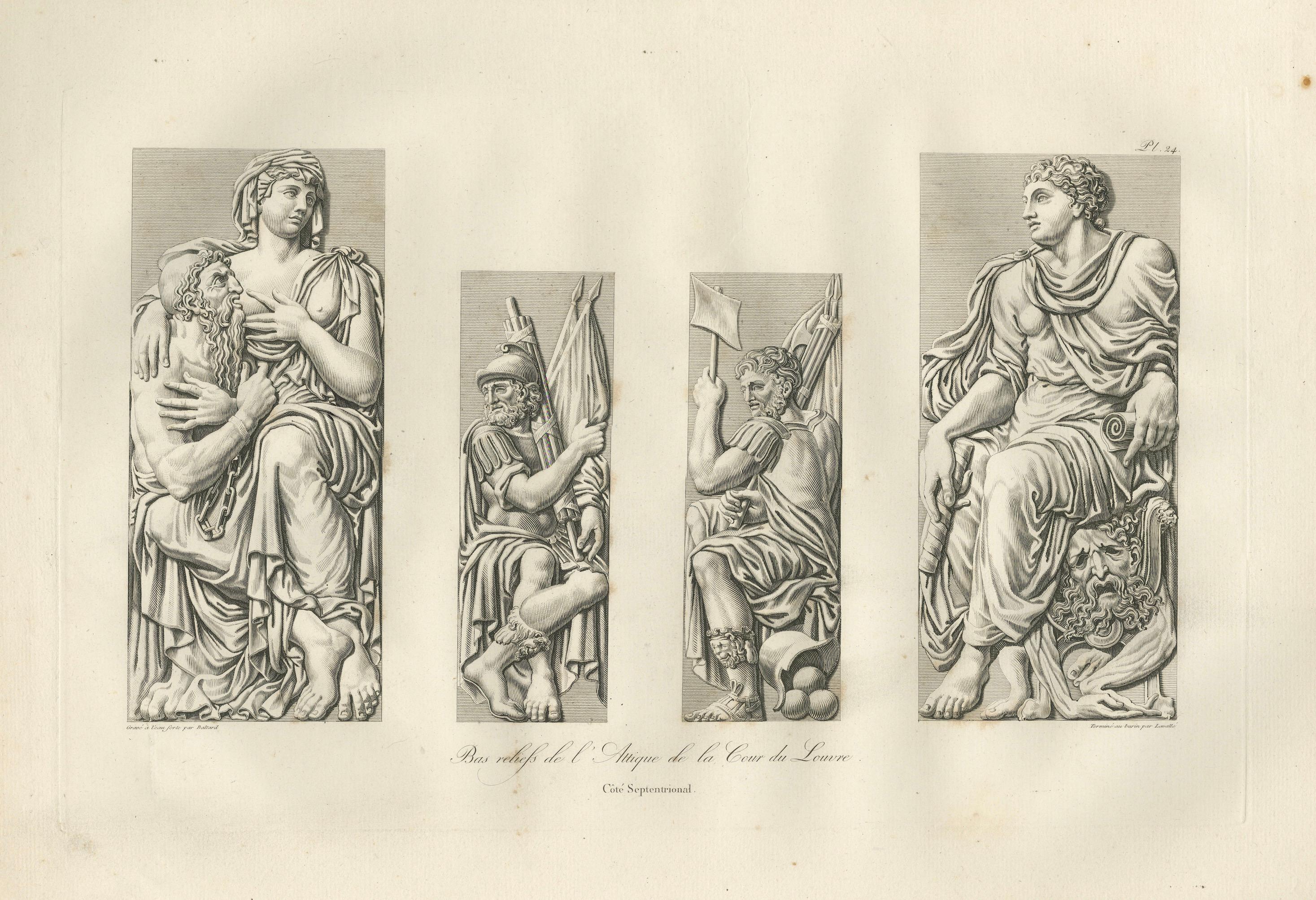
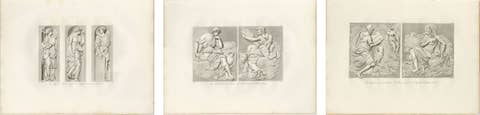
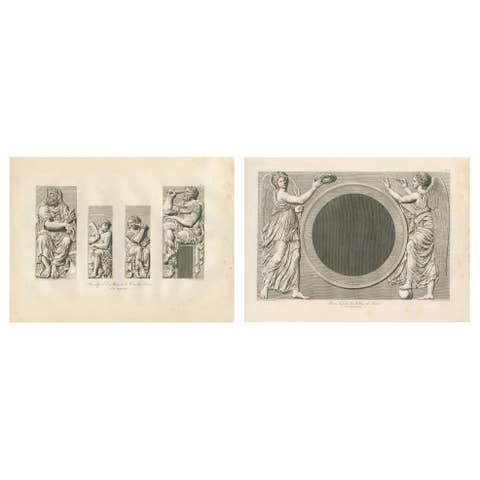
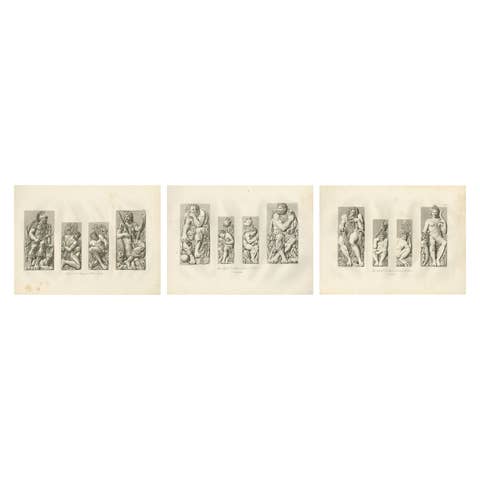
The first engraving illustrates four sculptural figures from the Bas-reliefs de l’Attique de la Cour du Louvre, the attic bas-reliefs decorating the inner courtyard of the Louvre Palace. These sculptural decorations were designed during the French Renaissance for the celebrated Lescot Wing of the Louvre, which served as the royal residence for King Francis I and later French monarchs. The reliefs are attributed to the renowned sculptor Jean Goujon (c.1510–1567), one of the most influential artists of the French Mannerist period and a central figure in the School of Fontainebleau.
Each figure is rendered individually, allowing the viewer to appreciate the refined sculptural language of Goujon’s work. The figures display elongated proportions and graceful poses typical of the Fontainebleau style. Their drapery demonstrates Goujon’s famous “wet drapery” effect, where fabric clings delicately to the body, accentuating the anatomy and creating a sense of elegant movement. Such figures often represent allegorical or mythological subjects—personifications such as Fame, Victory, or Virtue—designed to celebrate the grandeur and cultural aspirations of the French monarchy.
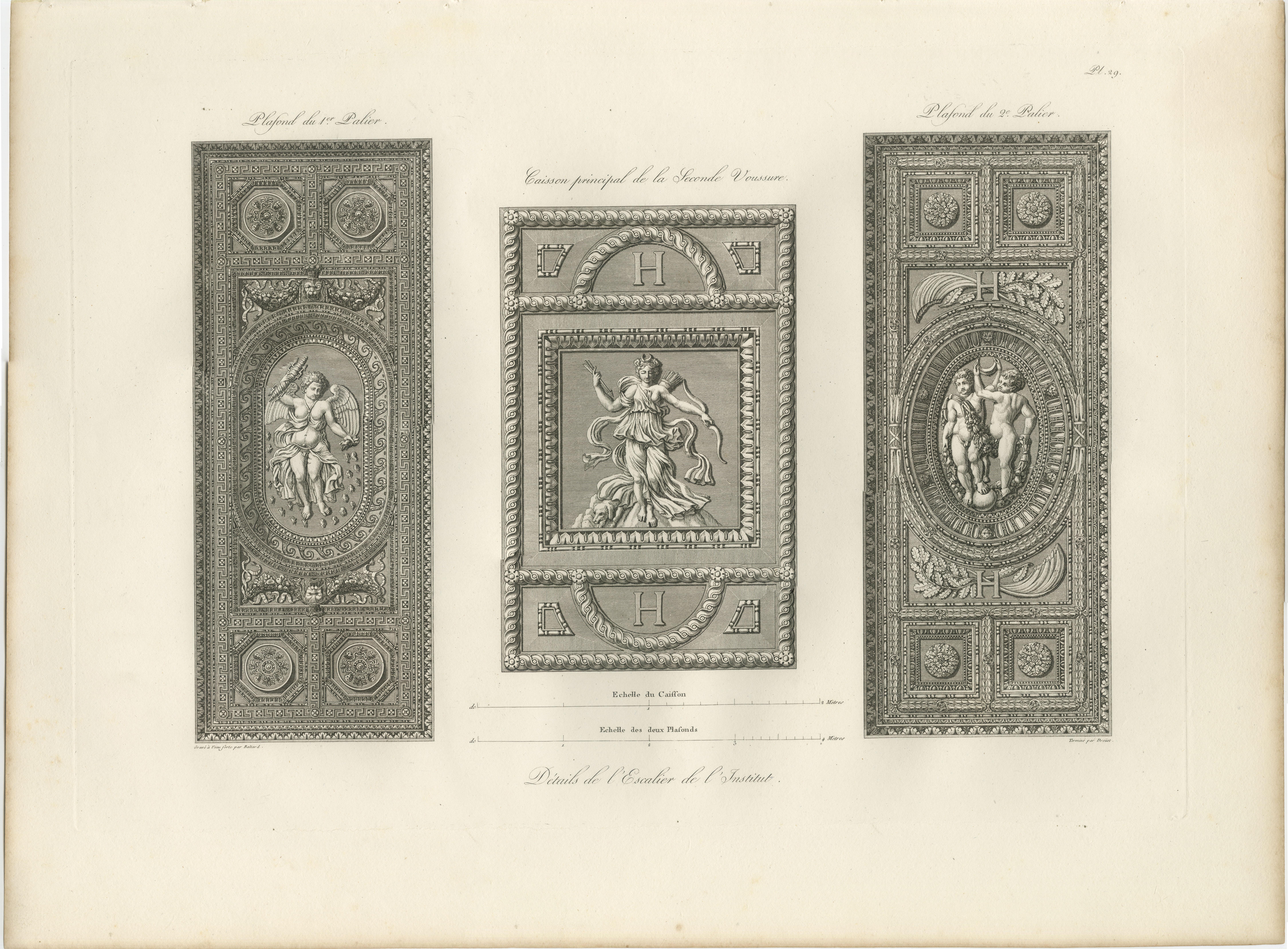
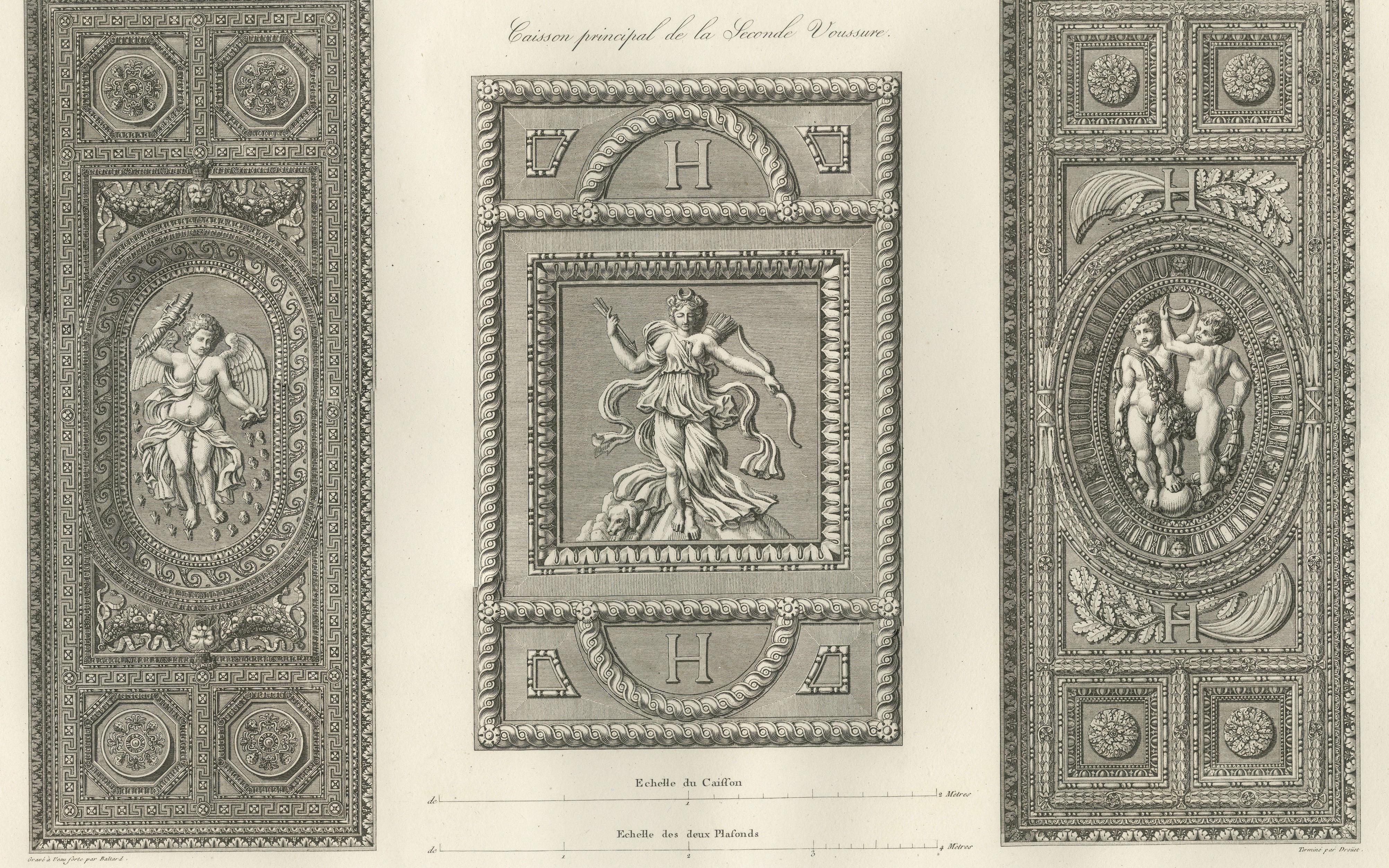
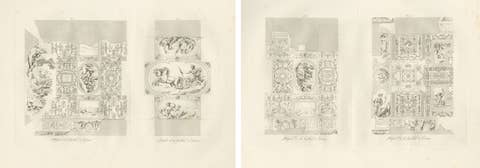
The second engraving, titled Détails de l’Escalier de l’Institut (Plate 29), presents three richly ornamented decorative panels documenting Renaissance ceiling designs. Despite the title referencing the Institut, the motifs actually derive from the celebrated Grand Escalier (Henri II staircase) of the Louvre Palace. At the time of Baltard’s publication, the Institut de France was temporarily housed within the Louvre before relocating to the Collège des Quatre-Nations in 1805.
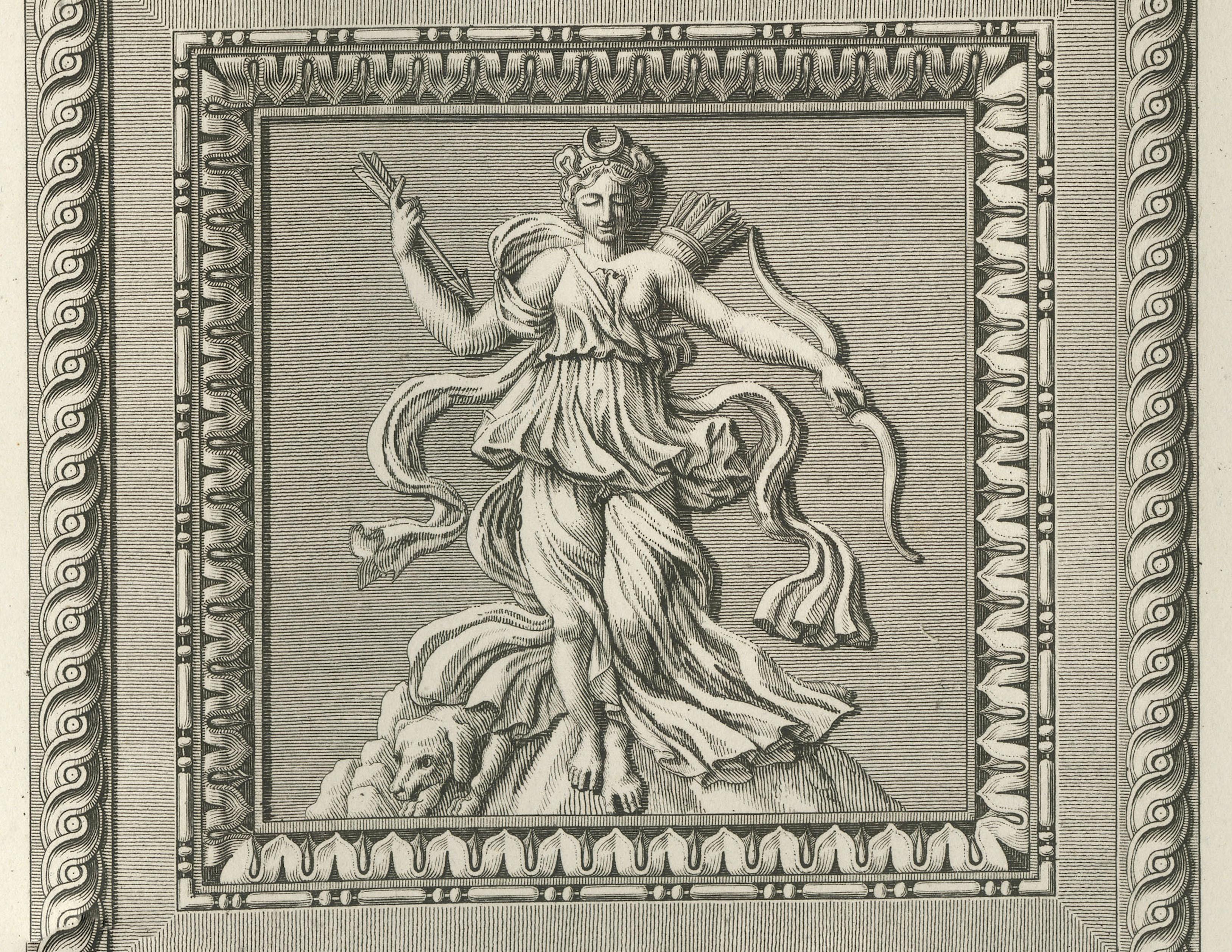
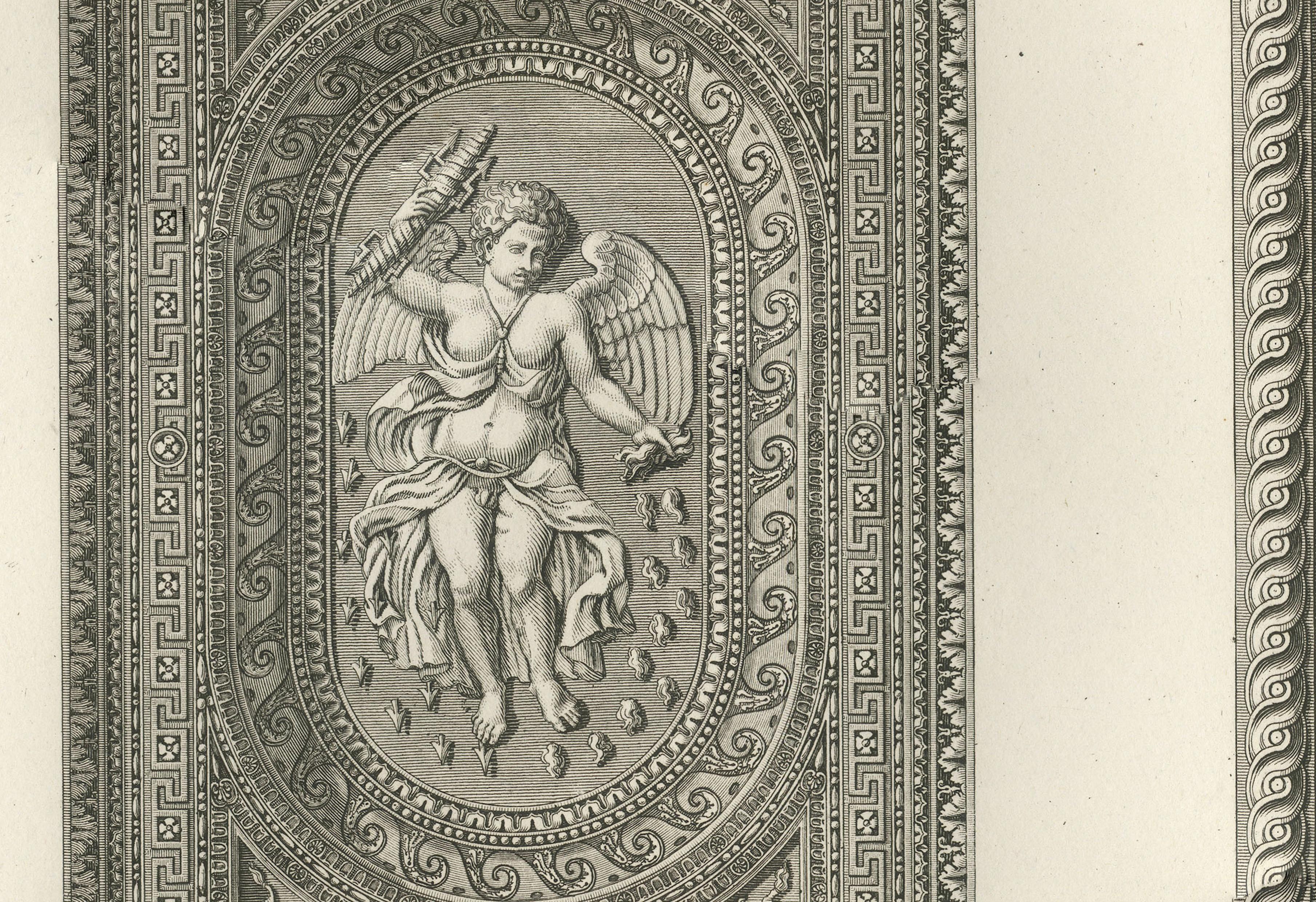
Baltard’s engraving groups several decorative fragments together in a single “imaginary” composition to display the intricacy of the original carvings. The panels depict elaborate ceiling coffers richly decorated with fruit garlands, architectural moldings, medallions, and allegorical figures. One panel features a winged figure—likely a Victory—within an oval medallion framed by dense ornamental foliage. Another panel presents a square composition with a draped figure in dynamic movement, while a third contains an oval medallion with paired mythological figures associated with royal iconography such as Peace and Justice.
Executed using copperplate engraving with refined burin work, Baltard’s prints demonstrate remarkable technical precision. The engraver skillfully reproduced the illusion of depth and sculptural texture, allowing the viewer to appreciate the three-dimensional quality of the original stone carvings. This careful documentation reflects the Neoclassical fascination with historical monuments and the desire to preserve the achievements of Renaissance architecture for future generations of artists, architects, and scholars.
Together, these engravings offer a fascinating glimpse into the artistic heritage of the Louvre and the architectural study of Paris during the early Napoleonic era. They are both historically significant and visually striking works that appeal to collectors of architectural prints, French history, and Renaissance sculpture.
The prints are offered unframed, allowing the buyer complete freedom to choose framing appropriate to their interior or collection. Any framed examples shown in photographs are for inspiration only.
Condition:
Good antique condition with general age-related toning and occasional light foxing. Margins wide and well preserved. Strong impressions with visible plate marks. Minor handling wear consistent with age.
Framing tips:
These architectural engravings display beautifully when framed with generous ivory or warm off-white mats and dark walnut, ebonized, or gilded frames. Pairing the prints together in matching frames creates an elegant museum-style presentation suitable for classical, library, or gallery interiors.
Technique: copperplate engraving
Maker: Louis-Pierre Baltard, Paris, 1803
Keyword block:
antique architectural print, baltard paris monuments, louvre sculpture engraving, jean goujon reliefs, french renaissance sculpture print, institut staircase ornament, louvre attic bas relief, napoleon era architecture print, french neoclassical engraving, architectural ornament engraving, paris monument print, 1803 copperplate engraving, louvre palace...