About this sheet
Antique Louvre Architectural Ornament Engraving, French Neoclassical, 1803
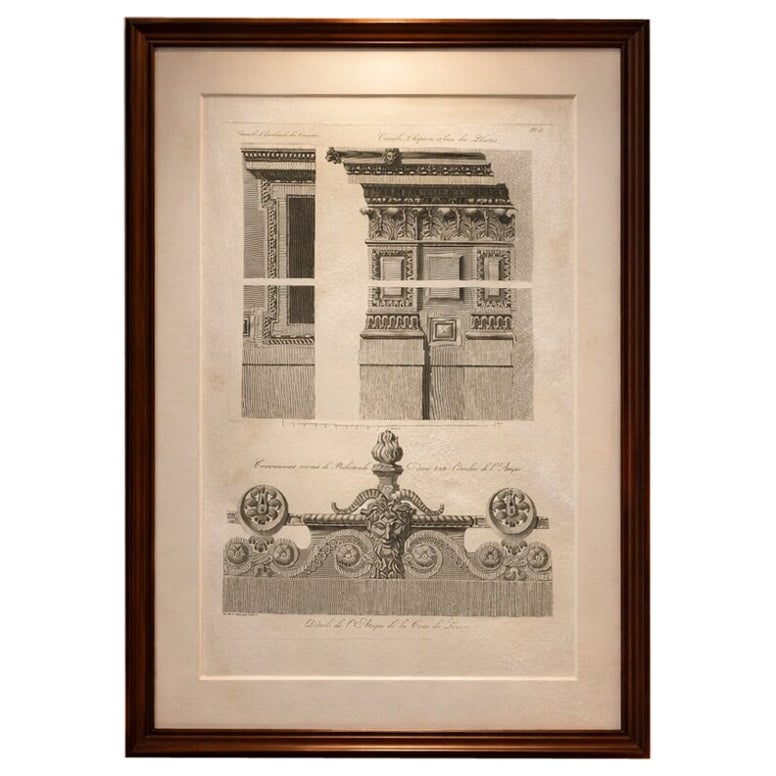
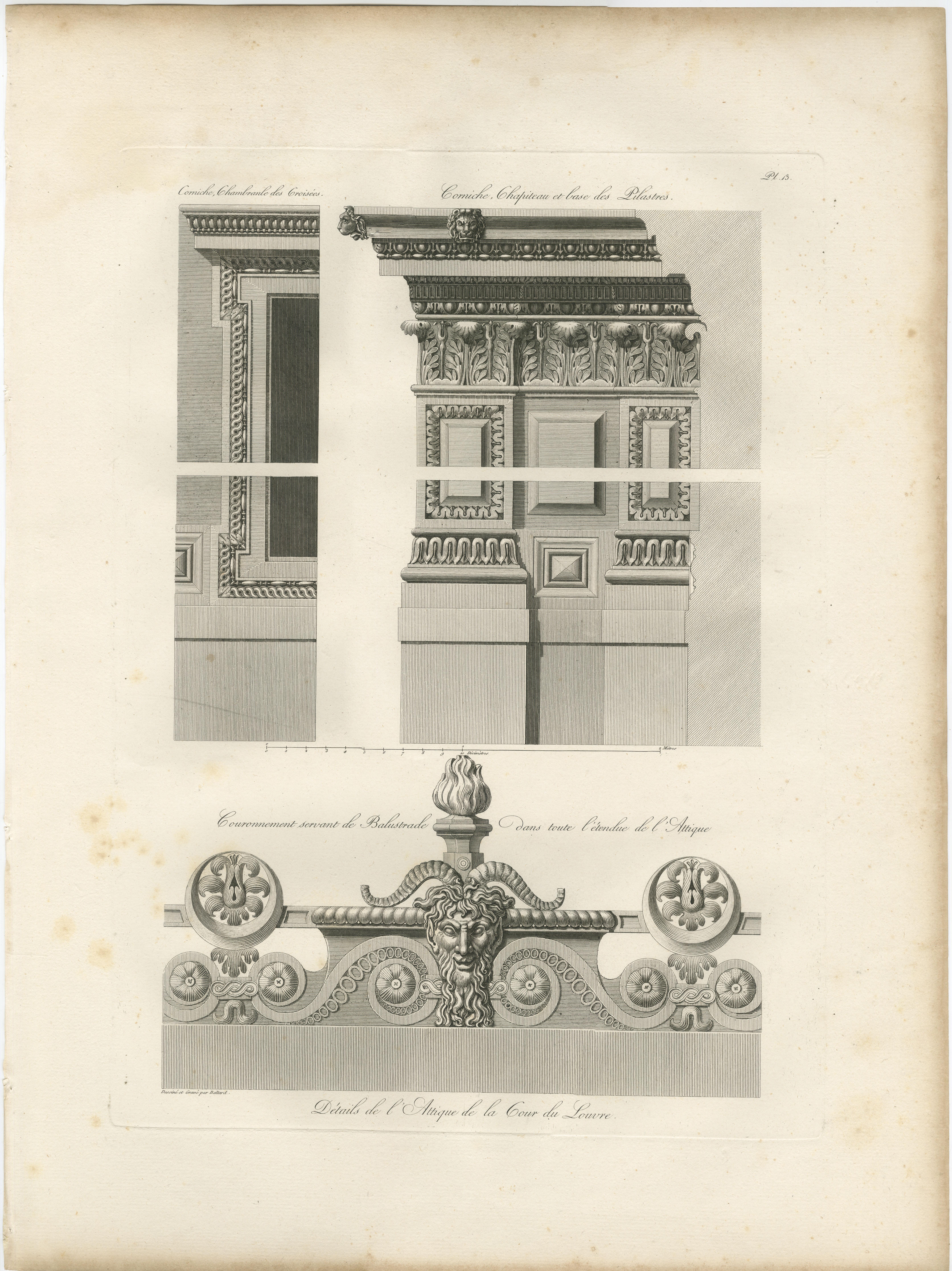
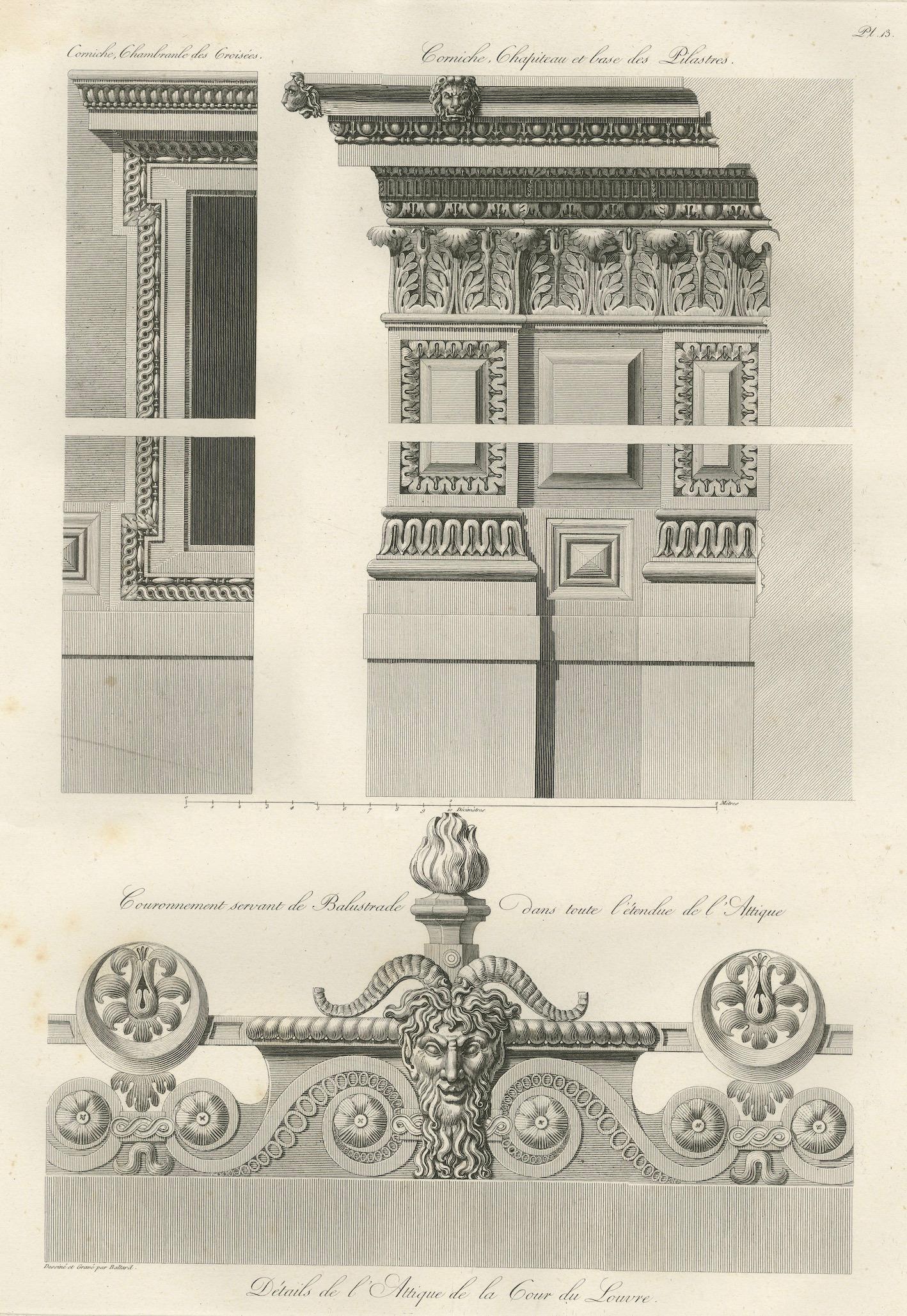
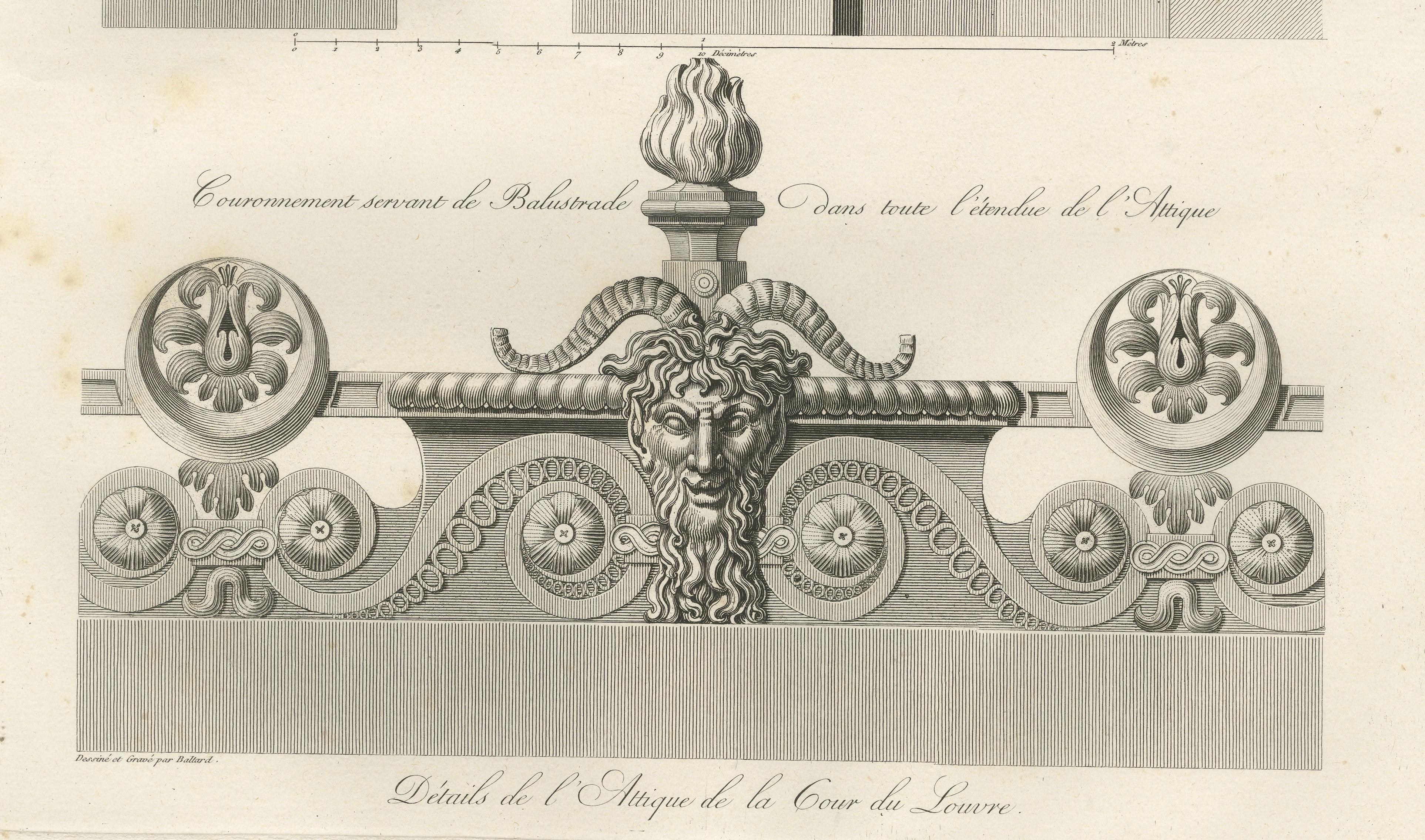
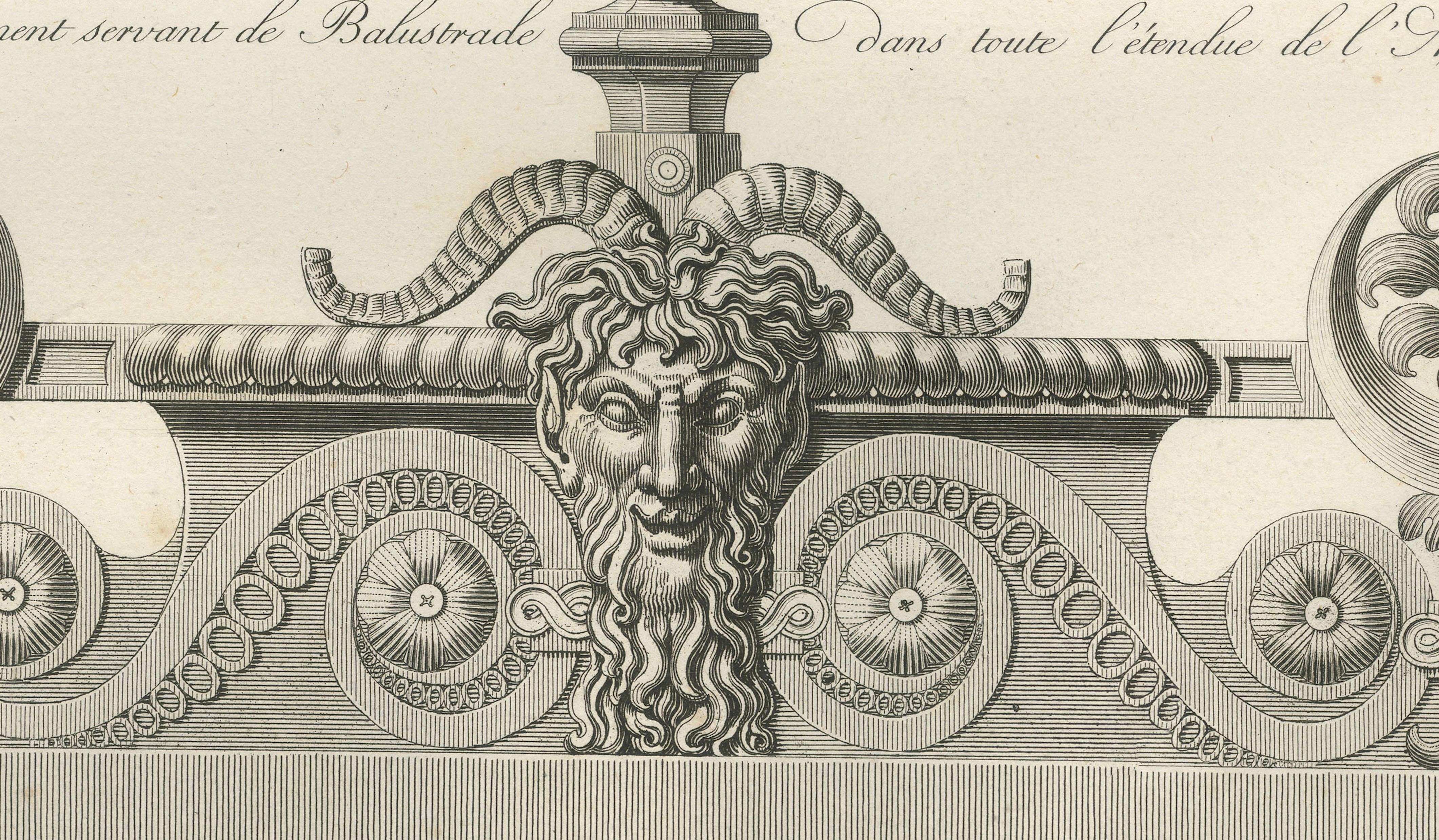
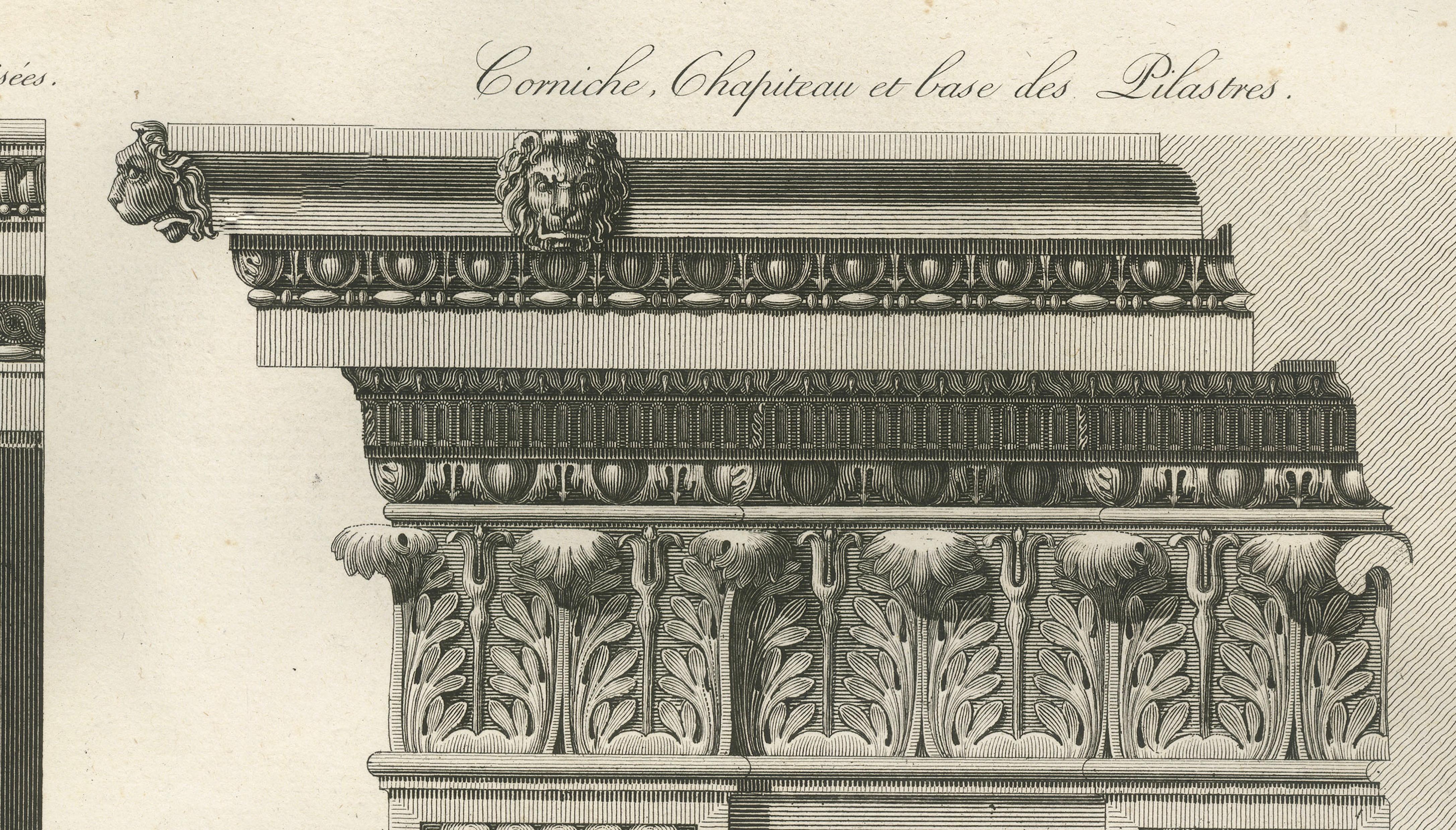
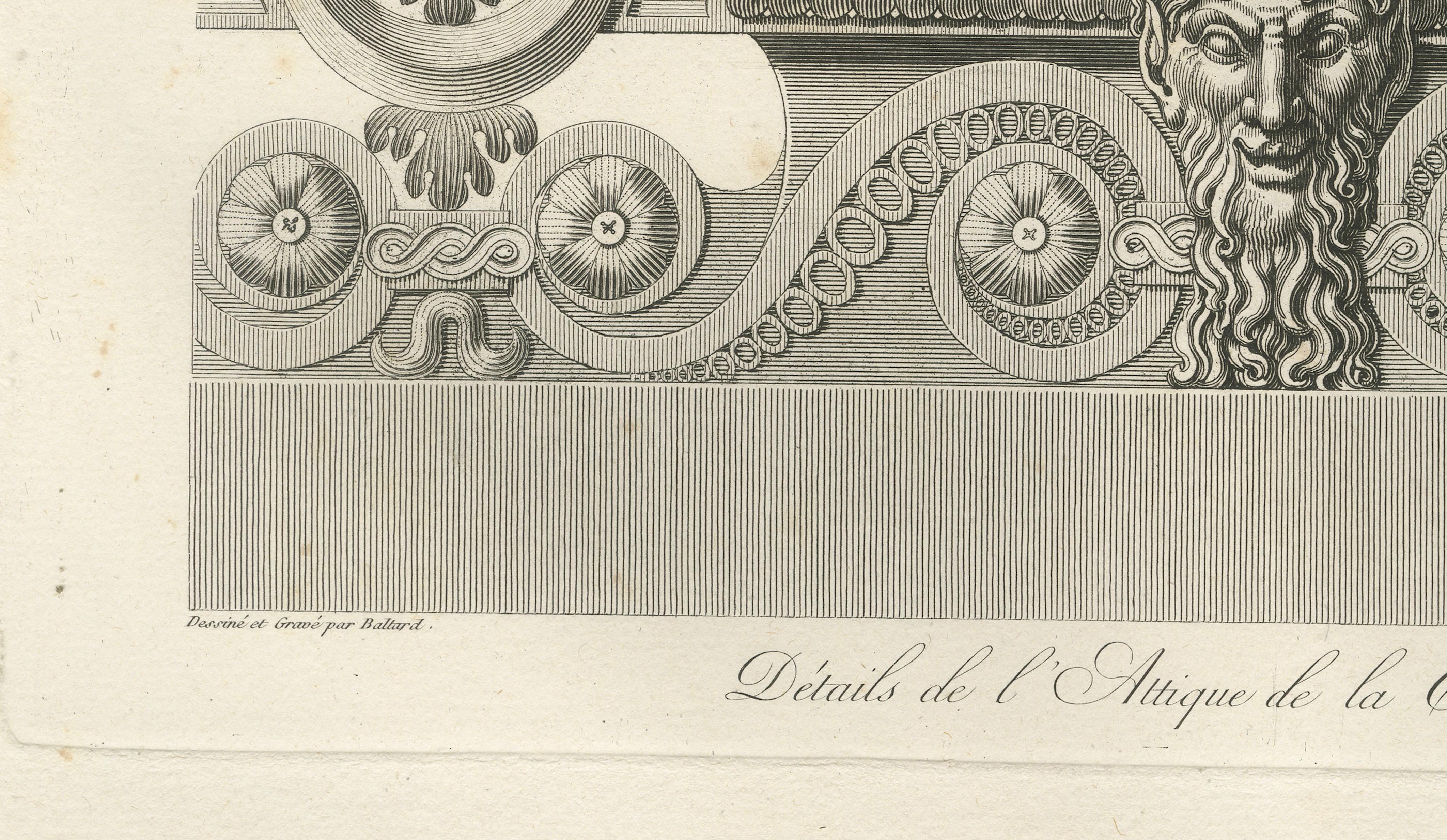
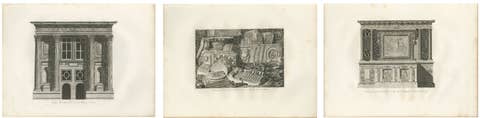
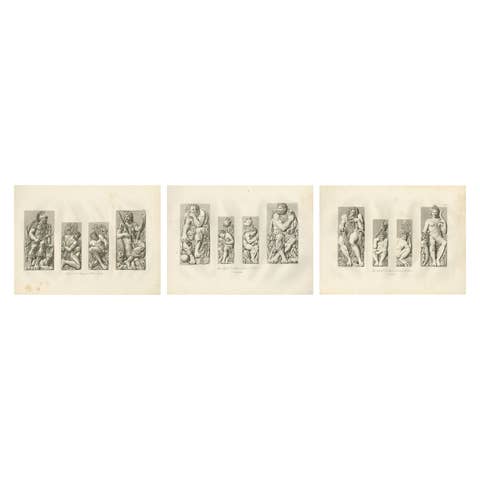
A highly refined early 19th-century French architectural engraving illustrating ornamental details from the Louvre in Paris, dated 1803. This composition focuses on sculptural and structural elements, including cornices, pilaster capitals and bases, balustrade ornaments, and a richly carved antique mask motif from the Cour du Louvre.
The upper section presents carefully measured architectural studies: “Corniche, Chapiteaux et base des Pilastres,” rendered with precise linear engraving and subtle cross-hatching. These details reflect the academic rigor of French Neoclassical design, emphasizing proportion, classical vocabulary, and decorative harmony. The ornamentation—acanthus leaves, mouldings, dentils, and layered entablatures—demonstrates the architectural language associated with the grand rebuilding campaigns of the Louvre during the 17th and 18th centuries.
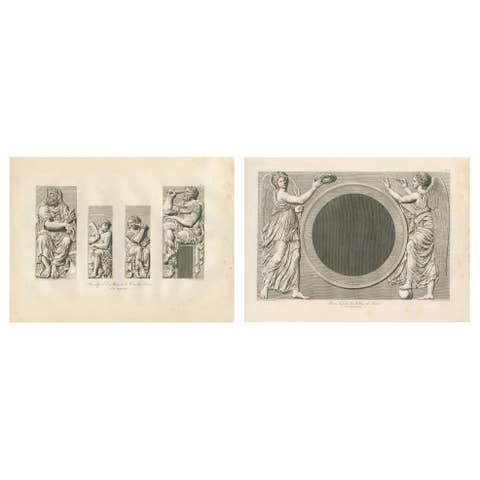
The lower register features a striking decorative frieze element described as “Détail de l’Antique de la Cour du Louvre.” At its center is a dramatic mascaron with flowing hair, flanked by circular medallions and scrolling volutes, crowned by a flame-like finial. The composition balances architectural discipline with expressive sculptural detail, making it especially appealing to collectors of classical ornament, architectural studies, and French Empire-period design.
Such engravings were produced both as documentation and as reference material for architects, designers, and students of classical architecture. Today they are highly desirable for decorative interiors—particularly in studies, libraries, hallways, or above consoles where detailed monochrome prints add intellectual elegance and Parisian sophistication.
This is an original print from the year of publication, not a later reproduction. The print is offered unframed, allowing custom framing according to interior preferences. Any framed images shown are for visual inspiration only.
Condition report: Good antique condition with light overall toning and scattered foxing typical for early 19th-century paper. Margins remain generous. Plate impression visible.
Framing tips: Beautiful in a dark walnut, ebonized, or antique gilt frame with a wide ivory mat to emphasize the fine engraved detail. Also works exceptionally well in a clean museum-style frame for a refined architectural gallery wall.
Technique: Copperplate engraving
Maker: French School, Paris, circa 1803