About this sheet
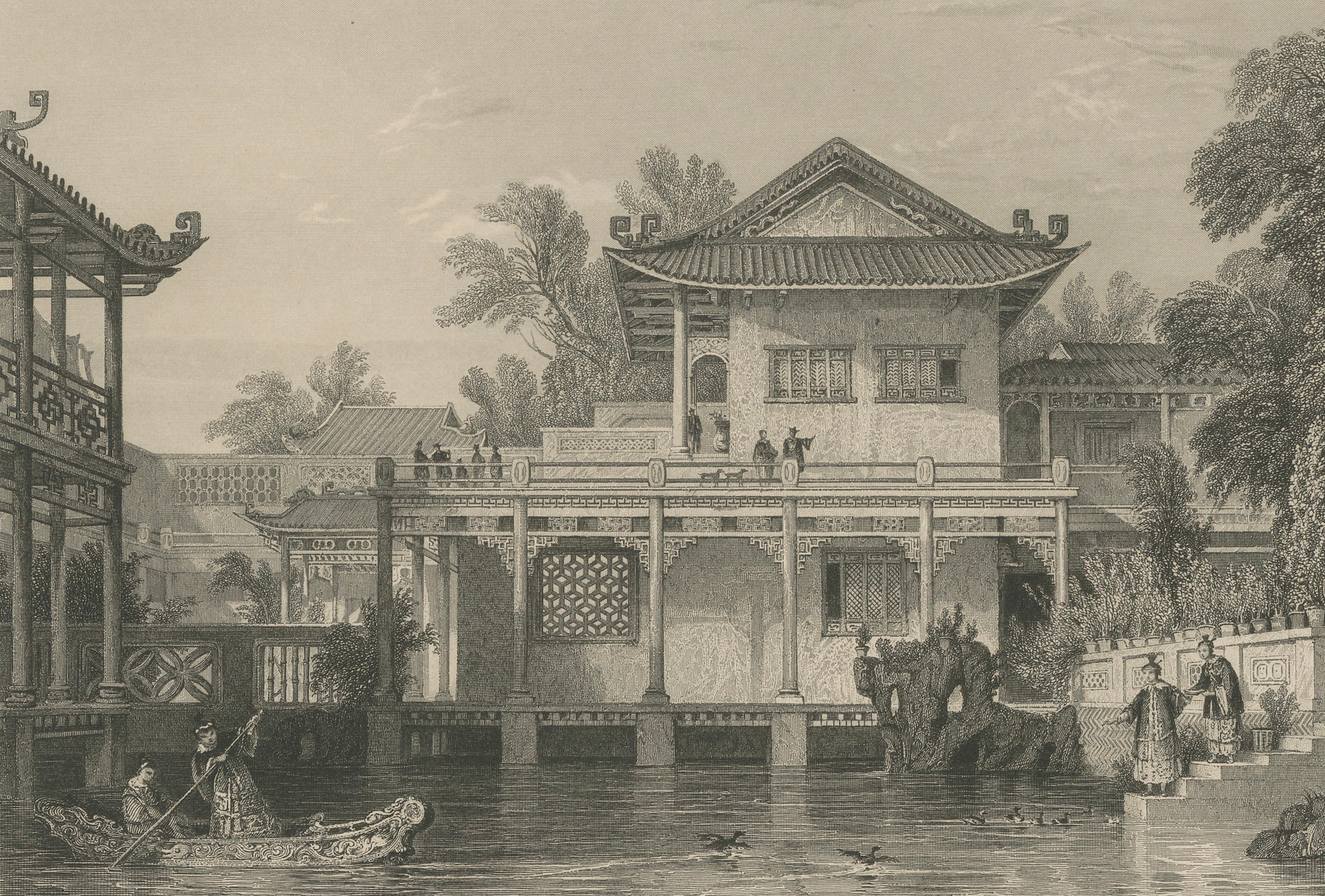
Antique China Consequa House Canton Print – Thomas Allom Steel Engraving 1843
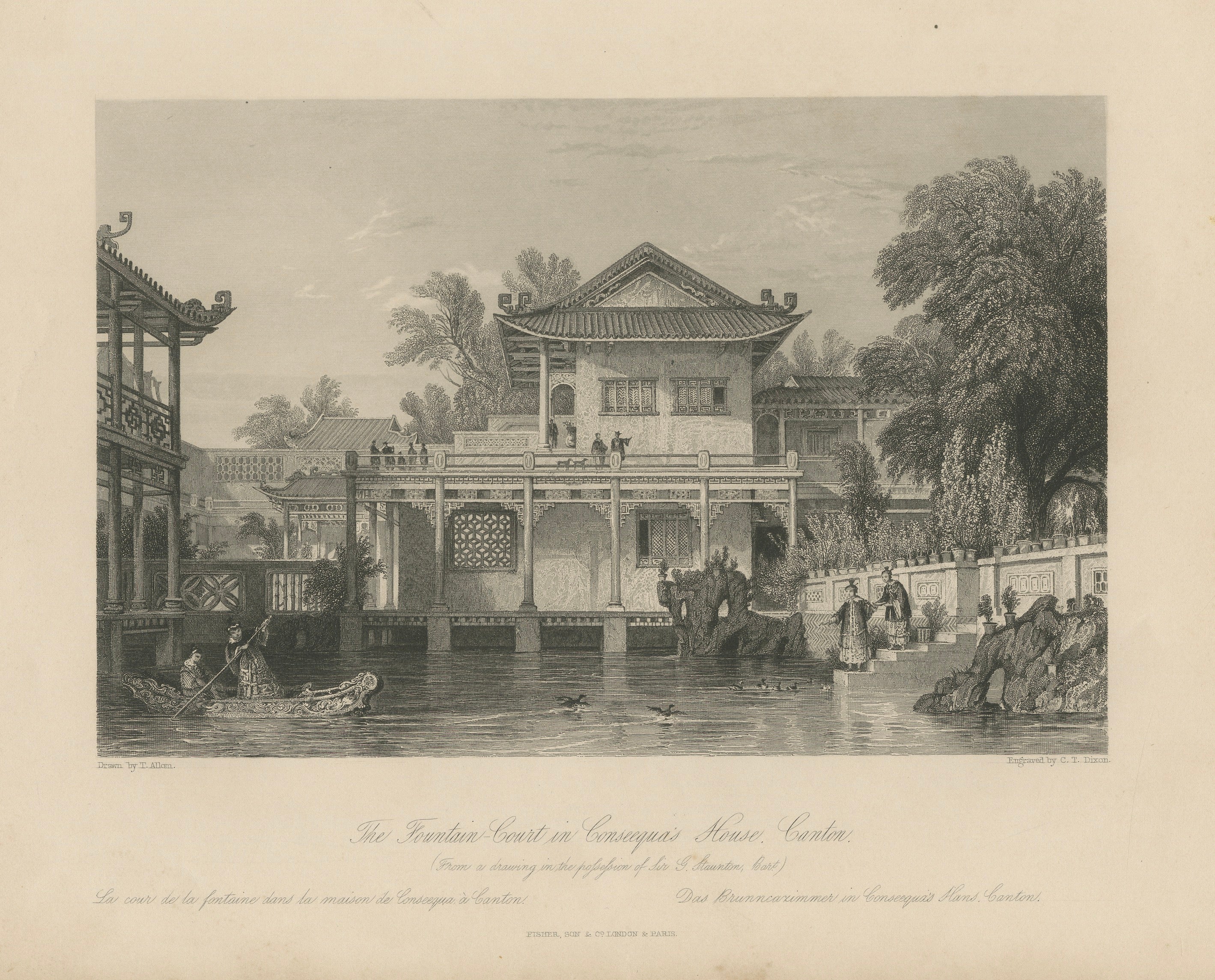
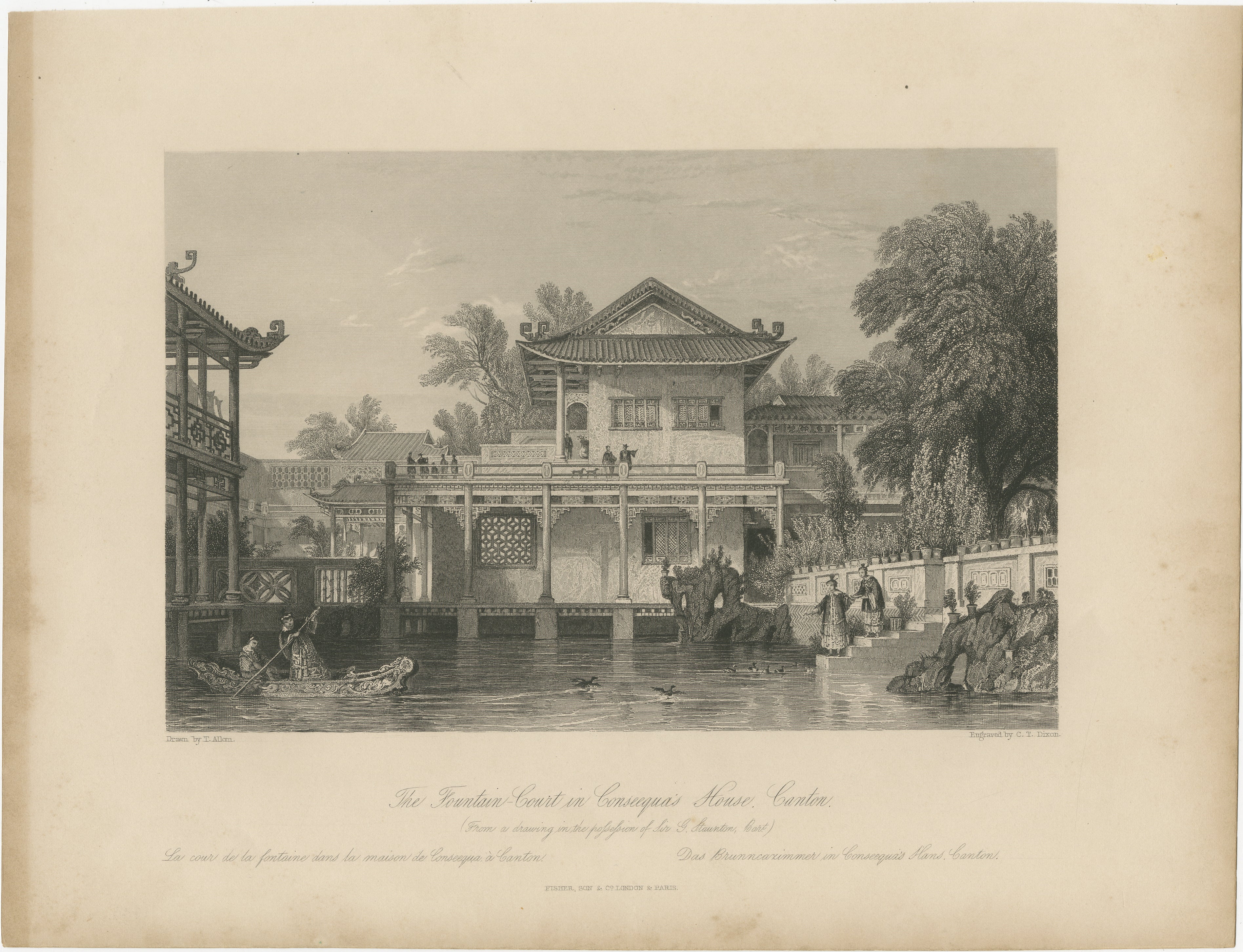
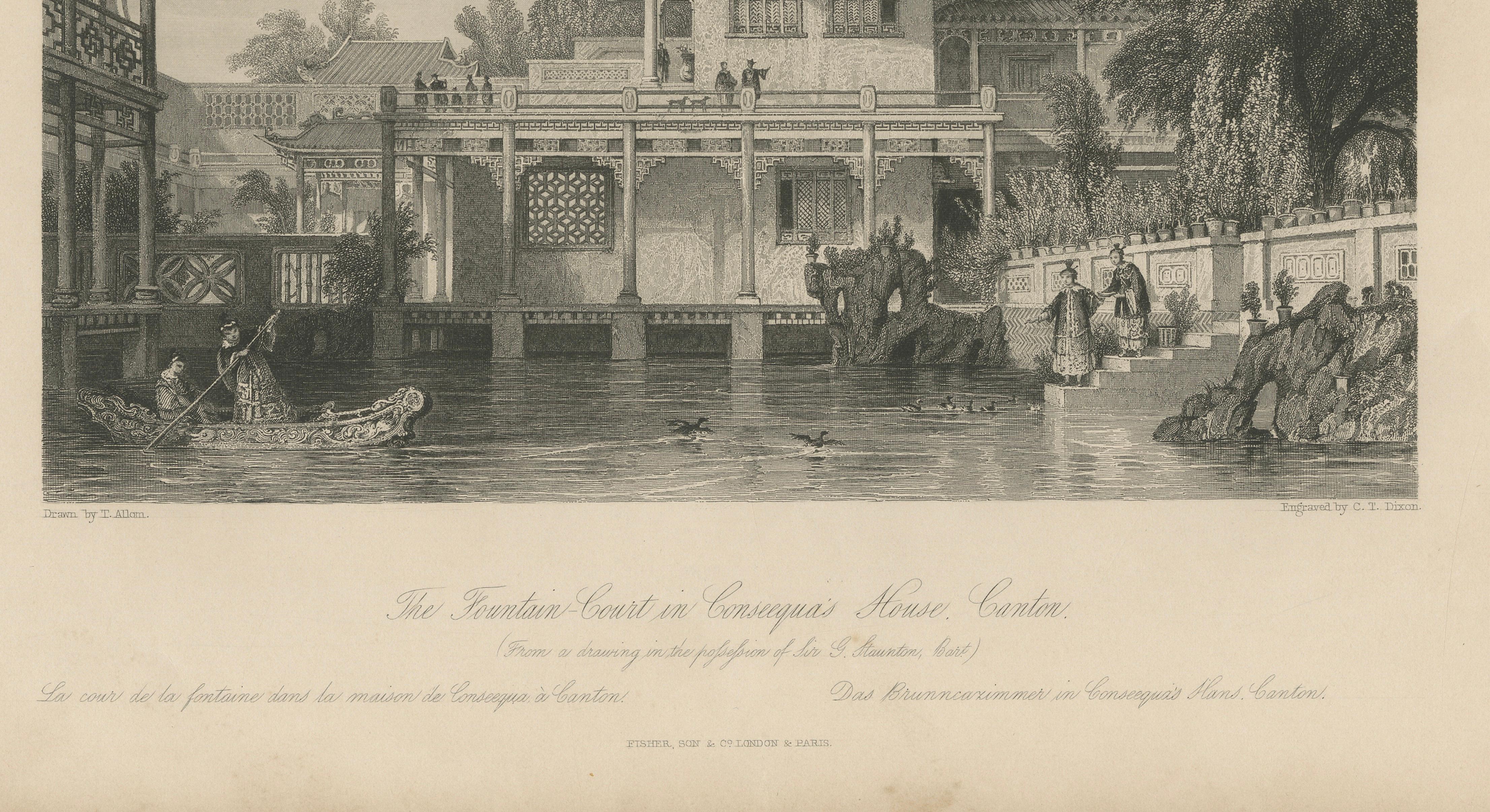
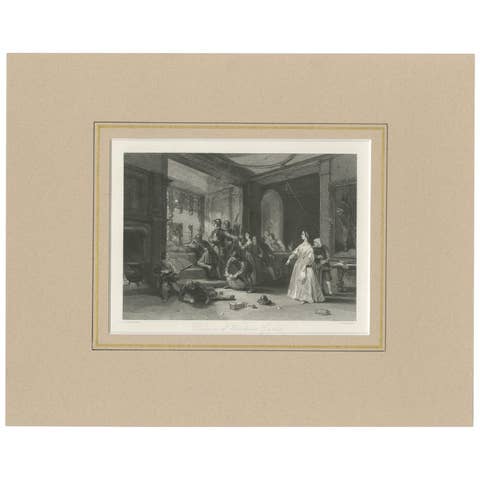
This finely detailed antique print titled “The Fountain Court in Consequa’s House, Canton” was drawn by the English architectural illustrator Thomas Allom (1804–1872) and engraved by C. T. Dixon. It was published by Fisher, Son & Co. of London and Paris as part of the celebrated illustrated travel work China, in a Series of Views, Displaying the Scenery, Architecture, and Social Habits, of that Ancient Empire, issued between 1843 and 1845.
The engraving depicts the elegant interior garden court of the residence belonging to Consequa, a wealthy Chinese merchant of Canton (modern Guangzhou). Consequa was one of the influential Chinese traders associated with the Cohong, the guild of officially licensed merchants who managed trade between China and Western countries during the period known as the Canton System. These merchants acted as intermediaries between Chinese authorities and European trading companies, making them among the most powerful and prosperous figures in southern China during the late 18th and early 19th centuries.
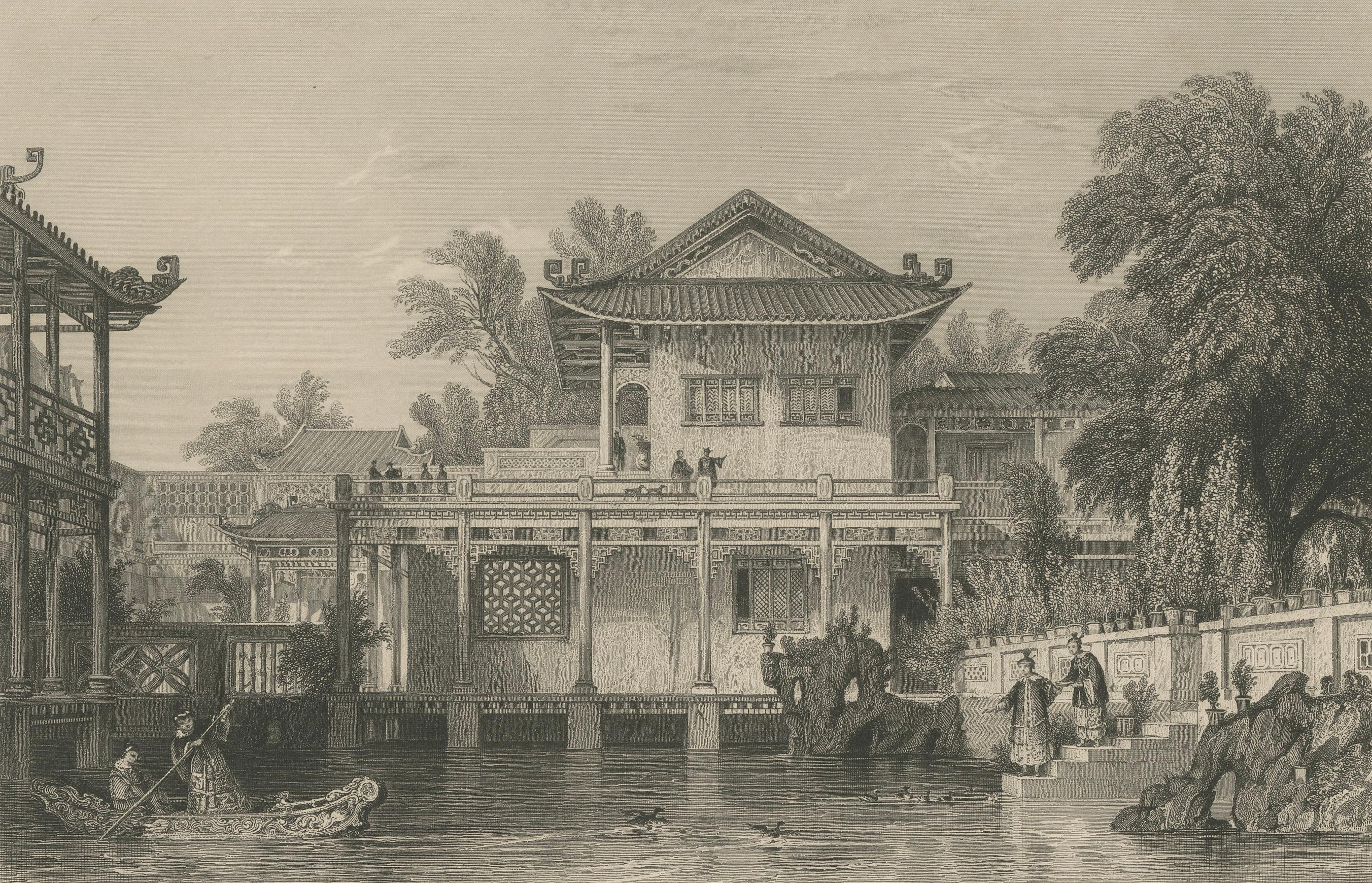
Allom’s composition presents an atmospheric view of the merchant’s refined private residence. The central building overlooks a tranquil ornamental pond surrounded by elegant pavilions and terraces. The architecture displays the distinctive characteristics of traditional southern Chinese design, including tiled roofs with gracefully curved eaves, decorative latticework panels, carved railings, and elevated walkways supported by columns above the water.
In the foreground a small ornamental boat moves across the calm pond while ducks swim on the surface. Figures stroll along the terraces and garden paths, suggesting the refined and leisurely lifestyle associated with Canton’s mercantile elite. The arrangement of buildings, water, bridges, and vegetation reflects the principles of classical Chinese garden design, where architecture and landscape are carefully balanced to create harmony and contemplation.
During the early 19th century Canton was one of the most important trading ports in the world and the principal gateway for Western commerce with China. Images such as this fascinated European audiences, who were eager to learn about Chinese architecture, customs, and the lifestyles of wealthy merchant families engaged in international trade.
Thomas Allom was one of the most prominent architectural illustrators of the Victorian era and a founding member of the Royal Institute of British Architects. Although he never traveled extensively through China himself, his engravings were based on drawings, travel accounts, and sketches gathered by diplomats, missionaries, and merchants. The resulting series became one of the most widely circulated visual representations of China available to Western audiences in the mid-19th century.
The print is executed as a finely detailed steel engraving, a technique widely used in illustrated books of the period. Steel plates allowed engravers to produce extremely precise lines and delicate shading, making them particularly suitable for architectural subjects and detailed landscape views.
Condition:
Good antique condition with moderate age toning and scattered foxing mainly visible in the margins. Minor edge wear consistent with age and previous binding. Plate impression visible.
Framing tips:
This print displays beautifully in a dark walnut, black lacquer, or Asian-inspired frame with a warm ivory mat. Because the engraving contains very fine architectural linework, museum glass is recommended to enhance clarity and protect the paper. A generous mat border gives the piece a refined gallery appearance suitable for both classic and contemporary interiors.
Technique: steel engraving
Maker: Thomas Allom, England, 1843