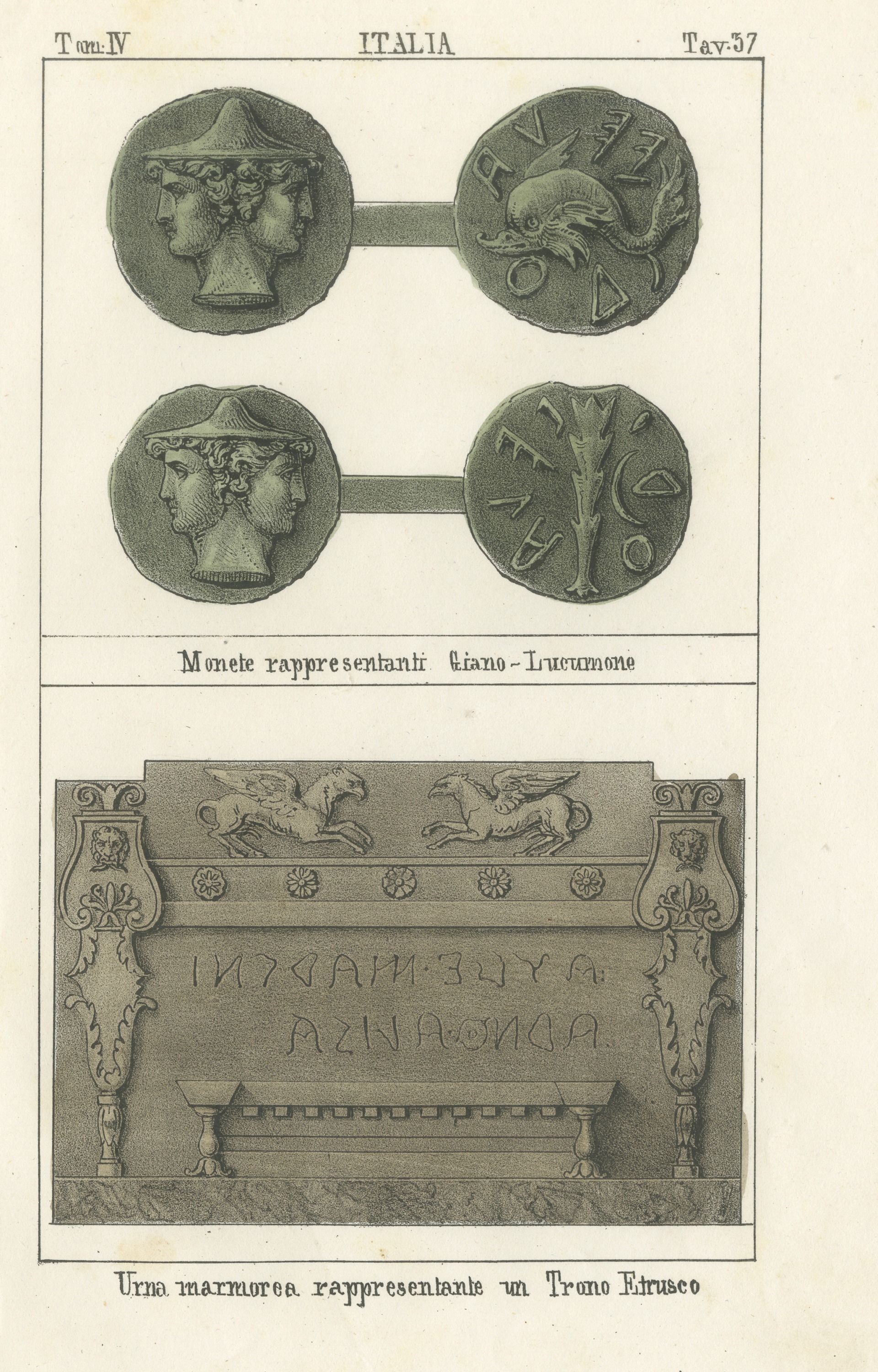
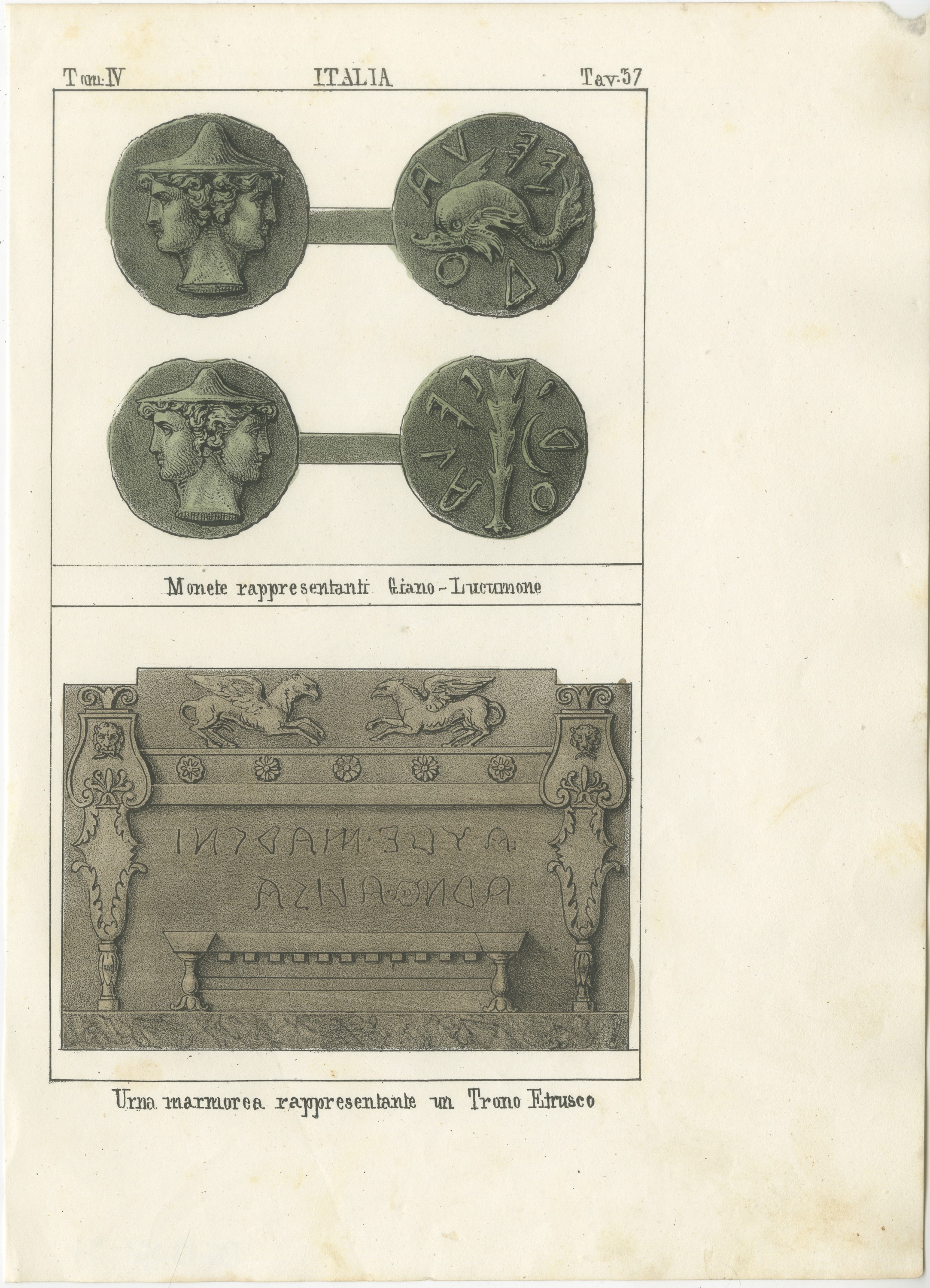
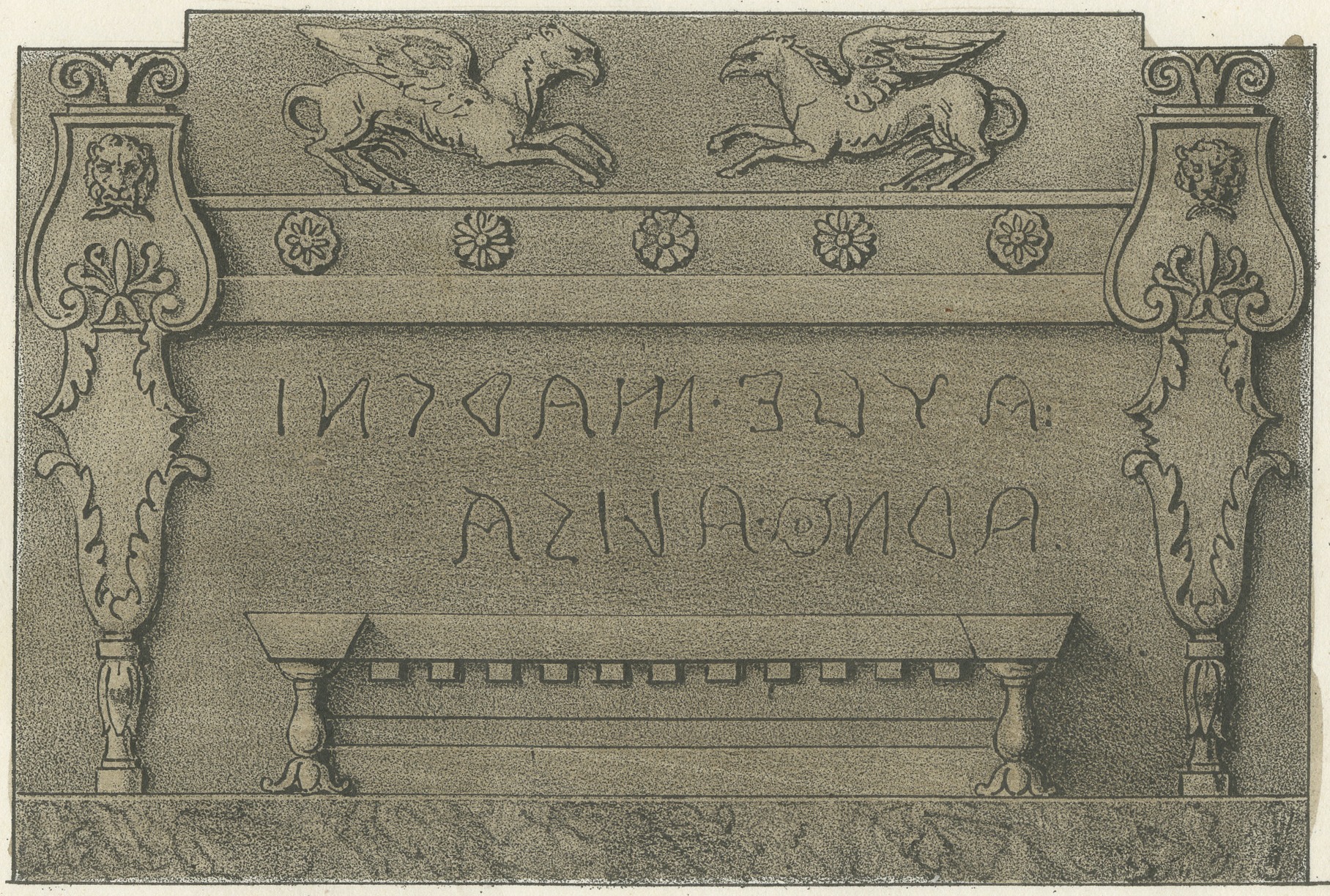
Etruscan Coins with Janus and a Marble Urn Carved as an Etruscan Throne, 1842
€ 175
Original antique · The actual sheet photographed · Certificate of authenticity on request · Sold unframed · Worldwide shipping from € 15 (rates)
Date
1842
Mapmaker / artist
Published by Giuseppe Antonelli
Publisher
Giuseppe Antonelli, Venice
Technique
Lithograph
Coloring
Hand colored
Condition
Good
Reference
BG-13061-37
What the condition grades mean
Excellent
Bright and clean, with no faults worth mentioning.
Very good
Only light signs of age, such as faint toning.
Good
Normal signs of age for a sheet of this period: toning, some foxing, small marks or neat old repairs.
Fair
Clear faults such as staining, tears or repairs, priced to match.
Every fault we see is written in the condition note, and the whole sheet is shown uncropped in the photos.
Condition
Light wear to the bottom right corner. Light age toning; light handling soiling along the edges and a few small spots in the margins. Printed image clean.
About this sheet
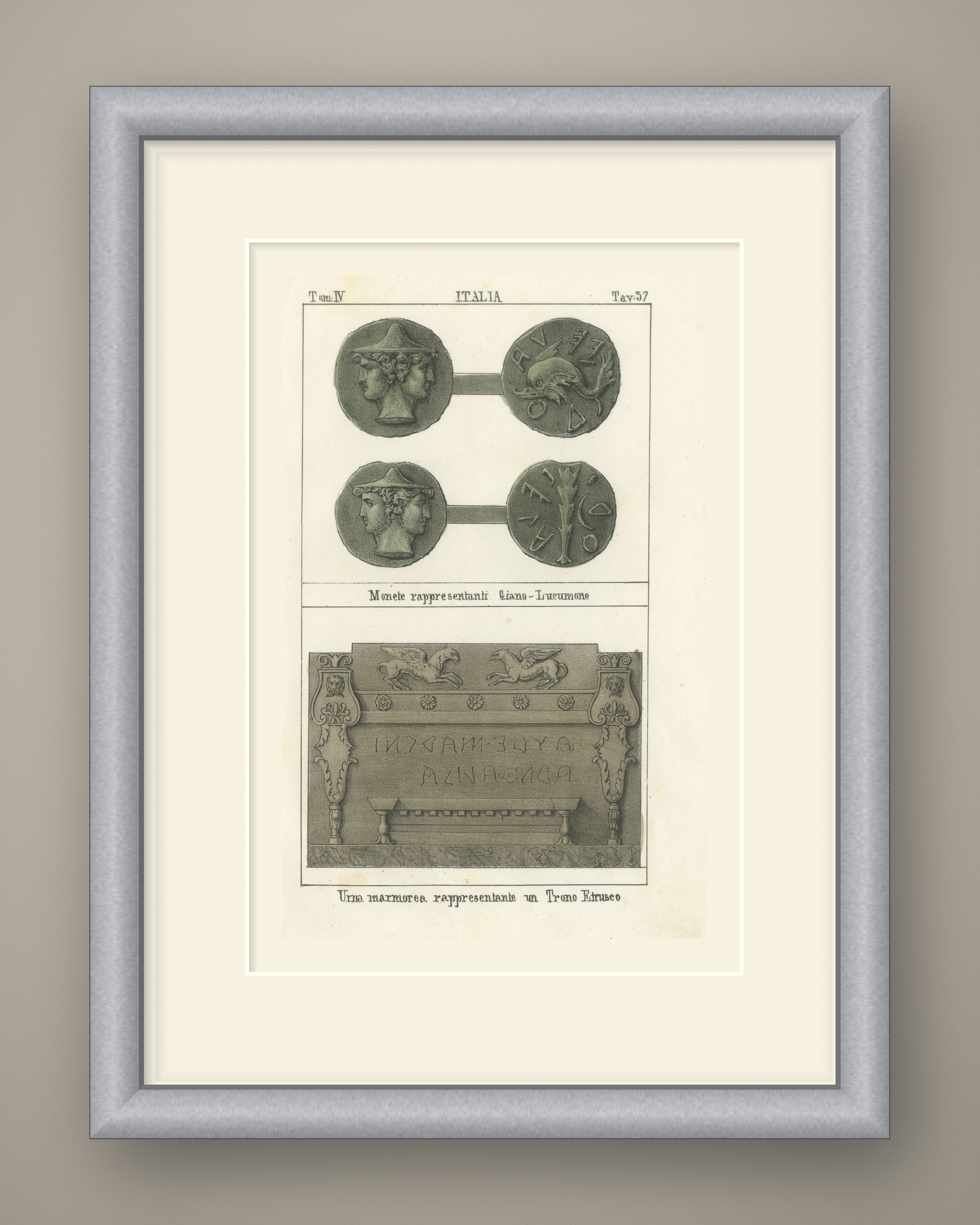
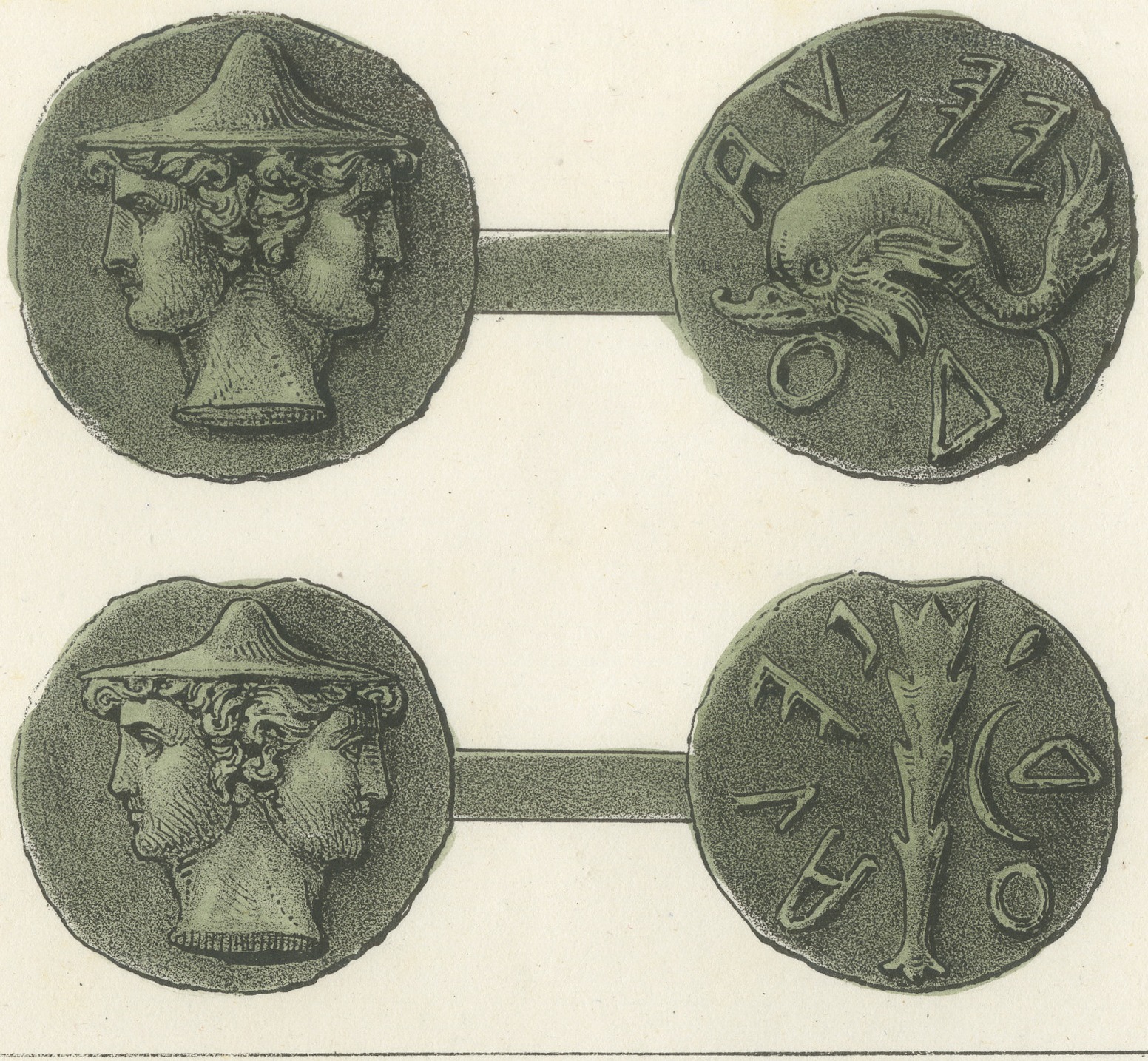
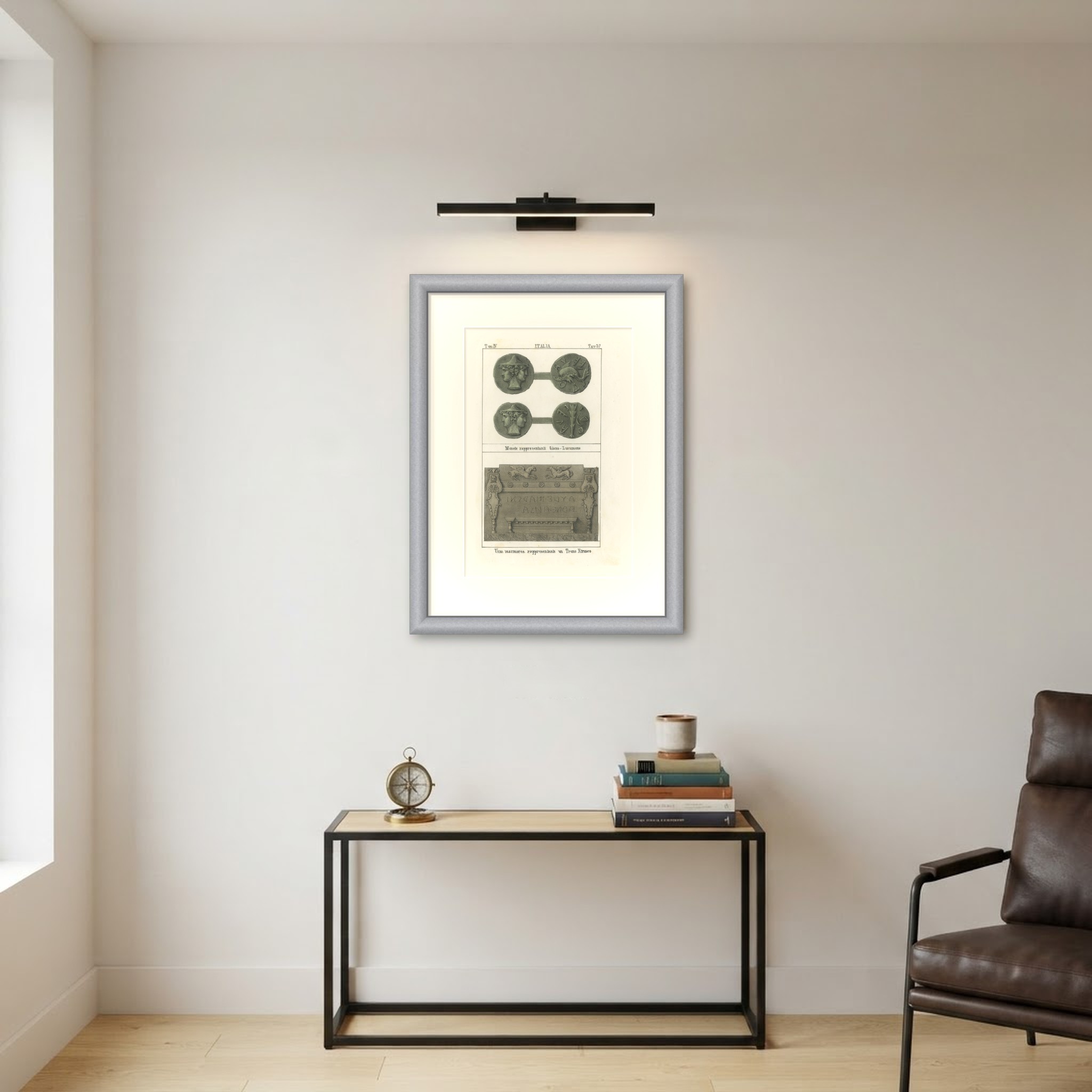
An original antique lithograph from the Galleria Universale di Tutti i Popoli del Mondo (Venice, Giuseppe Antonelli, 1842), with a bronze green wash on the coins and a brown wash on the urn. The upper image shows two coins, each drawn with both faces joined by a bar: on the left the obverses, each a two faced head of Janus wearing a broad conical cap; on the right the reverses, one with a dolphin and letters in the Etruscan alphabet, the other with an upright knotted staff, a crescent and further letters. The lower image shows the front of a marble urn: two winged griffins carved along the top, a band of rosettes below, side supports with lion masks, palmettes and acanthus leaves, two lines of Etruscan inscription across the center and a low bench with turned legs beneath.
The top margin is lettered "Tom: IV", "ITALIA" and "Tav. 37". Under the upper image: "Monete rappresentanti Giano-Lucumone" (Coins representing Janus, Lucumo). Under the lower image: "Urna marmorea rappresentante un Trono Etrusco" (Marble urn representing an Etruscan throne).
Janus, the god of doorways and beginnings, was shown with two faces looking in opposite directions. Lucumo was the Latin form of the Etruscan title for a ruler or chief magistrate. The Etruscans placed the ashes of the dead in small chests of stone or terracotta, often carved with relief decoration and inscribed with the name of the deceased; their alphabet was written from right to left.
A quiet, tonal plate that sits well with other antiquarian or archaeological prints.
Condition: Light wear to the bottom right corner. Light age toning; light handling soiling along the edges and a few small spots in the margins. Printed image clean.
This is an original antique print, not a modern reproduction. This item is sold unframed. Any framed or interior images are shown for presentation and inspiration only, unless the listing explicitly states that the item is sold framed.