About this sheet
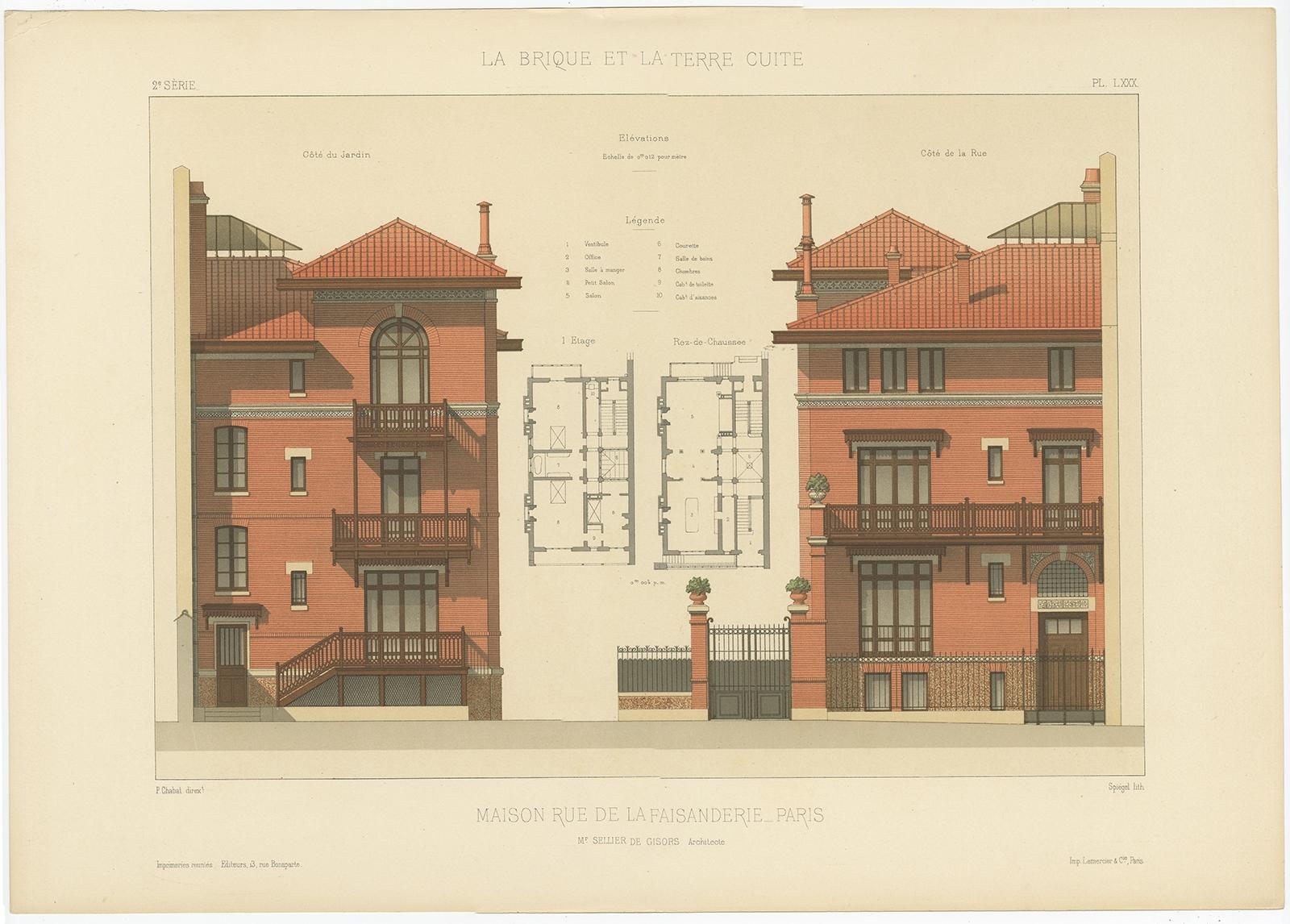
Antique Print of Maison Rue de la Faisanderie, Paris by Sellier de Gisors, c.1900
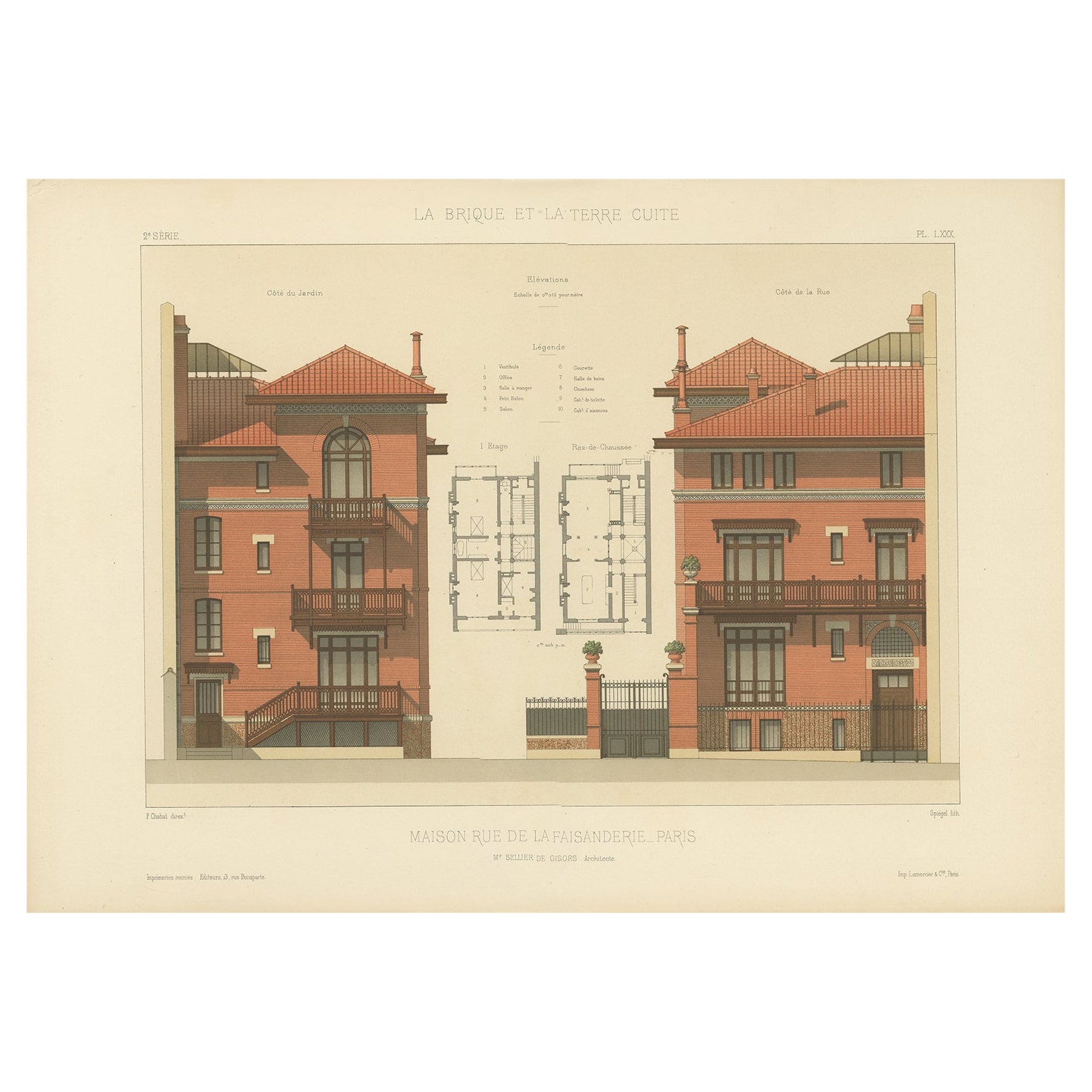
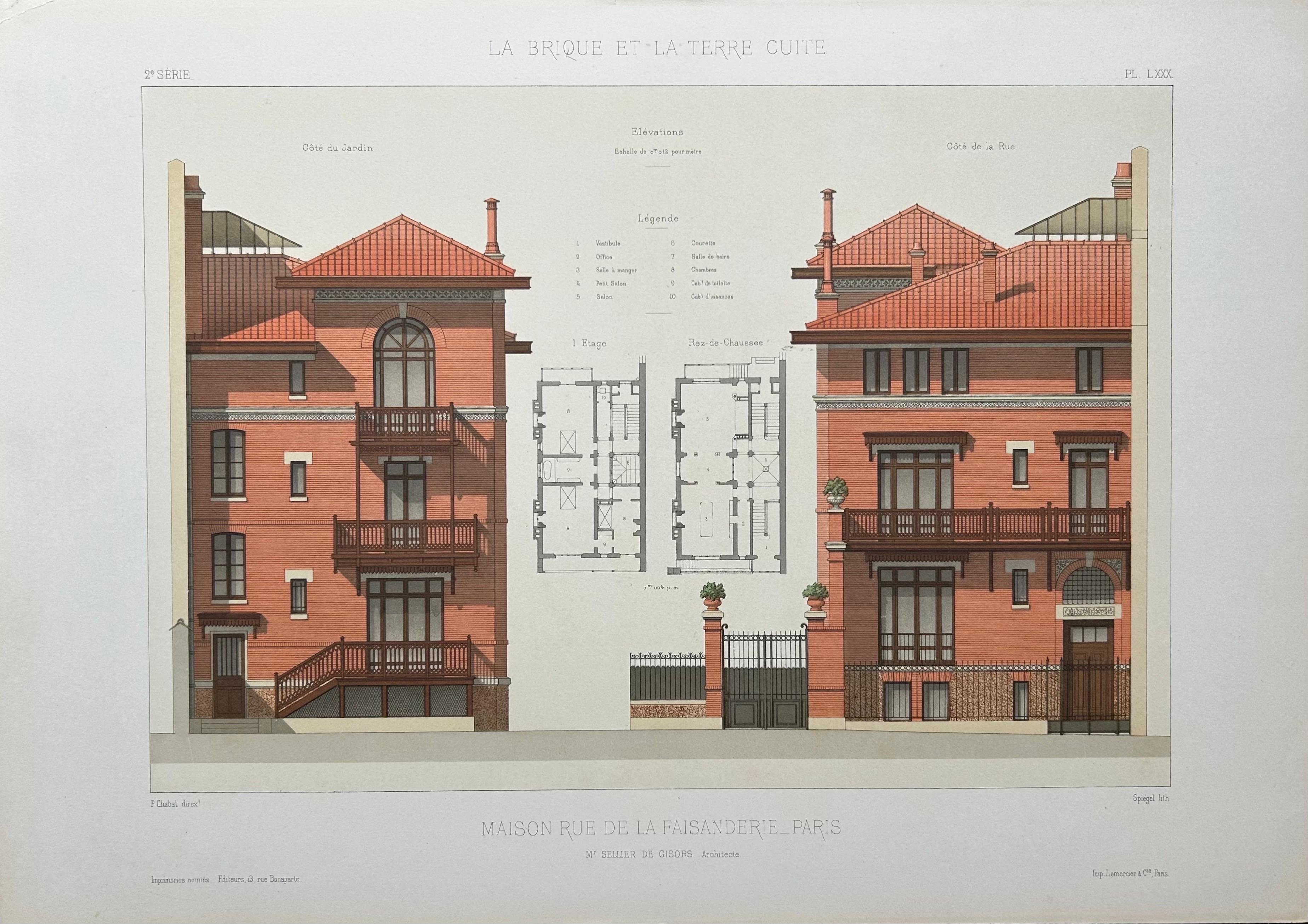
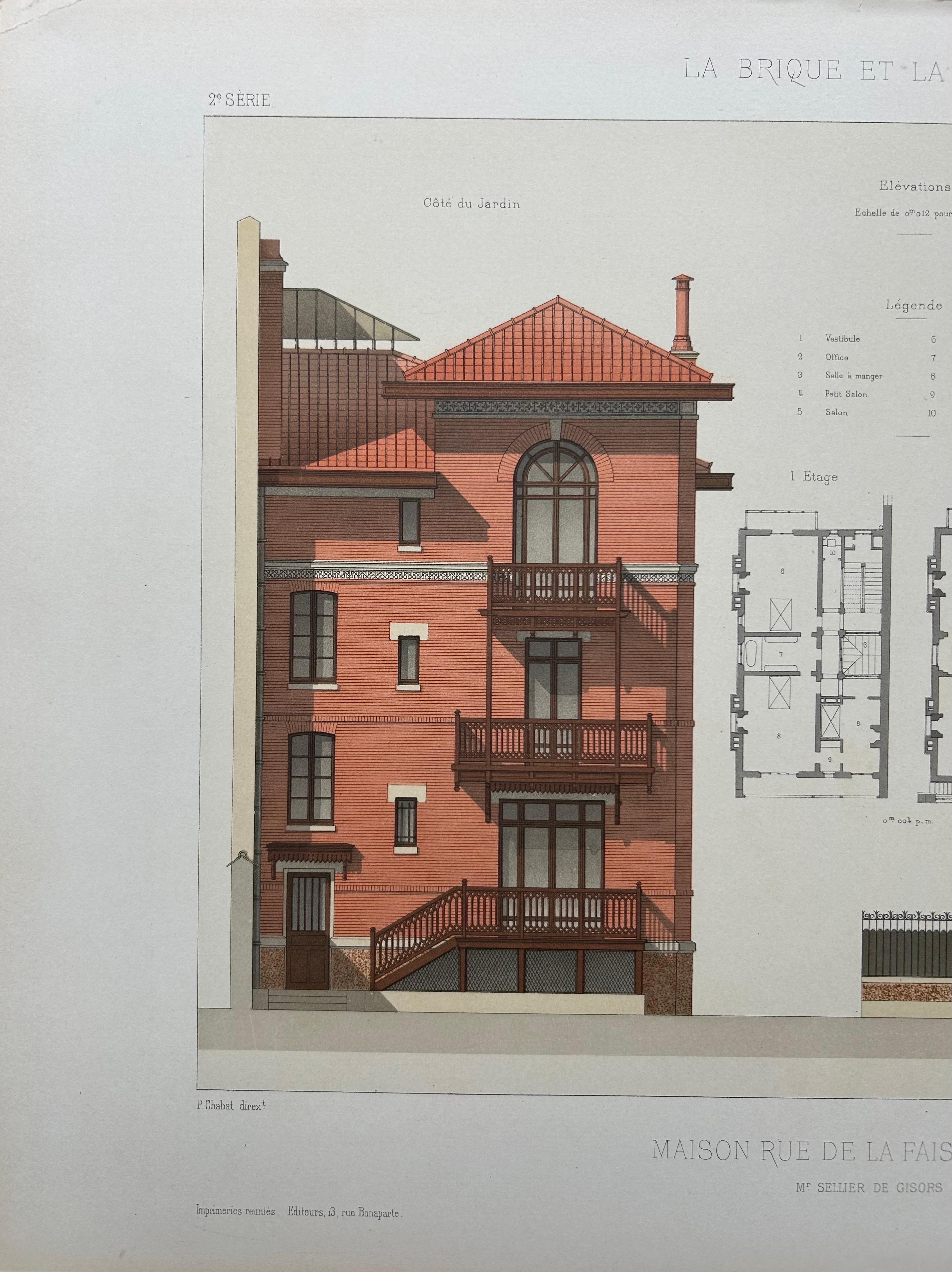
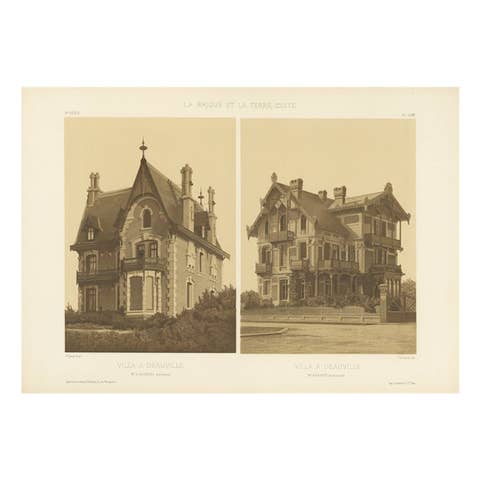
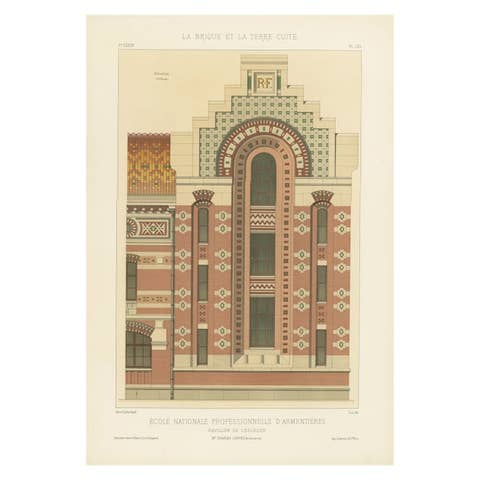
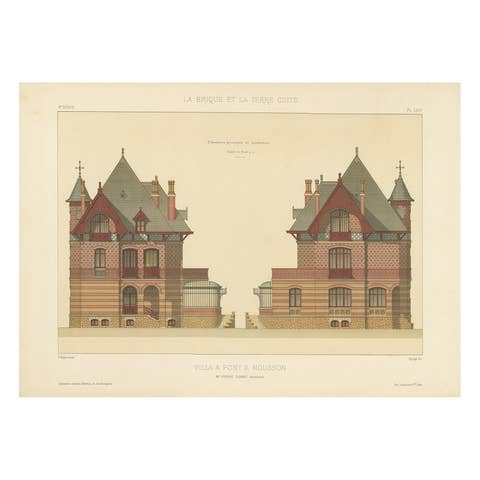
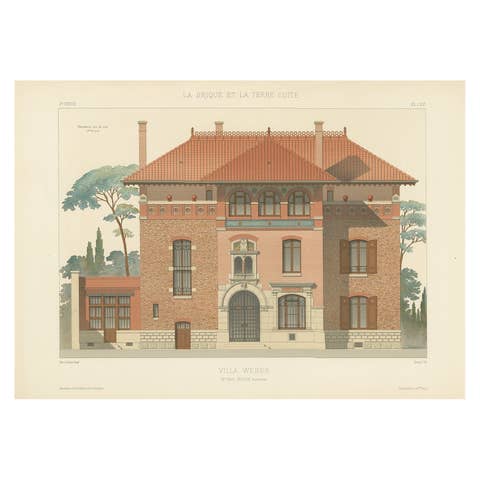
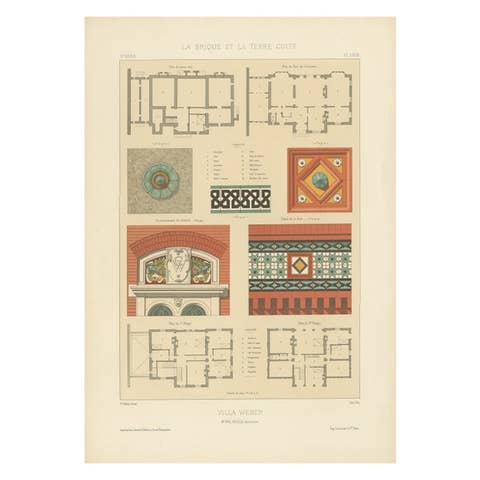
Antique architectural print titled "Maison Rue de la Faisanderie, Paris," designed by Mr. Sellier de Gisors, Architecte. This fine lithograph originates from *La Brique et La Terre Cuite* by Pierre Chabat, published in Paris around 1900. The folio is a celebrated reference on the creative use of brick and terracotta in French architecture during the late 19th century.
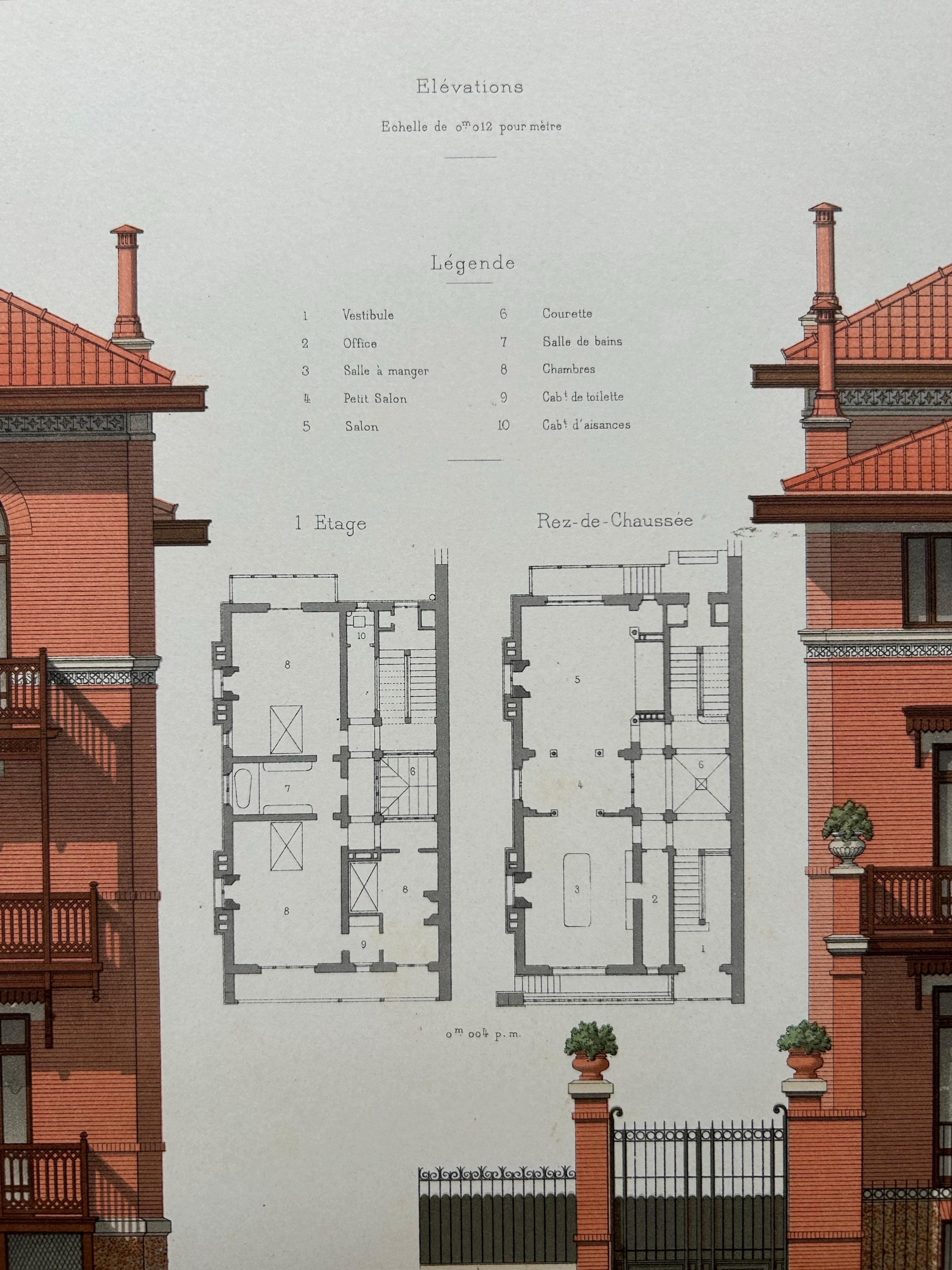
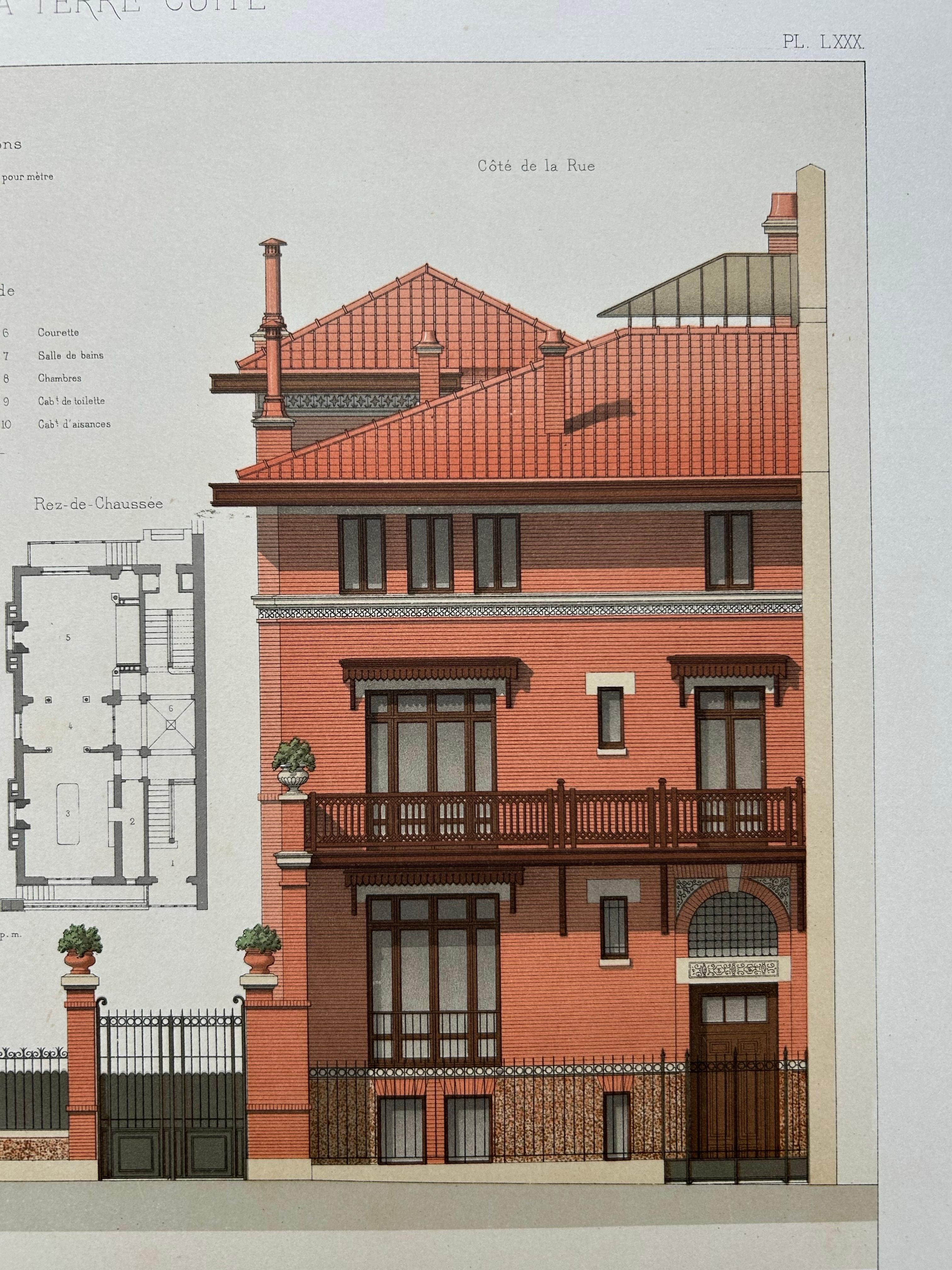
This plate presents both elevations and floor plans of a distinguished Parisian townhouse located on Rue de la Faisanderie, an elegant residential street in the 16th arrondissement. The design embodies the eclectic style of fin-de-siècle Paris, where decorative detail and functionality met to create urban residences that were both refined and modern.
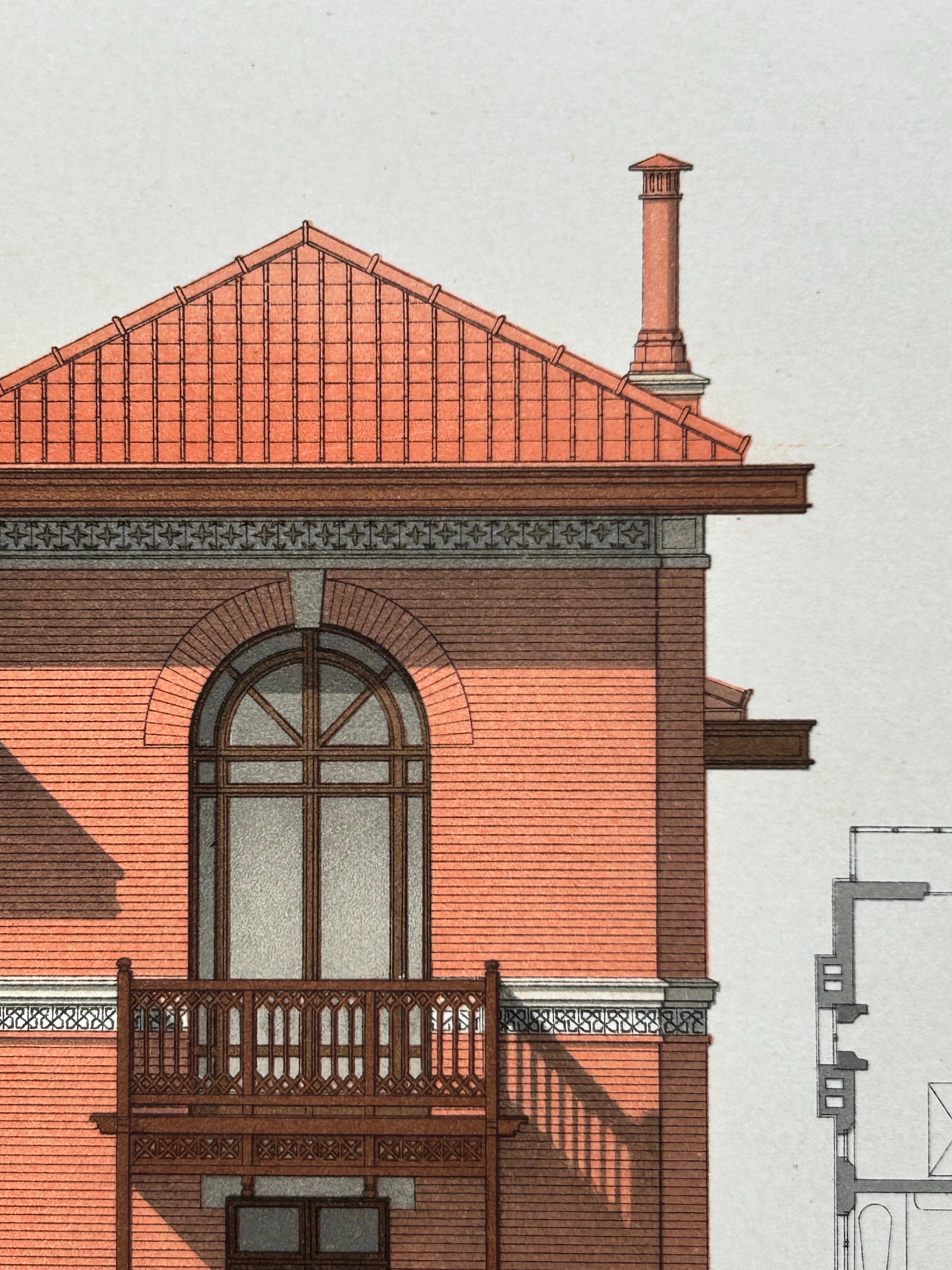
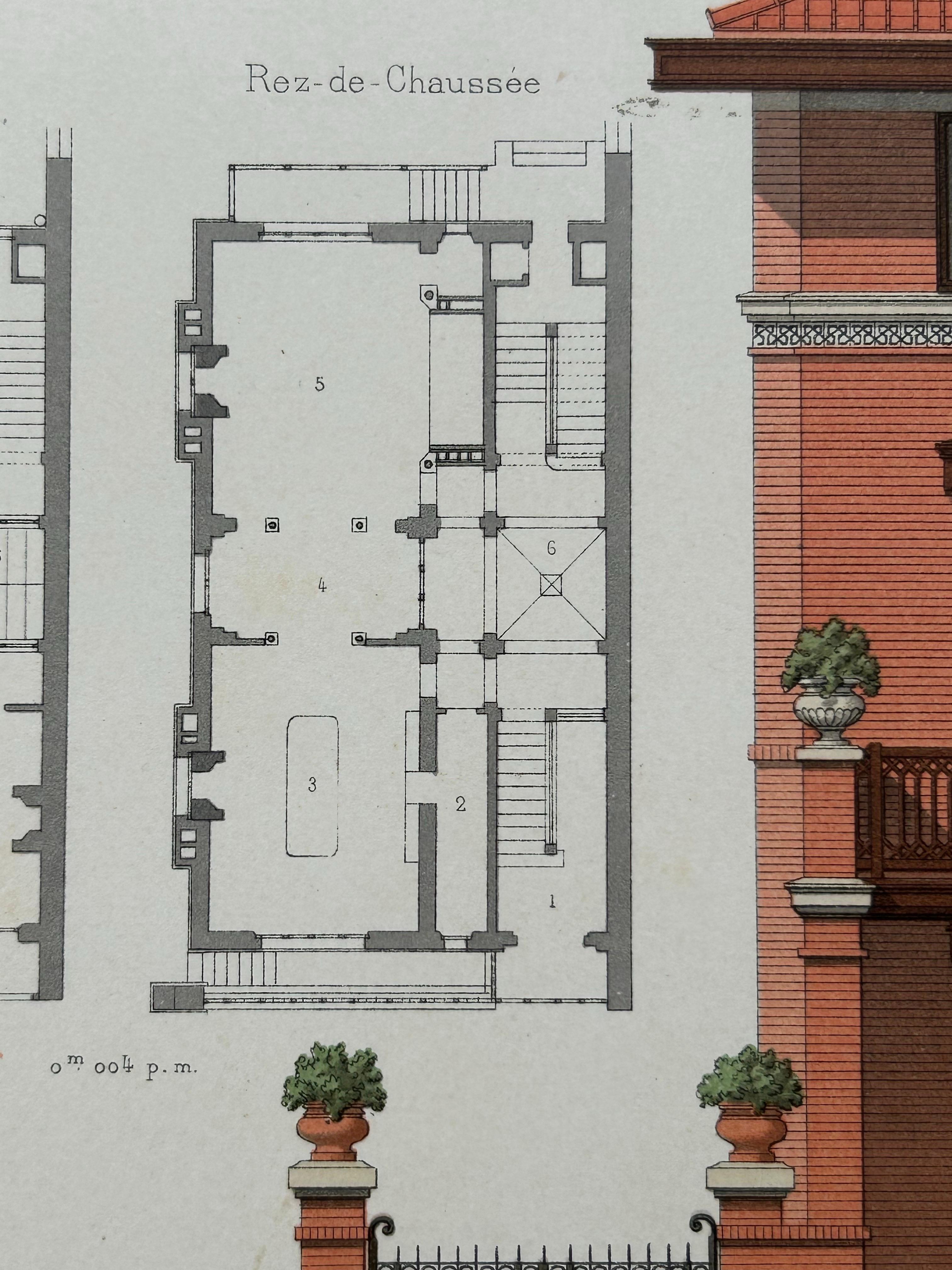
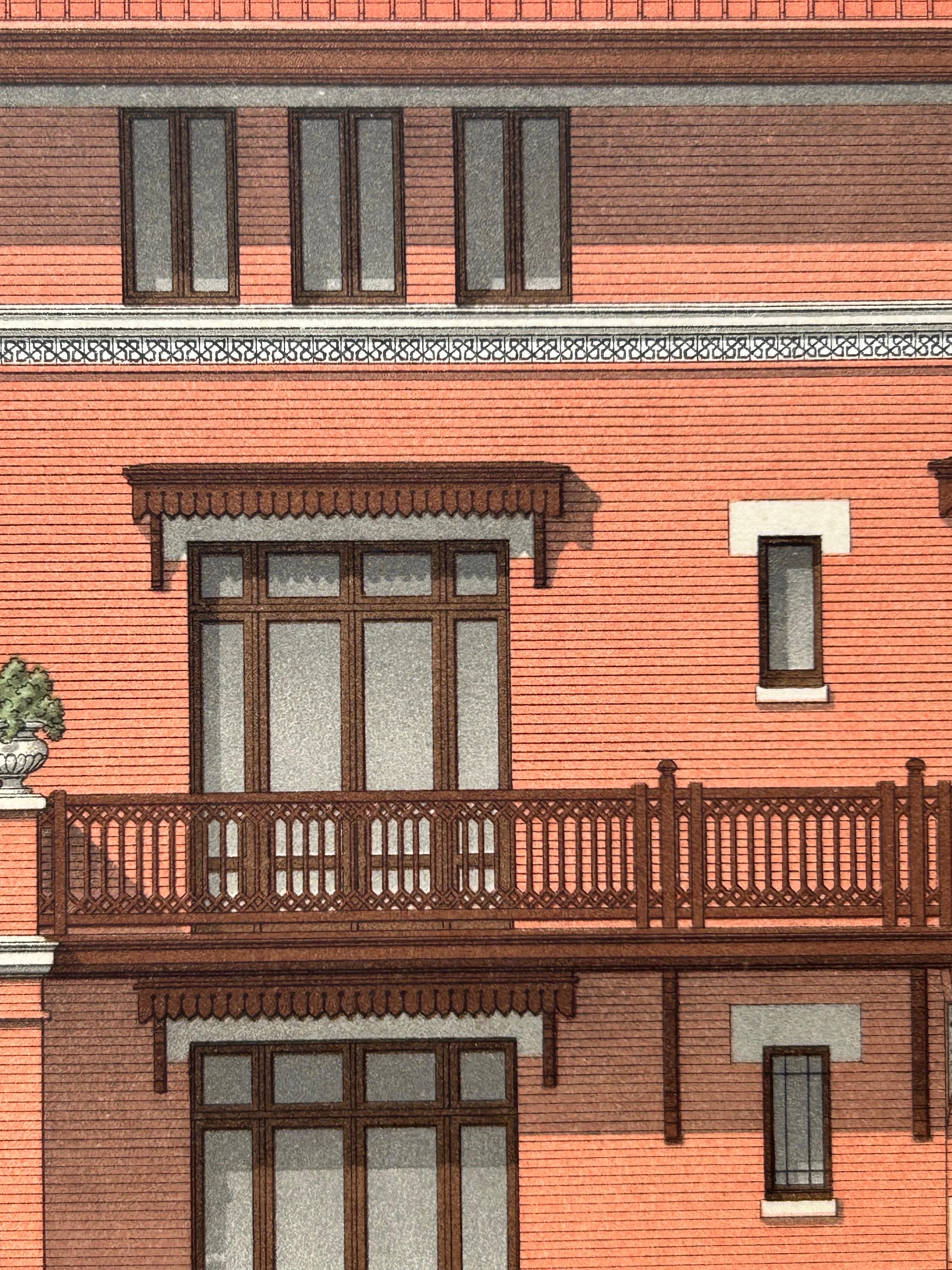
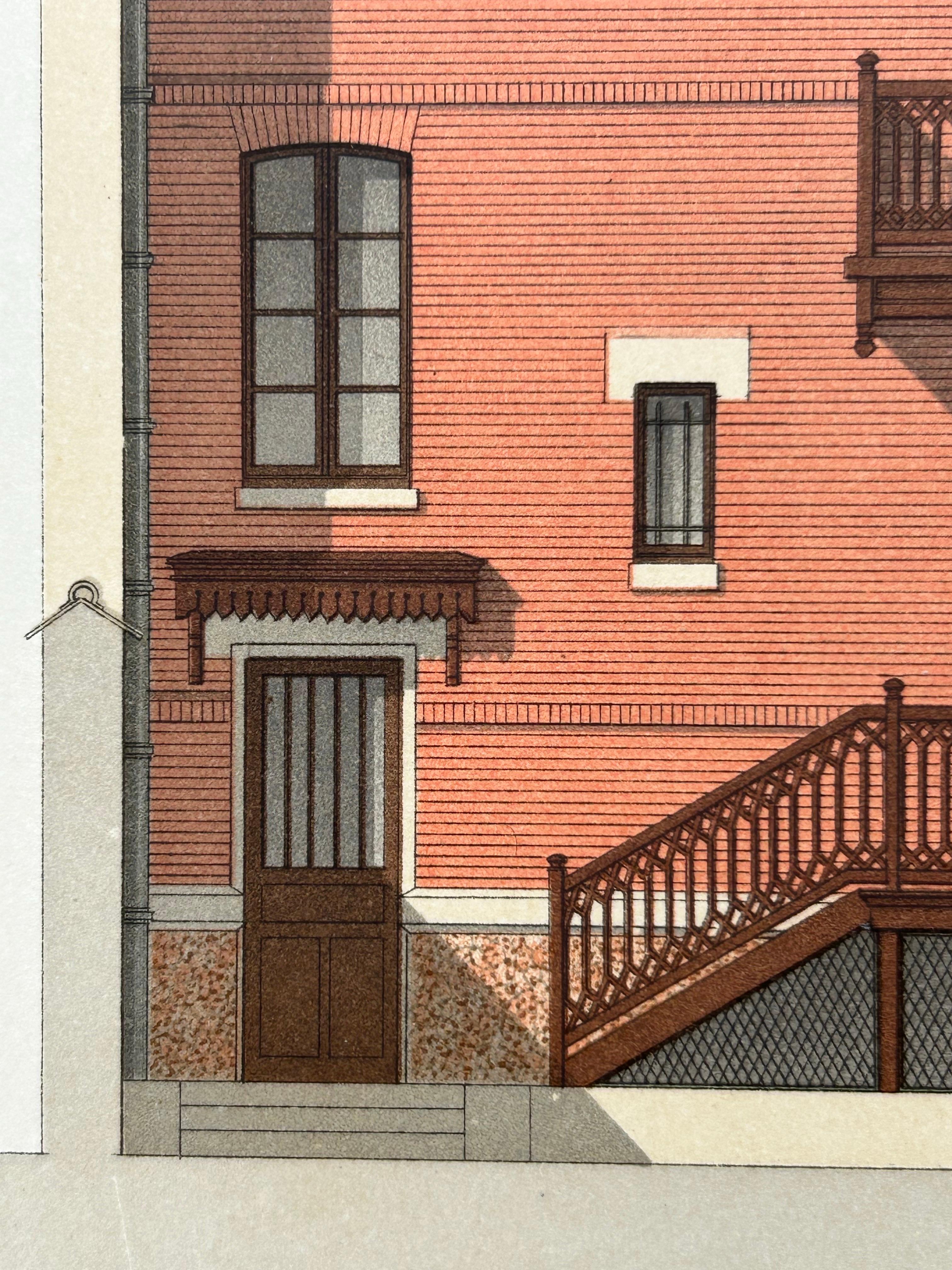
The façade features symmetrical arrangements of windows, wrought-iron balconies, and terracotta accents, demonstrating how ornamental brickwork was used to enhance both elegance and solidity. The plate includes two detailed perspectives—the garden side and the street side—allowing the viewer to appreciate how the house was designed to balance private domestic life with its public urban presence. The ground and first floor plans are displayed at the center, offering a rare insight into the internal organization of such townhouses, with reception areas, dining rooms, and service quarters carefully laid out to accommodate Parisian bourgeois life.
The architect, Sellier de Gisors, worked within the tradition of combining classical references with modern construction, ensuring that his buildings were both structurally advanced and visually harmonious. His inclusion in Chabat’s work underscores his contribution to the architectural landscape of Paris at the turn of the century.
For collectors, this print is not only a testament to architectural history but also a piece of Parisian heritage, capturing the sophistication of a city that was then at the heart of European cultural life.
Condition report: Very good condition. Strong impression with rich coloration. Light marginal toning and faint spotting consistent with age, well outside the image area. Plate mark visible.
Framing tips: A black or walnut wooden frame with a cream mat will emphasize the strong architectural lines. Alternatively, a gilt frame with ivory matting will give the print a period feel, enhancing its Parisian elegance.
Technique: Chromolithograph
Maker: Pierre Chabat, France, c.1900