About this sheet
Antique Print of Villa à Luzarches by Tronquois, c.1900
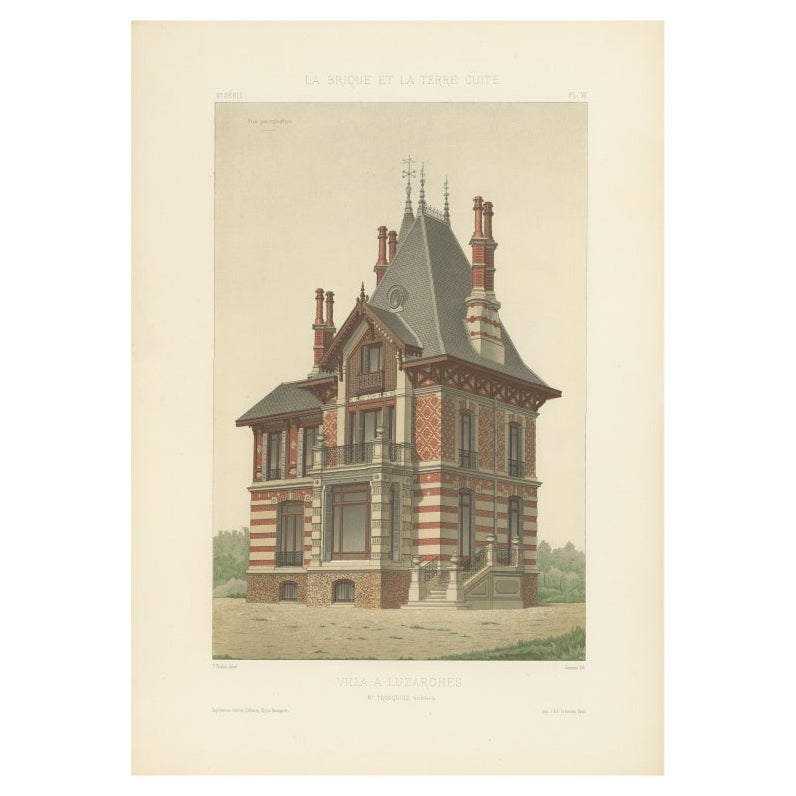
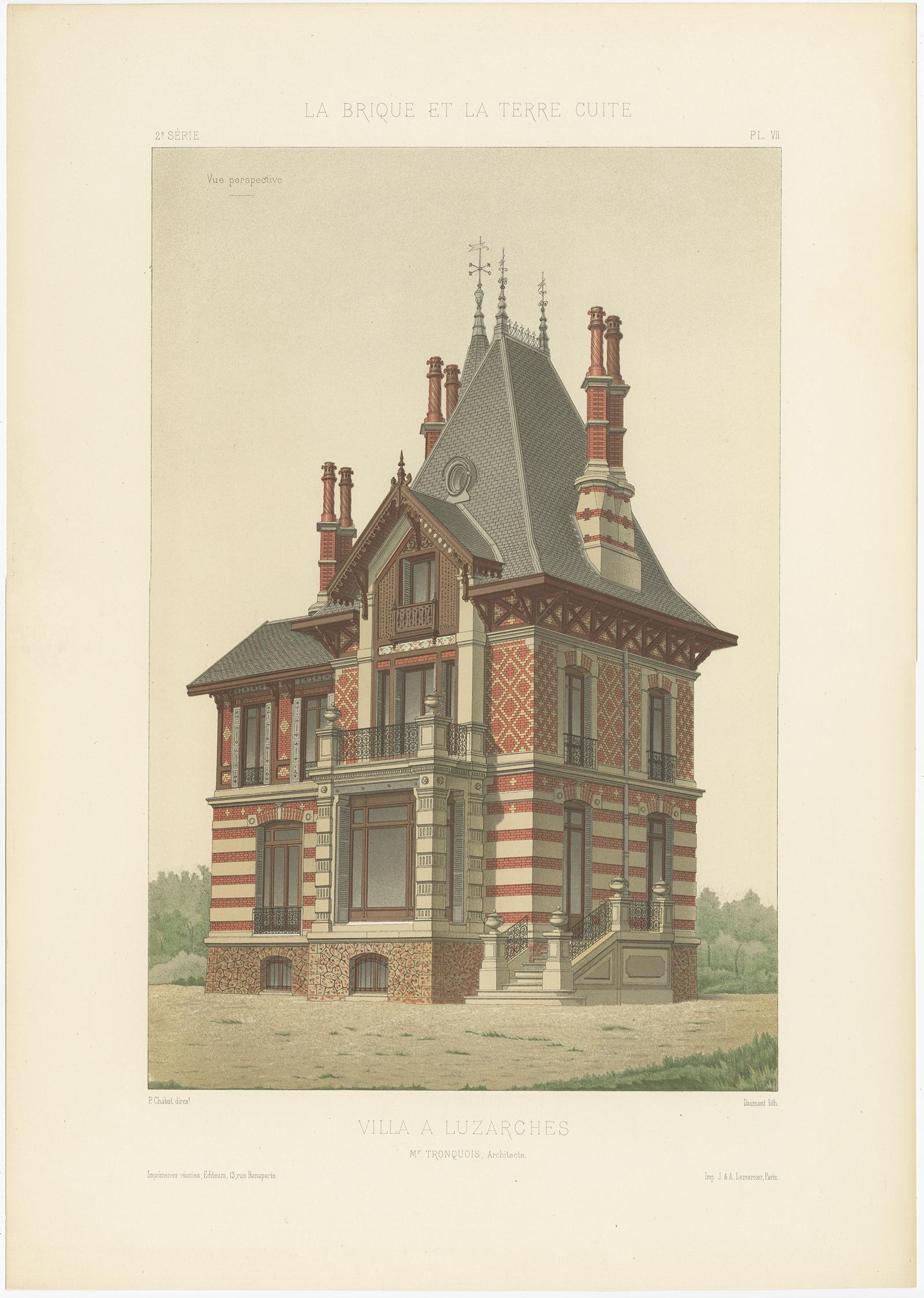
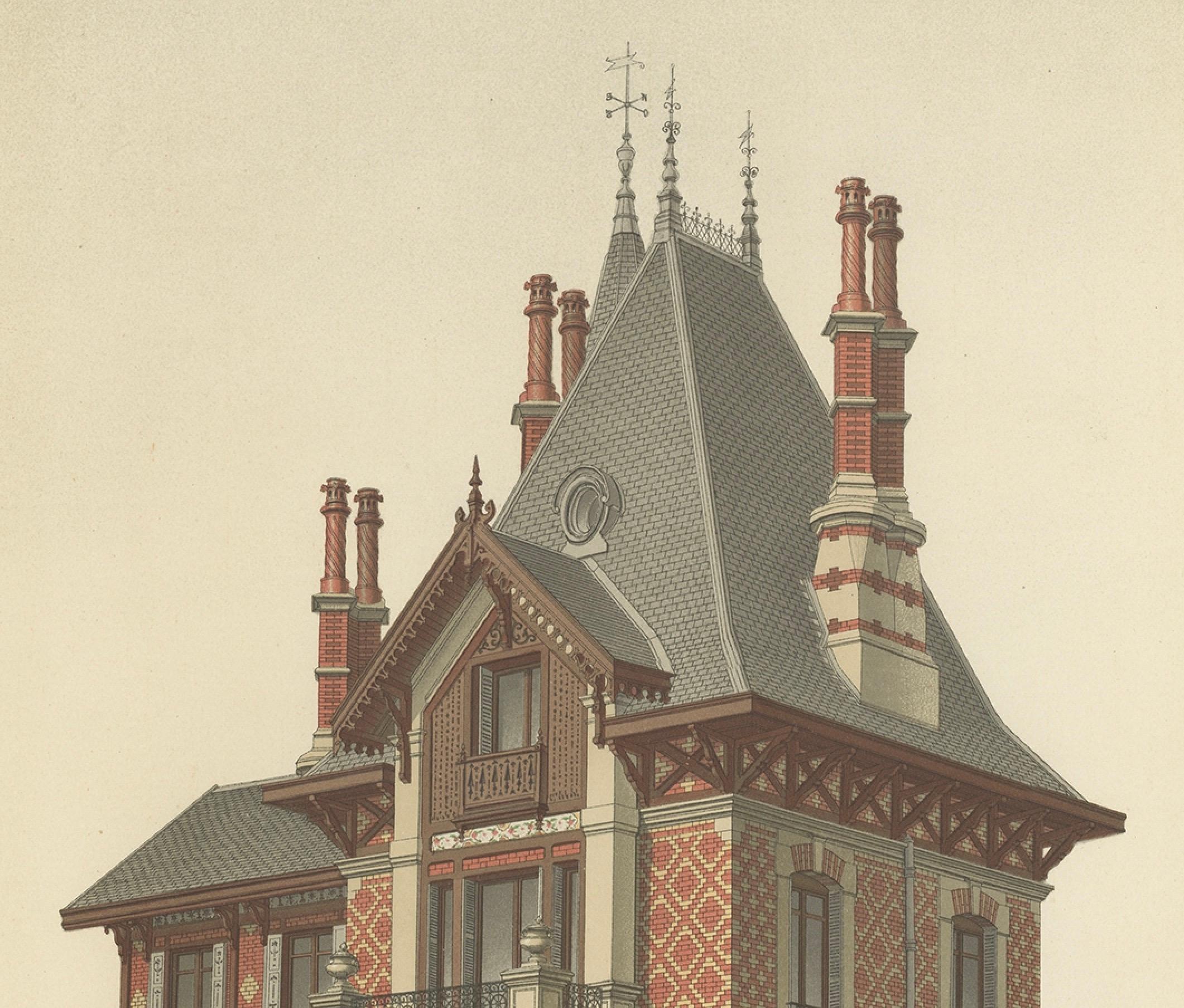
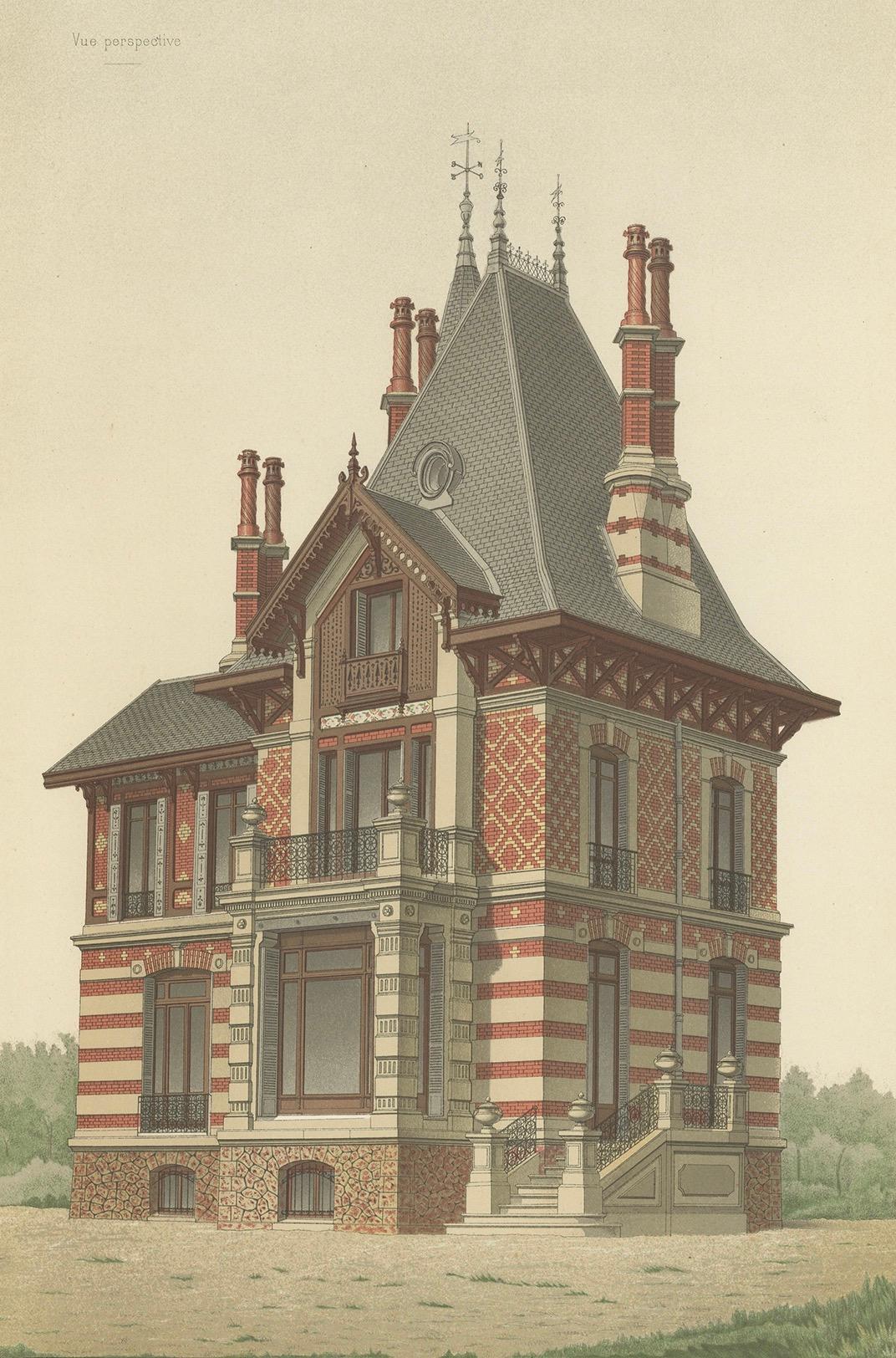
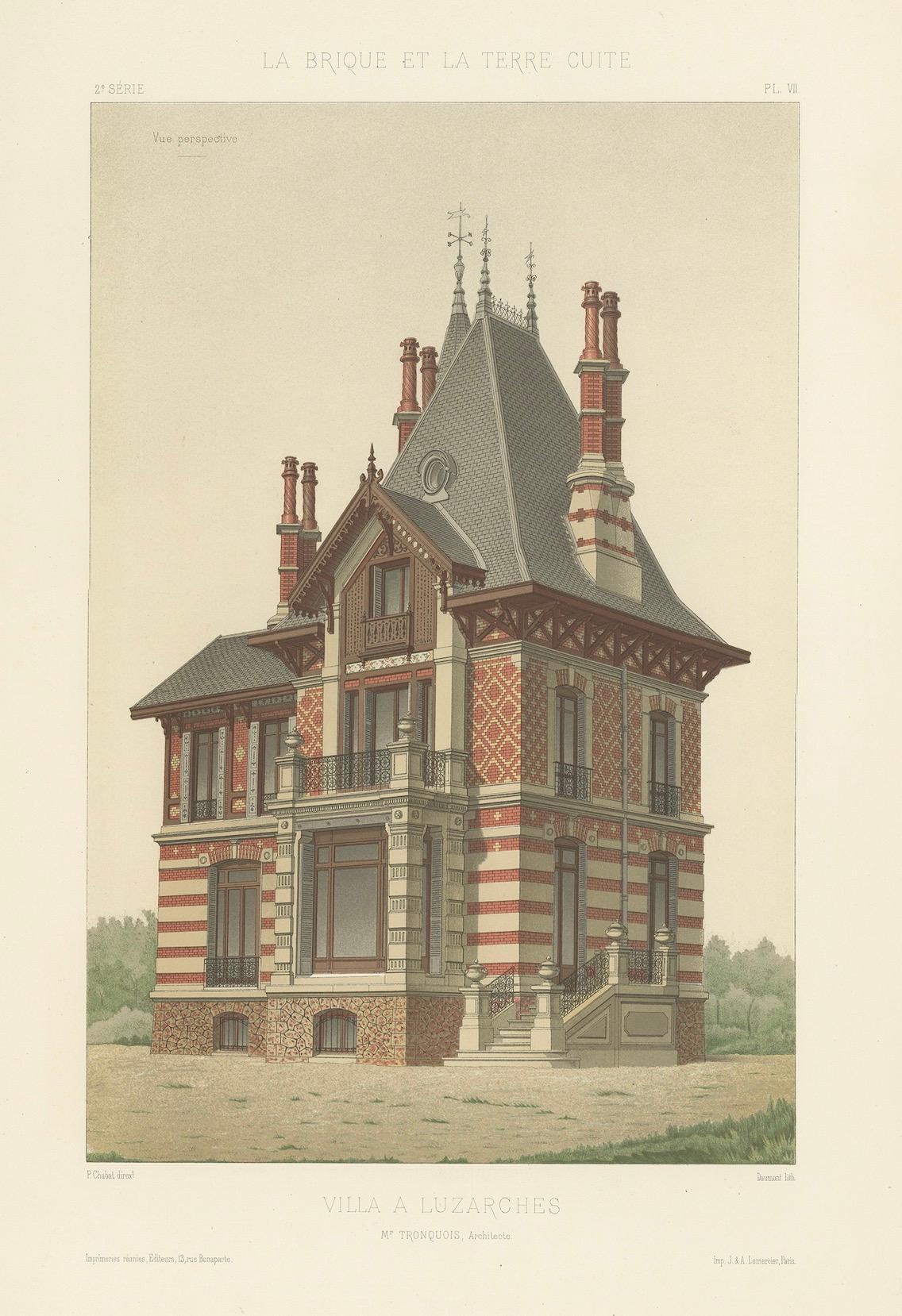
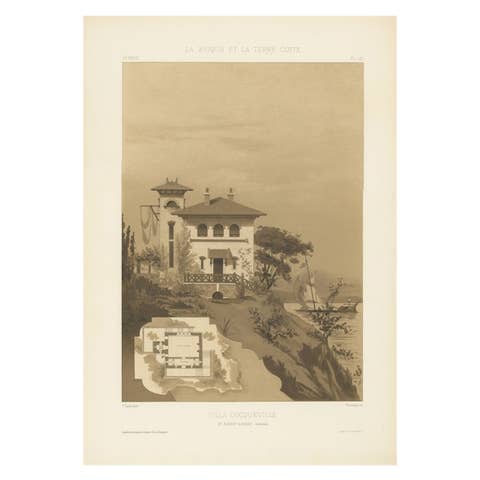
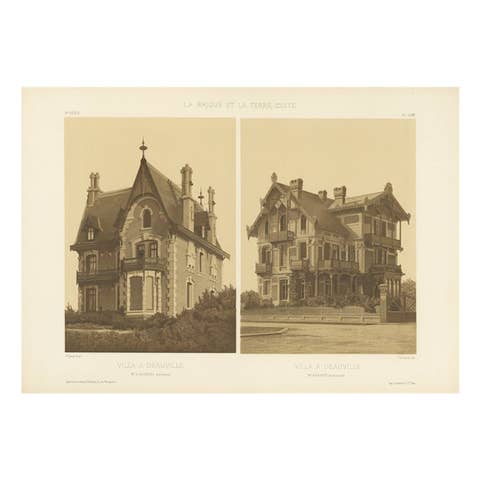
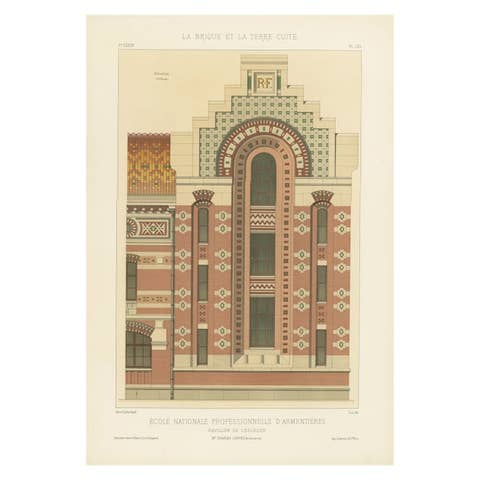
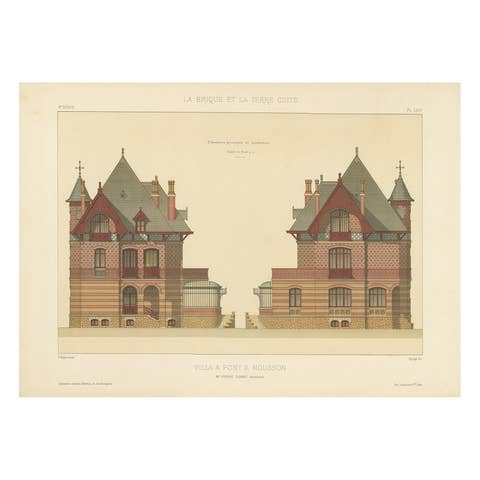
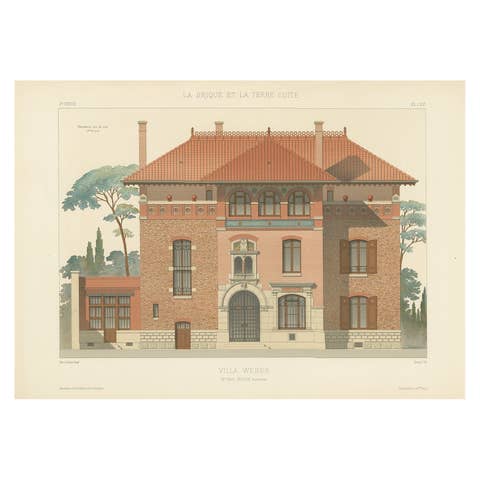
Antique architectural print titled "Villa à Luzarches," designed by Mr. Tronquois, Architecte. This striking plate originates from *La Brique et La Terre Cuite* by Pierre Chabat, published in Paris around 1900, one of the most refined architectural folios of its era.
The print presents a perspective view of a villa in Luzarches, a town north of Paris, embodying the eclectic and picturesque style of late 19th-century French domestic architecture. The building is distinguished by its polychrome brickwork, alternating bands of red and cream brick, and decorative geometric patterns that enliven the façades. The tall, steep slate roof is punctuated by ornate dormers and a series of finely detailed brick chimneys, which add both vertical emphasis and grandeur. The projecting central bay, complete with balconies and large windows, provides balance and symmetry while enhancing the villa’s light-filled interior.
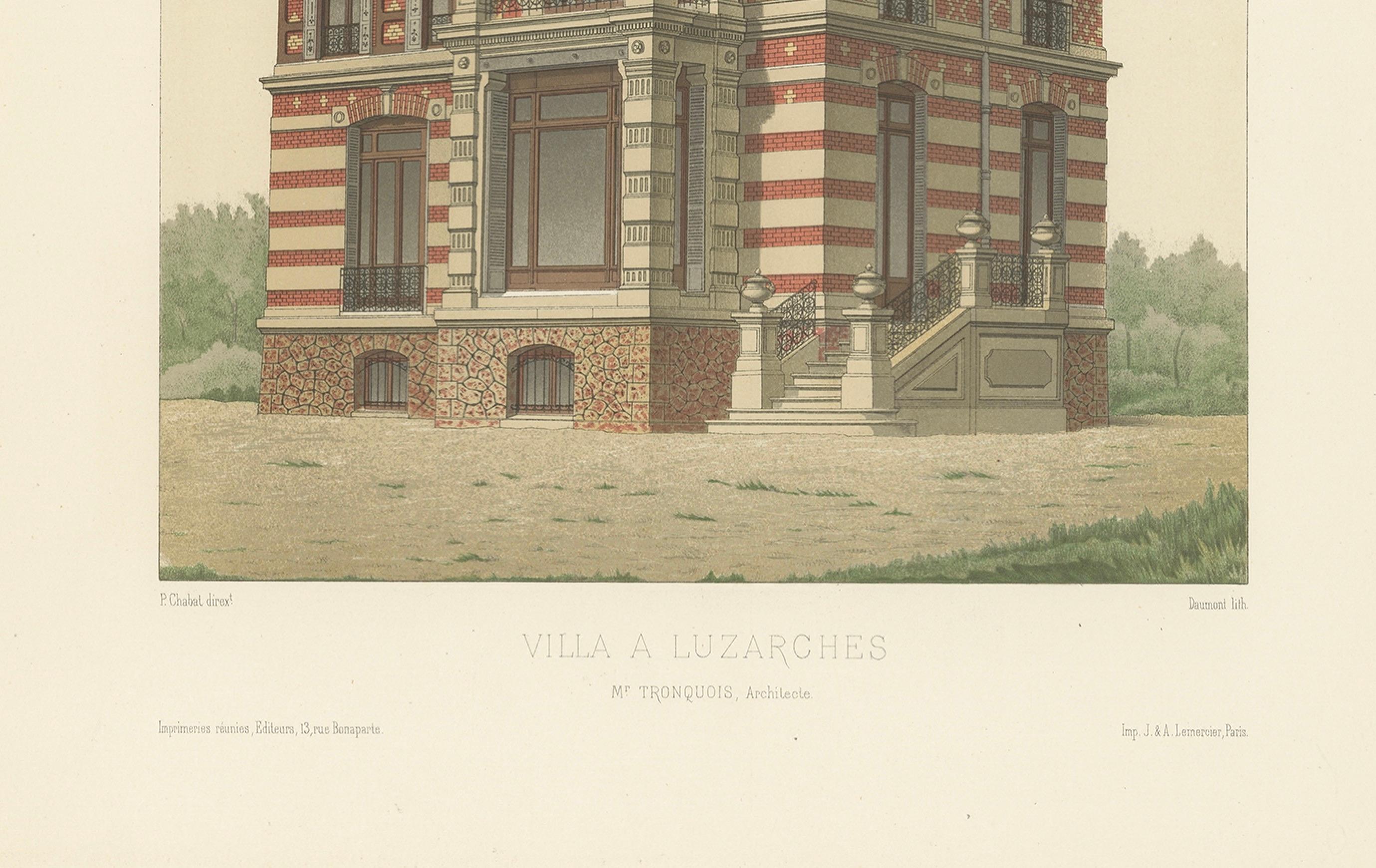
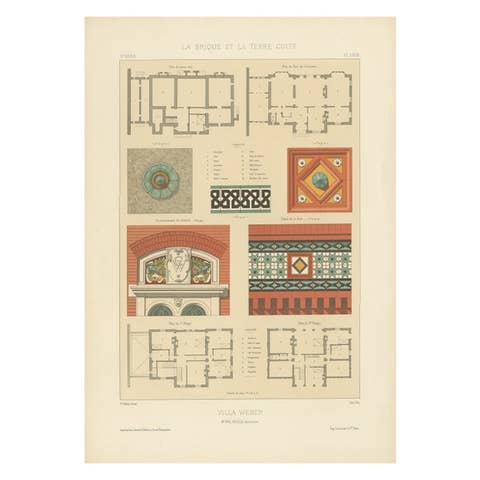
Unlike the floor-plan plates in the series, this perspective rendering emphasizes the villa’s exterior character and elegance. The careful detailing of cornices, stone framing, wrought iron balconies, and the brick-and-stone combination showcase the richness of Belle Époque craftsmanship. Villas such as this were intended for affluent families seeking stylish suburban residences that combined comfort, practicality, and architectural sophistication.
This print highlights the ambitions of the period to celebrate brick and terracotta as decorative as well as structural materials. By presenting the villa in its landscaped context, the plate captures the aspirational lifestyle associated with such residences.
Condition report: Very good condition, colors fresh and impression strong. Minor marginal toning and occasional light foxing consistent with age, well away from the printed area. Plate mark visible.
Framing tips: A slim black or mahogany frame with a cream or pale grey mat will accentuate the architectural lines, while a gilded frame can emphasize its decorative richness. Ideal for hanging in a study, library, or architectural office.
Technique: Chromolithograph
Maker: Pierre Chabat, France, c.1900