About this sheet
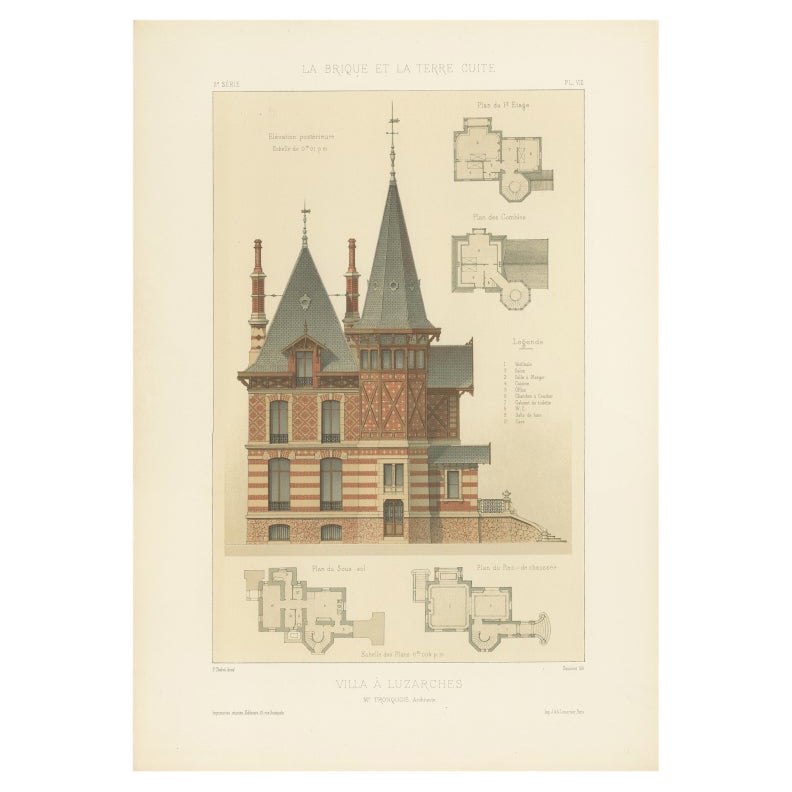
Antique Print of Villa à Luzarches by Tronquois, c.1900
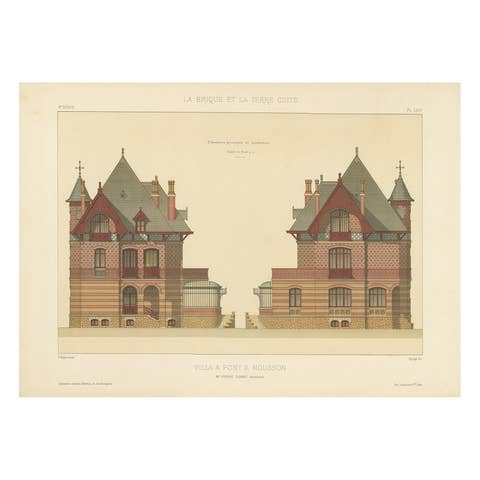
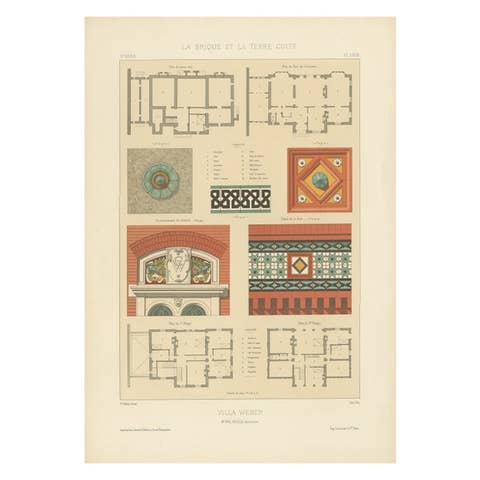
Antique architectural print titled "Villa à Luzarches," designed by Mr. Tronquois, Architecte. This plate originates from *La Brique et La Terre Cuite* by Pierre Chabat, published in Paris around 1900. The series is one of the most celebrated architectural folios of its time, highlighting the creative use of brick and terracotta in French domestic and civic architecture.
The print depicts a richly detailed villa in Luzarches, a historic town located north of Paris. The elevation showcases the combination of striped brick patterns and half-timber decorative motifs, crowned with steep slate roofs and prominent towers characteristic of late 19th-century eclectic design. The tall chimneys, elaborate gables, and symmetrical rhythm of windows emphasize both elegance and grandeur, marking this villa as a prestigious suburban residence.
The plate also includes detailed floor plans of the basement (sous-sol), ground floor (rez-de-chaussée), and upper levels (1er étage and combles), providing insight into the interior arrangement. The plans illustrate a vestibule, salon, dining room, office, kitchen, bedrooms, cabinet de toilette, and service spaces such as cellar and caves. These architectural details reveal both functionality and refinement, aligning with the Belle Époque ideals of comfort, craftsmanship, and aesthetic harmony.
Such prints were not only references for practicing architects and builders but also artistic works, intended to spread modern architectural ideas and decorative possibilities. Villas like this represent the suburban growth of the Parisian region at the turn of the 20th century, where industrial progress met the desire for stylish, individual residences in landscaped surroundings.
Condition report: Very good condition with vibrant color preservation and crisp impression. Light marginal toning and occasional faint foxing, typical for the age, not affecting the printed image. Plate mark visible.
Framing tips: This plate is ideal for display in a thin black or walnut frame with a cream or pale grey mat, allowing the architectural details and subtle brick tones to stand out. A gilded frame can also enhance its decorative character, making it a striking piece for a study or library wall.
Technique: Chromolithograph
Maker: Pierre Chabat, France, c.1900