About this sheet
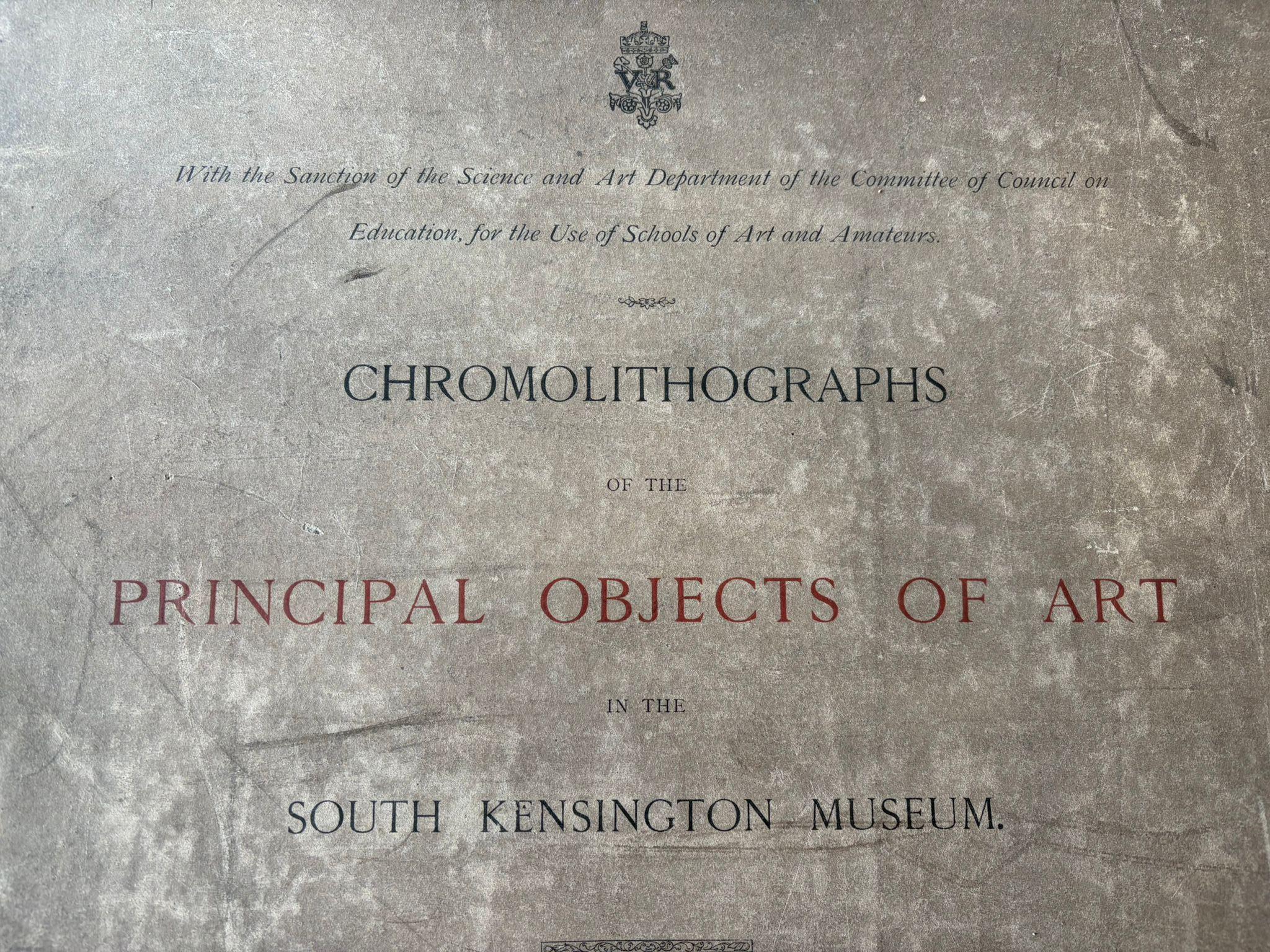
1875 Arundel Society Folio – South Kensington Museum Chromolithographs (4)
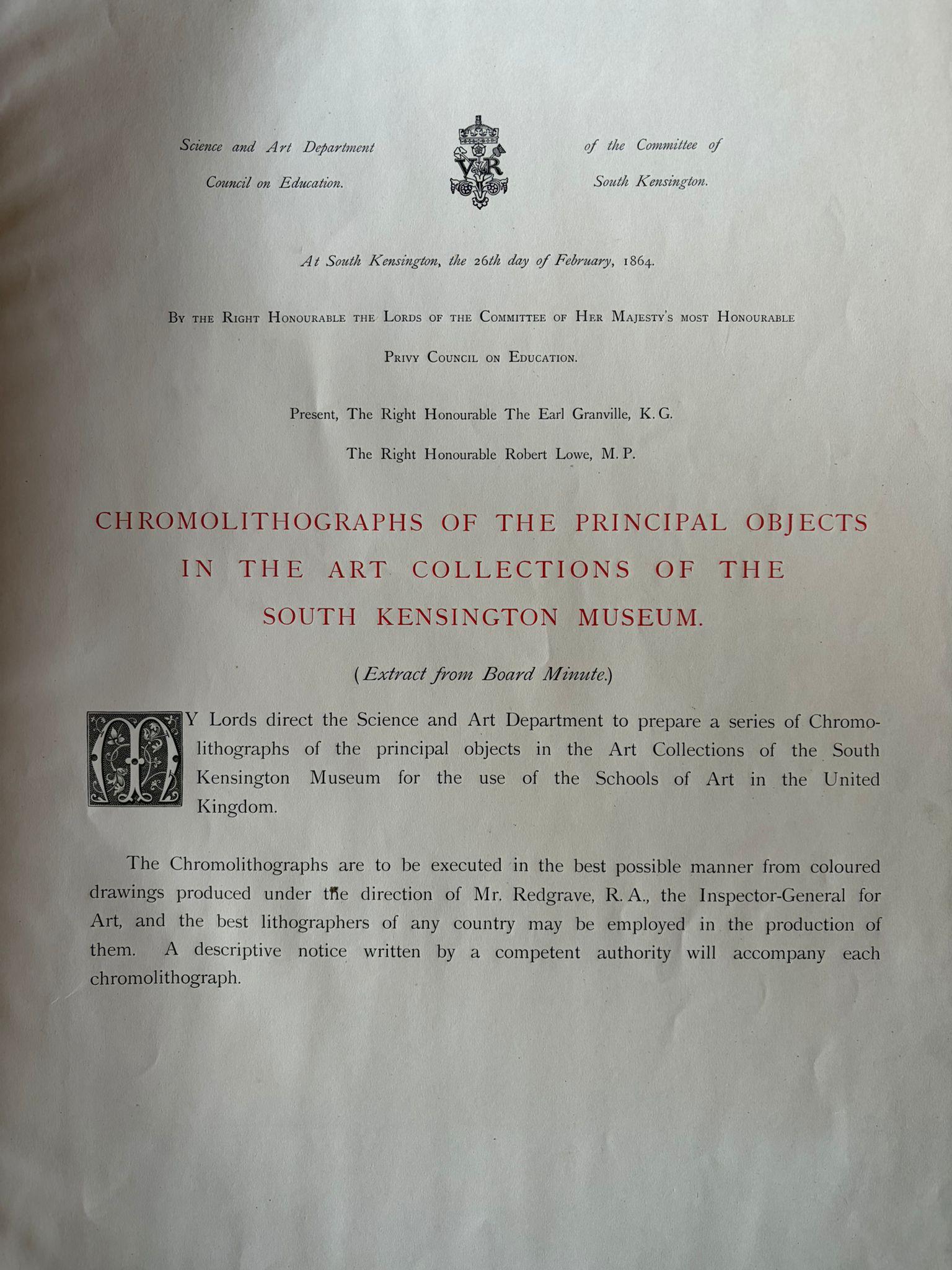
This impressive large folio presents a complete set of chromolithographs published in 1875 by the Arundel Society, documenting four celebrated medieval masterpieces from the art collections of the South Kensington Museum (today the Victoria and Albert Museum). Conceived under the auspices of the Science and Art Department of the Committee of Council on Education, the project formed part of a highly ambitious Victorian effort to elevate standards of design and craftsmanship through accurate, scholarly visual reproductions of exemplary historical works.
Issued as a teaching and reference portfolio for British art schools, these chromolithographs were executed to the highest technical standards of the period, with exceptional fidelity to original materials, enamels, gilding, and sculptural detail. Each plate is accompanied by its original descriptive text leaf, providing authoritative historical, iconographic, and technical commentary prepared by contemporary specialists. The result is not merely a decorative portfolio, but a serious scholarly document reflecting mid-19th-century museum practice, connoisseurship, and the Gothic Revival interest in medieval art.
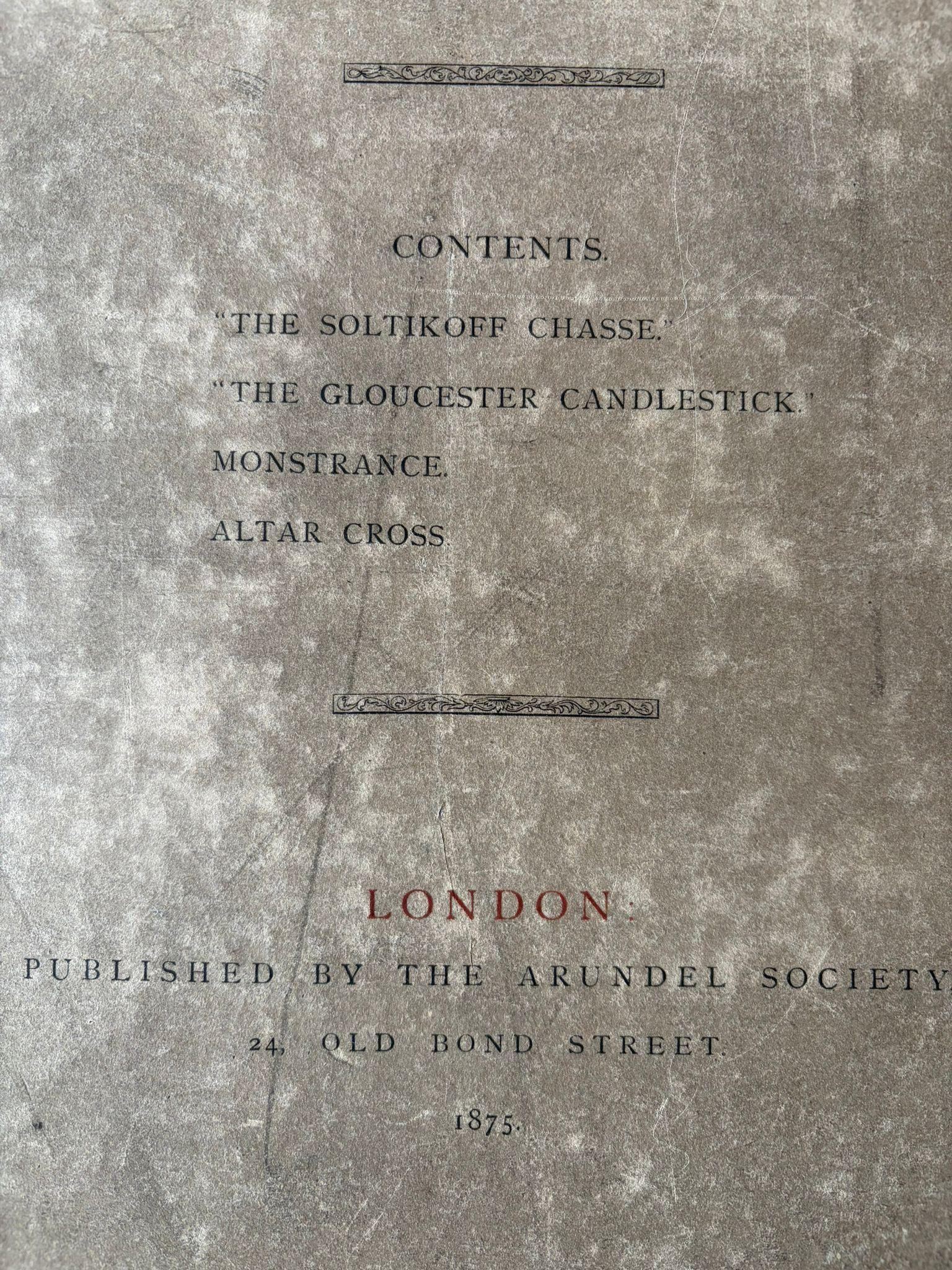
The present example is complete as issued, comprising the title and contents leaf, introductory institutional text, and all four chromolithographic plates with their corresponding descriptions. Such intact sets are increasingly scarce, as many were historically broken for individual framing.
Plates included (with scholarly notes):
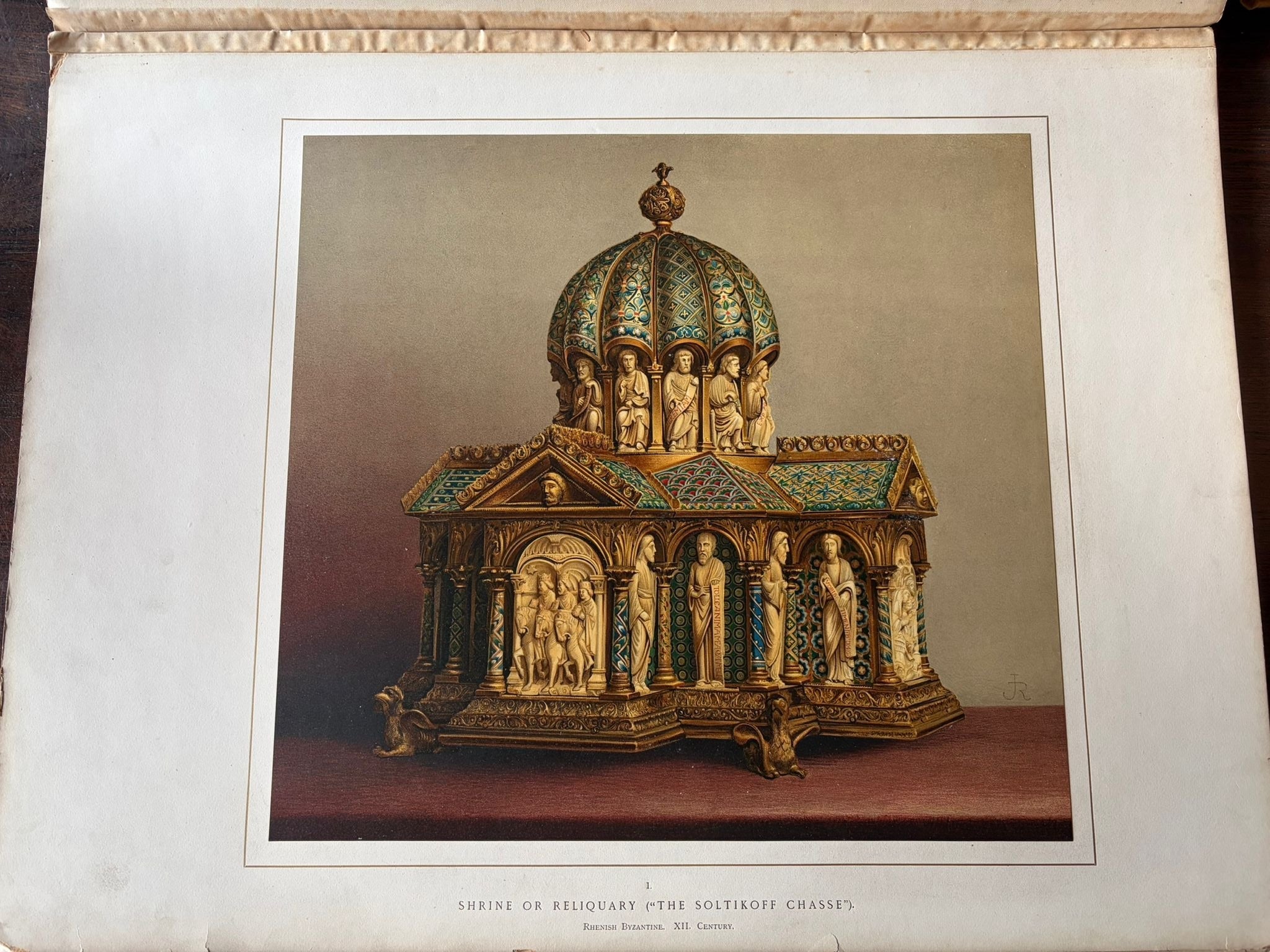
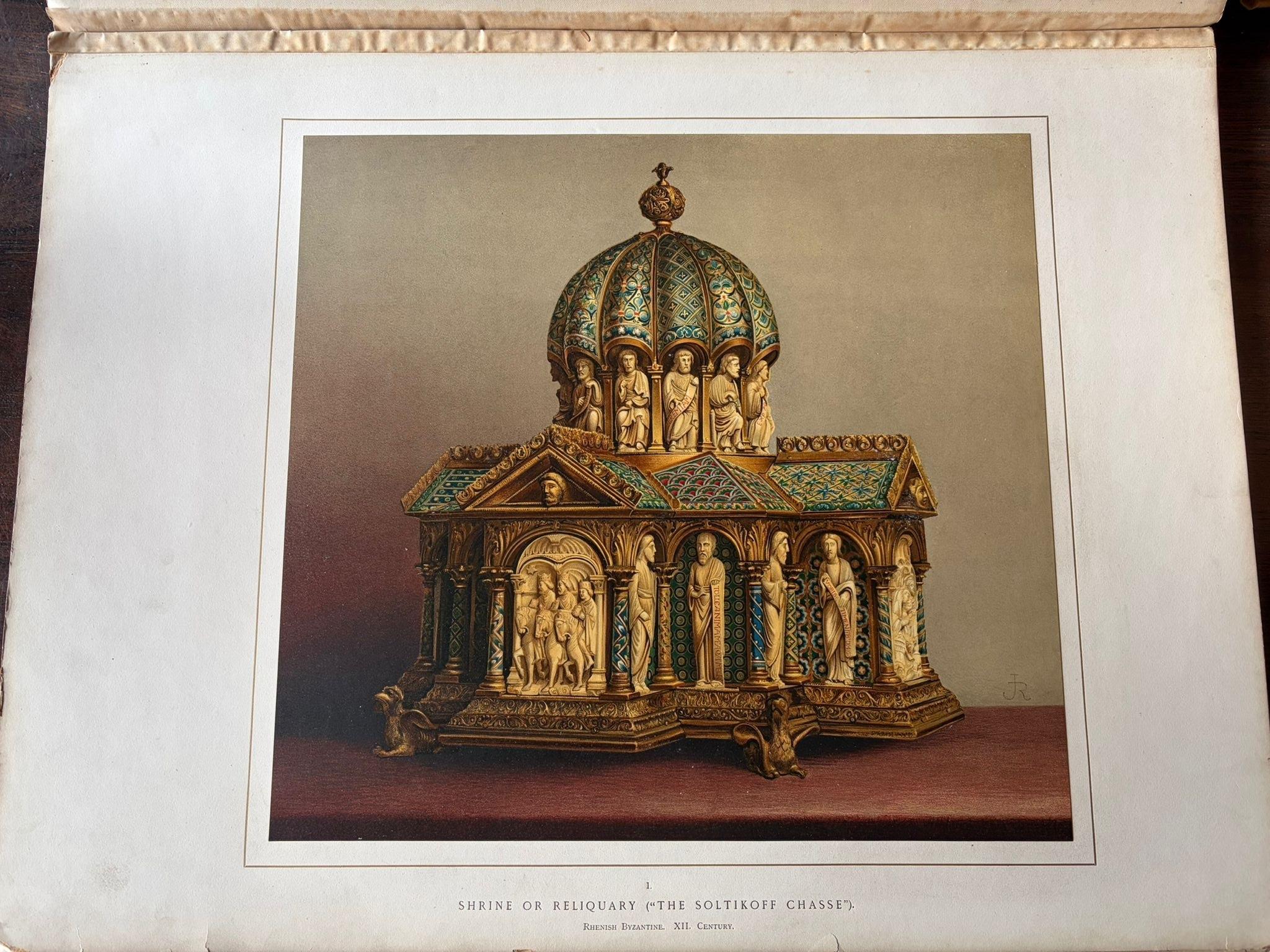
1. Shrine or Reliquary (“The Soltikoff Chasse”) – Rhenish Byzantine, 12th century
A celebrated Romanesque reliquary in the form of a Byzantine church, richly ornamented with champlevé enamels and ivory figures. Formerly part of the Soltikoff Collection, this object was admired in the 19th century as a benchmark of German medieval enamelling, and the Arundel Society reproduction was instrumental in disseminating its architectural and iconographic program to designers and scholars.
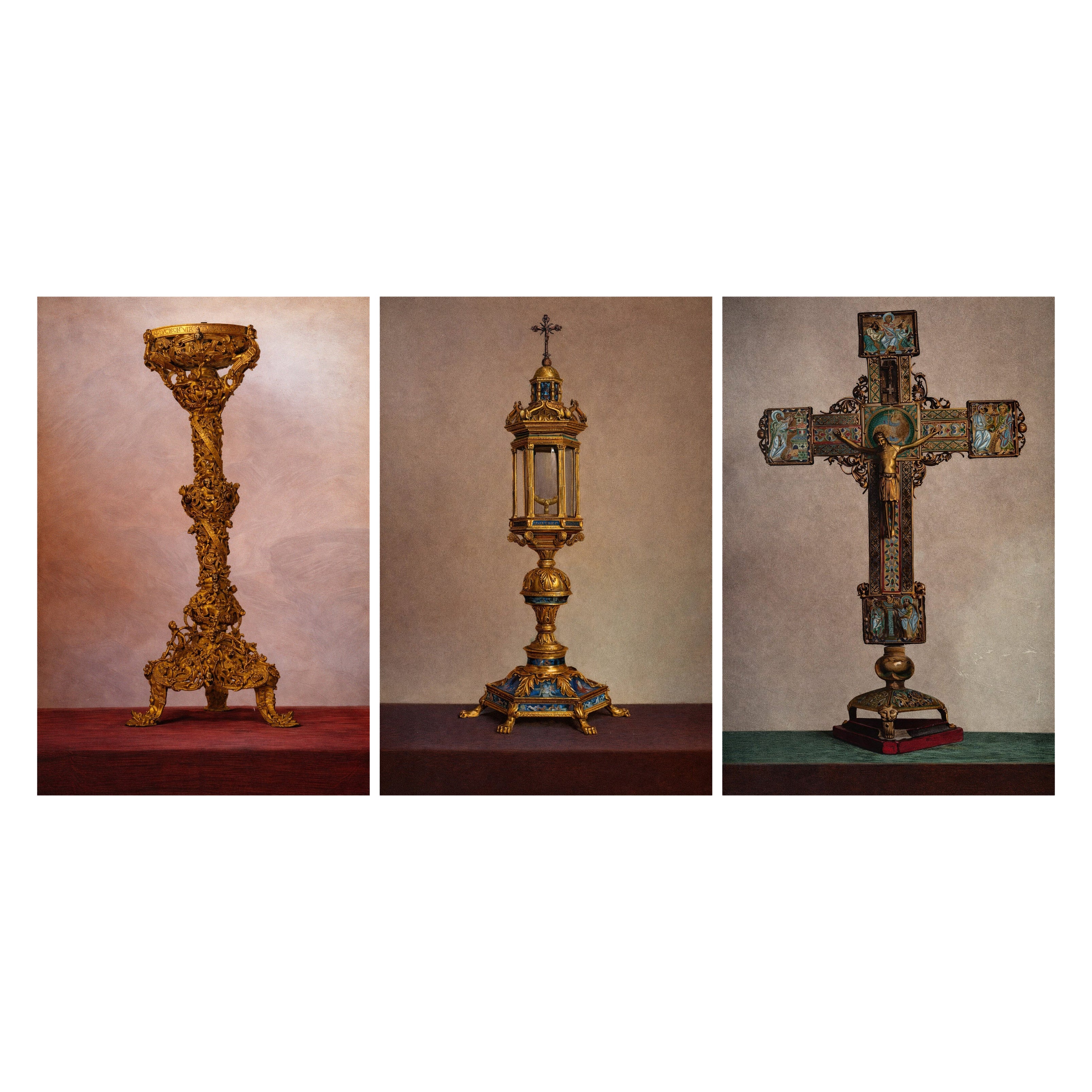
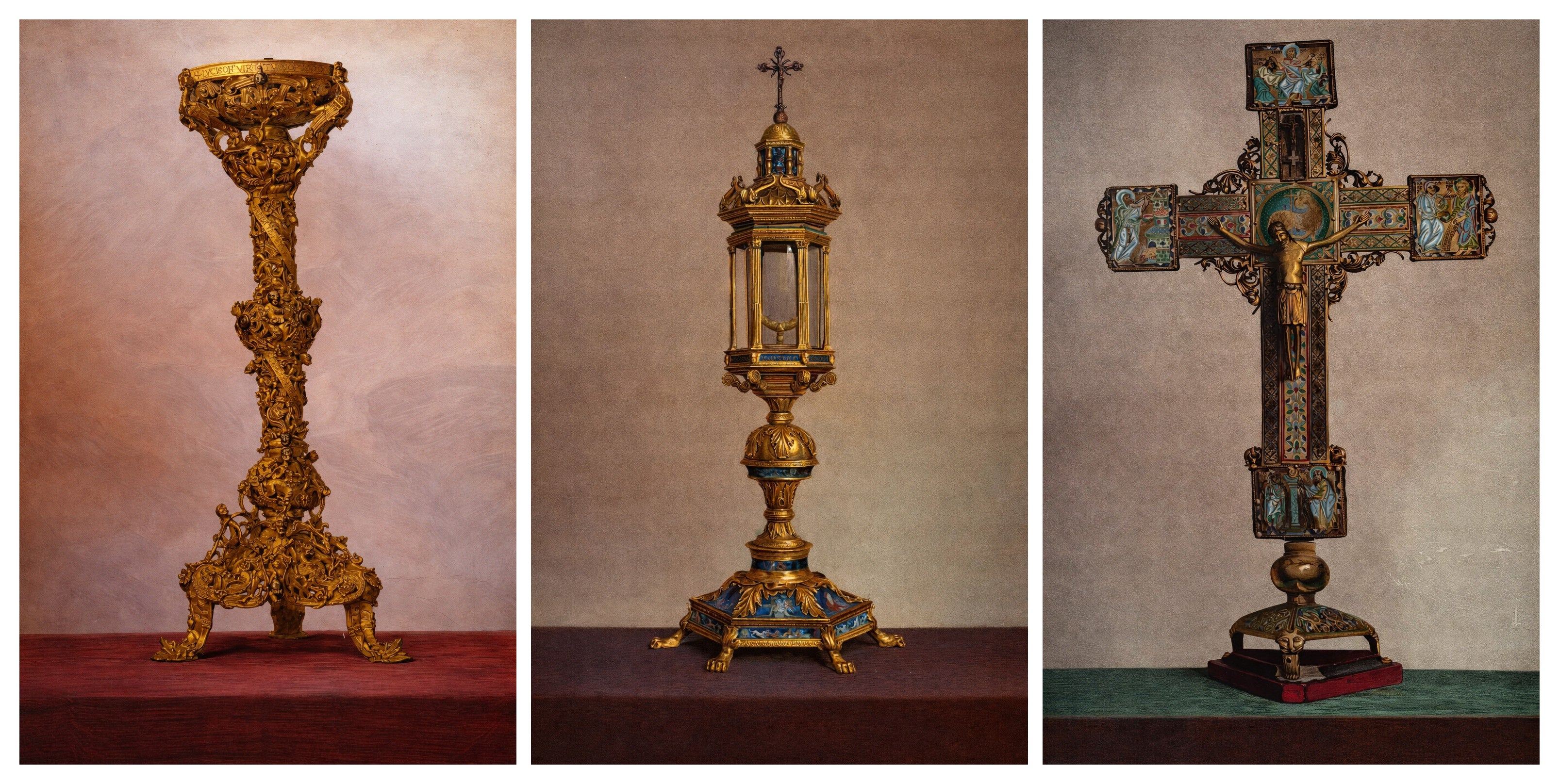
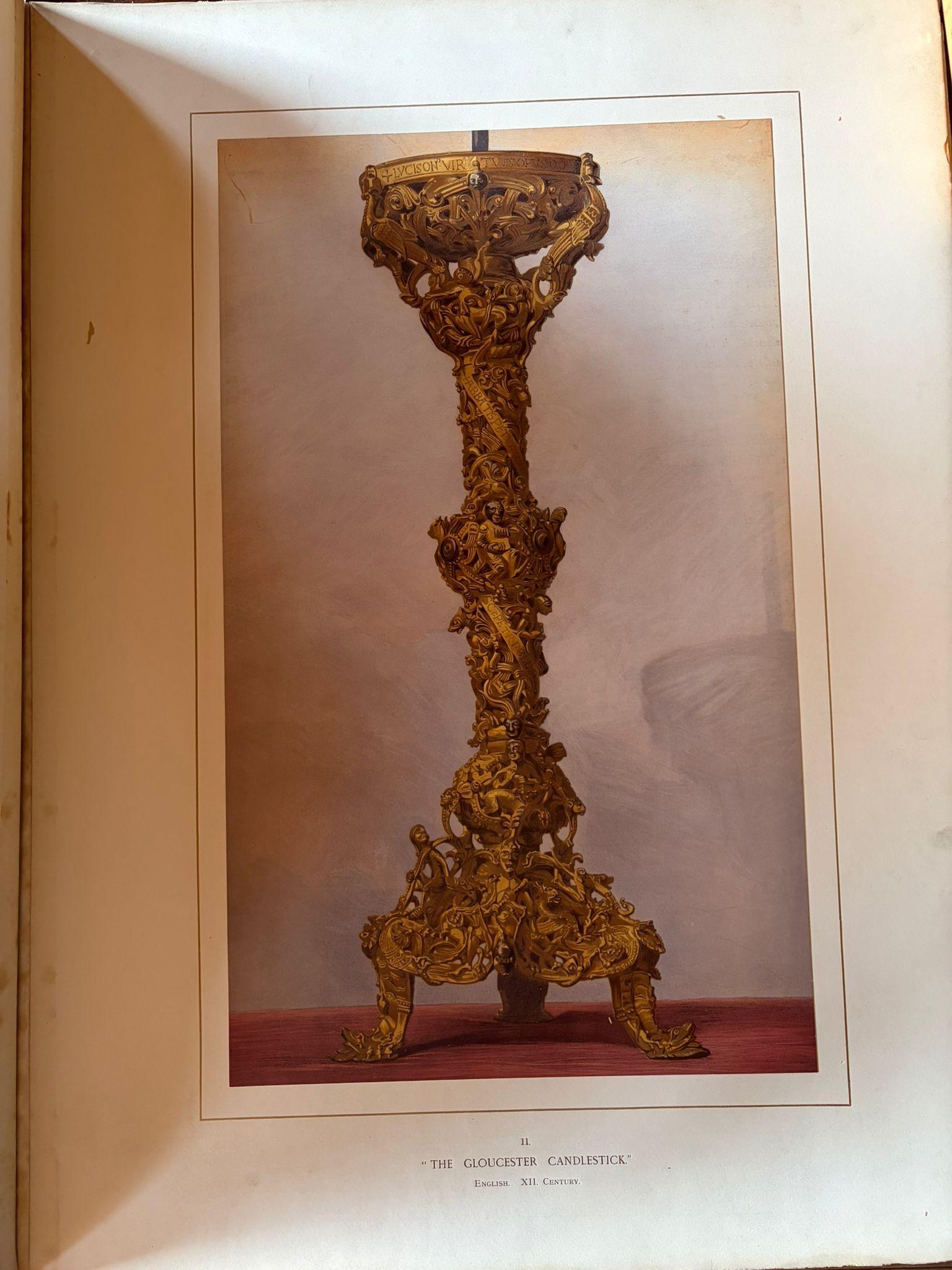
2. The Gloucester Candlestick – English, 12th century
One of the most iconic survivals of English Romanesque metalwork, renowned for its dynamic sculptural surface of interlaced figures, foliage, and beasts. The accompanying text carefully records its Latin inscriptions and historical provenance, fixing its date to the abbacy of Peter of Gloucester (1104–1112), making this plate an important early scholarly witness.
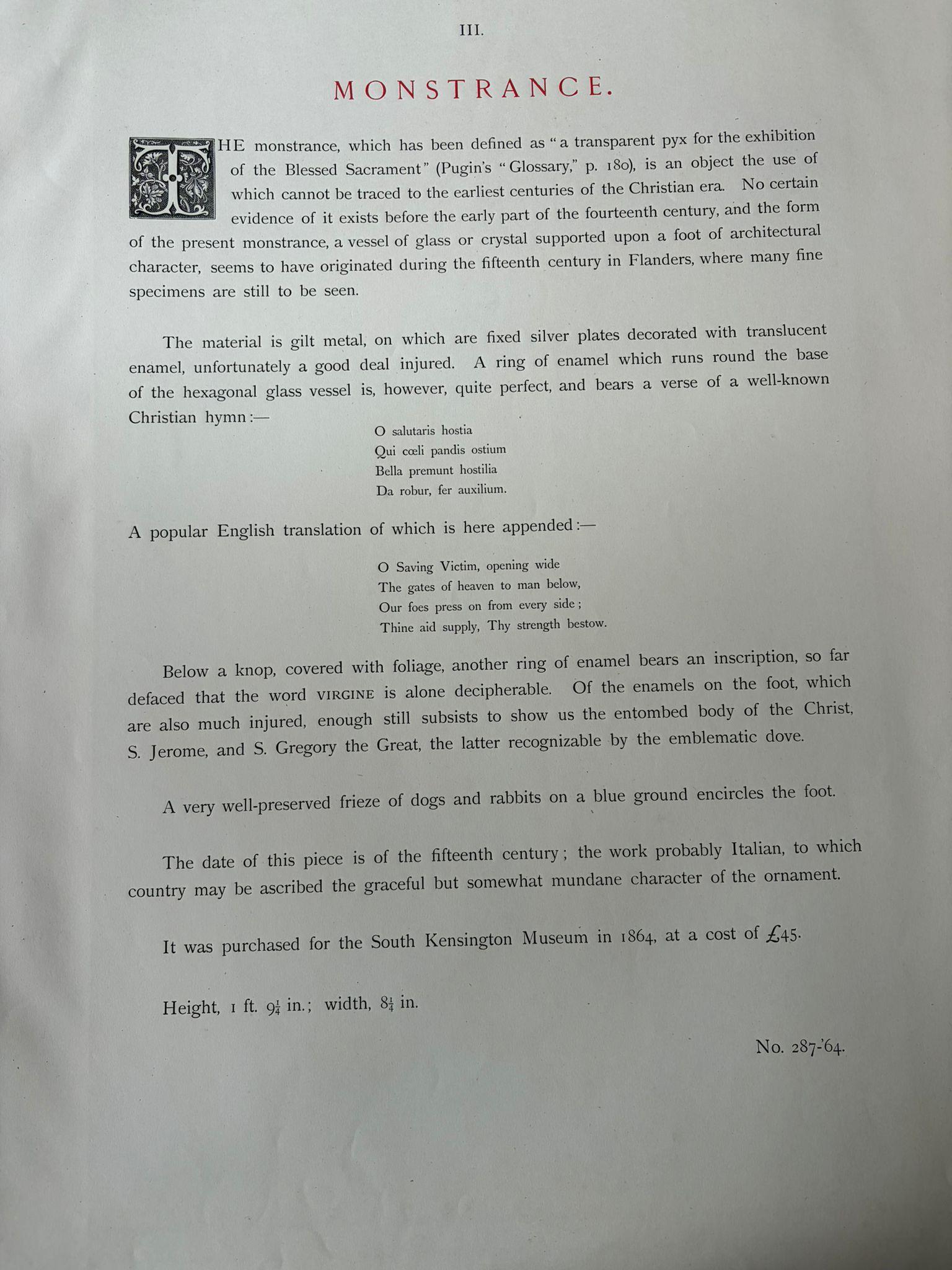
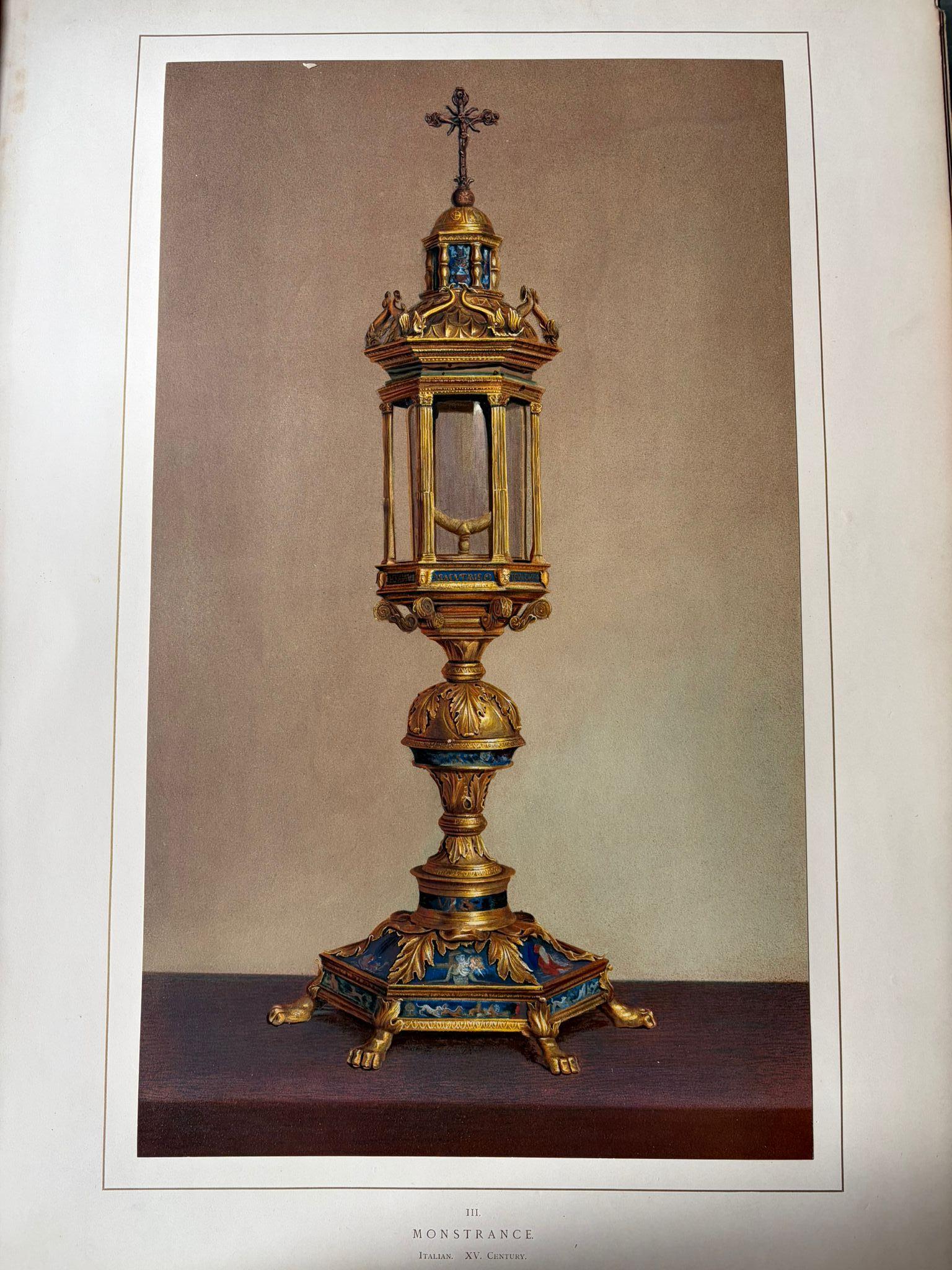
3. Monstrance – Italian, 15th century
A refined example of late medieval Italian ecclesiastical metalwork, combining architectural structure with translucent enamels and gilded surfaces. The text situates the object within the evolution of Eucharistic display vessels and highlights its decorative vocabulary, likely Italian in origin despite earlier Northern associations.
4. Altar Cross – Rhenish Byzantine, 12th century
A masterwork of Rhenish champlevé enamel on a wooden core, with densely symbolic scriptural scenes relating to redemption and the Passion. The detailed Victorian commentary reflects an early attempt at systematic iconographic interpretation, making this plate particularly valued by historians of medieval theology and art.
Together, these plates form a cohesive visual and intellectual statement of medieval craftsmanship, filtered through the lens of Victorian museum scholarship. The folio is equally compelling as a collector’s object, an interior design statement, or a reference work within a serious library of decorative arts.
Condition report:
Complete folio with all four chromolithographic plates and their original descriptive text leaves. Plates with strong, unfaded color and clean impressions; light, even toning to margins consistent with age. Text leaves with minor handling wear and gentle creasing. Folio binding with expected wear, contents intact and untrimmed.
Framing tips:
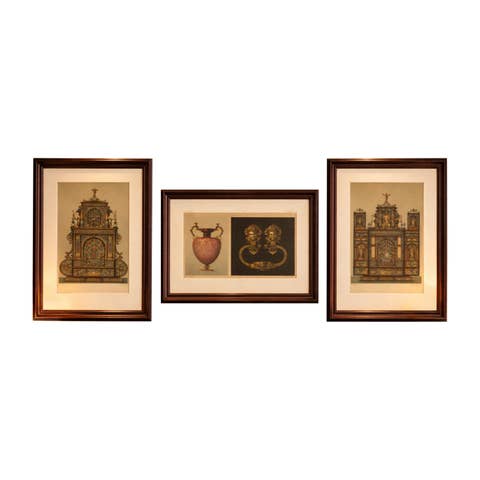
Each plate frames beautifully on its own using a wide ivory or soft stone-colored mat and a dark walnut or ebonized frame for a museum-style presentation. For a cohesive installation, consider framing the four plates as a unified series with identical mats and frames, hung in a linear or grid arrangement to emphasize their shared provenance and period.
Technique: Chromolithography
Maker: Arundel Society, London, 1875