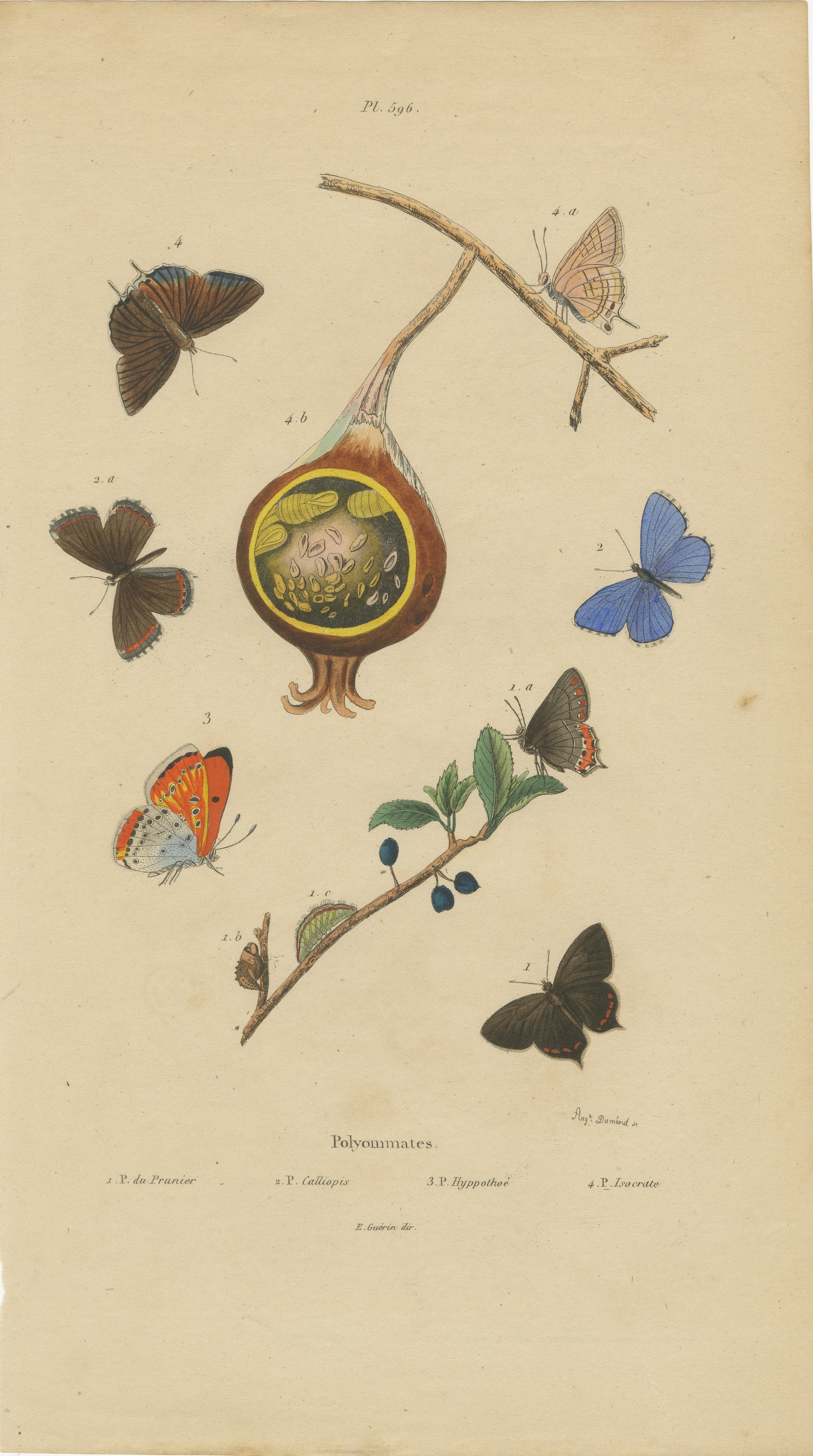
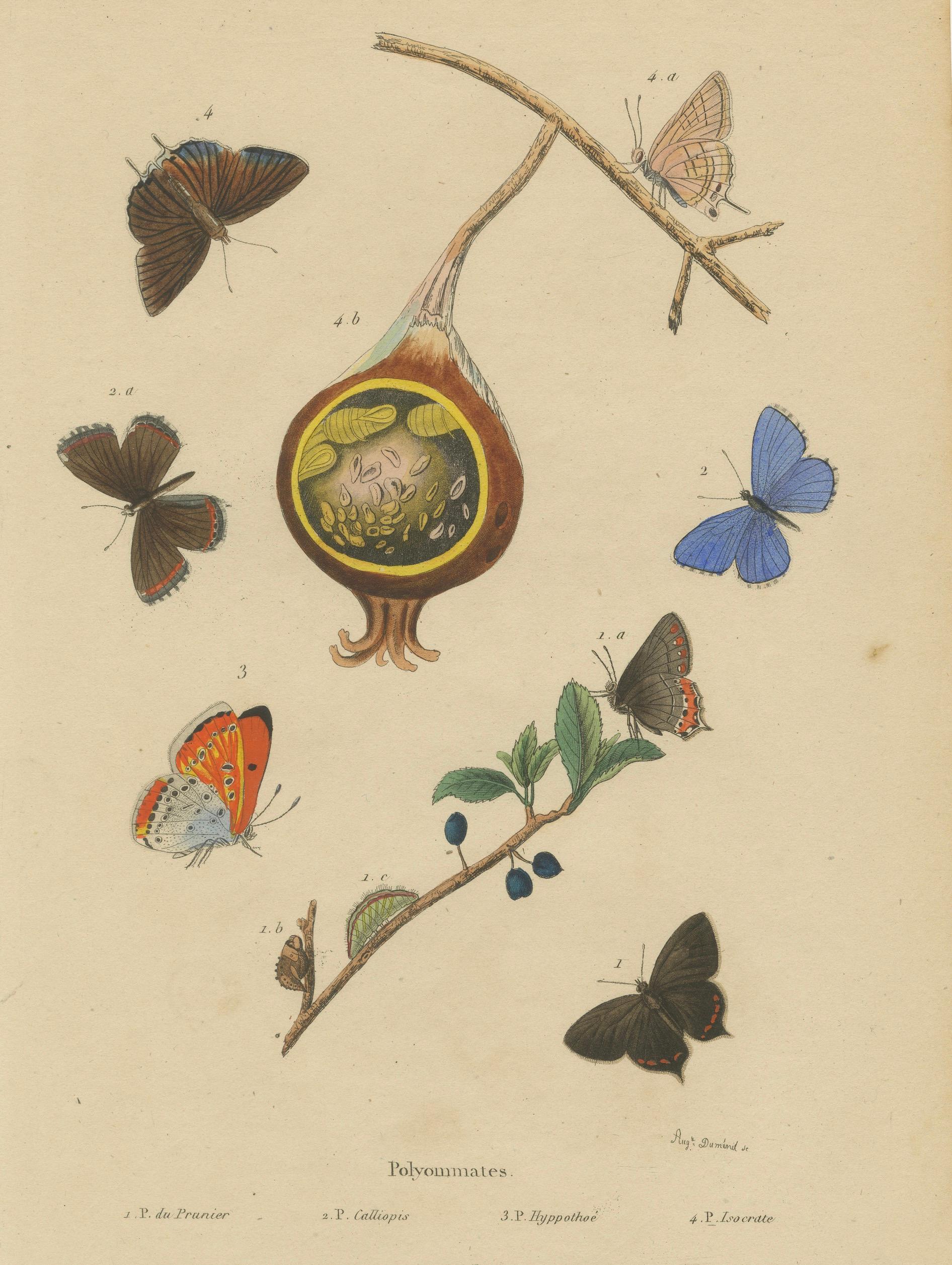
Polyommatus Butterflies & Caterpillars by Aug. Duméril, circa 1830
€ 230
Original antique · The actual sheet photographed · Certificate of authenticity on request · Sold unframed · Worldwide shipping from € 15 (rates)
Date
1830
Mapmaker / artist
Auguste Duméril & Edmond Guérin, French, circa 1830
Technique
Antique hand-colored engraving
Sheet size
30.3 × 17.2 cm (11.9 × 6.8 in)
Condition
Good
Reference
BG-13939-128
What the condition grades mean
Excellent
Bright and clean, with no faults worth mentioning.
Very good
Only light signs of age, such as faint toning.
Good
Normal signs of age for a sheet of this period: toning, some foxing, small marks or neat old repairs.
Fair
Clear faults such as staining, tears or repairs, priced to match.
Every fault we see is written in the condition note, and the whole sheet is shown uncropped in the photos.
Condition
Good antique condition overall, with age-related toning and minor wear consistent with age. Colors remain vibrant and attractive. Please review the images for further condition details.
About this sheet
Polyommatus Butterflies & Caterpillars by Aug. Duméril, circa 1830
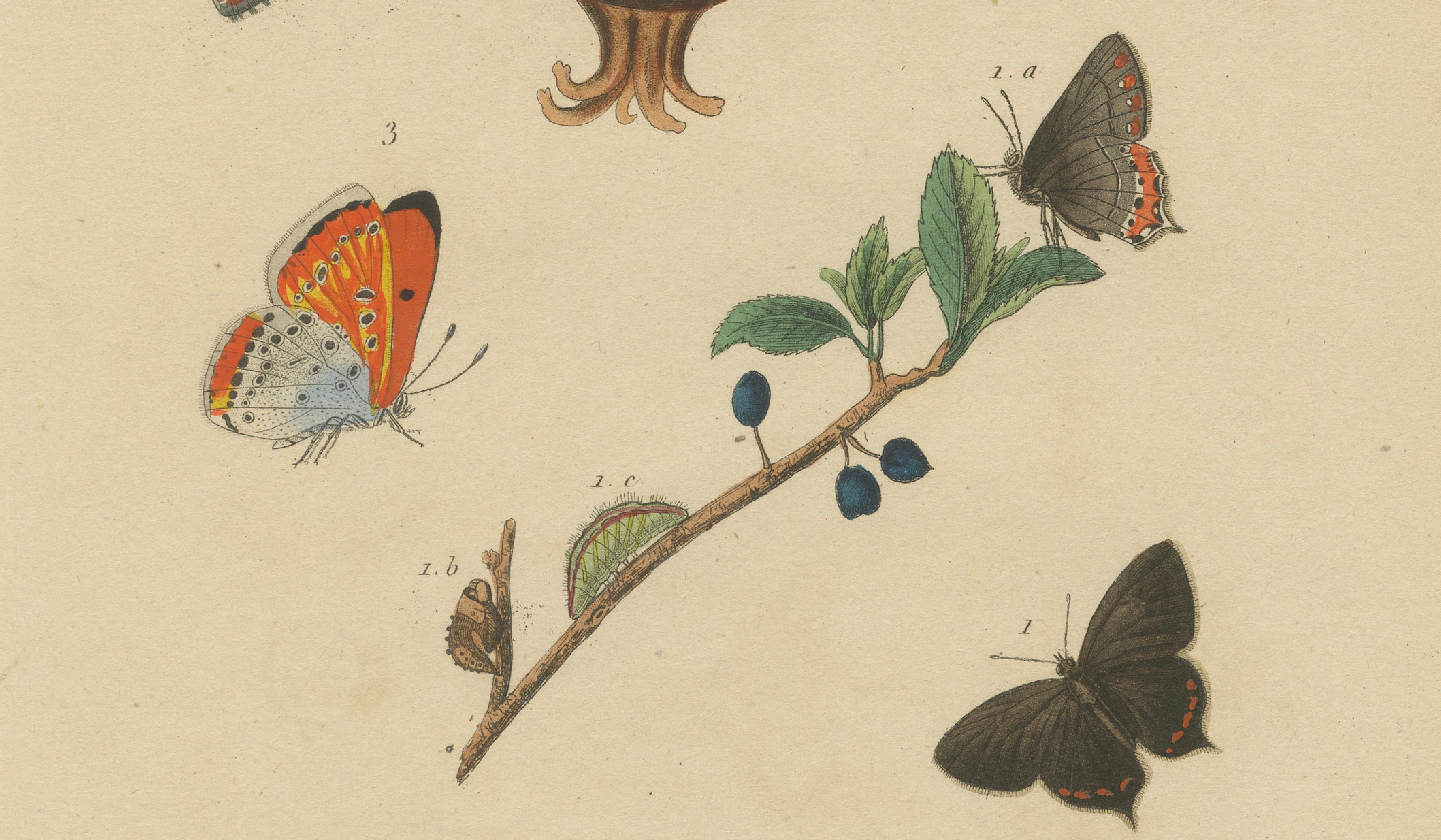
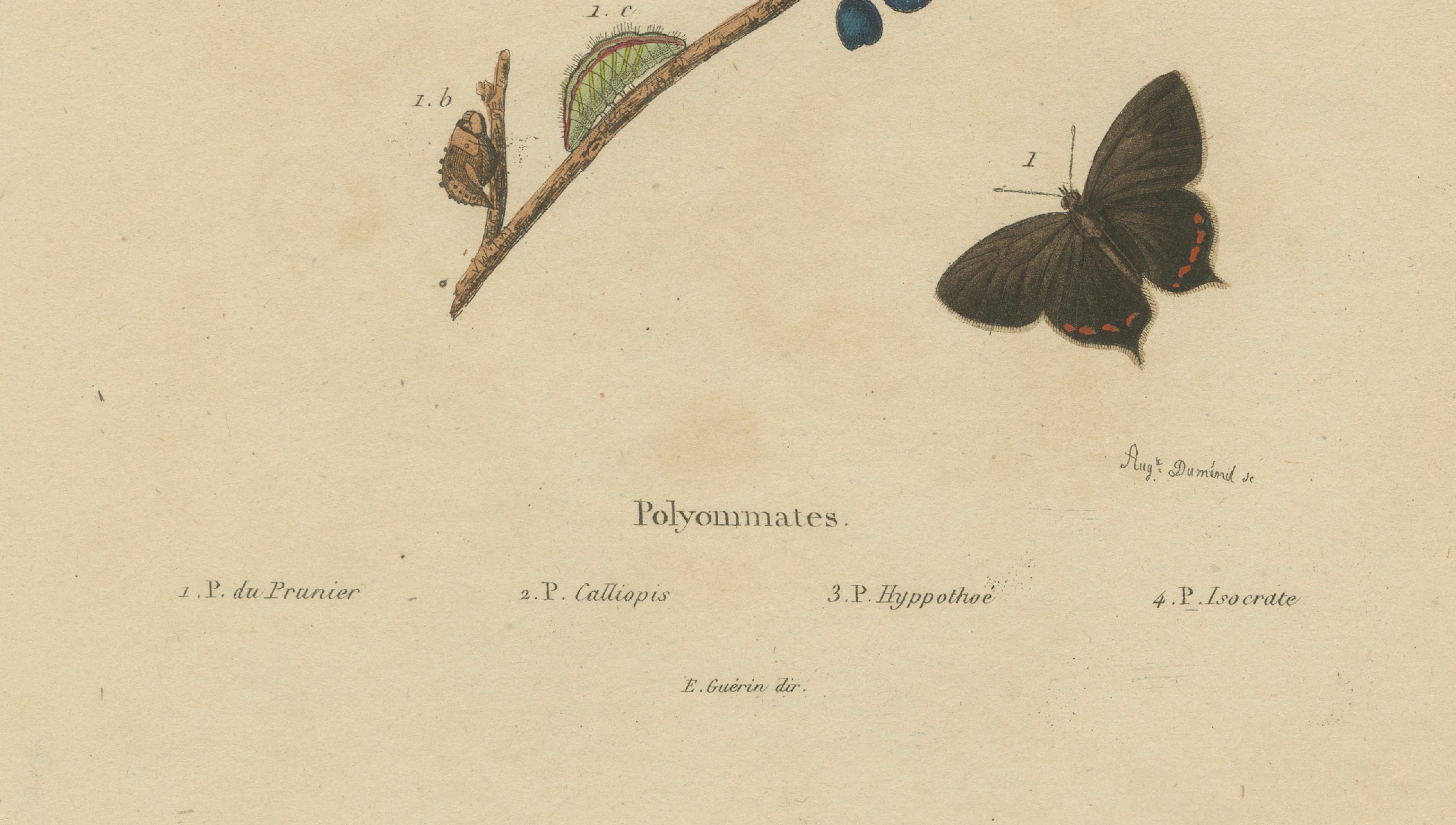
This finely detailed and beautifully hand-colored entomological engraving depicts several species of butterflies from the genus Polyommatus, commonly known as the “blues,” together with their caterpillars, chrysalises, and host plants. The plate was drawn under the direction of the French zoological illustrator Auguste Duméril (“Aug. Duméril del.”), whose signature appears in the lower margin alongside “E. Guérin dir.”, indicating the involvement of the noted French natural history artist and editor Edmond Guérin.
The engraving likely originates from an early 19th-century French natural history publication inspired by the scientific tradition of Buffon’s Histoire Naturelle and related zoological atlases produced in Paris during the Restoration and July Monarchy periods. Plates such as this combined scientific precision with decorative elegance and were intended for both scholarly study and the cultivated collector’s cabinet.
The composition illustrates multiple species historically classified within the broad Polyommatus group, including: – P. de l’Osier – P. Calliope – P. Hippothoë – P. Isocrate
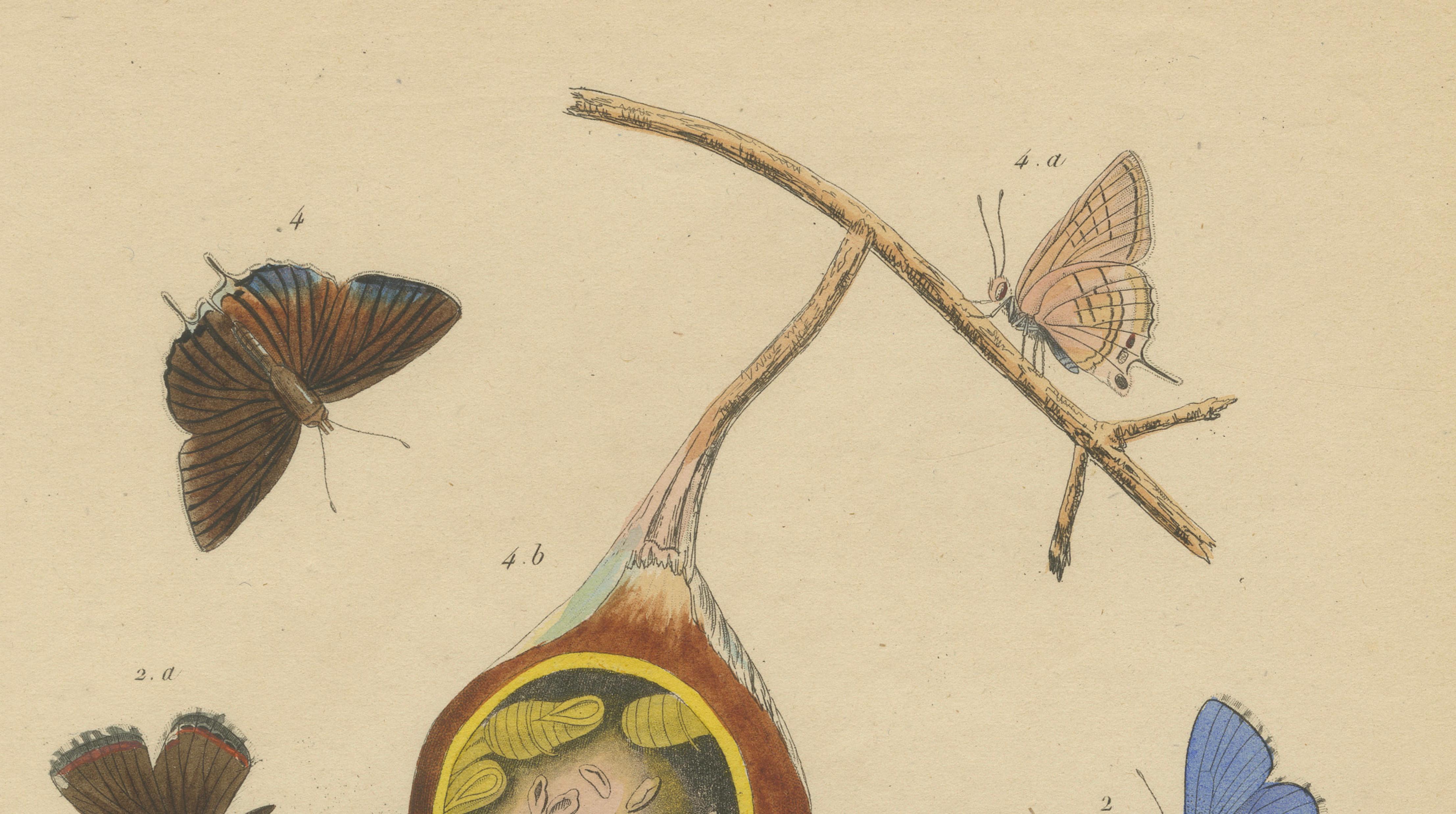
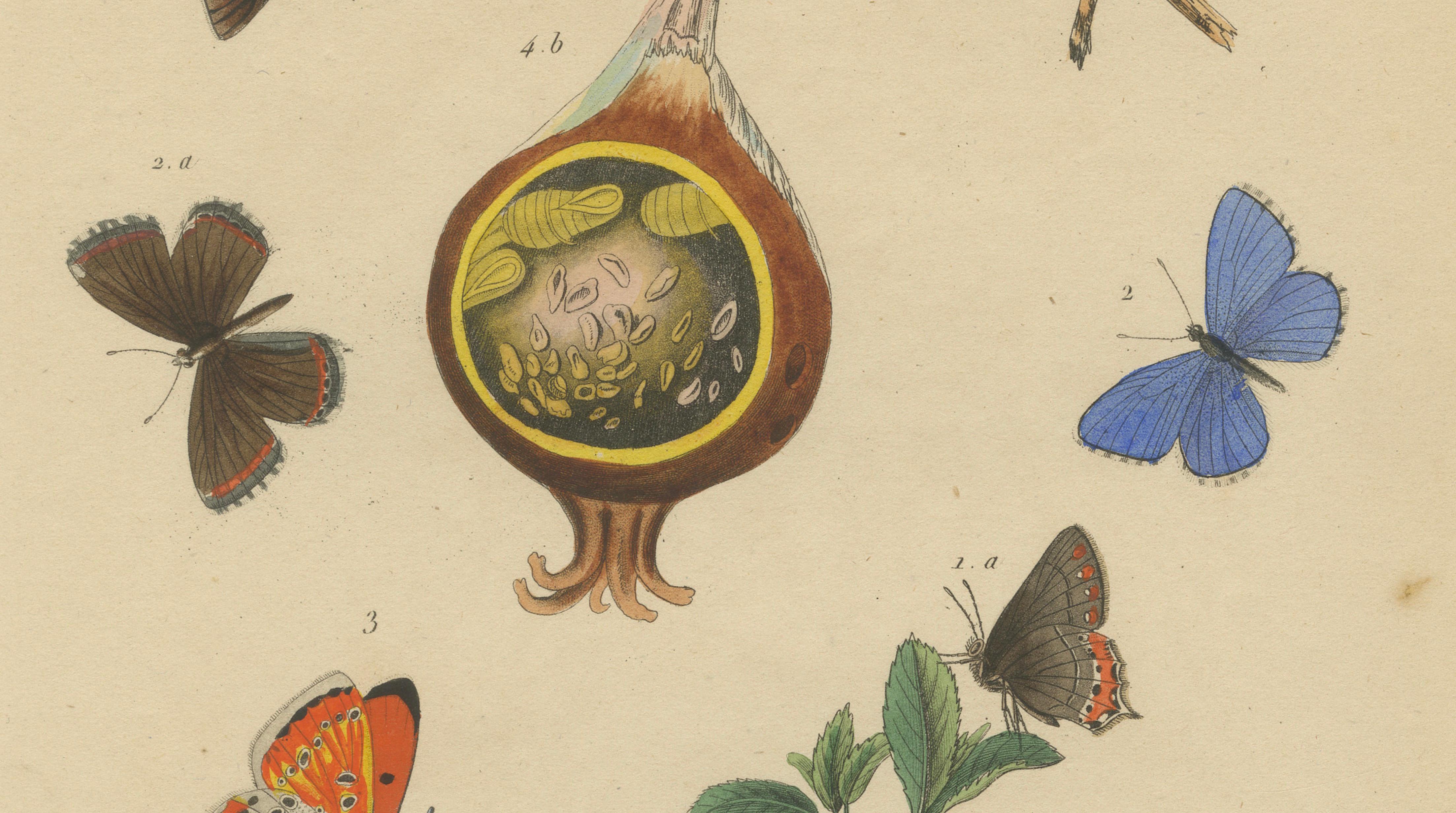
The butterflies are shown in both upper- and underside views, highlighting the striking differences in coloration and patterning between males and females. Brilliant iridescent blues contrast with earthy browns, warm copper tones, and delicately spotted undersides. The artist paid particular attention to the texture of the wings and the subtle variations in markings characteristic of the lycaenid family.
One of the most attractive features of the print is the inclusion of the complete life cycle. Caterpillars are shown feeding on their host plants, while tiny chrysalises cling naturally to stems and leaves. A fascinating cross-sectioned fruit—possibly a pomegranate—reveals larvae hidden inside, adding a highly scientific and visually intriguing detail to the scene. These botanical and developmental studies transform the engraving into a complete natural history tableau rather than merely a decorative butterfly study.
The hand-coloring remains remarkably fresh and luminous, particularly in the butterfly wings and surrounding vegetation. Such engravings are today highly desirable for both collectors of antique natural history prints and interior decorators seeking elegant cabinet-of-curiosity style works for display.
Note: This print is an original antique engraving, not a reproduction. The piece is sold unframed; any framed images are shown for presentation and interior inspiration only and may not always be to scale.
Framing tip: Particularly effective in a dark walnut or ebonized frame with a wide cream or ivory mat. The detailed scientific imagery also lends itself beautifully to salon-style groupings with other botanical or entomological engravings.