Captivating Natural History Prints: Insects, Life Cycles and Rare Details, 1832
€ 290
Original antique · The actual sheet photographed · Certificate of authenticity on request · Sold unframed · Worldwide shipping from € 15 (rates)
Date
1832
Sheet size
11 × 18 cm (4.3 × 7.1 in)
Condition
Good
Reference
BG-13292-163, -164 -168, -169
What the condition grades mean
Excellent
Bright and clean, with no faults worth mentioning.
Very good
Only light signs of age, such as faint toning.
Good
Normal signs of age for a sheet of this period: toning, some foxing, small marks or neat old repairs.
Fair
Clear faults such as staining, tears or repairs, priced to match.
Every fault we see is written in the condition note, and the whole sheet is shown uncropped in the photos.
Condition
Wear consistent with age and use. Very good condition with some age-related toning and minor imperfections typical for their age. The hand coloring remains vibrant and crisp.
About this sheet
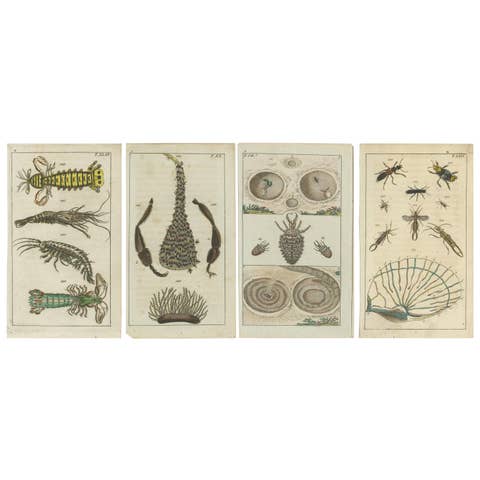
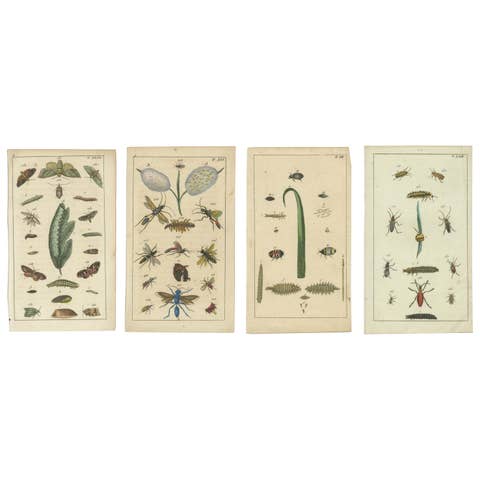
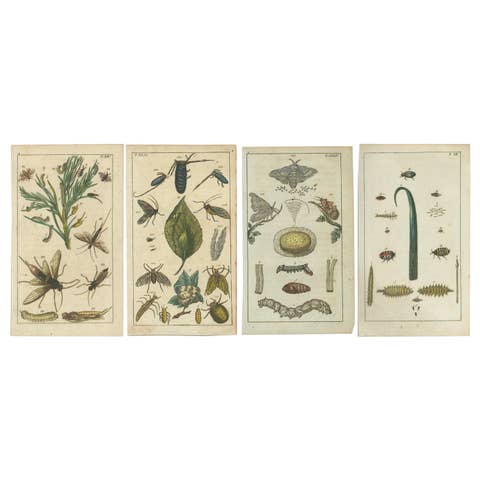
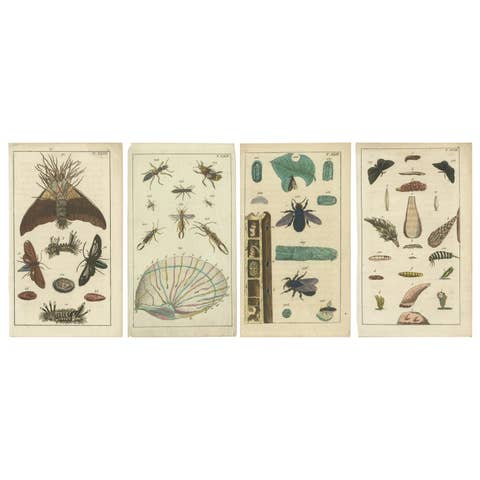
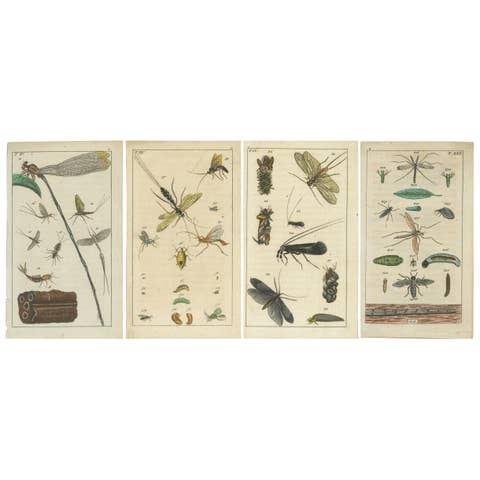
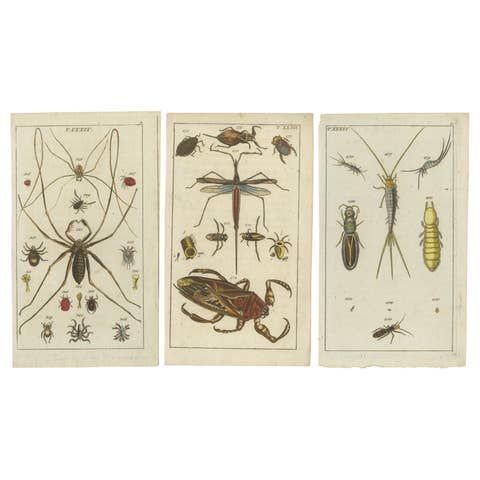
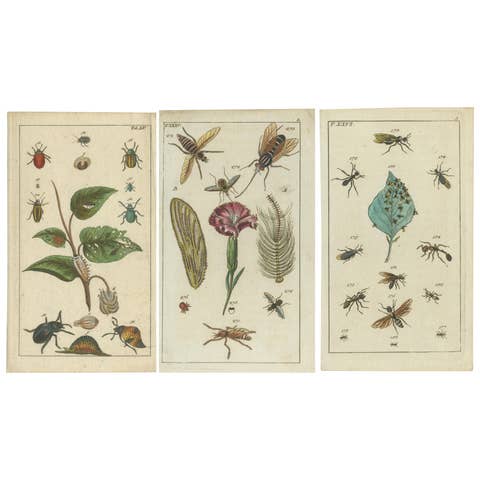
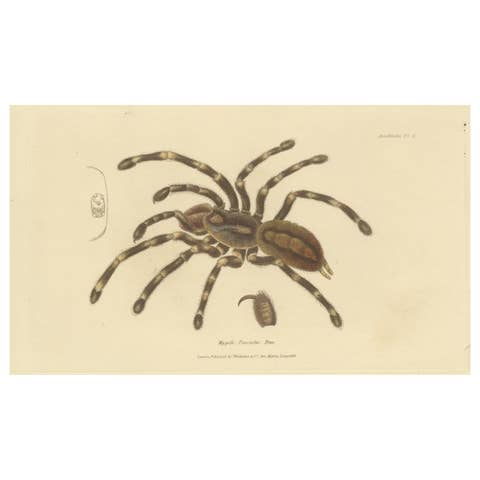
This set of four small original antique prints from 1832 offers an extraordinary look into the fascinating diversity of insects, their life cycles, and habitats. These prints are part of Gottlieb Tobias Wilhelm’s iconic Unterhaltungen aus der Naturgeschichte, a monumental 25-volume work that is celebrated as a cornerstone of 18th- and 19th-century natural history. Wilhelm, a Protestant pastor and natural history writer, collaborated with Augsburg’s renowned printmakers, who were part of the famous European Image Factory, to create illustrations of exceptional detail and beauty.
Produced using the traditional copperplate engraving technique, these prints are masterpieces of precision and craftsmanship. Each illustration was hand-colored by skilled artisans, resulting in vibrant and lifelike depictions of insects, from beetles and mantises to flies and their larvae. The engravings showcase the various stages of life, including eggs, pupae, and adult forms, providing both a scientific and artistic representation of these creatures.
What makes these prints particularly special is their dual role as scientific tools and decorative art. They reflect the Enlightenment-era curiosity about the natural world, with each detail meticulously rendered to serve as both an educational resource and a visual delight. These prints are ideal for collectors, entomology enthusiasts, or anyone looking to add historical charm to their space.
Framing tips: Use archival-quality materials to preserve the prints. Neutral-colored mats and elegant wooden or metallic frames enhance their antique appeal. Float-mounting is a great option to emphasize their historical value, and UV-protective glass is recommended to maintain the vibrancy of the hand coloring. Displayed together or individually, these prints make a timeless statement.