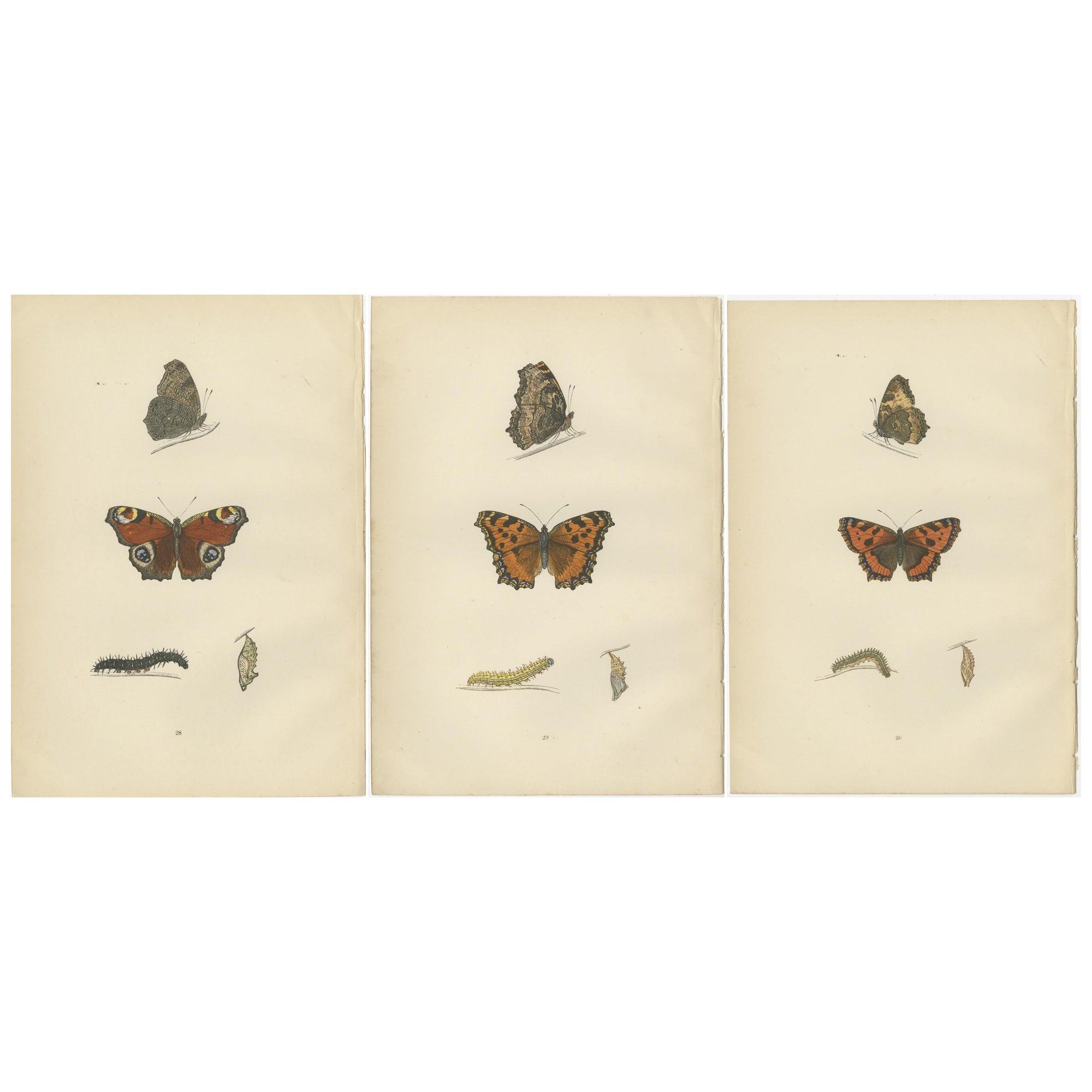
Metamorphosis in Motion: A Victorian Glimpse of British Butterflies, 1890
€ 340
One of a kind: this is the sheet in the photographs. Ships from Langweer, the Netherlands.
Date
1890
Sheet size
25.4 × 17.3 cm (10.0 × 6.8 in)
Condition
Good
Reference
BG-13260-28, BG-13260-29, BG-13260-30
Condition
given age, general age-related toning. Some small spots.. Please study scan carefully.
About this sheet
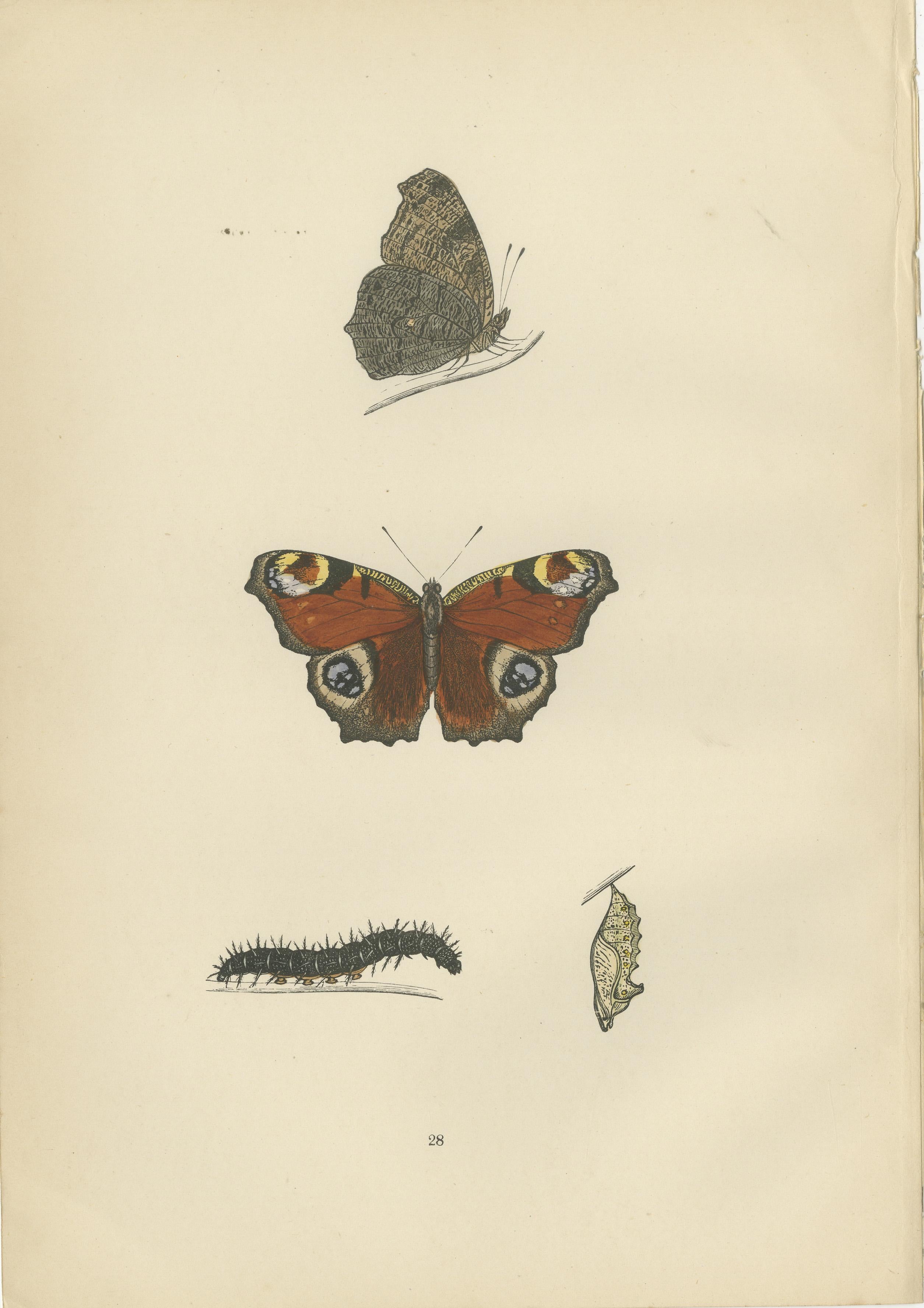
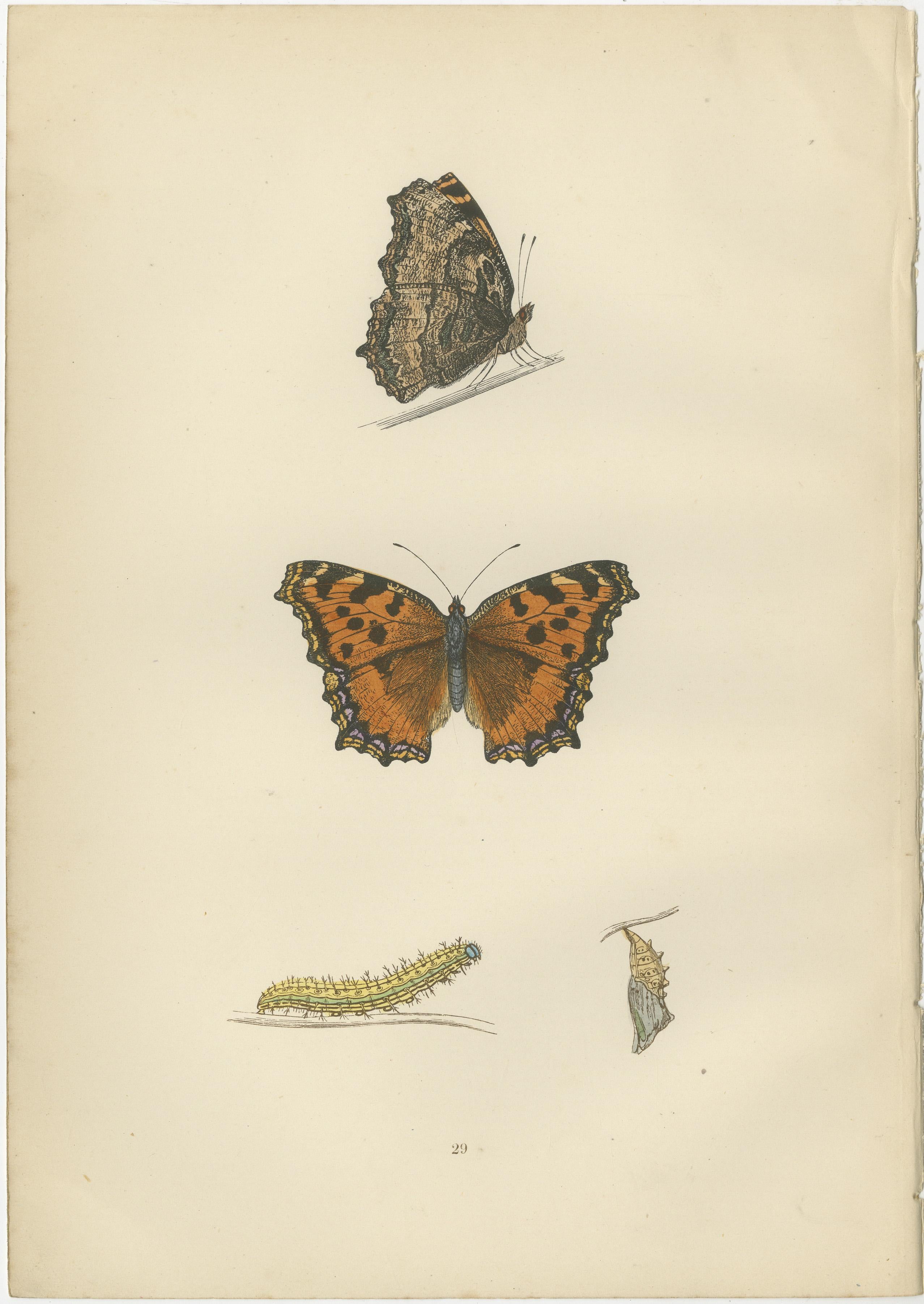
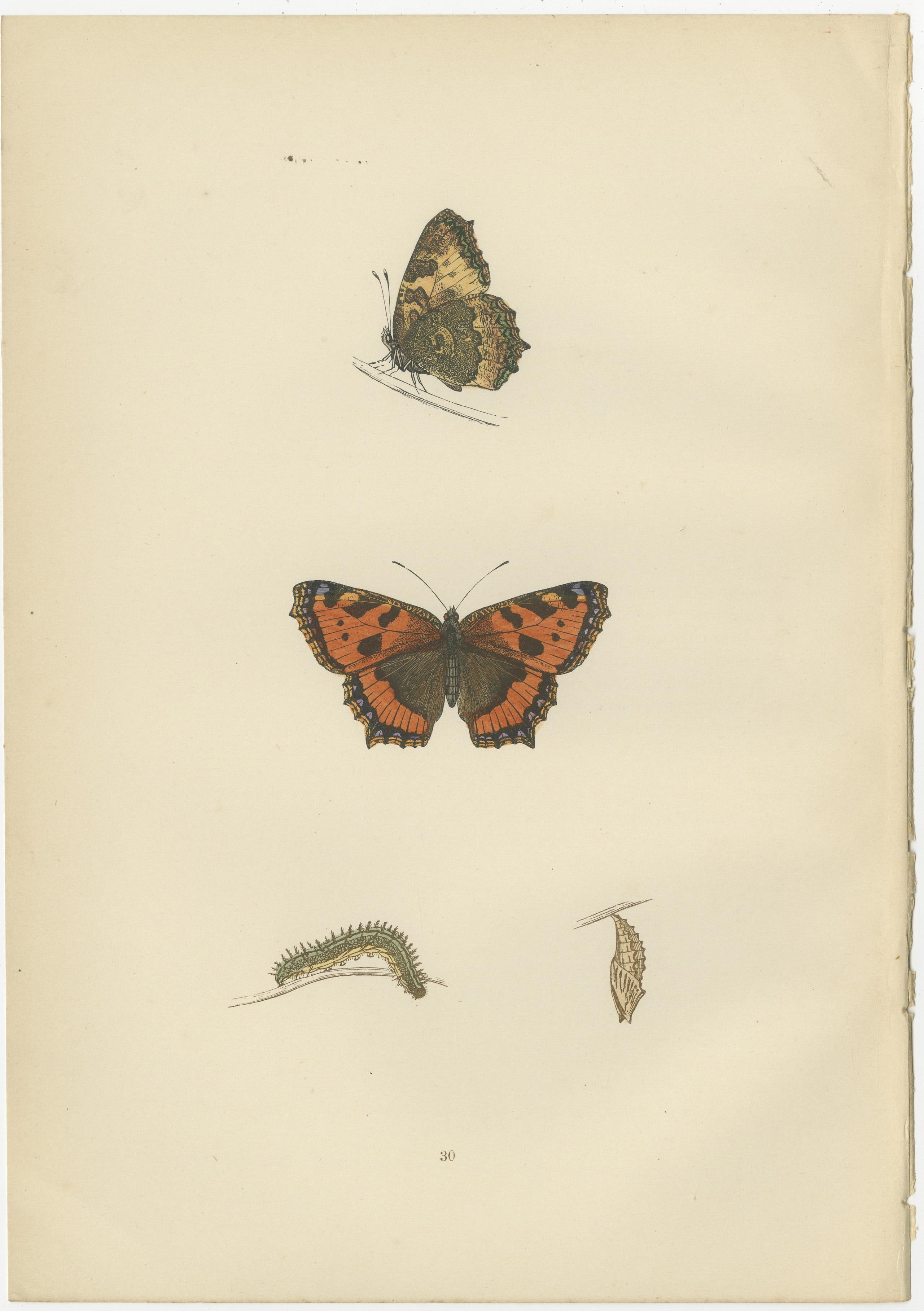
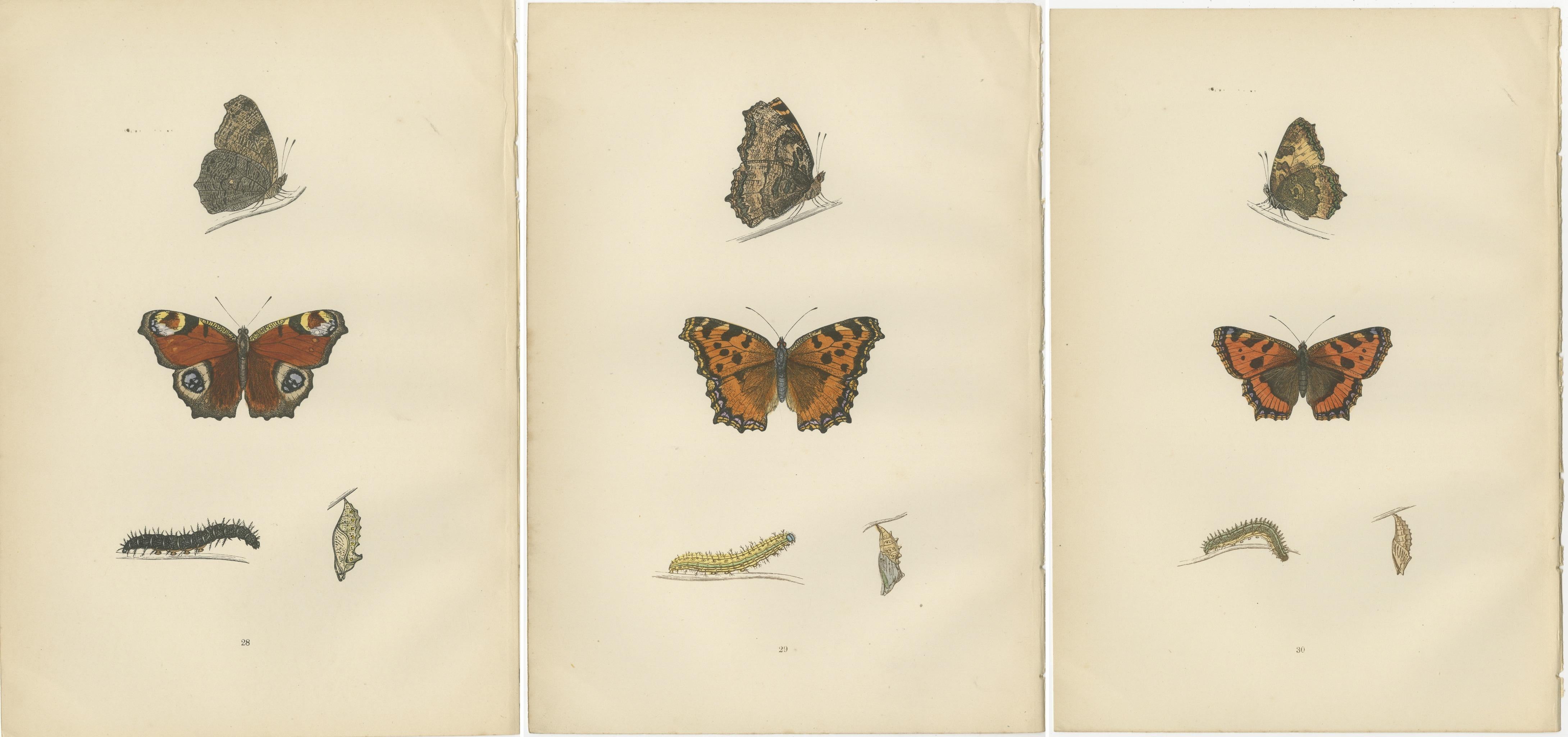
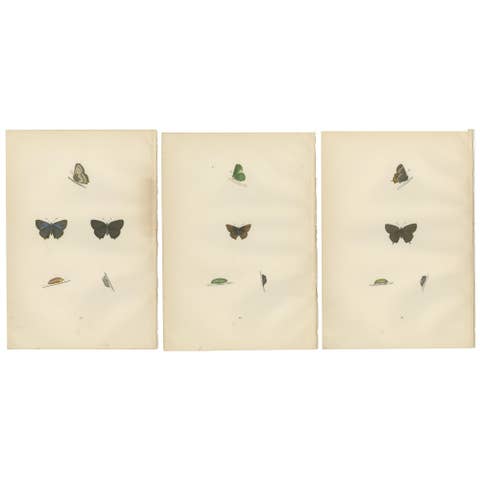
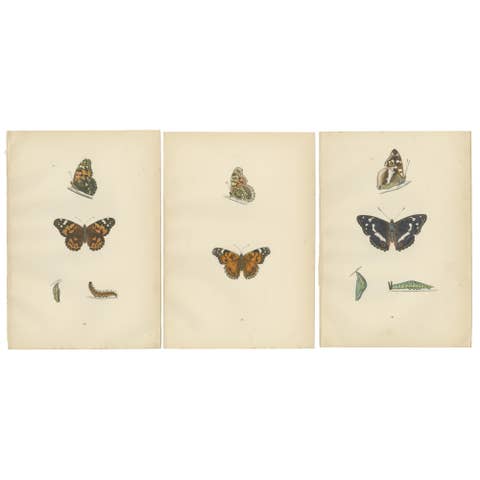
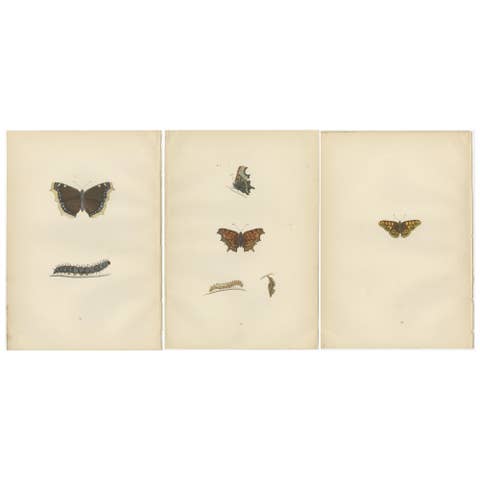
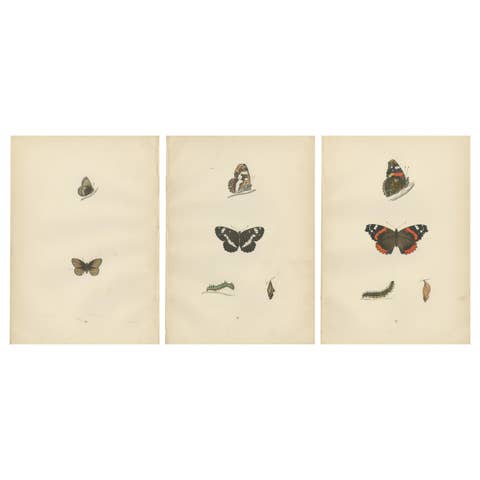
The prints are from "A History of British Butterflies" by Morris, which are quite collectible and historically significant. A description of the three butterfly species in these original hand-coloured prints:
1. **Peacock (Aglais io):** - The Peacock butterfly is known for its striking eyespots on the hind wings, which resemble those of a peacock's tail feathers, hence its name. These spots are thought to scare away predators. The rest of the wing is a deep red or maroon with black, white, and blue markings. The eyespots are a fine example of evolutionary adaptation for defense.
2. **Large Tortoiseshell (Nymphalis polychloros):** - This butterfly is less common in Britain now, but it sports large, multi-colored wings that range from orange to yellow with a mosaic of black spots and lines. It's a part of the Nymphalidae family and was once widespread in woodlands across the UK. Its decline has made sightings of this butterfly quite rare and special for enthusiasts and naturalists.
3. **Small Tortoiseshell (Aglais urticae):** - Smaller than the Large Tortoiseshell, this butterfly is nonetheless widespread and recognizable by its bright orange and black wings with a row of blue spots around the rear edge. The undersides of the wings have a cryptic pattern, helping it to camouflage when its wings are closed. The Small Tortoiseshell is often seen in gardens and is well-known for its association with nettles during the larval stage.
What makes these butterflies particularly interesting, aside from their beautiful and distinctive wing patterns, is their place within the ecosystem as pollinators and as part of the food chain. Furthermore, the historical aspect of these illustrations and their hand-colored nature from an 1890 publication adds considerable interest and value, reflecting the craftsmanship and scientific interest of the Victorian era. Their vivid depiction in these plates provides not just scientific knowledge but also a glimpse into the art and method of early entomology.